Taxonomy, the Microbial Cell, Metabolism, & Genetics
 Call Kai
 Learn
Learn Practice Test
 Spaced Repetition
 Match
Match Flashcards
 Knowt Play
1/29

There's no tags or description
Looks like no tags are added yet.
Name | Mastery | Learn | Test | Matching | Spaced | Call with Kai |
|---|
No analytics yet
Send a link to your students to track their progress
30 Terms
The role of the clinical microbiology lab is to assist healthcare providers with diagnosis and management of infectious diseases with information from…
microscope stains
cultures
phenotype characteristics
immunochemical testing
molecular analysis
antimicrobial susceptibility testing
What are some examples of microbiological point-of-care tests?
group A streptococcus screens
rapid influenza A and B tests
rapid COVID-19 tests
List 8 phenotypic characteristics of bacteria used for microbial identification
colony morphology
microscope morphology
staining characteristics
environmental requirements
nutritional requirements
biochemical characteristics
antigenic properties
antibiotic resistance profiles
species
the lowest taxonomic group that encompasses bacterial strains with common genetic, physiologic, and phenotypic characteristics
What 3 groups of classification are most important in microbiology?
family, genus, and species
bacteria are classified as “Genus species”
What 4 microorganisms are considered eukaryotic?
fungi, algae, protozoa, and parasites
they contain many membrane-bound organelles (nucleus, mitochondria, ER, etc.)
Where can DNA be found in bacterial cells?
in the free-floating DNA chromosome
OR in plasmids
extrachromosomal DNA
plays a role in the development of antibiotic resistance
What components can be found in bacterial cells?
ribosomes
DNA chromosome (nucleoid)
mRNA
proteins
metabolites
plasmids
ALL LOCATED in the cytosol
What 2 parts make up the cellular membrane?
plasma membrane
and cell wall
Gram negative bacteria have an additional outer membrane
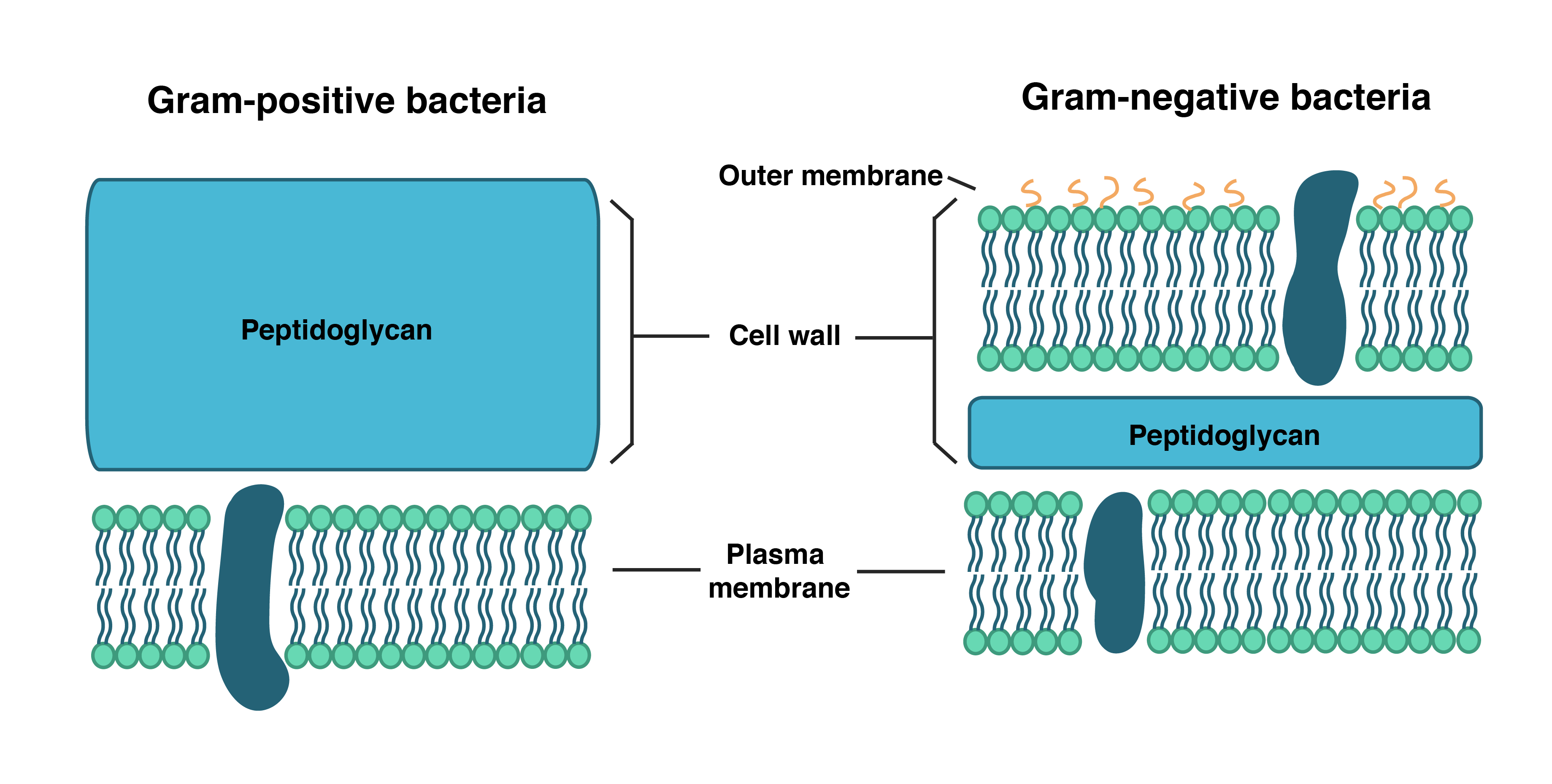
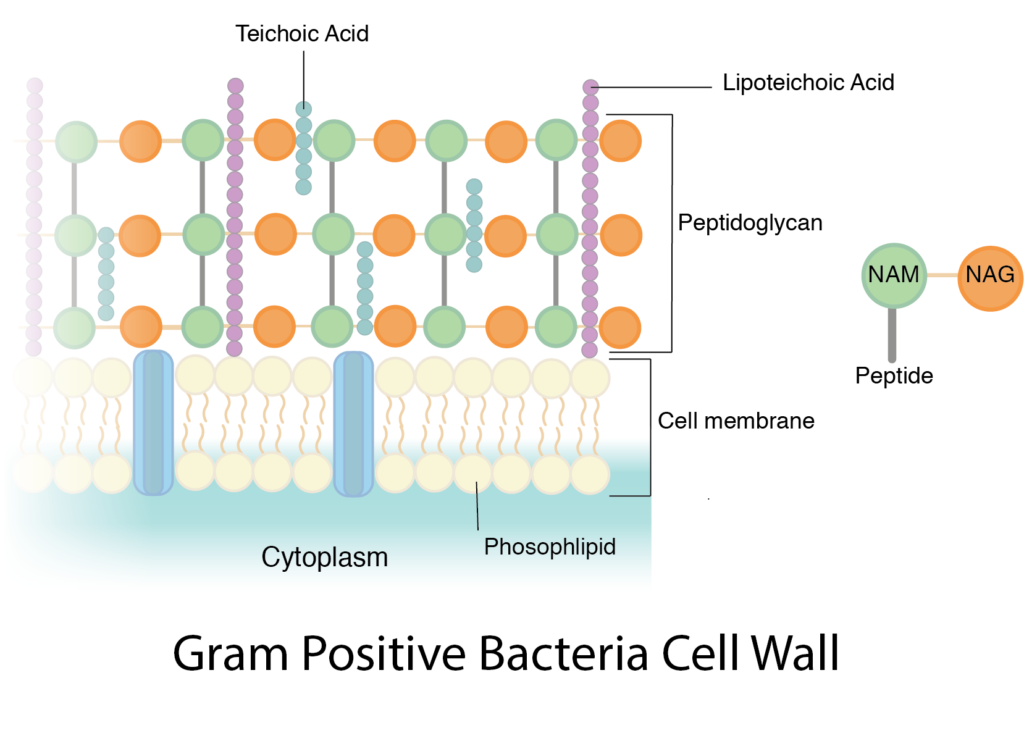
What does the Gram positive cell wall consist of?
a thick layer of cross-linked peptidoglycan
provides stability and strength, and can also block some macromolecules
techoic acids
essential for cell viability and virulence
lipotechoic acid
important as surface antigens to differentiate bacterial serotypes and to help the organism attach to the host
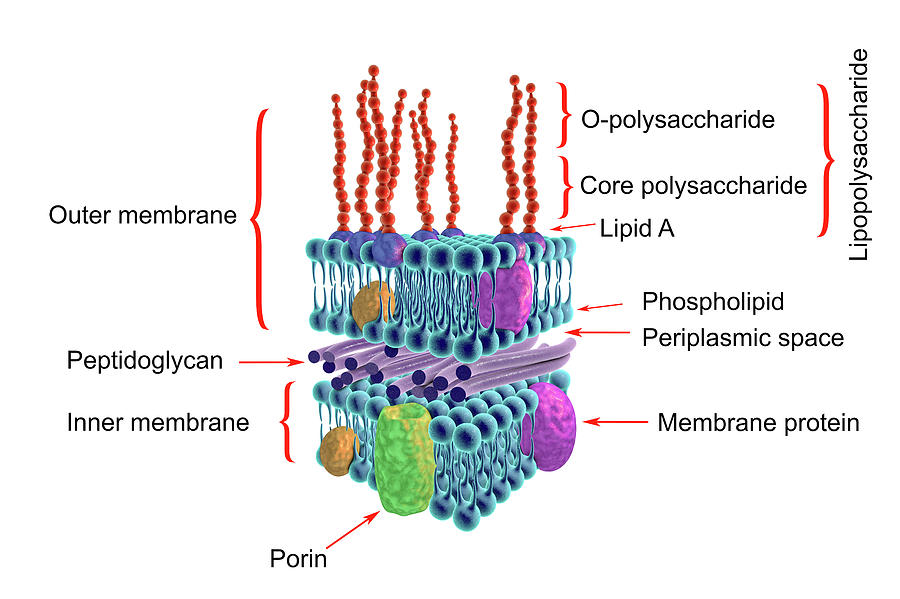
What does the Gram negative cell wall consist of?
a thin peptidoglycan layer
an outer lipopolysaccharide (LPS) layer
consists of lipid A (endotoxin), core polysaccharides, and O antigens
acts as a barrier and a site of attachment to host cells
___ are bacteria that have waxy cell walls, and are known as acid fast.
mycobacteria
Which 2 types of bacteria do not have a cell wall?
mycoplasma and ureaplasma
The cellular envelope of bacteria may also have a capsule and/or slime layer. What is a capsule and slime layer?
capsule
acts as a barrier, allows adherence to host surfaces, and helps the bacterium evade the immune system (antiphagocytic)
slime layer
loosely arranged polysaccharides
allows adherence to prosthetic devices/implants and the creation of biofilms
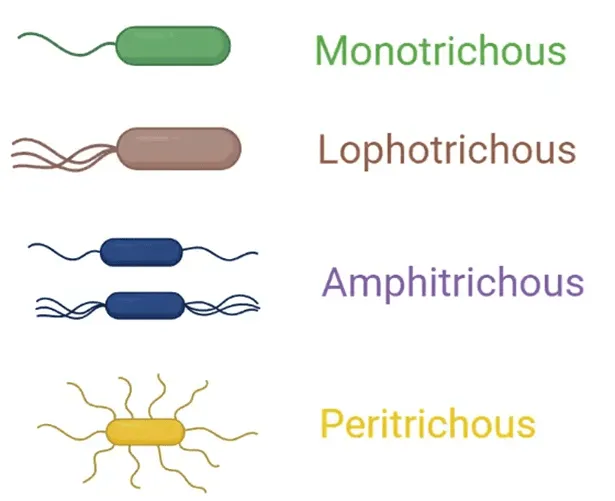
List and describe 2 external appendages on bacteria
pili
hair-like extensions that provide attachment to host cells or other bacteria
sex pili are involved in conjugation and exchange of DNA between bacteria
flagella
not present on all bacteria, used for movement
How are nutrients needed for metabolism enter the cell?
diffusion (water, oxygen, CO2)
or by active transport (organic acids, amino acids, inorganic ions)
What is the difference between aerobic and anaerobic respiration in microbial metabolism?
aerobic
oxygen is the terminal electron acceptor
bacteria grows in the presence of oxygen
anaerobic
the terminal electron acceptor is another organic molecule
oxygen is not required for bacterial growth
What are the 3 pathways in which glucose is converted to pyruvic acid?
Embden-Meyerhof-Parnas pathway (EMP)
pentose phosphate pathway
Entner-Doudoroff (ED) pathway
facultative anaerobe
organisms that prefer to grow in the presence of oxygen, but do not require it for growth
What is the electron acceptor, efficiency of, and organisms that undergo fermentation (for metabolism)?
electron acceptor
not oxygen (process does NOT require oxygen)
efficiency
less energy efficient
organisms
obligate and facultative anaerobes
What is the electron acceptor, efficiency of, and organisms that undergo respiration (for metabolism)?
electron acceptor
oxygen (requires oxygen to occur)
efficiency
more energy efficient
organisms
obligate aerobes and facultative anaerobes
exotoxins
substances secreted by living bacterial cells
produced by both gram + and - bacteria
not associated with fever
usually species specific
example: C. tetani produces the potent neurotoxin tetanospasmin, which produces muscular paralysis
endotoxins
substances released upon cell lysis or death
consists of LPS, a component of gram - cell walls
associated with gram - bacteria
not species specific
can induce fever and shock, or even DIC
activates B lymphs and complement
What are the applications of PCR and hybridization in the microbiology lab?
to identify small amounts of bacteria in specimens
to examine antimicrobial resistance
What characteristics do plasmids encode for?
virulence, toxins, and antibiotic resistance
plasmids can be released and taken up by other bacteria
What are transposons?
“jumping genes”
DNA segments that can insert pieces of DNA into other bacteria, even if no homology exists
Describe the following form of genetic change in bacteria: recombination
foreign DNA combines with an identical portion of a bacteria’s chromosome
this forms a partially hybrid chromosome with segments originating from the donor and recipient
List and describe 3 types of genetic exchange in bacteria
transformation
bacterium dies and releases genetic information into the environment
free-floating genetic material is incorporated into a living bacterium’s genome (recombination)
transduction
bacteriophages attach to bacteria and injects genetic information into the cell, which is incorporated into the genome
conjugation
two bacteria connect by sex pili and genetic information is transferred
What are mutations and what causes them to happen?
changes to the genetic code that can alter the organism’s phenotype
causes:
insertion or deletion of base pairs in DNA
physical or chemical environmental factors
biological factors associated with the insertion of foreign DNA
What are restriction enzymes used for?
to protect bacteria from bacteriophages
these enzymes snip DNA at specific sequences and new DNA can be created with the segments
example: A bacteriophage infects a bacterial cell. The restriction enzyme prevents replication by cutting up the phage DNA into pieces. The bacterium can then form new DNA that protects itself from other bacteriophages.