Social Cognition
 Call Kai
 Learn
Learn Practice Test
 Spaced Repetition
 Match
Match Flashcards
 Knowt Play
1/75

There's no tags or description
Looks like no tags are added yet.
Name | Mastery | Learn | Test | Matching | Spaced | Call with Kai |
|---|
No analytics yet
Send a link to your students to track their progress
76 Terms
Social Facilitation
better at task with others around
social inhibition
worse at task with others around
Social Referencing
we sue information from others to guide our own decisions and behaviors
self reflection
thinking about ourselves in comparison to others or our autobiographical memories
embodiment
thinking about and feeling connection with our bodies; connection of body and mind
Medical PFC purpose
engaged in self-reflection-- default is to have self-reflective thought
Insula purpose
interoception, body awareness
Temporo-parietal junction
body imagery and transformations
Eye cuing affects
Even when the cues are not valid, it is hard to ignore the cue
superior temporal sulcus purpose
perception of biological motion, social expectation violations
amygdala purpose
perception of emotional facial expressions
what type of attention do social cues modulate
early selection
Implicit Association Test
Whichever concept are more strongly associated will shows faster RT than more weakly associated concepts
What increases with racial bias (Social Categorization
amygdala, DLPFC
When does cooing occur
0-2 months
When does babbling occur
6 months
When does first word occur
1 year
When does 2 word speech and some multiword
18-24 months
When does rapid growth in grammar happen
2-4 years
When does most basic grammar start
4-5 years
When does the critical language period end?
7-8 years
What brain region is used when speaking a second language
PFC increase
Primary auditory cortex
process visual information
primary motor cortex
generate neural impulses that control the execution of movement
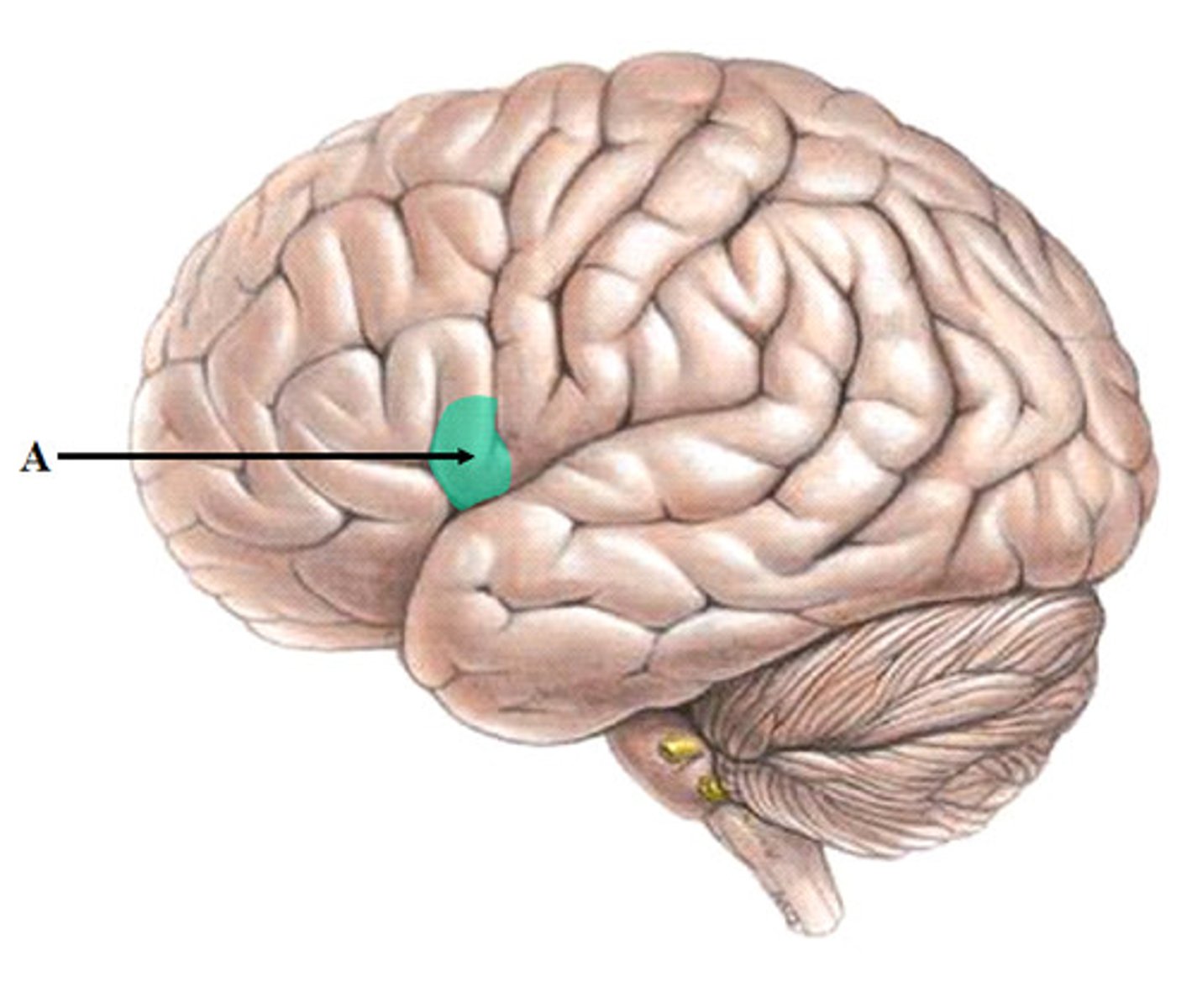
Broca's area
speech production
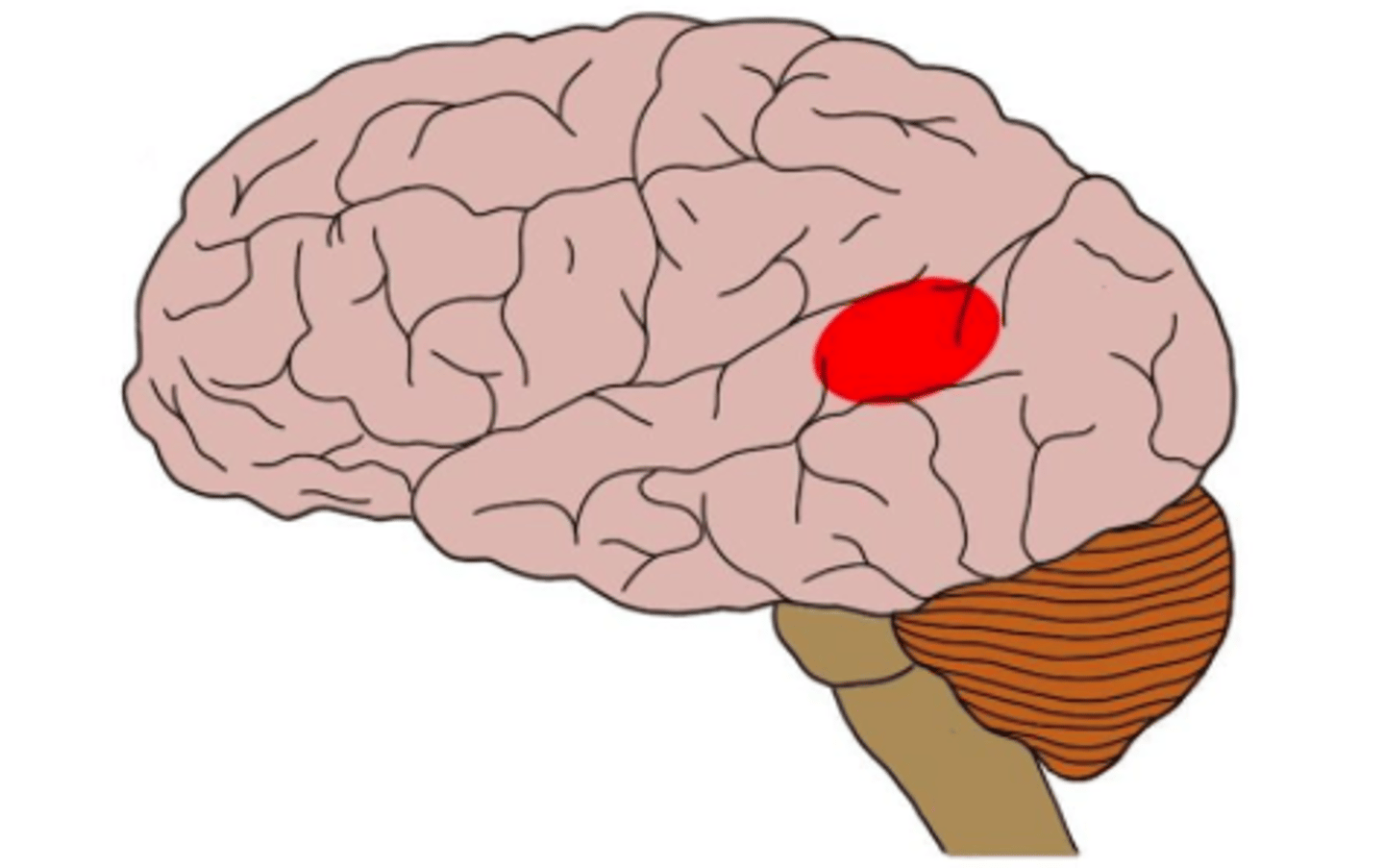
wernicke's area
speech comprehension
brocas area location
Wernickes area location
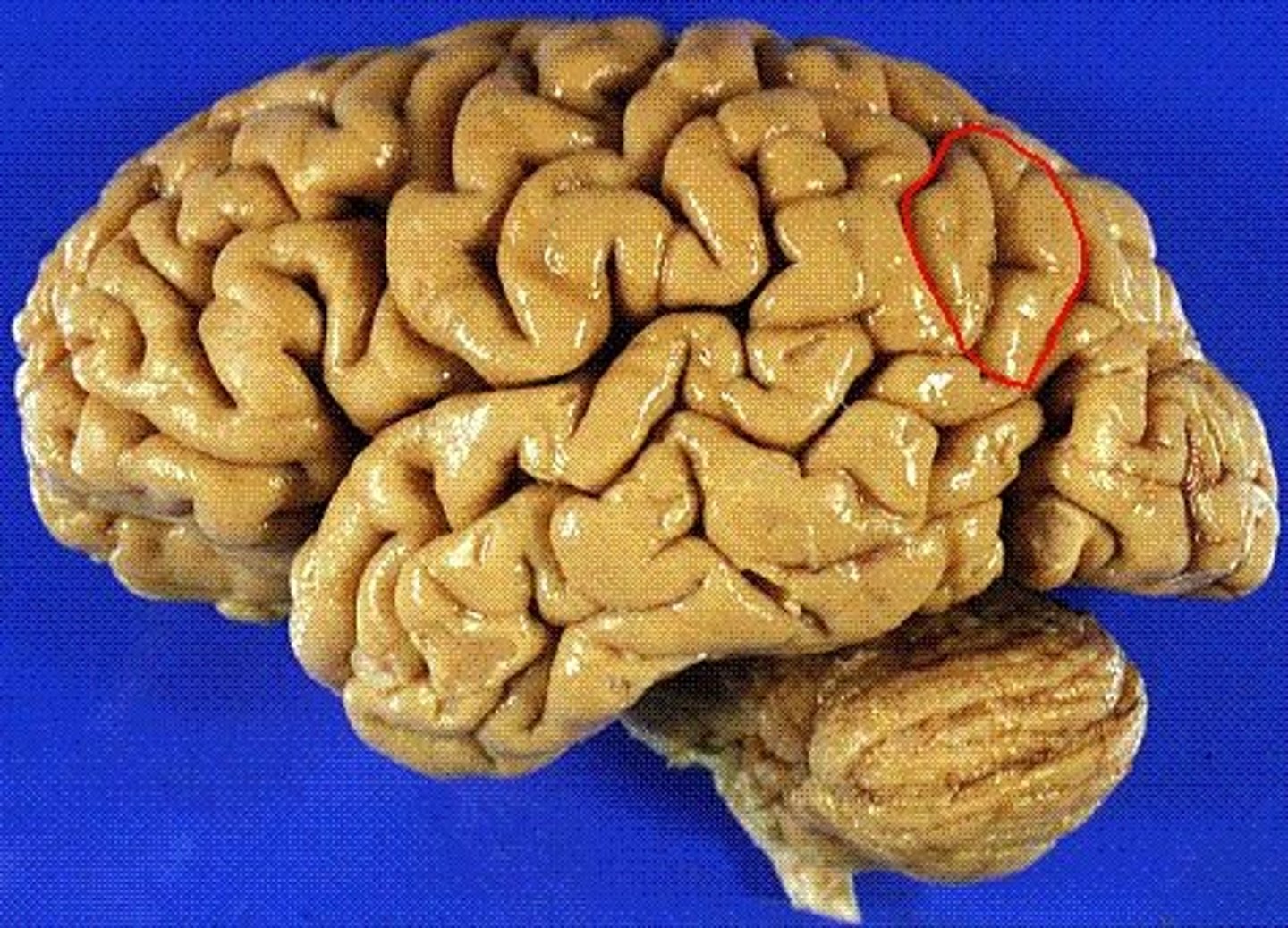
Angular gyrus
transfers visual information to wernickes area (reading)
angular gyrus
What side of the brain is language lateralized to
left-lateralized
Where is the emotional side of language
right hemisphere
aphasia
language deficit from brain injury
aprosodia
prosody (inflection, stress, tone) deficit; can be receptive or expressive
Alexia
reading deficit
What part of the brain is injured in aphasia
left hemisphere
what part of the brain is damaged in aphasia
Left hemisphere
What part of the brain is damaged in aprosodia
right hemisphere
What part of the brain is injured in Alexia
angular gyrus, Visual word from area
Symptoms of Broca's aphasia
speech lacks fluency, connecting words, grammatical markers
Wernickes aphasia symptoms
speech is fluent but doesn't not make sense. comprehension is disrupted
How to test for aphasia
open ended questions, scene descriptions, multiple-step commands
Expected value
proportional reward assisted with each outcome (probability)x(value), objective
Expected utility
proportional psychological measure associated with an outcome, subjective
Utilization maximization theory
people behave according to what an outcome is personally worth to them and their subjective estimate of the probability of an event occurring
framing
our choices will vary based on how information is presented
gain frame
emphasize what one could gain, people are risk averse
loss frame
emphasize what one has lost or could lose
What part of the brain overrides framing effects
dmPFC
key structures int eh dopamine pathway
substancia nigra, ventral tegmental area, nucleus accumbens
What is dopamine
a MOTIVATIONAL driver, wanting not liking
reward prediction error
dopamine neurons do not signal reward, they signal changes in information about reward
What responds to changes in reward expectation
Ventral tegmental area
neural basis of addiction
activation in reward areas (ventral striatum) for near misses
ADHD & dopamine
difficulties synthesizing dopamine, fewer receptors, higher concentration of dopamine transporters
impact on delay and value
people judge rewards to be less valuable the farther in the future they occur
what activates for immediate rewards
ventral striatum
Is social stimuli rewarding
activation of the ventral striatum is evoked both when money goes to themselves or charity
What is cooperation associated with
NAc activity
ability to over override self-interested impulses in order to implement fairness-related behaviors
dlPFC
computing decision value
vmPFC
executive function (singular)
overarching unitary capacity for goal directed behavior, self regulation, and top down control
executive functions (pleural)
specific processes that together make up the broader ability known as executive function
what region of the brain is for complex tasks
anterior
what region of the brain is for simple tasks
posterior
contextual control
in order to use executive functions efficiently, the brain must monitor the success of ongoing plans and the potential for conflicts
What part of the brain is responsible for conflict monitoring
anterior cingulate cortex
what part of the brain is for rule application
dlPFC
working memory
active process involved in maintaining information and rules to enable ongoing processing and goal-directed behavior
what part of the brain deals with manipulation of info in working memory
dlPFC
utilization behavior
impulsively acting on irrelevant objects in the environment due to anteromedial frontal injury
imitation behavior
a patient's replication of the examiners movements due to anteromedial injury
dysexecutive syndrome
impaired ability to plan and pay attention, lateral prefrontal injury
disinhibition syndrome
impaired social and emotional behavior, ventromedial prefrontal injury (0-100)
what disorder is characterized by problems with executive functioning
ADHD
arcuate fasciculus
connects brocas and wernickes area