Year 10 Commerce Term 1 Notes - 2
 Call Kai
 Learn
Learn Practice Test
 Spaced Repetition
 Match
Match Flashcards
 Knowt Play
1/42

Earn XP
Description and Tags
Managing Economic Issues/ Economic Performance
Name | Mastery | Learn | Test | Matching | Spaced | Call with Kai |
|---|
No analytics yet
Send a link to your students to track their progress
43 Terms
What are government economic policy tools?
The governments implementation of a range of economic policies to manage the economy and address economic issues regarding EG, unemployment and inflation.
What is macroeconomic policy?
Affects the entire economy. Known as demand-side policies, focusing on changing expenditure (spending) and demand in the different sectors of the economy. It involves looking at the general influences on national spending, output, income, employment and overall material living standards. AD = C + I + G + (X-M)
How is macroeconomic policy different to microeconomic policy?
Macroeconomic policy manages the economy as a whole to achieve stable growth, low unemployment, and controlled inflation.
Microeconomic policy focuses on individual markets, industries, and consumer behaviors to improve resource allocation and market efficiency
What is the role of Fiscal Policy?
To stabilise economic activity by changing the level of taxation and government spending
To redistribute income using taxation and government transfer payments
To allocate resources from one area of the economy to another
The fiscal policy involves altering the level of government spending and receipts. It is used to correct fluctuation in the economy. The purpose of the government’s budget is to outline where the governmnet plans on receiving money (receipts) and where it intends to spend that money (expenditure), in the coming year(s).
Recessionary gap vs inflationary gap
Recessionary gap → output falls below potential, signalling less demand and high unemployment
Inflationary gap → output exceeds potential, leading to higher pressure on prices
What are the two main components of the Federal Budget?
Government budget taxation receipts and government budget spending
What is direct and indirect taxation? Provide examples of direct and indirect taxation.
The revenue received that is used to pay for budget spending. Includes:
Direct taxation: tax imposed directly onto individuals or companies.
E.g. Personal income tax
company tax (tax charged on corporate income)
fringe benefits tax (tax for benefits paid to an employee in addition to wages)
medicare levy (tax to provide medical insurance to help cover basic costs of healthcare)
capital gains tax (tax levied on the real profits made from the sale of capital assets)
resource rent tax (tax on businesses that manufacture, produce or store certain fuel and petroleum products)
Indirect taxation: tax imposed on a business but the cost is passed to the end user as a customer.
E.g. goods and services tax (indirect tax levied at the rate of 10% on many goods and services)
excise duty (tax imposed on selected, produced goods such as petrol, LPG, beer)
customs duties (tax paid when importing certain goods into Australia)
What are examples of government spending?
How and where the government’s taxation receipts are spent. These include the level of spending on:
social security and welfare → payments go to the neediest groups in society, including the unemployed, aged pensioners, and people with disabilites. Helps redistribute income, to reduce poverty and improve living standards
health → providing medical attention to consumers, paying wages and salaries of hospital staff, bulding and furnishing hospitals
defence → money used for the payment of staff and day-to-day running expenses for armed services
education → public education provided by paying staff at universities, supporting state and non-government schools; vocational education and training; building programs
transport and communication → spending on government infrastructure such as roads, shipping, aviation and rail services
What is the relationship between G and T for the following budget outcomes: Budget surplus, Budget deficit, balanced budget
Budget deficit (T < G): taxation revenue is lower than government spending
Expansionary - attempt to stimulate economic activity by:
Encouraging spending through tax reductions and increased government spending
Leads to increased consumer spending and business investment, lower unemployment, higher EG, increased living standards
Budget surplus (T > G): taxation revenue is greater than government spending
Contractionary - attempt to slow economic activity and control inflation by:
Increased taxes and reduced government spending
Leads to decreased consumer spending adn business investment, higher unemployment, lower EG and reduced living standards
Balanced budget (T = G): taxation revenue = government spending
Explain the impact on individuals, business and economic activity in the following stances: Budget surplus, Budget deficit, Balanced budget
Budget surplus:
Individuals - lowers future interest burden on taxpayers, coudl result in tighter household budgets, increased cost-of-living pressures
Businesses - reduced GE means less demand for goods and services, resulting in lower corporal employment and an increase in employment
Economic activity - contractionary; cool down an overheating economy
Budget deficit:
Individuals - stimulate job creations, support household incomes through government-funded programs, could lead to higher taxes that fuel inflation
Businesses - Government spending on infrastructure and subsidies directly drives revenue for private contractors and suppliers.
Economic activity - expansionary; stimulate economic growth
Balanced budget:
Individuals - neither an increase nor decrease in the tax burden
Businesses - experience stable, predictable conditions, a lack of new government contracts or infrastructure spending might stall growth in certain industries that rely heavily on public funding.
Economic activity - can prevent the accumulation of debt, but must be used carefully as cutting governmetn expenditure during a recession could worsen the downturn
Outline the key taxes/ expenditures in the budget
Key taxes:
Capital Gains Tax (CGT) Reform: Replaces the 50% CGT discount for assets held over 12 months with a discount based on inflation (for gains after July 1, 2027)
Income & Work Offsets: Introduces a $250 Working Australians Tax Offset for earned income (from 2027–28) and an optional flat $1,000 instant tax deduction for work-related expenses
Trust Distributions: A 30% minimum tax rate applies to discretionary trust distributions starting July 1, 2028
Key expenditure:
Fuel & Energy Security: A massive $14.8 billion package over five years to create a national fuel stockpile, upgrade storage infrastructure, and support domestic biofuel production.
Defence Spending: A record additional $53 billion investment in Defence over the next 10 years.
Health & Hospitals: $25 billion in additional investment directed toward public hospitals and continued funding for cheaper medicines.
What is the current budget position?
The Australian federal budget position for 2026–27 features an underlying cash deficit of $31.5 billion (about 1.0% of GDP), representing an improvement of $2.8 billion from the previous forecast
Why is the automatic stabiliser considered non-discretionary?
Unplanned expenditure and revenue, known as the automatic stabiliser, stabilizes economic activity automatically without specific government budget adjustments. It operates counter-cyclically as the business cycle fluctuates.
What are the two main components of the automatic stabiliser?
PAYG Income tax, unemployment benefits (transfer payments)
Explain the role of PAYG Income tax during an upswing/ downturn
Upswing/peak | Downswing/ trough |
|---|---|
• Higher wages push taxpayers into higher tax brackets and increase tax paid | • Cut in wages will reduce taxable income |
Explain the role of unemployment benefits during an upswing/ downturn
Upswing/peak | Downswing/ trough |
|---|---|
• High levels of employment reduce demand for unemployment benefits | • Unemployment increases |
What is the role of monetary policy?
• Monetary policy is managed by the Reserve Bank of Australia (RBA). The main tool is the manipulation of interest rates.
• Interest rates influence the cost, availability, and demand for borrowing money. They affect spending levels within the economy.
• The goals of monetary policy include low inflation, sustainable economic growth, and full employment.
• Effective monetary policy aims to enhance Australia’s living standards.
• Changes in interest rates can affect consumer behavior, increasing the tendency to save rather than spend.
What is the contractionary (tight monetary policy) and expansionary (loose monetary policy) stances?
If the cash rate increases (contractionary stance), it causes the cost of borrowing by banks to rise and so they pass on the higher cost in the form of higher interest rates to individuals and firms. They do this so they can maintain their profit margins
If the cash rate decreases (expansionary stance), it causes the cost of borrowing by banks to fall and so they pass on the lower costs to individuals and firms as lower interest rates. They do this in order to remain competitive with other banks and keep customers
The RBA can also keep the cash rate the same
What is the relationship between the cash rate and interest rates?
The official interest rate at which banks borrow and lend from each other as well as with RBA. The cash rate is the interest rate that applies to a specialise market called the short-term money market. It depends on the overall deposits of cash in the short-term money market.
Explain the effect of expansionary stance on: Savings and investment, Economic growth, Unemployment, Inflation
Savings and investment:
Boosts investment, reduces savings incentives
Lowers borrowing costs for firms and businesses
Encourages capital expenditure and spending
However, lower returns on savings accounts make savings less attractive, driving capital towards riskier assets or consumption
Economic growth:
Stimulates EG by lowering interest rates and increasing money supply
Encourages borrowing, consumer spending, business investment
Revives economic activity during recessions, reduces unemployment, increases AD
Unemployment:
Reduces unemployment by lowering interest rates, increasing money supply
Encourages business investment and consumer spending
Boost in AD creates job opportunities
Inflation:
Increases inflation by lowering interest rates and boosting mone supply
By encouraging borrowing and spending, puts upward pressure on prices, wages, input costs
Explain the effect of contractionary stance on: Savings and investment, Economic growth, Unemployment, Inflation
Savings and investment:
Increases savings rates while reducing investment and borrowing
Higher rates incentivise households to save cash
Increased borrowing costs lead businesses to reduce capital investment, slowing EG
Economic growth:
Slows EG by decreasing consumer spending and business investment
Combats high inflation
Strengthens the currency and raises borrowing costs → lower GDP growth, increased unemployment, reduced market innovation
Unemployment:
Increases unemployment rate in short to medium term
Reduced consumer spending and business investment slows economic activity, with lower demand for labour
Inflation:
Curbs high inflation by slowing AD, cooling an overheating economu
Increases borrowing costs for household and businesses, reduces spending, which ultimately lowers price level, stabilises inflation
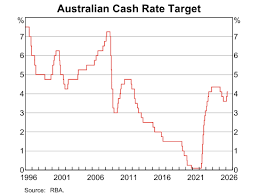
What has happened with the cash rate over the last 5 years?
From 0.75% in February 2020, the cash rate dropped to 0.25% by the end of March, where it stayed stable till October that year
From November 2020 to April 2022, the cash rate remained at 0.10%, before steadily increasing to 3.60% in March of the next year
At the end of 2023, the target reached 4.35%, the highest since November 2011, and around here till late 2024
Here, the rate receded slightly to 3.60%, before rising again from the start of this year, to 4.10%
What is meant by microeconomic policy?
Affects specific industries and markets through supply-side policies that enhance competitiveness, productivity, and efficiency.
These policies target aggregate supply (AS) to tackle structural issues and foster economic growth while managing inflation.
Government assistance improves productivity in targeted sectors, resulting in lower prices, greater consumer choice, and increased employment opportunities due to a rise in goods and services produced.
What are the four main microeconomic reforms?
Trade liberalisation, labour market reforms, market deregulation, national reform agenda
Describe trade liberalisation
Trade protection - in the form of tariffs, subsidies, quotas - where countries aim to protect their local industries from too many foreign imports, as this can overrun local industries
Tariffs - tax on imports that raise their price, making locally produce goods more attractive for purchase
Subsidies - grants given to local producers to help them lower their price and compete with imports
Quotas - limits on the number of goods allowed into Australia, meaning locally produced goods must be purchased when no imports are available
Embargo - a total ban on the import of a particular good or service
Trade liberalisation - aims to remove and/ or reduce protection. Without this protection, local businesses must compete on a level playing field, resulting in more product variety and lower prices for consumers, improving material living standards
However - industries where local businesses cannnot survive without protection will shut down, causing structural unemployment (skills mismatch). This has negative impacts on non-material living standards due to stress, financial pressures etc.
Firms → more competition from foregin imports, shutting down of local businesses, less supply/ production rates, higher cost to produce goods, increased productivity, may have to fund retrenchment packages for workers
Government → local industreis overrun by foreign competitors, weaker trade market/ profile, slower economic growth, loss of tariff revenue for government, however they need to spend less on subsidies
Describe labour market reform
Labour market - the market in which wage levels, working conditions such as hours of work, leave and terms of dismissal, are determined
Shifting from a cetnralised wage system (government set wages and increases for all), to a deregulated system of wages based on employees negotiating with employers individually, most of the negotiations collective
This means wage increases are linked to a worker’s ability to become more productive and thus ‘earn’ a higher pay rise, incentivising more productive work
Benefits both employer and employee - increased productivity means lower costs, increased competitiveness and higher wages. This can also increase employment and lead to improved material living standards
Non-material living standards may fall as increased productivity usually means more working hours and giving up leisure time
Describe market dergulation
The removal of unnecessary government controls, restrictions and supervision in various areas of the economy such as airlines and telecommunications with the aim of making them more independent and productive without government intervention
Lower cost inflation through lower prices due to competition between firms
Strong and sustainable EG through increased spending on goods due to lower prices (↑ demand)
better services due to lower prices (higher demand)
higher employment in long term as new businesses will open in markets previously blocked, creating new jobs
external stability through increased exports and less reliance on imports as locally produced goods become price competitive
Result - both material and non-material living standards will improve over time as the new competitors establish a share of the market
Describe national agenda reform
In 1995, as part of the National Competition Policy (NCP) refors, the ACCC (Australian Competition and Consumer Commission was establisehd to help prevent powerful companies from artificially raising prices to exploit consumers
Now enforces the Competition and Consumer Act 2010, under which a number of anti-competitive practices are illegal, including:
Price fixing → When firms collaborate to set common or similar prices that are higher than normal
Exclusive dealing → When companies refuse to supply their products or services to one or more firms
Collusive bidding → When competing firms that are submitting a tender or quote for the completion of works or to supply goods and services meet secretly beforehand to agree whose tender should be most attractive, cheapest and likely to win the contract
Predatory pricing → When dominant firms conduct a price war involving big cuts in selling prices with the intention of driving rival firms bankrupt, then later enjoying th emarket without competition
Market zoning → When competing firms in a region divide the market into zones, areas or regions within which they agree not ot compete with each other over prices, allowing them to abuse their power in their zones
What does the demand for a good refer to?
Quantity demanded → The quantity of a product that consumers are willing and able to purchase at a particular price at a given point in time
Demand → a full description of how thte quantity demanded changes as the price of a good changes
Define the law of demand
States that as the price of a good rises, the quantity demanded by consumers falls, and vice versa. There is an inverse relationship between price and quantity demanded. Essentially, the more expensive, the lower quantity demanded, and vice versa.
This is caused as consumers will want to consume more when a good is cheaper as they can buy more (more purchasing power of their incomes) and they feel they are getting more value for their money. When prices rise, the more expensive a good becomes thus the less a consumer can purchase and/or is willing to purchase the good.
What would cause demand to expand or contract along a demand curve?
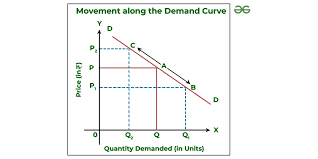
The downward sloping demand curve reflects the law of demand
Movement along the Demand curve is referred to as a contraction or expansion/ extension. It is caused by the change in the price of a good. NOTE: You CANNOT call this an increase or decrease
Demonstrate on a graph the effects of a price changes on demand
What are non-price factors that cause an increase and decrease in demand
Reasons for increases in demand | Reasons for decreases in demand |
|---|---|
A rise in consumer income → if consumers have higher incomes, they are able to buy more | A fall in consumer income → if consumers have lower incomes, this will reduce the amount they can buy |
An increase in the size of the poulation → the number of people wanting to purchase a product increases | Changes in consumer tastes and preferences → a product may fall out of fashion |
Prices are expected to rise in the future → if people think the prices of a product will be higher in the future, they will buy more now | A substitute good becomes cheaper → if prices of a substitute good decrease, consumers are more likely to purchase that |
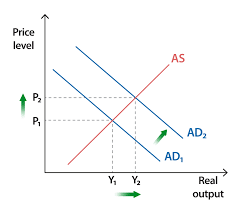
Demonstrate on a graph the effects of an increase and decrease in demand
E.g. If the price of fuel increases, there will be less fuel demanded. This results in a contraction in the quantity demanded. If the price of fuel decreases, there will be more fuel demanded. This results in an expansion in the quantity demanded
Increases in demand shift the curve to the right, shifting equilibrium, leading to an increase in price and quantity
Decreases in demand shift the curve to the left, shifting equilibirum, leading to a decrease in price and quantity
What does the supply of a good refer to?
Quantity supplied → the quantity of a good or service that businesses are willing and able to offer for sale at a given price, at a given point in time.
Supply → a full description of how the quantity supplied of a commodity responds to changes in its price
What is the law of supply?
States that as the price of a good rises, the quantity supplied by firms rises, and vice versa. There is a direct relationship between price and quantity supplied.
This is caused because, when prices rise, firms will want to produce more of the good so that they can increase their profits. When prices fall, it becomes less profitable to produce the good and so they will reduce production (supply) and shift their resources in making other goods that are relatively more profitable
What causes movement along the supply curve?
The upward sloping supply curve reflects the law of supply
Movement along the curve is reffered to as a contraction or expansion. It is caused by a change in price of a good or service
What causes shifts in the supply curve?
Reasons for increases in supply | Reasons for decreases in supply |
|---|---|
Increased efficiency → if farmers develop new technology, this may allow them to increase the amount of produce | Decreased efficiency → a drought or extreme weather could decrease efficiency |
A fall in the cost of production → if the wages of workers falls, farmers can employ more people and increase output | An increase in the cost of production → if the cost of car parts increase, they may not be able to produce as many cars |
Improved climactic conditions → increased rainfall would increase the harvest of farms | Unfavourable climactic conditions → a drought may reduce the amount farmers grow |
An increase in the number of suppliers → more people may start farms because they hear that blueberries are a superfood | A decrease in the number of suppliers → strict regulation or increased cost of production, may drive firms out of business |
E.g. the supply curve will shift right if: raw materials or labour becomes cheaper, technology becomes more efficient, and/ or the number of sellers increases
If the price of a smartphone increases, there will be more supplied, resultign in an expansion in the quantity supplied. However, if the price decreases, there will be less produced, resulting in a contraction in the quantity supplied.
Increase in supply shift the curve to the right, leading to a decrease in price and increase in quantity
Decrease in supply shifts the curve to the left, leading to an increase in price adn decrease in quantity
What is the relationship between demand and supply?
Market equilibrium - The situation where, at a certain price level, the quantity supplied and the quantity demanded of a particular good are equal. There is no excess demand or supply, at which buyers and sellers agree on a price and exchange the good or service for money.
On a graph, it is where the supply curve and demand curve intersect
What is the price mechanism?
Price mechanism → the process by which the forces of supply and demand interact to determine the market price at which goods and services are sold and the quantity produced.
What are the effects of excess supply?
When the price is higher than the equilibrium price, this results in a situation of excess supply
The price mechanism will cause firms to reduce prices to sell excess stock of the product
As prices fall, the law of demand means that more customers are willing and able to buy as they are now becoming cheaper → expansion in demand
According to the law of supply, the fall in prices will cause agricultural sectors to produce less as they are no longer as profitable → contraction in supply
This will continue to occur until market equlibrium is reached
What are the effects of excess demand?
When the price is lower than the equilibrium price, this results in a situation of excess demand
The price mechanism will cause consumers to compete for available houses and this competition will push prices up
As prices rise, the law of supply means that more houses will be built as they are now more profitable → espansion in supply
According to the law of demand, the rise in prices also means that some consumers cannot afford the houses as they are more expensive, meaning less consumers are willing and able to buy the houses as the higher prices → contraction in demand
This will continue to occur until market equilibrium is reached