BIO 114 Final Sean Ryan
 Call Kai
 Learn
Learn Practice Test
 Spaced Repetition
 Match
Match Flashcards
 Knowt Play
1/41

There's no tags or description
Looks like no tags are added yet.
Name | Mastery | Learn | Test | Matching | Spaced | Call with Kai |
|---|
No analytics yet
Send a link to your students to track their progress
42 Terms
Coastal Scrub
Dominates coast from Oregon to Baja California, 2.5% of California, soft-stemmed 1-2m tall
deciduous
A plant that sheds its leaves during a particular season
Types of Coastal Scrub
Northern, Southern (where we are), Southern Semidesert, Sea Bluff
Southern Coastal scrub
-Mostly from San Francisco Bay area southward
-Sometimes intergrading with northern coastal scrub from San Luis Obispo County northward
-Occupies dry areas, often aromatic
-Shallow soils that generally hold little moisture in summer
-has drought deciduous plants, mostly flower in spring but can flower in summer/autumn
Dominated by salvia and artemesia sages
Mediterranean Climate
Western Cali, Mediterranean sea, South Africa, Southwest Australia
Oaks
-500 species all ver the world
-Acorn: single seed, indehiscent
-wind pollenated, catkins (inflorescence)
-some are over 1000 years old
-extremely dense and valuable wood
-Cali has 21 native species (10 tree, 11 shrub, mostly endemic), 34 total
Oak woodlands
-Covers 10% of Cali
-Dominated by trees 15-70 ft tall
Acorn diet
-Once was 3/4 of Native diet
-Crushed with mortars
-18% fat, 6% protein, 68% carbs
-High vitamin A and C
Oaks are dying
-Increased herbivore predation
-Seedlings eaten by cattle/trampled
-Increased competition with non-native grasses
-Climate change
Seedless vascular plants
Horsetails, ferns, lycophytes
Sorus
cluster of sporangia on the underside of a fern frond
Sporangia
multicellular organs that produce haploid spores
gametophyte
Haploid, or gamete-producing, phase of a fern
Gymnosperms
Came after seedless plants but before angiosperms
-Cycads, Gnetophytes, Conifers, and Ginkgo
-make exposed seeds
Cycads
Gymnosperms that grow in the tropics
-All endangered
-All dioecious
-large cones (strobili)
-Beetle pollination
Ginkgo
a gymnosperm with fan-shaped leaves, dioecious
Conifers
Most abundant gymnosperm, has tallest, oldest, and biggest trees in the world
Pine family
• 11 genera, 232 species
• Mostly in the Northern Hemisphere
• 5 genera, 33 species in California
• Many important forest trees
Pinus spp
Evergreen, has needles in fascicles
Pine reproduction
• mostly monoecious
• male cones form gametophytes - pollen grains - sperm
• female pine cones form ovules - megaspore - gametophyte - egg
Pine cones
Modified stem with leaves and branches
-cone scale is a modified branch
-cone bract is a modified leaf
Female pine cones
Bigger than male cones, mature in 2 years, cone scales persistent and woody
Pine seeds
2 leaves per scale
Oldest tree
bristlecone pine (5064 years old)
Tallest tree
coast redwood (115.72m)
Coast redwood
Cali state tree
-Most commercially available softwood
-Tallest trees on earth
-Occupy fog belt
-Live below 2500 feet
2 California Redwoods
Giant sequoia and coastal redwood
Chaparral communities
Covers 9% of California
-Occurs from coast to high elevations of interior mountains
-Often have evergreen shrubs
-Mature chaparral lacks an herbacious understory
-Very fire prone but fires cause regeneration and are important for many chaparral species
Chaparral plant characteristics
-Thick cuticle for water resistance
-Leaves dont wilt during drought
Chaparral soil characteristics
-Low in nutrients
-Rocky or sandy
Lignotubers
Woody underground stems that contain dormant buds from which new growth can occur after a fire
Grasslands
Cover 13% of california
-valleys are too dry for grasslands but can occur anywhere with a little more moisture
Grass Vegetative Characteristics
- Herbaceous
-Linear, simple leaves with parallel venation
-Alternate distichous leaf arrangement
-Base of each leaf forms a sheath that wraps around the stem
-Stems (culms) are hollow between solid nodes
-Many species make rhizomes
Distichous leaf arrangement
Leaf arrangement is opposite from each other
Grass flowers
-Wind pollinated
-Have 2 bracts and a flower
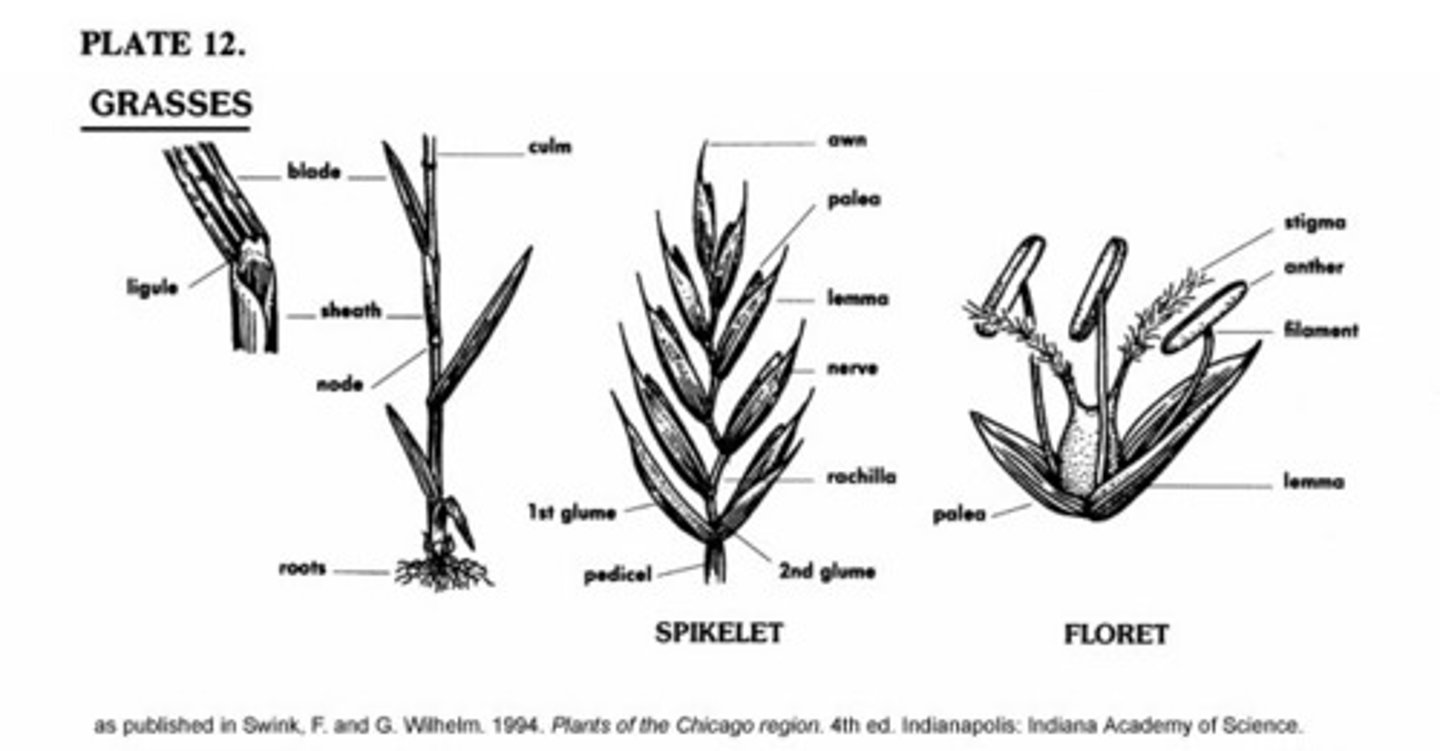
Grass bracts
lemma and palea
Lodicules
Scale-like structures in a grass flower that swell and force open the surrounding structures to facilitate pollination.
Awn
Bristle on the end of a grass flower
Grass fruit
bran = pericarp + seed coat
germ = embryo
Grassland grazing
-Amount of California grassland habitat left is 36%
-1% is native
Native grasses
perennial bunch grasses like stipa pulchra
Vernal pools
pools that form in spring then dry up, as they dry they cause zonation of different species where water was available