Forensic Palynology: Pollen and Spores in Criminal Investigations
 Call Kai
 Learn
Learn Practice Test
 Spaced Repetition
 Match
Match Flashcards
 Knowt Play
1/23

There's no tags or description
Looks like no tags are added yet.
Name | Mastery | Learn | Test | Matching | Spaced | Call with Kai |
|---|
No analytics yet
Send a link to your students to track their progress
24 Terms
What is forensic palynology?
The application of pollen and spores in solving criminal and legal issues.
What size range do pollen and spores typically fall within?
5-500 micrometres.
What do pollen grains produce?
Gametophytes that produce male gametes.
Where are pollen grains produced in angiosperms?
In the stamen.
Where are pollen grains produced in gymnosperms?
In cones.
What types of plants produce spores?
Vascular plants (ferns) and bryophytes (mosses).
How many plant species produce pollen?
Over 320,000 species.
What are the three main types of pollination?
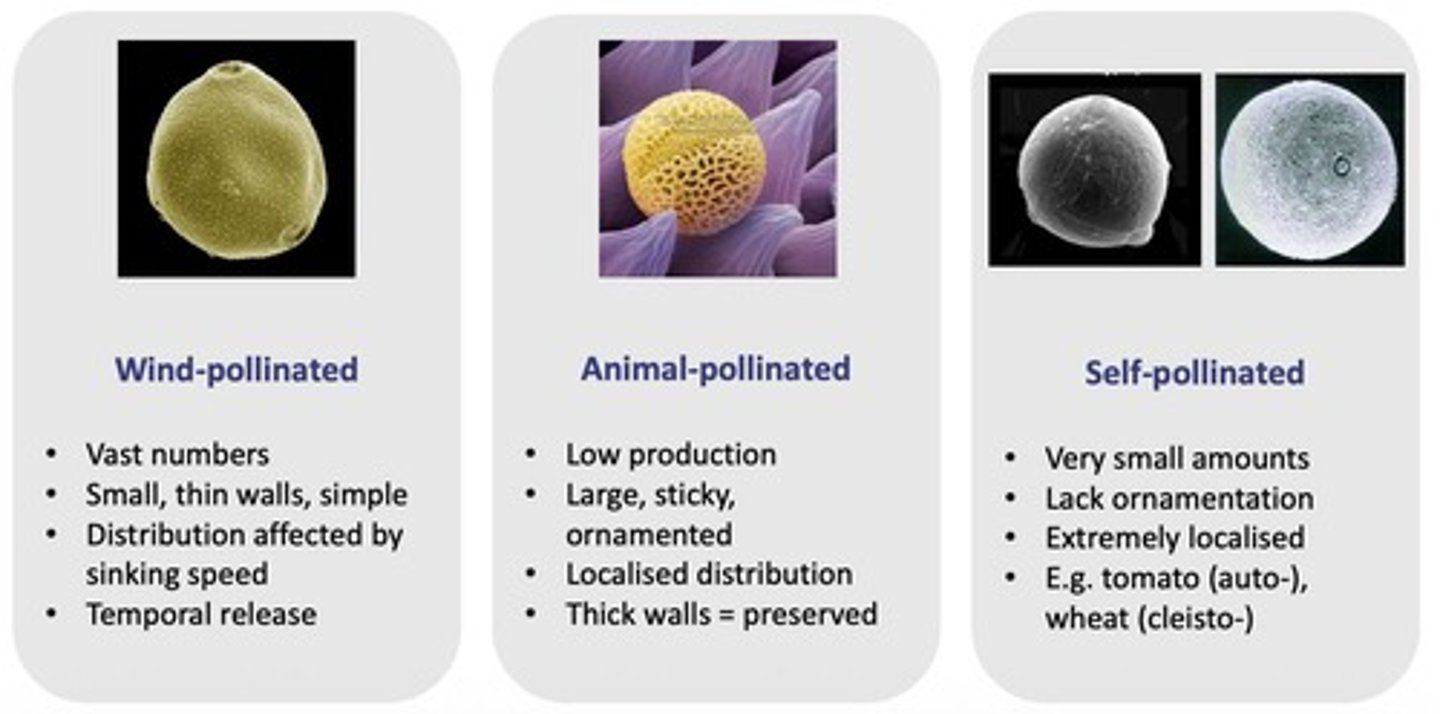
Wind-pollinated (anemophilous), animal-pollinated (zoogamous), and self-pollinated (autogamous).
What is the outer layer of a pollen grain called?
Exine.
What features of pollen are useful for identification?
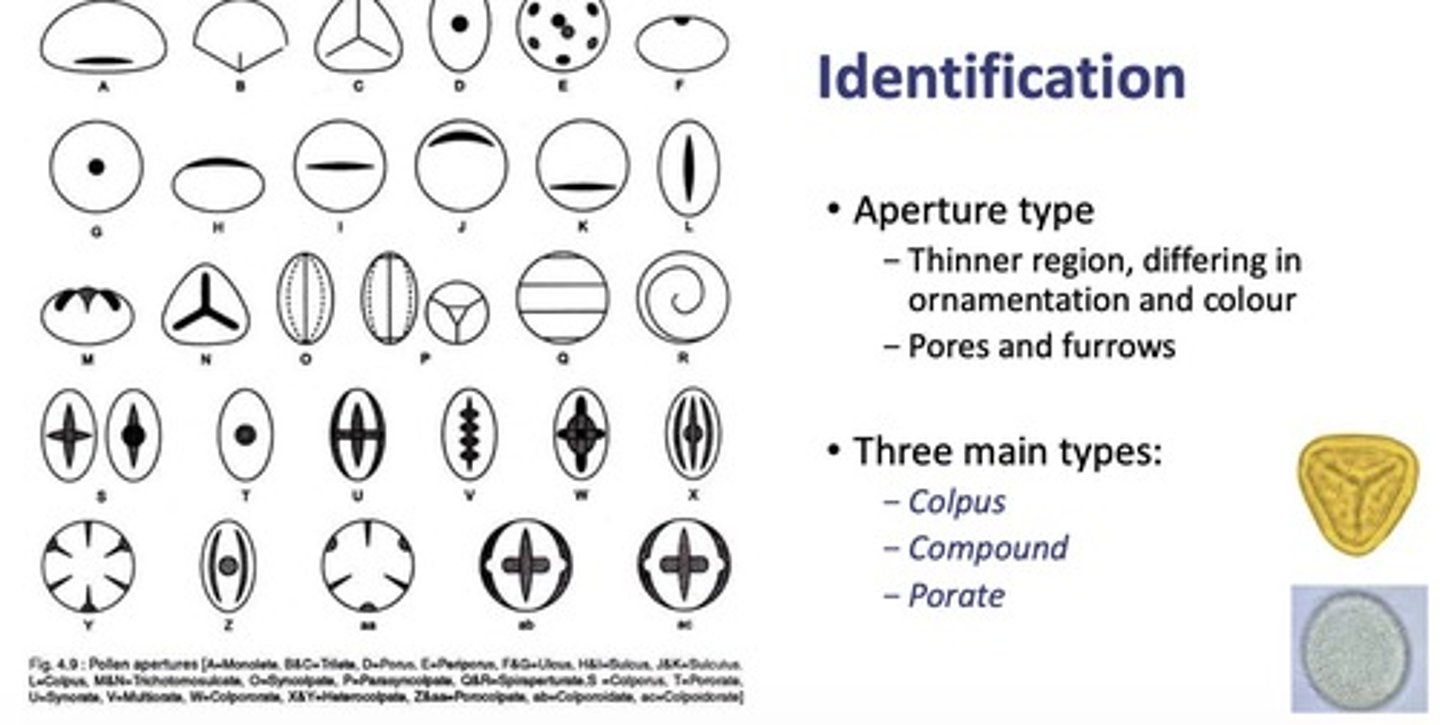
Size, shape, aperture number and type, general pattern/texture, symmetry, and polarity.
What forensic applications does pollen analysis have?
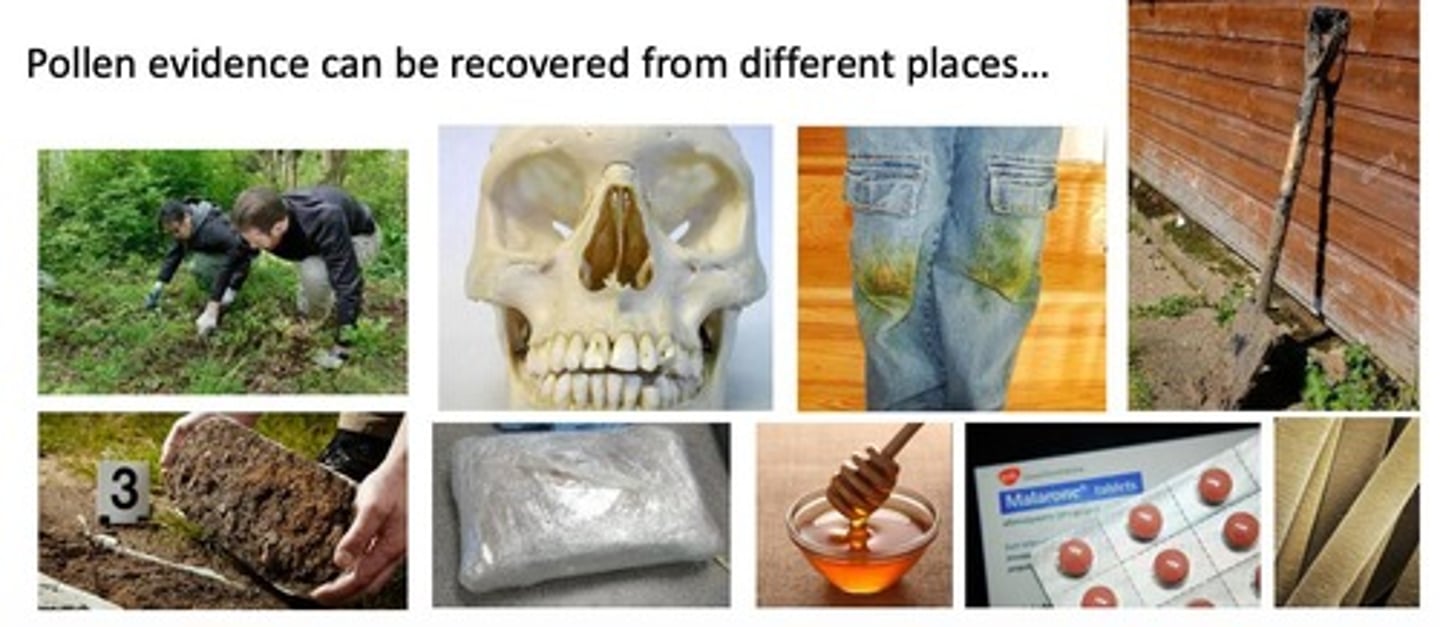
It can provide information on environmental sources, generate or limit lines of enquiry, and link suspects to items or scenes.
When was pollen evidence first used in forensic analysis?
In 1969.
What are the limitations of pollen analysis in forensic investigations?
Potential contamination, low taxonomic resolution, and often not being an investigative priority.
What can pollen analysis reveal about the circumstances surrounding death?
It can indicate the season of death and other environmental factors.
What is an example of a forensic case involving pollen analysis?
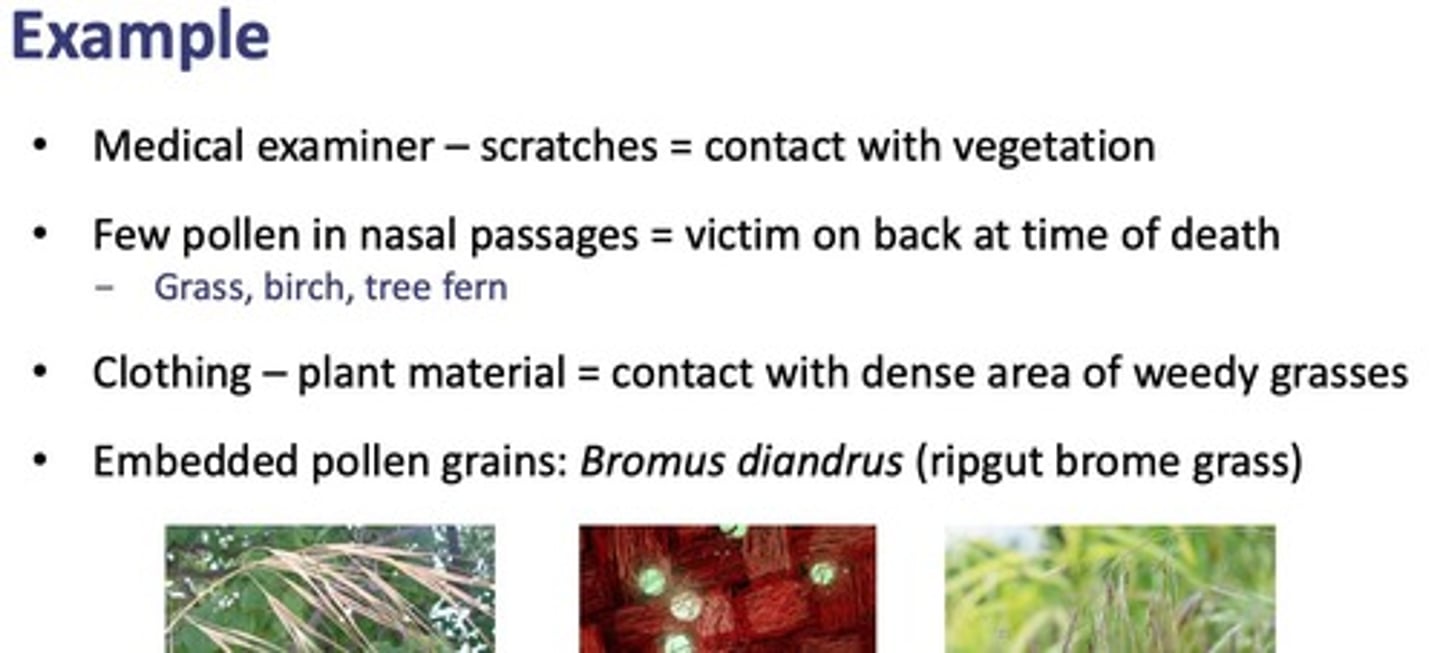
The identification of Bella Bond through pollen recovered from clothing.
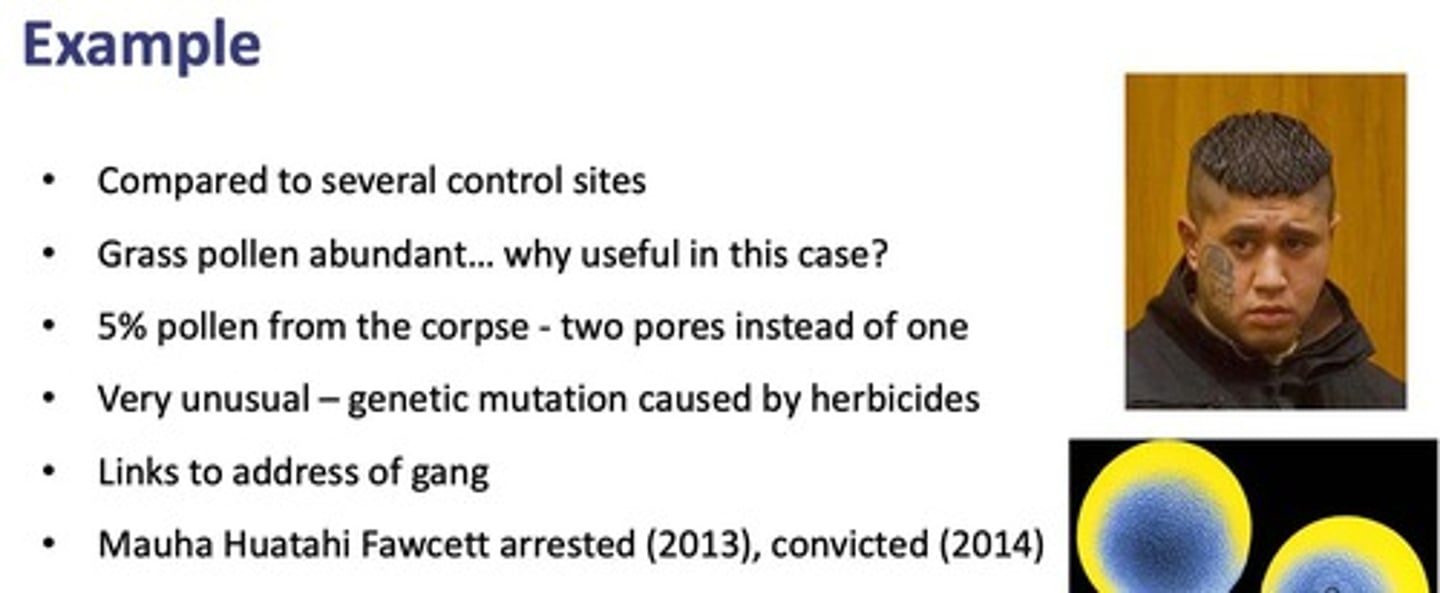
What does the concept 'Every contact leaves a trace' imply in forensic palynology?
It establishes links between people and places through trace evidence.
What are the advantages of using pollen in forensic investigations?
Its small size, diversity, abundance, resistance to decay, and established techniques.
What challenges are associated with pollen analysis?
Time-consuming analysis and the need for expert knowledge.
What is pollen tenacity?
The ability of pollen to transfer and persist in the environment.
How can pollen analysis assist in product authenticity investigations?
It can determine if products are genuine or falsified, such as in counterfeit medicines.
What is the significance of pollen in environmental profiling?
It helps understand local biases and environmental conditions related to a crime scene.
What is the role of pollen in tracing cannabis origins?
Pollen analysis can identify whether cannabis was grown indoors or outdoors based on contamination.
What forensic considerations must be taken into account regarding pollen?
Temporal and spatial variations in pollen production and dispersal.
What is a potential outcome of pollen analysis in a forensic investigation?
It can generate leads to prove or disprove alibis and exclude suspects.