psych 105 chp 16: treatment of psychological disorders
 Call Kai
 Learn
Learn Practice Test
 Spaced Repetition
 Match
Match Flashcards
 Knowt Play
1/50

Earn XP
Description and Tags
biological and psychological treatment, and treatment effectiveness
Name | Mastery | Learn | Test | Matching | Spaced | Call with Kai |
|---|
No analytics yet
Send a link to your students to track their progress
51 Terms
anti anxiety meds
Drugs that help reduce a person’s experience of fear or anxiety
Work by facilitating GABA action
Withdrawal from anti anxiety meds
symptoms of anxiety
heart palpitations, insomnia
not supposed to quit cold turkey
Most common antianxiety medications are
benzodiazepines
ex: Diazepam (Valium), lorazepam (Ativan), and alprazolam (Xanax)
what are Antidepressants and how do they work
help lift mood
act on neurotransmitters such as serotonin, dopamine, and norepinephrine by inhibiting their breakdown and blocking reuptake
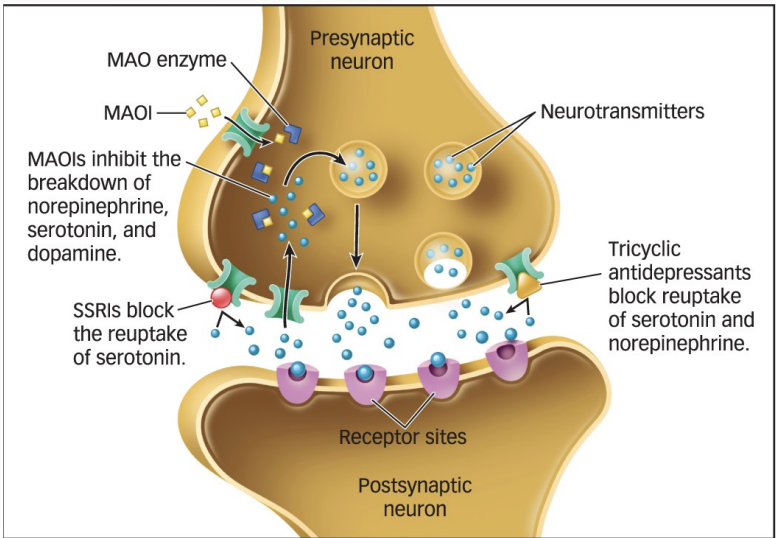
SSRI and SNRI
most common used antidepressants used today
Selective serotonin reuptake inhibitors (SSRI)
Serotonin and norepinephrine reuptake inhibitor (SNR
what is bipolar treated with
mood stabilizers
lithium and valporate
dont recommend antidepressants bc only treat depression not mania
phototherapy
repeated exposure to bright light
used for people w SAD depression
omega 3
some studied suggest it can lower depression and suicide rates
effects of medication and therapy in brain
decrease lvl of amygdala activity (stress area)
Electroconvulsive therapy (ECT)
Sometimes used to treat severe mental disorders that do not respond to psychological treatment or medication
Treatment involves inducing a mild seizure by delivering an electrical shock to the brain.
May be used to treat severe depression and/or mania
Transcranial magnetic stimulation (TMS)
placing a powerful pulsed magnet over a person’s scalp, which alters neuronal activity in the brain
used to treat depression.
more effective than ECT and less side effects
Psychosurgery and example
Involves surgical destruction of specific brain areas to treat severe and unresponsive psychological disorders; rarely used today
Cingulotomy
Ex: Severe cases of OCD; involves very precise destruction of brain tissue to disrupt the brain circuits known to be involved in generating obsession
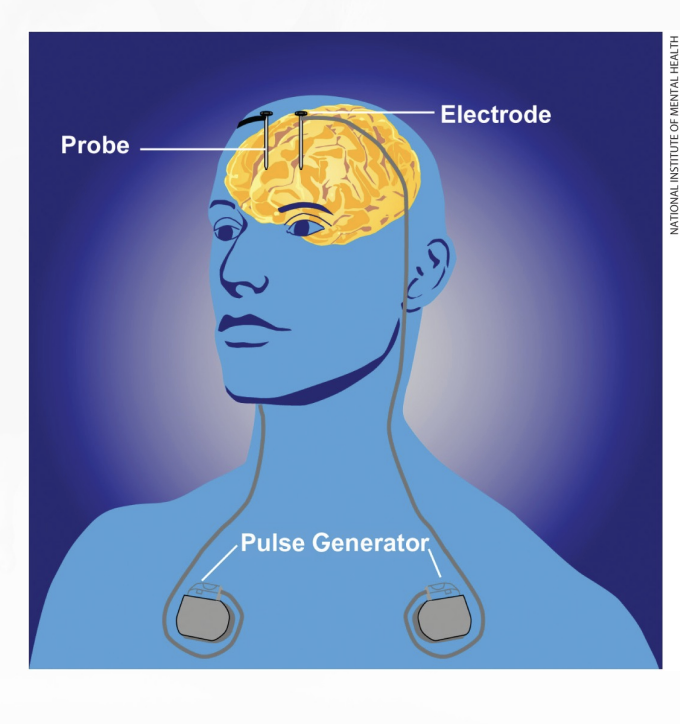
Deep brain stimulation (DBS)
insertion of battery-powered electrodes that deliver electrical pulses to specific brain areas believed to be causing a person’s mental disorder
how many canadians suffer from mental disorders at some point in their life
1 in 5
potential illusion of treatment
natural improvement
placebo effects
reconstructive memory
natural improvement
Tendency of symptoms to return to their mean or average level
placebo effect
Inert substance or procedure that has been applied with the expectation that a healing response will be produced
reconstructive memory
client’s motivation to get well causes errors in memory for the original symptoms
treatment outcome studies
evaluate whether treatment works (often in comparison to another treatment or control condition)
Hans eysenck
latrogenic illness
Disorder or symptom that occurs as a result of a medical or psychotherapeutic treatment itself
dangers of psychotherapy are subtle
treatments and ethnicity
Treatments that are effective in research studies (which often include only a small percentage of ethnic minority patients) have been found to work equally well with people of different ethnicities
personal and social costs
significant impairments in the person’s ability to carry out daily activities
financial costs
inability to hold employment or poor job performance and cost of treatment can create large personal and societal burdens.
who can get treatment
only about ½ of ppl w depression get adequate care
1/3 get treatment for general mental health
¾ Canadian children do not get access to care
why do some people not get treatment
don’t know they have a treatable disorder
barriers like beliefs and circumstances
structural barriers
psychologists and others are not publically funded and private coverage only for people w good employment
psychological treatment
people interact w clinicians
environment used to change client’s brain and behaviour
biological treatment
brain treated w drugs, surgery, or other direct intervention
psychotherapy
Interaction between a socially sanctioned clinician and someone suffering from a psychological problem
Goal: Provide support or relief from problem
Eclectic psychotherapy
Involves drawing on techniques from different forms of therapy
Therapy form depends on client and problem.
Psychodynamic psychotherapies
Explore childhood events and encourage individuals to use this understanding to develop insight into their psychological problems
Psychoanalysis
Assumes that humans are born with aggressive and sexual urges that are repressed during childhood by use of defense mechanisms
client to understand the unconscious in a process called developing insight
Limited evidence for effectiveness
what is Interpersonal psychotherapy (IPT) and the treatment focus
psychotherapy that focuses on helping clients improve current relationships
effective for depression and anxiety
focus: Interpersonal functioning, believing symptoms will subside as interpersonal relations improve.
ex: Grief, role disputes, role transitions, interpersonal deficits
humanistic and existential therapies think
psychological problems stem from feelings of alienation and loneliness
humanistic approach of therapy
feelings can be traced to failure to reach one’s potential
client centered therapy
existential approach to therapy
Feelings stem from failure to find meaning in life
Gestalt therapy
Person-centred therapy (or client-centred therapy)
Form of psychotherapy that assumes all individuals tend to growth
Therapist qualities: congruence, empathy, unconditional positive regard
Gestalt therapy
help the client become aware of thoughts, behaviours, experiences, and feelings and owning or take responsibility for them
technique: empty chair, feelings into actions
Behaviour therapy
Involves changing maladaptive behaviour patterns
Assumes that disordered behaviour is learned
symptom relief is achieved through changing maladaptive behaviours into more constructive behaviours
how to eliminate unwanted behaviour
operant conditioning:
how to promote desired behaviour
token economy:
how to reduce unwanted emotional responses
exposure therapy:
cognitive therapy
Helps a client identify and correct any distorted thinking about self, others, or the world
Cognitive restructuring
teaches clients to question the automatic beliefs, assumptions, and predictions that often lead to negative thinking with more realistic and positive beliefs
Mindfulness meditation
Teaches an individual to be fully present in each moment; to be aware of their thoughts, feelings, and sensations; and to detect symptoms before they become a problem
Cognitive-behavioural therapy (CBT)
Blend of cognitive and behavioural therapeutic strategies
Problem-focused
Action-oriented
Encourages transparency between therapist and client
Self-help and support groups
Involve discussion or Internet chat groups that focus on a particular disorder or difficult life experience
Groups are often run by peers who have struggled with the same issues
cost effective
can also encourage counter therapeutic behaviours
Kazdin and Blase
time for a rebooting of psychotherapy research and practice
update patient treatment passports w technology
Online conferencing apps; remote treatment
Facebook; group-based CBT
YouTube; DBT
how do drugs work
target specific neurotransmitters for desire effects
antipsychotic meds and first drug
used to treat schizophrenia and related psychotic disorders
first was chlorpromazine
how do antipsychotics work and how well
Block dopamine receptors in certain parts of the brain, such as the mesolimbic pathway
Work well for positive symptoms, but not negative ones that require increase in dopamine at synapse