Week 12: GI Tract Regulation
 Call Kai
 Learn
Learn Practice Test
 Spaced Repetition
 Match
Match Flashcards
 Knowt Play
1/16

There's no tags or description
Looks like no tags are added yet.
Name | Mastery | Learn | Test | Matching | Spaced | Call with Kai |
|---|
No analytics yet
Send a link to your students to track their progress
17 Terms
Volume & Luminal contents
The contents and volume of the GI tract can trigger neural or hormonal regulation
Neural regulation — Enteric nervous system
Submucosal plexus – primarily influences secretory activity
Myenteric plexus – primarily influences motility
Can cause responses WITHOUT influence from the CNS.
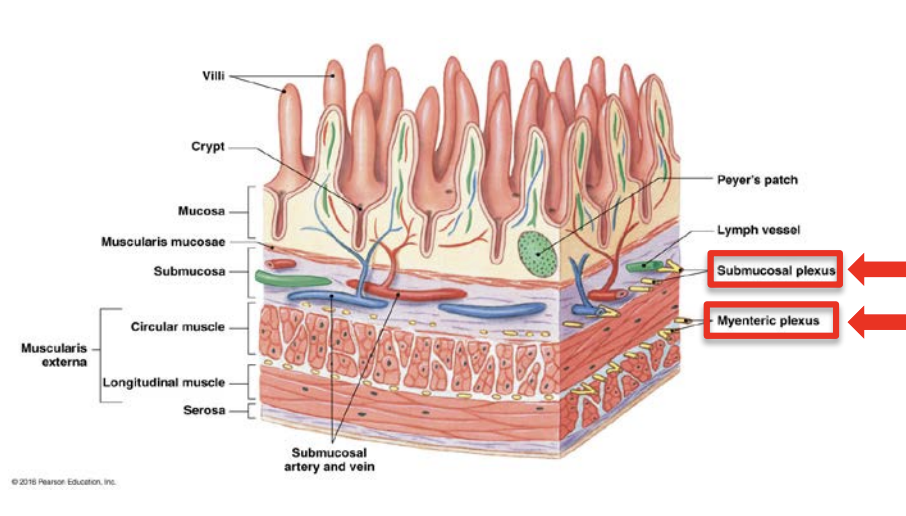
Neural regulation — short vs long reflexes
Short reflex: Reflex takes a short period of time to take effect — goes to enteric nervous system
Long reflex: Reflex takes a long period of time to take effect — goes to CNS (parasympathetic/sympathetic nervous system — autonomic)
Hormonal regulation
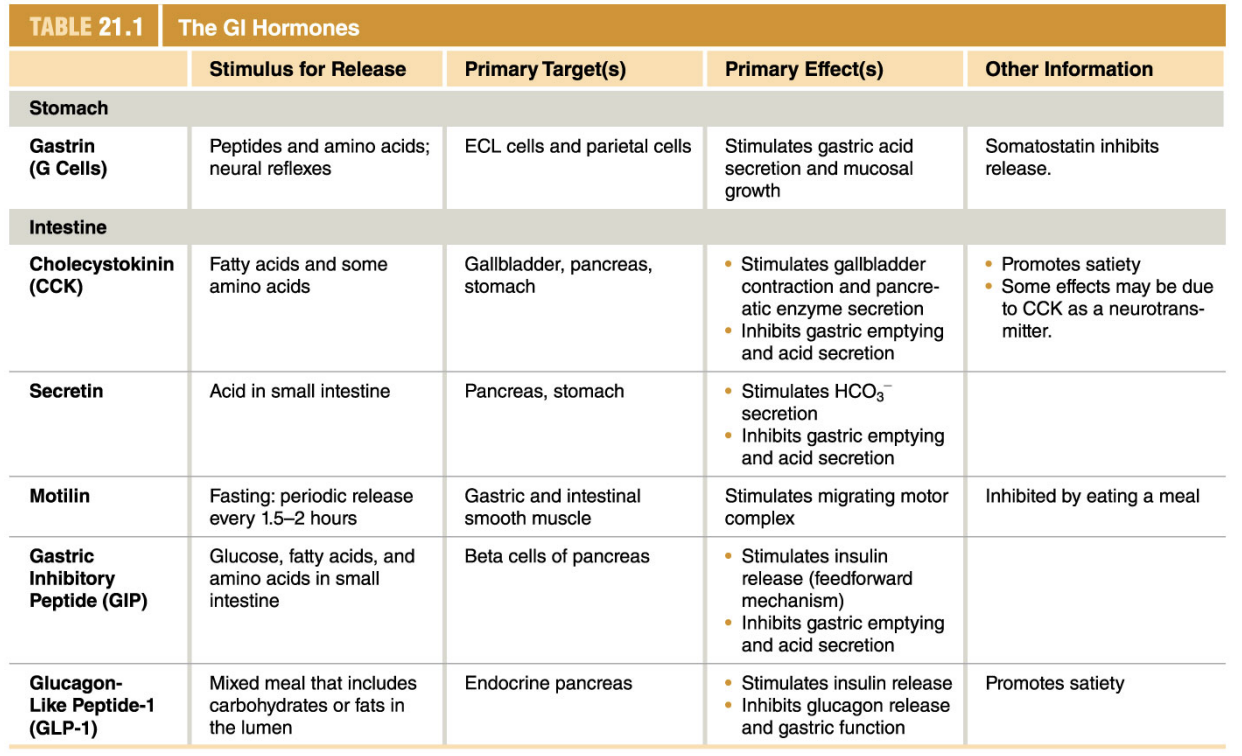
Hormonal regulation: Gastrin
Produced by G cells
Stimulatory effects.
Stimulates parietal cells & ECL cells — influences release of gastric acid & histamine
Hormonal regulation: Somatostatin
Does opposite of gastrin
Inhibits:
Inhibits parietal cells (↓ acid production)
Inhibits ECL cells (↓ histamine = ↓ acid)
Inhibits G cells (↓ gastrin = ↓ acid)
Prevents excessive acidity of the stomach
Hormonal regulation: CCK
Released in the small intestine, stimulated when chyme enters the small intestine:
Targets:
Gallbladder (releases bile)
Pancreas (secretes digestive enzymes)
Stomach (↓ gastric emptying/secretion)
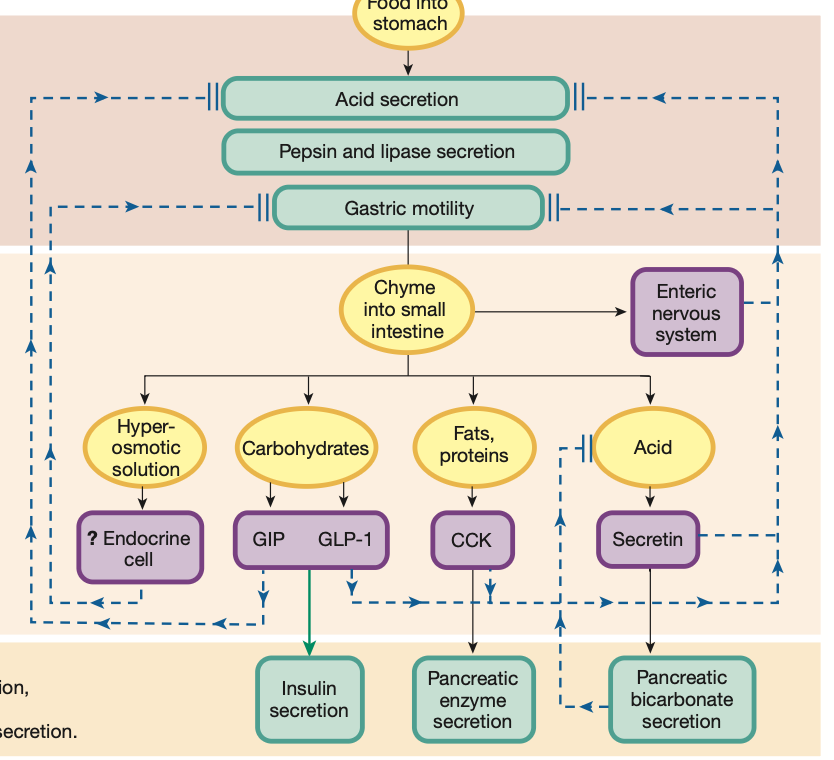
Hormonal regulation: Secretin
Stimulates bicarbonate release into the small intestine
Helps neutralise acids in the pancreas
Targets:
Pancreas (secretes HCO3 - )
Stomach (↓ gastric emptying/secretion)
Hormonal regulation: Motilin
Acts when no food is in the stomach.
Triggers the change from segmentation to MMC (peristaltic) contractions to clear up the intestines.
Hormonal regulation: GLP-1 & GIP
Stimulus:
Nutrients (particularly carbs) in duodenum
Targets:
Endocrine pancreas (‘feed-forward’ stimulation of insulin release)
Stomach (↓ gastric emptying/secretion)
Control nutrients coming from stomach and get body ready to deal with imminent surge in blood glucose, etc.
3 Phases of the GI system
Cephalic phase - Sight, smell, taste, thought of food, emotional state
Gastric phase - Distension, ↓/↑ acidity, peptides & amino acids in stomach
Intestinal phase - Distension, ↑ acidity, ↑ osmolarity, nutrients in duodenum
Can occur SIMULTANEOUSLY
Liver
Portal tried — Present in the converging corners of every hexagonal liver lobule
Contains:
Hepatic artery
Hepatic vein - Comes from GI system, with all nutrients
Converges into the central vein, filtered blood that will go to the heart
Bile duct — travels in opposing flow direction of hepatic vein
Pancreas hormones: Insulin & Glucagon
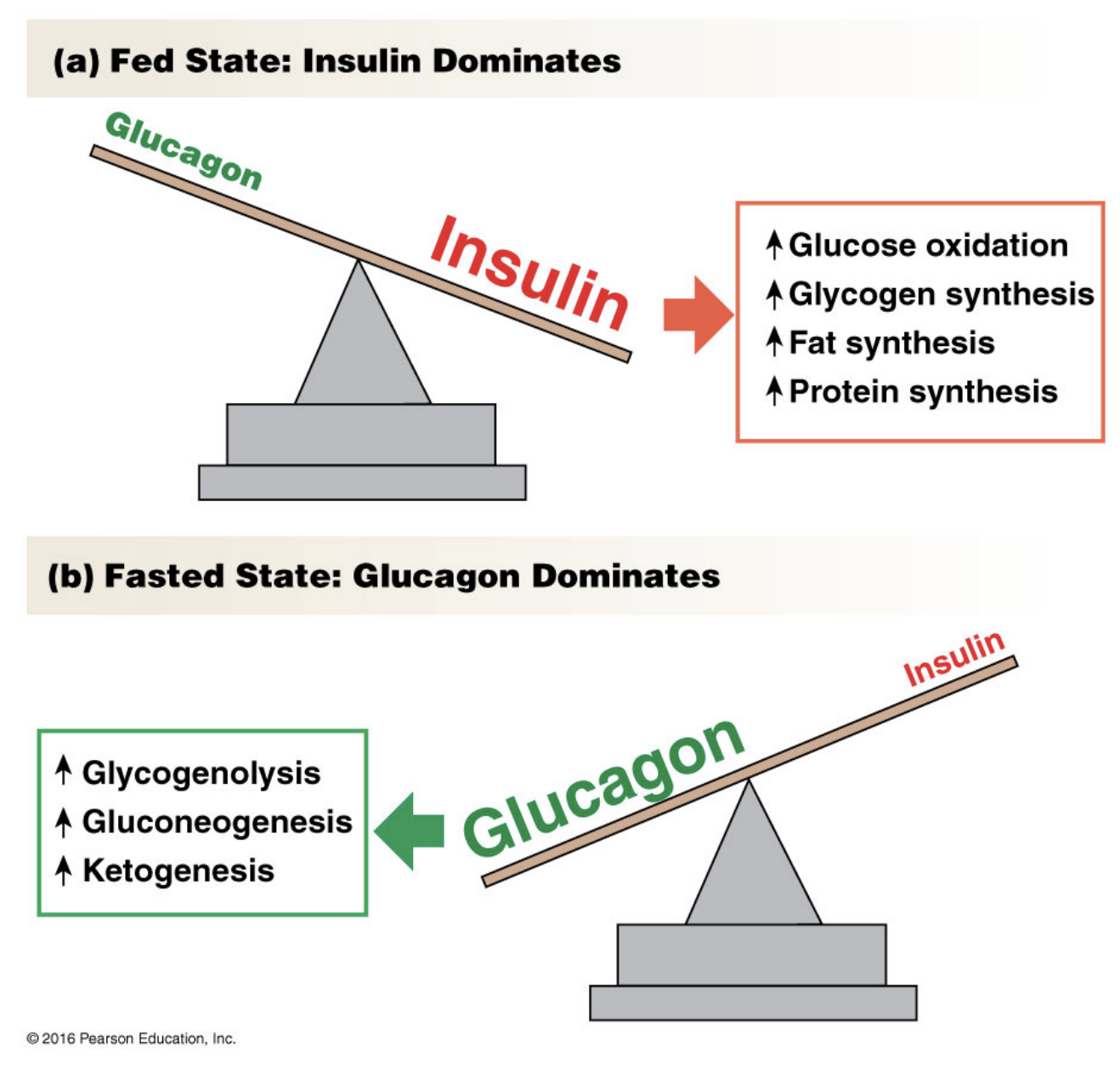
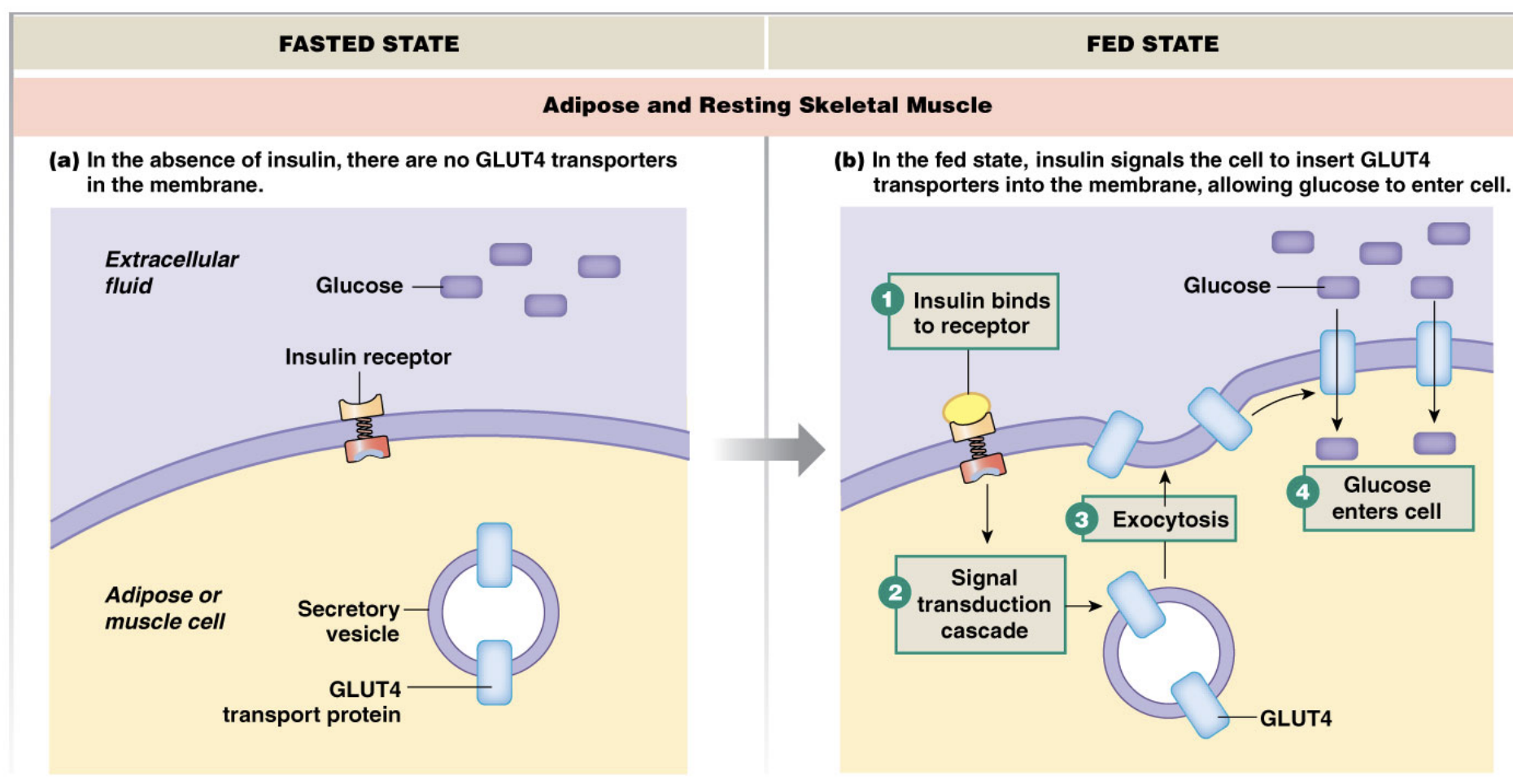
Pancreas hormones: Insulin
2 cellular responses:
Increase in glucose uptake by cells
Increase in cellular metabolism
GLUCOSE UPTAKE INTO CELLS
Pancreas hormones: Glucagon
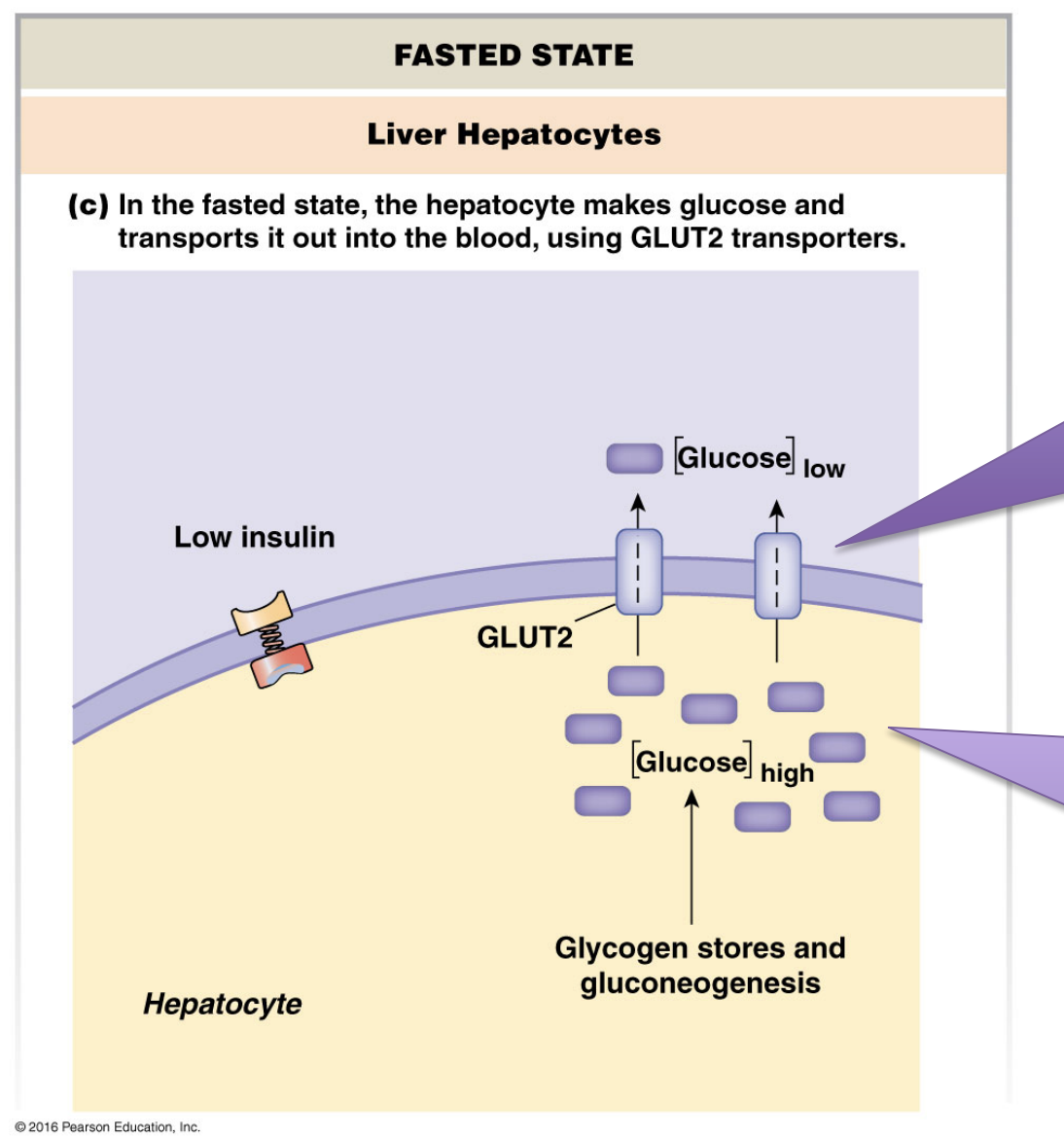
GLUCOSE CREATION AND RELEASE OUT OF CELLS AND INTO EXTRACELLULAR FLUID
diffuse DOWN the concentration gradient out of the cell via constant GLUT2 channel proteins in liver cells
Type 1 Diabetes
Autoimmune — Body attacks pancreas beta cells
Pancrease cannot produce insulin
Blood glucose cannot be uptaken
Type 2 Diabetes
Insulin can be produced. however body cells are LESS responsive to insulin.