PSY393 Exam Study
 Call Kai
 Learn
Learn Practice Test
 Spaced Repetition
 Match
Match Flashcards
 Knowt Play
1/257

Earn XP
Description and Tags
trying to find my will to live
Name | Mastery | Learn | Test | Matching | Spaced | Call with Kai |
|---|
No analytics yet
Send a link to your students to track their progress
258 Terms
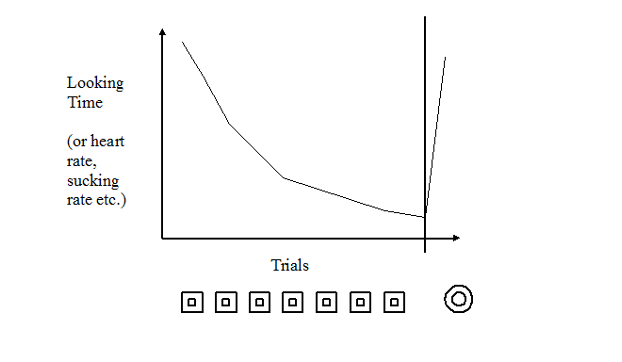
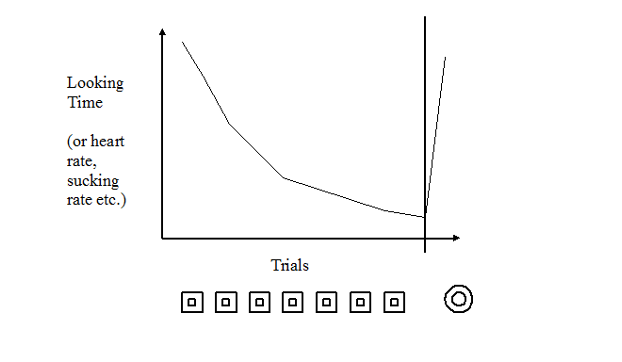
Key Term: Habituation
A method for studying cognitive development in infants: A baby’s behavioural or emotional response to a specific stimulus decreases after repeated or prolonged exposure.
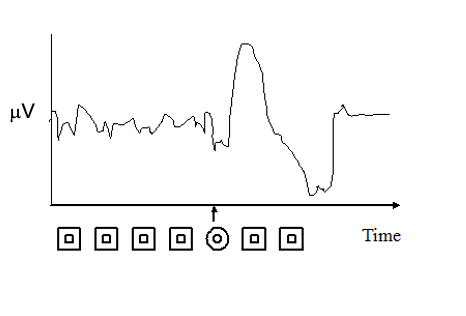
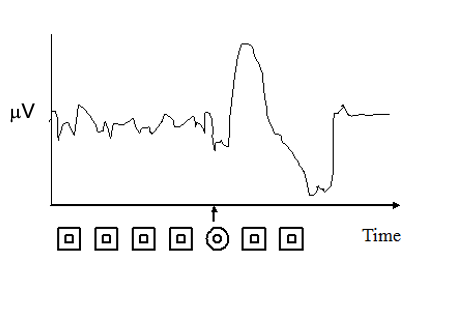
Key Term: Evoked potential
A method for studying cognitive development in infants: Cortical change in electrical potential produced in response to stimulus
Key Term: Operant conditioning
A method for studying cognitive development in infants: Infant is conditioned to make response to stimulus . E.g. turn head to left when you see red triangle, does response generalise? to green triangle? red circle?
Key Term: Rapport
Used in standardised tests in early childhood cognitive development studies. Refers to the positive, trusting relationship established between the tester and the child, essential for effective communication and accurate assessment during testing.
Methods of studying cognitive development in infancy
Spontaneous behaviour, Preferential looking, Habituation & recovery, Evoked potentials, Operant conditioning
Preferential looking in methods to studying infants
Infants presented with 2 stimuli, side by side. Measure time spent looking at each. The idea is that if they prefer one stimulus over another, it indicates their ability to differentiate between them.
Habituation and recovery in methods to studying infants
Infants are repeatedly shown a stimulus until their interest decreases. After introducing a new stimulus, if the infant shows renewed interest, it indicates the ability to differentiate between the two.
Evoked potentials in methods to studying infants.
Involve measuring cortical change in electrical potential produced in response to stimulus. By analysing these brain responses, researchers can assess infants' cognitive processing and perceptual abilities. This method can help determine how infants perceive and interpret different stimuli based on their neural responses, indicating levels of attention and recognition.
Operant conditioning in methods to studying infants
Involves reinforcing infant responses to stimuli through rewards or consequences. By analysing the changes in behaviour in response to different stimuli, researchers can gauge infants' learning capabilities and understanding of cause-and-effect relationships.
What are the major considerations when designing a psychological measure for use with very young children?
Simple verbal or motor responses e.g. point to doll, how many eyes does teddy have, individual testing, rapport building, warm-up practice items, limited attention span.
What problems do developmental psychologists face when they wish to compare the cognitive abilities of different age groups?
Age-related differences in cognitive processes and challenges in creating equivalent measures across age groups. Infants, young children and older childhood/adults all use different methods to study their cognitive abilities due to differences in abilities. This makes it harder to directly compare results across different age groups.
Methods of studying cognitive development in early childhood
Stories & Games + Standardised tests
Methods of studying cogntive development in later childhood onwards
Standardised tests (pencil/paper, group test) + Computerised tasks
Key Term: Perception
The interpretation of sensory information, the process of endowing sensory experience with meaning. Within one sensory modality e.g. vision or cross-modality e.g. vision + audition.
Key Term: Cognition
Beyond direct processing of sensory information. The mental processes involved in gaining knowledge and comprehension, including thinking, knowing, memory, and problem-solving.
Key Term: Intersensory coordination
The ability to integrate information from different sensory modalities to produce a coherent understanding of the environment. Essential for effective perception and interaction with the world.
E.g. Visual-Auditory: film rhythms match/mismatch soundtrack (4m look more at synchronous film, face/voice synchrony preference by 10w, direct gaze + talking results in preferential looking at person.
E.g. Visual-Tactile: 1m infants preferentially look toward the dummy they experienced by touch but not at 3m.
Key Term: Tracking
A basic visual function in newborn infants: neonates make visual pursuit movements. Smooth tracking improves over first 4m.
The ability of newborn infants to visually follow moving objects, demonstrating the development of visual pursuit movements.
Key Term: Object constancy
The understanding that objects remain the same despite changes in perspective, distance, or lighting.
Newborns generalise to same object at diff distance, diff object at same distance and not to same retinal image. By 4m they have adult-style constancy.
Key Term: Dynamic perception
The ability to perceive motion in the environment, recognizing that objects move and interact over time. This skill develops as infants learn to distinguish between moving and stationary objects.
E.g. point light walkers, 2 day old infants prefer biological motion to random motion.
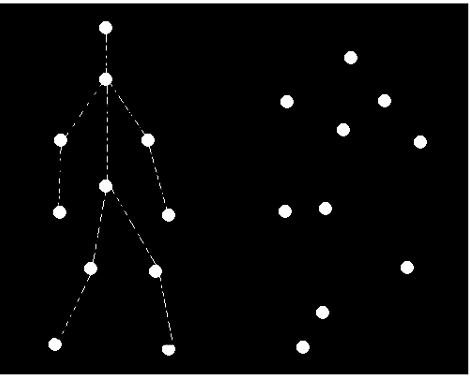
Basic visual functions in newborn infants
Preference for: moving objects, 3D objects, high contrast patterns and curves
Acuity (minimum visual angle at which adjacent lines are perceived as seperate): neonates 30x worse than adults, 4m 10x worse.
Tracking: neonates make visual pursuit movement, smooth tracking improves over first 4m.
Infants form perception - Do infants discriminate between shapes
Infants (1m) show limited form perception, only dishabituating when outer shape changes
By 4m can dishabituate to any change.
Infant colour perception
Newborns can discriminate red, green, yellow but not blue.
Use adult categories by 4m.
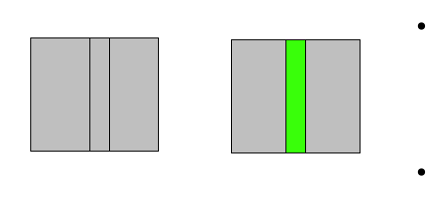
List aspects of visual perception that emerge at around 4 months of age.
Smooth tracking, form perception (dishabituate), object unity, object solidity, colour categories, 3D space perception (object size constancy), face perception (prefer mother’s face internal features).
What is ‘retinal image size’?
The perceived size of an object on the retina, which is influenced by the object's distance from the observer.
How did Bower (1964) control for retinal image size in his study of object size constancy in infants?
He used a series of visually similar objects placed at different distances to maintain constant retinal image sizes, allowing for the assessment of infants' perception of object size regardless of distance.
Why did Bower (1964) control for retinal image size?
To ensure that variations in perceived object size were due to infants' perception of size constancy rather than differences in retinal image size caused by distance.
What was Gibson and Walk’s (1960) ‘visual cliff’ designed to test?
Depth perception in infants by observing their responses to a glass surface that appeared to drop off.
Describe the course of development of face perception in humans.
Infants face perception - Discriminating between mum & stranger
1m - prefer higher contrast face
5w - prefer mother’s face (peripheral features)
4-5m - prefer mother’s face (internal factures)
What evidence is there that humans have an innate capacity for face perception?
Early preferences: Newborns and tracking faces.
Research shows infants recognise face-like patterns shortly after birth and exhibit preferences for faces over non-faces, indicating an innate predisposition for face recognition. E.g. spoon face, scrambled face & blank.
What evidence is there that experience plays a role in humans’ face perception?
1m infants prefer higher contrast face VS 4-5m infants prefer mums face
Inversion effect: develops at 5-6m
Neonates speech perceptions
Preferentially listen to speech frequencies, human speech over nonsense, own mothers speech, discriminate between speech sounds (ba/pa).
1m Speech perceptions
Prefer pauses on clause/word boundaries rather than mid-word.
How do we know that babies are able to distinguish between the speech sounds “ba” and “pa”?
A brain activity measure: ERP mismatch negativity response when a speech sound changes unexpectedly.
Describe the characteristics of the style of speech that adults typically adopt when talking to babies.
Infant directed speech: 4m-13m (7-9)*
exaggerated intonation, higher pitch, baby talk vocab, short/simple grammatical sentences, repetitive, slow delivery, lots of questions and imperatives, about here and now, response to spontaneous behaviour, joint attention.
What methods have been used to examine infants’ capacity for intersensory coordination?
Visual-Auditory: Film rhythms match/mismatch soundtrack
-4m look more at synchronous film
-10w face/voice synchrony preference
-Direct gaze + talking result in preferential looking at person
Visual-Tactile: Rough vs smooth dummy, take out of mouth, what do they look at?
-1m looks at the correct dummy they experienced
-3m loses this ability
List some perceptual abilities that do not simply improve with age.
Recognition of rhesus monkey faces & dummy visual-tactile coordination
Describe an example of a perceptual ability that appears to be mastered at different ages depending on the method of testing used.
Visual cliff:
Avoidance of deep side measure: 6m-14m
Heart rate measure: 2m
Key Term: Reflex
An involuntary response to a stimulus, often mediated by the nervous system, occurring without conscious thought.
Goal directed behaviour: 0-1m: specifc elicitor, same behaviour each time, “ ballistic” (once elicited, runs its full course).
Survival: breathing, sucking, swallowing
Primitive: stepping, swimming, grasping
Key Term: Primary circular reaction
Goal directed behaviour: 1-4m
Simple, repetitive acts focused on own body e.g. thumb sucking, cooing, smiling
Goal follows behaviour
Key Term: Secondary circular reaction
Goal directed behaviour: 4-8m
Behaviour oriented to objects external to own body e.g. grasp reachable objects, interacts with rattles.
Goal follows behaviour
Coordination (8-12m): pull toy closer with feet so can grasp with hands
Key Term: Tertiary circular reaction
Goal-directed behaviour: 12-18m
Empirical intelligence: intentional experimentation resulting in original means to achieve ends. Other people as causal agents.
Key Term: Imitation
The act of copying another person's behaviour or actions.
Key Term: Anticipatory response
Occurs between 4-8m. Includes object movement and expectations from routines. E.g. reaching for an object before it is presented.
Key Term: Symbolic problem solving
Goal-directed behaviour: 18-24m
Solve problems without intervening active experimentation
Key Term: Play
Beginning: 12-18m
Sequences & symbolic: 18-24m
Key Term: Holophrastic speech
12-18m
One word conveys whole sentence
E.g. turtle = toy turtle
= plastic walrus
= pinecone with stem
= own toe
Key Term: Receptive vocabulary
The ability to understand words and phrases before being able to speak them.
Increases over expressive/productive
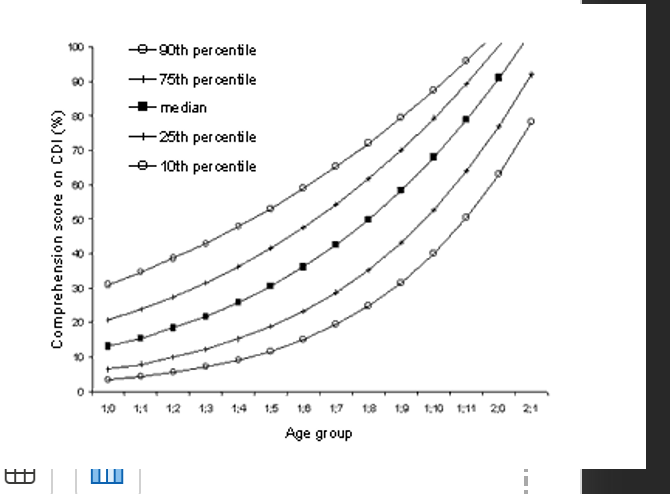
Key Term: Expressive vocabulary
The ability to use words and phrases to express thoughts and ideas.
Also known as productive, lags behind receptive vocab
Key Term: Overextension
The use of a single word to describe a wider set of objects or actions than is appropriate, leading to broader meanings. For example, a child may call all four-legged animals "dog."
Key Term: Underextension
The use of a word to refer to a narrower set of objects or actions than is appropriate, restricting its meaning. For instance, a child might only refer to their pet cat as "cat" and not apply the term to other cats.
Key Term: Animism
Tendency to attribute life to inanimate objects
Limitation to preschoolers reasoning
Key Term: Transductive reasoning
A cognitive process where children make connections between unrelated events, believing that if one event follows another, there must be a causal relationship.
Correlation = causation e.g. I haven’t had a nap, so it isn’t the afternoon
Key Term: Egocentrism
Tendency to view the world from one’s own perspective e.g. three mountains task
Key Term: Decentring
Cognitive ability to consider multiple perspectives and aspects of a situation, moving beyond egocentric thought.
Key Term: Conservation
The understanding that certain properties of objects, such as volume or mass, remain constant even when their shape or appearance changes
E.g. piaget's water glasses conservation tasks
Key Term: Seriation
The ability to arrange objects in a sequence based on a specific criterion, such as size or colour.
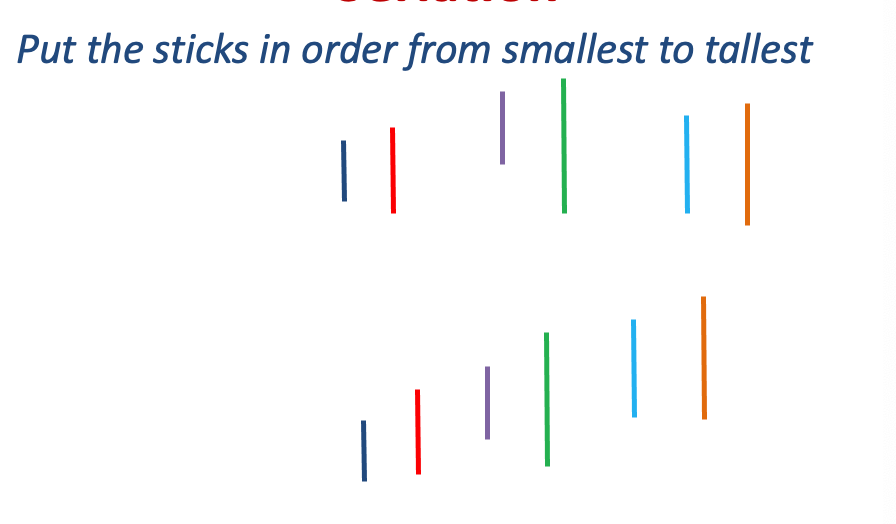
Key Term: Number concept
Cognitive understanding of numerical value, quantity, and relationships between numbers.
Cardinal correspondence: how many in each set?
Ordinal correspondence: mapping order of elements between sets
Key Term: Classification
The ability to group objects based on shared attributes or characteristics, such as colour, shape, or size.
Common feature that defines class, exclusive set of all objects that meet classficiation
Key Term: Segmentation
Parsing a spatial pattern into its constituent parts.
Key Term: Integration
Of parts into a coherent whole.
Key Term: Hypothetical reasoning
Generating hypotheses about what is possible rather than actual e.g. what if cloning humans were legalised.
Key Term: Deductive reasoning
From given premises to logical conclusion.
All dogs have tails + harry is a dog = harry has a tail
All dogs have fins + harry is a dog = harry has fins
Key Term: Hypothetico-deductive reasoning
Deducing conclusions from premises that are hypotheses rather than facts. E.g. if my theory of cognitive development were correct, then I would expect to see
Key Term: Inductive reasoning
Inferring general conclusions from specific facts + hypothesis testing
E.g. Pendulum problem
Beyond the here & now 0-4m
Responses dominated by immediate environment (internal & external)
Beyond the here & now 4-8m
Anticipatory response
Beyond the here & now 8-12m
Intentional search for concealed objects e.g. A not B error
Separation anxiety
A not B error
A common mistake made by infants during problem-solving tasks where they search for an object where it was originally hidden (location A) rather than where it was last visible (location B).
Beyond the here & now 12-18m
Appropriate search for hidden object (as long as location witnessed)
Beyond the here & now 18-24m
Systematic search for hidden objects, even when location not witnessed
Imitation 0-1m
Pseudo-imitation reflex
Neonates imitate tongue protrusion, emotional expressions
Imitation 1-8m
Imitation of behaviours already in baby’s repertoire
Imitation 8-12m
Beginnings of imitation of novel behaviours
Deferred imitation of simple behaviours after brief delay
Imitation 12-18m
Imitation of novel behaviours
Deferred imitation of simple behaviours after long delay
Imitation 18-24m
Deferred imitation of complex sequences of behaviour
Vocalisation in infancy 3-5w
Fake cry & Cooing
Vocalisation in infancy 3-4m
Babbling
Vocalisation in infancy 10m
Index finger extension synchronised with babbling in context of labelling
objects
Age of first words?
12-18m
First words
Repeated syllables, names for specific people/objects/action/social, articulation often poor, context-bound (underextension)
When does naming explosion occur
18m or when vocab reaches 50 words
When do first sentences occur?
18-27m
Telegraphic grammar
Only content words e.g. look dog, give juice, mummy read
Common in first sentences
Usually preserve correct word order
Same worlds convey variety of meanings, context dependent
Language at 21m
Only reliably learn new words from Infant Directed Speech
Language at 27m
Can learn from Adult Directed Speech as well as Infant Directed Speech
Children Language
Children’s spontaneous grammar is generative, not copied from adults
Resist attempts to change their grammar
Mental state language
Perception, physiology, affect, violation, cognition, moral judgement & obligation
Achievements of infancy and toddlerhood
Control over responses
Goal-directed behaviour
Anticipation of future events, memory of past events
Increasing complexity of behaviour
Representational/symbolic thought
Preschool age development
Symbolic thought
Spatial orientation
Spatial pattern processing
Theory of mind
Language
Limitations to preschoolers reasoning
Animism, transductive reasoning, egocentrism
Primary school age development
Conservation & reversibility
Number concept
Seriation
Classification
Adolescence and beyond development
Hypothetical reasoning
Deductive reasoning
Hypothetico-deductive reasoning
Inductive reasoning
Probability
Figurative language
Symbolic thought
The ability to make one thing stand for another such as words, self, images.
Hide little snoopy and find big snoopy
A childhood game where children hide a small toy and seek out a larger version.
2.5y olds fail
3y olds pass
Theory of Mind
The ability to impute mental states to oneself and others
E.g. Maxi and the chocolate + deceptive container task
Maxi and the chocolate
A classic experiment that tests children's understanding of others' beliefs and perspectives regarding hidden objects. This experiment evaluates how children perceive that others can hold different views from their own, particularly when it comes to locations of objects.
3y fail
4y pass
Language learning ability
Declines beyond early childhood
What age do children start using complex sentences
30-48m
Pragmatics of communication
The skills of appropriate and communicatively-effective language use
Communication failure < 6y
Blame listener