Economic systems and thinkers
 Call Kai
 Learn
Learn Practice Test
 Spaced Repetition
 Match
Match Flashcards
 Knowt Play
1/16

There's no tags or description
Looks like no tags are added yet.
Name | Mastery | Learn | Test | Matching | Spaced | Call with Kai |
|---|
No analytics yet
Send a link to your students to track their progress
17 Terms
What are the three functions of the price mechanism?
rationing, signalling, and incentivising.
if consumers want less goods than producers supplying, there will be:
Excess supply
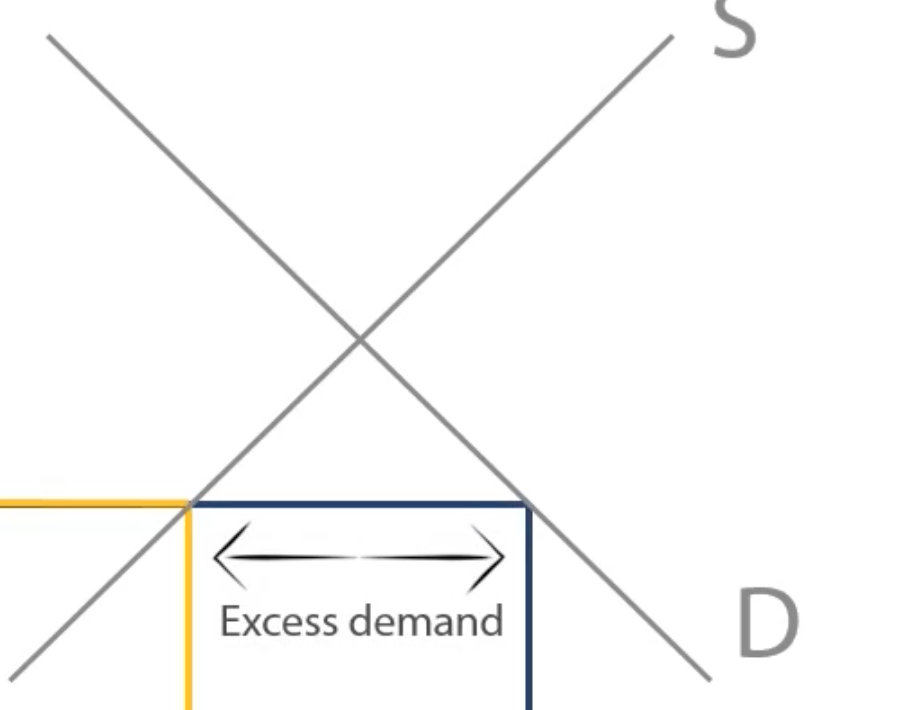
if consumers want more goods than producers supplying, there will be:
Excess demand
In a free market economy, all resources are allocated by:
the price mechanism e.g USA
In a command economy, all resources are allocated by:
the government e.g Soviet Union
in a mixed economy all resources are allocated by:
The government and the price mechanism e.g UK
What did Adam Smith come up with?
Specialisation and the division of labour
there aren’t always lots of firms to compete within a market, sometimes the market is dominated by a:
monopoly which can lead to exploitation of consumers
e.g apple charging large amounts for consumers that buy their product everytime
What are all the pros and cons of a free market?
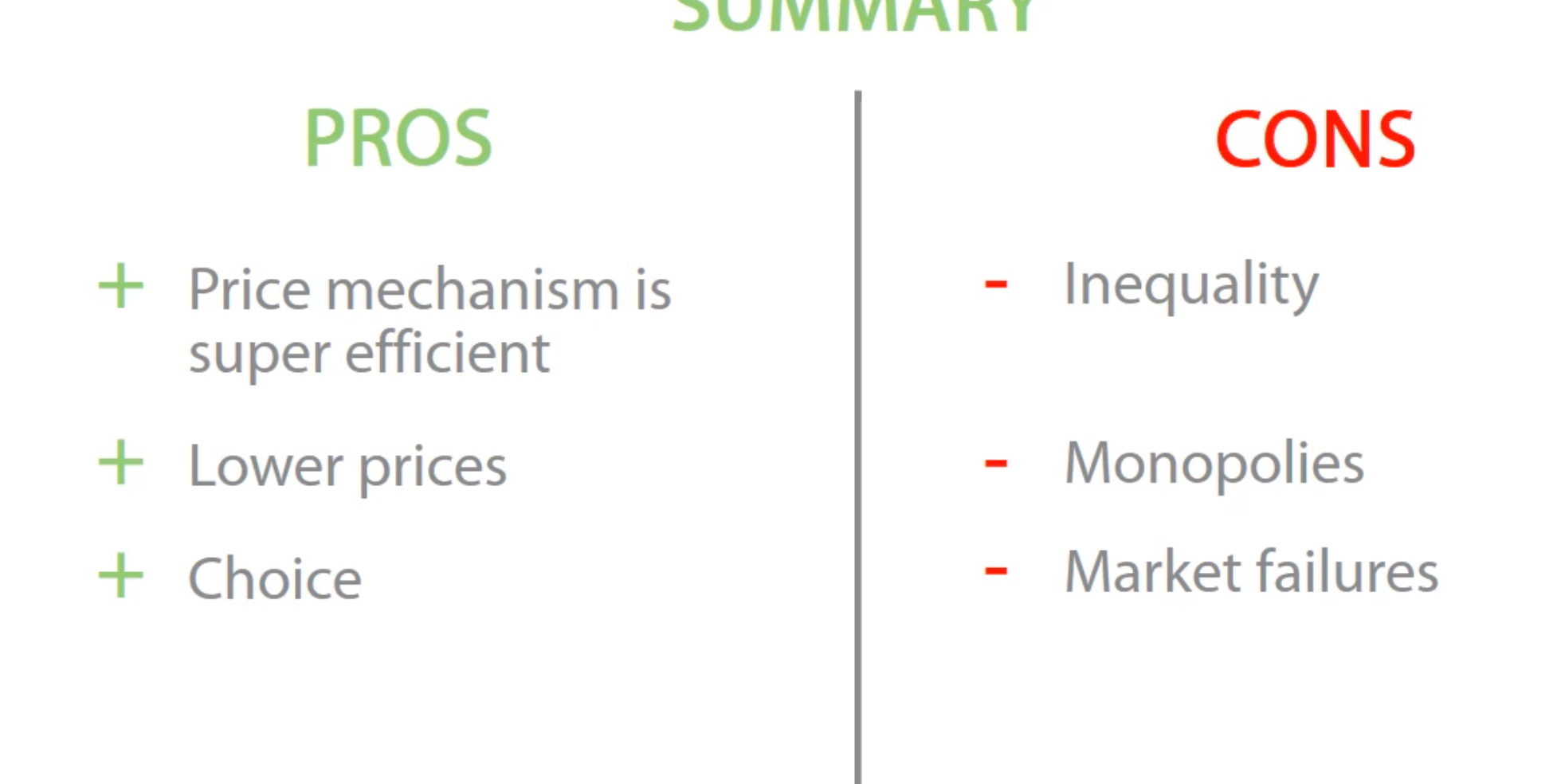
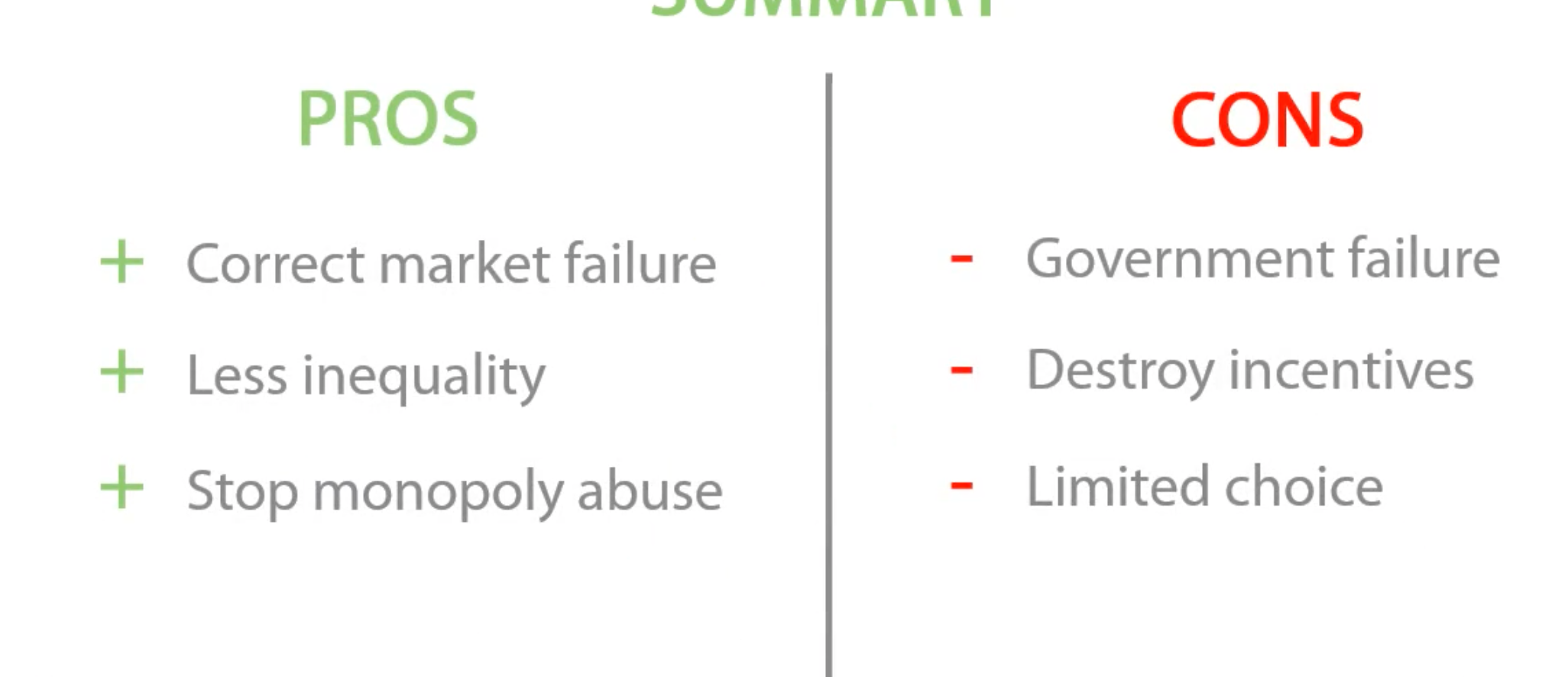
What are the pros and cons of a command economy?
A free market economy uses the price mechanism to efficiently allocate resources, as argued by:
Hayek and Smith
Write the definition of: Free market economy
An economy where all resources are allocated by the price mechanism. There's NO government intervention.
E.g. Hong Kong in 1960s is a close example
Write the definition of: Command economy
An economy where all resources are allocated by the government.
E.g. Cuba or North Korea in the 1980s
Write the definition of: Mixed economy
An economy where some resources are allocated by the price mechanism, and some are allocated by the government.
E.g. the UK
Adam Smith
Smith described the price mechanism as an "invisible hand".
He argued that free markets were very efficient and that the government should only intervene in cases of market failure (e.g. externalities).
Karl Marx
Marx argued that free markets would lead to capitalism and inequality.
Capital owners would make huge profits, but workers would be paid low wages.
So Marx supported command economies, where a government can fairly allocate resources between everyone.
Hayek
Friedrich Hayek described the price mechanism as a "communication network".
Changing prices told producers what consumers wanted and what they didn’t want, eliminating excess supply and demand.
Hayek criticised Marx's ideas for a command economy. Hayek argued that a government would not have enough information to work out how to allocate resources effectively.