marketing complete
 Call Kai
 Learn
Learn Practice Test
 Spaced Repetition
 Match
Match Flashcards
 Knowt Play
1/147

There's no tags or description
Looks like no tags are added yet.
Name | Mastery | Learn | Test | Matching | Spaced | Call with Kai |
|---|
No analytics yet
Send a link to your students to track their progress
148 Terms
marketing
the activity, set of institutions and processes for creating, communicating, delivering and exchanging offerings that have value for customers, clients, partners and society at large
the basic function of marketing
to attract and retain customers at a profit
criticism on marketing
it makes people buy things they don’t really need
need
a basic requirement; universal, fixed for everyone in the population
want
the way a need is expressed by an individual (shaped by personality/culture)
demand
a want that is backed by purchasing power
marketing (course) overview
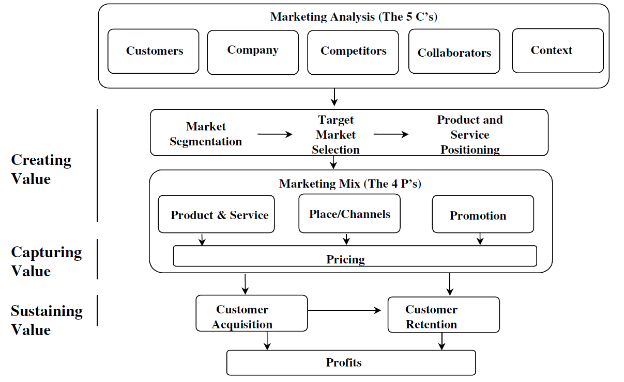
key questions within marketing (the 4 Ps = the marketing mix)
what does a customer want? → product
how does a customer obtain it? → place
how much is it worth to the customer? → price
how does the customer know we can fulfil the need? → promotion
exchange
the act of receiving something from someone by giving something in return → marketing exists through exchanges where the objective for all parties is to feel satisfied
touchpoints
contact points where customers interact with a firm (physical and digital)
the marketing concept
the achievement of corporate goals through meeting + exceeding customer needs and expectations better than the competition
conditions that must be met for the marketing concept to be achieved
customer orientation
integrated effort (from the whole firm)
goal achievement (e.g. profit)
+ discovery and exploitation of latent markets
latent markets
markets not yet served by existing products/offers; they present opportunities for market-oriented companies
efficiency and effectiveness
efficiency = doing things right (managing processes to a low cost per unit) → “inputs and outputs”
effectiveness = doing the right things (making the correct strategic choice of which products for which markets)
getting the balance right between the two explains the difference between success and failure
market-driven
= the customer drives every decision
market orientation = identification of market opportunities → creation of products → customer satisfaction
market-driven firms organise everything around the customer
→ researching their needs, welcoming change, innovating and striving to out-compete rivals
internally-oriented
= the firm's own products/convenience drive every decision
production orientation = focus on production capabilities → defines business mission and manufactured products → aggressively sold to customers
internally-oriented firms organise everything around their own products and convenience
→ clinging to the status quo and treating marketing as a cost rather than an investment
customer value
customer value = perceived benefits − perceived sacrifice
value is created by maximising perceived benefits (product/image benefits) and minimising perceived sacrifice (monetary/time costs)
customer satisfaction
customer satisfaction = the fulfilment of customer requirements/needs; occurs when perceived performance matches or exceeds expectations
loyalty
loyalty = a response a customer shows over time (repeated purchasing); customers return to the same supplier if satisfied
relationship marketing enhances productivity and lets firm + customers cooperate over the long term
levels of marketing
strategic/ business: what and why
using a firm’s resources to leverage competitive advantage → mission, vision, marketing audit, SWOT, high-level marketing objectives
operational/ tactical: how
deployment of the marketing & service mix; developing longer-term customer relationships
implementation
who is responsible/ how the strategy is carried out/ where things happen/ when action takes place
critiques of the marketing concept
marketing concept as an ideology → can lead to a narrow approach
marketing and society → by pursuing individual rather than societal gains, the firm benefits with little regard for the wider environment/society
marketing as a constraint on innovation → over-reliance on customers as a source of innovation leads to lacklustre innovations
marketing as a source of dullness → focus on analysing customers leads to me-too products, copycat promotion, marketplace stagnation
marketing as an intrusion → the capacity of marketing messages to interrupt our lives has increased (digital age)
activism and authenticity → firms should consider how far CSR policies meet the more controversial/immediate demands of activism campaigns
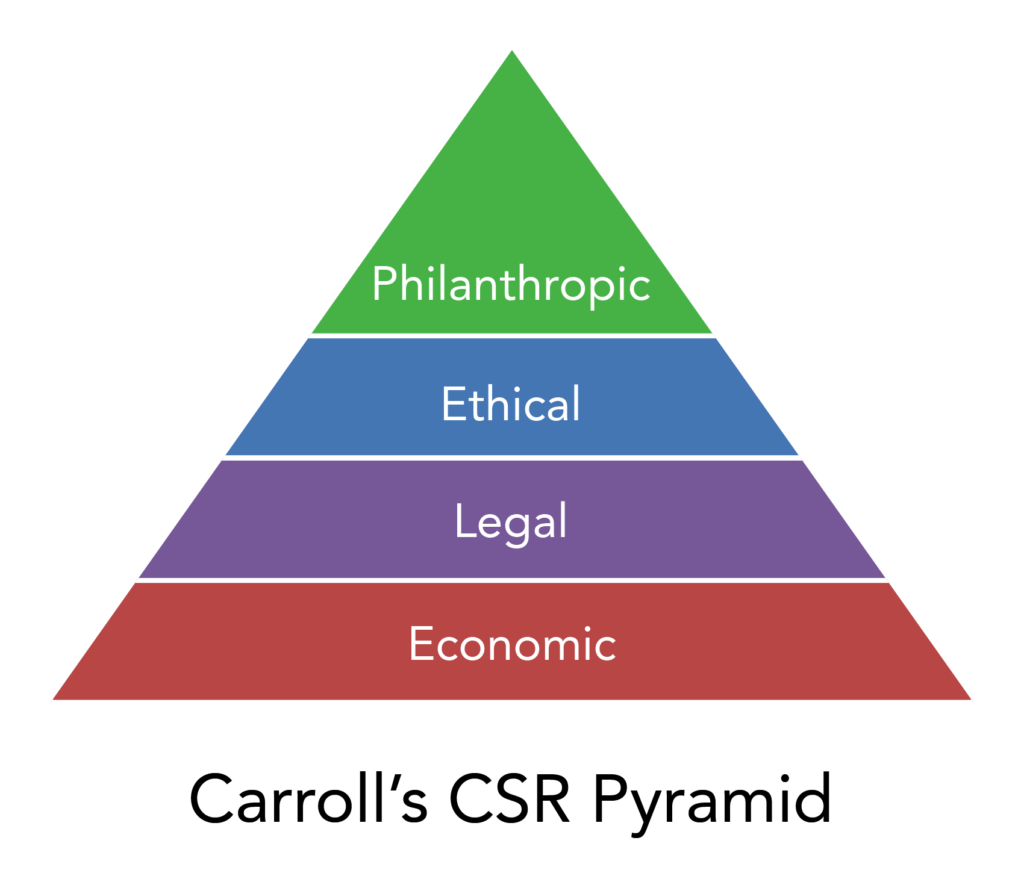
corporate social responsibility (CSR)
= the ethical principle that an organisation should be accountable for how its behaviour might affect society and the environment
economic (down-up)
legal
ethical
philanthropic
CSR advantages: enhanced brand reputation, marketing opportunities, ability to attract/retain employees
CSR disadvantages: can be misguided, too costly, encourages consumer cynicism, may not improve profitability
sustainability marketing
sustainability marketing = reducing environmental damage by creating, producing and delivering sustainable solutions while still satisfying customers and stakeholders
ethical issues in marketing
product safety, price fixing, misleading advertising, deceptive selling, invasion of privacy (direct & internet marketing)
societal concerns → materialism, short-termism
environmental concerns → impact of decisions on the environment
political concerns → power global firms exert on consumers/governments/suppliers (globalism)
SHIFT framework
= how to encourage more sustainable consumption behaviour:
Social influence
Habit formation
Individual self
Feelings and cognition
Tangibility
greenwashing and greenhushing
greenwashing = misleading or exaggerating a company’s environmental credentials
greenhushing = deliberately hiding or downplaying genuine sustainability efforts
societal responses to the negative social/environmental impacts of marketing
consumerism = organised pressure for consumers' rights and protection
environmentalism = pressure to reduce environmental damage
ethical consumption = individuals choosing what to buy (or boycott) on moral grounds
B2B buying decision process
need recognition → info search → evaluation → purchase → post-purchase
buying centre
= the people involved in a purchase decision
roles:
initiator (raises the need)
influencer (shapes criteria)
decider (makes the call)
buyer (places the order)
user (uses it)
gatekeeper (controls info flow)
Maslow's hierarchy
= needs are met bottom-up:
physiological → safety → belonging → esteem → self-actualisation (a want is how a person expresses a need)
market segmentation
= identifying individuals/organisations with similar characteristics that have implications for marketing strategy
market segment (+ variables)
= a subgroup sharing characteristics that cause similar product needs
three segmentation variables:
behavioural (benefits sought, occasion, usage, perceptions and beliefs)
psychographic (lifestyle, personality)
profile (demographic, socio-economic, geographic)
evaluating market segments
market attractiveness (market/ competitive/ political-social-environmental-technological factors) + capability to compete (assets, cost advantages, tech edge, managerial capability)
targeting
= using segmentation to choose segments to serve (target segments)
four target market strategies
undifferentiated (one mix, whole market) → e.g. salt
differentiated (separate mixes for several segments) → e.g. a carmaker with family, economy, and luxury ranges
focused (one mix, one segment) → ferrari
customised (a mix per customer)
customer profile
= a description of a customer/ set of customers that includes demographic, geographic, and psychographic characteristics, as well as buying patterns, creditworthiness, and purchase history
positioning
= choosing the target market and the differential advantage → creating a competitive advantage from a customer perspective
four keys to successful positioning
clarity
consistency
credibility
competitiveness
perceptual map
= tool for determining a brand's position in the market
positioning statement
summarises company or brand positioning
“to (target segment and need) our (brand) is (concept) that (point of difference)”
repositioning
= changing the target market and/or differential advantage:
image → product same, market same (change image only)
product → product changed, market same
intangible → product same, market changed
tangible → both product and market changed
cross-selling and up-selling
cross-selling = selling a complementary product (a mousepad after a mouse)
up-selling = selling a higher-spec version (a more capable mouse)
elaboration likelihood model (shahab 2021)
ELM = explains how persuasion works; the route depends on how much the person actually thinks about the message
central route → they think hard about the real arguments (they care + can focus) → change is durable
peripheral route → they don't think; they just go on cues like a famous/attractive/credible source → change is temporary
⇒ implication of ELM: persuaders (e.g., marketers) must tailor strategies depending on whether they expect their audience to process messages through the central or peripheral route
→ findings: ELM effectively explains the impact of persuasive communications on consumer attitudes and decisions
application in studies involving new technologies like virtual and augmented reality is limited
marketing environment
macroenvironment (shapes opportunity and threats) → difficult to influence
political and legal forces
(physical) environment forces
culture and society
digital technologies
microenvironment (shapes strengths and weaknesses) → able to influence
customers
competitors
distributors
suppliers
strategic partners
companies respond to environmental change in five ways
ignorance
delay
retrenchment
gradual strategic repositioning
radical strategic repositioning
⇒ (ignorance/delay/retrenchment = the inadequate "barrier" responses)
mission (statement)
= a broadly defined, enduring statement of purpose that distinguishes a business from others of its type
sets out:
what business are we in?
what business do we want to be in?
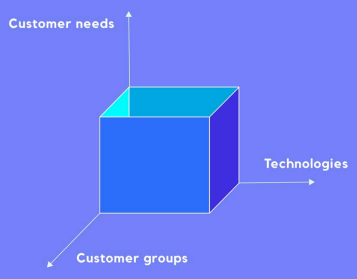
mission statement tool (abell)
customer needs relevant to the company are identified, listed, and are determined on the basis of the product benefits
customer segmentation key in abell’s model: thorough knowledge of target groups is needed to target product offerings
technologies is interpreted broadly: including both tech that is used in creation & production, but also used to market product
⇒ the mission statement should reflect the customer groups being served, refer to the customer needs being satisfied, and describe the process by which a customer need can be satisfied
marketing audit
= systematic examination of a business’ marketing environment, objectives, strategies, and activities
marketing analysis (the 5 Cs)
customers
company
competitors
collaborators
context
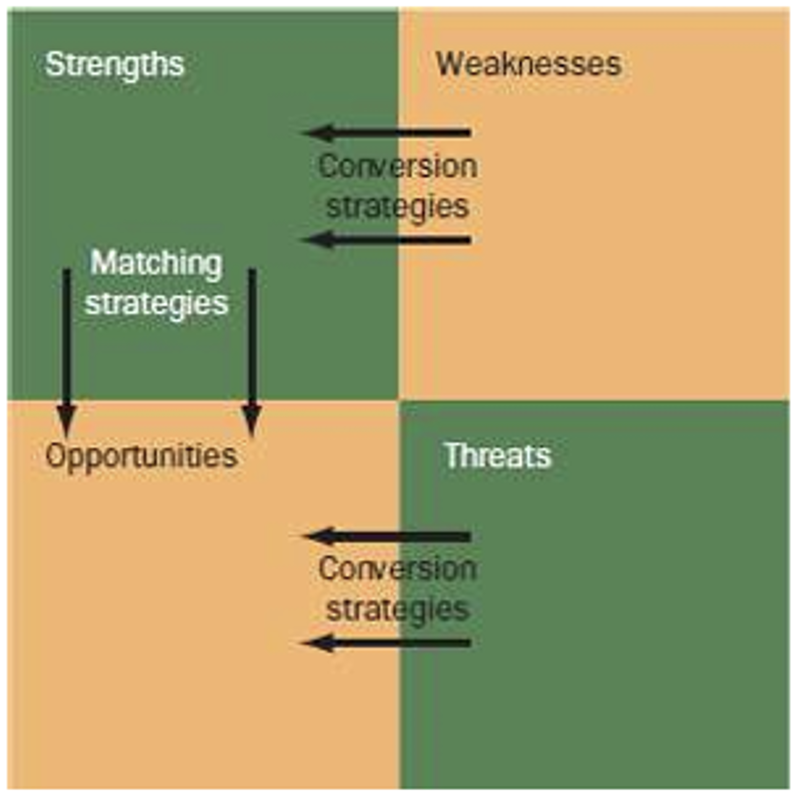
SWOT
internal analysis (strengths/ weaknesses) + external analysis (opportunities/ threats) = SWOT
in an exam question, two points must always be combined to create a strategy (e.g. strength with threat, weakness with opportunity, etc.)
marketing objectives
= result from marketing audit and SWOT analysis
product level planning
segmenting the market and targeting (week 2)
competitor analysis
creating competitive advantage
competitor analysis
who are the competitors?
what are their strengths and weaknesses?
what are their strategic objectives and thrust?
what are their strategies?
what are their response patterns?
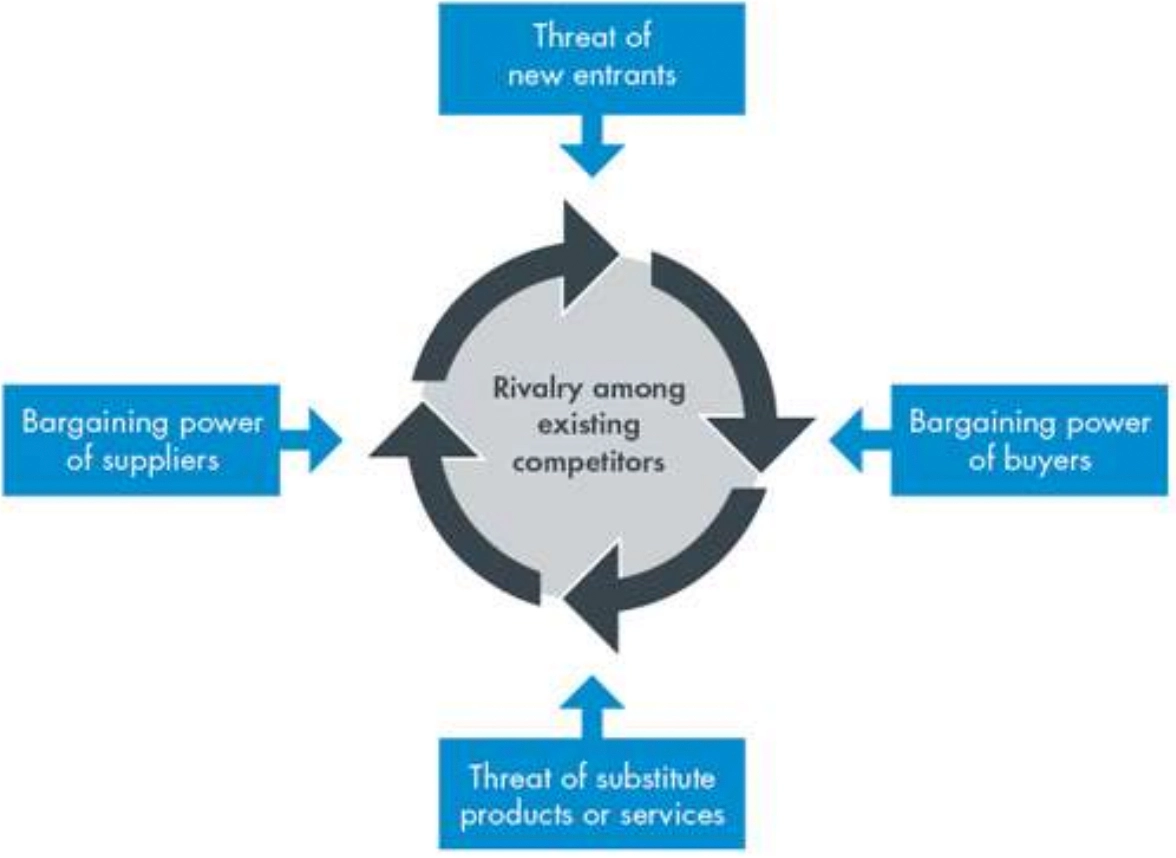
⇒ a sustainable competitive advantage is commonly based on offering customers greater value – either through lower prices or better product or service quality
porter’s five forces
creating competitive advantage (from a customer perspective)
being better (superior quality)
being faster (responding to the customer need)
being closer (long-term relationship)
pricing
⇒ most important thing: that the customer also perceives the advantage as distinguishing (sustainable differential advantage!)
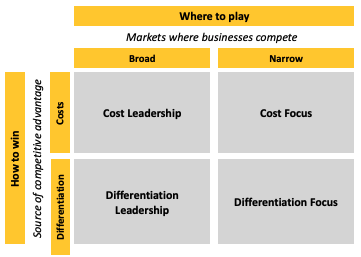
porter’s model of generic strategies for competitive advantage
guerrilla marketing
= unconventional, low-cost, surprise tactics that create buzz (a clever-but-normal billboard doesn't count)
competitive marketing strategies
attack strategies: gain at expense of competition
defence strategies: defend market share from competitors
the marketing plan
key questions | stages in marketing planning |
|---|---|
where are we now? | business mission, marketing audit, SWOT analysis |
where would we like to be? | marketing objectives |
how do we get there? | core strategy, marketing mix decisions, organisation, implementation |
are we on course? | control |
strategies of entry into foreign market (organised by rising commitment/ risk)
indirect exporting: use of independent organisations within exporter’s domestic market
direct exporting
foreign-based agents/ distributors
domestic-based sales representatives
overseas sales/marketing office
digital channels
licensing: provision of license to local actors and revenue based in royalty
franchising: form of licensing in a one-time payment
joint ventures: contractual or equity based
foreign direct investment: the firm directly owns operations abroad
development of a global marketing strategy
standardisation vs adaptation to local market
standardise when possible
stay local when needed → adaptation
marketing mix decisions (around the 4 Ps)
questionnaire development (frary 2003) → faulty question types
leading question = presupposes/steers an answer (e.g. "would you be worried if we discontinued this product line?")
absolute question = uses never/always (e.g. "why do you never visit the company website?")
double-barreled = asks two things at once
questionnaire development (frary 2003) → the "undecided"/neutral midpoint is chosen due to
ignorance (no basis to judge)
reluctance (won't reveal a true opinion)
uncooperativeness (won't form an opinion)
→ answer categories must be equidistant, clearly defined, and clarify direction (positive vs negative) → e.g. "not/ somewhat/ very emotional" fails to say whether the emotion is positive or negative
brand
= your promise to your customer
branding (+ aspects)
= the process by which companies distinguish their product offerings from the competition
name
symbols & signs
packaging
design
→ to develop customer associations with the brand and to make purchase decisions easier (perceived benefits & perceived sacrifices)
types of brands
manufacturer brands (e.g. magnum stieleis)
created by producers and bear their chosen brand name
manufacturer builds brand equity
own-label brands (e.g. albert heijn stieleis)
created and owned by channel intermediaries
typically outsource manufacturing and sell at lower process
sometimes referred to as private label, distributor or store brand
brand valuation (+ how it’s measured)
= the process of estimating the financial value of an individual or corporate brand
measured by:
performance
influence on choice
strength relative to competition
brand equity
= a measure of the strength of a brand in the marketplace by the added tangible value to a company through the resulting sales and profits
consumer-based brand equity
proprietary-based brand equity
customer-based brand equity
resides in the minds of customers and consists of brand awareness and brand image
brand awareness
can lead to higher sales and profits, and hence increased brand equity
type 1: by raising brand awareness, the likelihood of the brand entering a customer’s mind before making a purchase is increased since awareness is a pre-condition of evaluation of a brand
type 2: in low-involvement situations (low importance/ low price), a purchase may follow awareness of a brand with little information processing
brand image
= brand association
is formed by strong, favourable, and unique associations to the brand in the memory
is created using all elements of the marketing mix (4Ps) → advertising often employed to create a brand image
proprietary-based brand equity
based on assets attributable to the company
consists of patents and channel relationships
how to build a brand?
core product = anything that provides the central benefits required by the customer
augmented product = core product plus extra functional/ emotional values combined in a unique way to form a brand
how to build a strong brand?
quality: build quality into the core product
well-blended communications: create a clear position in the minds of a target audience
being first: pioneer brands are more likely to be successful than follower brands
internal marketing: training, communication with, and motivation internal staff
repositioning: as markets change and opportunities arise, repositioning is needed
long-term perspective: generating awareness, communicating values, and building loyalty requires commitment
positioning: creating a unique position in the marketplace
7 factors for successful brand positioning
brand heritage: background to the brand + its culture
brand assets: what makes the brand distinctive (symbols, images, etc.)
brand personality: character of the brand
brand reflection: how the customer perceives themselves because of buying/ using the brand
brand values: core values and characteristics
brand domain: the brand’s target market
4 branding decisions
brand name
rebranding
brand extension
co-branding
brand name
= strategy and choices
family brand name → a name used for all products
individual brand name → the name does not identify a brand with a particular company
combination brand name → using both
considerations when choosing a brand name:
evoke positive associations
easy to pronounce and remember
suggest product benefits
be distinctive
use numerals or alpha-numerics when emphasising technology
be transferable
not infringe on existing registered brand name
rebranding
= the act of changing a brand name
why rebrand?
merger or acquisition
desire to create a new image/position in the marketplace
the sale or acquisition of parts of a business
corporate strategy changes
brand familiarity
international marketing considerations
legal problems
brand extension
= using an established brand name for brands within the same broad market or product category (e.g. mcdonalds launching mccafe)
brand stretching = using an established brand name for brands in unrelated markets or product categories (e.g. dyson from vacuum to hairdryers)
co-branding
product-based co-branding (e.g. mastercard + applepay)
communications-based co-branding (nike + fc barcelona)
advantages of co-branding:
added value & differentiation, share the cost of introduction, and you can enter a category you'd otherwise struggle to enter alone
risks of co-branding:
loss of control, brand-equity damage if the partner underperforms
the importance of a brand name
strategic level:
reflects the financial value of the company
adds a barrier to competition
increases the profit (margin)
operational level:
basis for brand extensions
quality certification
creates trust
invention
= the discovery of new methods, products, and ideas
innovation
= when an invention is brought to the market and/ or generally adopted by the population
crossing the chasm - what to do?
for innovators and early adopters: use scarcity to incentivise buying (these groups are often happy with a less complete set of features)
to cross the chasm: use social proof to bring innovation to a larger population
crossing the chasm - what affects the rate of adoption?
differential advantage = the more added customer benefits a product gives to a customer, the more customers will be willing to buy
complexity = products that are difficult to understand or use may take longer to be adopted
divisibility = the degree to which the product can be tried on a limited basis and/ or without much (financial) risk
communicability = adoption is likely to be faster if the benefits and applications of the innovation can be readily observed/ described to target customers
compatibility = the new product needs to be compatible with consumers’ behaviour and existing infrastructure
categories of new products
product replacements: accounts for 45 per cent of new product launches (includes revisions and improvements to existing products)
addition to existing lines: accounts for 25 per cent of new product launches and take the form of new products that add to a company’s existing product lines (produces greater product depth)
new product lines: accounts for 20 per cent of all new product launches and represents a move into a new market (this strategy widens a company’s product mix)
innovations of new-to-the-world products: accounts for 10 per cent of new product launches and creates entirely new markets
product testing categories
safety testing
performance testing
simulated market test
beta testing = real users trial the product → tests consumer acceptance
service
= a product/ brand with a relative dominance of intangible attributes
the service industry
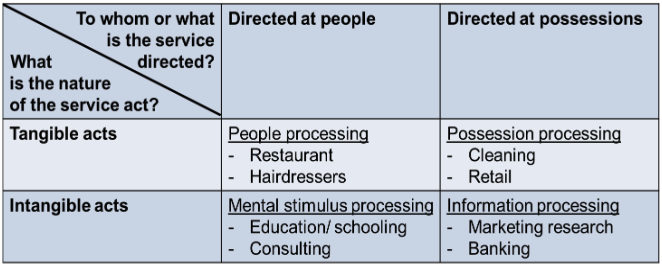
characteristics of a service
intangibility
a deed, performance, or effort
difficulty in evaluation
variability
standardisation difficult
selection, training, and rewarding of staff
evaluation systems
inseparabililty
simultaneous production and consumption
importance of service provider
selection, training, and rewarding of staff(?)
perishability
consumption cannot be stored
match supply and demand
managing services
managing customer relationships
managing service quality
managing service staff
managing service productivity
positioning
service productivity can be improved (without cutting quality) by…
technology
customer involvement in production
balancing supply & demand
the seven Ps
physical evidence (props):
appearances
ambiance
layout
process
procedures
mechanisms
flow of the activities
people
setting standards and monitoring
customer first attitude
examine customer role
→ these 3 (as a service extension to the 4Ps product, price, place, promotion)
managing product portfolios
managing products as groups (portfolios) rather than separate, distinct and independent entities
portfolio planning
product line = group of brands that are closely related in terms of their functions and the benefits they provide
product mix = the total set of brands (ALL product lines and items) marketed by the company
managing a large number of brands/ products
by using several product oriented models
product life cycle
BCG growth share matrix
GE market attractiveness-competitive position model
the product life cycle (PLC)
= a flexible model that can be applied to both brands and product lines
introduction
high marketing and educational costs
promotional sales/ adjustment of sales strategy
low competition + low sales
growth
demand increases
product gains popularity
strategies focus on scaling production, distribution, and building brand loyalty
maturity
market saturation occurs
sales peak and stabilise
competition peaks
focus shifts to defending, possible future innovations, and optimising pricing
decline
sales and profits fall due to market saturation, changing consumer preferences, or new innovations
companies may reduce marketing, liquidate remaining stock, retire the product, or redesign/ re-release newer models
limitations of the product lifecycle
not all products follow the same curve
causality
unpredictable
objectives and strategies can be misleading
boston consulting group growth share matrix
stars (high growth, high share)
generate high revenue but require heavy investment to sustain growth
modest cash flow (positive or negative)
build sales and/ or market share
cash cows (low growth, high share)
yield high returns with minimal investments, funding the company’s other ventures
large cash flow (positive)
hold sales and/ or market share
problem children/ question marks (high growth, low share)
require significant investment to turn into stars or risk becoming dogs
large cash flow (negative)
build selectively
focus on defendable niche where dominance can be achieved
harvest or divest the rest
dogs (low growth, low share)
modest cash flow (positive or negative)
harvest or
divest or
focus on defendable niche
→ ultimate goal is maintaining a balanced portfolio
cash cows should fund question marks → hoping that question marks eventually become stars → stars will eventually become cash cows as the market matures
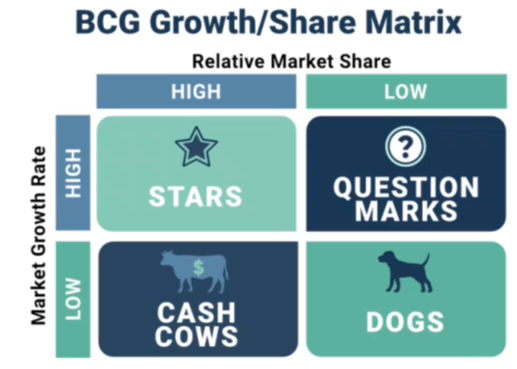
critiques of the BCG growth/ share matrix
oversimplified
based only on cash flows