transforming host cells (in vivo)
 Call Kai
 Learn
Learn Practice Test
 Spaced Repetition
 Match
Match Flashcards
 Knowt Play
1/18

Earn XP
Description and Tags
amplifying DNA fragments
Name | Mastery | Learn | Test | Matching | Spaced | Call with Kai |
|---|
No analytics yet
Send a link to your students to track their progress
19 Terms
what is in vivo cloning? why is transforming host cells an example of this?
in vivo cloning = copies of the DNA fragment are made inside of a living organism
DNA is inserted into a living cell
give the 4 stages of transforming host cells:
addition of promoter and terminator regions to the DNA fragments
inserting DNA fragments into vectors
transferring recombinant DNA into host cells
identifying transformed host cells
why must we add promoter and terminator regions to the DNA fragment?
to ensure the gene can be transcribed
describe how the promoter and terminator regions aid transcription:
promoter region: added at start of DNA fragment - sequence of DNA which is the binding site of RNA polymerase so enables transcription to occur’
terminator region: added at end of DNA fragment - causes RNA polymerase to detach and terminate transcription so that only one gene at a time is copied into mRNA
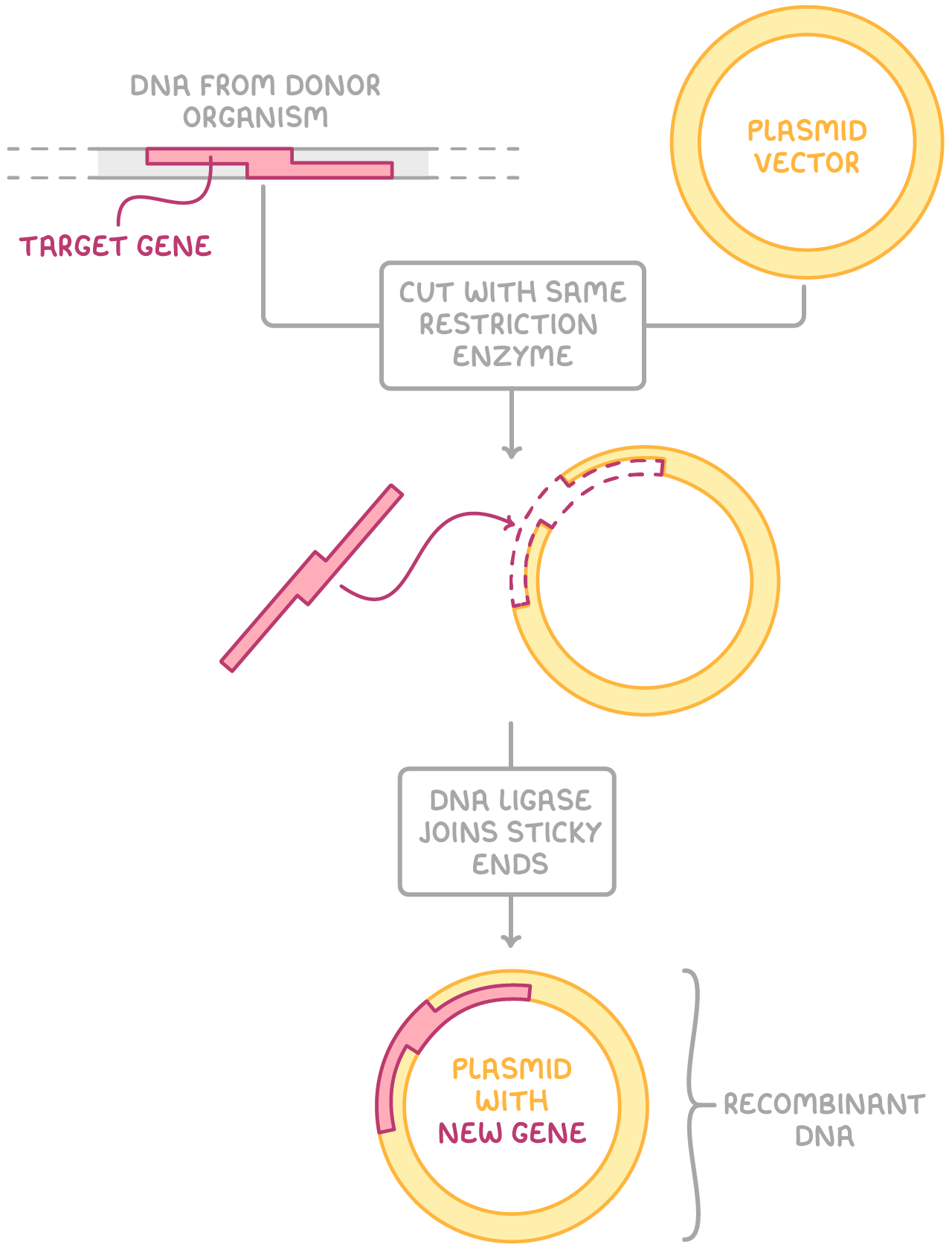
describe the process of inserting DNA fragments into vectors:
a vector is cut open at a specific site using a restriction enzyme, producing sticky ends
the same restriction enzyme is used to cut the target DNA fragment, so that the sticky ends are complementary
DNA ligase forms phosphodiester bonds between the sugar and phosphate groups on the 2 DNA strands, joining the sticky ends together
this newly formed combined DNA molecule is known as recombinant DNA
what is a vector? give 2 examples:
something which carries the isolated DNA fragment into the host cell e.g. plasmids/bacteriophages
describe how vectors are transferred into host cells:
plasmid vectors containing DNA fragments:
host cells placed into ice cold calcium chloride solution to make their cell walls more permeable
when plasmids added, mixture is heat shocked
bacteriophage vectors containing DNA fragments:
bacteriophage infects host bacterium by injecting its DNA into it
phage DNA then integrates into bacterial DNA
what is the significance of marker genes?
not all cells will successfully take up the gene
allows for the cells that have taken up the gene to be identified e.g. through fluorescence/radioactivity
describe the process of identifying transformed host cells:
using marker genes (e.g. UV fluorescence, radioactivity):
host cells grown on selective agar plates, each dividing and replicating DNA, creating colonies of cloned cells
only transformed cells display characteristics encoded by marker genes
give 3 reasons why not all host cells will successfully become transformed:
recombinant plasmid doesn’t get inside cell
plasmid rejoins before DNA fragment enters
DNA fragment sticks to itself rather than inserting into the plasmid
why is it important to insert the gene into the nucleus and not the cytoplasm?
all cells contain desired gene
as DNA of desired gene replicated inside nucleus
passed on by mitosis
to produce genetically identical cells
microinjection of DNA into fertilised egg cells is a frequent method of producing transgenic fish - however, the insertion of the transferred gene into nuclear DNA may be delayed. consequently, the offspring of transgenic fish may not possess the desired characteristic.
suggest and explain how delayed insertion of the GH gene could produce offspring of transgenic fish without the desired characteristic (2)
cell division (i.e. mitosis) has occurred before gene added
cells producing gametes do not receive the gene (i.e. DNA replication has occurred)
describe the roles of 2 named types of enzymes used to insert DNA fragments into plasmids (2)
restriction enzyme to cut plasmid/vector
ligase joins gene/DNA to plasmid/vector
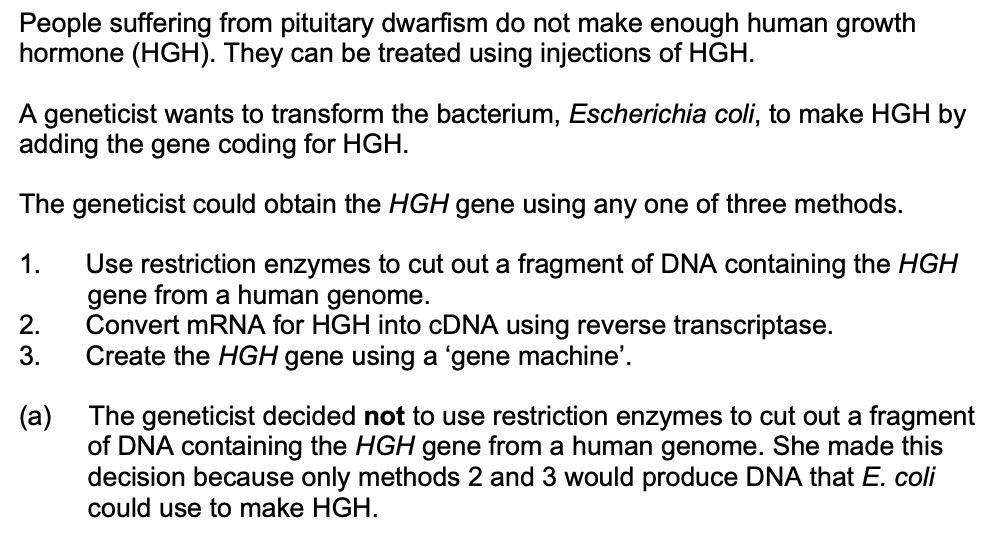
explain why only methods 2 and 3 would produce DNA that E. coli could use to make HGH (2)
human DNA contains introns
E. coli cannot remove introns
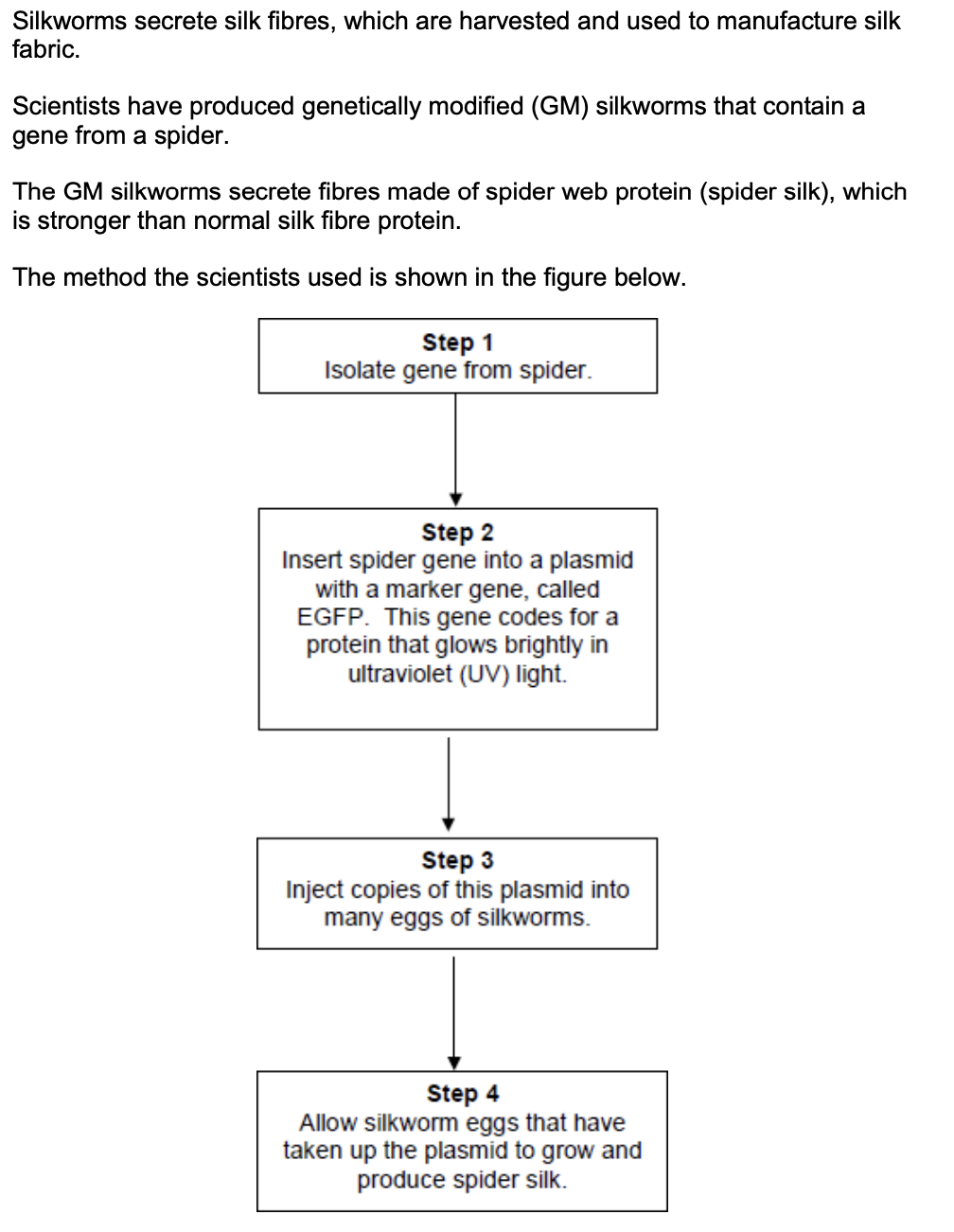
suggest why the plasmids were injected into the eggs of silkworms, rather than into the silkworms (2)
gene gets into all/most cells of silkworm
so gets into cells that make silk
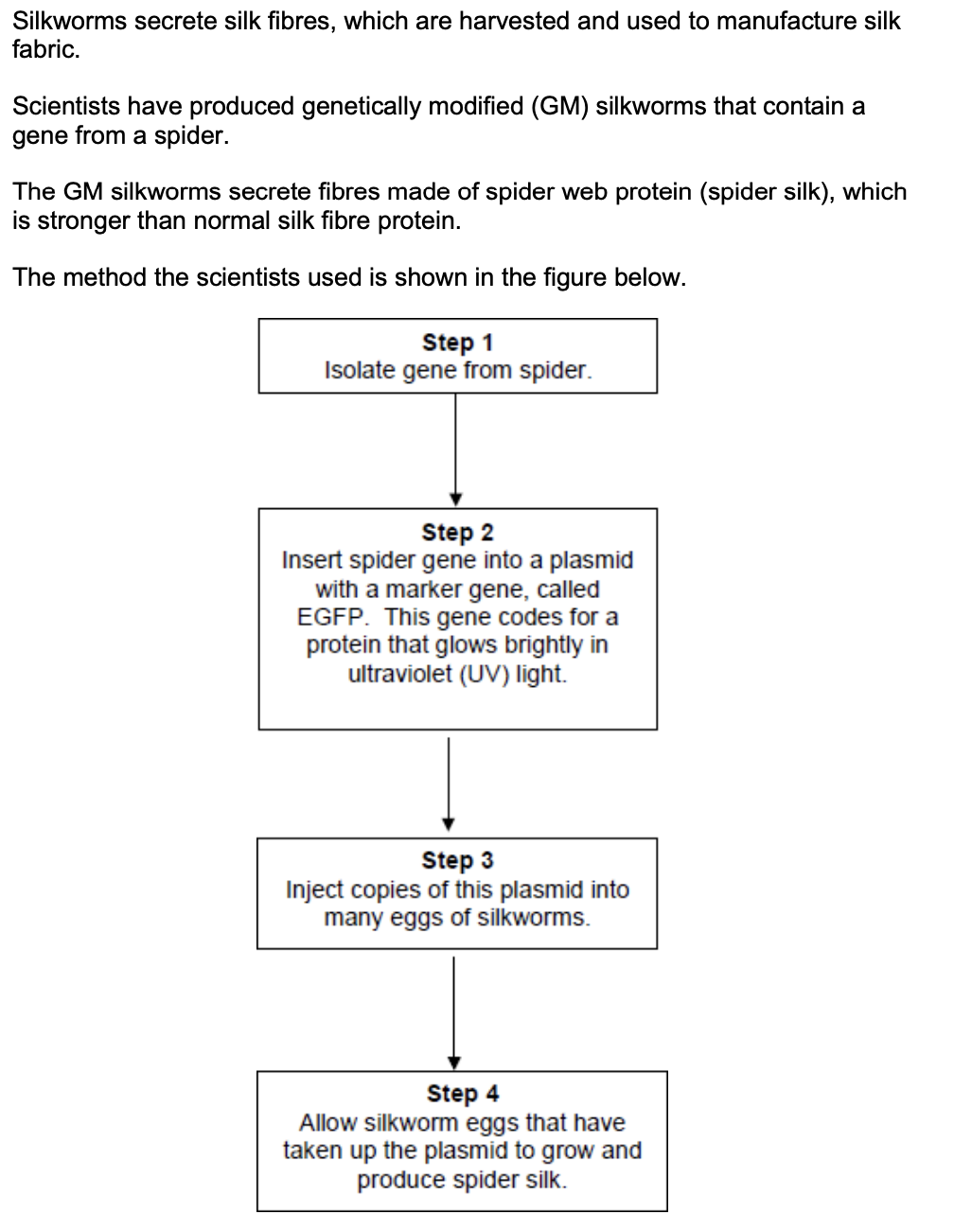
suggest why the scientists used a marker gene and why they used to EGFP gene (2)
not all eggs will successfully take up the plasmid
silkworms that have taken up gene will glow - can be easily identified
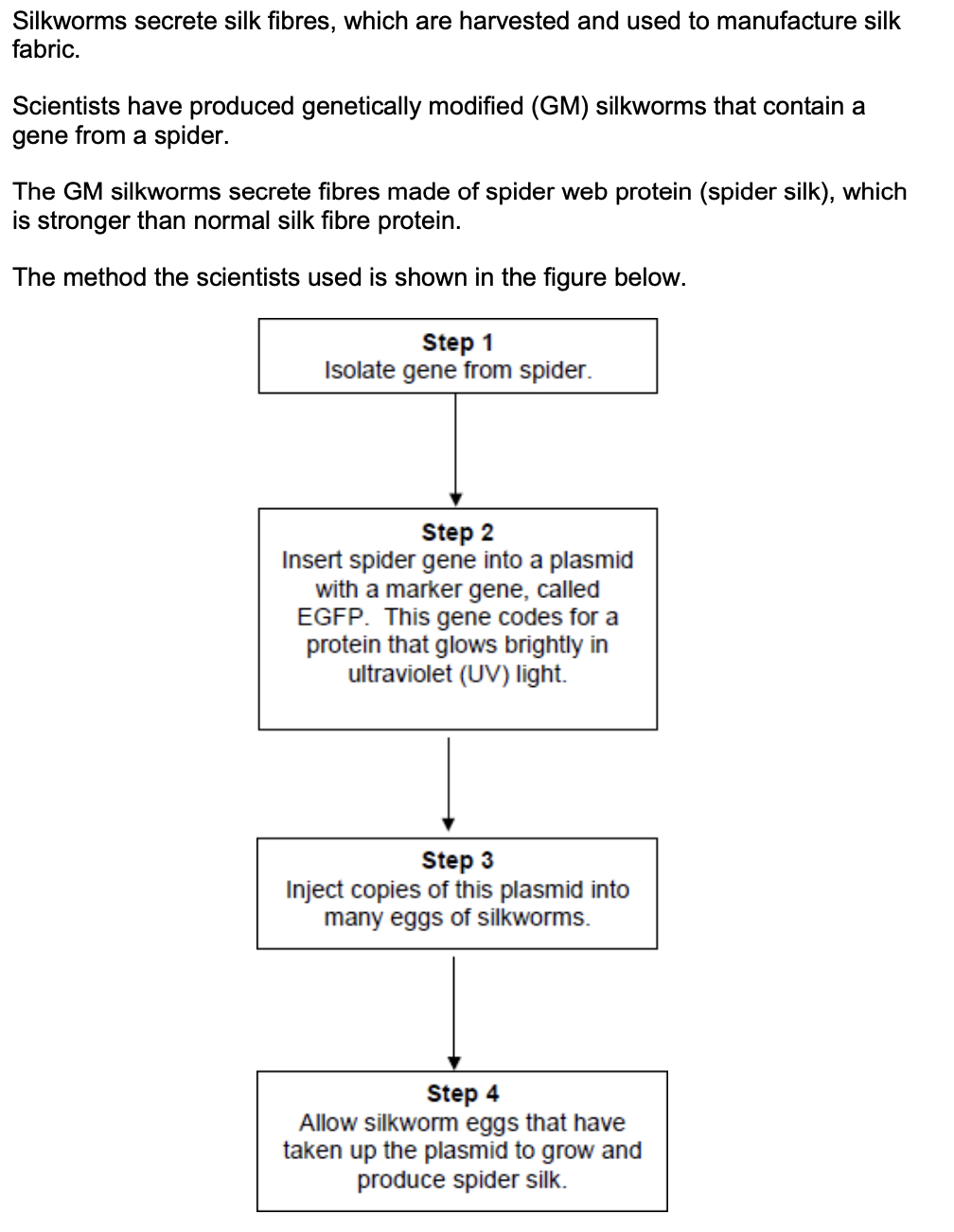
what could the scientists have inserted into the plasmid along w/ the spider gene to ensure the spider gene as only expressed in the silk glands of the silkworms? (1)
promoter region (initiates transcription)
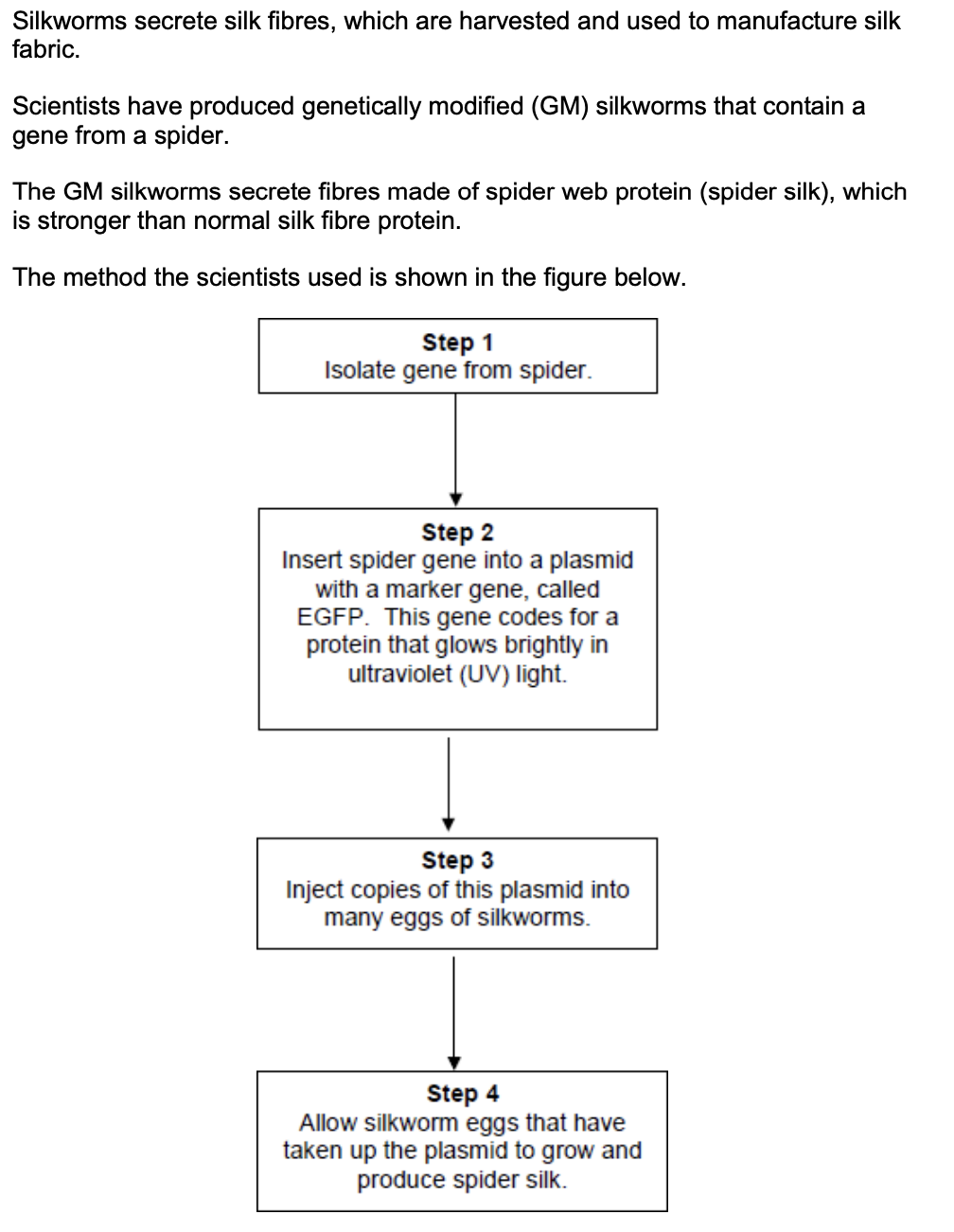
suggest 2 reasons why it was important that the spider gene was expressed only in the silk glands of the silkworms (2)
so that protein can be harvested
fibres in other cells might cause harm
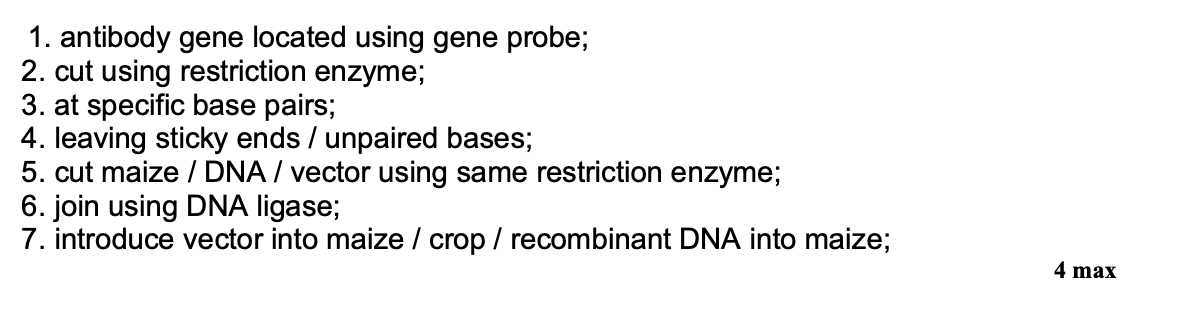
describe how an antibody gene could be isolated from an animal cell and introduced into a crop plant such as maize (4)