NSB Earth Science
 Call Kai
 Learn
Learn Practice Test
 Spaced Repetition
 Match
Match Flashcards
 Knowt Play
1/16

Earn XP
Description and Tags
Work in progress
Name | Mastery | Learn | Test | Matching | Spaced | Call with Kai |
|---|
No analytics yet
Send a link to your students to track their progress
17 Terms
Native Element
Minerals composed of only one element, such as copper, sulfur, gold, silver, and diamond.
A mineral must be this state of matter
Solid, not liquid or gas
Mineral
Naturally formed with a distinct chemical makeup, and crystalline structure, normally inorganic
Mineraloid
A substance that satisfies some, but not all of the parts of the definition. For example, opal, does not have a characteristic crystalline structure, so it is considered this.
Halite
NaCl, or salt, a mineral.
Van der Waals Bonds
a weak type of bond that does not share or transfer electrons. Usually results in a zone along which the material breaks easily (cleavage). Good examples's graphite and micas like biotite and muscovite.
Crystal (Structure)
All minerals, by definition are also these. Packing of atoms in this structure requires an orderly and repeated atomic arrangement. Such an orderly arrangement needs to fill space efficiently and keep a charge balance.
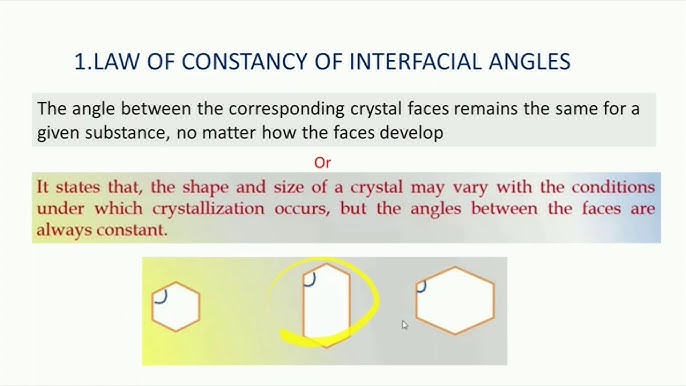
Law of constancy of interfacial angles (Steno’s Law)
X-ray diffraction
Using a certain wavelength of light that penetrates crystals but is deflected by the atoms within in order to determine crystal structure.
Polymorphs
Minerals with the same composition but different structures are called this.
Geothermal Gradient
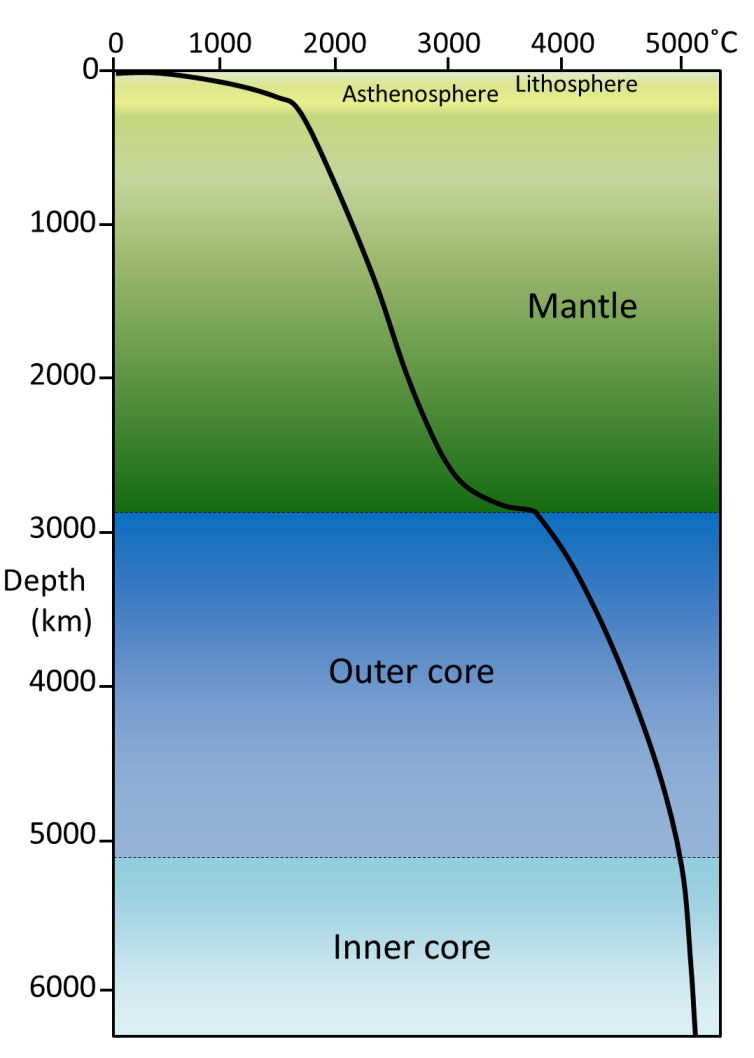
The observed relationship between pressure and temperature within the earth.
Carbon Polymorphs
Graphite and Diamond
O, Si, Al, Fe, Ca
top 5 most common elements in the earth’s crust, by mass. 45.2%, 27.2%, 8%, 5.8%, 5.1%
Silicates
Most common minerals are these - SiO4 tetrahedron
Habit, Color, Streak, Luster, Cleavage, Density, Hardness
Classifications of minerals
1 on Mohs’ scale
Talc. A clay mineral composed of hydrated magnesium silicate, with the chemical formula Mg3Si4O10(OH)2 - Phyllosilicate