3.1.1 e
 Call Kai
 Learn
Learn Practice Test
 Spaced Repetition
 Match
Match Flashcards
 Knowt Play
1/17

There's no tags or description
Looks like no tags are added yet.
Name | Mastery | Learn | Test | Matching | Spaced | Call with Kai |
|---|
No analytics yet
Send a link to your students to track their progress
18 Terms
State 3 pieces of equipment used to measure the functioning of the lungs.
peak flow meters
vitalographs
spirometers
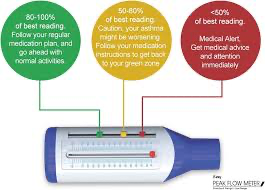
Outline how a peak flow meter works.
Measures the maximum rate at which rate can be expelled from lungs
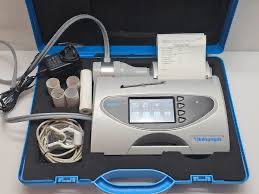
Outline how a vitalograph works.
Peak flow meters that calculate and graph the volume of air expelled as you breathe out as quickly as you can.
Label and annotate a diagram of a spirometer and the function of each component.
Floating chamber on water with a pivot so that it moves down when you inhale and up when you exhale, connected to a recording pen which draws a trace on a rotating drum.
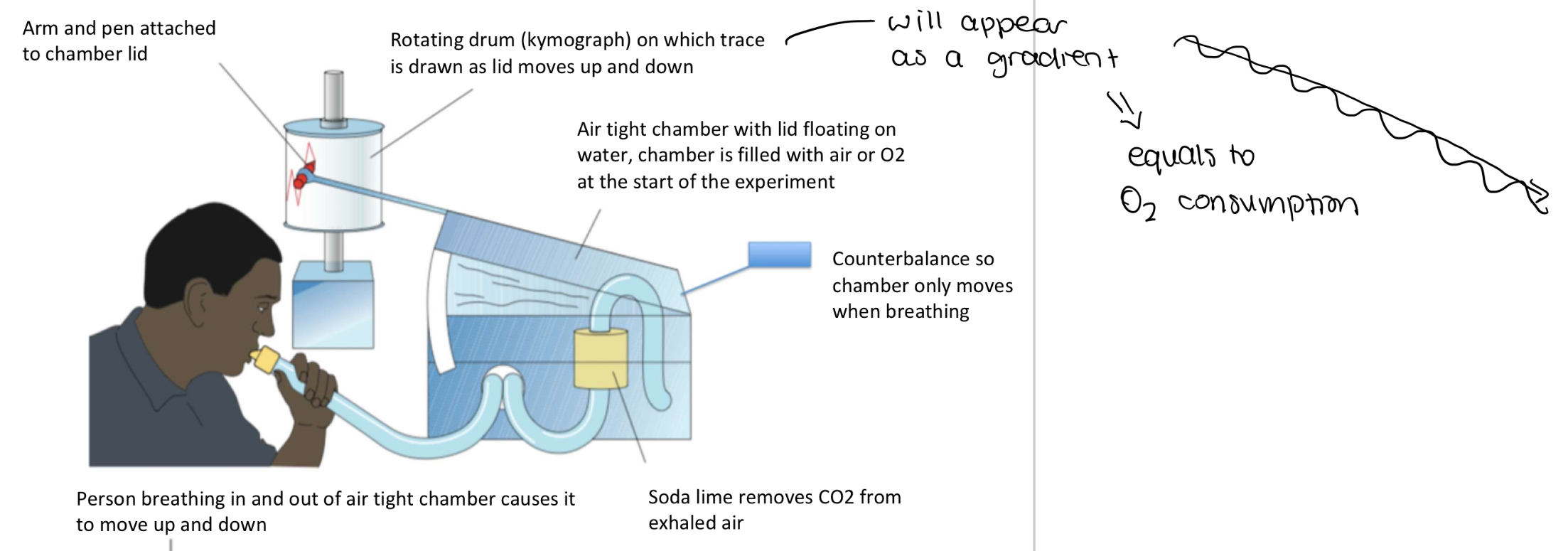
Describe how a spirometer measures change in lung volume and explain why it cannot measure absolute lung volume.
Can only calibrate trace for known volume of air, cannot ever completely empty lungs so always some residual volume that is not measured.
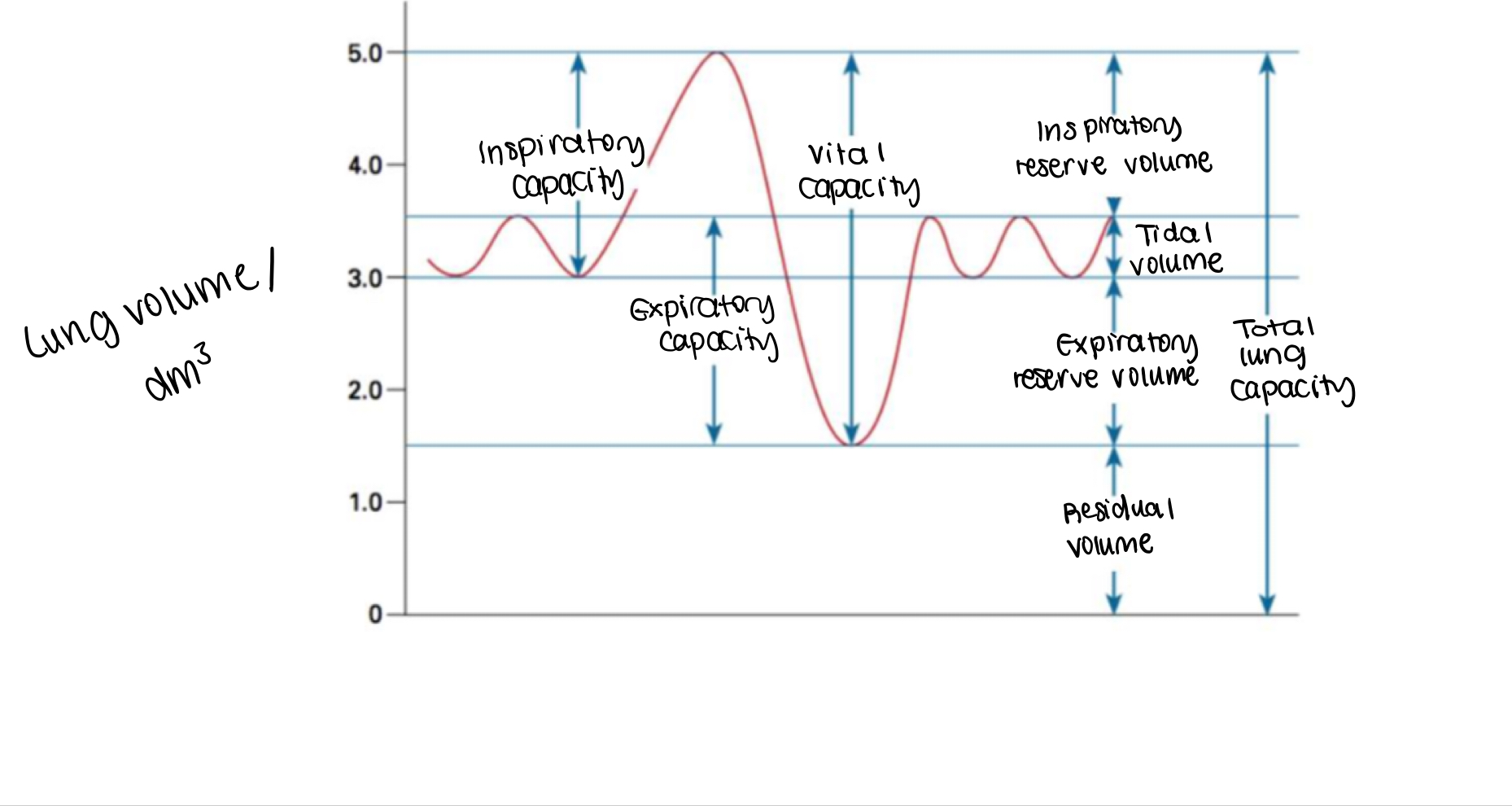
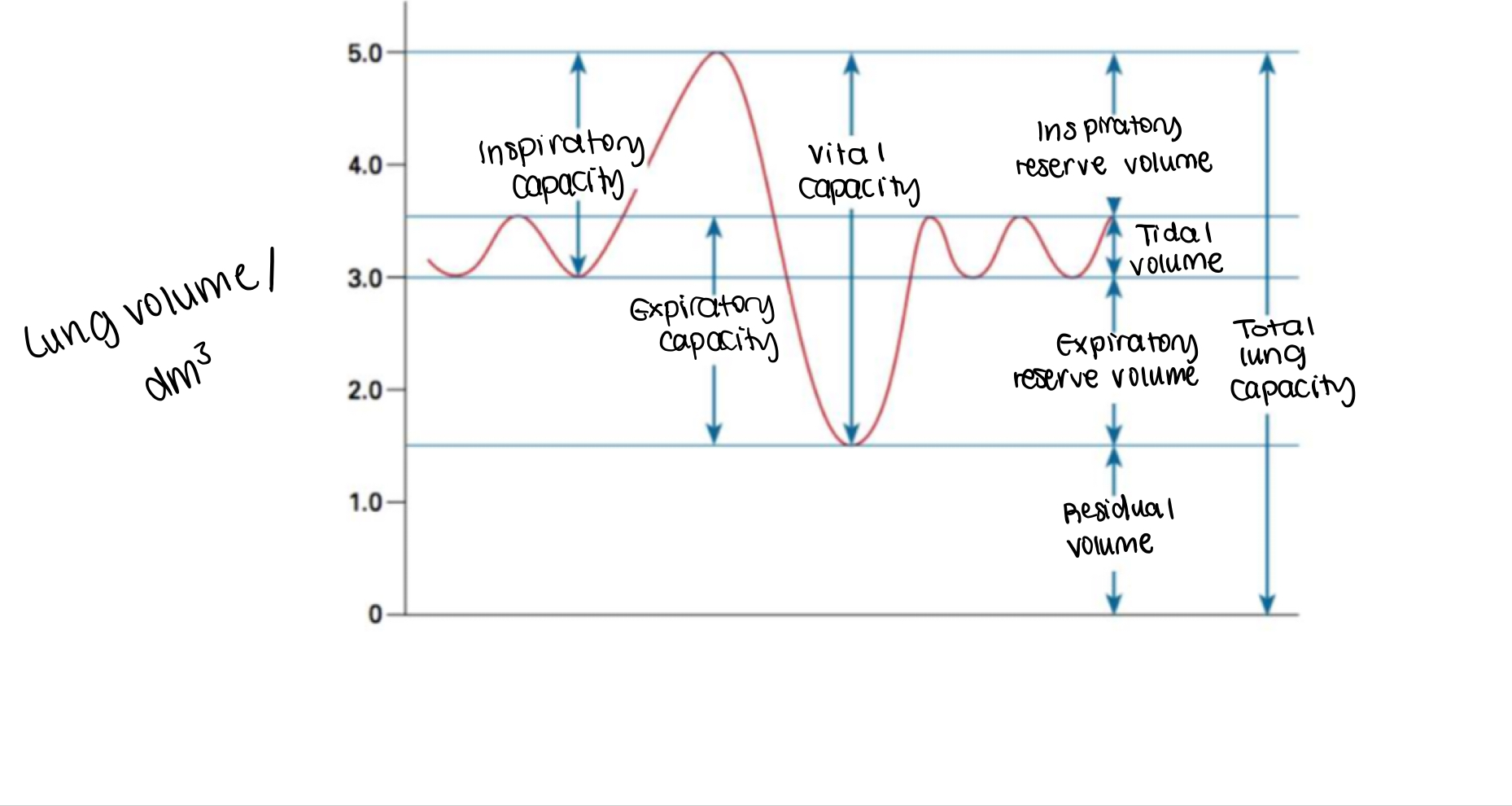
Define the term ‘tidal volume’.
The volume of air moved into or out of the lungs in one breath during normal breathing (dm³ breath^-1)
Define the term ‘vital capacity’.
The volume of air breathed out after the deepest inspiration. The maximum volume of air that can be exchanged in one breath.
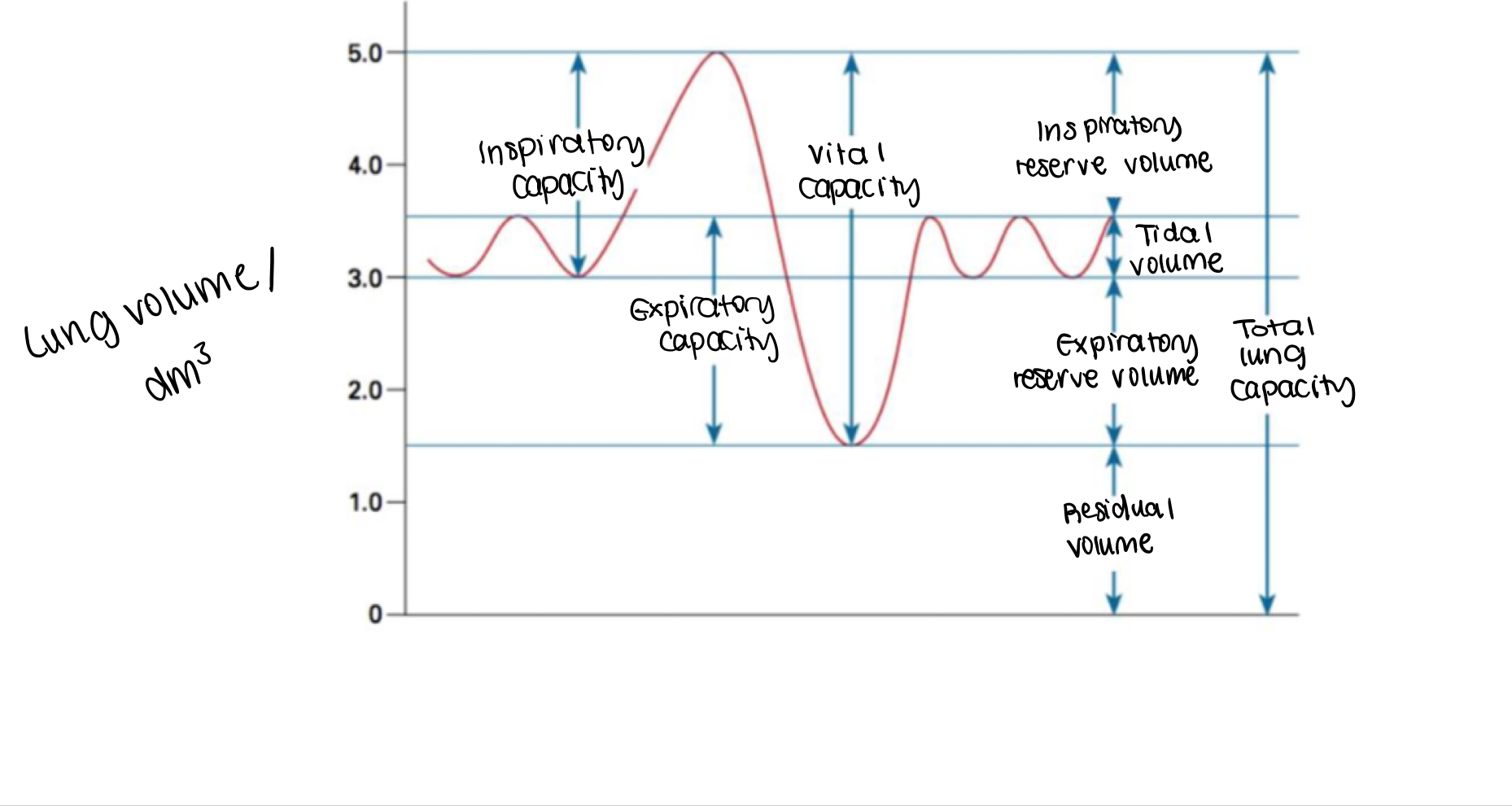
Define the term ‘inspiratory reserve volume’.
The maximum extra volume that can be inhaled after normal inspiration.
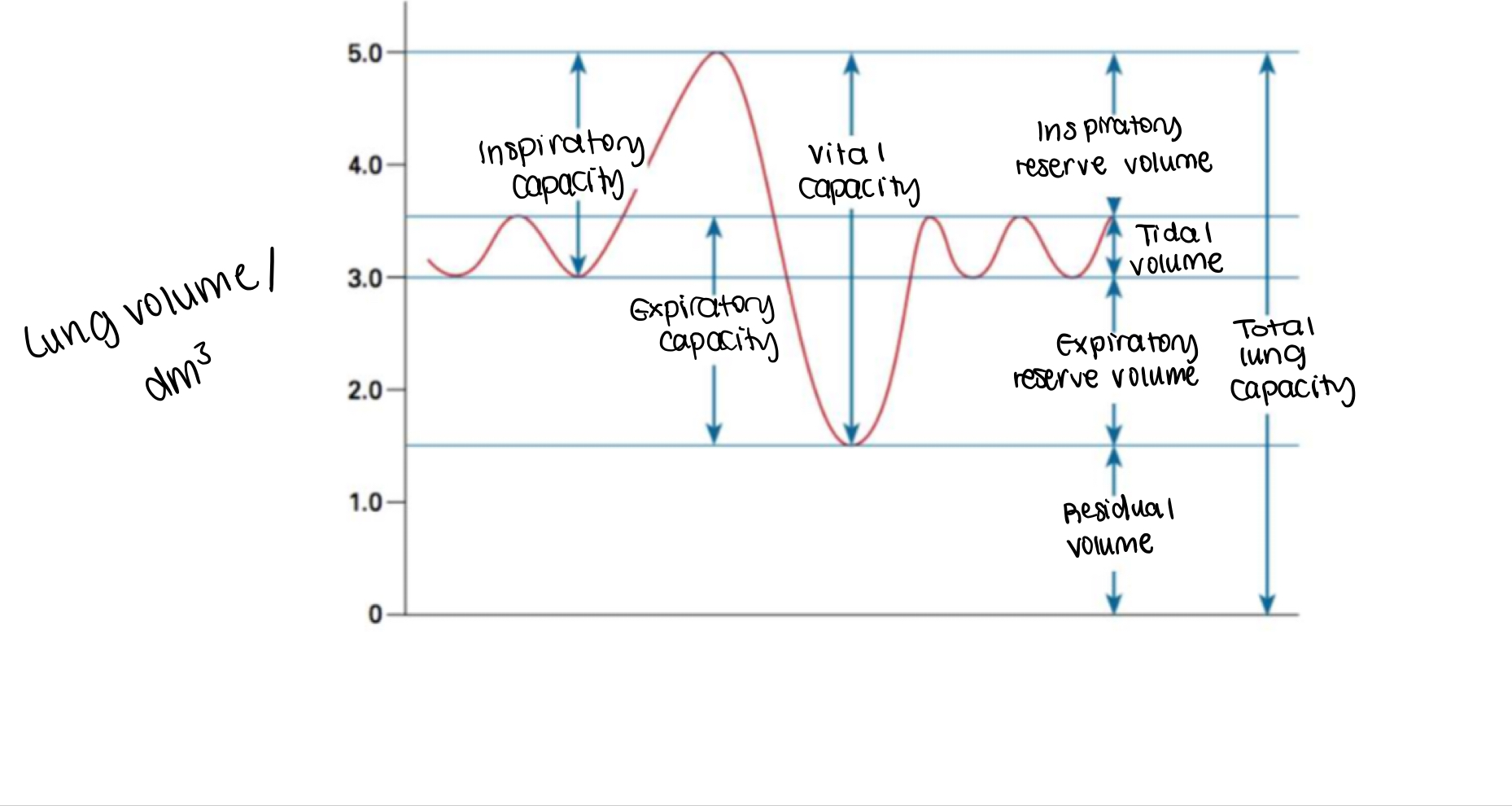
Define the term ‘expiratory reserve volume’.
The maximum extra volume that can be exhaled after normal expiration.
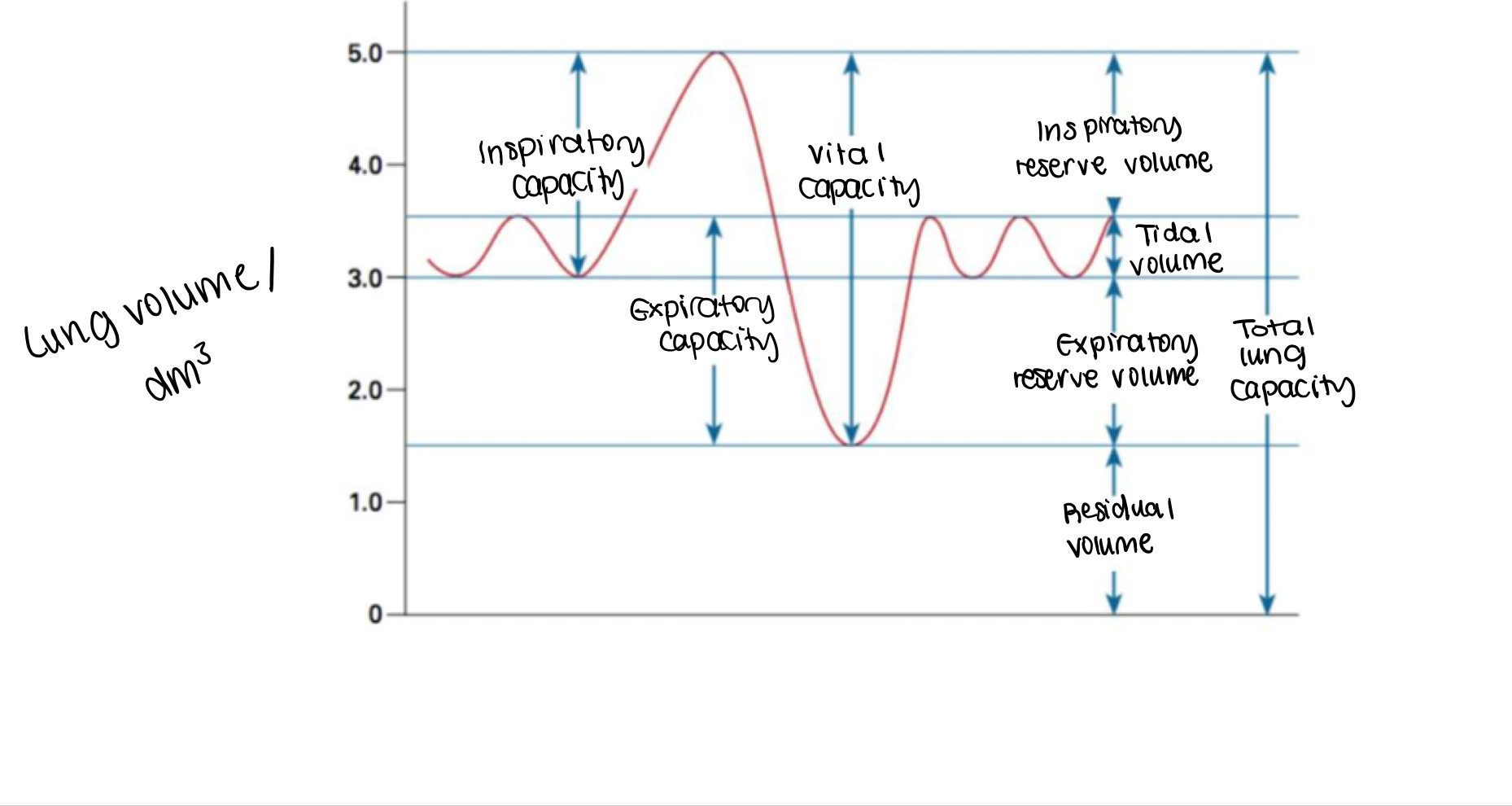
Define the term ‘residual volume’.
The volume of air remaining in the lungs after a maximal expansion.
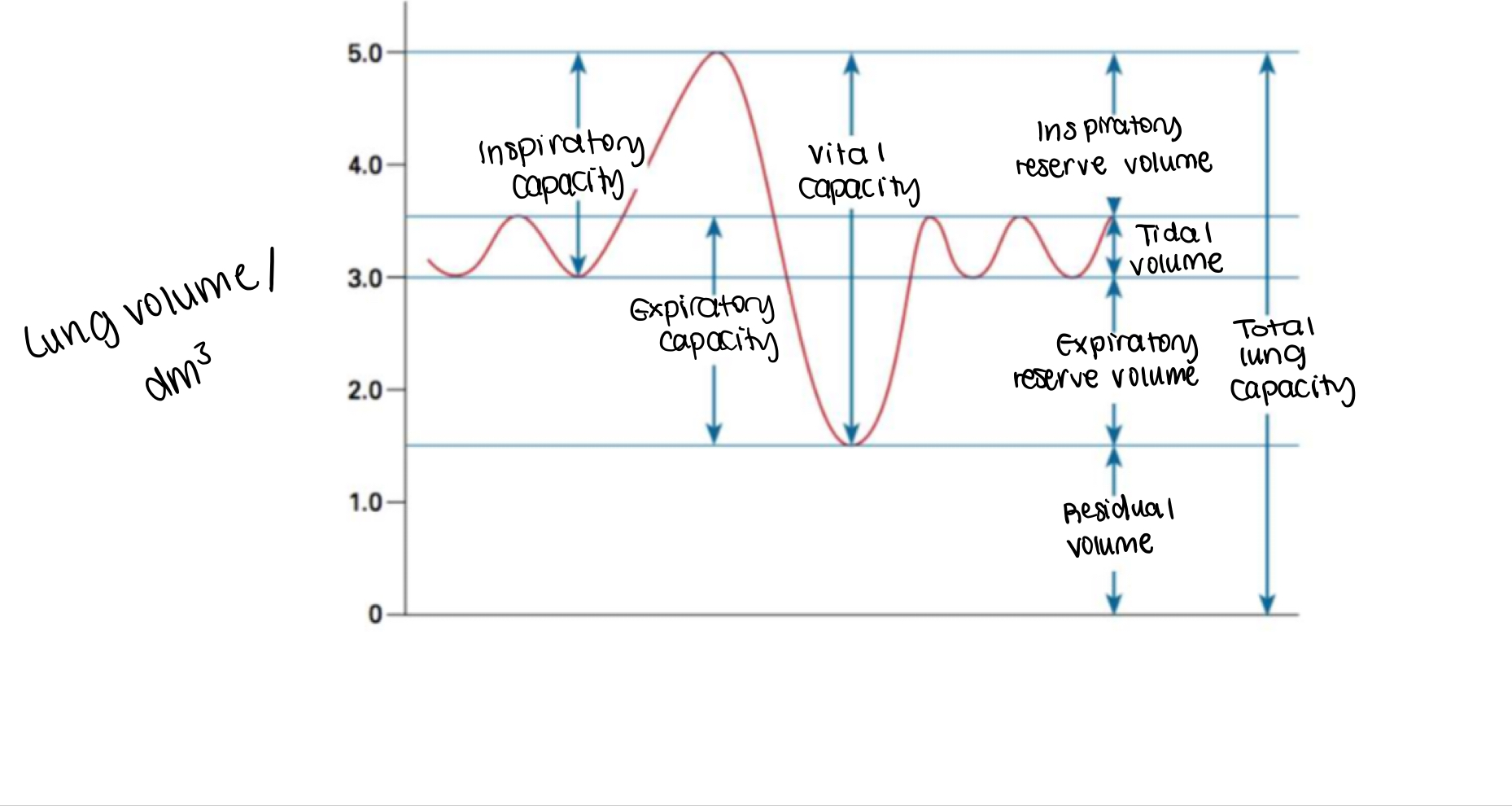
Define the term ‘total lung capacity’.
The volume in the lungs at maximal inspiration
Define the term ‘breathing rate’.
number of breaths per minute
Define the term ‘ventilation rate’.
the volume of air moved into or out of lungs per minute
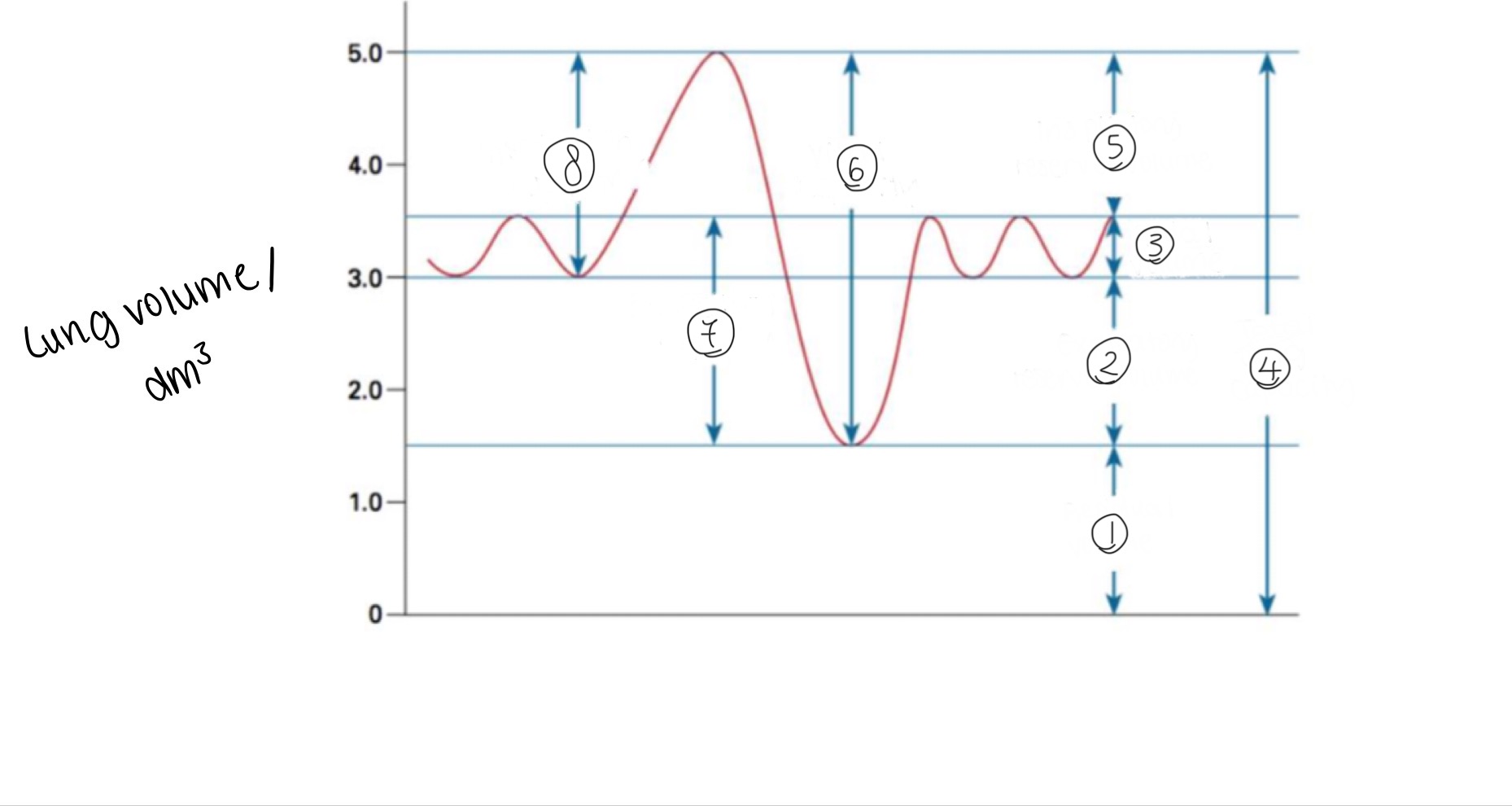
Label the spirometer graph.
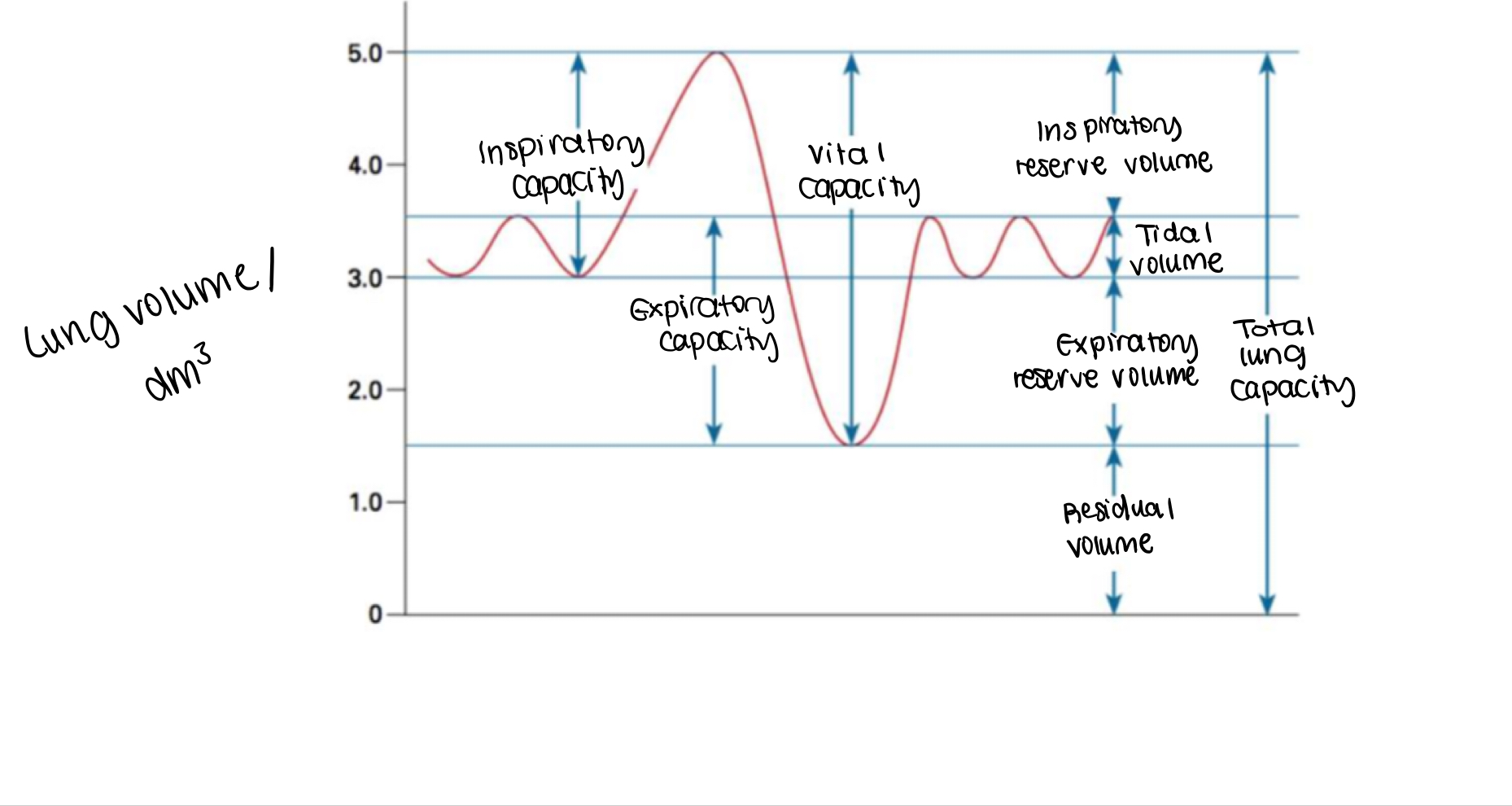
Explain how a spirometer trace is different to a graph of the changes in lung volume during breathing,
Spirometer does not show the residual volume, therefore does not show total lung capacity.
Inspiration and expiration are also the opposite way up as the floating chamber moves down as lung volume increases, not up.
Write an equation to link ventilation rate with breathing rate and tidal volume.
ventilation rate = breathing rate x tidal volume
Describe how a spirometer trace would differ during exercise as compared to the trace before exercise started.
Peaks and troughs would be larger and closer together
Describe how tidal volume and breathing rate link to oxygen uptake and explain the importance of the change in tidal volume and breathing rate during exercise.
Increased tidal volume and breathing rate means more air and therefore more oxygen is entering the lungs and available to be taken up by RBCs.
During exercise, more oxygen is needed for respiration, so more air must enter and leave the lungs at a greater rate.