Lesson 76 Neoplasia and developmental disorders
 Call Kai
 Learn
Learn Practice Test
 Spaced Repetition
 Match
Match Flashcards
 Knowt Play
1/61

There's no tags or description
Looks like no tags are added yet.
Name | Mastery | Learn | Test | Matching | Spaced | Call with Kai |
|---|
No analytics yet
Send a link to your students to track their progress
62 Terms
Granulosa cell tumor (GCT)
ovary, hormone secreting, unilateral
common in mares, hormone secreting
signs: anestrus, nymphomanias, stallion-like behavior from testosterone production
Dysgerminoma
ovary (germ cells)
rare, malignant, can metastasize
teratoma
ovary(germ cells). benign
can contain hair, teeth, bone
leiomyoma
uterus, vagina
smooth muscle tumor, benign
common in bitches. may cause dystocia(slow labor) or infertility
leiomyosarcoma
uterus
malignant smooth muscle tumor, invasive and metastatic
endometrial adenocarcinoma
uterus
malignant epithelial tumor
common in cows rabbits
squamous cell carcinoma
vulva, cervix
malignant epithelial tumor
linked to UV exposure in pale skin
common in mares and cows
Tranmissible venereal tumor
vagina, vulva
trasnmission venereal. common in dogs
cauliflower like masses can resolve with host immunity or chemo therapy
Melanoma
vulva, perineal region
common in older grey horses
can be benign or malignant
seminoma
testis (germ cell)
common in cryptorchid dogs
benign s
sertoli cell tumor
testis (sex cord stromal)
produces estrogen→ feminization, alopecia, gyenecomastia, bone marrow suppression
common in intact males
interstitial (Leydig) cell tumor
testis
common in older dogs
benign. secrete testosterone→ prostatic hyperplasiawhat
what do sertoli and leydig cells normally do
sertoli(stim by FSH)→ spermatogenesis
leydig(stim by LH)→ testosterone
what do granulosa and theca cells normally do
Theca (stim by LH)→ androgen ex. testosterone
granulosa (stim by FSH)→ estrogen
prostatic adenocarcinoma
prostate gland
aggressive, malignant→ can metastasize to bone and lungs
common in older nuetered dogs
squamous cell carcinoma in males
penis prepuce
common in horses, cattle
locally invasive and ulcerative
transmissible venereal tumor in male
penis prepuce
common in dogs
transmission via sex. able to resolve vincristine chemotherapypapi
papilloma
penis prepuce
common in young bulls
benign epithelial tumor, viralpe
perianal gland adenoma
perianal region
common in intact males
androgen dependent, can regress with castration
benign
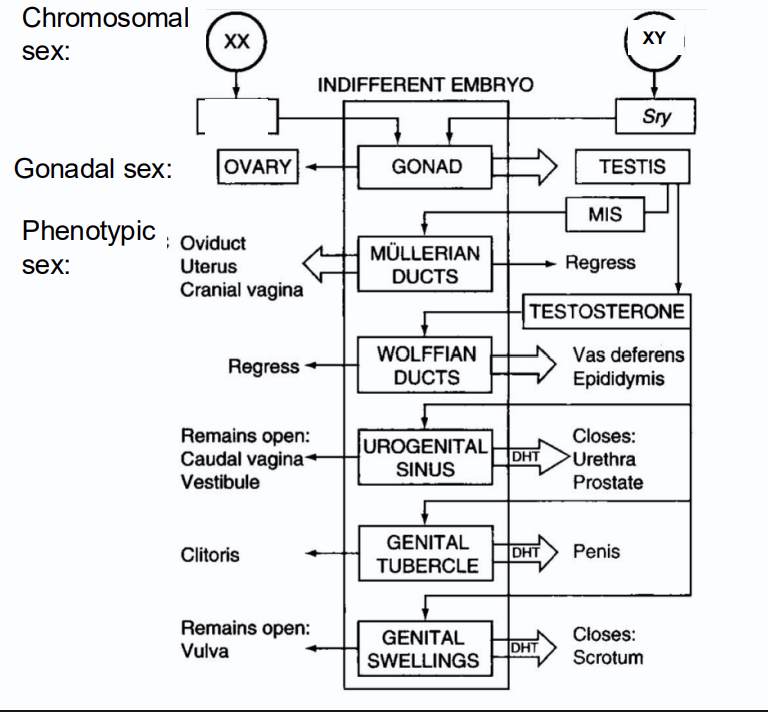
What gene presence determine if fetus become male
SRY gene
What is the two ducts present in early fetus development before sex is differentiated
mesonephric (wolffian) duct
paramesonephric (mullerian) duct
What does SRY gene expression do
created testis determining factor (TDF)
sertoli cell secrete anti mullerian hormone→ mullerian ducts regress
leydig cells produce testosterone
What happens in fetus with no SRY expression
no TDF made so both ducts are retained and primitive gonads develop into ovaries
Repro tract development
white heifer disease
genetic link to white coat. common in shorthorn cattle
failure or paramesonephric ducts to develop→ results in uterus unicornis(only one horn develops)
-persisitent hymen, horns fill with mucus
but normal sized ovaries and active
freemartinism
female born as co-twin with a male→ female is exposed to testosterone and AMH→ resulting in chimeras, incomplete development paramesonephric ducts(horn) and ovaries
-female will act bullish
-most common in cows
Signs of freemartinism
anestrus, large clitoris, small ovaries, increase distance b/w anus and vulva, lots of pubes
polled intersec syndrome
common in dairy goats
-male psuedohermaphodites (male but look female)
-female at birth but develop male characteristics
ex. larger, aggressive, buck odor, and erect hairs on neck. small teats and enlarged clitoris
gynecomastia
common in dairy goats and polled animals
“milking buck syndrome”
pituitary tumor→ increased prolactin and estrogen→ boobies
normal libido and fertility but not preferred for breeding
Sperm granuloma
common in bucks, and heritable
abnormal formation of epididymis head=sperm buildup and ductule rupturing→ inflammation and granuloma ± calcification→ testicular degeneration
signs: firm swelling at head of epididymis or small atrophic testis
persistent frenulum (attaches penis to prepuce)
normal in prepubertal bulls but should disappear postpubertal
-heritable
-results deviation of penis
sex reversal disorders
chromosomal sex does not match with gonadal or phenotypic sex
vaginal stricture
scar tissue → narrowed vaginal canal.
vaginal septum
divides lumen in vagina, basically extra wall
significane of vaginal septum and vaginal sticture
interference with breeding, making it painful or hard birth
63, xo gonadal dysgenesis
disorder of sexual development in mares
signs: small ovaries, infantile organs
cryptorcchism
failure one or both testis to descend into scrotum
common horses, pigs and dogs
hormones production is normal but spermatogenesis is affected
retained testes prone to spermatic cord torsion and testicular neoplasia
which tumors are more common in female repro system
ovarian tumors
which tumors are extremely rare in female repro system
oviductal and cervical tumors
What is the most common ovarian tumor
granulosa cell tumor (GCT)
Granulosa cell tumor in mares
unilateral, slow growing, benign→ destroy ovary architecture
-secrete hormone-estrogen, AMH, testosterone, inhibin→ atrophy of contralateral ovary
signs: aggression, stallion like behavior, masculine muscle development, irregular estrous cycle, anestrus
GCT hormones
AMH increased in 98% of mares
Inhibin increased in 80% of mares
testosterone increased in 48% of mares
GCT in dogs and cats
most common in older dogs/cats. more malignant in cats
still functional, secretes hormones (E2 and PG)
estrus like signs
-persistance of estrogen can lead to hyperestrogenism
-persistence of progesterone can lead to cystic edometrial hyperplasia and pyometra
hyperestrogenism
alopecia, bone marrow suppression
which hormone is best used to diagnose granulose cell tumor
AMH
Teratoma
germ cell-hair or bone can be found
not hormonally active, unilateral
contralateral ovary is fine
benign→ no need to remove
cystadenoma
enlarged, absence of ovulation fossa (dent where ovulation occurs)
looks honeycomb on U/S from multiple small cysts
contralateral ovary is normal
slow growing but surgery not urgent. no metastasis
Dysgerminoma
germ cell tumor, enlarged and solid, no ovulation fossa
massive echogenic structure on U/S
unilateral and hormonally inactive, slow growing
contralateral ovary is active
potential metastasis, surgery required
uterine tumors
not common
benign: leiomyoma, fibroma, fibroleiomyoma
malignant: leimyosarcoma, rhabdomyosarcoma, lymphosarcoma, adenosarcoma
Vaginal tumors
common in older dogs
benign but space occupying→ vaginal discharge, tenesmus(urge to poo), stranguria, hemorrhage, vaginal irritation
can be hormone dependent
ex. TVT
TVT-transmissible venereal tumor
affect any age bitches
transmission: coitus(mating)
round cell tumor
signs: cauliflower like growth on vaginal mucosal and serosanguinous discharge
which tumor is more common in male repro system
testicular tumors-most common is sertoli cell tumor
sertoli cell tumor
most common testis neoplasia
low malignancy, one side enlarged and other may be atrophic
signs: feminizing paraneoplastic syndrome from estrogen secretion→ pancytopenia, nonregenerative anemia, pale, bilateral alopecia, hyperpigmentation, gynecomastia, pendulous preputial sheath
seiminoma
tumor of testes germ cell
low malignancy, paraneoplastic syndrome (functional symptoms not physical space invading)
interstitial/Leydig cell tumor
most common in scrotal testes
small, discrete hard to detect clinically
low malignany
paraneoplastic syndrome ex. hyperestrogenism, hypertestosteronism, prostate disease, perianeal adenoma, hyperplasia or hernia
what clinical signs are most commonly associated with sertoli cell tumors in dogs
alopecia and feminization
Spermatic cord torsion
common in retained and neoplastic testes
-360 degress: anorexia, vomiting, abdominal pain, lethargy pyrexia, scrotal swelling
-180 degrees: subclinical and self correcting
prostatic metaplasia
secondary to estrogenic stimulation
low grade inflammation
dx: squamous cells in cytology
can lead to cysts, prostatis/ abscess
castration recommended
prostatic neoplasia
ex. malignant adenocarcinoma most common and most common in castrated dogs
high rate metastasis
signs:
- GIT-tenesmus, constipation
-urinary: stranguria, hematuria
-weightloss, pain, ataxia
what prostatic condition is more common in neutered dogs
prostatic neoplasia
fibropapilloma
common in young bulls
signs: hemorrhage, ulceration, impaired libido, phimosis (unable protrude) or paraphimbosis (unable to draw back)
prognosis: may return to breeding after treating
Most common testicular tumor in cryptoorchid dogs
sertoli cell tumor