CHAPTER 4 BONDING CHEM GT
0.0(0)
Studied by 1 person Call Kai
 Learn
Learn Practice Test
 Spaced Repetition
 Match
Match Flashcards
 Knowt Play
Card Sorting
1/34

Earn XP
Description and Tags
Last updated 10:14 PM on 7/3/23
Name | Mastery | Learn | Test | Matching | Spaced | Call with Kai |
|---|
No analytics yet
Send a link to your students to track their progress
35 Terms
1
New cards
Metallic Bonds
Between two metal atoms
2
New cards
Sea of Electrons
All the valence electrons going from one positive ion to another
3
New cards
Results of Sea of Electrons
Cause metals have high luster, are ductile and \n malleable, and conduct heat and electricity
4
New cards
Alloy
A mixture of metals
5
New cards
Substances with metallic bonding have…
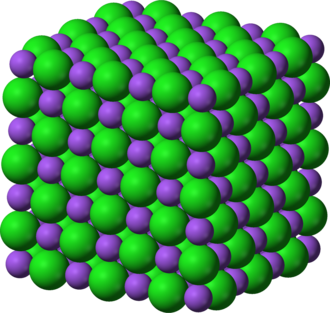
high boiling points, not soluble in water, and a crystal lattice
6
New cards
Metals tend to *__* electrons while Nonmetals tend to __ electrons
Metals tend to lose electrons while Nonmetals tend to gain electrons
7
New cards
Positive ions
Cations
8
New cards
Negative ions
Anions
9
New cards
Columbic attraction
The attraction / repulsion between positive and negative charges
10
New cards
Ionic compounds
The transfer of electrons from a metal to a nonmetal
11
New cards
Ionic compound traits
Solid at room temperature as they have high melting and boiling points, they often are soluble in water and conduct \n electricity when dissolved and as a liquid and they form crystals
12
New cards
The sum of an ionic compound’s charges **MUST** be
ZERO
13
New cards
Covalent Bonds
Also known as Molecular compounds, The sharing of electrons among two or more nonmetal atoms
14
New cards
Covalent Bond Traits
Molecular compounds are generally liquids or gases at room temperature because they have low melting and boiling points. They do not conduct electricity in any state and are often not soluble in water
15
New cards
Nonpolar Covalent
Electronegativity difference: .4 or less
Equal Sharing of e- \n 50% / 50%
Charge: None
Equal Sharing of e- \n 50% / 50%
Charge: None
16
New cards
Polar covalent
Electronegativity difference: .5-1.7
Unequal Sharing \n 40% / 60% to \n 10% / 90%
Charge: Partial
Unequal Sharing \n 40% / 60% to \n 10% / 90%
Charge: Partial
17
New cards
Ionic (Electronegativity difference)
Electronegativity difference: 1.8 or more
Transfer of e- \n 0% / 100%
Charge: Full
Transfer of e- \n 0% / 100%
Charge: Full
18
New cards
VSEPR Theory
Looks at the outer level of an electron and see how it repels from one another, which determines the shape of the molecule
19
New cards
Linear shape
Angle: 180
Shape: Two atoms or two double bonds
Shape: Two atoms or two double bonds
20
New cards
Trigonal Planar shape
Angle: 120
Shape: 3 shared (bonded) pairs and 0 unshared pairs
Shape: 3 shared (bonded) pairs and 0 unshared pairs
21
New cards
Tetrahedral shape
Angle: 109.5
Shape: 4 shared (bonded) pairs and 0 unshared pairs
Shape: 4 shared (bonded) pairs and 0 unshared pairs
22
New cards
Pyramidal shape
Angle: 107
Shape: 3 shared (bonded) pairs and 1 unshared pair
Shape: 3 shared (bonded) pairs and 1 unshared pair
23
New cards
Bent shape
Angle: 104.5
Shape: 2 shared (bonded) pairs and 2 unshared pairs
Shape: 2 shared (bonded) pairs and 2 unshared pairs
24
New cards
Polar and Non-Polar molecules
Polar and Non-Polar bonds are **DIFFERENT** from Polar and Non-Polar molecules. In order to find if a molecule is polar or non polar, we first need to find if their bonds are polar or non polar
25
New cards
Non Polar Molecules
If there bonds are non polar, then they are always non polar molecules.
If the bonds are polar but are __***3 atom linear, trigonal planar, or tetrahedral***__, then they are Non Polar Molecules.
If the bonds are polar but are __***3 atom linear, trigonal planar, or tetrahedral***__, then they are Non Polar Molecules.
26
New cards
Polar Molecules
If the bonds are polar but are __***2 atom linear, pyramidal, or bent,***__ then they are Polar Molecules.
27
New cards
Intermolecular Forces (IMF)
The bonds **BETWEEN** molecules. IMF is much weaker than any kind of bond (Covalent, Ionic, and Metallic)
28
New cards
The stronger the IMF…
The higher the boiling and melting point
29
New cards
Dipole-Dipole forces
The poles (partial positive and partial negative charges) of a \n polar molecule are attracted to the poles of another polar molecule. Between two polar molecules
30
New cards
Hydrogen ~~Bonds~~
Dipole-Dipole forces that include hydrogen bonded to a __***Nitrogen, Oxygen, or Fluorine*** *(Never On Friday)*__. This is the **STRONGEST** out of the all the IMFs but still the **WEAKEST** out of all the bonds.
31
New cards
London Dispersion Forces
A temporary dipole is one that is not normally present \n (nonpolar molecule), but is created momentarily by a shift of electrons. When this happens to two molecules at the same time, the opposite partial charges attract each other for the few moments that both induced dipole exists
32
New cards
London Dispersion Forces are…
the weakest out of all the IMFs but all molecules will have London Dispersion forces.
33
New cards
Properties of Metallic Bonds:
Solubility in H2O: No
Melting Point: High
Boiling Point: High
States that Conduct Electricity: Solid and Liquid
Melting Point: High
Boiling Point: High
States that Conduct Electricity: Solid and Liquid
34
New cards
Properties of Ionic Bonds:
Solubility in H2O: Yes
Melting Point: High
Boiling Point: High
States that Conduct Electricity: Liquid and when dissolved in water
Melting Point: High
Boiling Point: High
States that Conduct Electricity: Liquid and when dissolved in water
35
New cards
Properties of Covalent Bonds:
Solubility in H2O: NonPolar-no| Polar-yes
Melting Point: Low
Boiling Point: Low
States that Conduct Electricity: None
Melting Point: Low
Boiling Point: Low
States that Conduct Electricity: None