IB HL Psychology - Research Methods and Concepts
 Call Kai
 Learn
Learn Practice Test
 Spaced Repetition
 Match
Match Flashcards
 Knowt Play
1/181

There's no tags or description
Looks like no tags are added yet.
Name | Mastery | Learn | Test | Matching | Spaced | Call with Kai | Chat |
|---|
No analytics yet
Send a link to your students to track their progress
182 Terms
Quantitative data
usually numerical data (objective)
Qualitative data
rich data that is highly descriptive (subjective)
Aim of quantitative data
Parameter | Quantitative data |
Aim | To characterize behaviour of large group of individuals |
Focus of quantitative data
Parameter | Quantitative data |
Focus | Behavioural manifestation (operationalized → making it measurable) |
Data of quantitative data
Parameter | Quantitative data |
Data | Number |
Objectivity of quantitative data
Parameter | Quantitative data |
Objectivity | More objective |
Types of quantitative data
Parameter | Quantitative data |
Types (research methods) | Experiment, quasi-experiment, correlational study, interview |
Aim of qualitative data
Parameter | Qualitative data |
Aim | In-depth + rich understanding of case or phenomenon |
Focus of qualitative data
Parameter | Qualitative data |
Focus | human experiences, interpretations, meanings |
Data of qualitative data
Parameter | Qualitative data |
Data | Text |
Objectivity of qualitative data
Parameter | Qualitative data |
Objectivity | More subjective |
Types of qualitative data
Parameter | Qualitative data |
Type (research methods) | Observation, interview, focus group, case study |
Thing you need to have when doing an experiment
Construct validity
Sample
Standardization of the procedure
Internal validity
Construct validity
to what extant are you measuring what you need to measure
Sample
Participants
Standardization of the procedure
the process of ensuring that all participants in a study or experiment experience the exact same conditions, materials, instructions + environmental factors
Internal validity
Are you controlling things that can affect the results
Objectivity
The results generalized are not influenced by attitudes, personal feelings, opinions + experiences → a way that potential sources of bias are minimized.
Controlled
In experimental methods, all variables are operationalized + control over extraneous variables are applied → can enable researchers to establish cause + effect
Extraneous/confounding variables
variables other than the IV that could potentially influence the DV + change study results
Falsifiable
For something to be scientific, it should be falsifiable, should be amenable to scientific testing, should generate hypotheses → each support/refute a theory → can lead to a reconsideration of a theory
Nomothetic approach
creating laws that allow things to be generalized
Advantages of the empirical method
creates general laws
preventative measures
treatments + interventions
Example of an experiment with a control group
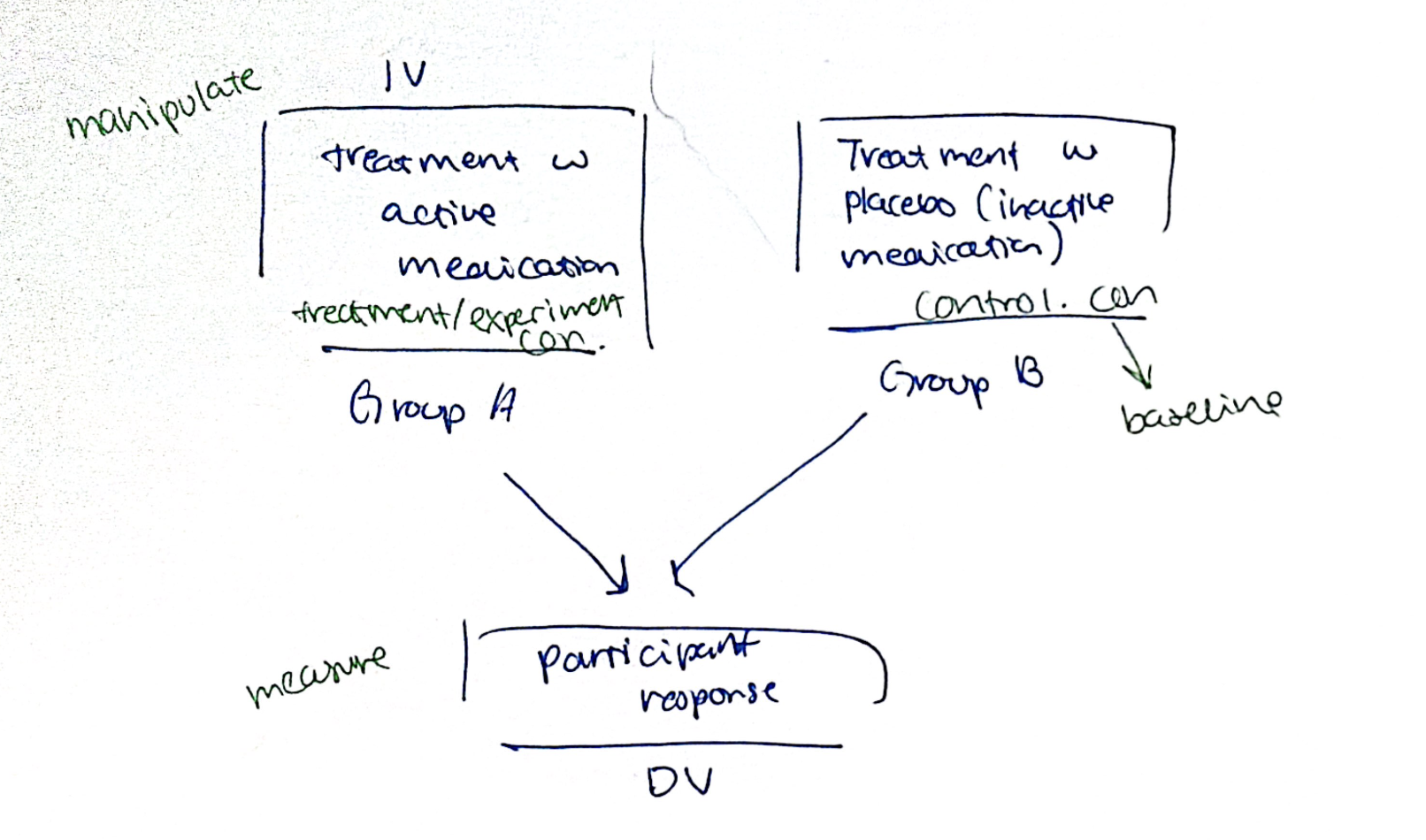
Practice effect
Getting better as you do more of it → e.g. doing it 2x
Demand characteristics
Participants able to guess aim + many of them changed their results
Types of demand characteristics
Social desirability bias
Expectancy effect
Screw you effect
Participants biases
Social desirability bias
Give a result that’s a socially acceptable response
Expectancy effect
Try to help them out by giving results needed for researcher
Screw you effect
Giving total opposite response to researcher.
Participants biases
Systematic way where participants' expectations, motivations, or behavior influence the study's outcome
Reactivity (qualitative)
Participants alter their behavior because they are aware of being observed
Placebo (non - active treatment) effect
Person experiences a real change in symptoms/behavior because they believe it's a treatment
Nocebo effect
Person experiencing negative effects caused by belief that something will harm them
Characteristics of a true/lab experiment
There is an artificial setting → extraneous variables are controlled
Participants are randomly allocated to minimize researcher + participant bias
starts off with a hypothesis → gives it a sense of direction → in experiments, never prove, but try to disprove the null hypothesis (which is no significant difference → IV manipulated, no change in the DV)
IV is manipulated
DV is measured in a quantitative way
Establishes causality
Characteristics of a field experiment
Inability to control extraneous variables → takes place in the natural environment
IV is manipulated
Participants are not randomly allocated
Establishes cause + effect
Does not take place under controlled conditions, but in real-world environments
Characteristics of a natural experiment
IV is not manipulated since the IV is naturally occurring
Occurs in a natural environment
Measures the impacts on the DV
All natural experiments are a type of quasi-experiments
Happens when we cannot ethically manipulate the IV
Cannot establish causality → only correlation
Characteristics of a quasi experiment
Allocation of participants isn't random
Participants are grouped based on their characteristics of interest
Researchers are measuring pre-existing differences in 1 variable
Methods become correlational and cannot draw conclusions → not establishing causality
IV cannot be manipulated
External validity
Generalize the results to other populations/settings → are you able to generalize beyond the specific conditions of the experiment → do the findings apply to the real world or just this specific study?
Pros + Cons of true/lab
Experiment | Strengths | Limitations |
True/lab ↑ internal val. ↑ control of variables ↓ eco val. |
|
|
Pros + Cons of field
Experiment | Strengths | Limitations |
Field ↑ eco val. ↓ control of variables ↓ internal val. ↓ demand characteristics ↓reliability ↓ replicability |
|
|
Pros + Cons of quasi
Experiment | Strengths | Limitations |
Quasi |
|
|
Pros + Cons of natural
Experiment | Strengths | Limitations |
Natural ↑ eco val. ↓ internal val. |
|
|
Pros + Cons of correlational studies
Experiment | Strengths | Limitations |
Correlational studies (for pilot studies → most time use correlational studies) |
|
|
Non - directional hypothesis (2-tailed)
There will be a significant difference between the number of digits recalled that will be read aloud and that those will be read sub-vocally (A ↔ B)
Directional hypothesis (1-tailed)
The numbers of digits recalled will be significantly higher for those that will be read out loud than those that will be read sub-vocally. (A → B)
1 tailed direction keywords
increase/decrease
higher/lower
better/worse
Directional hypotheses sentence former
The ____ will score a significantly high number of words recalled then _____.
Null hypothesis
There will be no significant difference between the number of digits recalled from those that will be read out loud and those that will be read sub-vocally (A ≠ B)
Null hypotheses sentence former
There will be no significant difference between #1 or and #2 the number of words recalled.
Experimental design
The way in which the participants are organized into groups
Characteristics of independent measures design
Testing separate groups of people
Each group is tested in a different condition
Pros + Cons of independent measures design
Pros | Cons |
|
|
Characteristics of repeated measures design
Testing the same group of people in different conditions → same people are used repeatedly
Pros + Cons of repeated measures design
Pros | Cons | Control |
|
|
|
Order effect
matters which order conditions are in
Counterbalancing
To avoid order effects → sample groups split in half → 1 half does C#1 then C#2 → oher half does C#2, then C#1
Eliminate order effects. Ensures changes in order of behaviors/responses are due to IV + not the sequences conditions are done
Control confounding variables caused by fatigue, practice/boredom
↑ internal validity → more likely that any observed effect is generally due to experimental manipulations
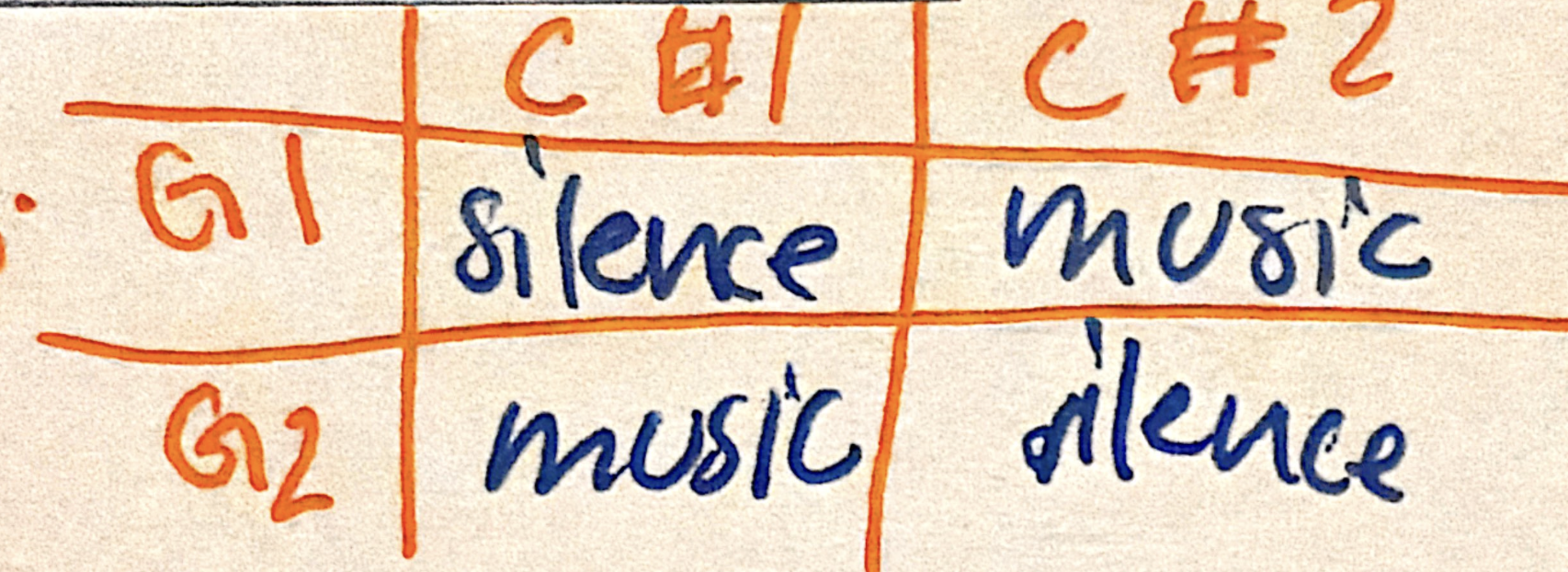
Characteristics of matched pair designs measures design
Testing separate groups of people, each member of one group could be the same age, sex, or social background as a member of the other group
People have pre-existing characteristics
This design can help overcome issues with repeated
Pros + Cons of matched pair designs measures design
Pros | Cons | Control |
|
|
|
Single blind
When the participants last researcher doesn't know if they are in the treatment group or the control group
Double blind
When neither the participants nor the researcher know which group is which.
Correlational studies
have no manipulated variable
do not seek to establish casual relationships
they have 2 or more measured variables knows as co-variables
Correlation
measures how strong the relationship is between 2 or more variables
Positive correlation
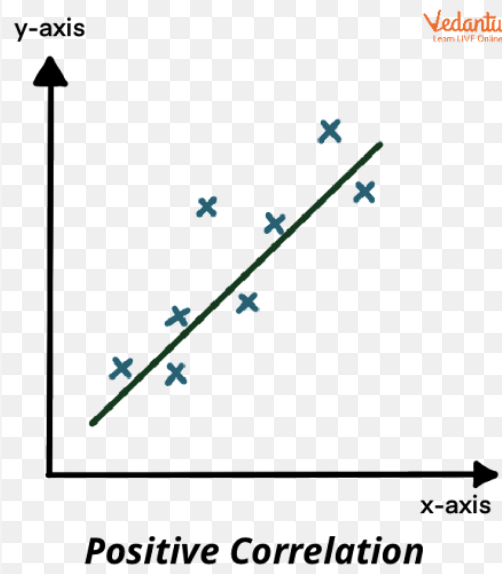
Negative correlation
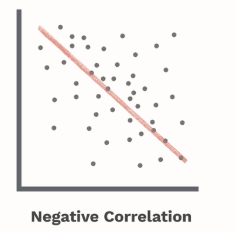
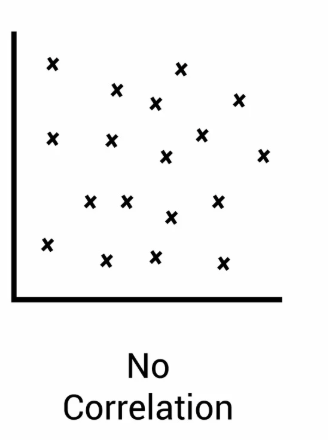
No correlation
Correlational designs
participants provide data for both variables
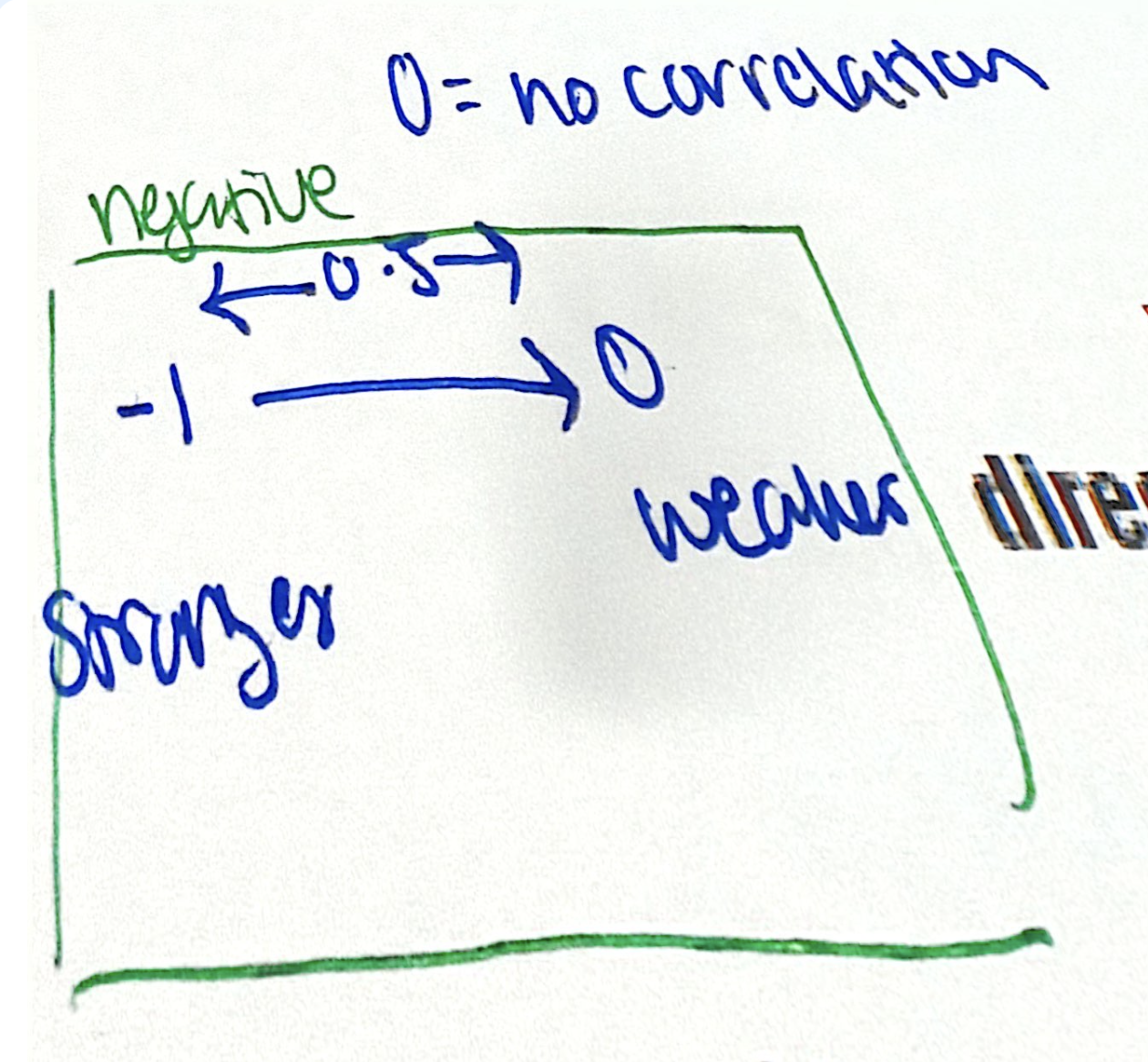
Negative correlation coefficient
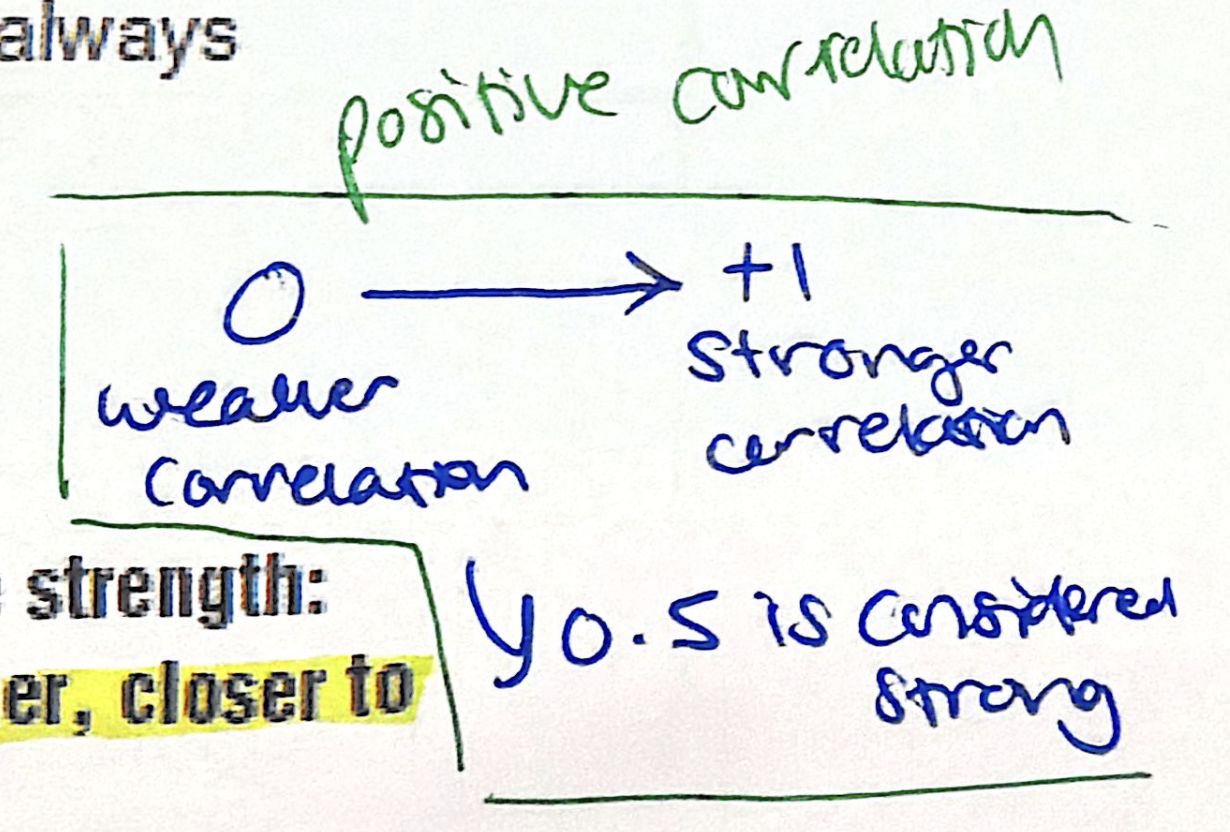
Positive correlation coefficient
Population
entire group of individuals that researchers are interested in studying → e.g. all IB students
Target population
Total group of individuals that researchers are interested in studying → e.g. SJI IB studens
Sample
smaller, manageable group of participants selected from a larger target population to take part in a research study → e.g. 1 BM, 1 eng, 1 geo class
Participants
individuals who voluntarily take part in research, providing data for studies → e.g. you
Sampling
referring to how you get participants
Probability sample
greater chance that the sample is representative of the target population
Results can be generalized to the wider population
Probability sample examples
Stratified
Random
Non-probability sampling
Method where a researcher doesn't pick participants randomly → they use a specific criteria → e.g. based on convenience or their own judgment
In qualitative techniques will be selected due to narrower criteria → generalizing isn't main focus
Non-probability sampling examples
Convenience
Volunteer
Snowball
Purposive
Target population
Group of people that researchers want to investigate → it can be huge → e.g. everyone on the planet or it can be restricted from the target population → the researcher then selects a group to be in their research → that group is a sample
Representational generalisability (how representative are your participants)
We can only generalize the population from which sample is drawn
Not correct to say a limitation of the study is that it cannot generalize these findings to the general population
If sample size is sufficient, you can infer that the participants characteristics are equally dispersed + fairly represented in the sample
Characteristics of random sampling technique
Every member of TP has an equal chance of being chosen → involves identifying everyone in TP →selecting the number of participants in an objective way → e.g. pulling names from a hat
Strengths of random sampling technique
Avoids researcher bias → researchers don’t control who is chosen as sample
More ethical method → everyone in TP has an equal chance of being picked → especially if the research is beneficial → e.g. learning aids
Limitations of random sampling technique
Time consuming as TP have to be identified → then have to use a generator to pick randomly
Characteristics of convenience/opportunity sampling technique
Taking the sample from people who are available at the time + place of the study within close proximity → e.g. canteen at school
Strengths of convenience/opportunity sampling technique
Convenient + quick for researchers as Ps are in the location of the study → more cost effective method as no time spent looking for Ps
Limitations of convenience/opportunity sampling technique
P’s may be a group of similar people → e.g. social class → makes it unrepresentative sample of TP
Affected by researcher bias as they get to choose their Ps
Characteristics of stratified sampling technique
Classifying TP into categories → then choosing a sample of Ps from each category in the same proportions as they are in the population
Strengths of stratified sampling technique
All Ps variables are taken into account in sampling → much more likely to be a representative sample of TP
Limitations of stratified sampling technique
Difficult to identify the sub-groups in TP → more time consuming + costly to researcher
Characteristics of volunteer/self-selected sampling technique
Individuals choose to participate in the study
This is when the study is advertised through posters, media, etc
Strengths of volunteer/self-selected sampling technique
As Ps volunteer → cost-effective as the researchers don’t spend anytime looking + producing a sample
Limitations of volunteer/self-selected sampling technique
Sample is not representative of TP as they have put themselves forward → probably much more eager to please researchers → e.g. expectancy effect + social desirability
Characteristics of snowball sampling technique
Small no. of Ps are invited + asked to invite other people they know to be part of study → due to the interest in the purpose of the study
Usually used to obtain samples of Ps that may be difficult to reach → e.g. youth gang members, drug users
Strengths of snowball sampling technique
Obtain samples from hard to reach Ps
Limitations of snowball sampling technique
May create a biased sample → may not be representative of TP → making generalizing of results difficult
Affected by researcher bias as they invite Ps who in turn pick people they know
Characteristics of purposive sampling technique
main characteristics of Ps are defined in advance of the study
Researchers recruit Ps that fit these conditions → proportions + sample size are not defined
Strengths of purposive sampling technique
More representative sample of TP → Ps are chosen due to characteristics important from TP → although it said to be more representative of TP
Limitations of purposive sampling technique
Researcher bias → due to them picking the criteria → Ps for the study