Cog: long term memory (copy)
 Call Kai
 Learn
Learn Practice Test
 Spaced Repetition
 Match
Match Flashcards
 Knowt Play
1/43

There's no tags or description
Looks like no tags are added yet.
Name | Mastery | Learn | Test | Matching | Spaced | Call with Kai |
|---|
No analytics yet
Send a link to your students to track their progress
44 Terms
levels/depth of processing approach
argues that deep, meaningful processing of info leads to more accurate recall than shallow, sensory kinds of processing
in general, ppl achieve a deeper level of processing when they extract more meaning from a stimulus
levels of processing and memory for general material
deeper levels of processing should produce better recall
meaning vs physical appearance
distinctiveness
elaboration
deep processing also enhances memory for faces
from most to least likely to remember: meaning, rhyming, appearance
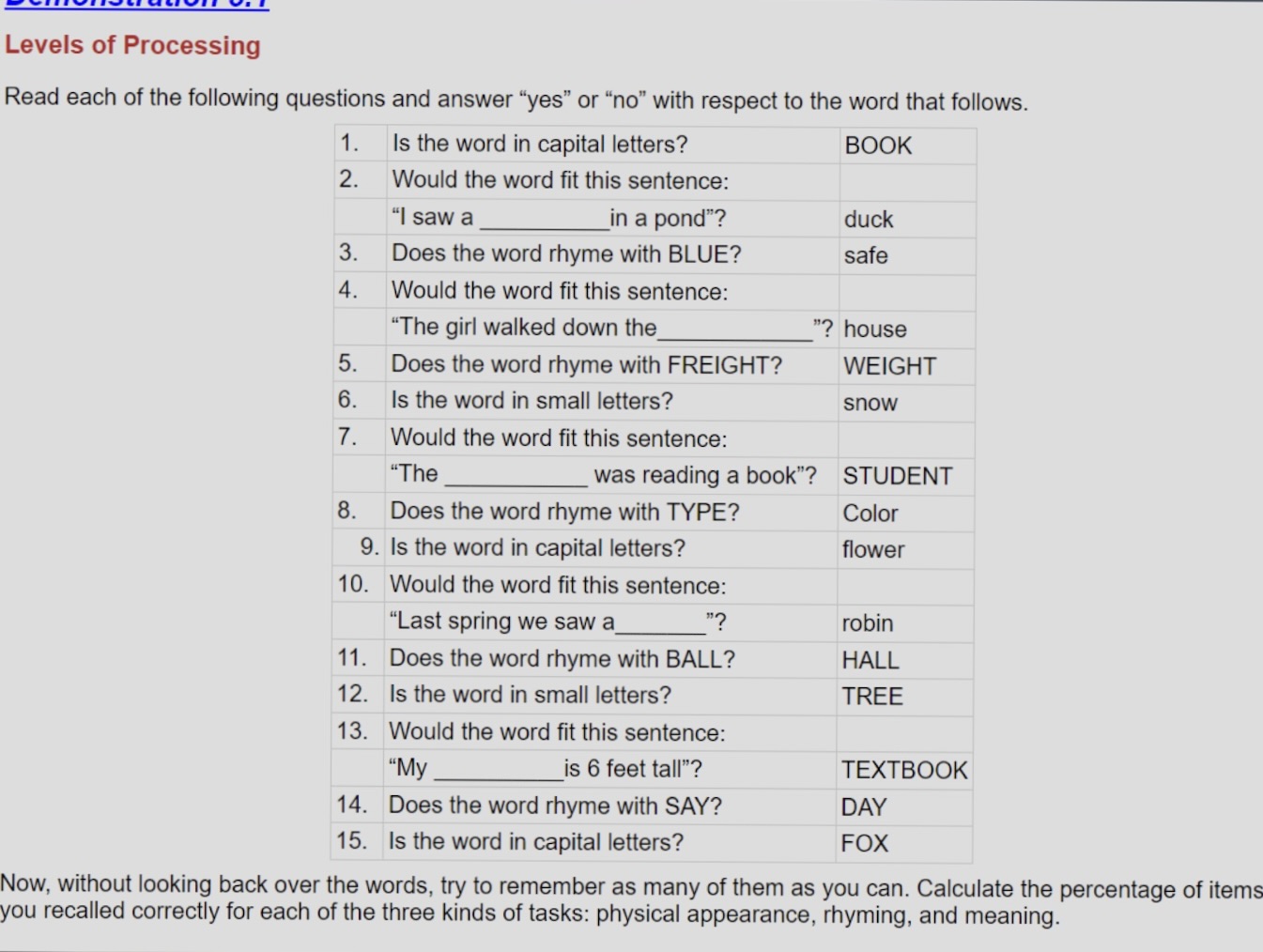
representative research
most to least likely to remember:
self-reference instructions
semantic (meaning but still gets beat by self reference)
acoustic
visual
factors responsible for the self reference effect
the “self” provides a rich set of “cues” (is the best way to encode and retrieve)
self-reference instructions encourage people to consider how their personal traits are connected to one another (elaboration)
material associated with the self is rehearsed more frequently
retrieve it regularly → “online”/practiced more often
it feels personal → connected to episodic memories we already have → easier to encode
Ex. someone
encoding specificity principal
recall is better if the context during retrieval is similar to the context during encoding
study in same place you test (also applies to emotional state)
study drunk → test drunk, study under water → test underwater
when the 2 contexts do not match, you are more likely to forget the items
research on encoding specificity
marian and fausey (2006)
bilingual english/spanish speakers
stories and questions (in either english or spanish)
match or mismatch of story and question languages
encoding-specificity principle: different kinds of memory tasks
recall task (harder, no cues) vs recognition tasks (easier)
real life vs laboratory
short delay vs long delay (natural decay over length of delay but cues fade too, can forget details and specifics)
encoding specificity is typically strong in recall, real-life, long delay situations
encoding-specificity principle: physical vs mental context
how the environments “feel”, not so much how they look
levels of processing and encoding specificity
encoding specificity can override level of processing
bransford et al (1979):
various levels of processing tasks during encoding
test with rhyming task
ppl perform better on rhyming test if they had originally performed the shallow-encoding task, rather than the deep-encoding task
semantic processing is effective only if the retrieval conditions also emphasize deeper, more meaningful features
ex. “if i teach you in a certain way, i should test you the same way”
teach: theories/concepts → test: years/names = bad
ways the emotional nature of the stimuli can influence LTM: pleasant
more accurate recall for pleasant items
pollyanna principle
recall: pleasant → unpleasant → neutral (balch)
if something creates pos or neg feeling, we tend to forget the context
Pollyanna principle
pleasant items are usually processed more efficiently/accurately than less pleasant items
ways the emotional nature of the stimuli can influence LTM: neutral pos association
more accurate recall for neutral stimuli associated with pleasant stimuli
do ppl remember commercials less accurately when they are associated with violent media (yes?)
bushman
significantly better recall for commercials that had appeared in the nonviolent film
anger/violence in a show typically reduce memory accuracy for info in a commercial
ways the emotional nature of the stimuli can influence LTM: unpleasant
over time, unpleasant memories fade more than pleasant
walker 1997
personal events; pleasantness and intensity ratings
changes in pleasantness ratings over time
positivity effect
this isn’t applicable for ppl w depressive tendencies (ties back to their tendencies to pay ATTENTION to neg things)
walker 2003
students with/without depressive tendencies
students without showed positivity effect
students with showed same amount of fading for unpleasant and pleasant events
ex. old married couples
positivity effect
tendency to prioritize attend to, and remember positive information over negative information
explicit memory tasks
maps in a declarative way
map to:
recall - “was Mia there?”
recognition - “have you seen this before?”
even if ppl cannot remember stimuli when they are tested using an explicit memory task, they may remember when tested with implicit memory task
ex. ppl typically recall more words if they have used deep levels of processing to encode them
implicit memory tasks
you might not be aware that you know these things
blindsight
sitting down and being able to do a skill (Cline W. playing piano bc it’s a learned skill)
you can have a weak/unconscious memory trait pulled out by implicit and not explicit
ex. research illustrates that ppl often know more than they can reveal in actual recall
on test, semantic and perceptual encoding may produce similar memory scores, or lower if they used semantic encoding
anxiety disorders and explicit/implicit memory tasks
mitte (2008) - meta-analysis
implicit memory tasks: high and low anxious people performed similarly
recognition tasks: high and low anxious people performed similarly
recall tasks: high anxious ppl more likly to recall negative, anxiety-arousing words but less likely to recall neutral/pleasant words (when compared to low anxious)
working memory: if you are recalling what you encoded (neg. memories) its going to create more negative though processes
this is a cycle and it adds to rumination/worry
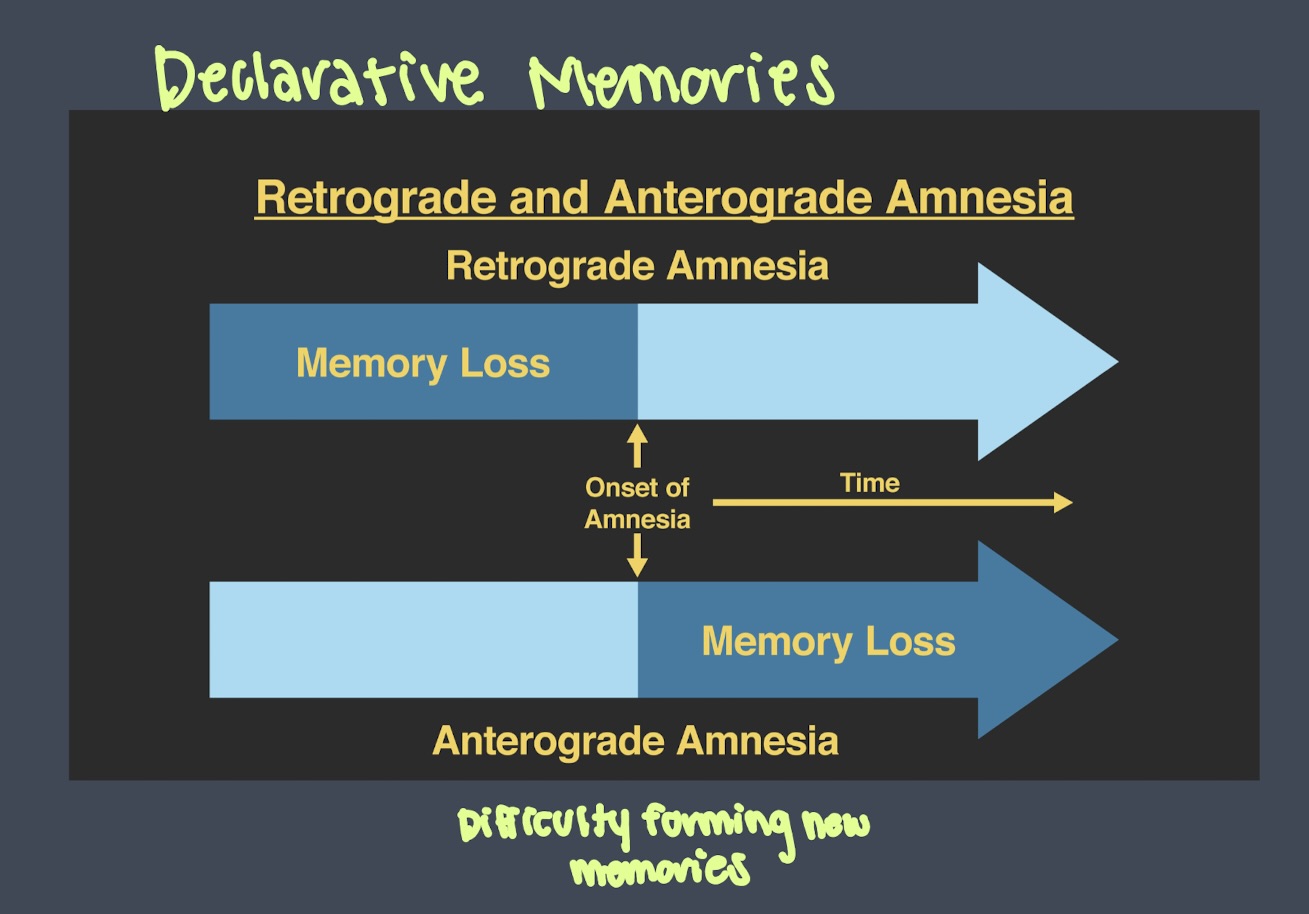
individuals with amnesia
patient HM: damages temporal lobes, but over time got a little of his memory back
other parts close by started to support the damaged areas
MLT/Hippocampus:
larger amount of tissue cut out → more severe amnesia
more damage, worse cognitive deficit
the context-specfiic nature of expertise
in general, researchers have found a strong positive correlation between knowledge about an area and memory performance in that area
ppl who are expert in one area may not dispaly outstanding general memory skills/expertise in other areas
if you’re an expert in an area → you’re an expert in THAT area (and not necessarily anything else)
when you have a broad spectrum, you likely lose depth of expertise
how do experts and novices differ?
experts:
have well-organized, carefully learned knowledge structure
are more likely to reorganize new material they must recall into meaningful chunks/groupings
have more vivid visual images ofr items they must recall
emphasize distinctiveness of each stimulus during encoding
rehearse in more strategic fashion
better at reconstructing missing info from material they partially remember
more skilled at predicting difficulty of task and monitoring progress
autobiographical memory
memory for events and issues related to yourself
characteristics of autobiographical memory
we make errors, but our memory is often accurate for a variety of info
when people make mistakes, these mistakes generally concern peripheral details and specific info about commonplace events, rather than central info about important events
our memories often blend together info from a variety of sources; we activity construct a unified memory at the time of retrieval
schema
general knowledge/expectation based on past experiences
consistency bias
tendency to exaggerate the consistency between our past feelings and beliefs and our current viewpoint
altering memories to fit w current perception of self
similar to cognitive dissonance
source monitoring
trying to identify the origin of a particular memory
reality monitoring
dreaming that you fought with someone and waking up mad at them
“did i dream that?”
dreaming that you found something you lost and waking up realizing it isnt true
schizophrenic ppl struggle with this a lot
flashbulb memories
many ppl believe that they can accurately recall all the minor details about what they were doing at the time of this event
(not true!)
ex. remembering situation specifics that evoked strong emotion —> not true (threat, anxiety, fear)
they arent wrong that the memories are VIVID, but they are more confident, which can lead to inaccuracies
when compared to standard memories, its about the same or sometimes context details can be worse (clothes, weather, etc)
talarico and rubin (9/11 vs ordinary event)
recall testing after 1, 6 and 32 weeks
post-event misinformation effect
1st, ppl view an event
then they are given misleading info about the event
later on they mistakenly recall the misleading info, rather than the event they actually saw
ex. Ronald Cotton - victim kept seeing his face, which implanted the idea that he was the aggressor
proactive interference
previously learned old material keeps interfering with new memories
retroactive interference/misinformation effect
recently learned mew material keeps interfering with old memories
autobiographical memory: loftus and colleagues (1978)
childhood memory implanting
proposed false memories (journals, stories from parents)
when asked to recall they recalled the false stories as if they were true
constructivist approach
memory is not stagnant, it’s a flexible and reconstructive process
GENERAL factors affecting the accuracy of eyewitness testimony
ppl may create memories that are consistent with their schemas (ex. using brain rot so gen z can understand)
ppl may make errors in source monitoring (mixing up sources: having a bad dream and waking up upset, retelling a joke to the person who told it to you initially)
post-event misinformation may distort recall
OTHER factors affecting the accuracy of eyewitness testimony
make more errors:
if they saw a crime committed during stressful circumstance (weapon, focused on threat→ effects memory)
when long delay between event and time of testimony
if the misinformation is plausible
if there is social pressure. In contrast, more accurate when ppl are allowed to report an event in their own words, when given sufficient time and allowed to respond w “IDK” (level of comfort leads to better recall)
if someone has provided positive feedback (someone affirms you, so that reinforces your answer)
eyewitness testimony: relationship between memory confidence and accuracy
many participants are almost as confident about their misinformation based memories as they are about their genuinely correct memories
confidence not strongly related w accuracy (despite us being more willing to believe confident ppl)
majority of officers and jurors are not aware that a confident eyewitness is not necessarily an accurate eye witness
recovered memory perspective
memory for traumatic events may be forgotten for many years and then come flooding back into conciousness
false memory perspective
most recovered memories are actually incorrect memories, constructed stores about events that ever occured
potential for memory errors
memory is less than perfect
social pressure enhances the likelihood of memory errors
the accuracy of childhood memories is not easy to determine
we can implant memories, even if not intentional
The Recovered Memory/False Memory Controversy
recovered/false memory perspectives
occurs with vulnerable population
hypnosis
implanting memories
aliens, demonic, SA
we believe its effected by both aspects
it IS possible to recover memories, but the methods used at the time were debatable
but either way, there is no way to prove whether or not they’re real
Roediger/McDermott
lists of similar words
and then show a different list with some words the same and some new but still related
list 1: sleep, snore, bed
list 2: sleep, snooze, bed
false recall rate of 55% (intrusion errors)
intrusions are common on this task, b/c each word that does appear on a list is commonly associated w a missing word
True or False: research demonstrated ppl can construct false memories for events during childhood that never actually happened
True
most ppl do not claim to “remember” the event but a significant amount do
arguments for recovered memories
lab studies lack ecological validity (real world)
Research shows ppl cannot be convinced to create false memories for more embarrassing events (ex. having an enema as a child)
Researchers studied individuals whose sexual abuse had been documented by medical professionals/ the legal system. Still, some fail to recall the episode when interviewed as adults
betrayal trauma
describes how a child may respond adaptively when a trusted parent/caretaker betrays him/her by sexual abuse
child depends on this adult and must actively inhibit memories of abuse in order to maintain an attachment to this person
The Recovered Memory/False Memory Controversy: Both perspectives are partially correct
some ppl have truly experienced childhood SA and may forget about the abuse for many decades until a critical event triggers the recall
in contrast, other ppl have never experienced childhood sexual abuse. however a suggestion about abuse may create a false memory of childhood experiences that never really occured