ALL Ecology
 Call Kai
 Learn
Learn Practice Test
 Spaced Repetition
 Match
Match Flashcards
 Knowt Play
1/78

There's no tags or description
Looks like no tags are added yet.
Name | Mastery | Learn | Test | Matching | Spaced | Call with Kai |
|---|
No analytics yet
Send a link to your students to track their progress
79 Terms
Pollution
any addition of harmful substances to the environment
Pollutant
substance which contaminates the environment
Name + describe the effect of an industrial pollutant?
How can it be managed?
CO2, formed by the combustion of fossil fuels
contribute to the enhanced greenhouse effect
plant more trees, change to more sustainable sources of energy
Name + describe the effect of an agricultural pollutant?
How can it be managed?
slurry
slurry washed into waterways causing eutrophication
What is eutrophication?
artificial fertilisers or slurry are washed into rivers and lakes
causes rapid increase in microscopic algae called an algae bloom
when the algae die they are broken down by bacteria which use up all the O2 in the water causing fish to die
Conservation
the wise management of the environment to ensure survival of organisms and their habitats
What are the reasons for conservation?
maintain population for breeding
prevent extinction of endangered species
balance of nature for food chains
Give examples of conservational practices:
habitat protection
maintaining habitat + population of prey
nb - always look at text provided to help
Give and example of a fishing conservation practice:
fishing quota to prevent overfishing of an area, and maintain numbers for breeding
What problems are associated with waste disposal?
wastes can be toxic
can cause disease
plastics are non-biodegradable
can pollute water causing eutrophication
incinerators release dioxins into the air which can cause cancer
rotting organic matter produces methane gas
Agricultural waste management
animal slurry is stored in waterproof concrete pits
diluted and spread on dry land as fertiliser
Fishing waste management
fish processing produces waste, eg fish heads, fins, intestines
treated with chemicals, dried, pulped and then used as fertiliser
Forestry waste management
timer wastes are recycled to make chipboard or MDF
some trees allowed to rot in ground after cutting, allowing minerals to return to the soil
What role to micro-organisms play in waste management?
bacteria and fungi break down organic wastes such as compost, sewage, oil spills
How to control domestic pollution?
reduce packaging buy loose veg
reuse jars, tupperware, reusable straws and cups
recycle, use compost bins or bottle banks
use biodegradable single use bags
Why do populations live together?
food and shelter
safer for individuals
for breeding
What are the factors that control population size?
competition
predators
parasites
symbiosis
Competition
struggle between organisms for resources, which are in short supply
What is the different between intra-specific competition + inter-specific competition
intra-specific competition - takes place between members of the same species
inter-specific competition - takes pace between members of different species
Describe + example for contest competition:
one organism wins the resource and the organism loses the resource
stags lock antlers to fight for antlers
birdsong as males warn off other birds
Describe + example of scramble competition:
each organism tries to get as much of the resource as possible
young chicks in a nest want food
overcrowding of seeds in a flower bed, trying to get nutrients and water from the soil
Give an example of how organisms can adapt to survive competition:
weeds produce a huge number of seeds
bees swarm and move on when a colony gets too crowded
animals occupy different food niches
Predation
the catching, killing and eating of another organism
Predator
organism that kills and eats another organism called prey
Prey
organism killed and eaten by a predator
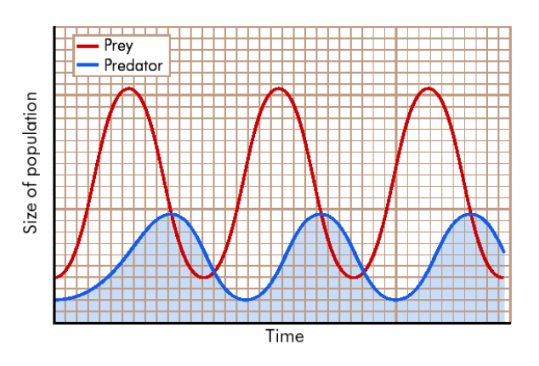
Describe a predator/prey relationship
predators are bigger in size and fewer in number than prey
get as much energy as they need without destroying the prey population
if the prey population drops too low the predator population will starve
Predator/prey relationship graph
as one goes up the other also goes up
the more prey eaten the more they would reduce in number
as one goes down the other also goes down
the predator will either stay in the habitat and die from lack of food or move to a new habitat
that gives the prey a chance to increase in number again
What factors affect predator/prey numbers?
availability of food, starvation
ability to conceal themselves
migration, moving to an area where there is more food
Example of predator adaptations
hawks have excellent eyesight to locate prey
cheetah built for speed to catch prey
chameleon camouflage to avoid being seen by prey
fox eyes in the front of head to judge size and distance well
Example of prey adaptations
crabs use their flat body to hide under rocks and camoflage
ladybirds produce formic acid which tastes bad
caterpillars have a nasty taste
rabbits long, mobile ears to detect predators and eyes at side of head for good peripheral vision
Parasite
an organism that lives in or on another living organism of a different species causing it harm
What is the difference between an endoparasite and ectoparasite?
endoparasite - inside the organism
ectoparasite - on the surface of the organism
Symbiosis
relationship between 2 organisms of different species in which at least one of them benefits
What are the 3 types of symbiosis?
mutualism - both benefit, eg nitrogen fixing bacteria in the nodules of legumes
commensalism - 1 organism benefits but does not cause harm, staphylococcus aureus bacteria on the skin
parasitism - 1 organism benefits but causes the other organism harm, streptococcus throat
Population dynamics
study of the changes that occur in a population and the factors that cause these changes
What factors cause population growth to slow down
food runs out, starvation
not enough room for breeding
overcrowding spreads diseases
individuals are more easily killed off by predators
Reasons for changes in human population:
famine
caused by poor farming technique
crop failure
badly managed food supplies
disease
vaccines, sanitation + insecticides
antibiotics developed prevent death
wars
reduces the human population
increased birth rates after
contraception
reduced birth rates,
more family planning, average family size 2.1
Nutrient recycling
the conversion of mineral elements such as carbon and nitrogen back and forth between abiotic and biotic for use in the ecosystem
Carbon cycle
the way in which carbon is taken from and added to the environment by organisms
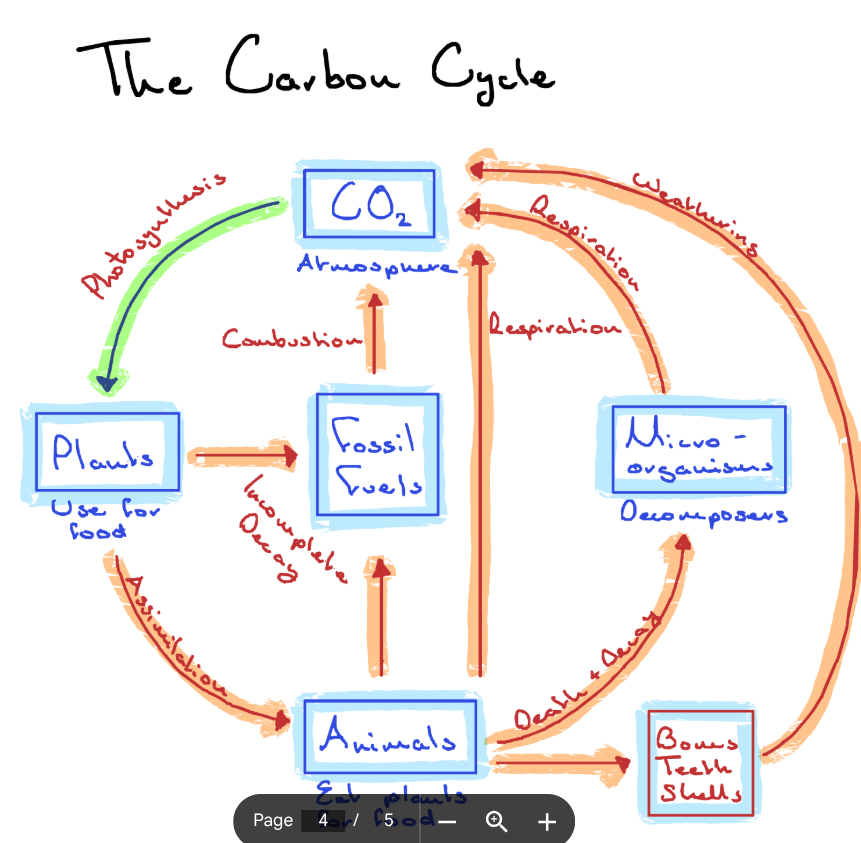
Describe the main steps in the carbon cycle:
plants take in CO2 through stomata for photosynthesis to make food (carbohydrates)
plants die and either:
incomplete decay leads to the formation of fossil fuels
they are consumed by animals; plant proteins are assimilated to form animal proteins
animals consume plants and respire which releases Co2
the animals die and either:
incomplete decay leads to the formation of fossil fuels
they are decomposed by micro-organisms, which release CO2 as they respire
bones, teeth and shells decay by slow weathering to produce CO2
Carbon cycle diagram:
Why do we need the carbon cycle?
supports photosynthesis + respiration
maintain a balance, so it does not run out
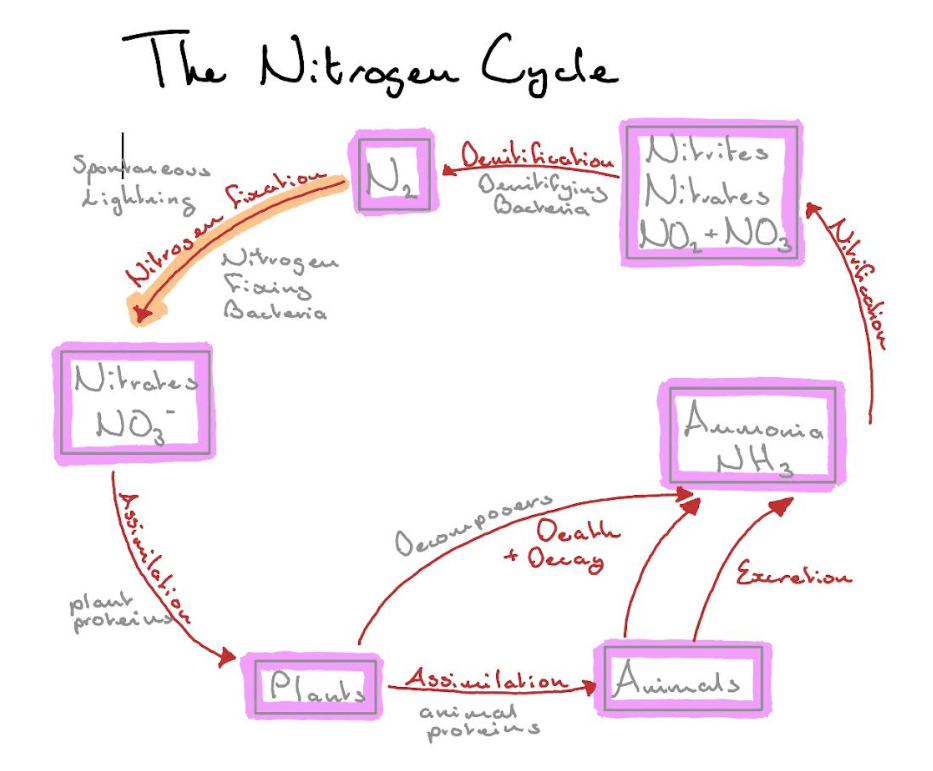
Describe the main steps in the nitrogen cycle:
nitrogen fixation: nitrogen gas is ‘fixed’/ converted into nitrates by nitrogen fixing bacteria
can also be converted into nitrates by lightning which splits nitrogen molecules allowing them to join with oxygen
nitrates are absorbed and assimilated into plant proteins
plants die and are either
eaten by animals and assimilated to form animal proteins
decomposed by decomposing bacteria, which release ammonia into the soil
animals either
excrete ammonia in urea
decompose by decomposers, which release ammonia into the soil
nitrification: nitrifying bacteria convert ammonia into nitrite then nitrate
some of this nitrate is absorbed and assimilated by plants
denitrification: denitrifying bacteria convert nitrates back into nitrogen gas
Name a pollutant produced by the nitrogen cycle + its impact on the environment?
ammonia
can cause eutrophication
Nitrogen cycle diagram:
Why do we need the nitrogen cycle?
to change nitrogen into a usable form for organisms
to maintain a balance
Why do organisms need nitrogen?
to make proteins and enzymes
Ecology
study of the interaction between groups of organisms and their environment
Population
group of organisms of the same species living in part of an ecosystem
Community
group of organisms of different species, group of populations
Ecosystem
community of organisms interacting with their environment
Biosphere
part of the earth and its atmosphere where organisms can live
Habitat
place where an organism lives
Environmental factors affecting organisms
biotic - living factors
abiotic - non-living factors
climatic - effect of weather over long periods of time
edaphic - soil factors
Biotic factors
food - the more food available, the more organisms will survive,
eg - number of berries affects the number of blackbirds
competition - plants and animals fight for food, water, minerals, light, space, mates and shelter
eg - number of foxes in an area compete for rabbits
predators - organisms which kill and eat other organisms', called prey
eg - ladybirds eat greenfly
parasites - organism that lives in or on another living organism (called a host) for nourishment causing it harm
pollination + seed dispersal - plants need animals to carry pollen and seeds
eg - birds eat fruits and egests seeds, dandelion is dependent on wind pollination
Terrestrial abiotic factors
altitude - higher altitudes are cooler, wetter and windier, rocky soil is not suitable for trees and other producers, not habitable
aspect - north-facing slopes are cooler and darker, south-facing slopes get more sunlight, and therefore have more vegetation
Aquatic abiotic factors
currents - seaweed clings to rocks to prevent being washed away
exposure - mucilage/slime on algae prevents them from drying out in the sun
Terrestrial climatic factors
temperature - effects the rate of reactions, high temperatures can cause rapid plant growth, low temperatures enzymes work slowly and can bring on hibernation in animals, such as hedgehogs
light - intensity affects the rate of photosynthesis, can cause drought which results in no crops
rainfall - plants that live in deserts are adapted to survive dry, harsh conditions, plants in rainforest are adapted for prolonged periods of heavy rainfall
Aquatic climatic factors
salinity - salt content
light intensity - plankton grows best in upper layers of water due to greater light intensity
Edaphic factors
pH - plant enzymes are adapted to specific soil pHs, acidic soils are found in bogs, neutral soils support most flora, alkaline soils support lime (CaCO3) loving plants (eg tomatoes)
soil particle size - sandy soils have large particles, resulting in good drainage and air content, clay soils have smaller particles, but are compact and poorly aerated
humus content - refers to the amount of dead decaying organic matter in soil which supports mineral content
water content - water is needed for photosynthesis, but too much water interferes with aeration
Primary producers
green plants which make their own food by photosynthesis
Consumers/heterotrophs
organisms that eat other organisms
Top consumer
the last consumer in a food chain
Food chain
feeding relationship between organisms in which energy is transferred from the sun to plants, and then to animals
Why do food chains have a limited number of trophic levels?
due to the large loss of energy (approximately 90%) during the transfer between trophic levels, due to use of energy for metabolism
Grazing food chain
starts with a green plant
rose leaves → greenfly → ladybird → spider
Grazing Food Web
Detritus food chain
starts with dead organisms/detritus
dead leaves → woodlouse → blackbird
Decomposers
break down the dead remains of plants and animals to recycle nutrients
Food web
2 or more intersecting food chains
Trophic level
feeding level in a food chain
Pyramid of numbers
a diagram which shows the number of each organism at each trophic level
What gives a regular pyramid of numbers its shape?
lots of energy lost between trophic levels
organisms increase in size
What are the limitations of use of pyramid of numbers?
does not take into account the size of the organism
parasites cannot be represented to scale
What causes an inverted pyramid of numbers?
when the number of primary producers is low
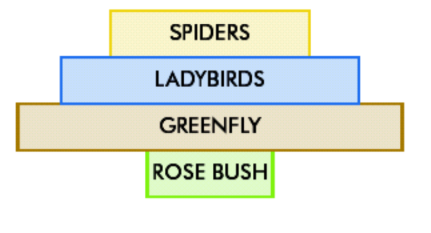
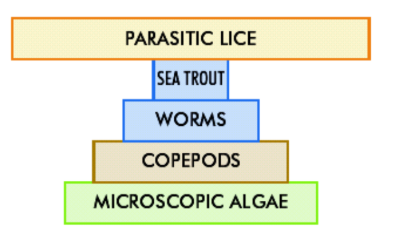
What causes a distorted pyramid of numbers?
large number of top consumers, eg parasites
Niche
functional role of an organism in its habitat
Why don’t organisms occupy the same food niche?
too much competition for food, space, shelter
eg. swallow eats flying insects, thrush eats ground insects, blackbird eats fruit and worms
How many questions are needed in a key?
3