Biology 30 - Genetics
 Call Kai
 Learn
Learn Practice Test
 Spaced Repetition
 Match
Match Flashcards
 Knowt Play
1/53

There's no tags or description
Looks like no tags are added yet.
Name | Mastery | Learn | Test | Matching | Spaced | Call with Kai |
|---|
No analytics yet
Send a link to your students to track their progress
54 Terms
Aristotle
384-322 BCE
proposed pangenesis to explain why offspring resemble their parents
states that egg and sperm contain tiny particles (pangenes) from all parts of the body
upon fertilization, the pangenes develop into the parts of the body they derived from
Antony van Leeuwenhoek
1632-1723
proposed homunculus - complete, miniature person in the head of a sperm which came from the father but developed in the mother
Regnier de Graaf
proposed that the egg contained the entire person
sperm only stimulated the egg to develop
Genes
sequences of DNA that contain the instructions to make different proteins
two copies of every gene from parents: 1 maternal copy, 1 paternal copy
Alleles
different versions of genes
dominant: uppercase
recessive: lowercase
Genotype
genetic makeup of a person
Phenotype
what we actually/physically see in the person
Homozygous
matching alleles
purebred
Heterozygous
non-matching alleles
hybrid
Punnett squares
predicts genotypes and phenotypes of offspring of different crosses
Grigor Mendel
Augustinian monk
1822-1884
bred and analyzed over 28 000 pea plants in 7 years
laws formed the foundation of modern science of genetics
studied the inheritance of 7 traits that were each expressed in 2 easily distinguishable forms
Genetic cross
combination of 2 gametes from the P (parental) generation
First filial generation
F1
genetic material of the P gametes combine in different ways
Monohybrid cross
genetic cross that involves only 1 trait
Mendel pea shape examples
first let plants self-pollinate to ensure the plants were purebred; exhibited characteristics generation after generation
crossed pure breeding plants (P generation) with opposite traits (e.g. purple flowered plants w/ white flowered plants)
results in F1 all being purple
F1 plants pollinate each other → creating F2 generation
What is special about the F2 generation of a monohybrid cross of dominant and recessive purebreds?
ratio is always 3:1 (dominant: recessive phenotype)
Law of Segregation
Mendel’s first law
all individuals have 2 copies of each gene → these segregate randomly during gamete formation and each gamete receives only 1 copy of each gene
when two gametes fuse during fertilization, an entirely new combination of parental genetic material is created (variation within a population)
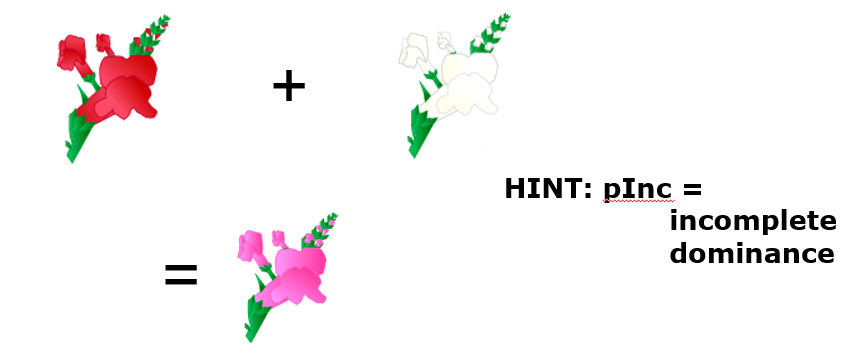
Incomplete dominance
when 2 alleles are equally dominant
interact to produce a new phenotype
NOT simple dominant and recessive
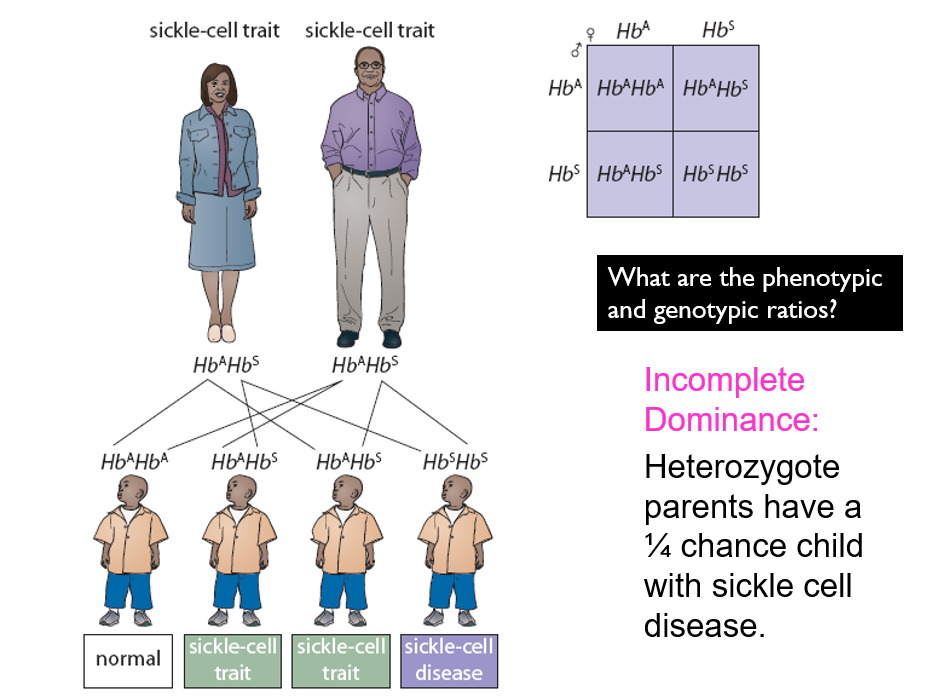
Sickle-Cell Anemia
incomplete dominance
normal haemoglobin allele = HbA
sickle-cell haemoglobin allele = HbS
HbAHbA: normal
HbAHbS: sickle-cell trail (carrier)
HbSHbS: sickle-cell disease
heterozygous → malaria resistance = advantageous
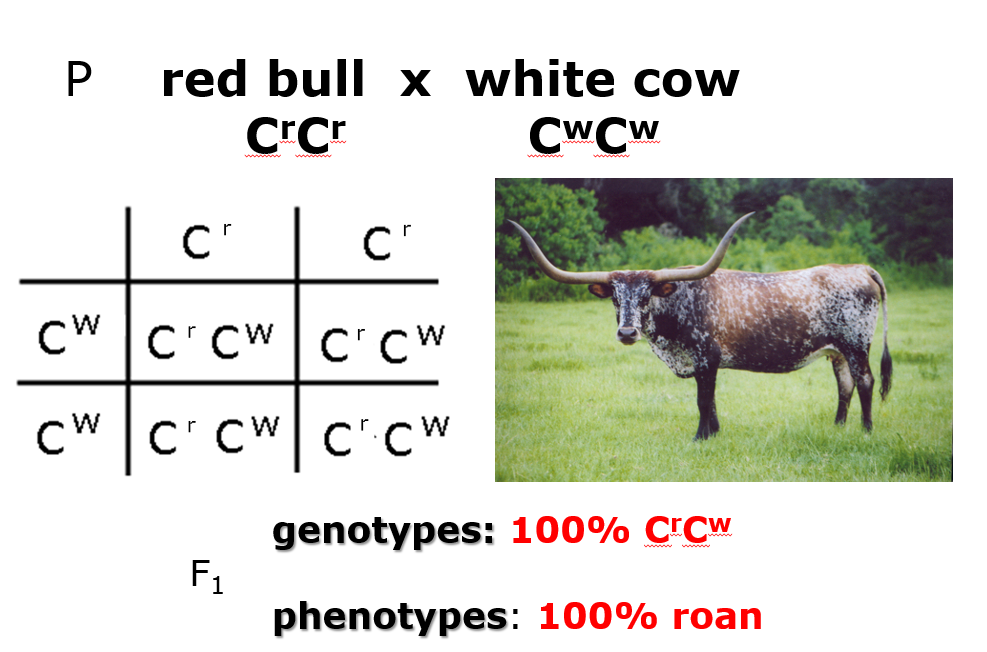
Codominance
both alleles fully expressed → individual expresses BOTH phenotypes at once
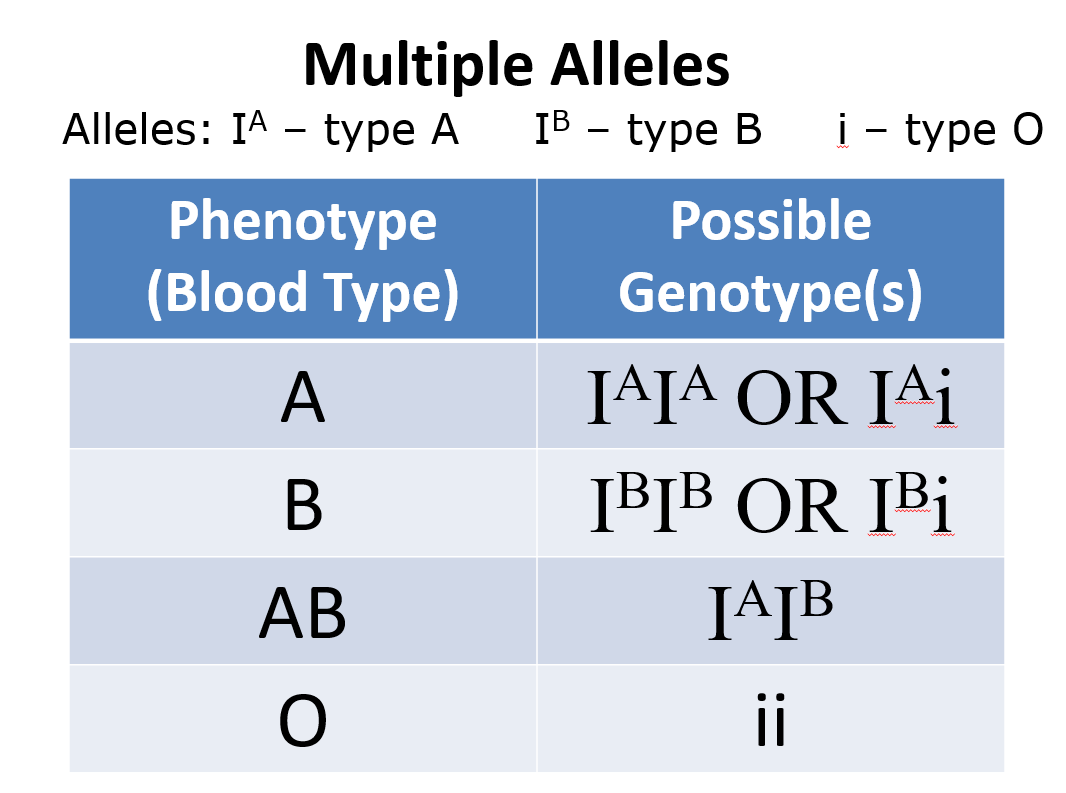
Multiple alleles
in many organisms, most genes have more than 2 alleles (in the population as a whole)
human blood types follow this pattern: 3 alleles → 4 blood types (phenotype)
Rule of independent events
chance of an event occurring is UNAFFECTED by previous results
Rule of sums
“or” = add the probabilities
chance of one or the other event occurring = SUM of these two events happening separately
Rule of products
“and”: multiply the probabilities
chance of two events occurring at the same time = PRODUCT of these two events happening separately
Dihybrid crosses
2 traits
4 symbols/letters in the genotype of 1 organism
Law of independent assortment
Mendel’s second law
segregation of alleles of one gene has NO INFLUENCE on segregation of alleles of another
the two alleles for one gene segregate (assort) independently of the alleles for the other genes during gamete formation
What is the phenotypic ratio of a dihybrid cross of heterozygous parents?
according to Mendel → will ALWAYS 9 : 3 : 3 : 1
9: dominant for trait 1 & 2
3: dominant for trait 1 & recessive for trait 2
3: recessive for trait 1 & dominant for trait 2
1: recessive for trait 1 & 2
Are dominant alleles always better?
not always
with some inherited traits, recessive alleles benefit the organism more than if they were to receive the dominant allele
Huntington’s Disease
inherited disease
neurodegenerative disorder
allele for it is dominant
homo or heterozygous = develop HD
Achondroplasis Dwarfism
typically inherited
homozygous dominant
heterozygous individuals = have this form
no homozygous individuals as it would be lethal
Lethal alleles
detrimental effect → organism dies
exhibit incomplete dominance → only homozygous individuals die from two alleles
affected individuals do not reach reproductive age
Tay-Sach’s Disease
lethal homozygous recessive
Why do lethal allele traits still exist if those affected with 2 alleles die before reproducing?
allele passed through heterozygotes
Epistasis
masking effect
allele at one locus (gene location) prevents the allele at another locus from being expressed
extension of dominance concept for alleles within the same homozygous pair (i.e. locus)
Chromosomal theory of inheritance
1902 - Walter Sutton and Theodor Boveri independently conclude that chromosomes carry genes
movement of each pair of homologous chromosomes is independent of movement of all other pairs of homologous chromosomes → follows Mendelian inheritance patterns
genes that are carried on the same chromosome do not assort independently → does not follow Mendelian inheritance patterns
Fruit fly genetics
Thomas Hunt Morgan set out to test Sutton-Bovery theory using fruit flies as they reproduce at a very fast rate
crossed a white-eyed male with a red-eyed female
F1 generation all had red eyes → red dominant to white
crossed male and female from F1 generation → expected phenotypic ratio is 3 (red eyes) : 1 (white eyes)
actual results: 100% of females had red eyes, 50% of males had white eyes
therefore eye colour connected to gender → gene must be located on the X chromosome
Results & analysis of fruit fly genetics
female fruit flies have 2 X chromosomes
male fruit flies have 1 X chromosome & 1 Y chromosome
F1 data indicates white-eyed trait is indeed recessive → males only have one X chromosome so only need one recessive allele to have white eyes
Barr body
in every human female cell, one of the X chromosomes is inactivated
the barr body is the condensed structure of the inactive X chromosome
Mendel’s work
genetic traits (i.e. genes) assort independently from one another
Sutton-Boveri’s work
when alleles of two different genes are on the same chromosome, they do not necessarily segregate independently
called linked genes
Crossing over
point at which a crossover occurs b/w two genes, alleles will be on separate chromosomes → alleles will migrate to different gametes
random event
occurs at any point on sister chromatids except near centromere
more likely to occur b/w genes that are farther apart on a chromosome than b/w genes that are closer together
Morgan’s work
any given pair of linked gene would separate with a predictable frequency
results could be explained by assigning each gene a specific position along a linear chromosome
Morgan and his students were able to amend the chromosomal theory of inheritance → gene-chromosome theory
Gene-chromosome theory
genes exist at specific sites arranged in a linear manner along chromosomes
What is crossing over used to determine?
relative positions of genes on a chromosome
One map unit
distance between points on a chromosome where a crossover is likely to occur in 1% of all meiotic events
1% = 1 map unit = 1 mu
Recombinant frequency
F1 offspring that have the same pheno/genotype as parents = parentals
F1 offspring that have different pheno/genotypes than parents = recombinants
% of recombinant types in F1 generation is directly proportional to the distance between two gametes
greater distance = greater likelihood of crossover event occurring
Recombination frequency
percentage of times that crossover occurred as P gametes were formed → if <50% → genes are linked
formula: # of recombinant types/total # of offspring x 100%
Model subjects
fruit flies were chosen as test species due to their fast rate of reproduction, large number of offspring, were considered more ethical, and ability to select desired traits
Human pedigrees
collect as much information about a family’s history available, and use this information to create a flowchart that uses symbols to show patterns of relationships and traits in a family over many generations
unethical to perform experimental crosses b/w selected men and women
unethical to accumulate large numbers of offspring from the same human parents
Autosomal dominant inheritance
number of men = number of women (affects both equally)
does NOT SKIP generations (generally appears in ALL GENERATIONS)
traits that are carried on autosomes
both homozygous dominant and heterozygous will exhibit trait
Autosomal recessive inheritance
number of men = number of women (affects both equally)
SKIPS generations
only homozygous recessive will exhibit trait
tend to appear more frequently in families with consanguineous marriages (inbreeding)
X-linked dominant traits
increased number of women affected
does NOT SKIP generations
typically seen in females (often lethal in males)
only need one dominant allele to be affected
less common than X-linked recessive disorders
X-linked recessive traits
increased number of men affected
SKIPS generations
affects men more than women
females must have both recessive alleles to be affected, males only need one
heterozygous females are unaffected → carriers
no father to son transmission
Y-linked traits
ONLY in men (on Y chromosome)
does NOT SKIP generations in males
if father affected → sons will ALWAYS be affected