AP Physics 1 - unit 5 - torque and rotational motion
 Call Kai
 Learn
 Practice Test
 Spaced Repetition
 Match
 Flashcards
 Knowt Play
1/9

Earn XP
Description and Tags
10 Terms
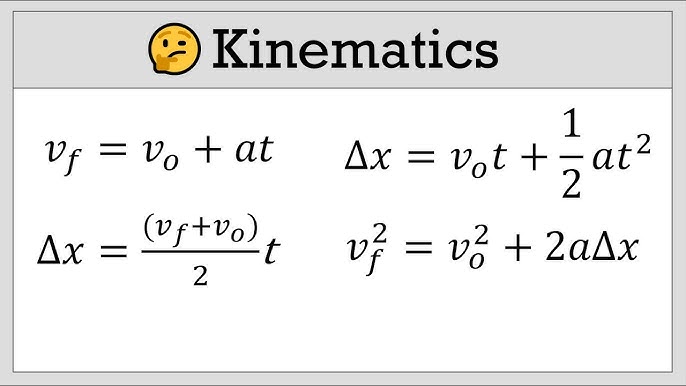
kinematics (definition)
the study of motion WITHOUT regards to forces causing it
equations are the same for rotational and linear kinematics
angular displacement VS. linear displacement in rotational kinematics
angular displacement: the change in angle (Δθ)
measured in radians(rad)
linear displacement: the arc length (s)
s=rθ
angular/ rotational velocity VS. linear velocity
angular v: how fast an object is spinning
ω=Δθ/t
linear v: the speed of an object or point tangent to the rotational motion (like a skateboard going forward as a result of the rotation (ω) of the wheels
v=rω
angular/ rotational acceleration VS. linear acceleration
linear | angular |
rate of change of tangential velocity as a result of angular α | how fast an object speeds up while spinning, rate of change of angular velocity |
a=rα | α=Δω/Δt |
torque (τ) (definition, eq, units)
torque: a force that acts to the radius of an object causing acceleration in rotation
τ = F⊥r = Fr(cosθ)
τ = Iα
moment of inertia/ rotational inertia (I)
how difficult it is to change rotational motion
generally, for a single point at a fixed distance from an axis
I = mr²
however formulas for spheres, cylinders, thick rings with 2 radiuses and more will be given
Newton’s 2nd Law for rotation
F=ma
τ=Iα
rigid body
an ideal object where there is no deformation; a solid body with a fixed shape, meaning internal distances ( r ) between points remain constant during motion.
rotational equilibrium
sum of torques acting perpendicular to the radius equals zero
Στ=0