Cognitive Psychology Exam 1
 Call Kai
 Learn
Learn Practice Test
 Spaced Repetition
 Match
Match Flashcards
 Knowt Play
1/85

Earn XP
Description and Tags
Cognitive Pyschology- Sensation, perception, and motion.
Name | Mastery | Learn | Test | Matching | Spaced | Call with Kai | Chat |
|---|
No analytics yet
Send a link to your students to track their progress
86 Terms
Occipital Lobe
Vision, basic properties of visual stimuli
What is sensation?
“Pre-brain” registry of sensory information through sensory organs.
What is perception?
“Brain-based” perception of raw sensory information.
What is object recognition?
Making sense of perceptual information (e.g., object indentification and segmentation).
Frontal Lobe
Region of the brain involved in executive functioning (planning, goal setting, strategizing), cognitive control, inhibition, and working memory
Temporal Lobe
Region of the brain involved in object recognition (ventral pathway- what), long-term memory, and face recognition
Parietal Lobe
Region of the brain involved in relational processing, integration of varied inputs, motion processing (dorsal pathway-where), spatial reltions (above, behind), touch perception (sensomotosensory cortex; homunculus)
Thalamus
Sensory relay center: Sensory information enters and is then distributed throughout the brain
Amygdala
Emotion processing
Area MT (V5)
Involved in the perception of motion and is located in the visual cortex.
Hippocampus
Memory and encoding
Ventral Pathway (What?)
Occipital to temporal, and object recognition
Dorsal Pathway (Where?)
Occipital to parietal, spatial, and motion information.
Hindbrain
Brainstem, medulla (breathing, heart rate, blood pressure), cerebellum (coordination, movements, motor control, cognition).
Midbrain
Sensory processing (superior colliculus-visual information, inferior colliculus-auditory information; orienting attention).
Forebrain
Cerebrum: Frontal lobe, Temporal lobe, occipital lobe, and parietal lobe
Subcortical strucrtures
Amygdala, hippocampus, thalamus.
Electrocephalography (EEG)
This neuroimaging technique has good temporal resolution (when something is happening) and relatively poor spatial resolution (where something is happening). Event-related potentials (used for cognitive research, change in activation in patterns pre- and post-event)
Positron Emission Topography (PET)
This neuroimaging technique measures blood flow using radioactive glucose, offers good spatial resolution but relatively poor temporal resolution, and introduces radioactivity. The subtraction method is used.
Functional Magnetic Resonance Imaging (fMRI)
This neuroimaging technique uses a methodology similar to PET; it measures magnetic properties of blood, employs the subtraction method, and offers better spatial than temporal resolution.
Diffusion Tensor Imaging (DTI)
This neuroimaging technique tracks white matter, shows axon pathways in the brain, and reveals the complexity of pathways and the interconnectivity of regions/structures.
Concerns for Neuroimaging
Visual appeal mistaken for meaning/importance, correlation, not causal, tends to bias interpretation toward locations rather than circuits, activation patterns dependent on control task (subtraction method), test multiplicity problem; many tests= high probability of Type I errors (False+; eg., fish study).
Object Recognition
Making sense of perceptual information (e.g., object identification; segmentation), ventral (what) pathway weighted, models.
Bottom-up
Data-based external information enters sensory organs. Wholes built sequentially from simple attributes, components to whole (e.g., Biederman’s geons; recognition by components model), match constructed whole to template or prototype in long-term memory, feature detectors- property specific, thresholds- more likely to fire if more frequent and more recent.
Top-down
Internally driven goals and expectations of the person. Activity of mind imposes (i.e., Gestalt School), perceives objects or object properties, holistically and automatically, Principles: similarity, proximity, closure, good continuation, Pragnanz (simplicity), Figure-ground segmentation, Common Fate (motion)
Interactive Models: Top-Down x Down-Up
Expectations impact object perception and identification; expectations limit possibilities, context effects, word superiority effects, and expectations lead to particular interpretations of the information (e.g., man or dog). If bottom-up activations are ambiguous, top-down becomes prominent.
Hollistic vs Analyitical Processing
Perceive pattern as a whole automatically (e.g., Gestalt), or construct from parts sequentially (takes time), Global vs. Local Precedence Effects.
Agnosia
Inability to identify objects or a subset/category of objects (e.g., faces), prosopagnosia; inability to identify faces, common cause; damage to ventral (what) pathway.
Face Processing (Why is it Special for human beings)
Inborn preference for face-like stimuli: Highly practiced (Expertise develops) and conveys critical information: social cues, emotions (evolutionary advantage). Most evidence supports holistic processing of faces; evidence for early preference in newborns; in the brain, this happens in the occipito-temporal ventral pathway.
Motion Perception
Extremely complex computationally, heuristic (fast, rules of thumb), or algorithmic (mathematical computation). Provides critical information like danger signals (e.g., movement in the periphery), segmentation cues (figure-ground; figure moves on ground), and structure from motion (e.g., RDK-random dot kinematogram or random dot motion display, biological motion).
What does motion say about the Brain?
Evidence for motion-specific neurons, prone to systematic error/misperceptions (i.e., wagon wheel, aftereffects), dorsal pathway (occipital to parietal pathway), Area MT (V5): Temporal. Case LM
Patient LM
Motion blindness, very disruptive to daily functioning, has been studied for two decades; one of the most important individuals in the field. Allowed us to uncover Area MT, an area for detecting motion.
According to J.J Gibson, we directly pervieve optic _______ patterns, which guide movement through the environment.
Flow
Structure from Motion (Optic Flow)
Detect flow (relative movements of objects from the point of focus), direction, and speed differences = information.
Structure from Motion (3-D Structure)
(e.g., Human activity, point light displays)
Structure from Motion (Figure-ground segmentation)
Figure=small, in motion, ground= large, static, example = camouflage.
Biological Motion
Special stimulus- produced and observed, much experience observing (highly practiced), important information: intentions of mover, social cues for success/survival (e.g., evolutionary significance).
What is the word superiority effect?
Whole words yield superior processing compared to individual letters.
What is synesthesia?
One sense triggers an extra, involuntary sense at the same time. (Connections across senses) For example, numbers and colors.
The word superiorty effect demonstrates the importance of _______ for perception and cognition.
Context
_________ is a failure to recognize faces?
Prospagnosia
Color and motion provide ciritcal information for object _______
Recognition (segmentation).
In feature-dectector object reognition models, dectors are more likely to “fire” if they have been activated _________ and/or ________
Recently, Frequently
DTI shows the _________ pathways in the brain
Axon
What human factors are scientists interested in?
Errors, how does a person’s profile match their environment, persons (TD) x enviornment (BU) interaction, good match=speed, acuracy, mental health.
What is the Subtraction Method as used in neuroimaging research?
Time to complete the control and experimental tasks is subtracted to find the difference in completion time = cognitive process time (RT), and the difference in activation = the area linked to the cognitive process (PET).
What is Priming? Using this as an example ____ Otion
Exposure can alter perception/ behavior and depends on the frequency and recency of activation.
The blind spot of the retina demonstrates what general principle about perception and cognition?
The brain likes to fill in knowledge gaps
Cognitive pyschologist typically speak of internal “___________” of the world rather than replicas (i.e., exact copies) of the world.
Representations
Cogntiive pyschologists believe that in order to explain human behavior, unobservable ______ must be considered.
Constructs
What are the pieces of evidence for the proposition that we do not see the world exactly as it is?
Physiological strucutre of the retina (Optic Chiasm and loss of information): convergence, blind spot, and visual illusions.
Give a example of constructs used in cognitive psychology
Mind, attention, motion, and memory
If you are more interested in what areas of the brain are involved in performing a particular task, what neuroimaging technique should you use?
fMRI or PET
If you are more interested in when or how long a particular process takes, what recording methodology should you use?
EEG
Murmuration is an example of the Gestalt principle of _________ ___________
Common Fate
Hollistic perception, represetned by the famous quote, “The whole is greater than the sum of its parts” is a foundational belief of _______ psychologists
Gestalt
The video of the people catching rulers with their fingers, demonstrates 2 general principles of cognitive functioning in humans
Individual differences and time delay
What is Irving Biederman’s relevance to object recognition theory?
All objects are composed of geons (Bottom-up)
Probabilistic Brain
The brain considers multiple possible interpretations of ambiguous inputs and settles on the most probable one.
What are the Principles of Sensation?
1) Limited range of all possible information in the environment (e.g., visible light).
2) Information is altered (e.g., summed, averaged) within the sensory organ (e.g., retina).
3) Takes time: operates on a slight delay (e.g., slow-motion video)
4) Information for cognition is imperfect (what enters the brain is different than reality).
5) We have internal representations of the external world not replicas
What are the principles of Perception?
1) Probabilistic brain (multiple potential interpretations)
2) Inferential (infer properties of the world based on sensory information)
3) Active (structure information in particular ways)
3a) Add qualities (e.g., motion to static images)
3b) Fill in missing information (e.g., blindspot, good continuation/spoon illusion)
3c) Alter information (e.g., lightening checkerboard square in shadow)
Evolutionary basis of systems
Designed to sense certain types of information from the environment, designed to interpret information in certain ways (perception), designed to attend, store, and make decisions according to certain principles and rules, bias for speed over accuracy.
General systems
The great majority of people have a system that operates according to the same principles (e.g., visual illusions work similarly for everyone).
Individual Systems (differences)
Characteristics are normally distributed, with unique profiles of strengths and weaknesses across these characteristics; unique experiences affect expectancies, attention biases, etc.
Local processing
Particular brain areas/structures govern particular processes (e.g., specific area for motion processing)
Distributed Processing
Particular ability is governed by the interaction of multiple structures/ areas of the brain (e.g., motion perception involves coordinated activity across multiple lobes and structures in the brain). Complex skills are broadly distributed, coordinated activities.
Theories that propose word recognition proceeds hierarchically from smaller parts (e.g., feature detectors to letter detectors) to wholes (e.g., word detectors) are examples of ______ - _______ obeject recognition.
Bottom-up
Pre-brain can be referred to
Sensation
Brain based can be referred to
Perception

List the condition, or effect
Global precedence effect

What is Capgras syndrome
A rare psychological condition where a person believes that a friend, family member, or spouse has been replaced by an identical-looking imposter.

What is this condition?
Agnosia

What is this condition?
Prospagnosia

List the principles governing the structure/interpretation of the example.
Law of Pragnanz/ Good continuation

List the principles governing the structure/interpretation of the example.
Figure-ground segmentation

List the principles governing the structure/interpretation of the example.
Closure
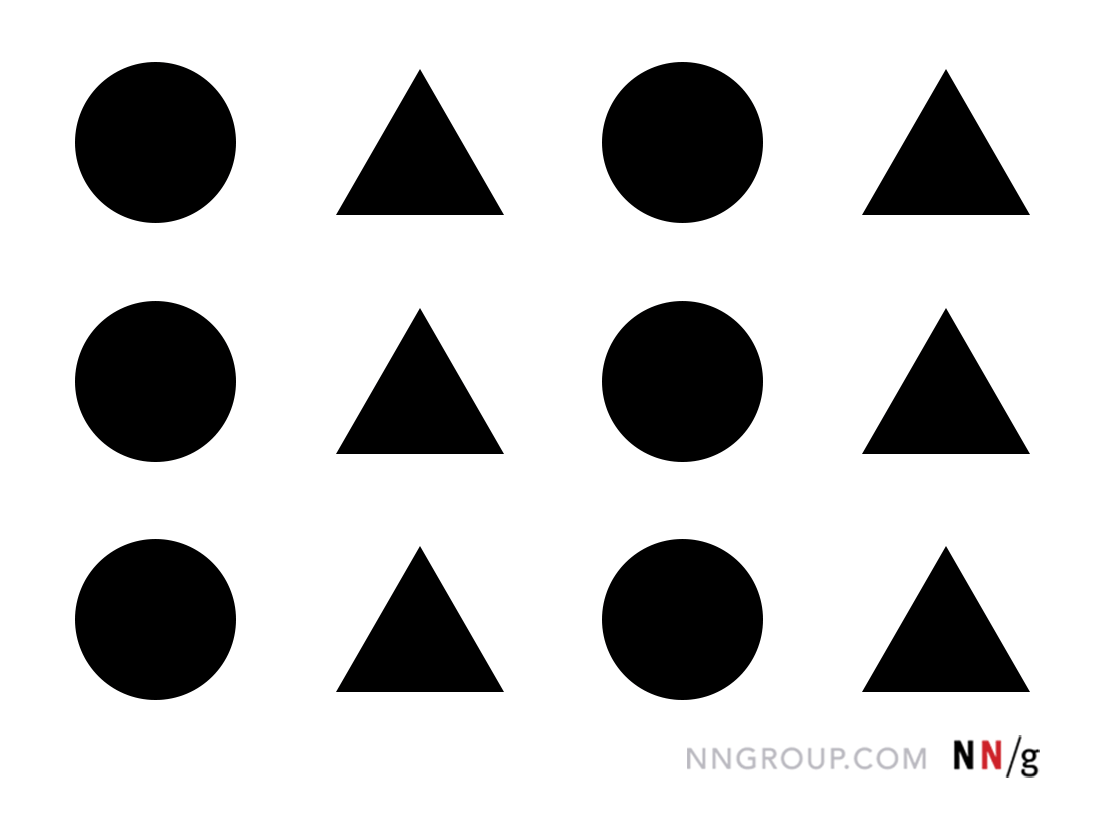
List the principles governing the structure/interpretation of the example.
Similarity

List the principles governing the structure/interpretation of the example.
Proximity

What recording methodology is this graph using?
Electroencephalography (EEG)
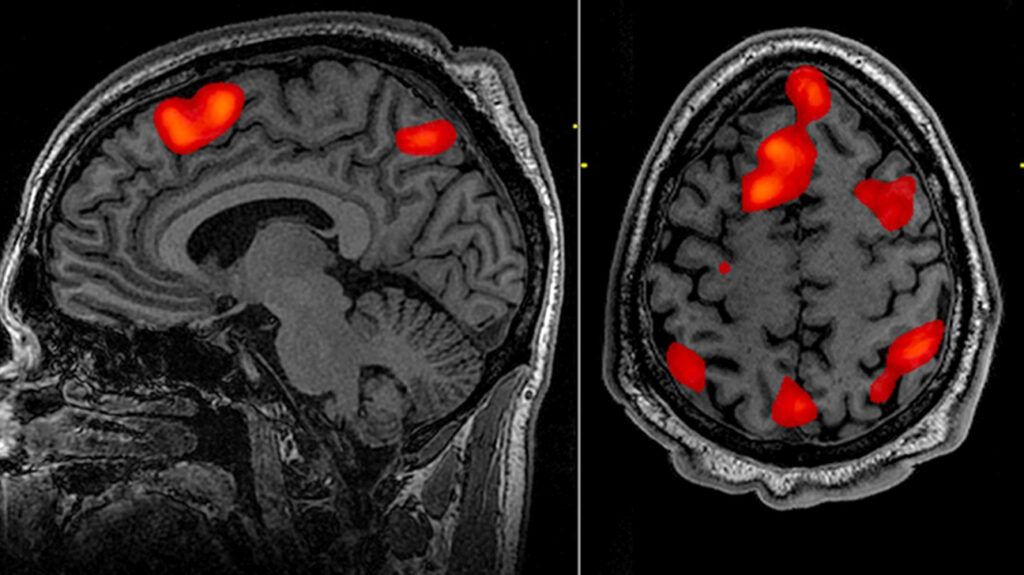
What neuroimaging technique is this?
Fuctional Magnetic resonance imaging (fMRI)
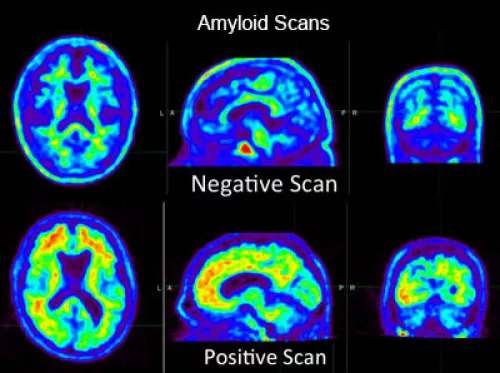
What neuroimaging technique is this?
Positron Emission Tomography (PET) Scan
What does Positron Emission Tomograph measure?
Measures blood flow by using radioactive glucose
What does Functional Magnetic Resonance Imaging measure?
It measures change in oxygen flow, blood flow, and metabolic activity
Spatial resolution refers to
Where is something happening?
Temporal resolution refers to
When is something happening?

What neuroimaging technique is this?
Diffusion Tensor Imaging (DTI)