GCSE Chemistry: C9 - Crude oils and fuels
 Call Kai
 Learn
Learn Practice Test
 Spaced Repetition
 Match
Match Flashcards
 Knowt Play
1/115

There's no tags or description
Looks like no tags are added yet.
Name | Mastery | Learn | Test | Matching | Spaced | Call with Kai |
|---|
No analytics yet
Send a link to your students to track their progress
116 Terms
What is crude oil?
Crude oil is a finite resource that is found in rocks.
Describe how crude oil is formed
- crude oil is formed over millions of years from the remains of tiny sea creatures called plankton, which were buried in mud
What does crude oil consist of?
Crude oil is a mixture of molecules called hydrocarbons.
Structural formula of methane
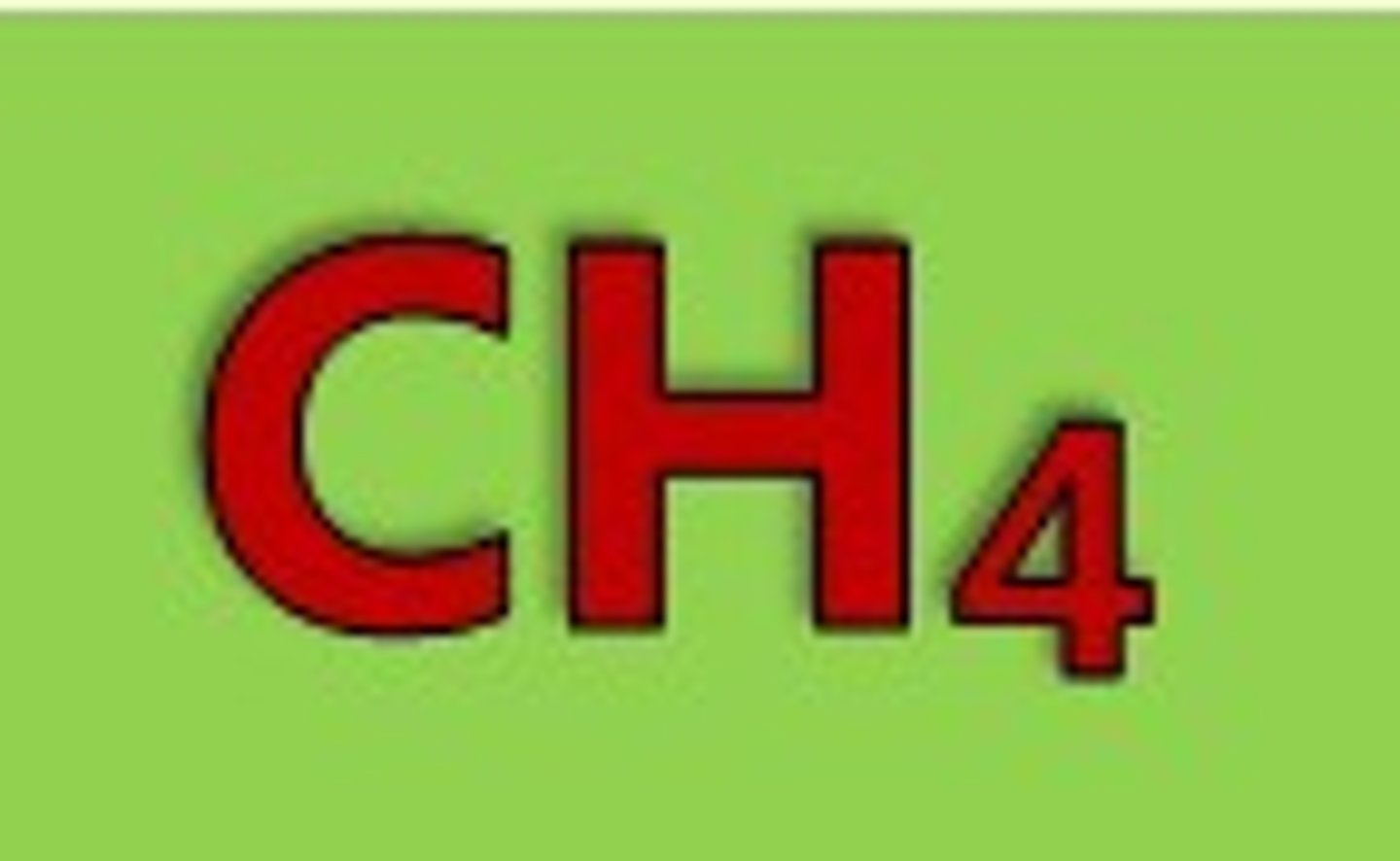
Methane
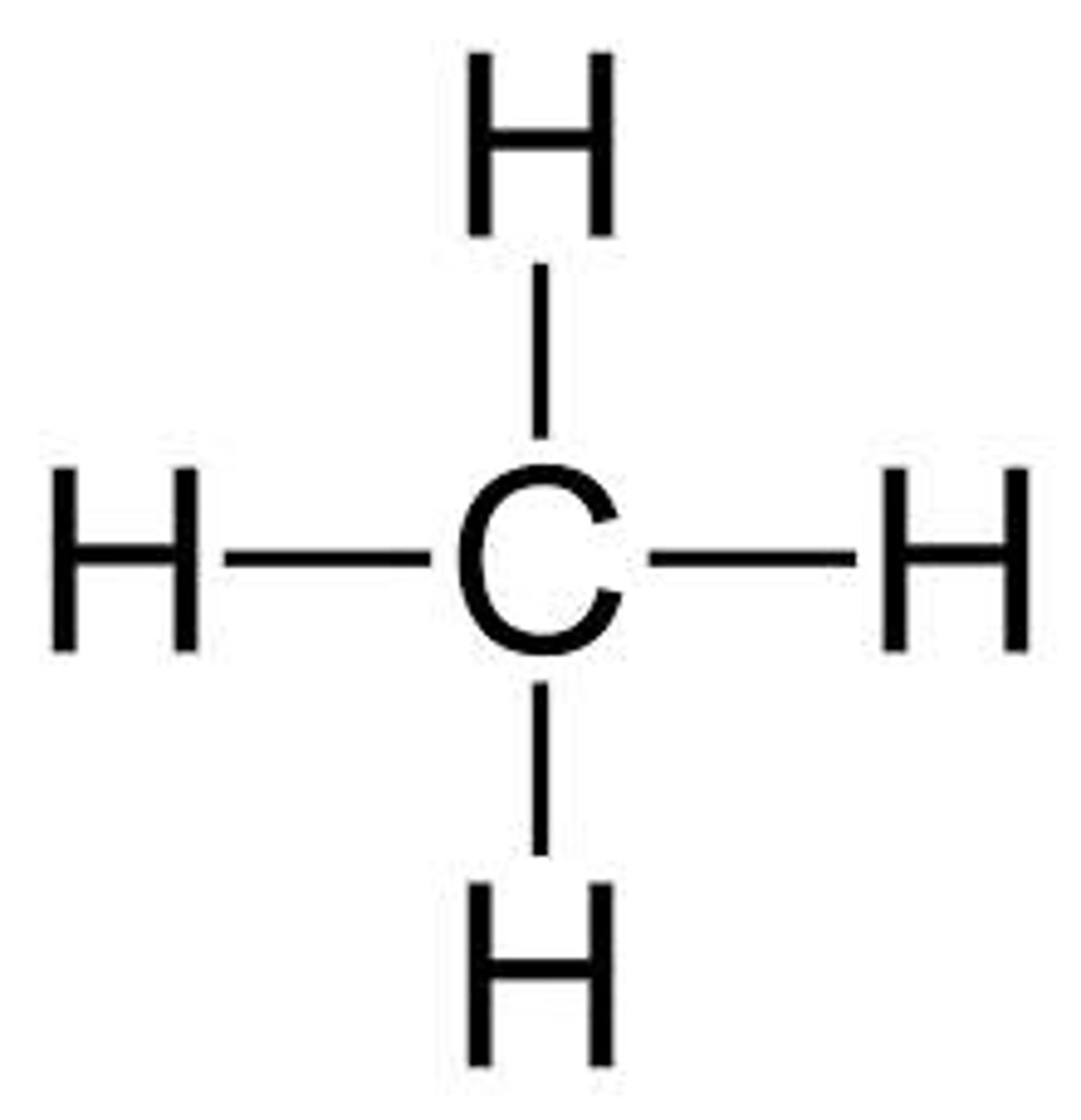
What is methane an example of?
Methane is an example of a hydrocarbon.
Describe the bonding in methane.
Methane contains one carbon atom covalently bonded to four hydrogen atoms.
What are hydrocarbons?
Hydrocarbons are molecules made up of hydrogen and carbon atoms only.
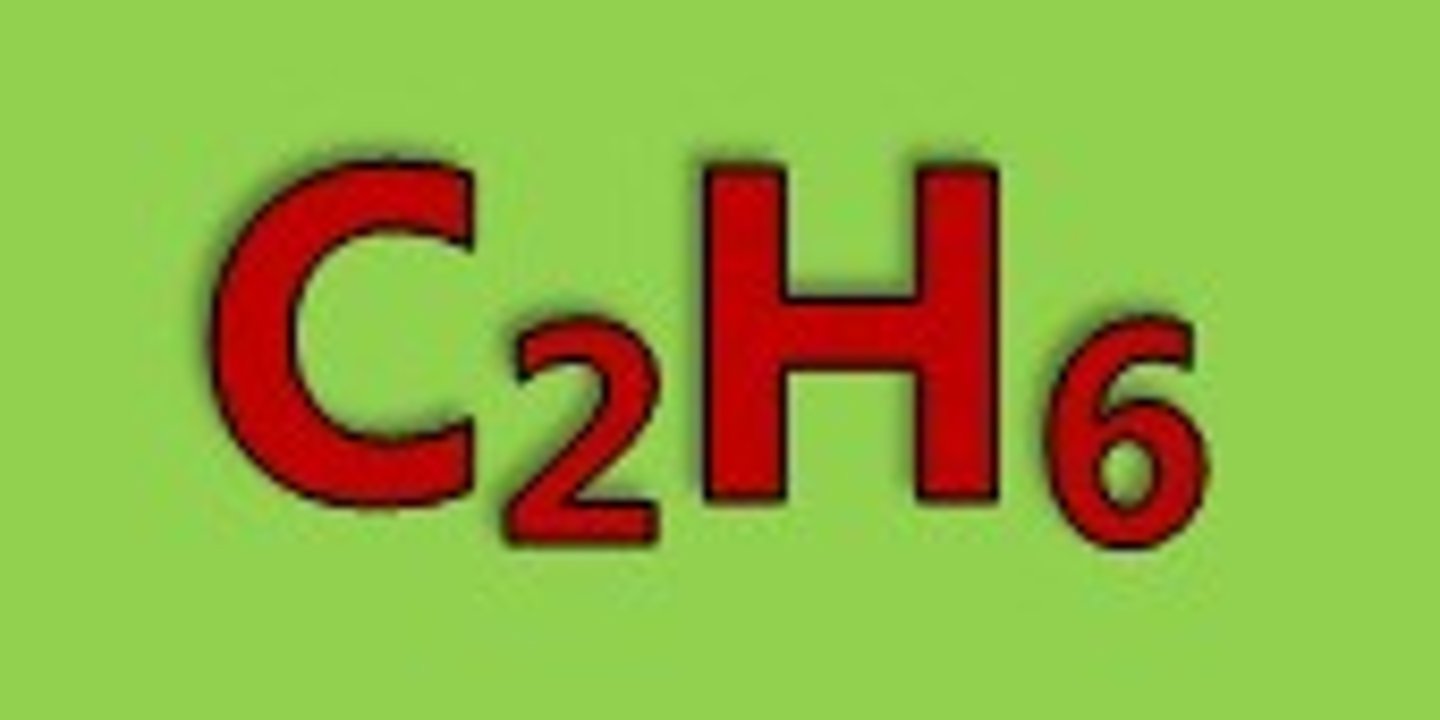
Ethane
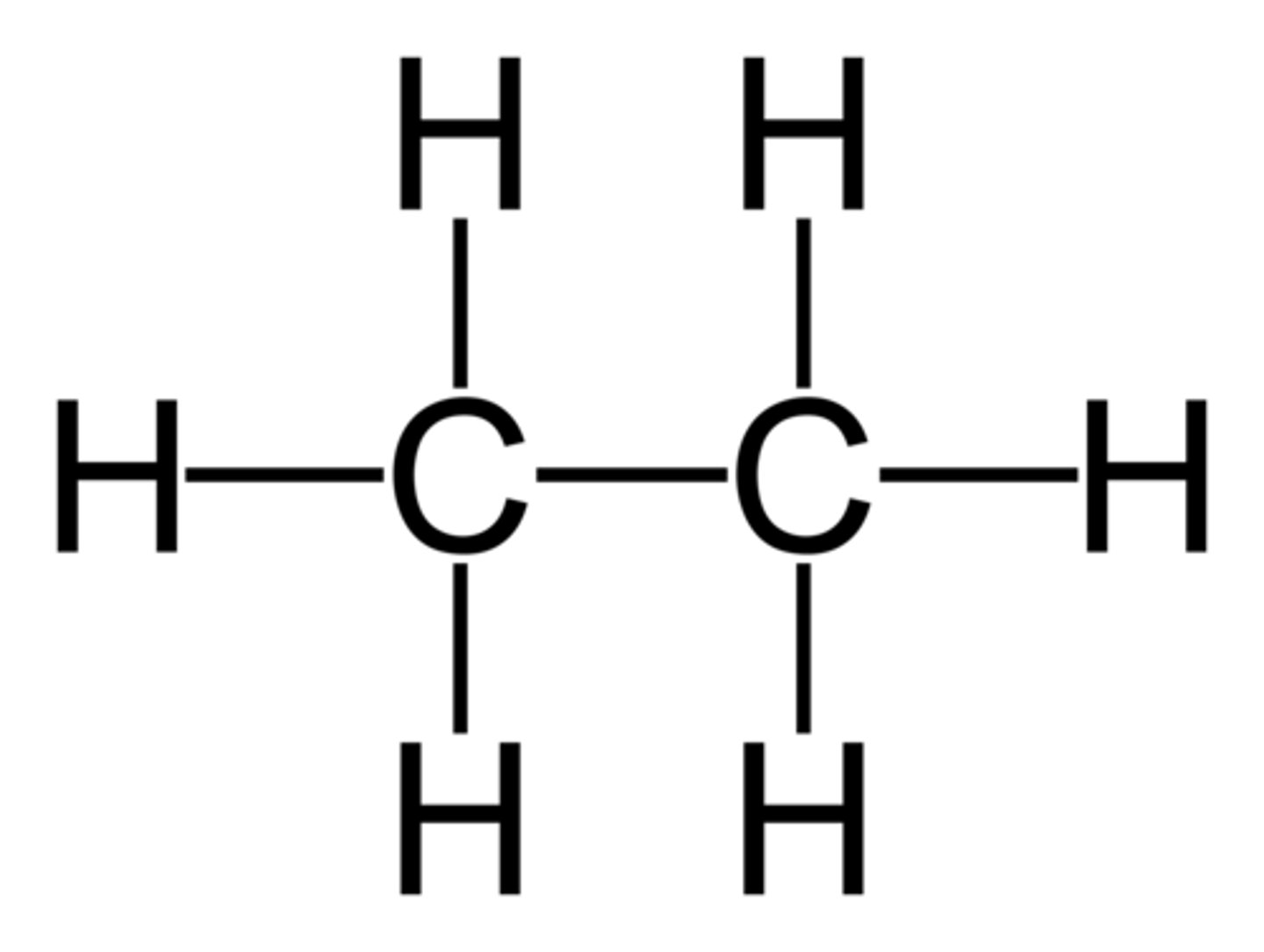
Structural formula of ethane
Where is ethane found?
Ethane is another hydrocarbon that is found in crude oil.
What are alkanes?
Alkanes are saturated hydrocarbons such as methane and ethane.
State the general formula of alkanes
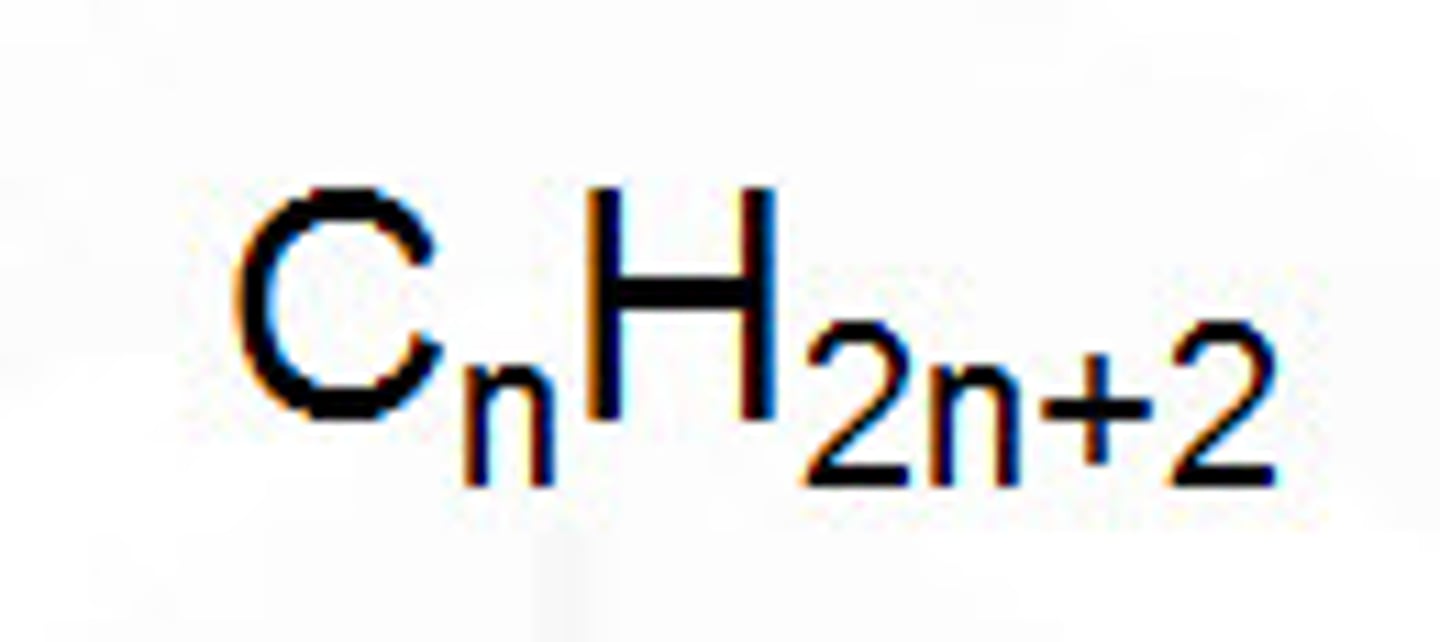
n =
n = the number of carbon atoms
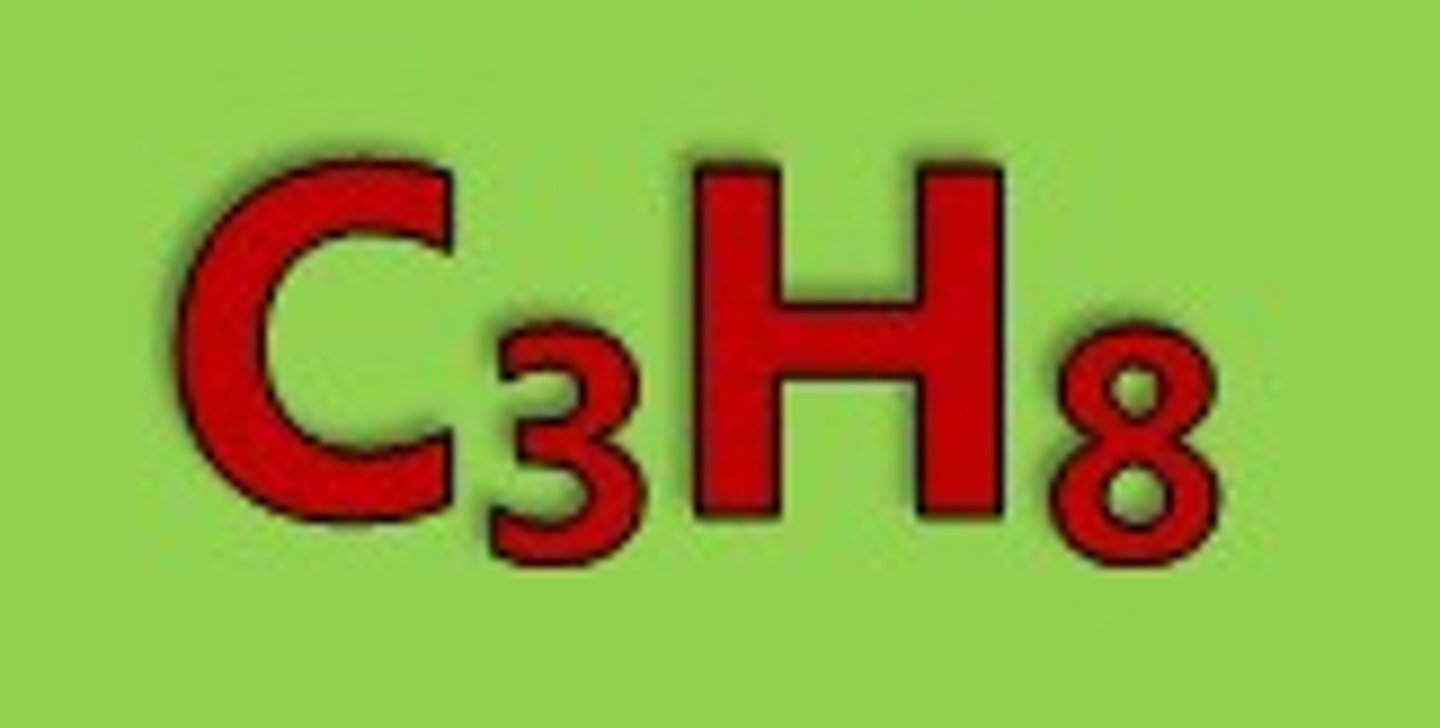
Propane
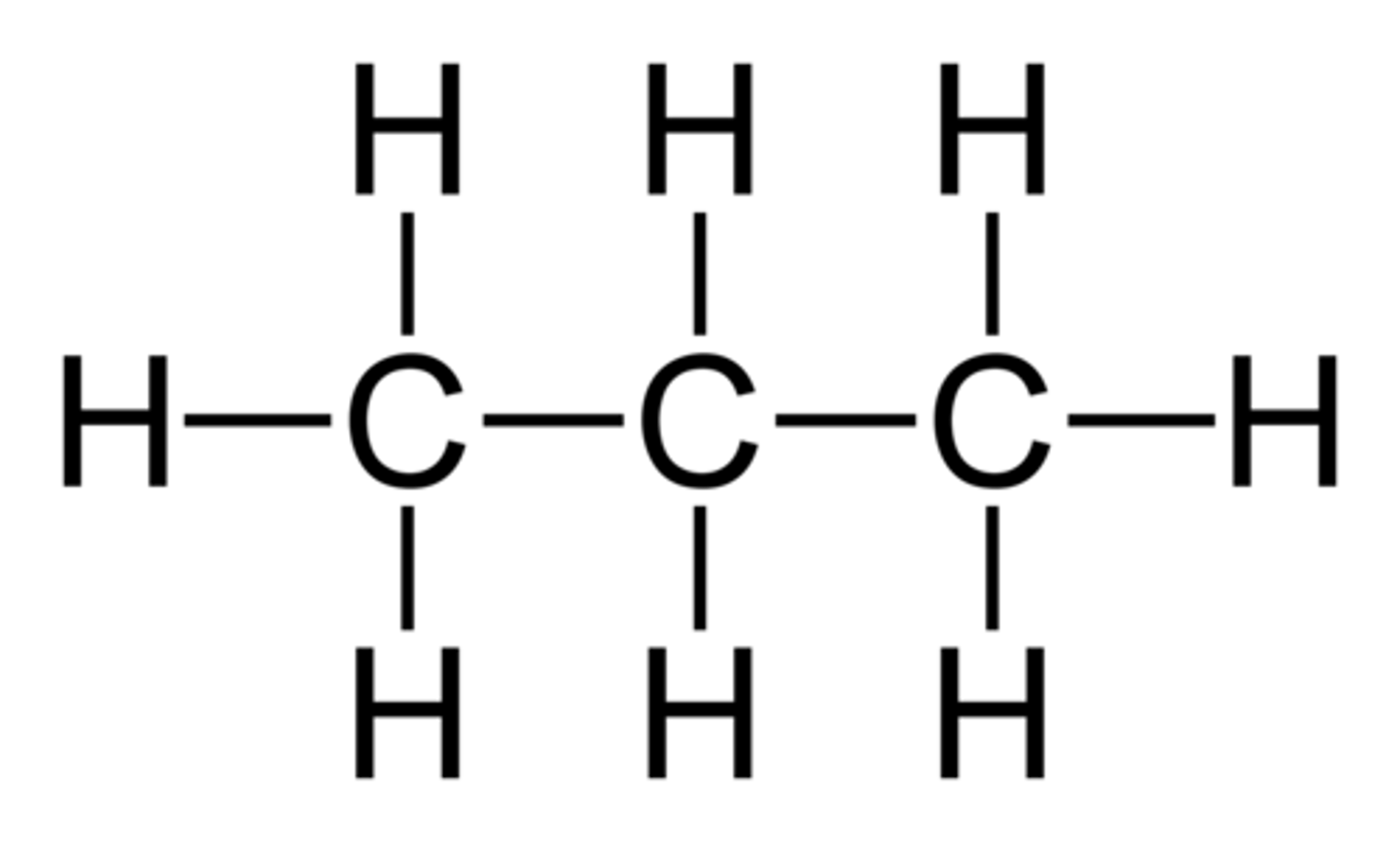
Structural formula of propane
Butane
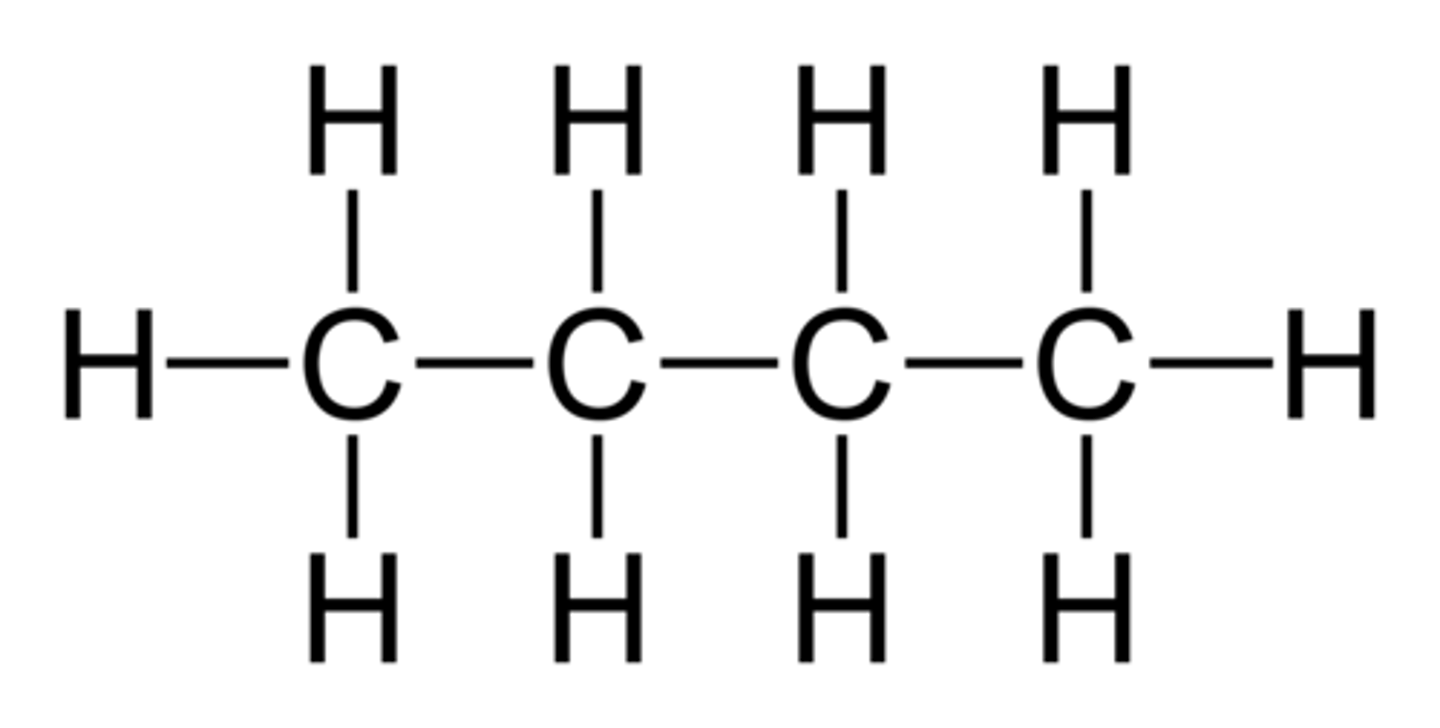
Structural formula of butane
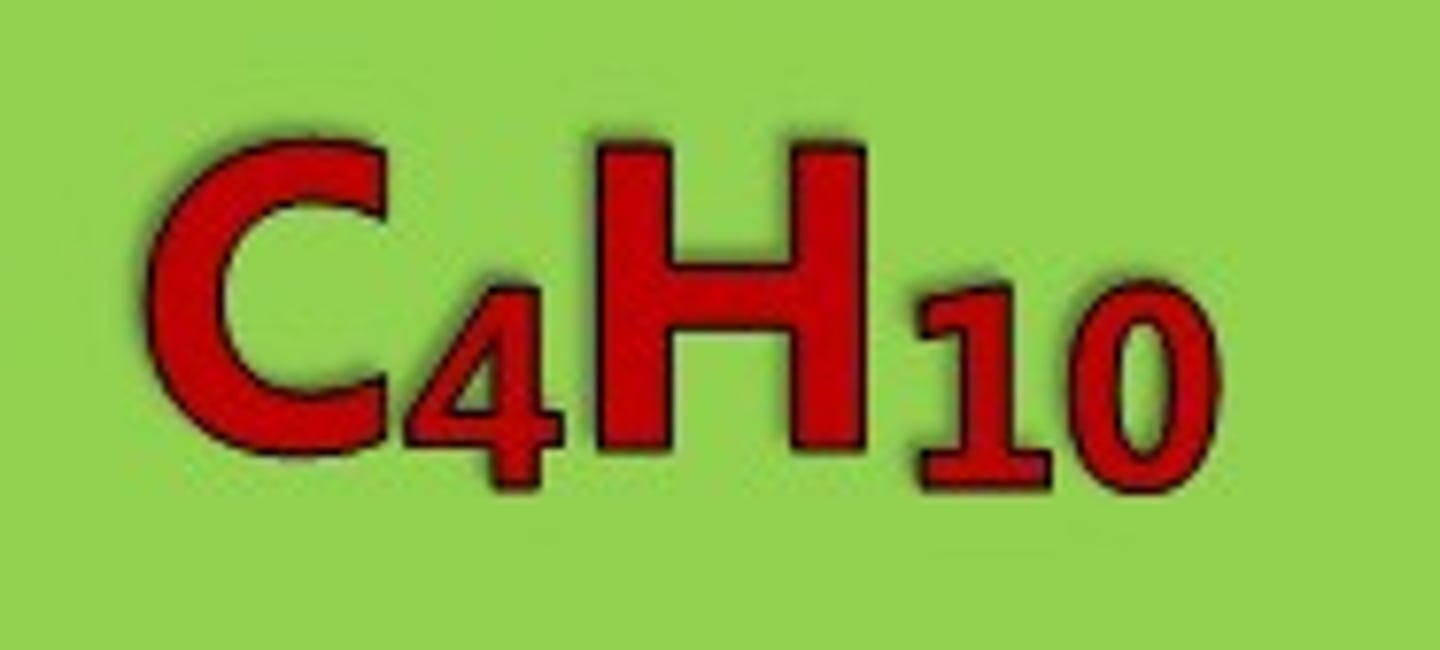
Why do scientists say that alkanes are saturated molecules?
- scientists say that alkanes are saturated molecules,
- because the carbon atoms are fully bonded to the hydrogen atoms
What does viscosity mean?
Viscosity tells use the thickness of a fluid
Fluids with a high viscosity ....
Fluids with a high viscosity flow slowly.
As the size of the hydrocarbon molecules increases,
As the size of the hydrocarbon molecules increases, the molecules get more viscous.
This means that very long chain hydrocarbons are extremely viscous/have a high viscosity, and so they flow very slowly.
What is meant by flammability?
Flammability tells us how easily a hydrocarbon combusts (burns)
What does combustion mean?
burning
Describe the flammability of short chain hydrocarbons
Short chain hydrocarbons are extremely flammable.
How does the flammability change as the size of the hydrocarbon molecules increases?
- as the size of the hydrocarbon molecules increases, the molecules get less flammable/the flammability decreases
- this means that long chain hydrocarbons are very difficult to burn
What is meant by the boiling point?
The boiling point is the temperature at which a liquid turns to a gas.
Describe the boiling points of short chain hydrocarbons
Short chain hydrocarbons have low boiling points.
Due to this, methane, ethane, propane and butane are all gases at room temperature, because they all have boiling points which are lower than room temperature.
How does the boiling point change with the size of the hydrocarbon molecules?
As the size of the hydrocarbon molecules increases, the boiling point increases.
This means that long chain hydrocarbons have higher boiling points.
Name some examples of vehicles than run on hydrocarbon fuels
Ships, planes and cars all run on hydrocarbon fuels.
What is released when hydrocarbon fuels are combusted?
Hydrocarbon fuels release energy when combusted (burned).
Describe the reactions taking place during the combustion of a hydrocarbon
- during combustion, the carbon and hydrogen atoms in the fuel react with oxygen
- this means that the carbon and hydrogen are oxidised
Describe what is meant by complete combustion
- if the oxygen is unlimited/sufficient in amount, the combustion reaction of a hydrocarbon produces carbon dioxide and water
- scientists call this complete combustion
Show the general word equation for a complete combustion reaction
hydrocarbon + oxygen ---> carbon dioxide + water
What must be carried out on crude oil in order to make the hydrocarbons useful?
- in order for the hydrocarbons in crude oil to be useful, we have to separate the hydrocarbons
- to do that, we use a technique called fractional distillation
How are the hydrocarbons in crude oil separated using fractional distillation?
- In fractional distillation, crude oil is separated into fractions
- the fractions contain hydrocarbons with a similar number of carbon atoms
Explain the stages of the fractional distillation of crude oil
- firstly in fractional distillation, the crude oil is heated to a very high temperature
- this causes the crude oil to boil, so that all of the hydrocarbons evaporate into a gas
- the crude oil vapour is then fed into the the fractional distillation column
- the column is hotter at the bottom and cooler at the top
- the hydrocarbon vapours rise up the column, and hydrocarbons condense when they reach their boiling points
- the liquid fractions are then removed
- the remaining hydrocarbons continue moving up the column, and condense when they reach their boiling point
- very long chain hydrocarbons have very high boiling points, so these hydrocarbons are removed from the bottom of the column
- very short chain hydrocarbons have very low boiling points, so these do not condense, and are removed from the top of the column as gases
Fractions contain ....
Fractions contain hydrocarbons with a similar number of carbon atoms.
What are the fractions of crude oil used for?
Some of the fractions are used as fuels, such as petrol, diesel, kerosene, heavy fuel oil and liquified petroleum gas.
What are petrol and diesel used for?
Petrol and diesel are used to fuel cars.
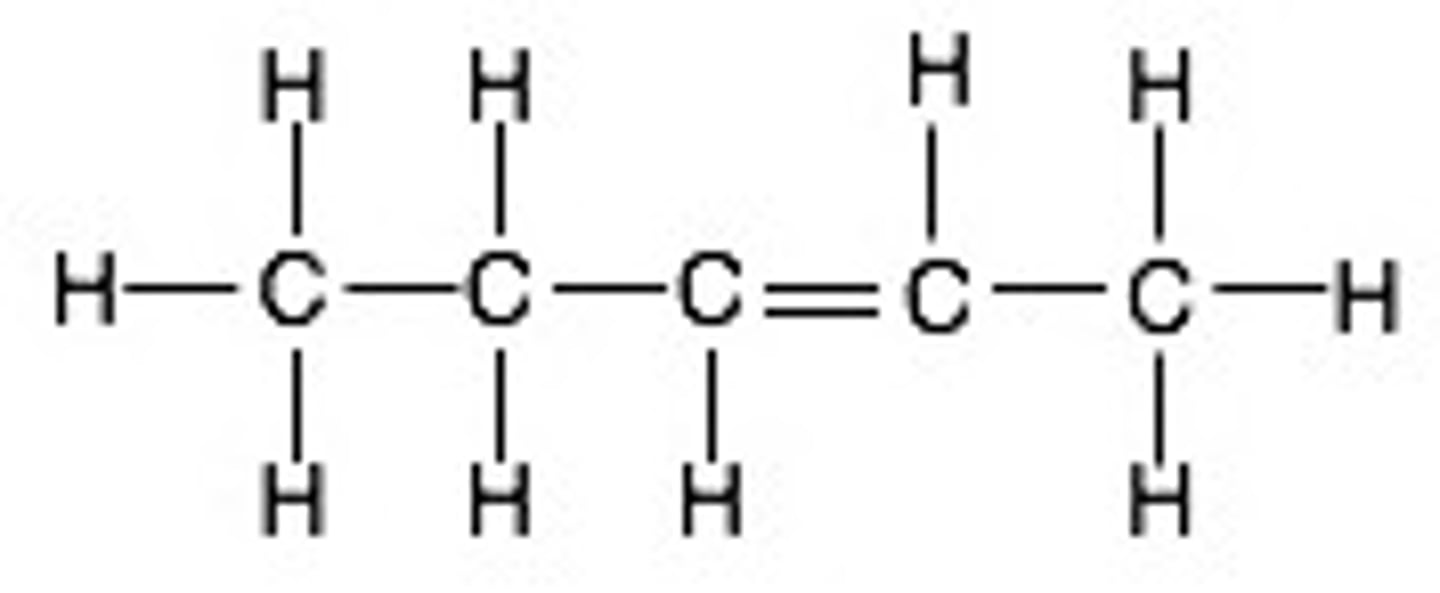
Structural formula of pentene
C5H10
What is heavy fuel oil used for?
Heavy fuel oil is used to power ships.
What is liquified petroleum gas used for?
Liquified petroleum gas is used in camping stoves.
What other uses do the fractions from the fractional distillation of crude oil have?
Some fractions are used as feedstock for the petrochemical industry.
What is a feedstock?
A feedstock is a chemical that is used to make other chemicals.
What are feedstock reactions used to make?
Feedstock reactions are used to make:
- solvents
- detergents
- and polymers
Describe the bonding in an alkane
Alkanes only have single covalent bonds between the carbon atoms.
Why do hydrocarbons not make good fuels and why is this a problem?
- as long chain hydrocarbons are not very flammable, hydrocarbons do not make good fuels, as that means they are difficult to combust (burn)
- that is a problem, as there is a high demand for short-chain hydrocarbons to be used as fuels
This means, to solve that problem, we need to convert long chain hydrocarbons into shorter chain hydrocarbons.
Name the process used to convert long chain hydrocarbons into shorter chain hydrocarbons
To convert long chain hydrocarbons into shorter chain hydrocarbons, we use a process called cracking.
Describe what happens in cracking
- In cracking, a long chain alkane is broken down (cracked) to produce smaller, more useful molecules
- the reaction for cracking produces a short-chain alkane,
- as well as a different molecule called an alkene
What are short chain alkanes used for?
Short chain alkanes are used for fuels, such as fuels in cars
Name the two types of cracking
The two types of cracking:
- catalytic cracking
- steam cracking
Describe the conditions needed for catalytic cracking
- in catalytic cracking, we use a high temperature and a catalyst
- the catalyst speeds up the reaction
Describe the conditions needed for steam cracking
- in steam cracking, we use a high temperature and steam
What are alkenes?
Alkenes are unsaturated hydrocarbons with a double covalent bond between two of the carbon atoms.
Describe the bonding in an alkene
Alkenes have a double covalent bond between two of their carbon atoms.
Describe the reasons why alkenes are very useful molecules
- alkenes are used to make chemicals called polymers
- alkenes are also used as the starting material for other useful chemicals
Are alkenes very reactive?
Alkenes are more reactive than alkanes, so we can use this reactivity to test for alkenes.
Describe how to test for alkenes
- we test for alkenes using bromine water, which is orange
- if we shake the alkene with bromine water, then the bromine water turns colourless
State the general formula of alkenes
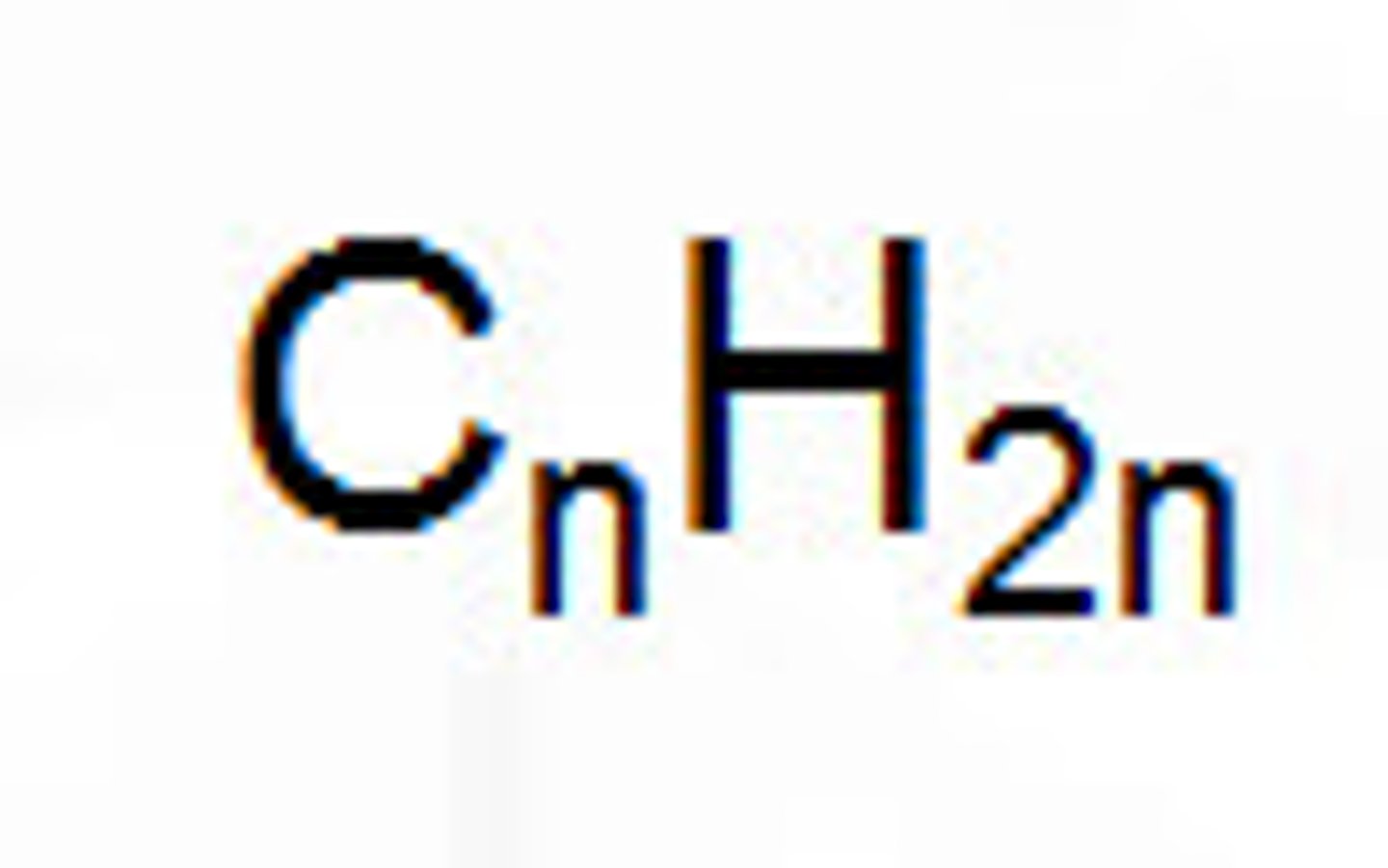
Ethene
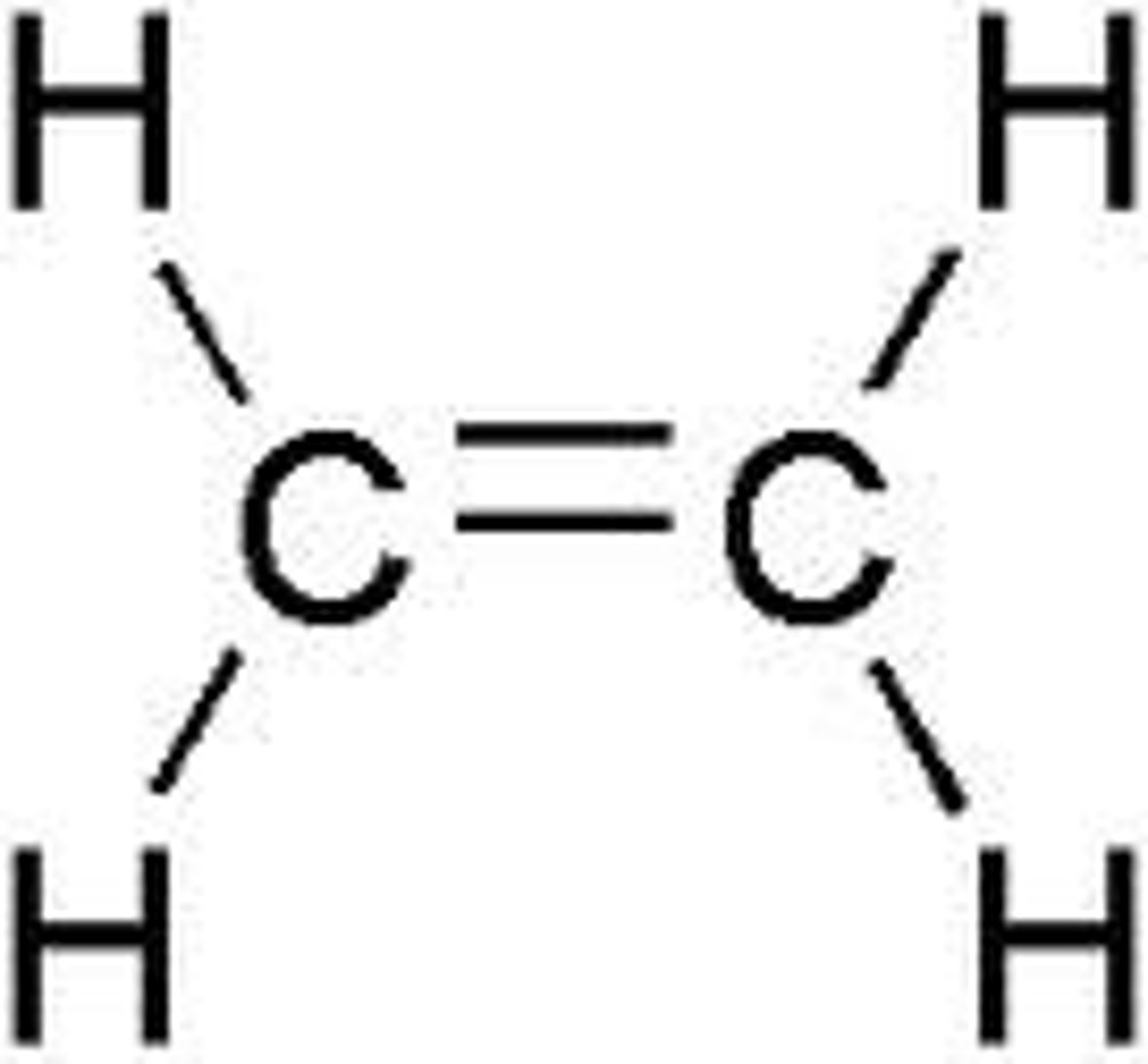
Structural formula of ethene
C2H4
Propene
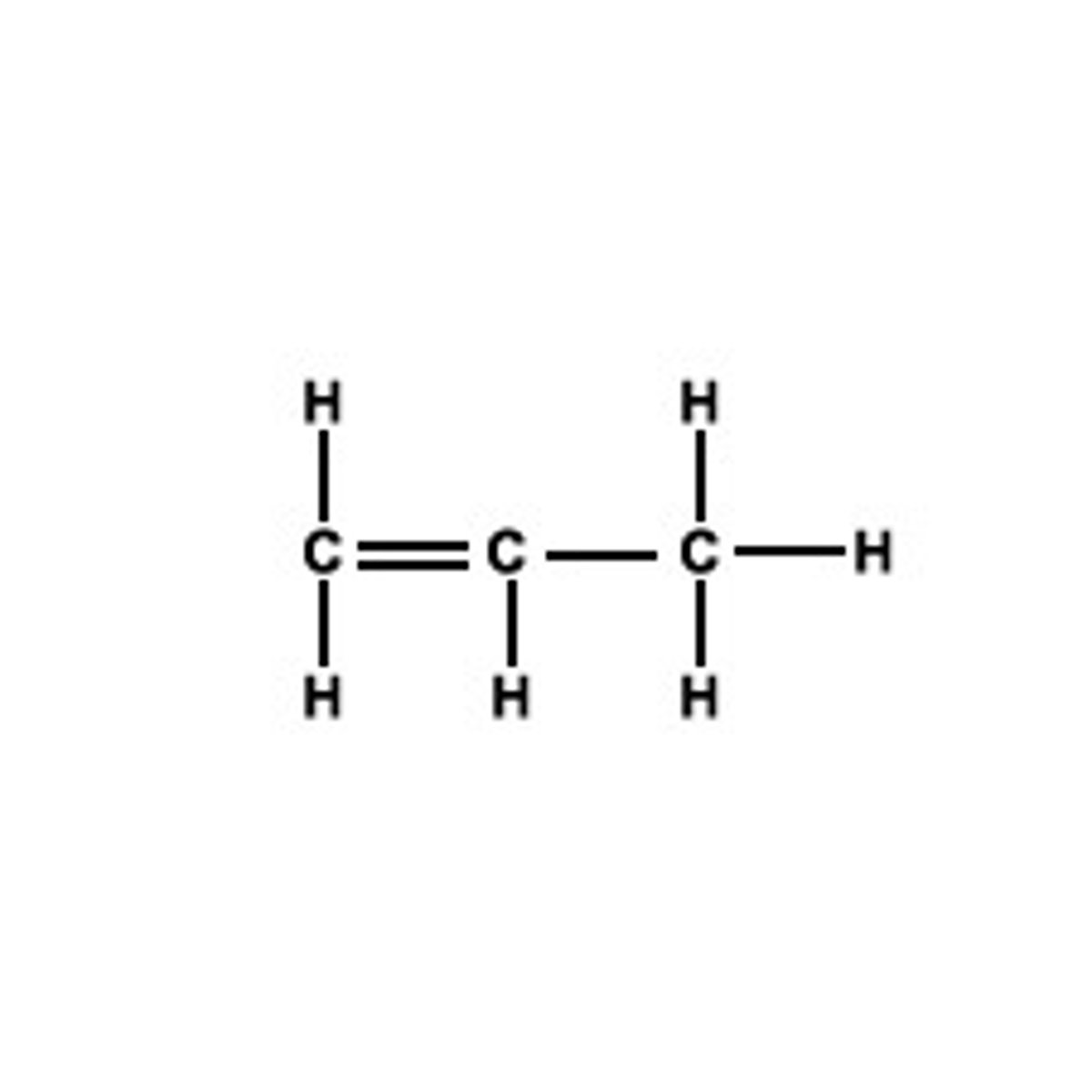
Structural formula of propene
C3H6
Butene
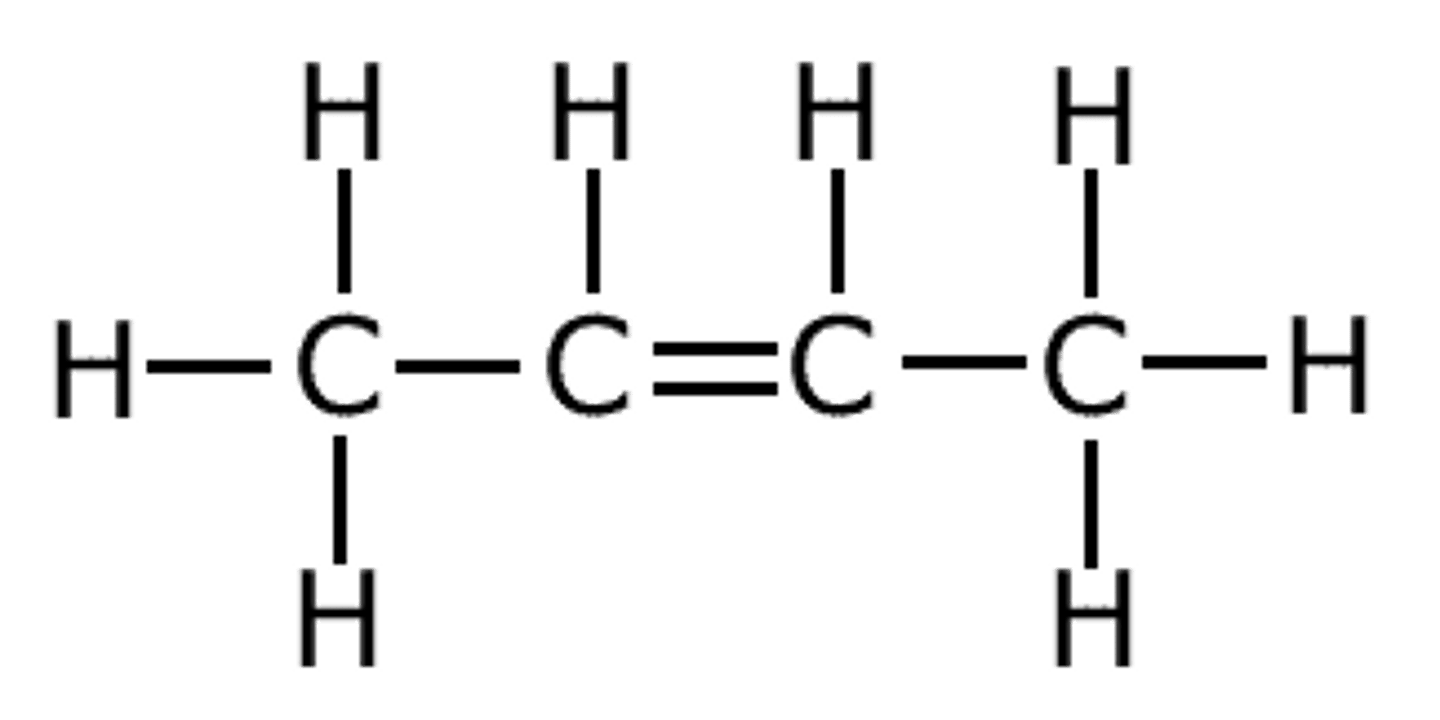
Structural formula of butene
C4H8
Pentene
What is kerosene used for?
Kerosene is used as jet fuel.
Why do scientists say that alkenes are unsaturated?
Scientists say that alkene molecules are unsaturated.
That is because alkenes have two fewer hydrogen atoms that their equivalent alkane with the same number of carbon atoms.
Why do all alkenes react in a similar way?
- all alkenes react in a similar way,
- because all alkenes have a double covalent bond between two of their carbon atoms
What is meant by a functional group?
The functional group describes the part of a molecule that determines how it reacts.
What is the functional group of alkenes?
The functional group of an alkene is the double covalent bond between two of the carbon atoms.
C=C
Scientists call molecules such as alkenes a ....
Scientists call molecules such as alkenes a homologous sereies.
What do the members of a homologous series all share?
The members of a homologous group all have the same functional group.
The next molecule in the homologous series of alkenes always has ....
... an extra carbon atom and two extra hydrogen atoms.
Describe what happens in the combustion of alkenes
- when we combust alkanes, we produce carbon dioxide and water, and this is also true when we combust alkenes
- However, combusting an alkene also produces unburnt carbon particles, and this is because of incomplete combustion
- this means that alkenes burn in air with a smoky flame
What is hydrogenation?
Hydrogenation is where an alkene reacts with hydrogen to convert the alkene into its equivalent alkane.
What are the conditions for the hydrogenation of ethene with hydrogen?
In the example of ethene in the process of hydrogenation, the conditions required are a temperature of around 150 *C and a nickel catalyst.
Why is a nickel catalyst needed for the hydrogenation reaction?
The nickel catalyst is needed to speed of the hydrogenation reaction between ethene and hydrogen.
Describe what happens in the hydrogenation reaction between ethene and hydrogen
- in the hydrogenation reaction between ethene and hydrogen, the two hydrogen atoms add across the double bond of ethene,
- so that the double covalent bond between two of the carbon atoms in ethene is converted into a carbon to carbon single bond
- this means that the ethene is converted into the alkane ethane
This means that reacting an alkene with hydrogen produces an alkane.
ethene + hydrogen
ethene + hydrogen ----> ethane
Show the general word equation for a hydrogenation reaction
alkene + hydrogen -----> alkane
The conditions required for the hydrogenation reaction are a temperature of 150 *C and a nickel catalyst.
What is hydration?
Hydration is the reaction between an alkene and water.
Describe what would happen in the hydration reaction between ethene and water
- in this hydration reaction between ethene and water, ethanol is made
- ethanol is an alcohol
- in the hydration reaction, the water must be in the form of steam.
Describe the conditions required for the hydration reaction between ethene and water (steam)
In the hydration reaction between ethene and water in the form of steam, the temperature must be around 300*C, and the pressure around 70 atmospheres.
Also, a phosphoric acid catalyst is also used in order to speed up the hydration reaction between the alkene and steam.
What type of reaction is the hydration reaction between an alkene and steam?
The hydration reaction between an alkene and steam is reversible. This means that the yield of the alcohol produced, e.g. ethanol, if the alkene is ethene, can be increased by passing any unreacted alkene and steam back through the catalyst.
Show the general word equation for the hydration reaction between an alkene and steam
alkene + water (steam) ------> alcohol
The conditions of a temperature of around 300*C, a pressure of around 70 atmospheres and a phosphoric acid catalyst are also required for a hydration reaction.
Describe an example of the reaction of an alkene with a halogen
- when the alkene ethene reacts with the halogen chlorine, the product of this reaction is dichloroethane
- the two chlorine atoms in the chlorine molecule have added across the double bond
- also, the double covalent bond between two of the carbon atoms has turned into a single carbon to carbon bond
Do all of the halogens add across in the same way as the molecules of chlorine do when reacting with an alkene?
Yes, the molecules of the halogens bromine and iodine would also add across in the same way.
Show the general word equation for the reaction of an alkene with a halogen.
alkene + halogen ----> dihaloalkane
Chlorine
dichloro-
ethene + chlorine ---->
ethene + chlorine -----> dichloroethane
propene + chlorine ---->
propene + chlorine -----> dichloropropane
Bromine
dibromo-
ethene + bromine ----->
ethene + bromine ----> dibromoethane
Iodine
diiodo-
ethene + iodine ----->
ethene + iodine ----> diiodoethane
Name the uses of alcohols
Uses of alcohols:
- fuels
- solvents
- alcoholic drinks
The alcohols are a ....
The alcohols are a homologous series.
What is the functional group of alcohols?
Alcohols all have the functional group OH.