Nematodes (Exam 4)
 Call Kai
 Learn
Learn Practice Test
 Spaced Repetition
 Match
Match Flashcards
 Knowt Play
1/63

Earn XP
Description and Tags
Exam 3 of Parasitology is the Nematodeds. Blue text is testable material, black text is general info or potential extra credit
Name | Mastery | Learn | Test | Matching | Spaced | Call with Kai |
|---|
No analytics yet
Send a link to your students to track their progress
64 Terms
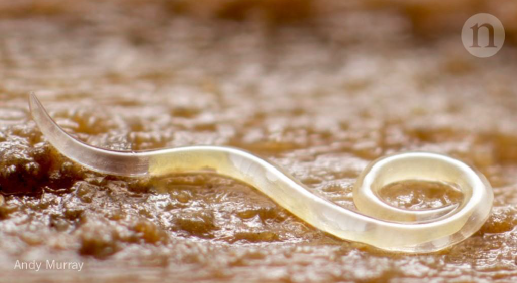
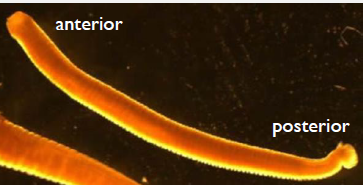
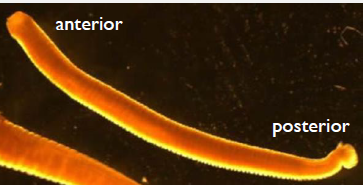
This is an example of a ______, commonly known as roundworms
Nematode
AKA “roundworms”
Nematode: morphologic characteristics
Long cylindrical organisms covered by a cuticle
Have a large body cavity (pseudocoelom)
Nematodes are ______ (two sexes)
Non-hermaphroditic
Males smaller than females
Females have a vulva that may be located near the oral end, tail end, or in the middle
Male nematodes have ____ for grasping females
copulatory bursa (bursates) and copulatory spicules
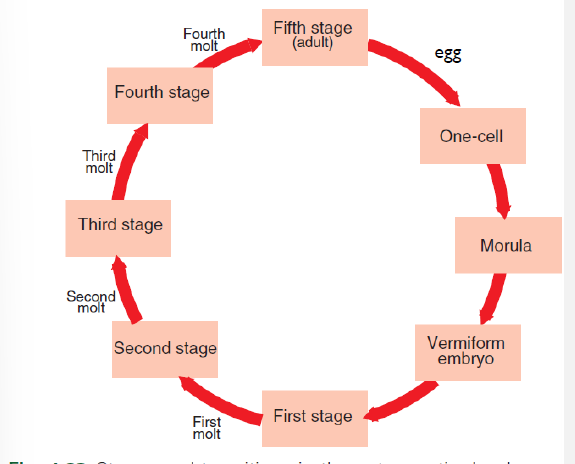
Nematode: Typical Life cycle
egg → one cell → morula → vermiform embryo → 1st stage larva → 1st molt → 2nd stage larva → 2nd molt → 3rd stage larva → 3rd molt → 4th stage larva → 4th molt → 5th stage (adult)
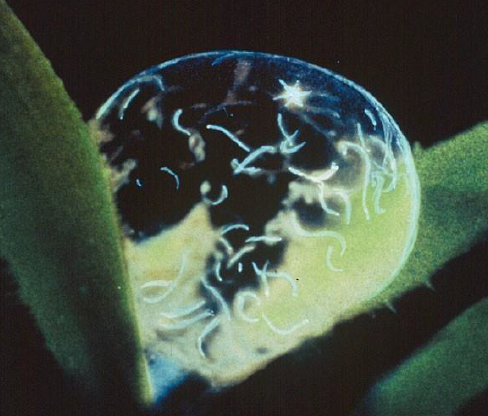
Name this class of nematodes (includes the majority of parasitic nematodes)
Nematoda > Secernentea
What larval stage is the infective stage in the Secernentea class of nematodes?
3rd-stage larva
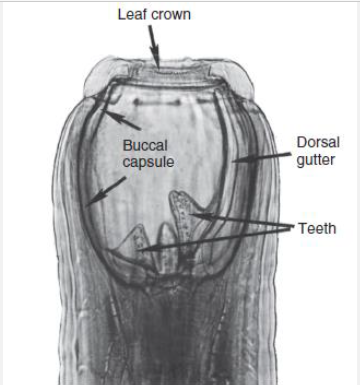
Name this order of Nematodes otherwise known as Bursates
Nematoda > Secernentea > Strongylida (bursates)
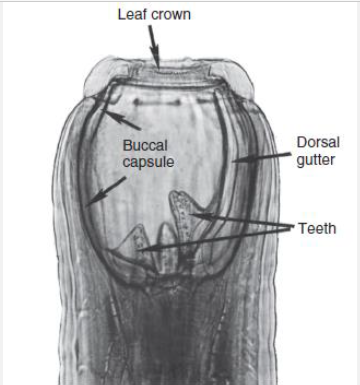
Strongylida: Typical morphologic features
Males typically have a pronounced copulatory bursa (hence the name bursates)
Large buccal capsules for strongyloids and ancylostomatoids
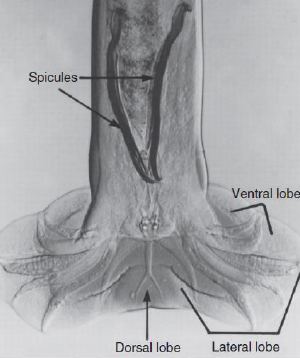
Describe the Spicules of Male Strongyloids and Ancylostomatoids
Spicules are long and thin
Describe the Spicules of Trichostrongyloidea
Spicules are short and stout
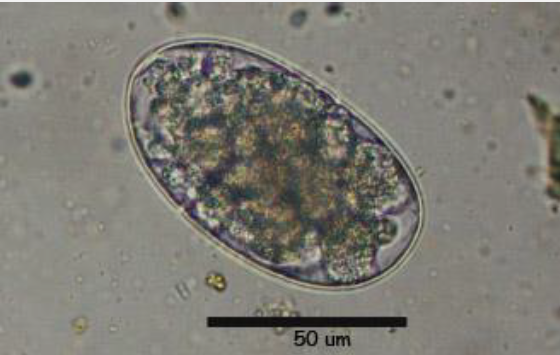
Describe morphological characteristics of Strongylida eggs
typical strongyle-type eggs → smooth, elliptical egg with a morulated embryo
Where do 1st, 2nd and 3rd stage Strongylida larva live?
1st and 2nd stage larvae live in feces
3rd stage larvae migrates out of feces to then be ingested by host
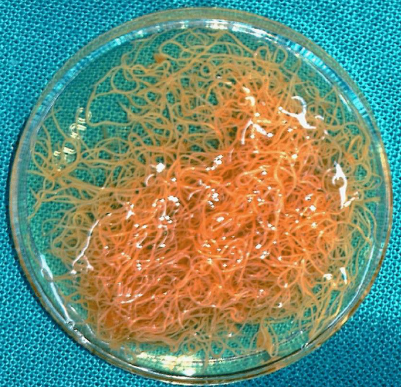
Name this family of nematodes (scientific and common names)
Nematoda > Secernentea > Strongylida (bursates) > Trichostrongylida (threadworms)
Where do Trichostrongylida live and in what hosts?
Common in grazing ruminants, also in swine, horses, cats, and birds
Typically in abomasum and small intestine (exceptions exist)
Where do Dictyocaulus spp. live in host?
Nematoda > Secernentea > Strongylida (bursates) > Trichostrongylida (threadworms) > Dictyocaulus
Exception to typical Trichostrongylida where live in abomasum and small intestine, Dictyocaulus live in the lungs
How is a Trichostrongylida infection diagnosed?
Diagnosis: Strongyle-type eggs on fecal flotation
How is a Dictyocaulus infection diagnosed (differs from other typical Trichostrongylida)?
Baermann technique
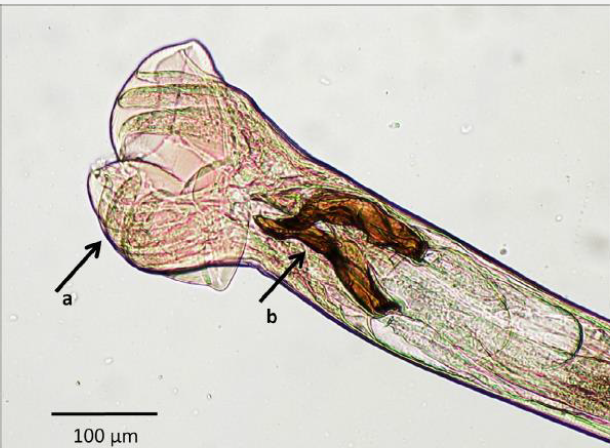
Name this Threadworm
Nematoda > Secernentea > Strongylida (bursates) > Trichostrongylida (threadworms) > Trichostrongylus
Small worms, very reduced buccal cavity
Short, twisted, pointed spicules
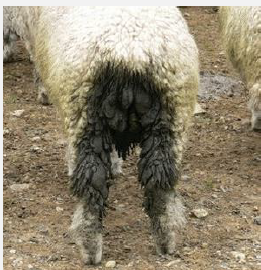
The diarrhea in this sheep is caused by what nematode infection?
Trichostrongylus
Typically asymptomatic, but high numbers can cause diarrhea in sheep, goats, and cattle → Feces on fleece can attract blowflies, leading to myiasis
How does host acquire Trichostrongylus infection? Diagnosis?
Infective third-stage larvae survive winter on pasture, ingested in spring
Diagnosis: Strongyle-type eggs in feces
Trichostrongylus axei: where live and in what host?
Stomach or abomasum of horses and ruminants
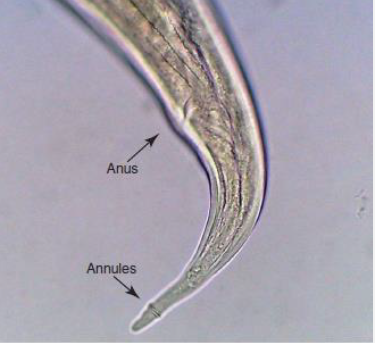
Pictured is the tail of what Threadworm?
Nematoda > Secernentea > Strongylida (bursates) > Trichostrongylida (threadworms) > Ostertagia, Teladorsagia
annulated tail tip
Threadworms Ostertagia and Teladorsagia are related species, but differ in their hosts. What is each one’s host?
Teladorsagia in sheep and goats, Ostertagia in cattle
Teladorsagia/Ostertagia: morphological cahracteristics
Small brownish worms with short buccal cavity, annulated tail tip in females
Short, three-pronged spicules
Where do Ostertagia/Teladorsagia adults live in their respective hosts?
In the abomasum (Ostertagia in cattle, Teladorsagia in sheep)
How are Ostertagia/Teladorsagia infections acquired?
Third-stage larvae survive winter on pasture, ingested in spring
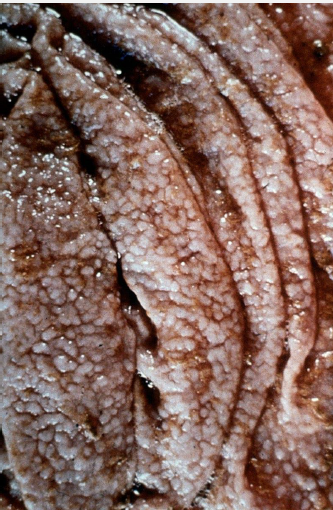
This “Moroccan leather” appearance of abomasal mucosa on necropsy is due to what nematode infection?
Ostertagia (ostertagiasis)
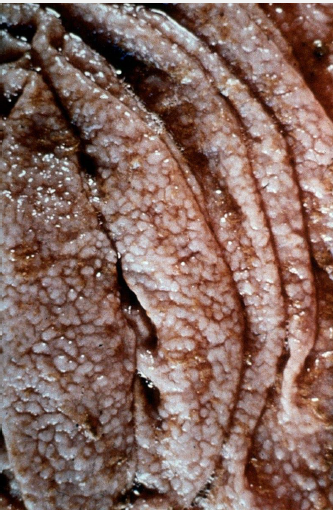
Type 1 Ostertagiasis
Ostertagia infection in cattle
Also called Summer Ostertagiasis
Young pastured cattle acquire the infection in the spring
Clinical signs: diarrhea, anemia, hypoproteinemia, emaciation
Typically in young calves
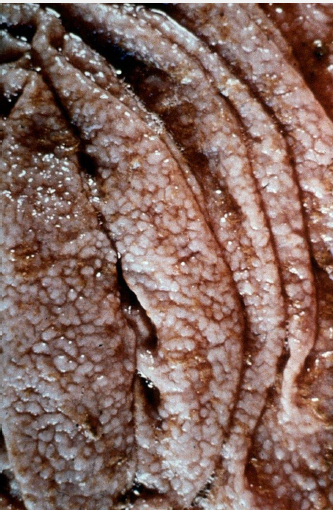
Type 2 Ostertagiasis
Ostertagia infection in cattle
Also called Winter Ostertagiasis
Acquired larvae encyst in mucosa and emerge in late winter
Clinical signs: diarrhea, anemia, hypoproteinemia, emaciation
Typically in young calves
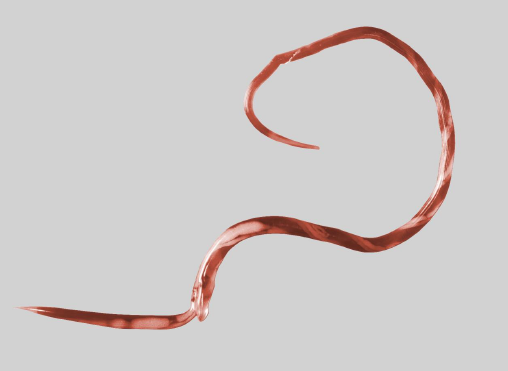
Identify this threadworm: the defining morphological characteristic?
Nematoda > Secernentea > Strongylida (bursates) > Trichostrongylida (threadworms) > Haemonchus
White uterus spirals around blood-filled gut in females → Barber-pole appearance
Where do Haemonchus adults live?
Live as adults in abomasum of ruminants
Haemonchus: Disease
Disease: Anemia, weakness, shortness of breath, submandibular edema (bottle jaw), can be fatal
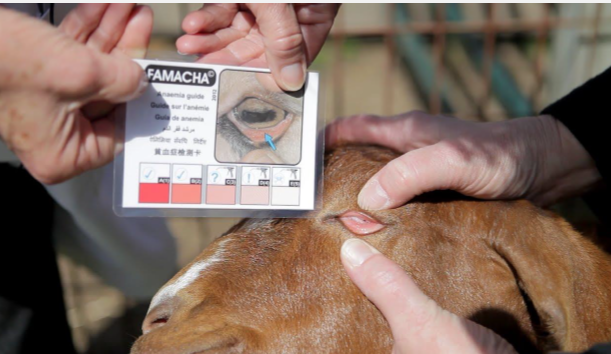
This test is useful for diagnosing what?
FAMACHA chart used to assess mucous membrane pallor
Aids diagnosis of anemia due to Haemonchus infections
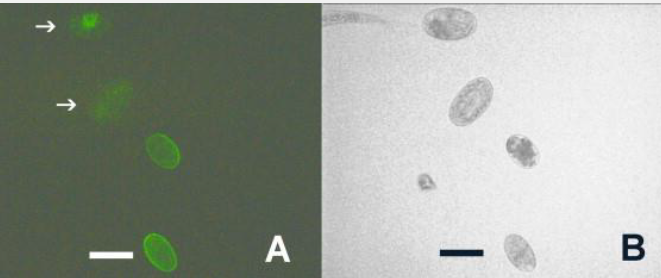
Name this test and what is diagnoses
Peanut agglutination test
Haemonchus eggs
Haemonchus: treatment
Treatment: benzimidazoles (fenbendazole, albendazole), macrocyclic lactones (ivermectin, moxidectin), levamisole, morantel tartrate
Resistance to many drugs reported
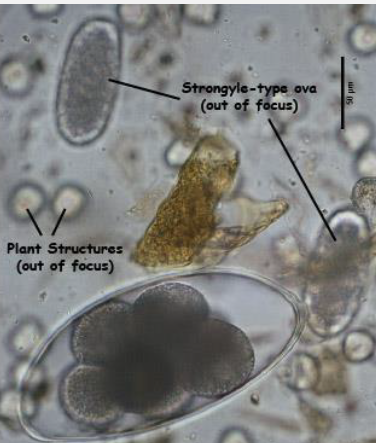
Pictured is a Nematode egg that is much larger than other strongyle-type eggs. Identify the species
Nematoda > Secernentea > Strongylida (bursates) > Trichostrongylida (threadworms) > Nematodirus
Diagnosis: Eggs much larger than other strongyle-type eggs
Nematodirus battus: infective stage development?
Nematodirus battus larvae develop to infective third stage in egg, then hatch after a period of winter freezing
When do Nematodirus battus infections typically occur?
Single wave of infection and disease each spring
Second wave can occur in the fall
Nematodirus: Disease
Typically asymptomatic
Nematodirus battus can cause severe diarrhea and death
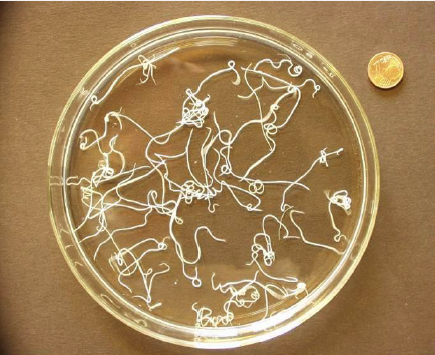
Identify these threadworms
Nematoda > Secernentea > Strongylida (bursates) > Trichostrongylida (threadworms) > Dictyocaulus
Long, white worms with small buccal cavity
Short, granular spicules, reduced bursa
Where do Dictyocaulus adults live and in what hosts?
Live as adults in the respiratory tract of ruminants and horses, first-stage larvae passed in eggs often hatch before passing into feces
Name the host for Dictyocaulus viviparus
Cattle
Name the host for Dictyocaulus filaria
Sheep
Name the host for Dictyocaulus arnfieldi
Equids
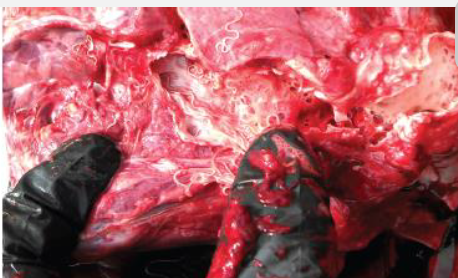
Dictyocaulus: Disease
Disease: Chronic bronchitis, bronchial tree occlusion, atelectasis
(Pictured is a calf lung infected)
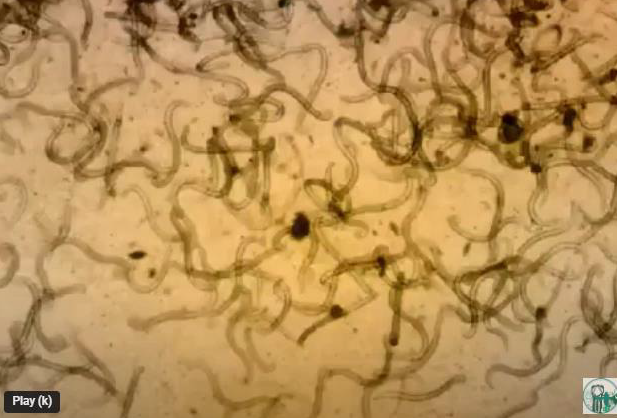
Dictyocaulus: Diagnosis
Diagnosis: First stage larvae in feces detected via Baermann method
Eggs occasionally found on fecal flotation, but usually hatch rapidly
Dictyocaulus: Treatment
Treatment: Macrocyclic lactones (ivermectin, doramectin, moxidectin, eprinomectin), benzimidazoles (fenbendazole, albendazole, oxfendazole), levamisole
Vaccine available
Premunition
The phenomenon where the host is more resistant to a parasite after an initial acute infection has become chronic
A stable adult population of nematodes inhibits further infection or maturation of additional larvae
Spring Rise
Increased number of eggs are passed in feces right before spring
Periparturient rise
Increased number of eggs are passed in feces right before giving birth
Refugia
A population of nematodes that remain unexposed to treatment, decreasing selection pressure on the nematode population as a whole
Resistance to ivermectin, benzimidazoles, and levamisole/morantel reported in many nematode species
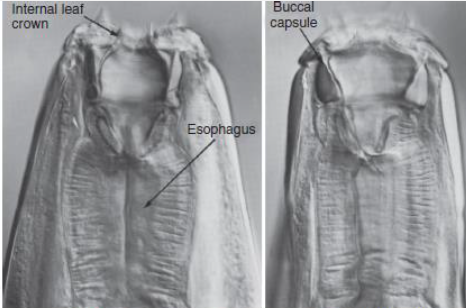
Identify the suborder of Bursates (Strongylida) that show this characteristic of large buccal cavities
Nematoda > Secernentea > Strongylida (bursates) > Strongyloidea