Lesson 84 herd management
 Call Kai
 Learn
Learn Practice Test
 Spaced Repetition
 Match
Match Flashcards
 Knowt Play
1/68

There's no tags or description
Looks like no tags are added yet.
Name | Mastery | Learn | Test | Matching | Spaced | Call with Kai |
|---|
No analytics yet
Send a link to your students to track their progress
69 Terms
shipping fever-Bovine respiratory disease complex
general term for respiratory disease in cattle
bacteria commonly associated
-mannheimia haemolytica
-pasteurella multocida
-histophilis somni
-mycoplasma bovis
signa of BRD-bovine respiratory disease
lethargy, depression, dullness, discharge from eyes, nose, drooling, coughing, labored breathing, death
diagnosis BRD
signs, nasal swabs/ culture, PCR
Prevention/ control of BRD
early detection+treatment
biosecurity, stress management
vaccination
Actinobacillus pleuropneumoniae
bacteria causing swine respiratory disease
-very contagious
cause: poor ventilated overcrowded environment
signs: sneezing, coughing, reduced growth rate, death
prevention and control of actinobacillus pleruopneumonia (pleuropneumonia)
improve ventilation
vaccine→ reduces severity of diseasepas
pasteurella multocida
porcine respiratory disease complex (PRDC)
colibacillosis-E. coli
cattle, pigs, lambs
neonatal diarrhea
diagnosis E. coli
history, culture feces, cytology, API strips (identifies colonies)
confirmation test: agglutination test or PCR
prevention and control E. coli
hygiene/ sanitation, reduce overcrowding
vaccinate dam
colostrum for neonate
Salmonella enterica
causes enteritis-diarrhea, mucus, fibrin, blood
-hypersecretion, malabsorption and exudation
-death in foals
Paratuberculosis (Johne’s disease)
bacteria: M. avium
species: cattle(mostly young), goats sheep
signs: chronic diarrhea
-can be asymptomatic shedders but signs appear after 2 yrs old
-clinical signs severe in older cattle
transmission: slow spread, oral (eating contaminated feed or milk or feces
diagnosis of Johne’s disease-paratuberculosis
fecal smear→ clumps pink bacilli
culture and PCR
Johnin skin test
-single test alone not good enough, ideal is culture+ ELISA
prevention and control of Johne’s disease
test annually, cull positives
add calcium oxide/ lime to feces
separate newborn calves
NO TREATMENT/ ABX
common baacteria GI infection in pigs
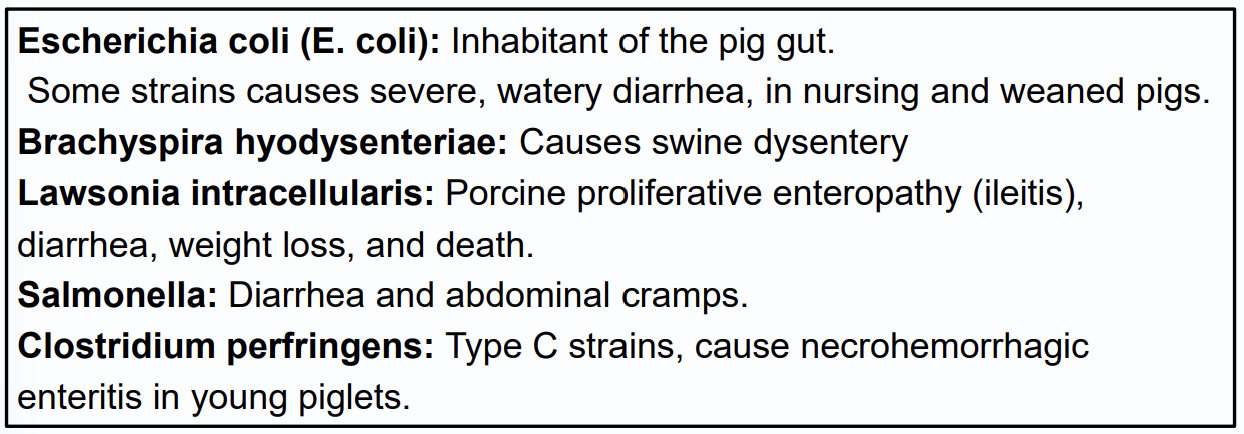
swine dysentry
bacteria: brachyspira hydosenteria
signs: diarrhea, reduced growth rate post weaned pigs, sudden death
transmission: rodent vectors
preventative/ control swine dysentery
reduce stock density, hygeine, rodent control
ABX in water, feed, inj
Lawsonia intracellularis (swine)
gram negative, highly pathogenic, NOT culturable. proliferative enteropathy
causes: hyperplasia enterocytes, thickening intestinal walls, stiffening and reduced flexibility
-acute hemorrhagic form: procine hemorrhagic enteropathy
-chronic proliferative form: porcine intestinal adenomatosis (PIA)
signs: mild diarrhea, reduced weight gain
diagnosis of PIA-porcine intestinal adenomatosis
PCR and ELISA since can’t culture
dermatophilosis/ streptothricosis
bacteria: dermatophilus congolensis (gram +)
cattle, horses, sheep, goats
types:
rain scald/ rain rot
lumpy wool disease
strawberry footr ot
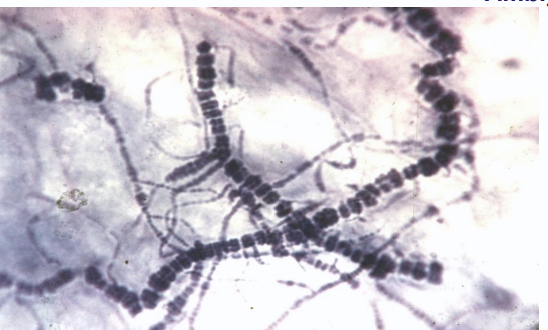
how does dermatophilus congolensis look like on cytology
railroad track like appearance
pathogenesis of dermatophilosis
spores spreading in wet conditions→ transmit by flies→ enters injuries→ exudation→ skin trauma, tick infestation
Dermatophilus congolensis in sheeps
types:
lumpy wool
face and scrotum
lower leg and foot (strawberry food rot)
transmission: zoonotic from farm animals
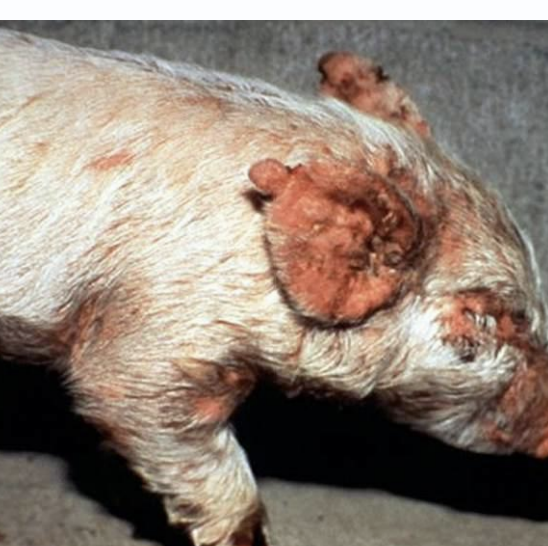
exudative dermatitis (greasy pig)
bacteria: staphlococcus hyicus
signs: skin lesion
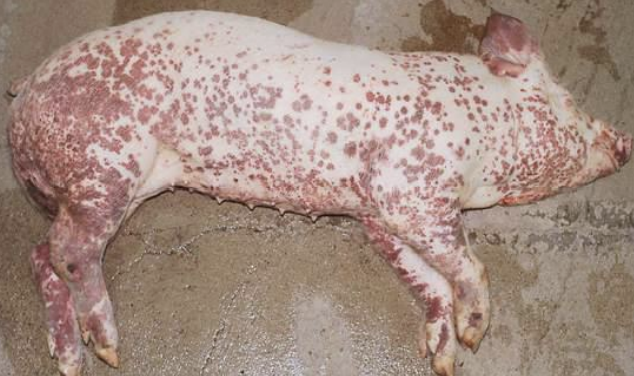
Swine erysipelas (diamond skin disease)
bacteria: erysipelothrix rhusiopathiae
seen with: porcine reproductive and respiratory syndrome (PRRS) or swine influenza
transmission: via tonsils or wounds→ lymphs→ invade bloodstream→ septicemia
signs: sudden onset, small raised areas diamond shaped, red/black colored due to necrosis, no abscess, fever, death from septicemia or heart failure, inappetence, heart valve growth, arthritis
prognosis for diamond skin disease
lesions appear 2-3 days and disappear day 4-7
good prognosis: light to purplish lesion
bad prognosis: dark purplish to red→ death
treatment diamond skin disease
penicillin→ recovery in 24-36 hrs
What pathogen is responsible for greasy pig disease (exudative epidermitis) in pigs?
staphylococcus hyicus
what bacterium causes proliferation of intestinal enterocytes of pigs resulting in thickening and stiffness intestinal wall
lawsonia intracellularis
ringworm in cattle
fungus: trichophyton verrucosum
transmission: infective spores in envrionment or animals. zoonotic
signs: circular lesions mostly head and neck
ringworm diagnosis in cattle
signs, scrapes or biopsy
prevention/control ringworm in cattle
isolate and treat
Rhodococcus Equi
pneumonia common in foals. high mortality
signs: difficulty breathing, cough, reluctance to move, fever, nasal discharge. tuberculosis like abscesses in lungs
DIagnosis of rhodococcus equi
bacterial culture using transtracheal aspirates
prevention and control of rhodococcus equi
remove foal from pasture, dust control in pens, ABX treatment
Rhodovcac vaccine
Bastard strangles
Steptococcus equi subsp. equi (S. equi)
contagious disease horse, donkey, mules. REPORTABLE
signs: abscess in upper resp tract lymph nodes
diagnosis streptococcus equi/ bastard strangles
culture or PCR abscess material
prevention and control streptococcus
biosecurity, screening, vaccine
seedstock producer
creates breeding stock with optimal genetic traits
cow-calf operation
system breeding cows to make supply of weaned calves for sale
feedlot
system of growing/ fattening cow for meat slaughter
conditioning/preconditioning
basic care before going into feedlot
backgrounding
calf growing program b/w weaning and finishing ration on feedlot
ADG-average daily gain
measures weight gain while on feed
feed conversion or feed efficiency
units of feed consumer per weight gained
calf crop
number of calves per year to the number of females mated
cow-calf production cycle
spring= calving
summer= breeding
fall=wean calves
dairy cow housing
tie stall: individual stalls where they stay life including feeding and milking
free stall: group housing and individual stalls, communal feed. cows move to milking parlor
dry lot
pasture
tie stall
individual stalls where they stay life including feeding and milking
high labor costs
free stall
group housing and individual stalls, communal feed. cows move to milking parlor
dry lot
outdoor dirt/sand pens, free roaming in area
milking parlor required
low labor
risk with wet climate
pasture
outdoorgrzaing, free romaing grass field
milking parlor required
moderate labor
parasite risk
how many days is dry period/ until P is ready for calving again
60 days
Calf housing
calf removed from dam at birth and fed colostrum→ individual hutches→ after weaning (7-8 weeks ) move to group pens
how long is pig pregnancy
3 months 3 weeks 3 days= 114 days
pigs gestation crate
-used to prevent fighting
goal to prevent crushing piglets but allow sow to get up
-piglets stay with mother until 21 days old
stages of pig production
furrowing: 21 days old
nursery: 6-8 weeks old
growing and finishing: 16-17 weeks old
-around 120 lbs or 6 months old
types of swin production
all on one farm
farrow to nursery operation
farrow to weaning operation
free range operation
all in all out
everything grown and transferred out same time to reduce disease transmission=batches of piglets
sheep
tails down, grazers-eats grass and clover
stay within flock
goats
tails up, browers-scavenge and eat w/e
independent
horns and beards
sheep vs goat housing
sheeps dont climb so housing simple and dogs needed for predator control
goats need high strong fences, theyre harder to herd, they need areas to climb for enrichment, they have their own predator control
small ruminant nutrition
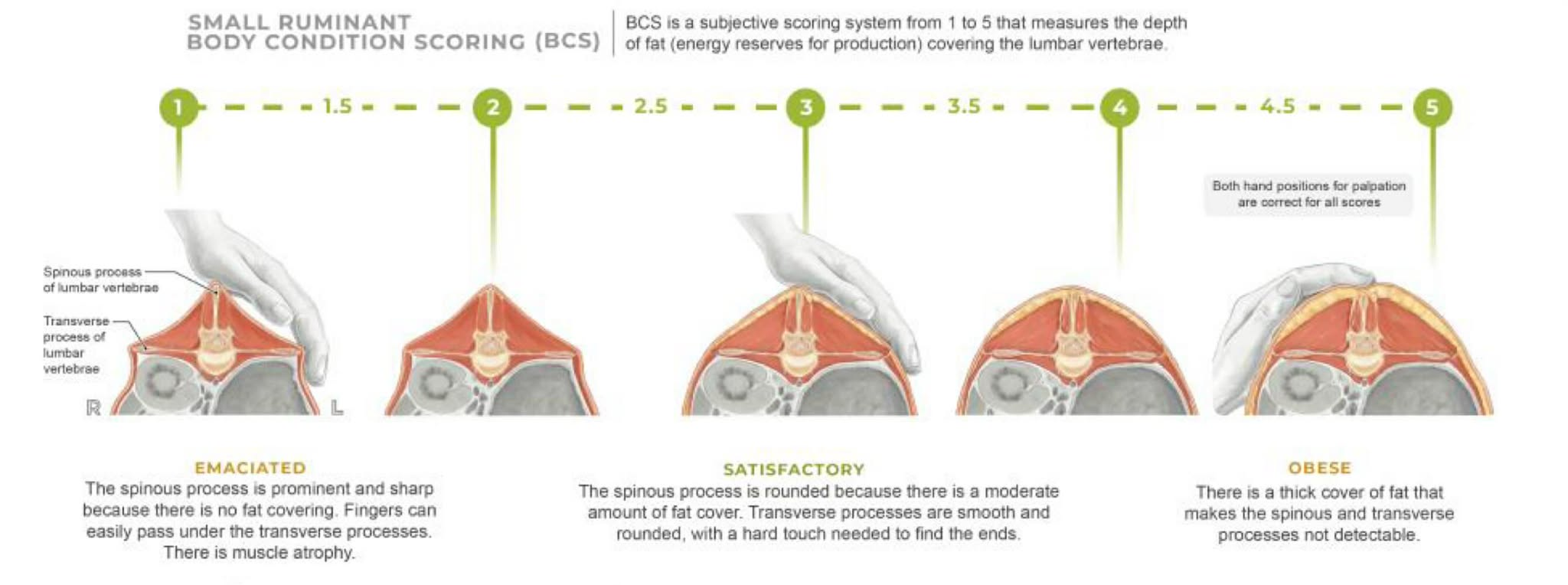
limitations to intensive rearing system (indoor)
hoof care, udder health, vitamin D supplementation, competition for feed
lambing production system
lambing early spring→ puberty in Fall
pregnancy is 147 days
what production system is most likely to use rangelands or pasture as the main
beef cattle production
what is the major advantage of implementing a robotic milking system?
decreased labor