Environmental Controls Final Exam Review
 Call Kai
 Learn
Learn Practice Test
 Spaced Repetition
 Match
Match Flashcards
 Knowt Play
1/32

Earn XP
Description and Tags
(From Simon's Review Slides)
Name | Mastery | Learn | Test | Matching | Spaced | Call with Kai |
|---|
No analytics yet
Send a link to your students to track their progress
33 Terms
Energy
Represents the total capacity to do work
Power
The rate at which energy is used
True/False: Are energy and work the same thing?
True! Energy = Work
Formula for energy/work
Power x Time
Energy Units
BTU (calories) or foot-pounds (joules) or kWh
Renewable Resources
Those that are available on a recurring cycle without substantial depletion
wind
solar
geothermal
biomass and biofuels
hydroelectric
Nonrenewable energy sources
Resources that, once exhausted, can be replaced in a time frame that is meaningful to the human race
coal
oil
natural gas
The largest source of greenhouse gas emissions from human activities in the united states is from __
burning fossil fuels for electricity, heat, and transportation
Major green house gases
carbon dioxide
methane
nitrous oxide
fluorinated gases
Embodied energy of materials
inherent energy captured within the product itself + energy used during the entire life cycle of the product’s manufacture, transport, and disposal
Bioclimatic design
The link between climate and comfort
Microclimate
INteraction of the characteristics of climate (sun, ambient temp, humidity, wind, precipitation, air quality) and site (topography, soil, ground surface, vegetation, water, views, structures, transportation, heat, noise, water, etc.)
Urban heat island effect
Built up areas are hotter than nearby rural areas because of the increased impermeable concrete surfaces, causing
increased summertime peak energy demand
increased use of cooling mechanical systems, reducing their efficiency
considerable decreases the potential of passive cooling strategies
causing heat-related illness and mortality
decreasing water quality
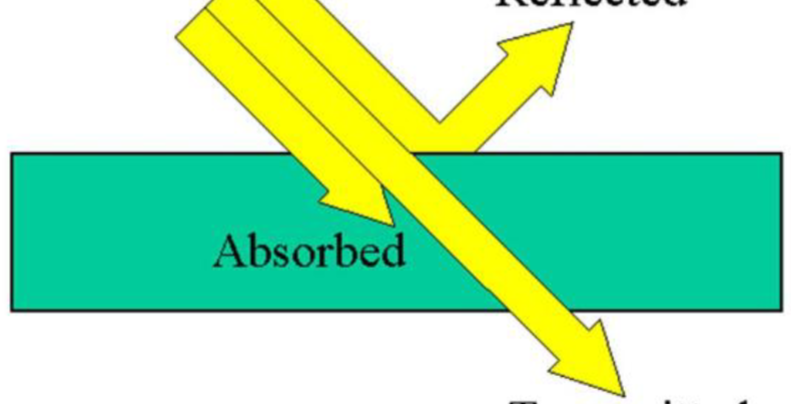
What are the three types of rays shown in the diagram (there’s a spoiler)
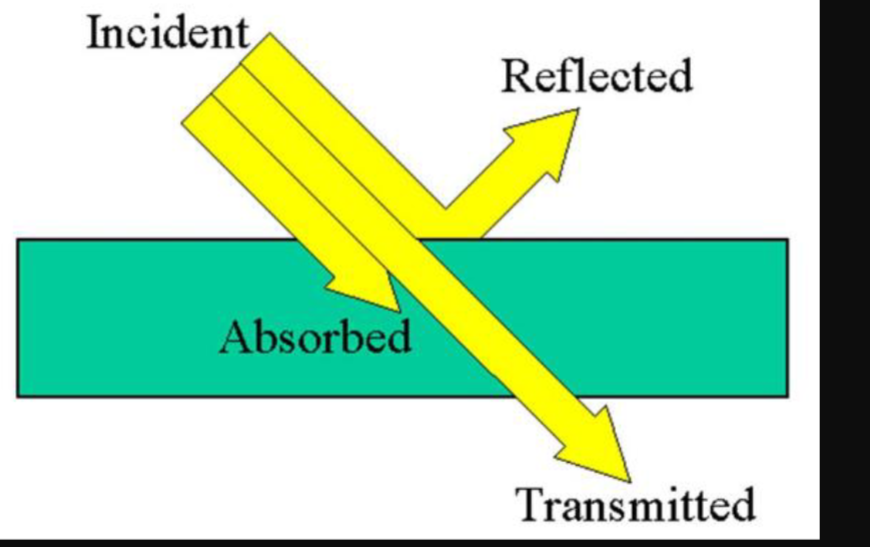
Albedo
Measure of a surface’s reflectivity of solar radiation
Albedo = 0 → absorbs all solar radiation
Albedo = 1 → reflects all solar radiation
Paved surfaces constitute __ of developed urban areas
30-40%
What is the functional difference between a green roof and conventional roof in terms of urban heat island effect?
There is a 80 degree temperature difference between a green roof and conventional roof (with the green roof being cooler)
Extensive vs. Intensive Green roof characteristics
Extensive (low profile, eco-roof)
low growth
lightweight
low growing plants
non-accessible and non-recreational
slopes up to 30 degrees or higher
less expensive
low water requirements
low maintenance
Intensive ( high profile, roof garden)
heavier weights
trees shrubs and more
huge plant variety
designed for human recreation
more expensive
irrigition necessary
high maintenance
What is the difference between IEQ, IAQ, and thermal comfort
IEQ (Indoor environmental qualtiy) includes
vibration
odor
vision
sound
air
thermal
water/microbiome
IAQ is only the “air” component of IEQ
Thermal Comfort is driven by
metabolism
clothing
air temperature
humidity
air flow
mean radiant heat (MRT)
Thermal Comfort Variables (6)
Personal:
Metabolism (Met)
Clothing (Clo)
Environmental
Air temperature (dry bulb)
Humidity (Wet bulb)
Air flow/motion (fpm)
Mean Radiant Heat (MRT)
Sensible heat
The energy exchanged by a thermodynamic system that ONLY effects the change of air temperature (dry bulb temperature)
Latent heat
The amount of energy exchanged that is HIDDEN
present within moisture in air
increases wet bulb temperature
When does sensible heat loss occur?
radiant loss to cooler surfaces
convection loss to cooler air which is heated and rises
dry respiration loss to cooler air through lungs
When does latent heat loss occur?
latent respiration heat loss
water diffusion through the skin
evaporation of sweat
Principles of Thermal Comfort
improving occupant comfort
understanding the impact of physical components of a space (ie. room geometry, materials, etc.)
defining passive cooling/heating/ventilation strategies
reduction of energy consumption by buildings
ASHRAE Standard 55-2004
Defines “comfort zone”, which is a “condition of mind which expresses satisfaction with the thermal environment and is assessed by subjective evaluation”
ASHRAE Comfort Zone based on:
relative humidity
average of mean radiant temperature (MRT) and ambient air (dry bulb) temperatures AKA operative temperature
two seasons - adjusted for clothing insulation
air motion and metabolic rate are fixed
Localized discomfort
Overrides comfort even under thermal neutrality
radiant asymmetry (a fire pit in a cold evening)
drafts
contact with hot or cold floors
vertical temperature differences
sensitive parts of body (chest, fingertips, chine, upper lip, nose)
Thermal comfort arises chiefly from __
a mismatch between the environments people expect and the environments they encounter
Adaptive approach to thermal comfort:
Individual control is the key to comfort (ie. ceiling fans and operable windows)
Solar constant
average amount of electromagnetic radiation received from the sun per unit area on a surface perpendicular to the sun’s rays, measured at the Earths average distance from the sun
represents the total solar energy reaching the top of Earths atmosphere per square meter
Insolation
Amount of radiation reaching a given area
Solar radiation
Energy emitted based on temperature of the surface of the sun