Chapter 5: Sleep (2)
0.0(0)
Studied by 0 people Call Kai
 Learn
Learn Practice Test
 Spaced Repetition
 Match
Match Flashcards
 Knowt Play
Card Sorting
1/13

Earn XP
Description and Tags
Last updated 4:45 AM on 5/31/26
Name | Mastery | Learn | Test | Matching | Spaced | Call with Kai |
|---|
No analytics yet
Send a link to your students to track their progress
14 Terms
1
New cards
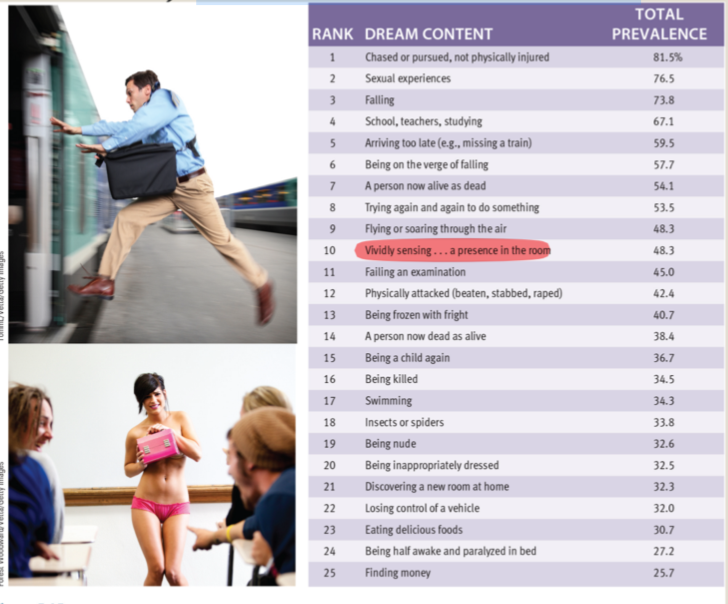
Content of Dreams
2
New cards
Freud
“Dreams are the royal road to the unconscious”
3
New cards
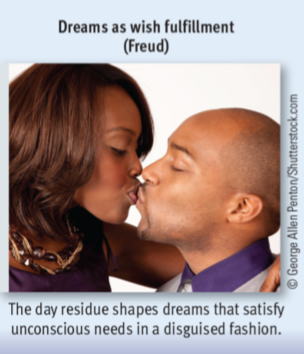
Wish Fulfillment Theory
◦ Dreams express unconscious motives and wishes
◦ Manifest & latent content
◦ Manifest & latent content
4
New cards
Freud Criticisms
◦ Dreams often hide anxiety or formulations that are not sexual
◦ No simple recipe for dream interpretation
◦ Differed from Jung (personal vs collective unconscious expressed in dreams.
◦ No simple recipe for dream interpretation
◦ Differed from Jung (personal vs collective unconscious expressed in dreams.
5
New cards
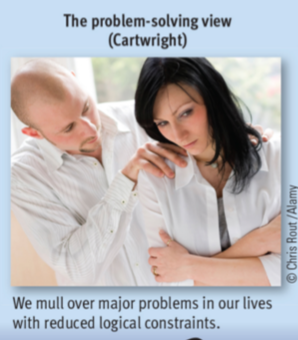
Problem-solving View
◦ Dreams reflect an attempt to solve problems in waking-life
6
New cards
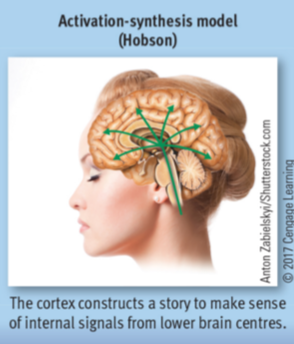
Biological View
◦ Activation-Synthesis Model
◦ Dreams are the by-product of random neural firing
emerging from deep (subcortical) areas of the brain.
◦ Dreams are the by-product of random neural firing
emerging from deep (subcortical) areas of the brain.
7
New cards
Sleep: adults, children, adolescence
●Adults should get 7-9 hours
●Children 9-11 hours
●Adolescents 8.5-9.5 hours
●Children 9-11 hours
●Adolescents 8.5-9.5 hours
8
New cards
Chronic sleep disturbances
●Associated with a spectrum of medical conditions
●E.g. Obesity, diabetes, high blood pressure stroke, cardiovascular disease, depression, excessive drinking
●Immunity to disease reduced
●E.g. Obesity, diabetes, high blood pressure stroke, cardiovascular disease, depression, excessive drinking
●Immunity to disease reduced
9
New cards
Sleep Deprivation
●Impaired concentration and cognitive performance
●Emotional centers of the brain more reactive:
●Irritability/mood problems
●Misperceptions during monotonous tasks
●Emotional centers of the brain more reactive:
●Irritability/mood problems
●Misperceptions during monotonous tasks
10
New cards
Why we need sleep
1) To maintain a healthy brain:
●“Cleans” the brain/Repair cells
●Replenish energy stores
●Grow new neurons
2) To consolidate memory & learn
3) To maintain psychological health
●*Regulate mood
●Handle stress
●Effective decision-making
●“Cleans” the brain/Repair cells
●Replenish energy stores
●Grow new neurons
2) To consolidate memory & learn
3) To maintain psychological health
●*Regulate mood
●Handle stress
●Effective decision-making
11
New cards
Tips for Sleep Success
1) Develop a consistent bedtime routine
2) Use principles of conditioning
3) Expose yourself to bright light early in the day
4) Avoid excessive caffeine after 2 p.m.
5) Schedule “worry time” for another period of the day
2) Use principles of conditioning
3) Expose yourself to bright light early in the day
4) Avoid excessive caffeine after 2 p.m.
5) Schedule “worry time” for another period of the day
12
New cards
1) Develop a consistent bedtime routine
●Train your body to know what to expect
●To develop a routine:
●Wake up at the same time/Go to bed at the same time
●Make small incremental changes (e.g. by 15 minutes)
●To develop a routine:
●Wake up at the same time/Go to bed at the same time
●Make small incremental changes (e.g. by 15 minutes)
13
New cards
2) Use principles of conditioning:
●Bed should be associated with sleep (not with alert activities)
●Don’t stay awake in bed for more than 20 minutes
●Don’t stay awake in bed for more than 20 minutes
14
New cards
Self-Guide to Dream Interpretation
1) Write your dream in the present tense
2) Underline dream elements
3) Provide more description of the dream elements
4) Associate to dream elements
5) Link to waking life
6) & Making your dream work for you!
2) Underline dream elements
3) Provide more description of the dream elements
4) Associate to dream elements
5) Link to waking life
6) & Making your dream work for you!