Chapter 41: Osmotic Regulation and Excretion
 Call Kai
 Learn
Learn Practice Test
 Spaced Repetition
 Match
Match Flashcards
 Knowt Play
1/30

There's no tags or description
Looks like no tags are added yet.
Name | Mastery | Learn | Test | Matching | Spaced | Call with Kai |
|---|
No analytics yet
Send a link to your students to track their progress
31 Terms
Osmoregulation
The process of maintaining salt and water balance (osmotic balance) across membranes within body fluids
What happens to cells placed in a hypertonic environment?
They tend to shrink due to the loss of water.
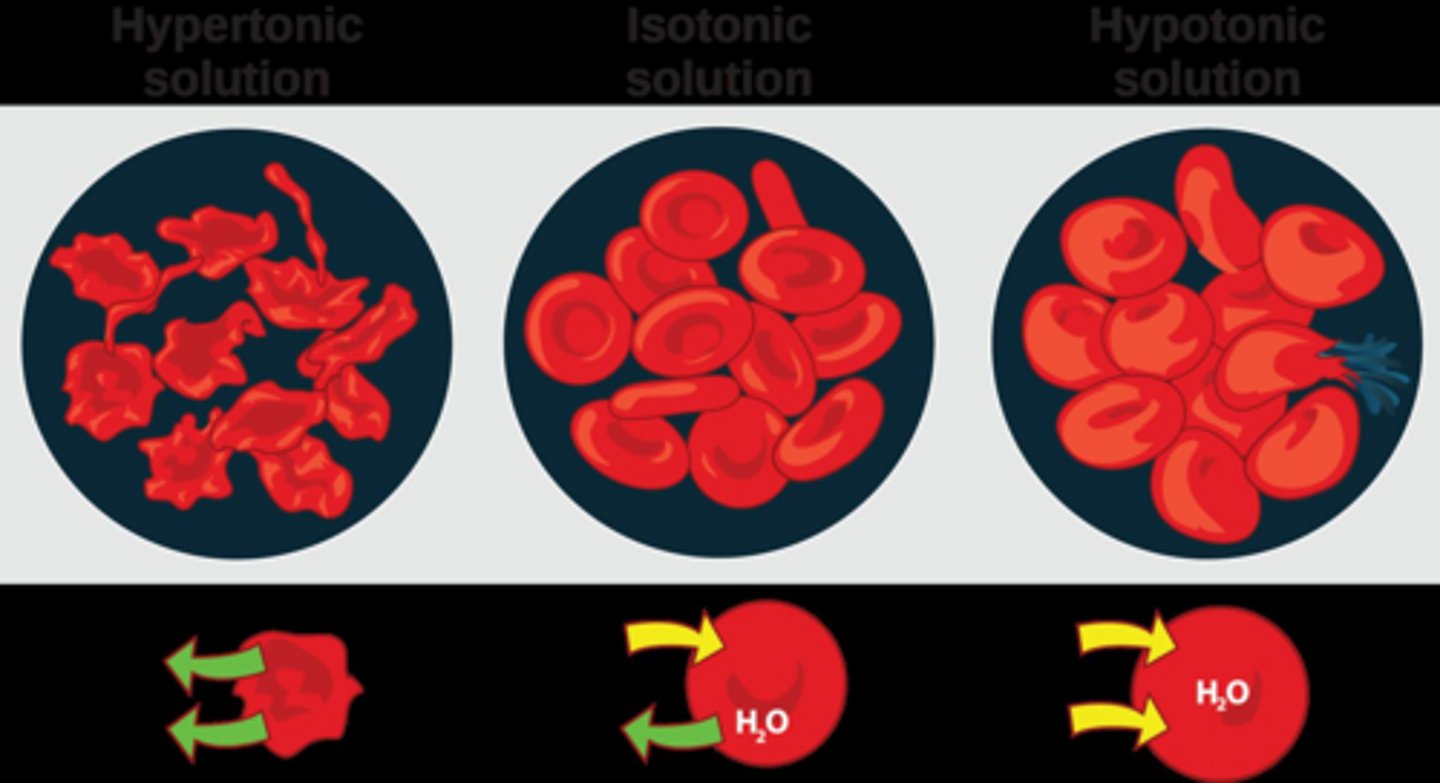
What happens to cells placed in a hypotonic environment?
They tend to swell due to the intake of water.
Osmoregulators
Actively maintain internal osmotic balance at an energy cost
Osmoconformers
Maintain an internal environment that is isotonic to their external environment, expending less energy
What are the three ways water can enter an animal's body?
Drinking, food consumption, and metabolism.
How do cartilaginous fishes (like sharks) achieve isotonicity with seawater?
They maintain high concentrations of urea in their blood to match the tonicity of the sea water.
Glomerulus
Proximal covered tubule*
The filtrate after this point flows into a collecting duct*, eventually, urine moves through the ureter, urinary duct, and urethra
A part of the nephron that is a tuft of capillaries
Bowman's capsule
The initial site of blood filtration in the nephron, surrounding the glomerulus to collect filtrate (water, ions, waste) while retaining blood cells and large proteins
Renal corpuscle
Part of the nephron that is the glomerulus + bowman's capsule
Proximal covered tubule
Part of the nephron that extends off of the bowman's capsule
Collecting duct
The filtrate in the nephron eventually flows into this
What are the three distinct processes of urine formation?
Glomerular filtration, tubular reabsorption, and tubular secretion.
What is the function of Antidiuretic Hormone (ADH) in the kidneys?
It plays a key role in water reabsorption and is released by the posterior pituitary gland.
Name three types of excretory organs found in invertebrates.
Flame cells (planarians), nephridia (earthworms), and Malpighian tubules (insects).
How do terrestrial animals reduce water loss during nitrogen excretion?
By converting ammonia into relatively insoluble uric acid, which requires less water to excrete.
How is blood pH regulated in the kidneys?
By the reabsorption of bicarbonate ions or the secretion of hydrogen ions
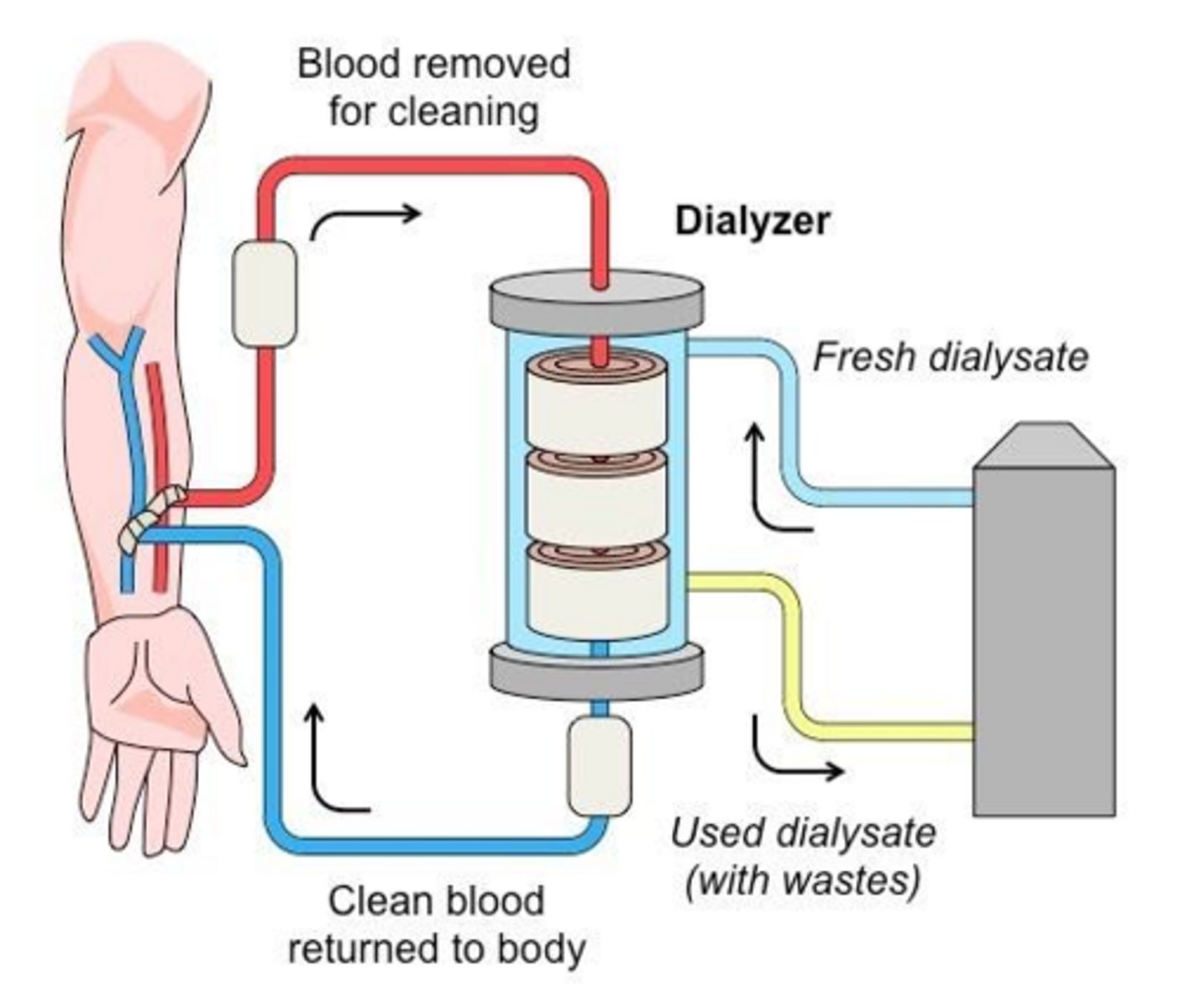
Hemodialysis
The clinical purification of blood by dialysis, acting as a substitute for normal kidney function
Ammonia
The primary nitrogenous waste product resulting from the catabolism of amino acids and nucleic acids
Why can aquatic animals excrete ammonia directly?
Because ammonia is highly soluble in water, allowing it to be easily diluted and excreted.
The three layers/regions of the human kidney
Renal cortex (outer), renal medulla (middle), and renal pelvis (innermost).
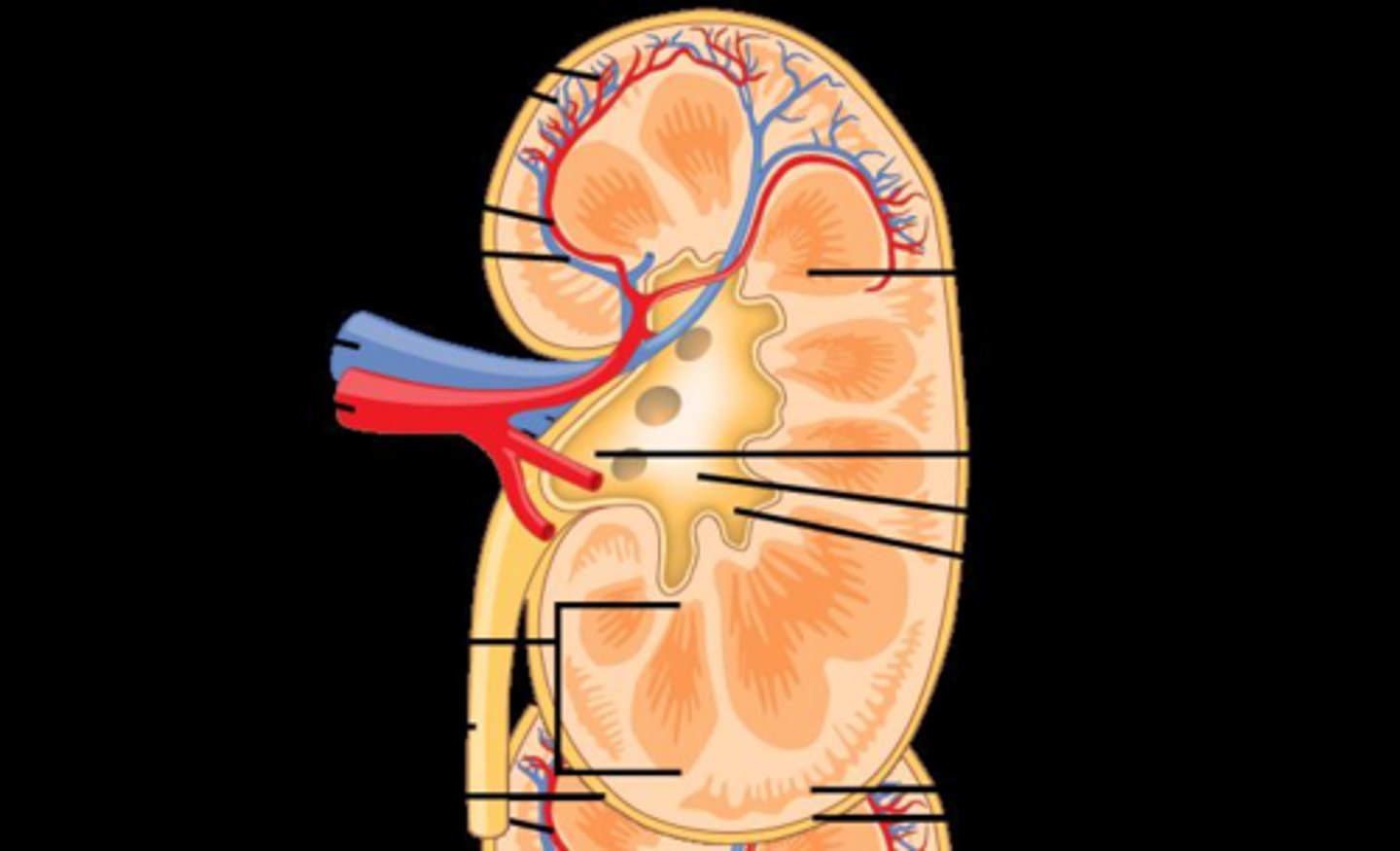
What is the role of the renal medulla in urine concentration?
It maintains an osmotic gradient that causes water to leave the descending limb of the loop of the nephron.
Antidiuretic hormone (ADH)
A hormone that influences the absorption of water by kidney tubules
Where is ADH produced?
The posterior lobe of the pituitary gland in the brain
Ureter
Conducts urine from the kidney to the urinary bladder.
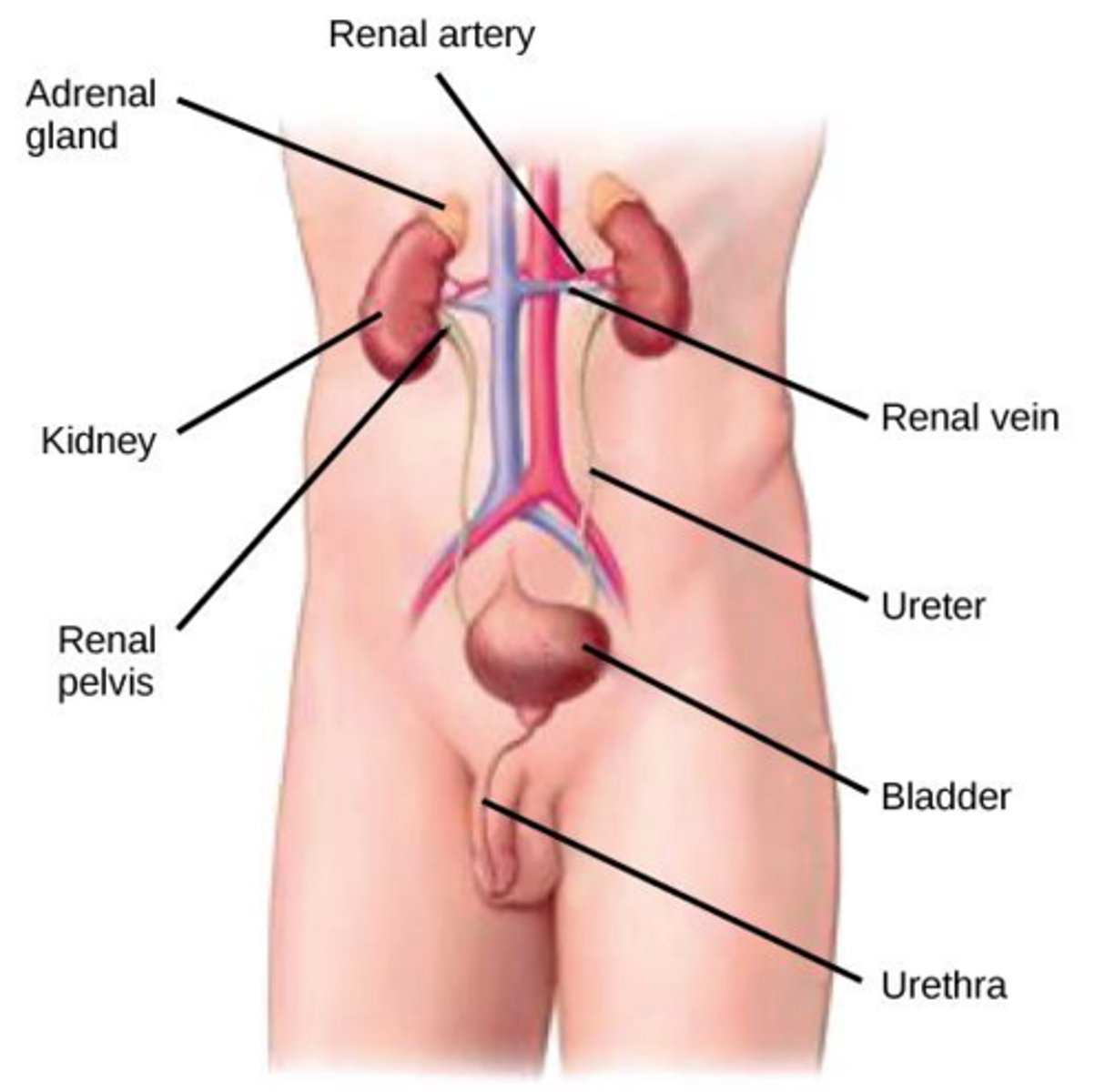
Urethra
The tube that carries urine from the bladder to the outside of the body.
The first process of urine production
Glomerular filtration(in the glomerular capsule)
The second process of urine production
Tubular reabsorption(at the proximal convoluted tubule)
The third process of urine production
Tubular secretion(at the distal convoluted tubule)
Why do terrestrial animals often need to drink more water than aquatic animals?
Because they lose water through respiration and the excretion of nitrogenous wastes like urea.
What is the benefit of excreting uric acid for birds and reptiles?
It allows them to inhabit drier environments far from standing water because it requires very little water to excrete.