Chapter 42 - exam 4
 Call Kai
 Learn
Learn Practice Test
 Spaced Repetition
 Match
Match Flashcards
 Knowt Play
1/23

There's no tags or description
Looks like no tags are added yet.
Name | Mastery | Learn | Test | Matching | Spaced | Call with Kai |
|---|
No analytics yet
Send a link to your students to track their progress
24 Terms
What is the primary function of the nervous system?
To respond to environmental stimuli.
What are the two main components of the nervous system?
Central nervous system (CNS) and peripheral nervous system (PNS).
What does the central nervous system consist of?
The brain and spinal cord.
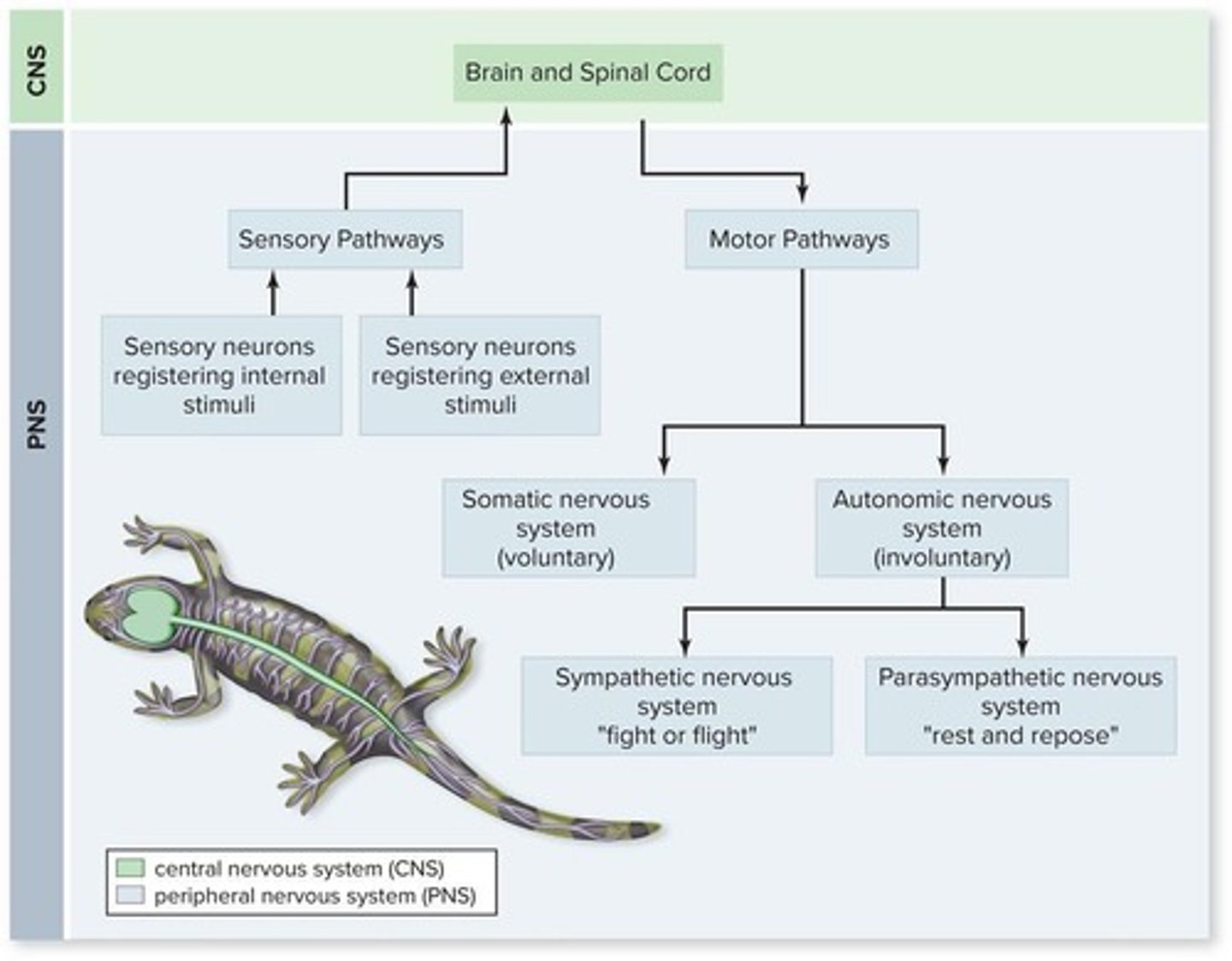
What is the role of the peripheral nervous system?
To collect information and carry out responses.
What are the three types of neurons in vertebrates?
Sensory neurons, motor neurons, and interneurons.
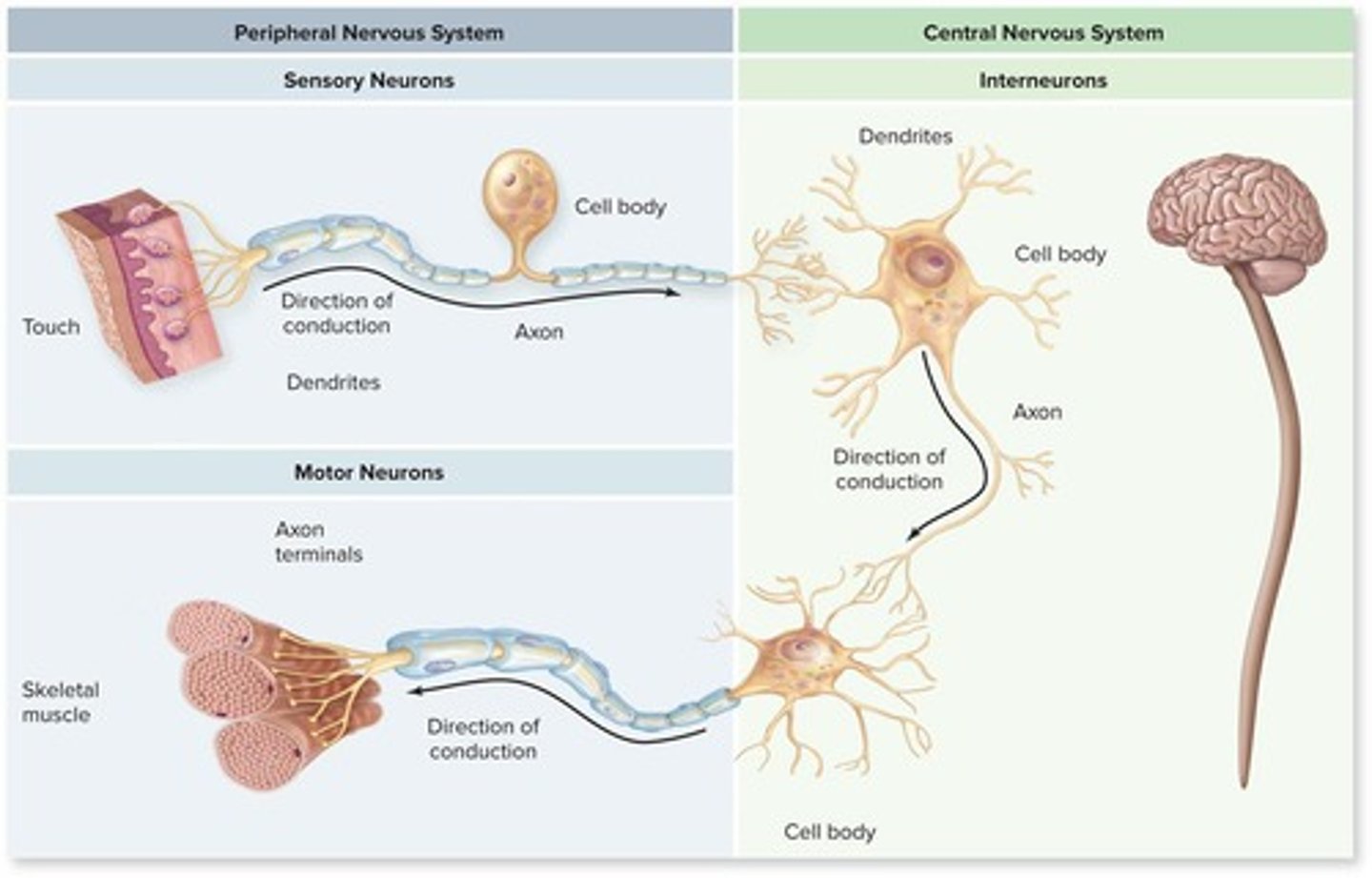
What do sensory neurons do?
Carry impulses to the central nervous system.
What is the function of motor neurons?
Carry impulses from the CNS to effectors (muscles and glands).
What role do interneurons play?
Provide complex reflexes and associative functions like learning and memory.
What is the somatic nervous system responsible for?
Stimulating skeletal muscles.
What does the autonomic nervous system stimulate?
Smooth and cardiac muscles, as well as glands.
What are the basic components of a neuron?
Cell body, dendrites, and axon.
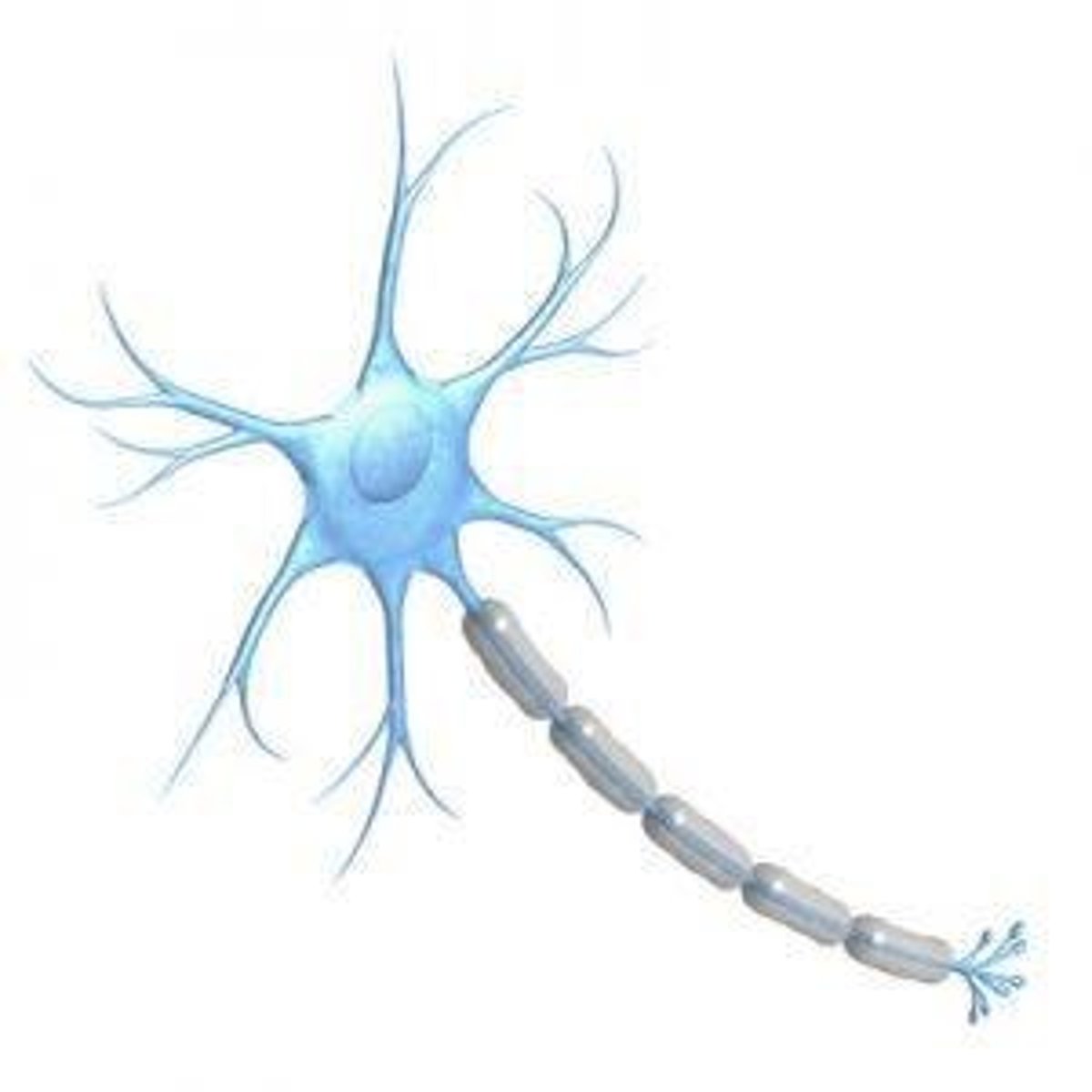
What is the function of dendrites?
Receive stimuli and information from various sources.
What is the role of the axon?
Conduct impulses away from the cell body.
What are supporting cells of neurons called?
Neuroglia or glial cells.
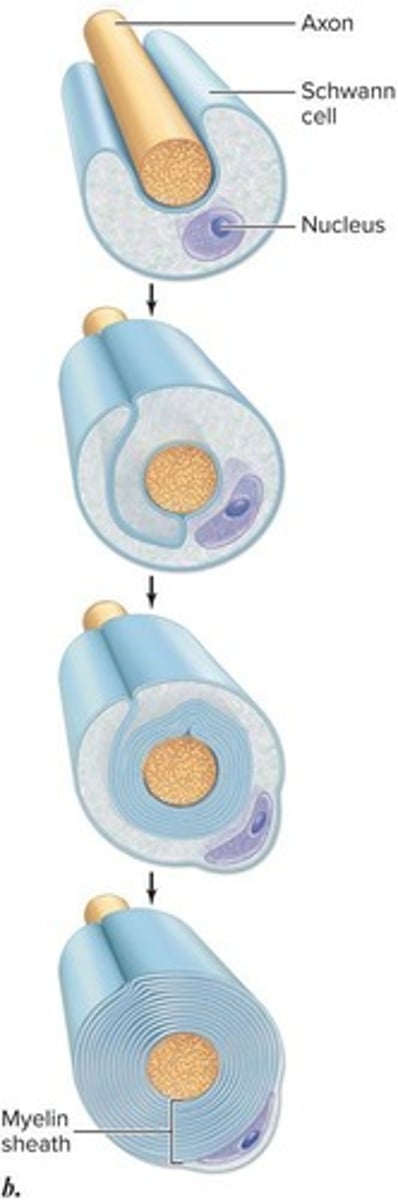
What do Schwann cells and oligodendrocytes produce?
Myelin sheaths surrounding axons.
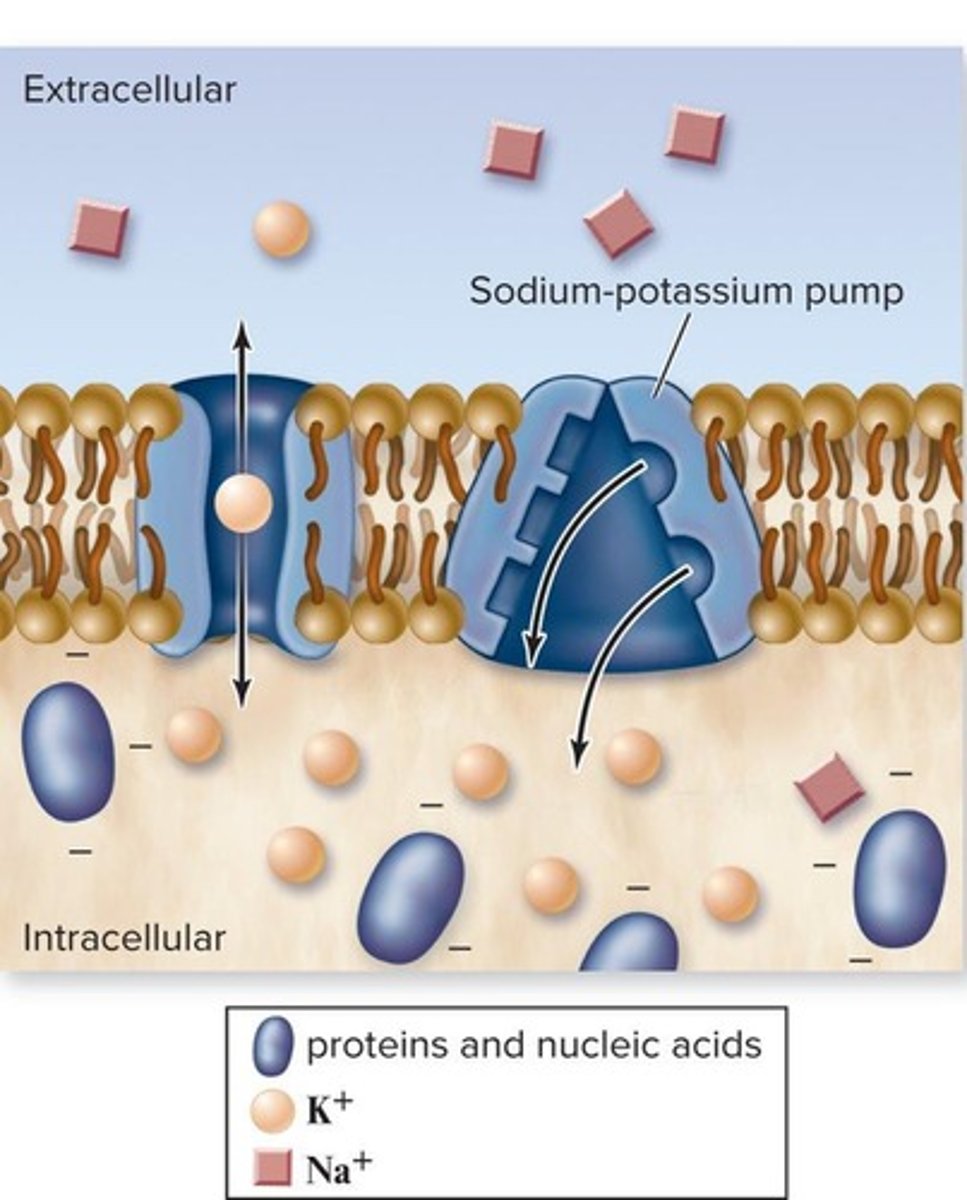
What is the resting potential of a neuron?
Ranges from -40 to -90 millivolts, averaging about -70 mV.
What is the sodium-potassium pump's function?
Brings two K+ ions into the cell for every three Na+ ions it pumps out.
What are graded potentials?
Localized changes in membrane potential that vary in size based on stimulus intensity.
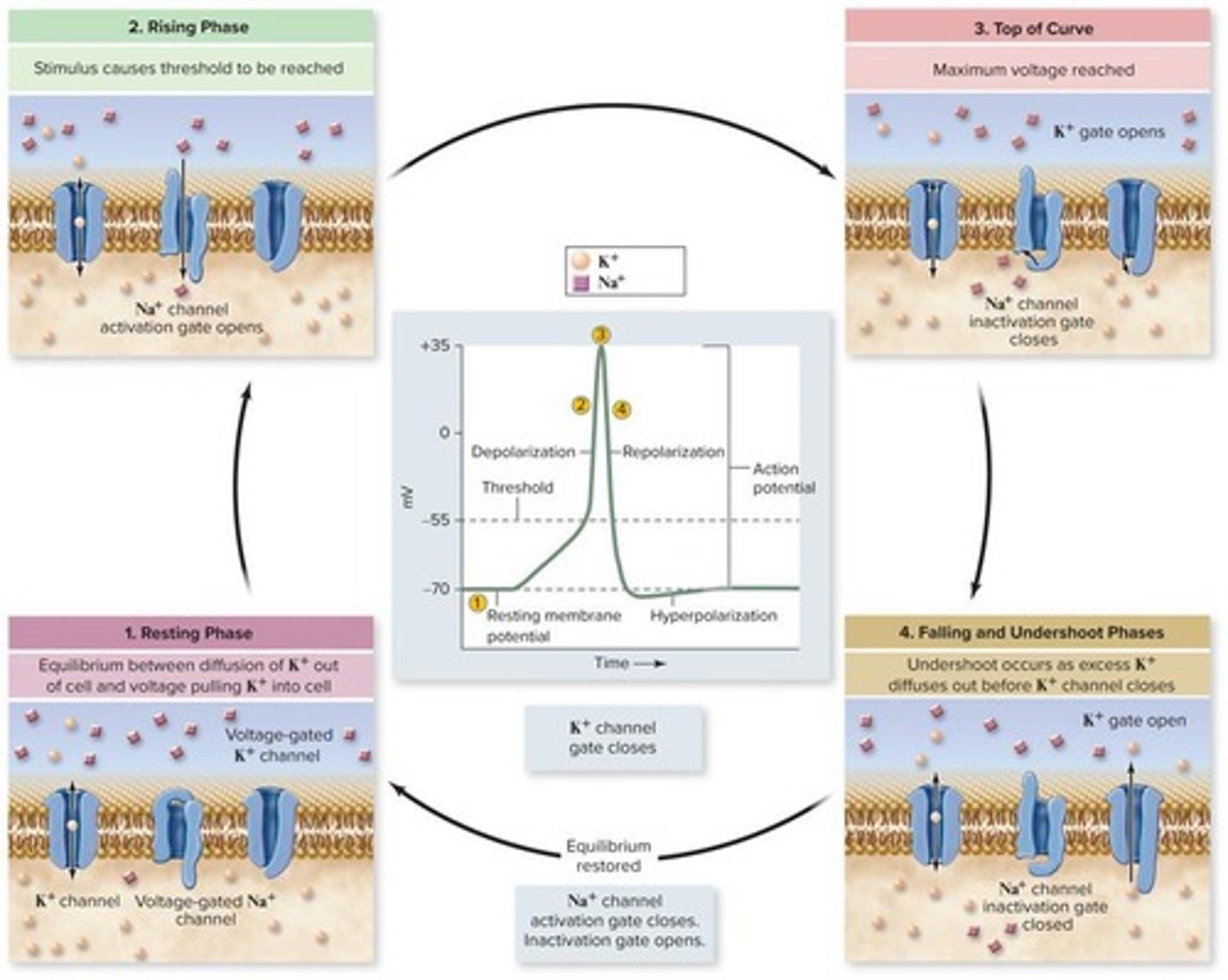
What triggers action potentials?
When depolarization reaches the threshold potential of -55 mV.
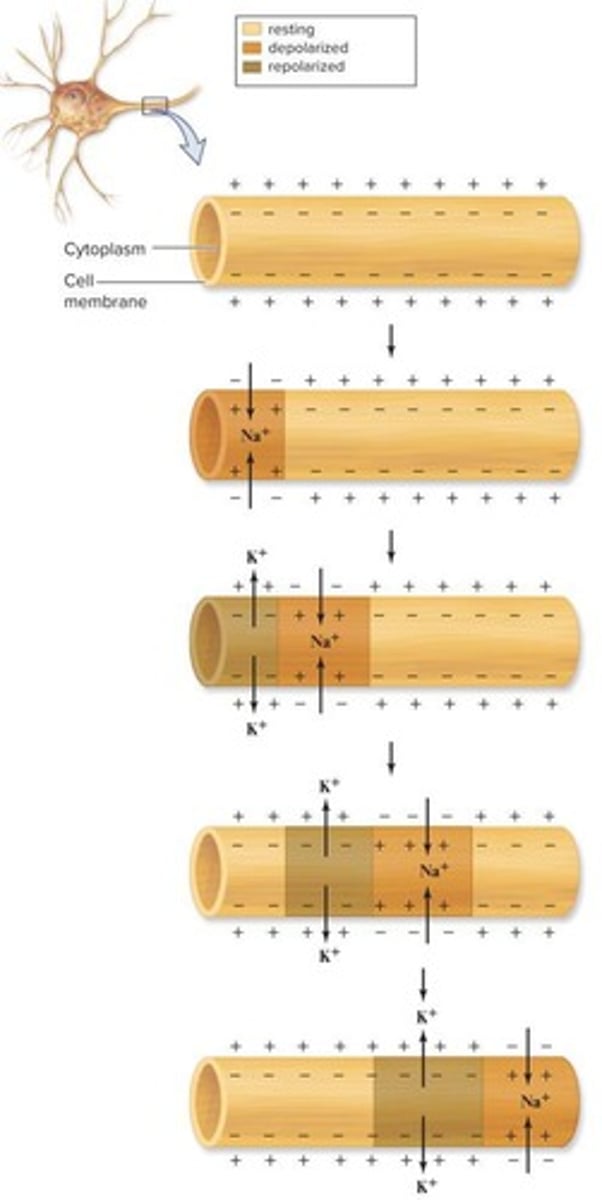
How are action potentials propagated along axons?
Positive charges depolarize adjacent regions, triggering new action potentials.
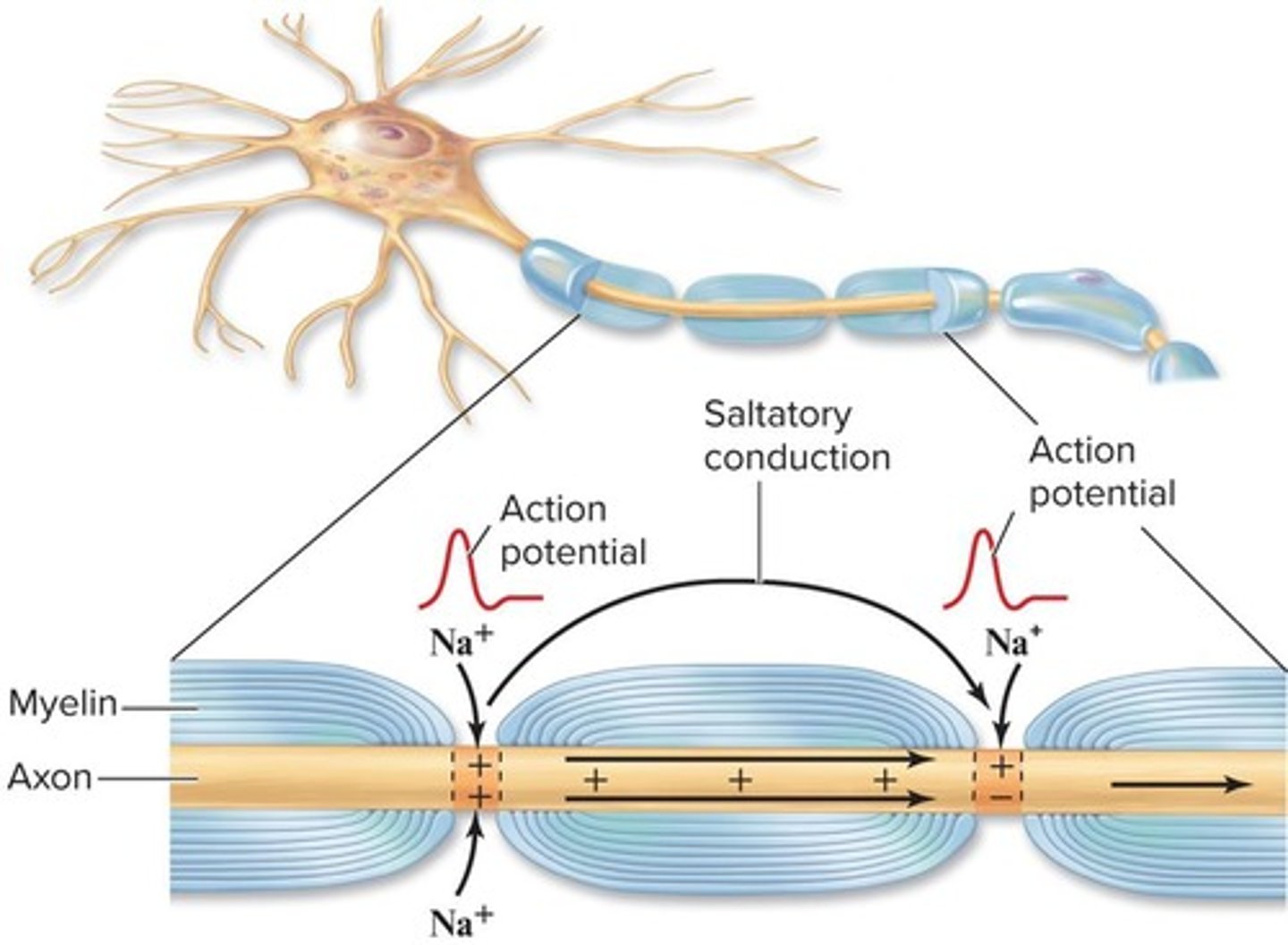
What is saltatory conduction?
The process where action potentials jump from node to node in myelinated axons.
What is the difference between graded potentials and action potentials?
Graded potentials are localized and variable, while action potentials are all-or-none events.
What determines the intensity of a stimulus in terms of action potentials?
The frequency of action potentials, not their amplitude.
What is the role of chemically-gated channels?
They open in response to chemical signals like hormones or neurotransmitters.