Unit 1: Biological Basis of Behavior
 Call Kai
 Learn
Learn Practice Test
 Spaced Repetition
 Match
Match Flashcards
 Knowt Play
1/86

There's no tags or description
Looks like no tags are added yet.
Name | Mastery | Learn | Test | Matching | Spaced | Call with Kai |
|---|
No analytics yet
Send a link to your students to track their progress
87 Terms
Heredity
The passing on of physical or mental characteristics genetically from one generation to another
Environment
All external conditions and influences affecting the life and development of an organism
Nature
Pre-wiring and influenced by genetic inheritance and other biological factors
Nurture
The influence of external factors after conception, e.g., the product of exposure, life experiences, and learning on an induvidual
Genetic predisposition
An increased chance or likelihood of developing a particular disease based on the presence of one or more genetic variants and/or a family history suggestive of an increased risk of the disease
Evolutionary Psych
The branch of psychology that studies the mental adaptations of humans to a changing environment
Natural selection
Certain behaviors and genes best for survival (survival of the fittest)
Identical twins
Twins who develop from a single fertilized egg that splits in two, creating two genetically identical organisms
Fraternal twins
Twins who develop from separate fertilized eggs, They are genetically no closer than brothers and sisters, but they share a fetal environment
Eugenics
The study of how to arrange reproduction within a human population to increase the occurrence of heritable characteristics regarded as desirable
Twin studies
Studies conducted on identical or fraternal twins. They aim to reveal the importance of environmental and genetic influences for traits, phenotypes, and disorders
Adoption studies
Studies conducted to compare pairs of persons, e.g., adopted child and adoptive mother or adopted child and biological mother, to assess genetic and environmental influences on behavior
Family studies
Studies conducted to provide a way for professionals to further examine the relationship between genetics and mental disorders
Nervous System
The body’s electrochemical communications network
Central Nervous System
The brain and spinal cord, which distribute and process messages
Peripheral Nervous System
A branch of the human Nervous System that includes all components except the brain and spinal cord
Somatic Nervous System
A part of the Peripheral Nervous System that controls voluntary movements
Autonomic Nervous System
A part of the Peripheral Nervous System that regulates bodily processes such as breathing, heart rate, and digestion
Sympathetic Nervous System
A branch of the Autonomic Nervous System that excites the body by preparing it for action (increased heartbeat, pupils dilate, lungs increase oxygen, relax bladder, etc)
Fight or Flight
Parasympathetic Nervous System
A branch of the Autonomic Nervous System that restores the body’s energy sources once they have been depleted (pupils contract, heart beat slows, constrict airways, stomach contract, etc)
Rest and Digest
Nerves
Bundles of fibers that transmit impulses between different areas within our bodies
Spinal Reflex Arc
A neural pathway that controls reflex actions, allowing for rapid, automatic responses to sensory stimuli without conscious thought (primitive reflexes)
Neurons
Individual nerve cells that make up our entire nervous system
Glial cells
Cells that provide nutrition and protection for neurons
Sensory neurons
Neurons that take information from the senses to the brain
Motor neurons
Neurons that take information from the brain to the rest of the body
Interneurons
In the brain or spinal cord, neurons that take messages and send them elsewhere in the brain or spinal cord
Spinal reflex
An immediate response to external stimuli directed at the level of the spinal cord
Mirror neurons
Neurons that play a role in action understanding, imitation learning, and language processing. Enables use to recreate and embody the intentions of others
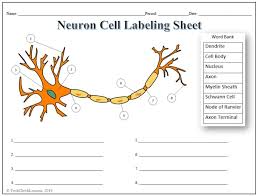
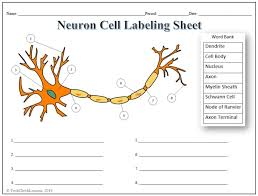
Dendrites
What is #1?
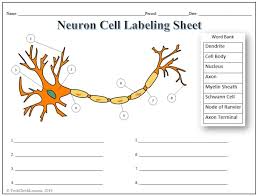
Soma
What is #2?
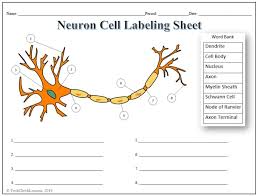
Nucleus
What is #3?
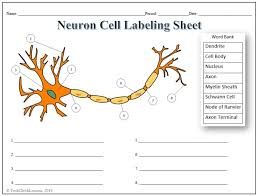
Axon
What is #4?
Myelin sheath
What is #5?
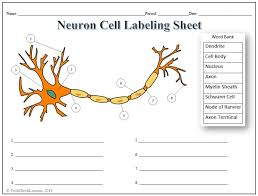
Schwann cell
What is #6?
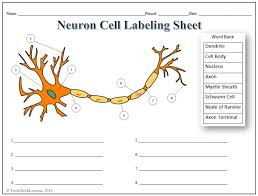
Node of ranvier
What is #7?
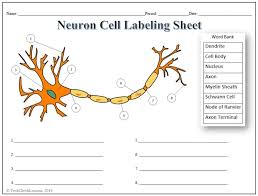
Axon terminal
What is #8?
Action potential
An impulse or brief electric charge that travels down the axon
Threshold
The level of stimulation needed to trigger a neural impulse
All or None response
A neuron either sends an impulse or it does not
Resting potential
When a neuron does not have an action potential
Polarized
The state of a resting neuron; the outside of the membrane is positively charged while the inside of the membrane is negatively charged
Depolarization
Describes an axon that is firing. Positive ions enter the axon and cause other positive ions to move into the axon in the form of a neural impulse down the axon
Refractory period
A resting pause where neurons pump positively charged sodium ions back outside of the cell
Reuptake
The reabsorption of neurotransmitters by the sending neuron
Excitatory nerotransmitters
Neurotransmitters that send signals to calm the brain down and create balance
Inhibitory neyrotransmitters
Neurotransmitters that send signals to calm the brain down and create balance
Multiple Sclerosis
The loss of muscle control resulting from a deterioration of myelin sheath
Myasthenia gravis
A relatively rare, acquired autoimmune disorder caused by an antibody-mediated blockade of neuromuscular transmission resulting in skeletal muscle weakness and rapid muscle fatigue (caused by a blockade of acetylcholine)
Neurotransmitters
Chemical messengers that cross the synaptic gaps between neurons that generate the next neural impulse, growth and development, tissue function, reproduction, sleep, mood, etc.
Hormone
A chemical messenger produces in the body that controls and regulates the activity of certain cells or organs (released in the bloodstream)
Adrenaline
A hormone that activates the Sympathetic Nervous System. This triggers our “fight o flight” response, which increases heart rate, dilates the pupils, increases blood flow to skeletal muscle, and reduces digestive and reproductive activity
Melatonin
A hormone known to regulate sleep and wake cycles
Ghrelin
Increases hunger, secreted by an empty stomach
Acetylcholine
Enables muscle action, learning, and memory
Ex. A depletion of this neurotransmitter is connected to Alzheimer’s disease
Dopamine
Influences movement, learning, attention, and emotion
Ex. An oversupply is linked to schizophrenia. An undersupply is linked to tremors and decreased mobility in Parkinson’s disease
Serotonin
Affects mood, hunger, sleep, and arousal
Ex. An undersupply is linked to depression. Some drugs that raise levels of this neurotransmitter are used to treat depression
Norepinephrine
Helps control alertness and arousal
Ex. An undersupply can depress mood
GABA
A major inhibitory neurotransmitter
Ex. A undersupply is linked to seizures, tremors, and insomnia
Glutamate
A major excitatory neurotransmitter; involved in memory
Ex. Oversupply can overstimulate the brain, producing migraines or seizures
Endorphins
Neurotransmitters that influence the perception of pain or pleasure
Ex. Oversupply with opioid drugs can suppress the body’s natural supply
Substance P
Involved in pain perception and immune response
Ex. Oversupply can lead to chronic pain
Leptin
Decreases hunger, protein hormone secreted by fat cells
Oxytocin
A hormone produced by the hypothalamus and released by the pituitary gland that plays a significant role in social bonding, sexual reproduction, childbirth, and postpartum
Psychoactive drugs
Chemical substances that alter perceptions, mood, or behavior
Addiction
Craving for a chemical substance despite its adverse effects
Tolerance
After long-term use, the brain then produces less of that specific neurotransmitter - this creates a need for increasing amounts of the drug to experience the same effect
Withdrawal
Set of symptoms associated with discontinuing a drug - reverses neuroadaptation
Depressants
Lower neural activity and slow body functioning
Ex. Barbiturates
Alcohol
A type of depressant that slows neural processing, thinking, and impairs physical activity
Opiates
A type of depressant that reduces neurotransmission and temporarily lessens pain and anxiety
Stimulants
Drugs that speed up the body’s functions
Ex. Caffeine, Nicotine, Cocaine, Meth, Amphetamines
Hallucinogens (psychedelics)
Drugs that distort perceptions of reality
Ex. LSD, Marijuana
Opioids
Psychoactive drugs that act on ______ receptors in the brain and body, producing pain relief, euphoria, and sedation
Ex. Heroin typically acts as pain relievers
Agonists
Chemicals that activate the receptors for certain neurotransmitters and make the effects of neurotransmitter stronger
Ex.
Caffeine for Acetylcholine (ACH)
Selective Serotonin Reuptake Inhibitors (SSRIs) for Serotonin
Adderall, Methamphetamine, Cocaine, and Speed for Norepinephrine
Cause euphoria and extreme alertness
Benzodiazepines and alcohol for GABA
Opiates (morphine, oxycodone, heroin, etc.) for endorphins
Antagonists
Chemicals that inhibit the actions of neurotransmitters
Ex.
LSD for serotonin
Drugs for dopamine that treat psychosis, schizophrenia, and bipolar disorder
Reuptake inhibitors
Drugs that prevent the axon terminals from engaging in the reuptake of neurotransmitters
Ex.
Cocaine is one of these for dopamine
Brainstem
The oldest part and central core of the brain, beginning where the spinal cord swells as it enters the skull
This part is responsible for automatic survival functions
Medulla
Controls heartbeat, blood circulation, breathing, muscle maintenance, regulation of reflexes like sneezing/coughing
Reticular activating system
Regulate behavioral arousal, consciousness, and motivation (generally control some voluntary movement, eye movement, and some types of learning, cognition, and emotion)
Cerebellum
The “little brain” at the rear of the brain stem
Functions include processing sensory input, coordinating movement output and balance, and enabling nonverbal learning and memory
Thalamus
The brain’s sensory control center, located on top of the brainstem
It directs messages to the sensory receiving areas in the cortex and transmits replies to the cerebellum and medulla
Limbic system
Neural system (includes hippocampus, amygdala, and hypothalamus) located below the cerebral hemispheres
Associated with emotions and drives
Hippocampus
Vital to our memory system
Amygdala
The center of emotion
Responsible for fear and aggressive responses
Hypothalamus
Regulates the Autonomic Nervous System (fight or flight), temperature, hunger, and reproduction