omm spring practical 2
 Call Kai
 Learn
Learn Practice Test
 Spaced Repetition
 Match
Match Flashcards
 Knowt Play
1/16

There's no tags or description
Looks like no tags are added yet.
Name | Mastery | Learn | Test | Matching | Spaced | Call with Kai |
|---|
No analytics yet
Send a link to your students to track their progress
17 Terms
Sacral diagnosis steps
- scrap paper will be provided
- verbally indicate landmarks as you diagnose (e.g., “left sacral base posterior”, “left ILA posterior”)
- must state diagnosis before time is up
Seated flexion test
Place thumbs on inferior aspect of PSIS
Positive for side that moves first/forward
Spring or sphinx test
Identify deep sulcus
Locate PSIS and roll your thumbs so they’re more medial and superior
Identify posterior ILA
Palpate down sacral bone until you feel the ledge and find the points on both ends
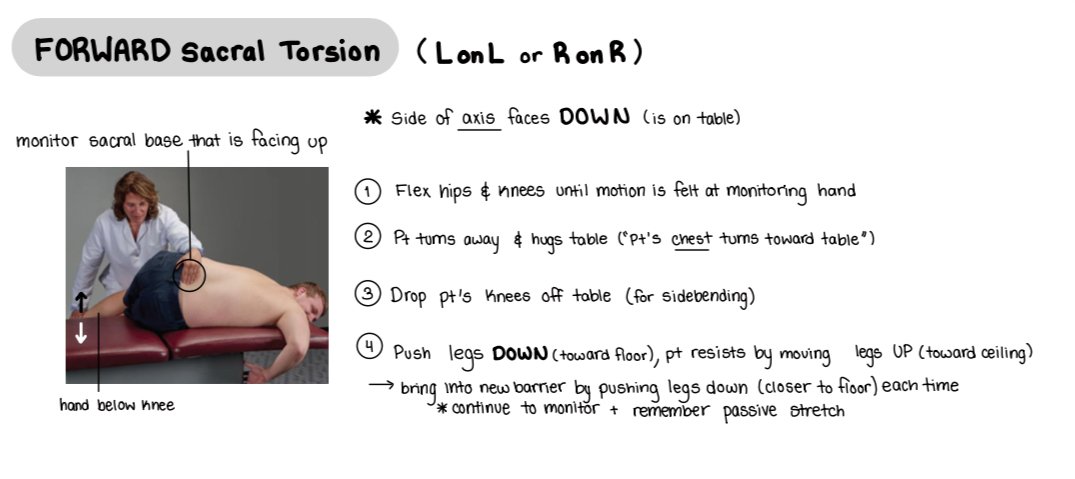
MET for forward sacral torsion
Pt’s side of axis faces DOWN
Monitor sacral sulcus (slightly medial to PSIS, hook thumbs medial to help locate it)
Flex hips and knees of pt towards you until motion is felt
Pt turns away and hugs table
Drop pt knees off table
Engage in barrier by pushing pt legs down while continuing to monitor + passive stretch
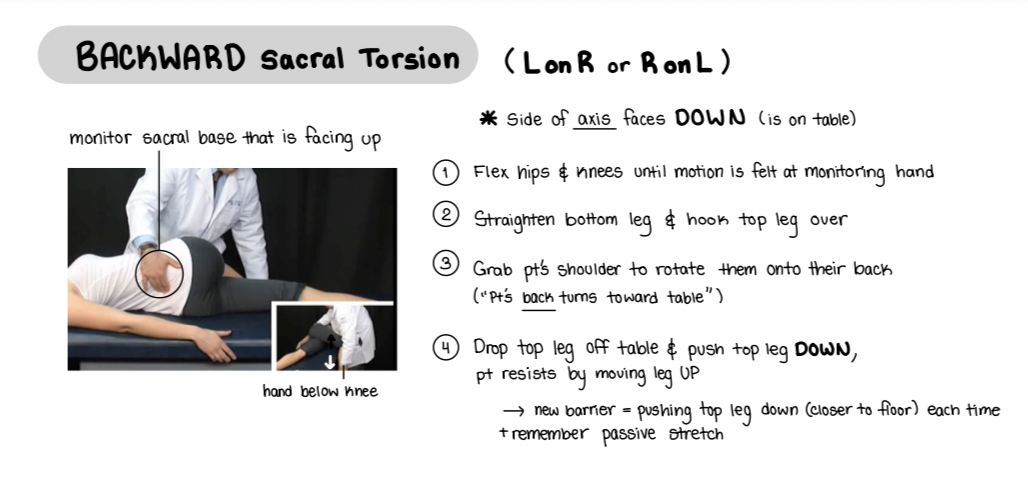
MET for backward sacral torsion
Pt side of axis faces DOWN
Monitor sulcus
Flex hips and knees until motion is felt
Straight bottom leg and hook top leg over
Grab pt shoulder to rotate them onto their back
Drop top leg off table, but keep it parallel to the floor.
Push top leg DOWN and pt resists by move leg UP + passive stretch
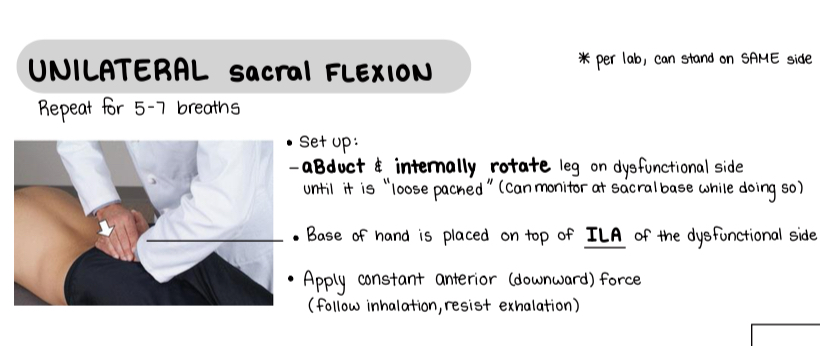
MET for Unilateral Sacral Flexion
Pt prone
Stand on opposite side
Walk fingers/palpate down to ILA
ABduct leg and int rot side of dysfunction
Hypothenar on SD ILA, cover sacrum, place cephalad hand on top
Push down on inhale for ILA, as they exhale maintain pressure on SD ILA (push on inhale, resist exhale)
5-7 breaths
Test both sacral bases for reassessment,
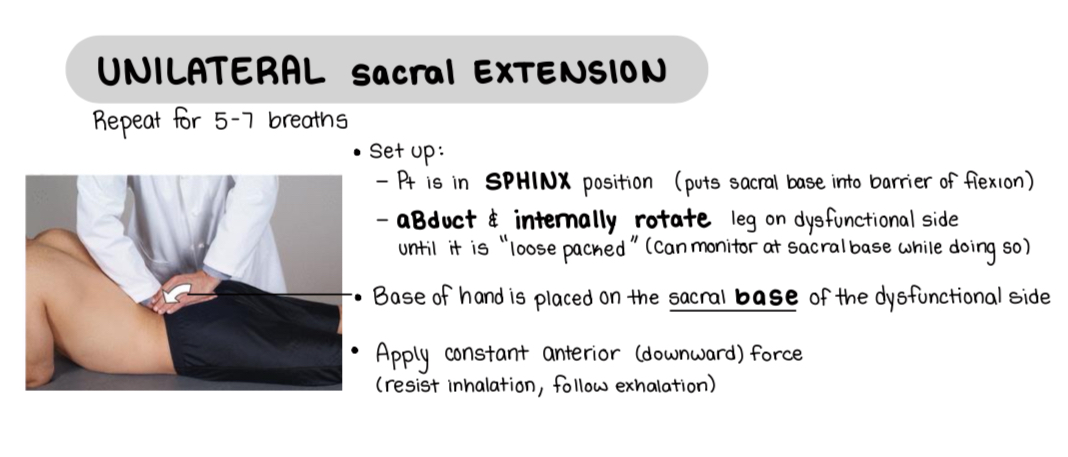
MET for Unilateral Sacral Extension
Pt prone, physician stands on opposite side
Hand monitor PSIS and sacral bases of side of dysfunction
Abduct and int rot leg of SD
Place hypothenar on sacral base of side of dysfunction (points caudad), other hand on top (points cephalad)
Ask pt to Sphinx pose
Resist on inhale and follow on exhale for 5-7 times
Reassess sulci
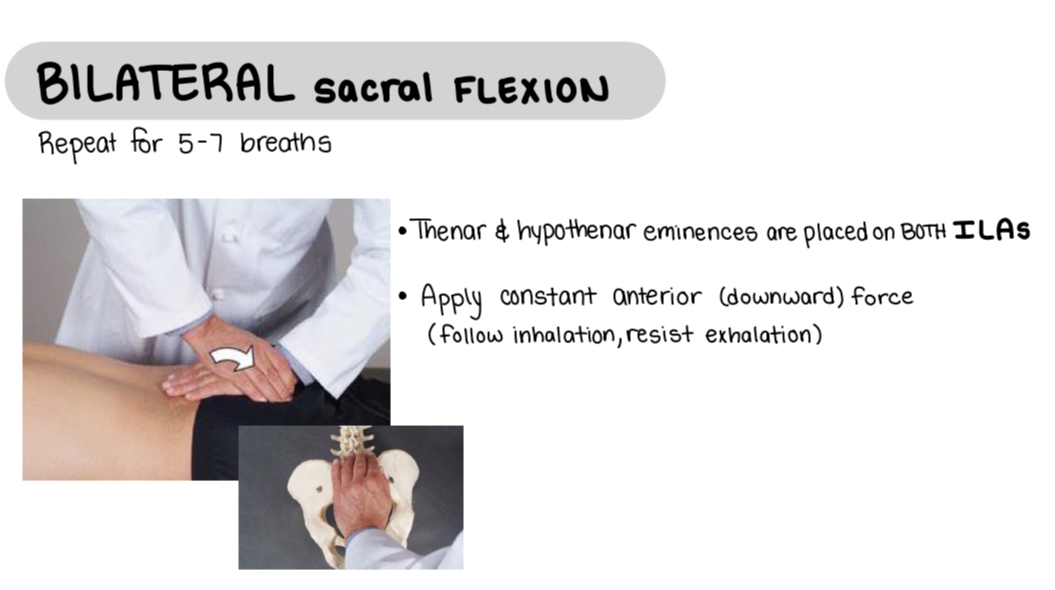
MET for Bilateral Sacral Flexion with Respiratory Assist
Pt prone
Hypothenar and thenar on BOTH ILAs
ABduct and int rot BOTH legs
Push on inhale and resist exhale 5-7 times
Reassess sacral bases and ILA and spring test
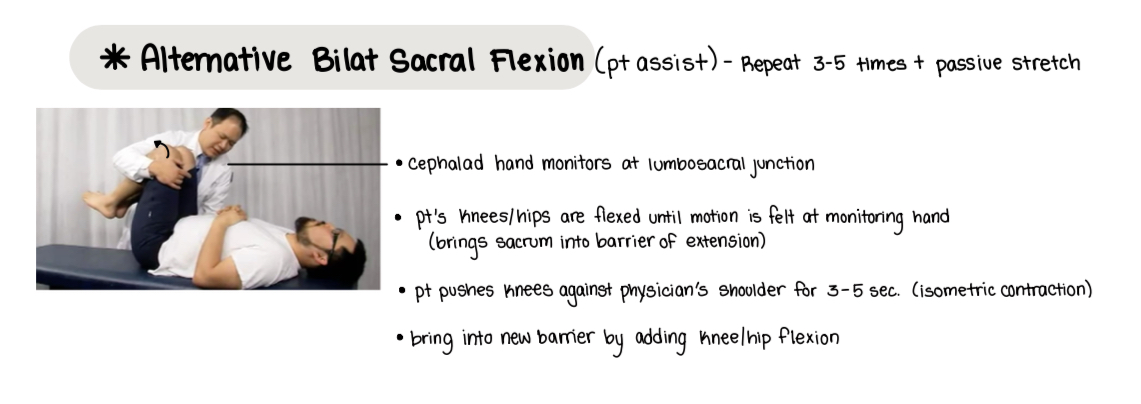
MET for Bilateral Sacral Flexion with Alternative Method
Pt supine
Have pt turn on side so you can locate lumbosacral joint and keep that cephalad hand under them as they lie back down
Flex legs/knees until motion is felt at sacral base (brace shoulder into pt knees to get better leverage)
Pt push against your shoulder 3-5 sec for 3-5 times
Bring into knew barrier with more flexion
Passive stretch and reassess
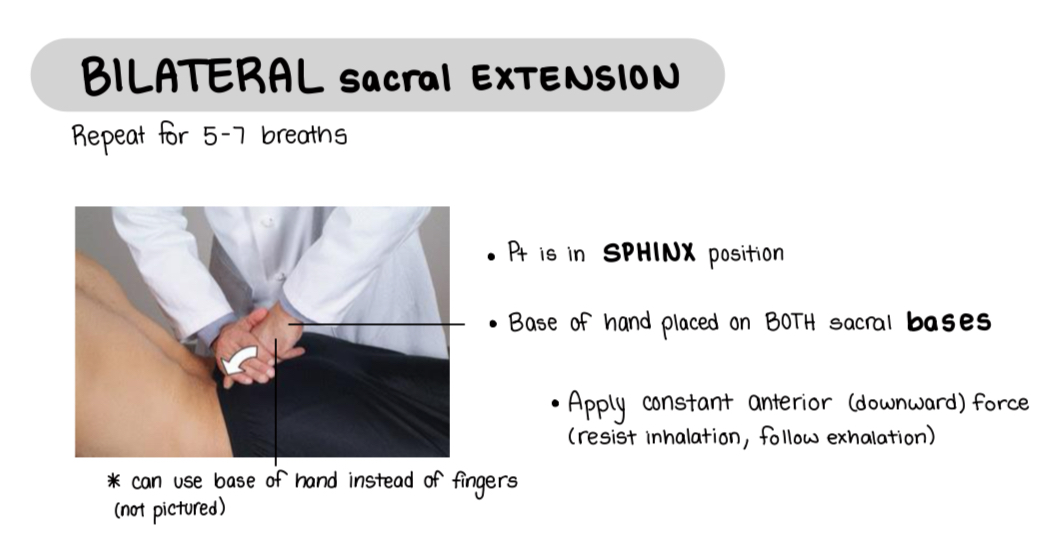
MET for Bilateral Sacral Extension
Pt sphinx pose
Locate sacral bases with two fingers of one hand. Other hand covers the two fingers.
Optional: loose pack the legs
Resist on inhale and follow through on exhale 7-10 times.
Reassess.
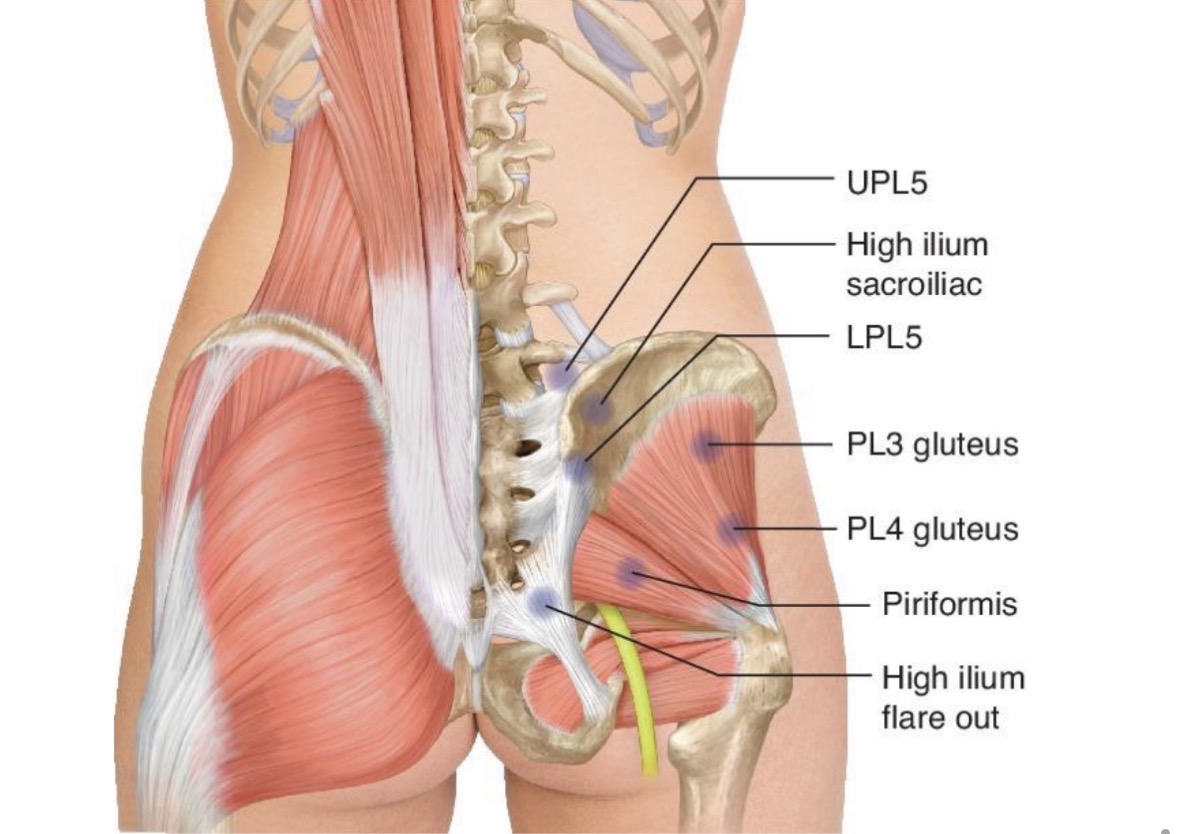
Posterior Pelvic CS Points
we just need to know UPL5 and Piriformis
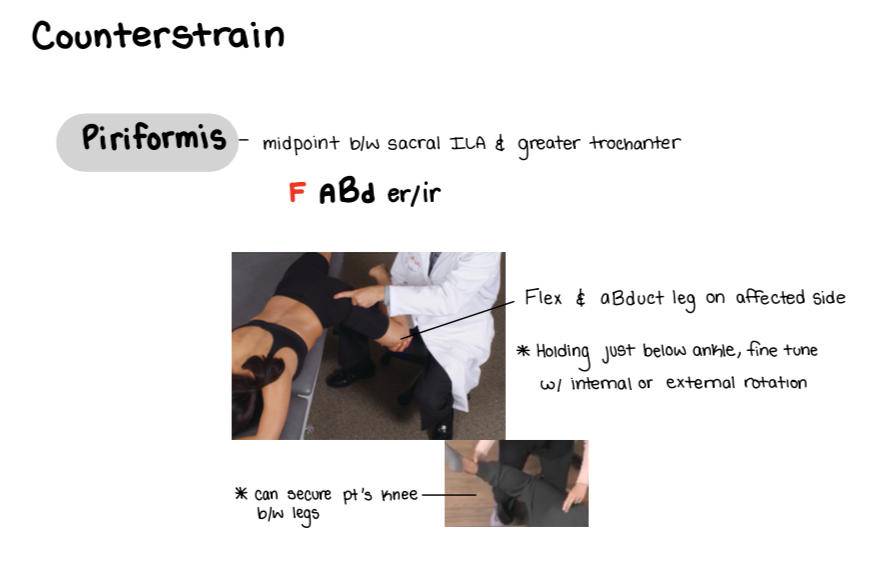
CS for piriformis (posterior pelvic)
Point is between sacral ILA and greater trochanter
Stand on same side
Ask pt to move to edge of table
Move leg down and hold between your knees
Flex and ABduct leg on affected side
Hold just below ankle and fine tune with internal or external rotation
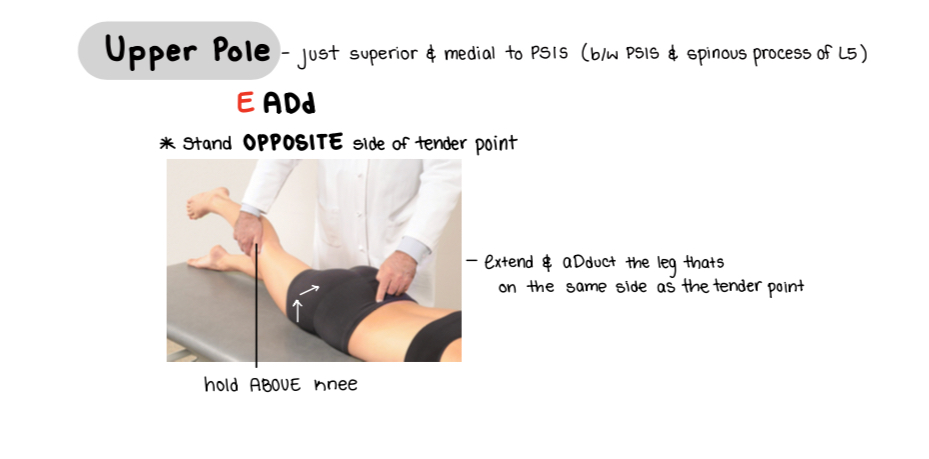
CS for UPL5 (posterior pelvic)
Point is superior and medial to PSIS
Pt is prone
Stand on opposite side
Hold pt leg of the tender point above knee
Extend and ADduct
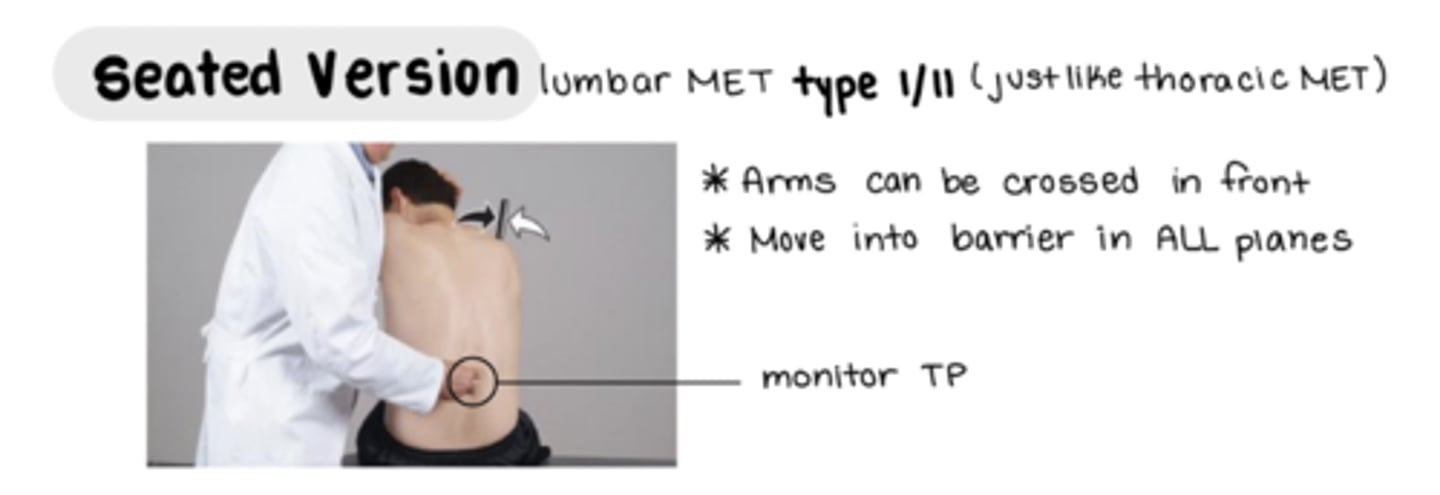
MET for Lumbar Type 1/2
osteopathic hug or pt arm on neck
monitor TP
(same as thoracic sitting MET)
Posterior Lumbar CS Points
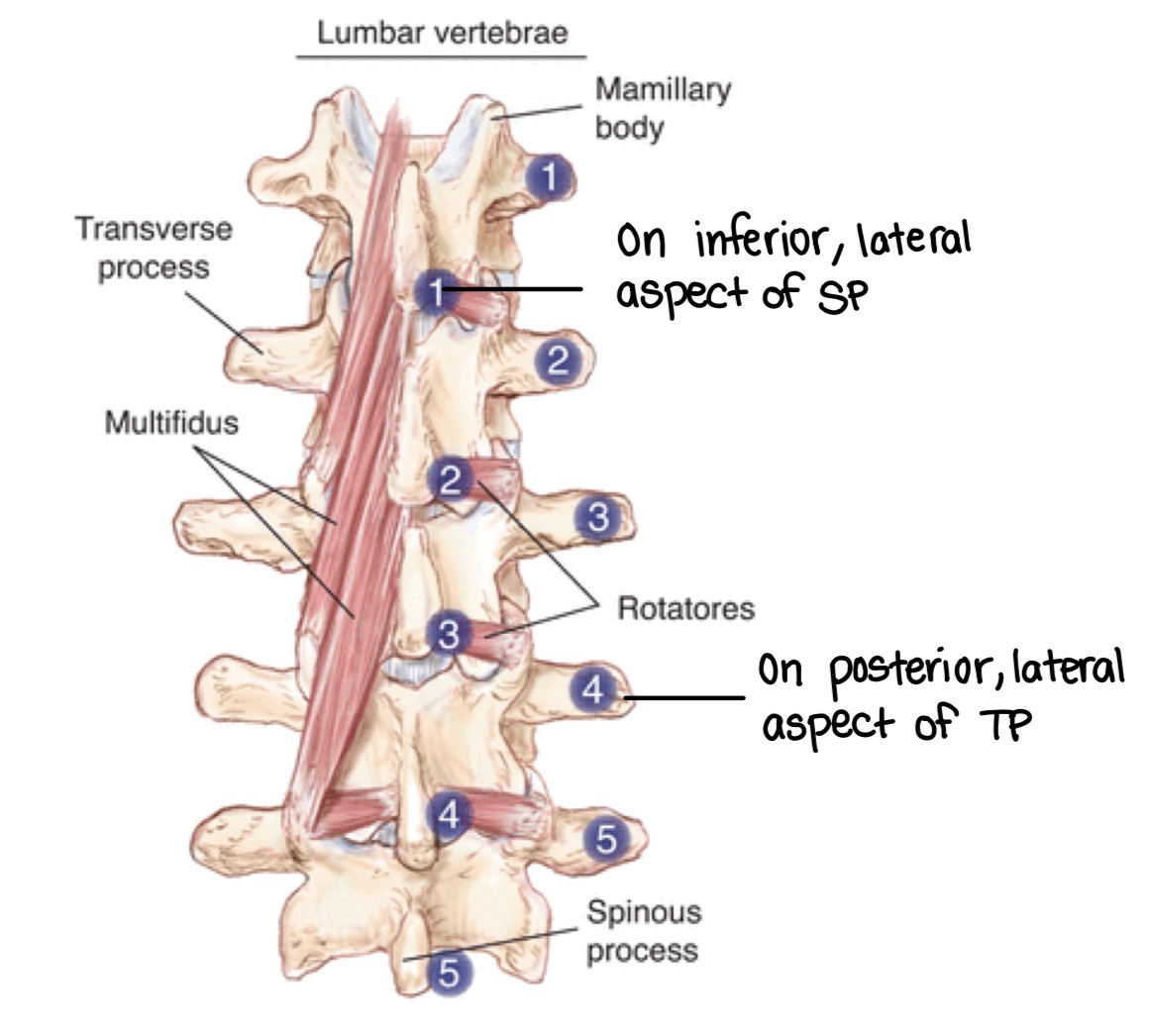
CS of PL 1-5 SP
Point is inferior lateral aspect of SP
E Sa Ra
EXTEND, ADDUCT, EXTERNALLY ROTATE
Stand OPPOSITE of SP
hold leg ABOVE knee
When standing on same side
Use your knee to lift leg closest to you to externally rotate, extend, and ADduct
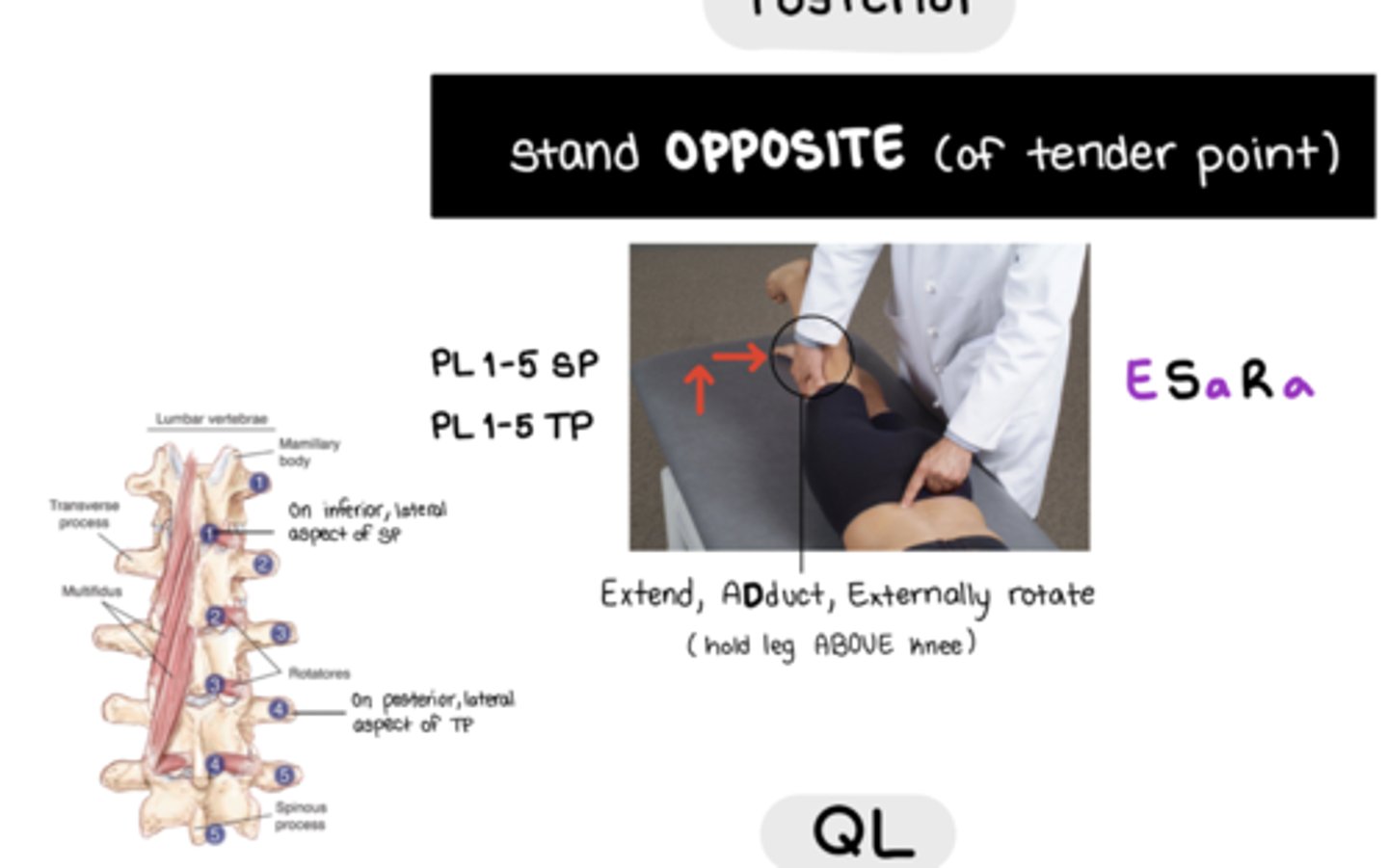
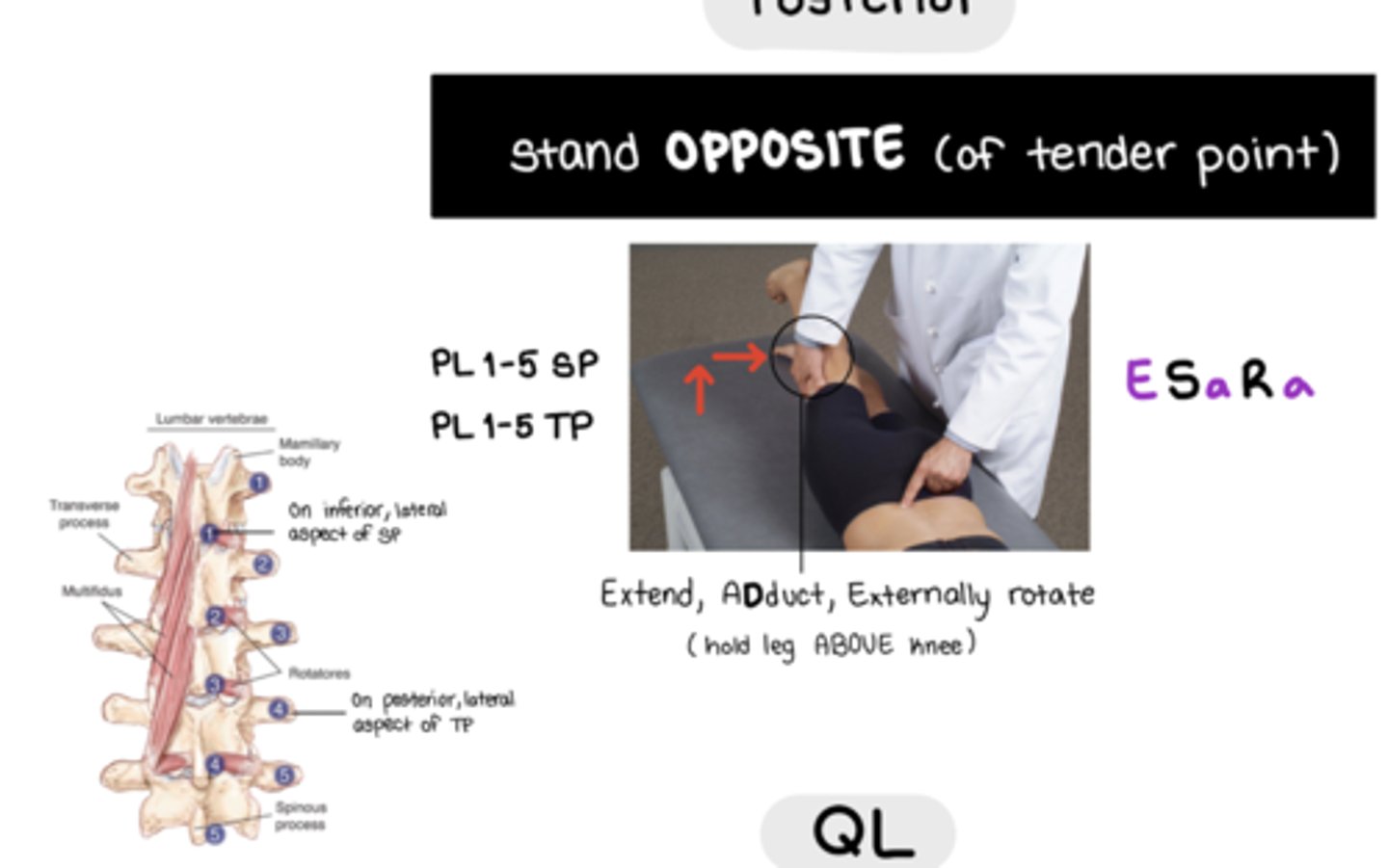
CS of PL 1-5 TP
Point is posterior lateral aspect of TP (also TP point is slightly one level above SP)
E Sa Ra
EXTEND, ADDUCT, EXTERNALLY ROTATE
Stand OPPOSITE of TP
hold leg ABOVE knee
When standing on same side
Use your knee to lift leg closest to you to externally rotate, extend, and ADduct
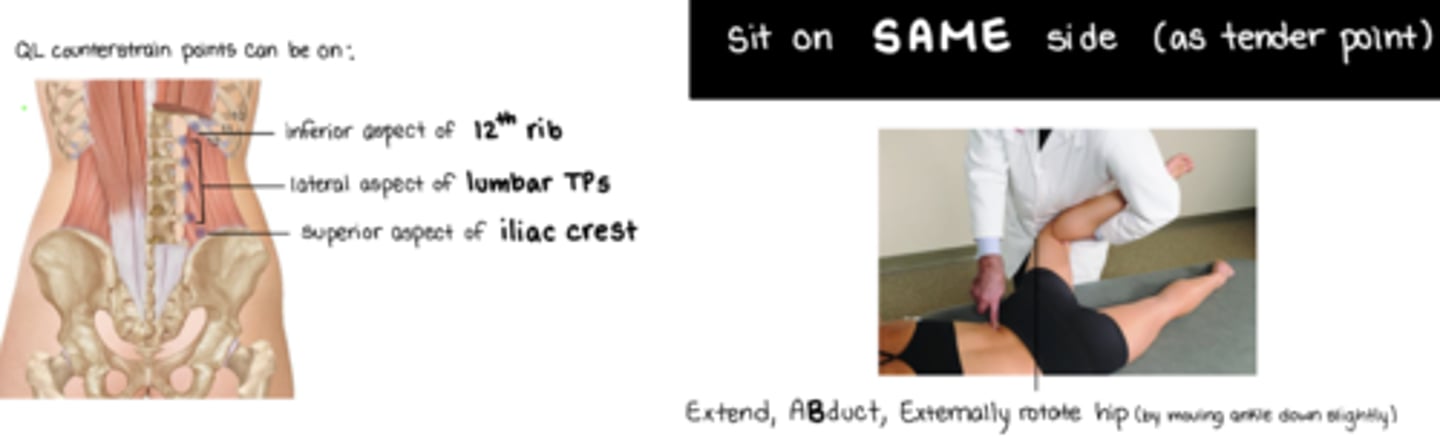
CS for QL
EXTEND, ABDUCT, EXTERNALLY ROTATE HIP
Stand on SAME SIDE of TP
QL attachments: inferior aspect of 12th rib, lateral aspect of lumbar TPs, superior aspect of iliac crest
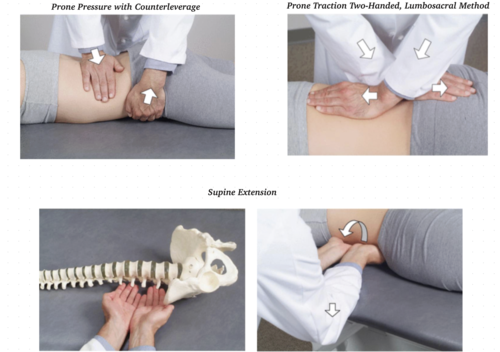
Lumbar Soft Tissue
prone pressure w/ counter leverage
prone traction, two handed
supine extension