Triangle classifications
 Call Kai
 Learn
Learn Practice Test
 Spaced Repetition
 Match
Match Flashcards
 Knowt Play
1/11

There's no tags or description
Looks like no tags are added yet.
Name | Mastery | Learn | Test | Matching | Spaced | Call with Kai |
|---|
No analytics yet
Send a link to your students to track their progress
12 Terms
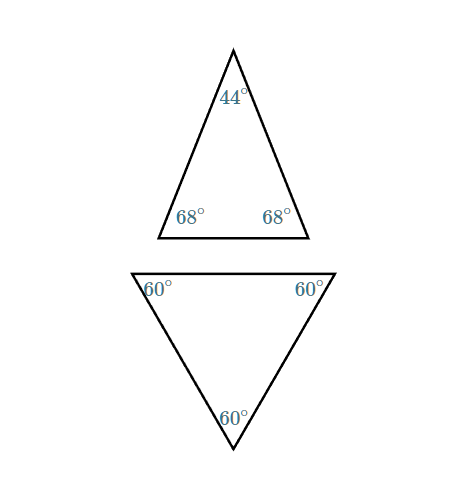
Acute triangles
Triangles with all 3 angles measuring below 90 degrees.
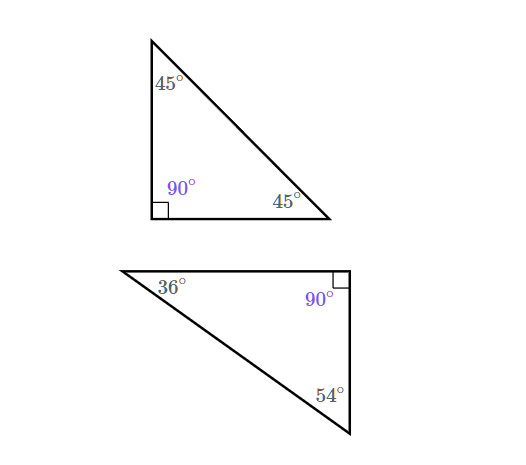
Right triangles
Triangles with 1 angle at 90 degrees and 2 below 90 degrees.
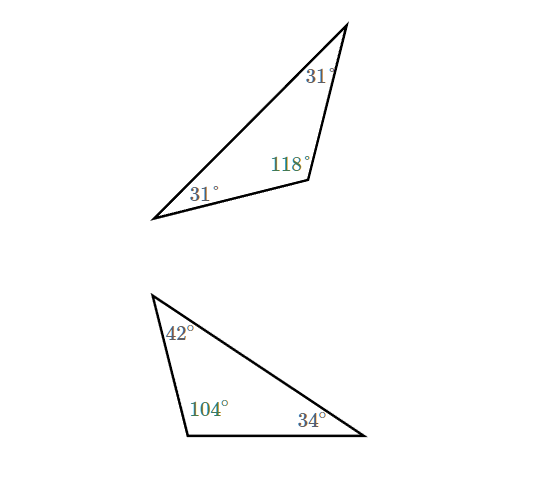
Obtuse triangles
Triangles with 1 angle measuring above 90 degrees and 2 below 90 degrees.
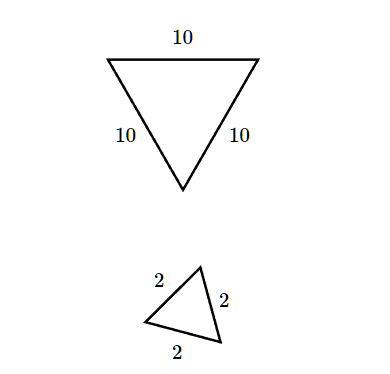
Equilateral triangles
Triangles with all 3 sides equal to each other.
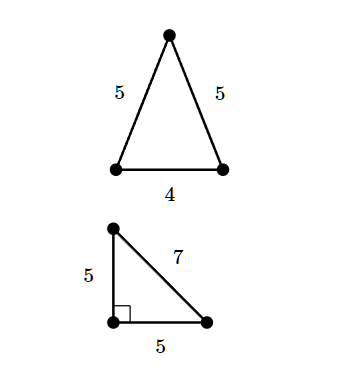
Isosceles triangles
Triangles with at least 2 equal sides.
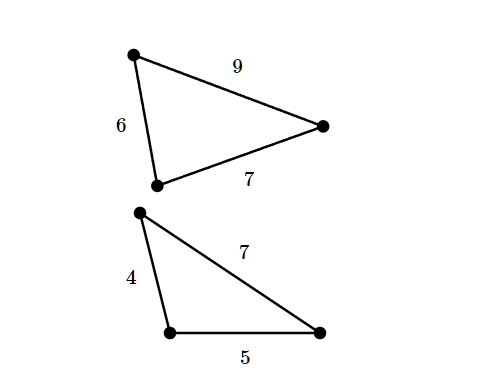
Scalene triangles
Triangles with no equal sides at all.
Def. and orig. of the term “equilateral”.
Having all sides equal/all faces. Origin: Derived from the late Latin word “aequilateralis“ in the 1560s. “Aequi-” = equal, “lateralis” = lateral/side/face.
Def. and orig. of the term “isosceles”.
Having two sides of equal length. Origin: Derived from the Greek term “isoskeles“ in the 1550s. “Iso” = equal, “skelos” = leg.
Def. and orig. of the term “scalene”.
Having sides unequal lengthwise.
Another term for scalenus in anatomy.
Origin: Derived from the Greek term “skalenos” meaning “unequal“, and “skolios“ meaning “bent“ in the 1750s.
Def. and orig. of the term “acute”.
An angle less than 90 degrees.
An unfortunate event experienced to an intense and unpleasant degree (dreadful, drastic).
Showing or having a perceptive understanding/insight.
Origin: Derived from the Latin term “acuere“ meaning “to sharpen“ in the Middle English period (1150-1500s).
Def. and orig. of the term “right”.
True as a fact.
Satisfactory of a condition.
Restore to an upright or normal position.
Origin: Derived from Old English “riht“, “rihtan“, “rihte“, and of Germanic origin, the terms related to Latin “rectus“ meaning “ruled“, and from an Indo-European root denoting movement in a straight line. First known use of the term was in the 12th century (1100s).
Def. and orig. of the term “obtuse“.
Dull-witted.
Unsharp, edge.
Angle above 90 degrees and less than 180 degrees.
Origin: Derived from the Latin term “obtusus“ meaning blunt/dull, first known use was in the 15th century (1400s).