Chapter 26 - The Colonization of Land (copy)
 Call Kai
 Learn
Learn Practice Test
 Spaced Repetition
 Match
Match Flashcards
 Knowt Play
1/71

There's no tags or description
Looks like no tags are added yet.
Name | Mastery | Learn | Test | Matching | Spaced | Call with Kai |
|---|
No analytics yet
Send a link to your students to track their progress
72 Terms
The Greening of Earth
fungi, animals, and plants arose on the land to join the prokaryotes and protists in the last 500 million years ago
terrestrial surface was lifeless besides prokaryotes and protists for more than the first 3 billion years
Charophytes
green algae
closest relative of land plants
evidence for algal ancestry
land plants and charophytes share many key traits
Pros and Cons to the move on land for plants
Pros - unfiltered sun, more CO2, nutrient-rich soil, and few herbivores or pathogens
Cons - scarcity of water and lack of structural support
How did charophytes avoid being dried out on the land
formed a durable polymer called spropollenin which prevents exposed zygotes from drying out
Embryophytes
plants that live on land
defined by their dependency of the embryo on the parent
Derived traits of terrestrial plants
these traits appear in almost all land plants, but absent in charophytes
alternation of generations (with multicellular, dependent embryos)
walled spored produced in sporangia
apical meristems
alternation of generations and stages
reproductive cycle where plants alternate between two multicellular stages
gametophyte - haploid and produces haploid gametes by mitosis
sporophyte - fusion of the gametes, which is diploid and produces haploid spores by meiosis
steps of alternation of generations
Gametophyte produces haploid gametes by mitosis
Gametes unite
zygote develops into multicellular diploid sporophyte
sporophyte produces haploid spores by meiosis
spores develop into multicellular haploid gametophytes
embryos and alternation of generations
diploid embyro is retained within the tissue of the female gametophyte
nutrients are transferred from the parent to the embryo through placental transfer cells
sporangia
organs in the sporophyte that produce spores
sporocytes
diploid cells that undergo meiosis to produce haploid spores
sporopollenin
spore walls that makes them resistant to harsh enviornments
gametangia
organs in gametophytes that produce haploid gametes
archegonia
female gametangia that produces eggs and are the site of fertilization
antheridia
male gametangia that produces sperm cells
Role of Fungi in land colonization
fungi aren’t closely related to plants but have a symbiotic relationship with plants that allows for nutrient uptake by early plants
fungi were one of the earliest colonizers of land and probably formed mutualistic relationships with early land plants
Fungi
heterotrophs that absorb nutrients from outside their body
they use enzymes to break down a large variety of complex molecules into smaller organic compounds
hyphae
networks of filament that provide a large surface area for absorption
body structures of fungi
most commonly are multicellular filaments and single cells (yeasts)
Micorrhizae
mutually beneficial relationships between fungi and plant roots
mycorrhizal fungi grow branched extensions on hyphae that exchange nutrients with living plant cells
Origin of fungi
fungi and animals are more closely related to each other than to plants
ancestor of fungi was probably unicellular
fungi and animals separated more than a billion years ago
chitin
strong, flexible polysaccharide that prevents cells from bursting when they absorb nutrients and water from their environment
Mycellium
interwoven mass of hyphae that grows into and absorbs nutrients from material where fungus feeds on
two main types of mycorrizhae
Arbuscular mycorrhizal fungi grow branched - extend branching hyphae through the root cell walls and into tubes pushing inward of the root cell plasma membrane
Ectomycorrhyizal fungi - form sheaths of hyphae over the surface of the root and typically grow into root cortex
benefits of mycorrhizae
improve phosphate ion delivery and other minerals to plants because mhycorrhizal fungal networks are more efficient than plant roots
plants supply fungi with organic nutrients such as carbohydrates in return
The major fungal groups
Chytrids, Zygomycetes, Glomermycetes, Ascomycetes
reproduction of fungi
can occur sexually or asexually by producing many spores
Sexual reproduction of fungi
fungi nuclei are normally haploid (with the exception of transient diploid stages
requires fusion of hyphae from different mating strains
Plasmogamy - union of two parent mycelia
heterokaryon - haploid nuclei from each parent coexist in the mycelium since they don’t fuse right away in most fungi
Karyogamy - haploid nuclei fuse which produces diploid cells
diploid phase is short-lived and goes through meiosis to produce haploid spores
hours, days, or even centuries may pass before karyogamy ever occurs
Groupings of Land Plants
can be informally grouped based the presence or absence of vascular tissue
Vascular plants - have vascular tissues
Bryophytes - nonvascular plants
Key evolutionary stages of plants
Nonvascular plants (bryophytes)
seedless vascular palnts
gymnosperms
angiosperms
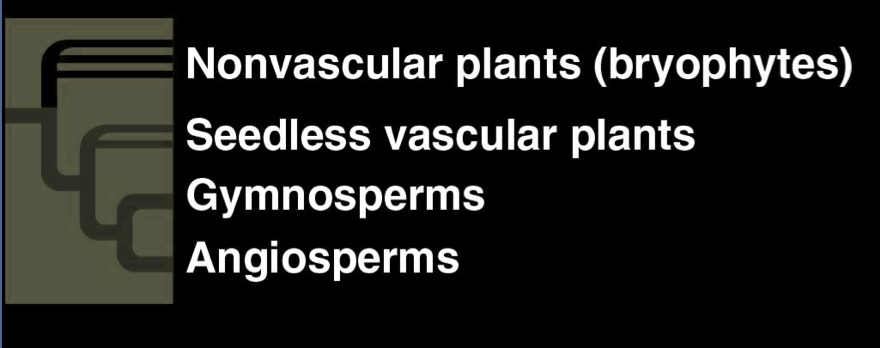
3 clades of bryophytes
liverworts
mosses
hornworts
bryophyte sporophytes
grow out of archegonia and are the smallest and simplest sporophytes of all plant groups
consists of a foot, seta (stalk), and a sporangium (AKA capsule)
bryophytes
ground-hugging plants
don’t have roots and are instead anchored to the ground by rhizoids
live in moist habitats since they have flagellated sperm that must swim through a film of water to fertilize an egg
lack vascular tissue
body parts are too thin so they can’ grow tall
bryophyte reduction is tied to water
which plants were the first plants to grow tall
seedless vascular plants
vascular plants
began to diversify during the Devonian and Carboniferous periods
but the earliest vascular plants date back to the Silurian period
had vascular tissue which allowed them to grow tall
had flagellated sperm and are usually restricted to moist environments
two clades of Seedless vascular plants
Lycophytes - club mosses and their relatives
monilophytes - ferns and their relatives
previosly known as Pterophytes
significance of seedless vascular plants
ancestors of lycophytes, horsetails, and ferns grew tall during the Devonian and Carboniferous which formed the first forests
increased photosynthesis which may have helped global cooling at the end of the Carboniferous
decaying plants of these carboniferous forests eventually became coal
Rise of vascular plants
lacked seeds
but had well developed roots and leaves
well developed vascular systems which allowed for long distance transport of water and nutrients
what is the dominant stage in the life cycle of bryophytes (and mosses)
gametophyte
what is the dominant stage in the life cycle of ferns and other vascular plants
sporophyte
types of vascular tissue
Xylem - conducts most of the water and minerals and includes dead cells called tracheids
Phloem - consists of living cells and distributes sugars, amino acids, and other organic products
lignin
provides structural support to water-conducting cells (like in the xylem and phloem)
Roots
organs that anchor vascular plants
enable vascular plants to absorb water and nutrients from the soil
may have evolved from subterranean stems
leaves
organs that increase the surface area of vascular plants which allows for more solar energy captured that is used for photosynthesis
2 types of leaves
microphylls - leaves with a single vein
megaphylls - leaves with a highly branched vascular system
microphylls evolved first as a growth of stems
what are key adaptations for life on land
seeds and pollen grains
seed
embryo and nutrients surrounded by a protective coat
originated about 360 million years ago
2 major clades of seed plants
gymnosperms - the naked seed plants including conifers
angiosperms - flowering plants
terrestrial adaptations of seed plants
seeds
greatly reduced gametophytes - gametophytes develop within the walls of spores and are contained within tissues of the parent sporophyte
ovules
pollen
allow for new ways for plants to cope with terrestrial conditions such as drought and exposure to UV radation
ovule
consists of megasporangium, megaspore, and one or more protective integument
how many integuments do the megaspores of gymnosperms and angiosperm have
gymnosperms have one integument, angiosperms usually have two integuments
what do microspores develop into?
microspores develop into pollen grains which contain the male gametophytes
pollination
transfer of pollen to the part of a seed plants containing ovule
eliminates the need for water being used and can be dispersed greater distances by air or animals
if a pollen grains germinates, it gives rise to a pollen tube that discharges two sperm into the female gametophyte within the ovule
evolutionary advantage of seeds
a seed develops from the whole ovule
evolutionary advantages seeds have over spores:
may remain dormant for days to years until conditions are favourable for germination
may be transported long distances by wind or animals
Gymnosperm evolution
appeared early in the fossil record and dominated the Mesozoic terrestrial ecosystems
were better suited to drier conditions than nonvascular plants
conifers (cone-bearing gymnosperms) dominate the northern latitudes
some examples of gymnosperms
cycads - have large cones and palmlike leaves
thrived in the Mesozoic, but very few species live today
conifers - largest group of gymnosperms
are evergreens and can carry out photosynthesis year round
Angiosperms
seed plants with reproductive structures called structures called flowers and fruits
most widespread and diverse of all plants
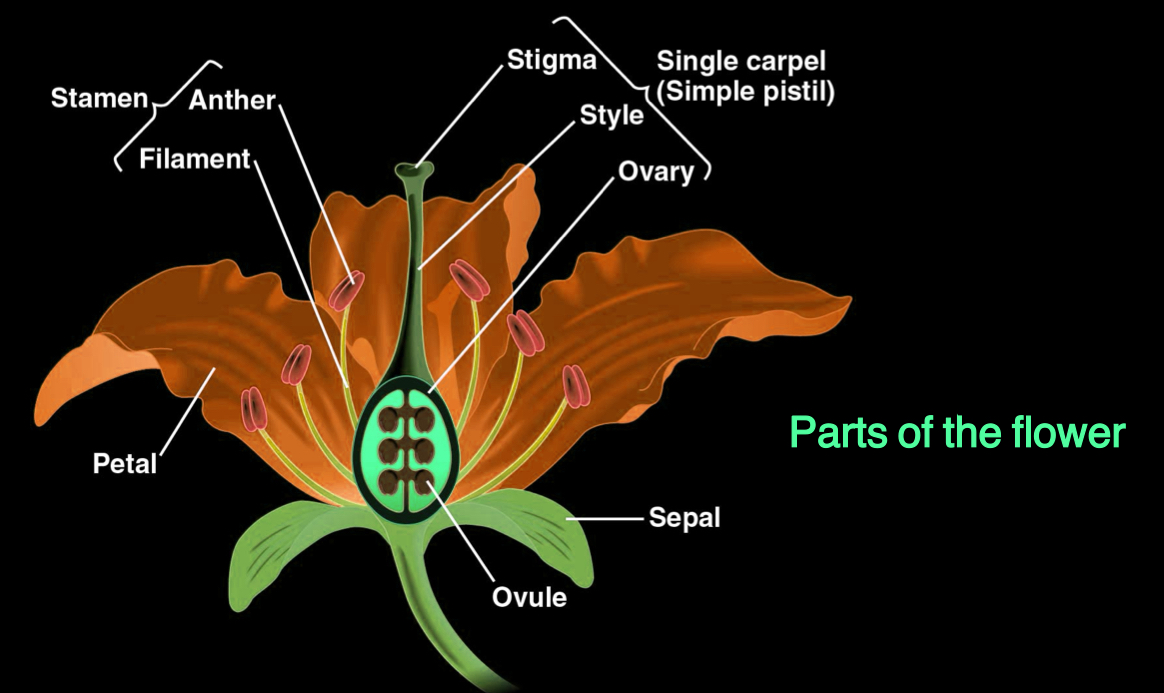
flower
angiosperm structure specialized for sexual reproduction
specialized shoot with up to 4 types of modified leaves
many species are pollinated by insects or animals while some are wind-pollinated
parts of the flower
4 types of modified leaves:
Sepals - enclose the flower
petals - brightly coloured and attract pollinators
stamens - produce pollen on their terminal anthers
carpels consists of an ovary at the base, and a style leading up to a stigma where pollen is received
fruits
protects seeds and aid in dispersal
consist of mature ovary but can also include other flower parts
mature fruits can either be fleshy or dry
seeds of fruits can be carried by wind water, or animals to new locations
ex. tomatoes, ruby grapefruits, nectarine, hazelnuts, milkweeds
angiosperm evolution
originated in the early Cretaceous
major branches of the clade diverged from their common ancestor during the late Mesozoic
by the mid-Cretacous, they began to dominate terrestrial ecosystems
Fossil angiosperms
have derived and primitive traits
ex. archaefructus sinensis has anthers and seeds but lacks petals and sepals
2 main groups of angiosperms
monocots - have one cotyledon
make up more than ¼ of angiosperm species
ex. corn, wheat, rice, lilies, and palms, etc.
eudicots - true dicots
make up more than ¾ of angiosperm species
ex. zucchini, beans, roses, daises, etc.
lichen
symbiotic relationship between a photosynthetic organism and a fungus where millions of photosynthetic cells are held in a mass of fungal hyphae
fungal component of a lichen is usually an ascomycete
algae or cyanobacteria make up an inner layer below the lichen surface
algae provide carbon compounds, cyanobacteria provide organic nitrogen, and fungi provide the environment for growth
benefits of lichens
pros:
important pioneers on new rock and soil surfaces
important in soil formation
sensitive to sollution, so their death can be a warning that air quality is deteriorating
plants and carbon cycling
carbon forms the basis of organic compounds that are essential to life
during photosynthesis, plants remove atmospheric carbon dioxide, and action that can affect global climate
in the Carboniferous, the grwoth of forests contributed to a large drop in global CO2, which caused global cooling and widespread glacier formation
Fungi as mutualists
mycorrhizae form beneficial relationships with plants
endophytes - fungi or bacteria that live inside plant leaves or other parts
some endophytes benefit their hosts by producing toxins to keep herbivores away
fungi as pathogens
about 30% of known fungal species are parasites or pathogens (mostly to plants)
some fungi that attack food crops are also toxic to humans
mycosis
fungal infection in animals
interactions between plants and animals in the ecosystem
pollination of flowers and transport of seeds by animals are two important relationships in terrestrial ecosystems
clades with bilaterally symmetrical flowers have more species than those with radially symmetrical flowers
this is likely because bilateral symmetry affects the movement of pollinators and reduces gene flow in diverging populations
products from seed plants
wheat, rice, maize, potatoes, cassava, and sweet potatoes yield 80% of the calories consumed by humans
modern crops are products of recent genetic change caused by artificial selection
many plant seeds provide wood
secondary compounds of seed plants are used in medicines