World War II
 Call Kai
 Learn
Learn Practice Test
 Spaced Repetition
 Match
Match Flashcards
 Knowt Play
1/89

There's no tags or description
Looks like no tags are added yet.
Name | Mastery | Learn | Test | Matching | Spaced | Call with Kai |
|---|
No analytics yet
Send a link to your students to track their progress
90 Terms
Adolf Hitler
Fascist Dictator of Nazi Germany
Benito Mussolini
Fascist Dictator of Italy; dreamed of recreating the Roman Empire
Hideki Tojo
Prime Minister of Japan
Joseph Stalin
Communist Dictator of Soviet Union; conducted the Great Purge and sent millions to gulags
Neville Chamberlain
Prime Minister of Great Britain before Churchill. Famous for appeasing Hitler at the Munich Conference.
Winston Churchill
Prime Minister of Great Britain during WWII, great leader during Battle of Britain who inspired to never surrender
Franklin D. Roosevelt
President of the US during Great Depression and World War II
Communism
Type of society that is classless; no private property; complete government control of economy; wants to spread
Fascism
Type of society with a supreme leader; belligerent nationalism; glory is gained through conquest and war
Treaty of Versailles violations
Rebuilding military, stop paying reparations, invading Rhineland, Sudetenland, Poland, France, Anschluss (union) with Austria
Anschluss
Union of Austria and Germany
Treaty of Versailles
1. Germany had to pay reparations to allies
2. Germany had to give up land (Rhineland, Sudetenland, colonies)
3. Germany had to reduce its military
Munich Pact
Neville chamberlain met with Adolf Hitler and Mussolini and discussed appeasement
Ancshluss
Annexation or joining of Austria with Germany
Appeasement
Allowing Hitler to take Sudetenland in order to avoid conflict - Neville Chamberlain's policy (giving into demands to keep the peace)
Francisco Franco
Fascist leader of the Spanish revolution, helped by Hitler and Mussolini
Kristallnacht
(Night of the Broken Glass) November 9, 1938, when mobs throughout Germany destroyed Jewish property and terrorized Jews.
Neutrality Acts of 1930s
Prevented selling weapons or giving loans to nations at war; showed that Americans were mostly isolationists
Cash and Carry
Only legal method of giving aid to the Allies under the Neutrality Acts; other countries must pay in cash for goods and ship it themselves
Isolationists
Most Americans before WWII were _______________. (did not want to go to war).
Interventionists
People in the United States that were pro-war and wanted to send aid to Britain to save democracy and liberty
Germany invades Poland to start WWII
September 1, 1939
Pearl Harbor Attack
December 7, 1941 (a date which will live in infamy)
Blitzkrieg
"Lighting war", type of fast-moving warfare used by German forces against Poland in 1939
Tripartite Pact
Alliance between the Axis powers in 1940 (Italy, Germany and Japan)
Allies
Great Britain, Soviet Union, United States
Lend-Lease Act
The law passed by the U.S. Congress allowing us to give aid to our Allies (Britain) in early WWII (ships, guns, ammunition, money, etc)
Hirohito
Emperor of Japan during WWII
Lebensraum
Hitler's need to acquire "living space" for the German people
Manchukuo
'puppet state' that was created after the Japanese invaded Manchuria, China
Oil Embargo on Japan
FDR banned the sale of oil to Japan in response to Japanese aggression; this increased tensions and prompted the Japanese to plan an attack at Pearl Harbor
Pearl Harbor
United States military base on Hawaii that was bombed by Japan, bringing the United States into World War II. Pearl Harbor was attacked on December 7, 1941.
Aircraft carriers
Survived the attack on Pearl Harbor; most important weapon in war in Pacific
USS Arizona
Exploded and sunk at Pearl Harbor after a bomb hit its magazine; killed 1,177 sailors; still underwater today
Douglas MacArthur
General of the Army in the Pacific. Lost battle of Philippines which led to Bataan death march; returned to Philippines and signed surrender agreement at the end of the war
Bataan Death March
Japanese forced American and Filipino POWs to march 68 miles with little food and water while being abused, killing thousands
James Doolittle
Commanded the mission that dropped the first U.S. bombs on Tokyo, Japan (Doolittle Raid)
Dunkirk
site of British troops stranded in France, and their rescue and retreat back to Britain
Unconditional Surrender
United States military strategy that called for the axis powers to be defeated completely without any conditions
Soft Underbelly
Nickname for the weaker side of Europe (Italy). Think of a porcupine.
Wolf Packs
Groups of German U-boats that hunted Allied and US ships in the Atlantic
Battle of the Atlantic
Convoys, sonar, radar, and depth charges helped the Allies protect convoys against German wolf packs (groups of u-boats)
Operation Torch
Allied invasion of North Africa; many American troops experienced their first combat here
Scorched Earth
Burning live stock and crops to prevent the enemy from living off the land. Soviets used it during WWII.
Battle of Stalingrad
Soviets defeat the Germans in one of the deadliest battles in history; Turning point of the war on the eastern front.
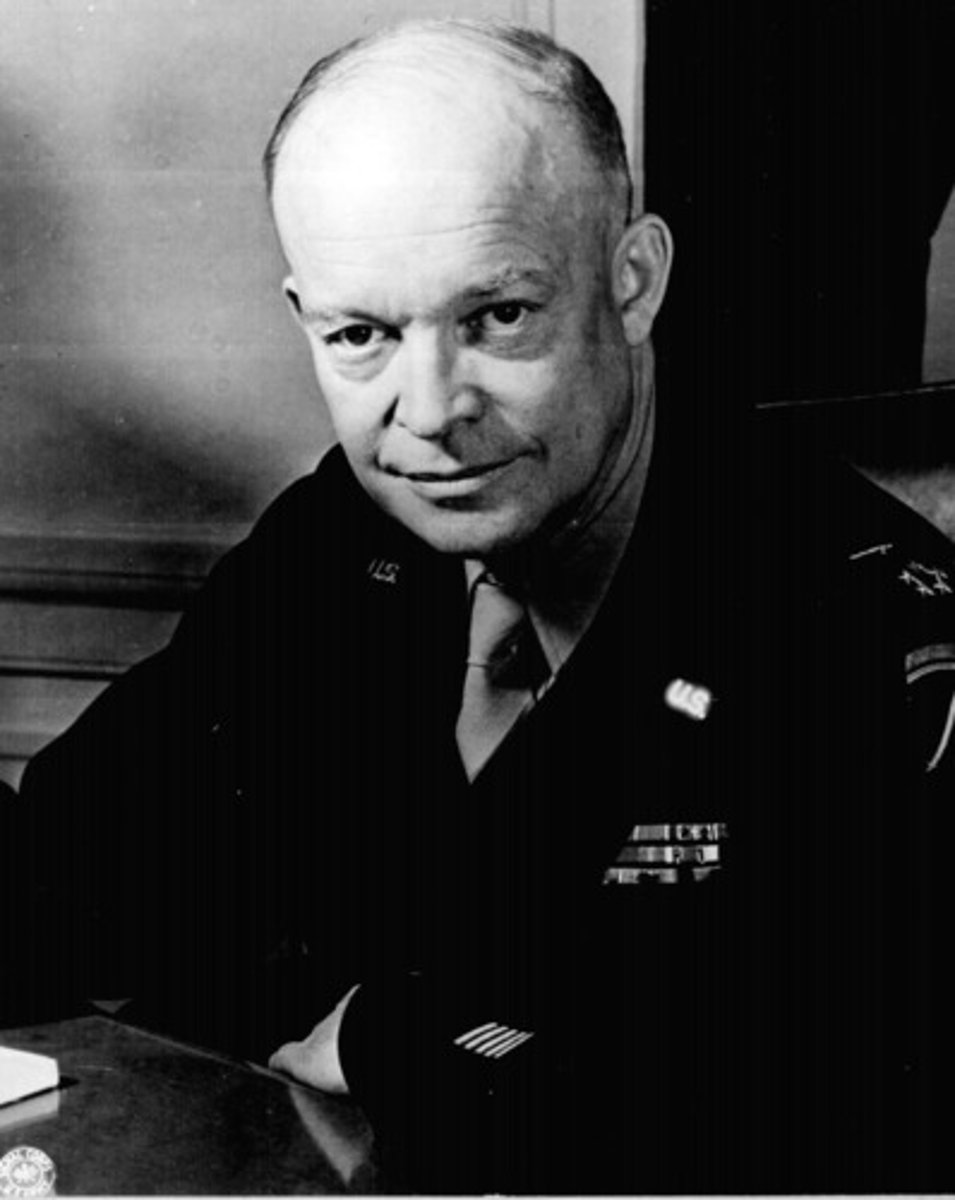
Dwight D. Eisenhower "Ike"
Supreme Allied Commander in Europe; American general who planned the D-Day invasion
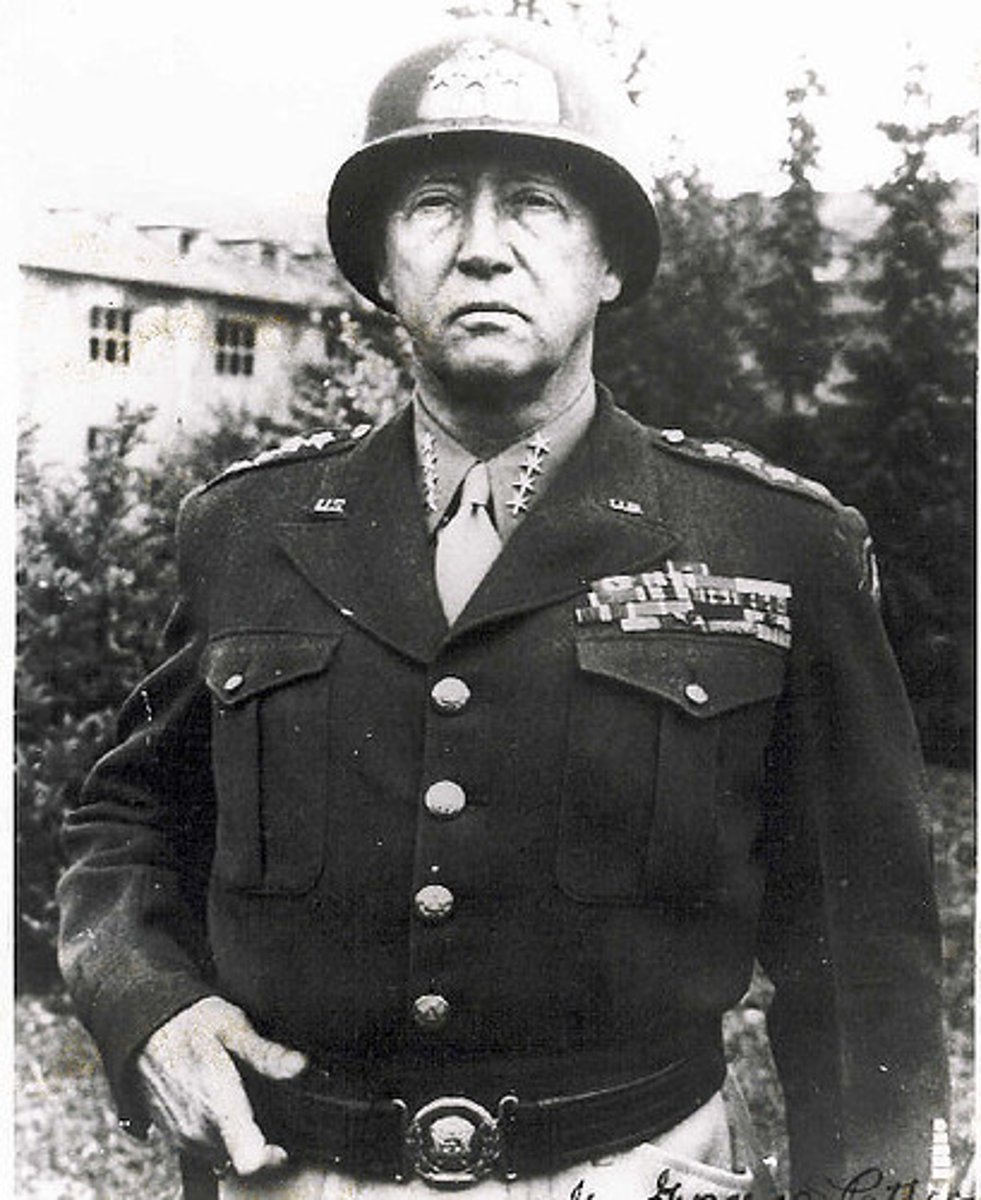
George S. Patton "Old Blood and Guts"
U.S. general, tank commander known as "old blood and guts"
Tuskegee Airmen
"Red Tails"; all-Black fighter squadron that escorted bombers
Navajo Code Talkers
Native Americans from the Navajo tribe that made an unbreakable communications code for the Marines
442nd Regimental Combat Team
Japanese American combat team that became one of the most decorated military units in American history
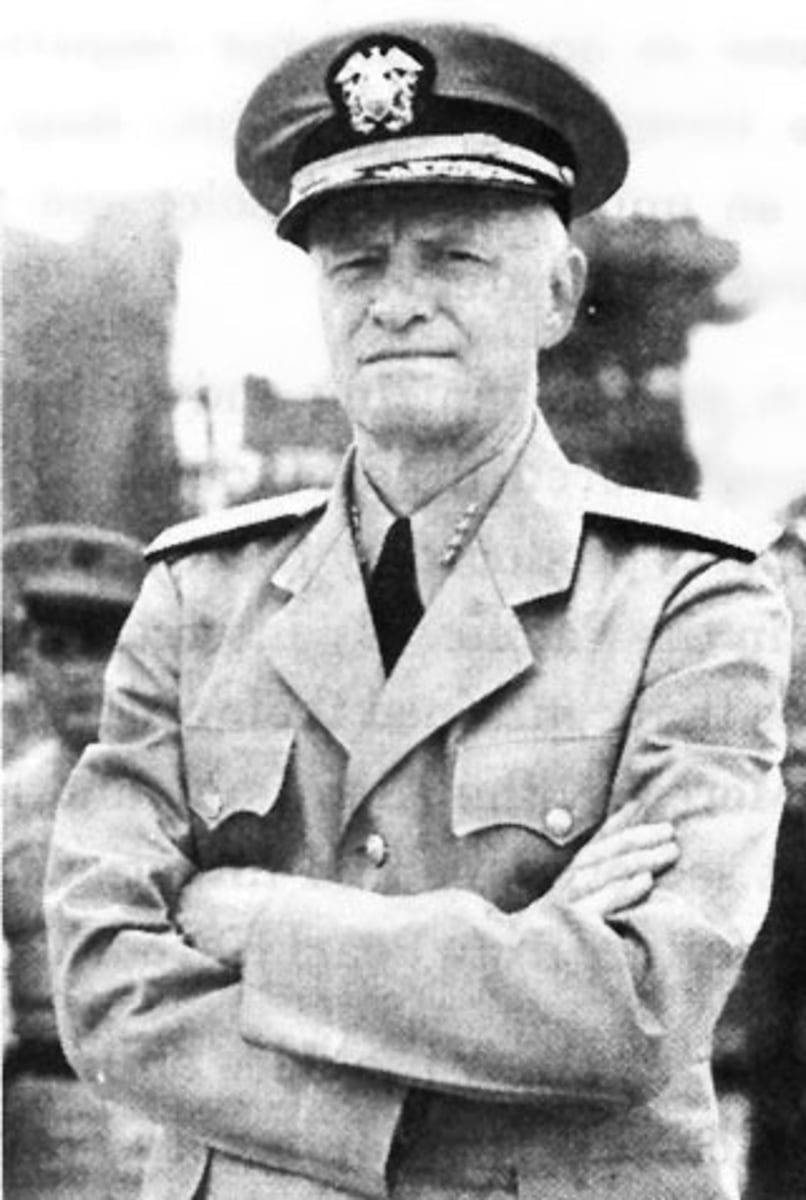
Chester Nimitz
Admiral of the U.S. Navy in the Pacific
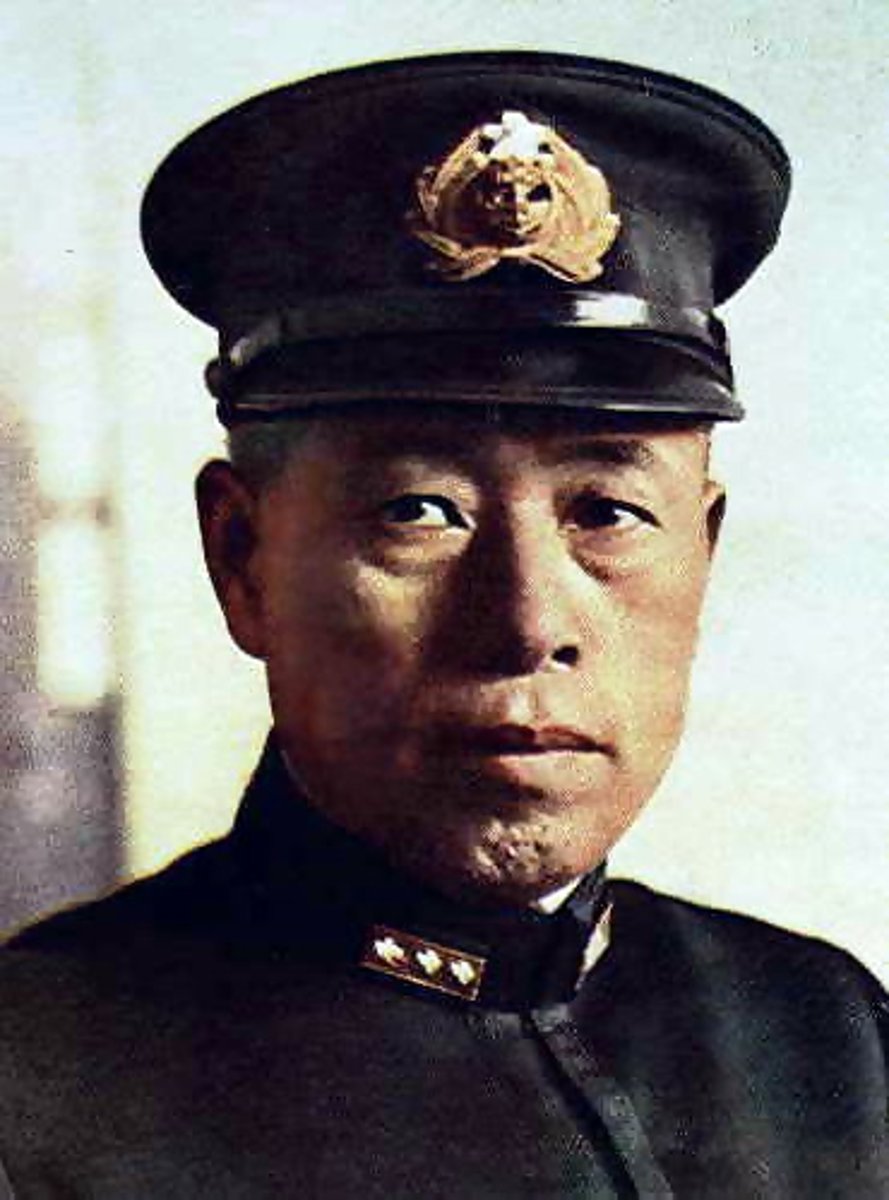
Yamamoto
Admiral of the Japanese Navy in the Pacific
Battle of Midway
U.S. victory over Japan in 1942; turning point of the war in the pacific; U.S. knew Japan's plans because of code-breakers; U.S. used dive bombers; Japan lost 4 carriers
Battle of Leyte Gulf
The largest naval battle in history; American victory in the Philippines
Arsenal of Democracy
Term introduced by President Franklin Roosevelt for America's role in World War II giving supplies to the Allies to win the war
Ford Motor Company
Switched from building cars to airplanes during the war
Nebraska Scrap Metal Drive of 1942
Henry Doorly and the Omaha World Herald organized a competition for Nebraskans to donate scrap metal to be turned into steel; helped end a nationwide steel shortage
Rosie the Riveter
symbol of American women who went to work in factories during the war

Internment Camps
Where Japanese Americans were placed after Pearl Harbor attack
Fred Korematsu
Japanese American who fought against internment in the Supreme Court
War Bonds
Loans given to the United States government by citizens to pay for the war.
Victory Gardens
Americans were encouraged to grow their own vegetables due to rationing
D-Day
Allied invasion of Normandy, France on June 6, 1944; planned by Eisenhower; largest naval invasion in history
Rationing
Restricting the amount of food and other goods people may buy during wartime to assure adequate supplies for the military
Omaha Beach
deadliest beach landing on D-day; main American beach
Battle of the Bulge
Hitler's last stand; attempts to encircle the Allies but fails
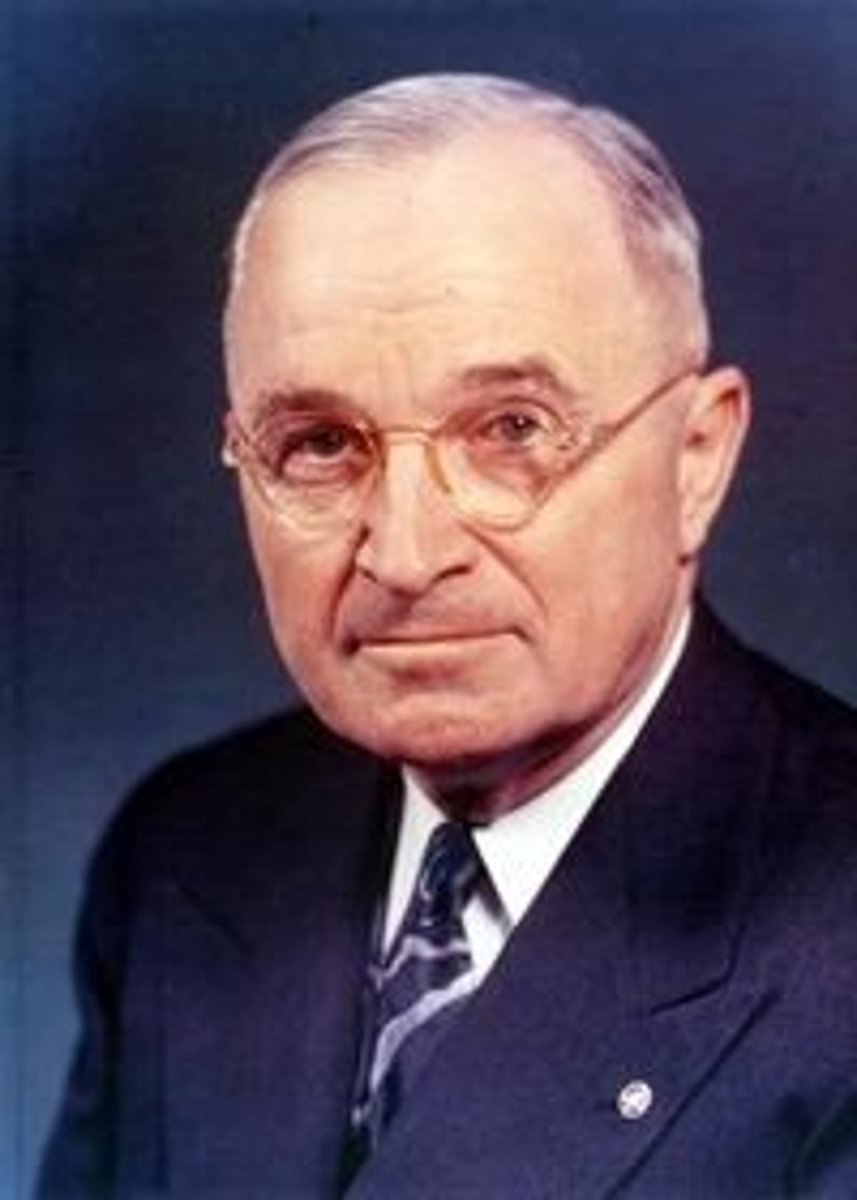
Harry S. Truman
Became president when FDR died; gave the order to drop the atomic bomb
Island Hopping
Bypassing heavily fortified islands and attacking less-defended islands on the way to Japan; used in the Pacific
Kamikaze
Japanese suicide pilots who would crash their planes into American targets
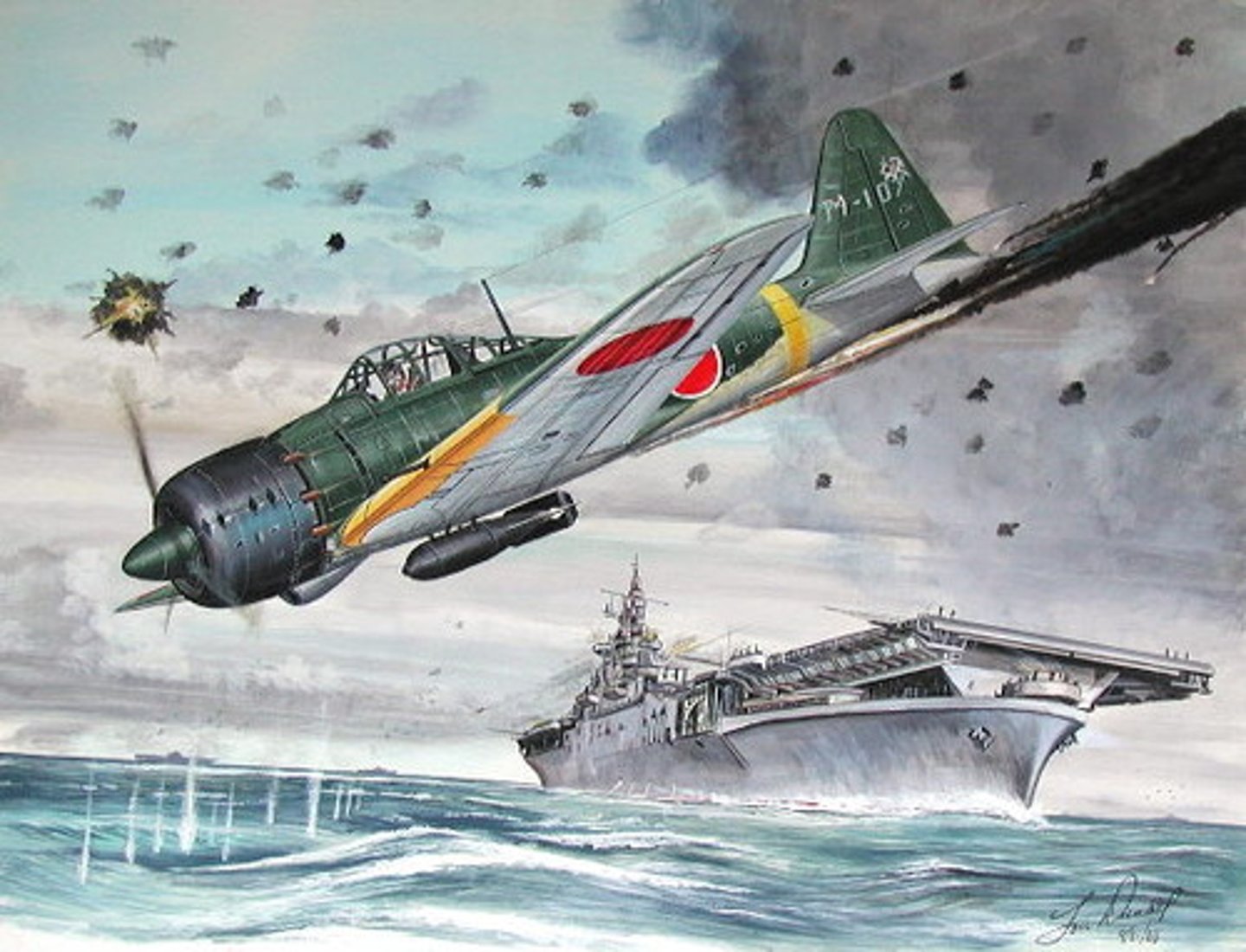
Bushido
Japanese moral code that valued "death before dishonor" and never surrendering
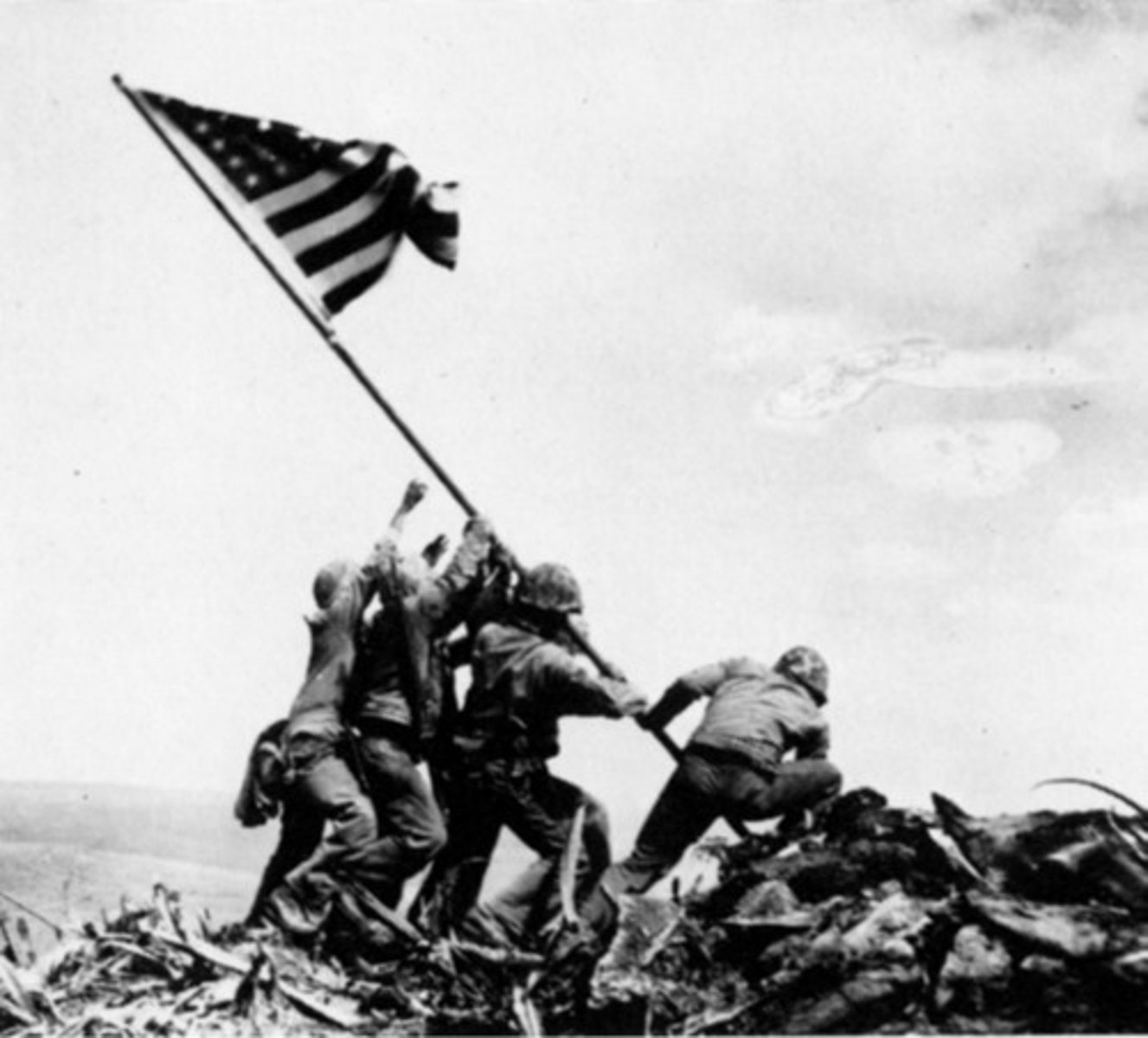
Battle of Iwo Jima
US victory over Japan, best known for a picture of Marines raising a US flag
Battle of Okinawa
Last island battle for the US before reaching mainland Japan
Amphibious Landing
A landing where soldiers get off ships or boats onto land in enemy territory; used in D-Day
Hiroshima and Nagasaki
Two Japanese cities on which the U.S. dropped the atomic bombs to end World War II; August 6th and 9th, 1945
Manhattan Project
A secret U.S. project for the construction of the first atomic bomb; located in Los Alamos, New Mexico
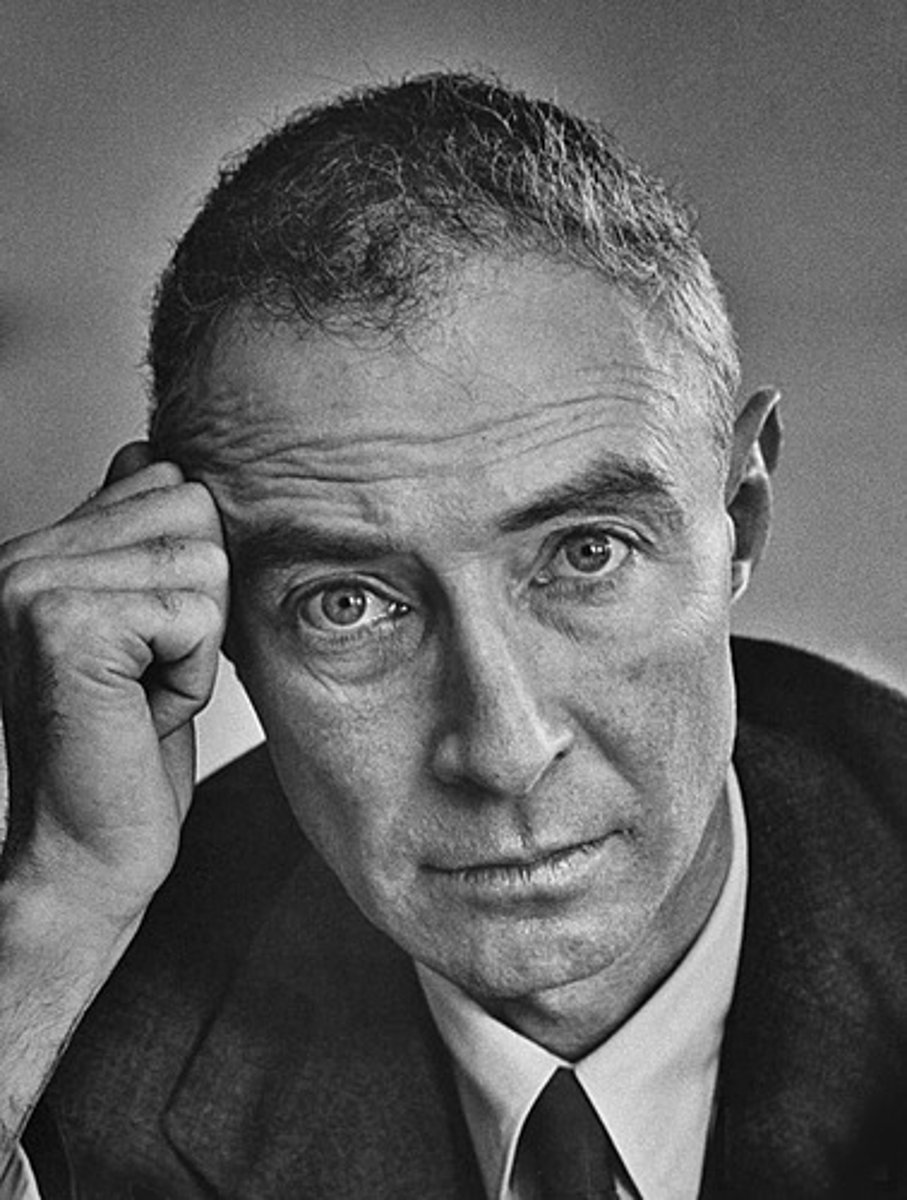
J. Robert Oppenheimer
Scientific leader of the Manhattan project
Victory in Europe Day (V-E Day)
May 8, 1945
Victory in Japan Day (V-J Day)
August 15, 1945
Little Boy and Fat Man
Nicknames of the two atomic bombs dropped on Japan
Albert Einstein
Man who warned Roosevelt that Nazis were developing an atomic bomb
Axis Powers
Germany, Italy, Japan
Dachau
First concentration camp; liberated by US soldiers 1945
Auschwitz
Nazi death camp in Poland, the largest center of mass murder during the Holocaust. Close to a million Jews, Gypsies, Communists, and others were killed there
Liberty Ships
US cargo ships made quickly by Henry Kaiser to transport troops and supplies across the Atlantic
Genocide
The killing of an entire race of people (the Holocaust);
Holocaust
Genocide in which 6 million Jews were murdered by Nazis
St. Louis Ship
a ship crowded with 900 Jewish refugees, turned away by the United States and other countries and returned to Europe
War Refugee Board
US government agency created to help rescue Jews and other victims of the Holocaust
Nuremberg Trials
Trials of 24 Nazi leaders, showed that people are responsible for their actions, even in wartime; convicted of crimes against humanity
USS Missouri
On September 2, 1945, the Japanese emperor formally surrendered on the ship in Tokyo Bay