U2 Quiz/I-Clicker Questions
 Call Kai
 Learn
Learn Practice Test
 Spaced Repetition
 Match
Match Flashcards
 Knowt Play
1/280

There's no tags or description
Looks like no tags are added yet.
Name | Mastery | Learn | Test | Matching | Spaced | Call with Kai | Chat |
|---|
No analytics yet
Send a link to your students to track their progress
281 Terms
Which of the following pairs of terms is mismatched?
bacteriostatic – kills vegetative bacterial cells
virucide – inactivates viruses
sterilant – destroys all living microorganisms
fungicide – kills yeasts and molds
germicide – kills microbes
bacteriostatic – kills vegetative bacterial cells
A(n) ________ is a bacterial virus which is integrated into the host cell DNA.
plasmid
lytic phage
prophage
transposon
insertion phage
prophage
A virus's ability to infect an animal cell depends primarily upon the
presence of pili on the host cell wall.
presence of receptor sites on the cell membrane.
type of viral nucleic acid.
enzymatic activity of a host cell.
host cell's ability to phagocytize viral particles.
presence of receptor sites on the cell membrane.
You have isolated and grown a pure culture of a prokaryotic cell type. The first step in identification is a(n)
lactose fermentation test.
flagella stain.
Gram stain.
endospore stain.
Gram stain.
In the scientific name Enterobacter aerogenes, Enterobacter is the
specific epithet.
genus.
kingdom.
family.
order.
genus.
In a direct ELISA test, the method is determining if ________ is/are present in the patient's sample by attempting to bind a labeled antibody to it.
antibodies against a pathogen found in a patient's blood
a bacteriophage that can infect a particular bacterial strain
an antigen from a particular pathogen
a known sequence of DNA from a pathogen
an antigen from a particular pathogen
The enzyme reverse transcriptase
can synthesize DNA or RNA from an RNA template.
synthesizes RNA from an RNA template.
synthesizes DNA to repair gaps in a DNA strand.
synthesizes RNA from a DNA template.
synthesizes DNA from an RNA template.
synthesizes DNA from an RNA template.
An advantage of complementary DNA, cDNA, over genomic DNA is that it
contains selectable markers.
lacks exons
can form very large DNA segments.
lacks introns.
is very easy to isolate.
lacks introns.
Genetic elements known as promoters are initiation points in the process of
mutation repair.
transcription.
transformation.
DNA replication.
translation.
transcription.
An enzyme that makes covalent bonds between Okazaki fragments in the lagging strand of DNA being replicated is
SSBP.
transposase.
DNA helicase.
DNA ligase
RNA polymerase.
DNA ligase
Which of the following is found at the 5' end of a DNA strand?
a hydrogen bond
histones
a methyl group
a phosphate group
a hydroxyl group
a phosphate group
The preservation of beef jerky from microbial growth relies on which method of microbial control?
desiccation
filtration
lyophilization
ionizing radiation
supercritical CO2
desiccation
Which of the following is the most difficult to inactivate?
fungus spores
nonenveloped viruses
bacterial endospores
protozoan cysts
enveloped viruses
bacterial endospores
Which of the following is the best method to sterilize heat-labile solutions?
dry heat
membrane filtration
pasteurization
freezing
autoclave
membrane filtration
A bacterial genome is typically
multiple linear pieces of DNA.
a single linear piece of DNA.
multiple circular DNA molecules.
a single circular DNA molecule.
a linear RNA molecule.
a single circular DNA molecule.
An enzyme produced in response to the presence of a substrate is called a(n) ______
Hint: think operon regulation
operator.
restriction enzyme
repressible enzyme.
inducible enzyme.
promoter.
inducible enzyme.
Which of the following is involved in translation?
both mRNA and tRNA
rRNA only
tRNA only
mRNA only
mRNA, rRNA, and tRNA are all involved.
mRNA, rRNA, and tRNA are all involved.
According to the operon model, for the synthesis of an inducible enzyme to occur, the
repressor must bind to the operator.
repressor must not be synthesized.
substrate must bind to the enzyme.
end-product must not be in excess.
substrate must bind to the repressor.
substrate must bind to the repressor.
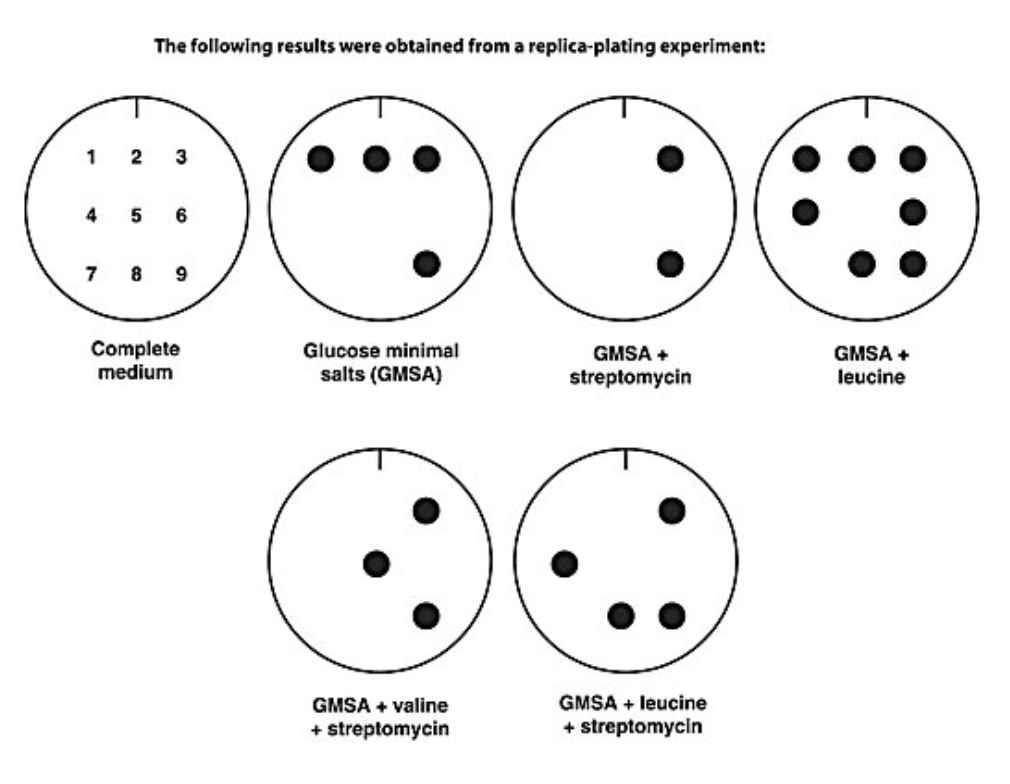
In Figure 8.1, which colony(ies) is/are streptomycin-resistant and valine-requiring?
3, 5 and 9
3
1, 2, 3, and 9
9
5
5
Which of the following causes mutations by creating thymine dimers?
gamma rays
nitrous acid
ultraviolet light
benzopyrene
nucleotide analogs
ultraviolet light
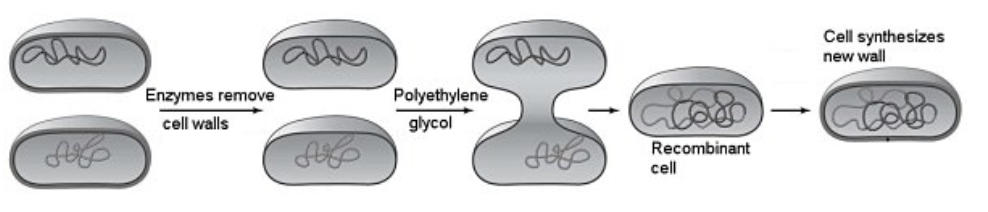
Which method of inserting DNA into cells is illustrated in Figure 8.1?
electroporation
injection
transduction
a gene gun
protoplast fusion
protoplast fusion
Which of the following is NOT a desired characteristic of DNA vectors used in gene cloning procedures?
may replicate in several species
self-replication
has a selectable marker
circular form of DNA or integrates into the host chromosome
large size
large size
Biotechnology involves the
development of disease-resistant crop plants.
use of microorganisms to make desired products.
use of animal cells to make vaccines.
use of microorganisms to make desired products and the use of animal cells to make vaccines.
use of microorganisms to make desired products, the use of animal cells to make vaccines, and the development of disease-resistant crop plants.
use of microorganisms to make desired products, the use of animal cells to make vaccines, and the development of disease-resistant crop plants.
The natural role of restriction enzymes in bacteria is to
allow transposons to move to another place in the chromosome.
allow cells to accept foreign DNA.
protect the cell from invading phages.
provide the cell with new phenotypes, such as antibiotic resistance.
make conjugation more efficient.
protect the cell from invading phages.
Which of the following restriction enzyme sites would produce blunt-ended fragments? (The arrow represents the cutting site of the enzyme.)
A↓AGCTT
CCC↓GGG
G↓GATCC
C↓CGG
G↓AATTC
CCC↓GGG
The phylogenetic classification of bacteria is based on _______ studies
rRNA
mRNA
DNA
tRNA
ribosomal RNA (rRNA) sequences.
Which of the following is the best evidence for a three-domain system?
There are three distinctly different types of nuclei.
Some bacteria live in extreme environments.
There are three distinctly different Gram reactions.
Nucleotide sequences in ribosomal RNA vary between all three domains.
There are three distinctly different sets of metabolic reactions.
Nucleotide sequences in ribosomal RNA vary between all three domains.
A biochemical test, in the microbiology world, is used to determine
All of the answers are correct.
staining characteristics.
nucleic acid-base composition of DNA sequences.
amino acid sequences of enzymes.
capability of a microbe to perform a specific enzymatic activity.
capability of a microbe to perform a specific enzymatic activity.
What is the outstanding characteristic of the Kingdom Fungi?
All members are photosynthetic (phototrophs)
All members are macroscopic.
Members absorb dissolved organic matter. (chemo- or photo-heterotrophs)
All members are microscopic.
Members absorb dissolved organic matter. (chemo- or photo-heterotrophs)
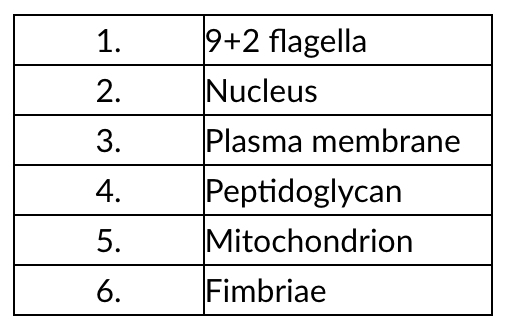
In Table 10.1, which features are found in nearly all eukarya?
3, 5
2, 3
1, 2, 5
1, 4, 6
2, 3, 5
2, 3, 5
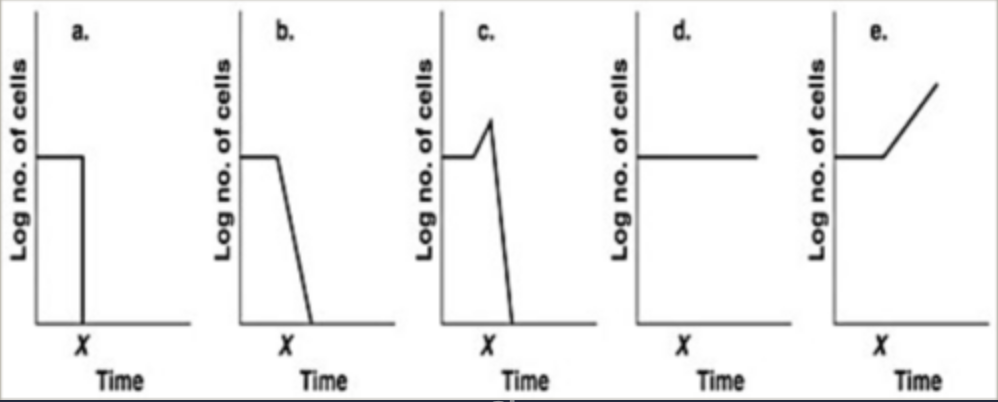
Assume 109 E. coli cells/ml are in a flask. Which graph in Figure 7.2 best depicts the effect of placing the culture at 7°C at time x?
e
d
c
b
a
d
Seventy percent alcohol is effective against
enveloped viruses
protozoan cysts
bacterial endospores
nonenveloped viruses
prions
enveloped viruses
A chemical agent that dissolves lipids can damage
enveloped viruses.
cells.
cells and enveloped viruses.
bacterial endospores.
nonenveloped and enveloped viruses.
cells and enveloped viruses.
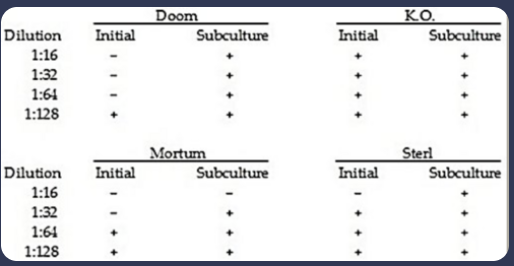
The following data were obtained by incubating gram-positive bacteria in nutrient medium + disinfectant for 24 hours, then transferring one loopful to nutrient medium (subculturing). (+ = growth; - = no growth)
In Table 7.3, which disinfectant was bactericidal?
Doom
Sterl
The answer cannot be determined based on the information provided.
Mortum
K.O.
Mortum
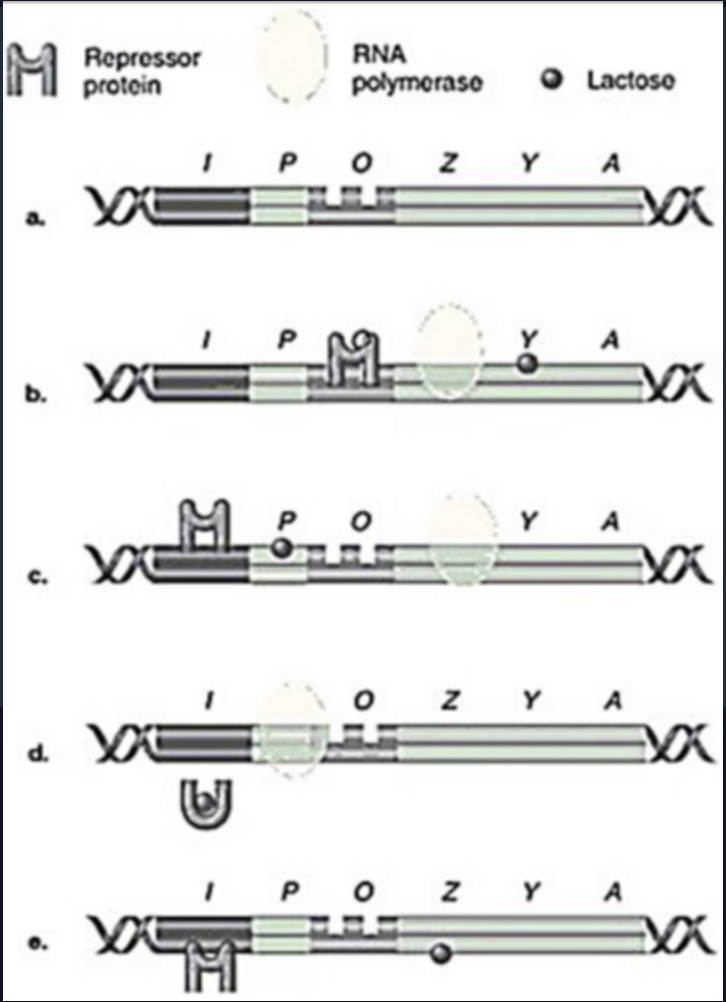
In Figure 8.5, which model of the lac operon correctly shows RNA polymerase, lactose, and repressor protein when the structural genes are being transcribed?
b
a
e
d
c
d
Two bacterial strains have the same genes for metabolizing a carbohydrate, but one is wild-type for a regulatory inducer while the other does not produce the inducer. Which of the following statements is CORRECT with regard to the metabolism of the bacteria?
The two bacterial strains have the same phenotype.
The genotypes and phenotypes of the two bacterial strains are the same.
The two bacterial strains have the same phenotype but have different genotypes.
The two bacterial strains have different phenotypes.
The answer cannot be determined from the information provided.
The two bacterial strains have different phenotypes.
Protein synthesis in eukaryotes is similar to the process in prokaryotes in that both eukaryotes and prokaryotes
have exons.
require snRNPS
use codons to determine polypeptide sequences.
use methionine as the "start" amino acid.
have introns.
use codons to determine polypeptide sequences.
Which of the following pairs is mismatched?
RNA polymerase - makes a molecule of RNA from an RNA template
DNA ligase - joins segments of DNA
DNA polymerase - makes a molecule of DNA from a DNA template
transposase - cuts DNA backbone, leaving "sticky ends"
DNA gyrase - relaxes supercoiling in DNA ahead of the replication fork
RNA polymerase - makes a molecule of RNA from an RNA template
The horizontal transfer process known as transduction
requires a plasmid.
involves a virus.
involves a mutagen.
requires a cell to be "competent."
requires a pilus
involves a virus.
Amino acids are delivered in their appropriate order by
ribozymes.
mRNAs.
rRNAs.
RNA-induced silencing complexes (RISC).
tRNAs.
tRNAs.
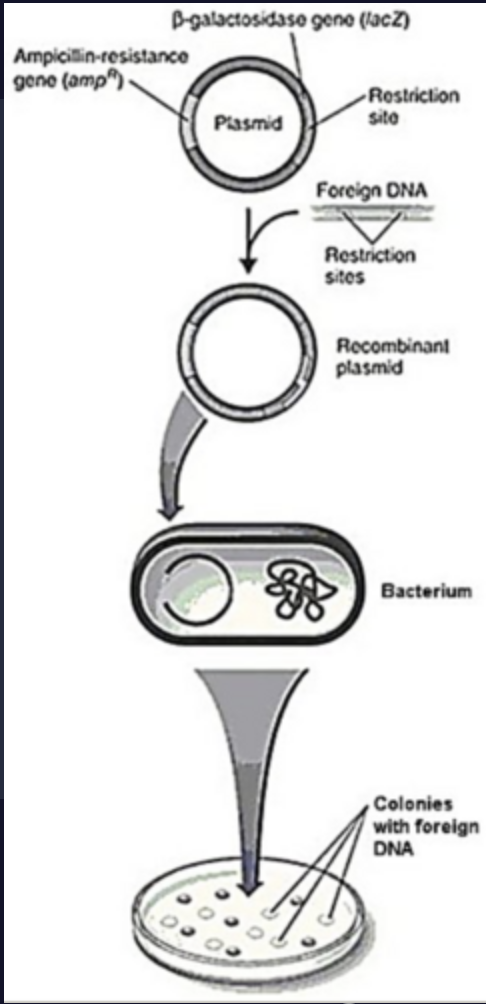
In Figure 9.4, the bacteria transformed with the recombinant plasmid and plated on media containing ampicillin and X-gal will
form blue, ampicillin-sensitive colonies.
not grow.
form blue, ampicillin-resistant colonies.
form white, ampicillin-resistant colonies.
form white, ampicillin-sensitive colonies.
form white, ampicillin-resistant colonies.
________ are used for cutting DNA molecules into fragments.
Antisense RNAs
Mutagens
DNA polymerase and DNA ligase
RNA polymerases
Restriction enzymes
Restriction enzymes
Which of the following microbes produces a protein that kills a variety of insect pests? [Hint: insects are a pest for plants]
Pseudomonas
Haemophilus influenzae
Thermus aquaticus
Plasmodium falciparum
Bacillus thuringiensis
Bacillus thuringiensis
When performing phage typing to identify an unknown bacterium, you must have ________ in your possession.
fluorescent molecules that will light up when bound to the DNA of the bacterium
antiserum containing antibodies that will bind to the bacterium to be identified
DNA that will hybridize to the DNA of the bacterium to be identified
RNA that will hybridize to the RNA of the bacterium to be identified
viruses that will specifically infect the bacterium you're trying to identify
viruses that will specifically infect the bacterium you're trying to identify
You discovered a unicellular organism that lacks a nucleus and peptidoglycan. You suspect the organism is in the group
Fungi.
Bacteria.
Animalia.
Plantae.
Archaea.
Archaea
For a serological bacterial identification test to be performed, you must have ________ in your possession.
RNA that will hybridize to the RNA of the bacterium to be identified
viruses that will specifically infect the bacterium you're trying to identify
fluorescent molecules that will light up when bound to the DNA of the bacterium
DNA that will hybridize to the DNA of the bacterium to be identified
antiserum containing antibodies that will bind to the bacterium to be identified
antiserum containing antibodies that will bind to the bacterium to be identified
Serological testing is based on the fact that
antibodies react specifically with an antigen.
antibodies cause the formation of antigens.
bacteria clump together when mixed with any antibodies.
all bacteria have the same antigens.
the human body makes antibodies against bacteria
antibodies react specifically with an antigen.
If two organisms have similar ribosomal RNA (rRNA) sequences, you can conclude that they
mated with each other.
will have different G-C ratios.
live in the same place.
evolved from a common ancestor.
will both ferment lactose.
evolved from a common ancestor.
Which of the following does NOT achieve sterilization?
Autoclaving at 121°C for 15 minutes
Dry heat at 170°C for 2 hours
Ethylene oxide gas treatment
Pasteurization
Ionizing radiation
Pasteurization
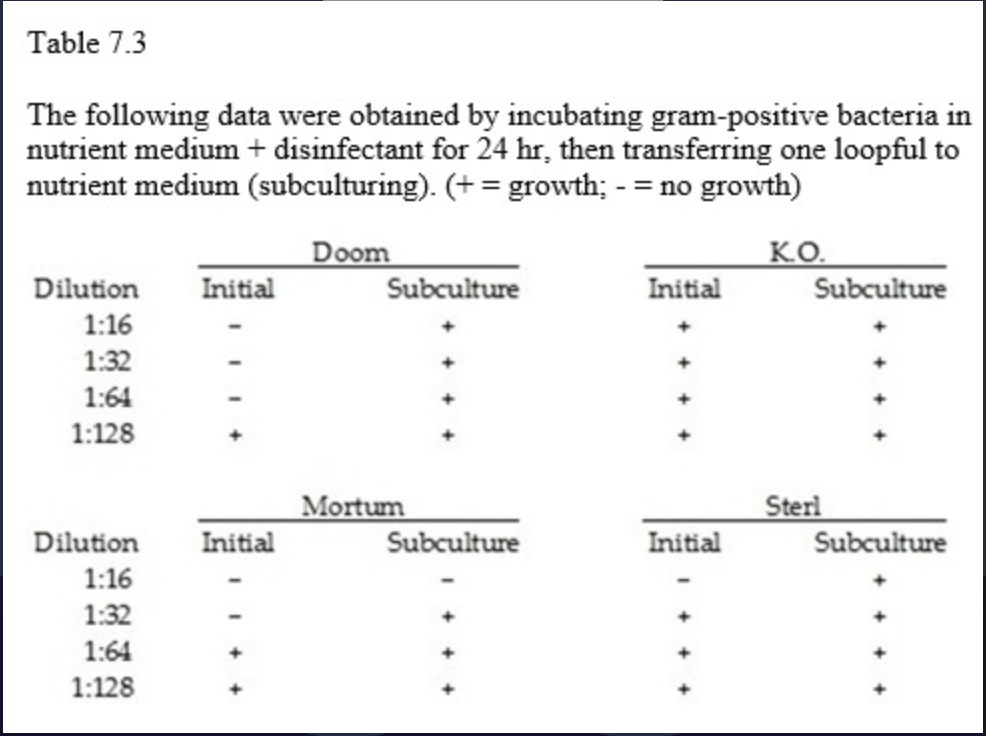
In Table 7.3 which disinfectant is the most effective at stopping bacterial growth?
Doom
Which of the following is an example of pasteurization?
Heat is used to kill potential pathogens in apple juice.
Surgical instruments are autoclaved at 121°C for 15 minutes.
Bacterial cultures are incinerated after use.
A 0.22 µm membrane filter is used to sterilize a solution.
Canned food is heated under pressure to destroy endospores.
Heat is used to kill potential pathogens in apple juice.
A gene is defined as
a sequence of nucleotides in DNA that codes for a functional product.
Any region of DNA between two promoters.
A sequence of amino acids that forms a protein.
A DNA segment that always codes for a protein
A nucleotide sequence that contains only exons.
a sequence of nucleotides in DNA that codes for a functional product.
Which of the following is NOT a product of transcription?
mRNA
tRNA
rRNA
A new strand of DNA
a new strand of DNA.
DNA is constructed of
Two strands of amino acids arranged in a double helix
A single strand of nucleotides folded into a helix
Two parallel strands of nucleotides running in the same 5′ → 3′ direction
Two strands of nucleotides running in an antiparallel configuration
two strands of nucleotides running in an antiparallel configuration.
A bacterial genome is typically
Multiple linear chromosomes enclosed in a nuclear membrane
A single circular DNA molecule
Several circular chromosomes housed in a nucleus
A linear double-stranded DNA molecule with telomeres
a single circular DNA molecule.
The ozone layer of the Earth has been depleted to an extent by human release of certain chemicals. What type of mutation caused by the induction of thymine dimer formation is more likely to occur in organisms on Earth as a result of this problem?
Missense mutation
Silent Mutation
Frameshift mutation
Nonsense mutation
frameshift mutation.
Double strand DNA fragments are separated by size using
Polymerase chain reaction (PCR)
DNA ligase
Peptide bonds
Gel electrophoresis
gel electrophoresis
The restriction enzyme EcoRI recognizes the sequence G↓AATTC. Which of the following is TRUE of DNA after it is treated with EcoRI?
All fragments will have blunt ends.
All fragments will have single-stranded regions ending in TT.
The DNA will be completely degraded into single nucleotides.
All of the DNA fragments will have single-stranded regions ending in AA.
All of the DNA fragments will have single-stranded regions ending in AA.
________ are a diverse group of eukaryotic organisms that are similar in ribosomal RNA (rRNA) sequences but quite different from each other in motility types and ecology. They have been used previously as a "catch-all" for organisms that couldn't be easily classified into other groups.
Archea
Bacteria
Protists
Fungi
Protists.
What is the outstanding characteristic of the Kingdom Fungi?
Members perform photosynthesis using chlorophyll.
Members ingest food particles by phagocytosis.
Members are primarily autotrophic and fix carbon dioxide.
Members absorb dissolved organic matter (chemo- or photo-heterotrophs).
Members absorb dissolved organic matter (chemo- or photo-heterotrophs).
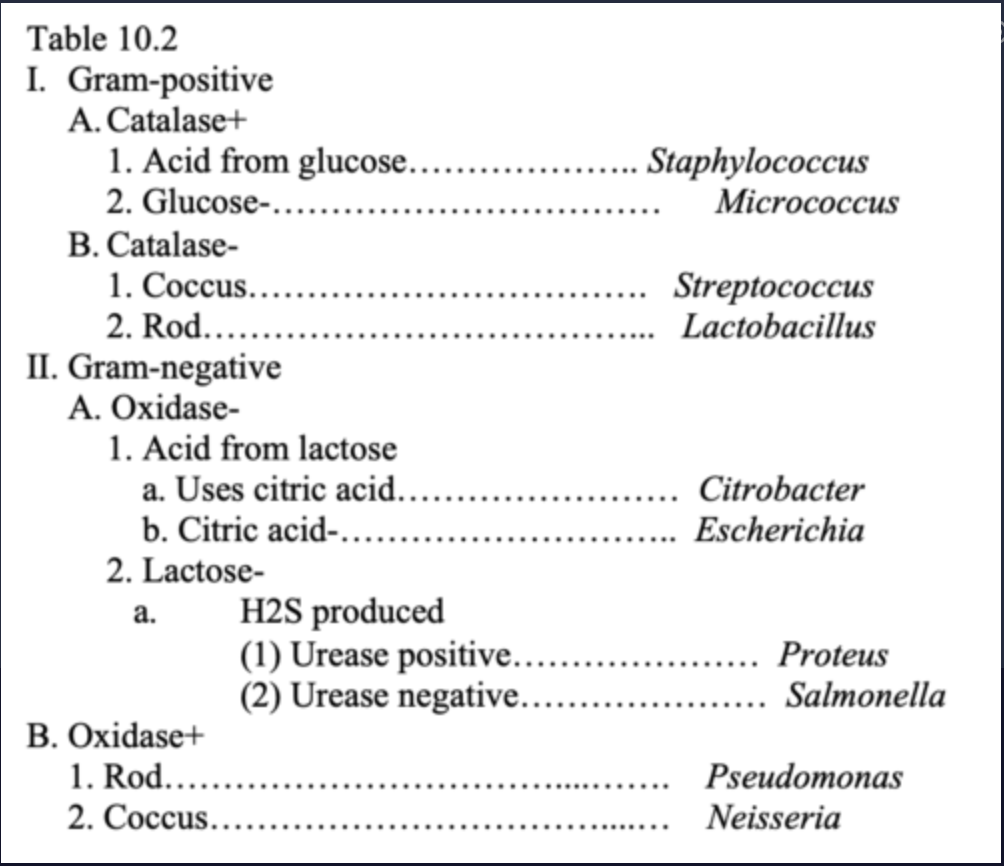
Use the dichotomous key in Table 10.2 to identify a gram-negative coccus.
Neisseria
Citrobacter
Micrococcus
Salmonella
Neisseria.
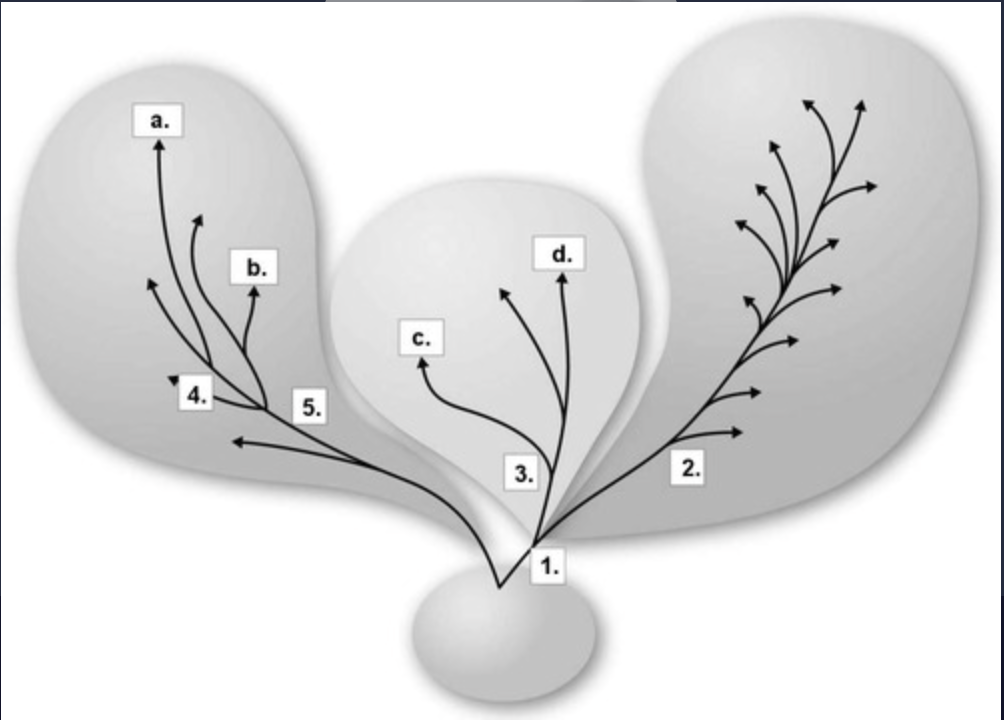
In Figure 10.1 the closest ancestor for both species "a." and species "b." would be which of the following?
4
1
3
5
5
A group of three nucleotides on mRNA is called an
operon
codon
amino acid
RNA polymerase
codon
Transcription begins when RNA polymerase binds to the DNA at the
promoter
inducer
repressor
DNA Polymerase
promoter
Of the 64 codons how many are sense codons
30
61
24
60
61
Between 60% and 80% of genes are not regulated by the cell but are ___________ in nature
Inducible
Repressible
Operonic
Constitutive
Constitutive
What is the process that turns ON the transcription of a gene or genes?
polymerase chain reaction
repressor
induction
promoter
Induction
A group of genes that are transcribed together and controlled by one promoter defines a
amino acid sequence
operon
promoter
repressor
operon
Inhibition of the metabolism of alternative carbon sources by glucose is called
Competitive inhibition
Feedback inhibition
Induction
Catabolite repression
catabolite repression
Single stranded RNA molecules that inhibit protein production in eukaryotic cells are known as
tRNA
mRNA
miRNA
rRNA
microRNAs (miRNAs)
Ionizing radiation causes
DNA polymerase reaction
RNA polymerase reaction
DNA strand breaks
amino acids break
DNA strand breaks
What is the most common type of mutation which involves single base pairs?
frameshift mutation
missense mutation
base substitution
silent mutation
base substitution
The process of bacteria passing their genes to other microbes of the same generation is known as
vertical gene transfer
horizontal gene transfer
diagonal gene transfer
rapid gene transfer
horizontal gene transfer
Transformation is the transfer of DNA from the donor to a recipient cell via
Direct cell-to-cell contact through a pilus
A bacteriophage vector
Membrane-bound vesicles
Naked DNA in a solution
naked DNA in a solution
A population of genetically identical cells carrying a desired vector is called a
clone
operon
amino acid
gene
clone
In nature organisms with characteristics that enhance survival are more likely to survive and reproduce than variants that lack desirable traits this is known as
Genetic drift
Mutation
Artificial selection
Natural selection
natural selection
A DNA molecule that transports foreign DNA into a cell is called a
operon
vector
amino acid
gene
vector
Which technique amplifies small samples of DNA to quantities that are large enough for analysis
Gel electrophoresis
DNA sequencing
Restriction enzyme digestion
Polymerase Chain Reaction (PCR)
PCR (polymerase chain reaction)
The technique that separates DNA fragments of different lengths by applying a charge is known as
covalent bonds
peptide bonds
gel electrophorensis
ionic bonds
gel electrophoresis
If a restriction enzyme makes a staggered cut in DNA then ____________ asymmetrical ends are created
blunt
sticky
slimy
hard
sticky
A molecular clock for evolution is based on
Fossil record comparisons
Morphological similarities between species
Protein shape and structure differences
Nucleotide sequences in the genomes of organisms
nucleotide sequences in the genomes of organisms
Which is the correct order in the taxonomic hierarchy from the broadest to most specific
Kingdom-phylum-class-order-family-genus-species
Phylum-kingdom-order-genus-family-species
Order-family-species-kingdom-phylum-class
Phylum-order-class-species-genus-family
Kingdom-phylum-class-order-family-genus-species
All proteobacteria are
Gram-positive bacteria
Obligate intracellular parasites
Photosynthetic autotrophs
Oligotrophs
Oligotrophs
Which of the following refers to photosynthesis preformed by bacteria with the use of water as the donor of electrons
Anoxygenic
Chemolithotrophic
Photophosphorylation
Oxygenic
oxygenic
Which of the following bacteria lacks a cell wall?
Myxococcus
Fungi
Mycoplasma
Bacteria
Mycoplasma
Which one of the following is NOT a category of Archea
Methanogens
Extreme halophiles
Thermoacidophiles
Low G+C gram-positive rods and cocci
Low G+C gram-positive rods and cocci
Nitrogen-fixing bacteria that infect the roots of leguminous plants are known as
Cyanobacteria
Azotobacter
Mycorrhizae
Rhizobia
rhizobia
Unicellular algae with complex cell walls made of pectin and a layer of silica
Dinoflagellates
Green algae
Cyanobacteria
Diatoms
diatoms
The body of a multicellular algae is called a
Mycelium
Hypha
Sporophyte
Thallus
thallus
The largest bacterium discovered found in sediments of the costal waters off Namibia belongs to the genus
Beggiatoa
Spirillum
Nitrobacter
Thiomargarita
Thiomargarita
Nitrosomonas and Nitrobacter play a role in the nitrogen cycle by conducting
Nitrogen fixation
Denitrification
Ammonification
Nitrification
nitrification
Alphaproteobacteria often have stalklike or budlike protrusions known as
Flagella
Pili
Hyphae
Prosthecae
prosthecae
Which of the following is NOT a member of the order Enterobacteriales
Escherichia
Salmonella
Klebsiella
Pseudomonas
Pseudomonas
The common infectious genus in the world which only lives inside the cells of insects is
Rickettsia
Ehrlichia
Bartonella
Wolbachia
wolbachia
In which phylum has sexual reproduction NOT been observed
Ascomycota
Basidiomycota
Zygomycota
Microsporidia
Microsporidia
The phylogenetic relationship among proteobacteria is based on ___________ studies
rRNA
tRNA
mRNA
miRNA
rRNA
Paralytic shellfish poisoning is caused by dinoflagellates that secrete a neurotoxin known as
Tetrodotoxin
Botulinum toxin
Anatoxin
Saxitoxin
saxitoxin
Taq polymerase an enzyme used in PCR is derived from Thermus aquaticus which belongs to which bacterial phylum
Proteobacteria
Firmicutes
Cyanobacteria
Deinococci
deinococci
Elementary bodies are found in the phylum
Rickettsiae
Spirochaetes
Firmicutes
Chlamydiae
Chlamydiae
The enzymes that fix nitrogen gas into ammonium in cyanobacteria are located in
Carboxysomes
Akinetes
Thylakoids
Heterocysts
heterocysts