Study Guides for the AP Test - Major Events and Terms
 Call Kai
 Learn
Learn Practice Test
 Spaced Repetition
 Match
Match Flashcards
 Knowt Play
1/129

There's no tags or description
Looks like no tags are added yet.
Name | Mastery | Learn | Test | Matching | Spaced | Call with Kai |
|---|
No analytics yet
Send a link to your students to track their progress
130 Terms
The Renaissance
The terms means "rebirth". It's time period is agreed by many to span from 1450 to 1650. It is in this time period that Europe would see a revival in classic art and literature inspired from antiquity, and the spread of new ideas. To many, it is the birth event of 'Modern Europe'.
Humanism
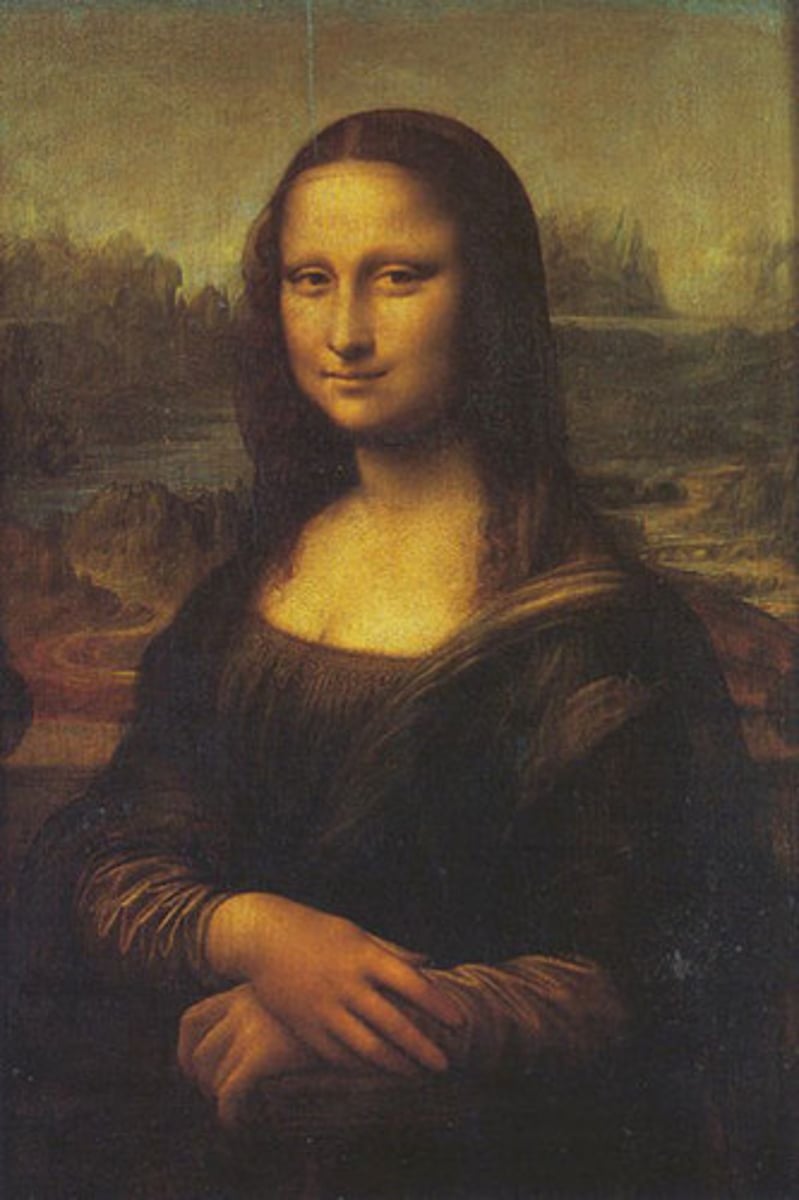
This was an intellectual movement based on the study of the classics from the time of ancient Greece and Rome. This group strove to improve themselves and gain knowledge to expand their abilities and understanding of the world.

Civic Humanism
The belief and practice of using the knowledge you gained from the study of the classics to improve and better society and the lives of those around you. The ancient Roman, Cicero, would become the movements role model.
The Printing Press
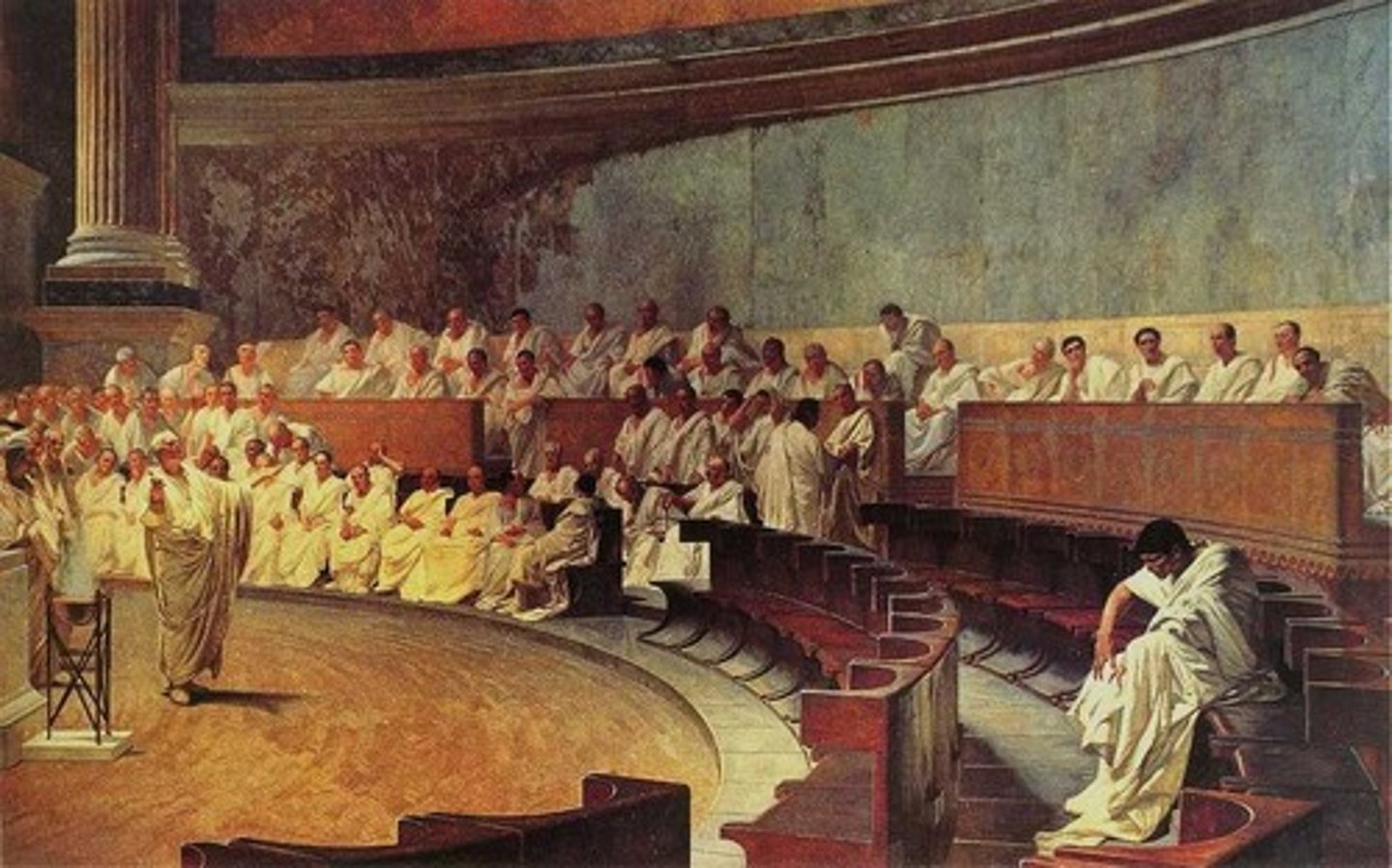
Invented in over the span of a few years between 1445 and 1450, this invention used movable metal type to mass produce and print volumes of text books and materials. This invention would greatly speed up the spread of knowledge and ideas. The Gutenberg Bible printed in 1456 was the first true book produced in the West.
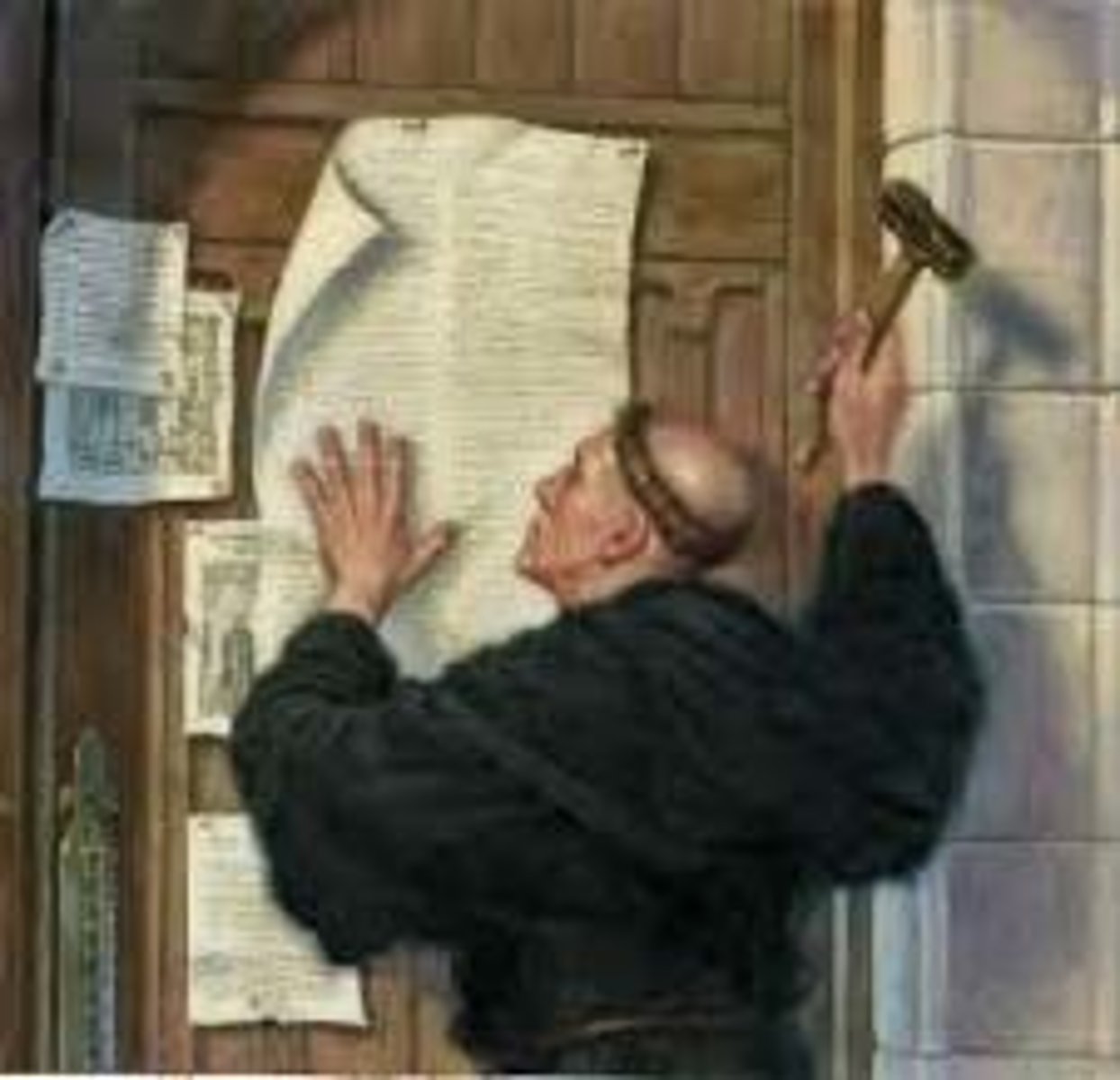
Ninety-Five Theses
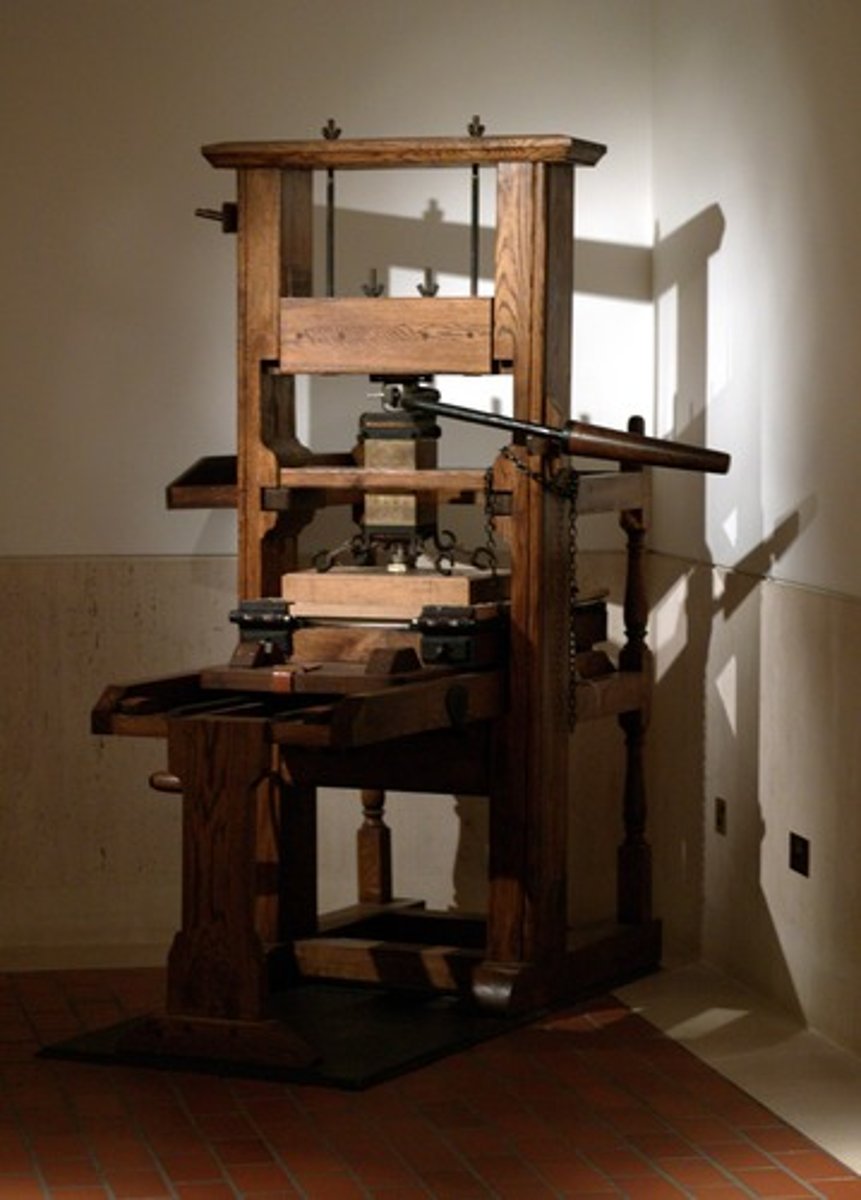
The posting of the famous list of abuses and problems with the Catholic Church nailed on the door of the Church at Wittenberg, Germany in 1517 by Martin Luther that would start a movement that would see many in Europe break away from the Catholic Church.
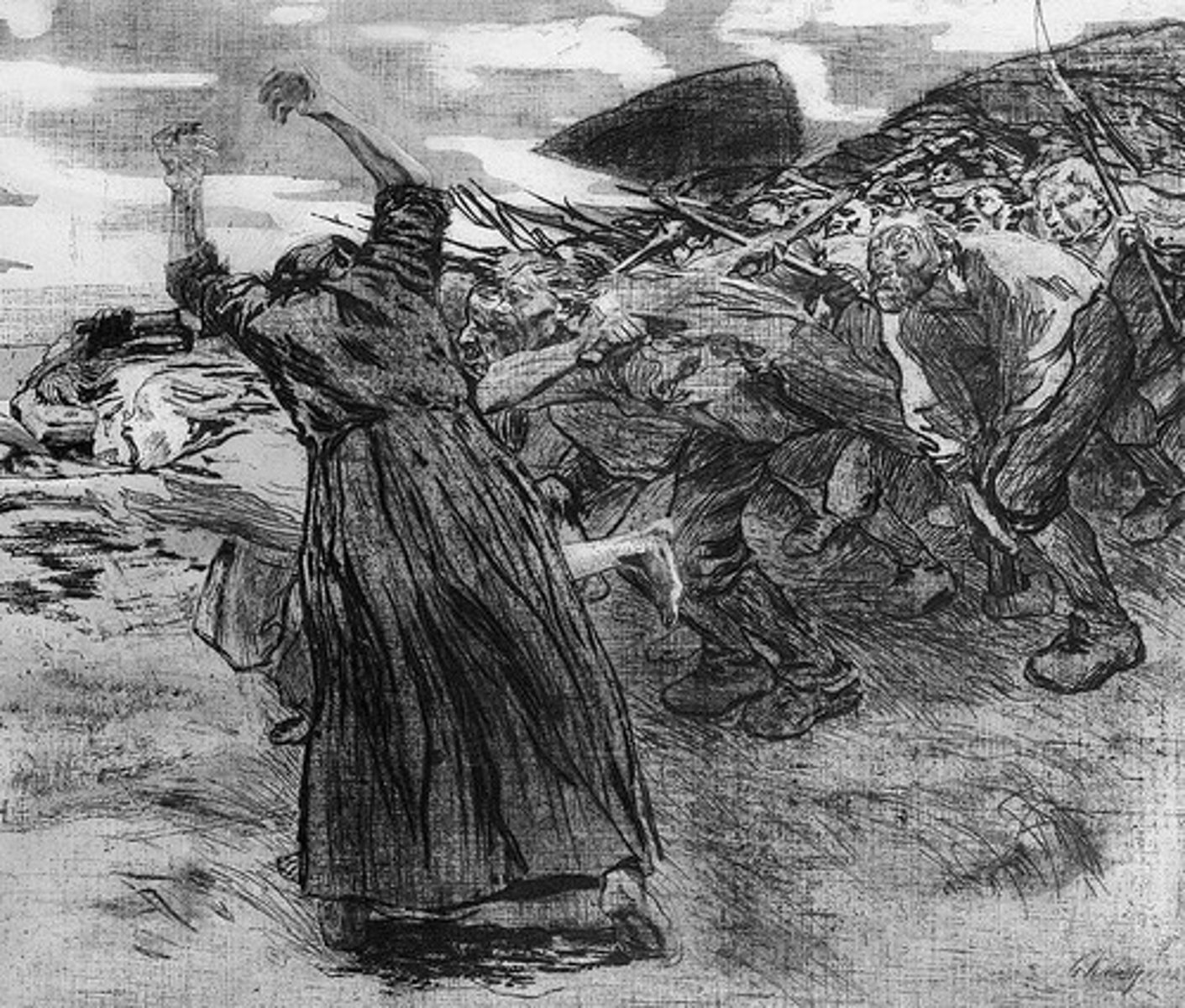
German Peasants' War of 1524-1525
A conflict that would see Martin Luther take the side of the nobles against the peasants in a struggle for more rights. This conflict showed that he was more interested in being supported in starting his new religion than backing "The robbing and murdering hordes of peasants" as per his own booklet.
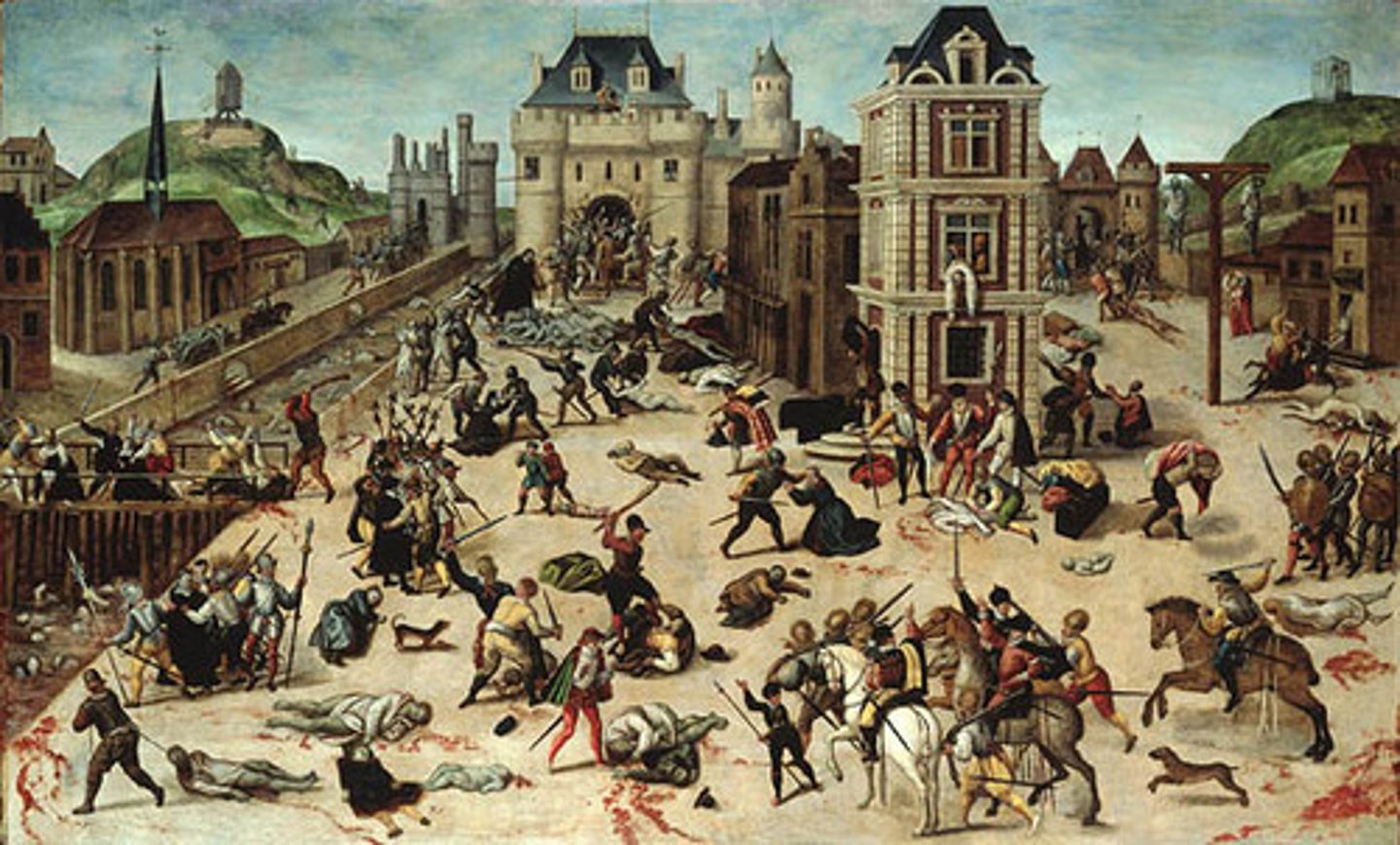
Saint Bartholomew's Day Massacre
The murder of roughly 3000 French Huguenots in Paris in 1572. This was the result of religious intolerance and conflict in France at the time. It's carnage would discredit the Valois dynasty.
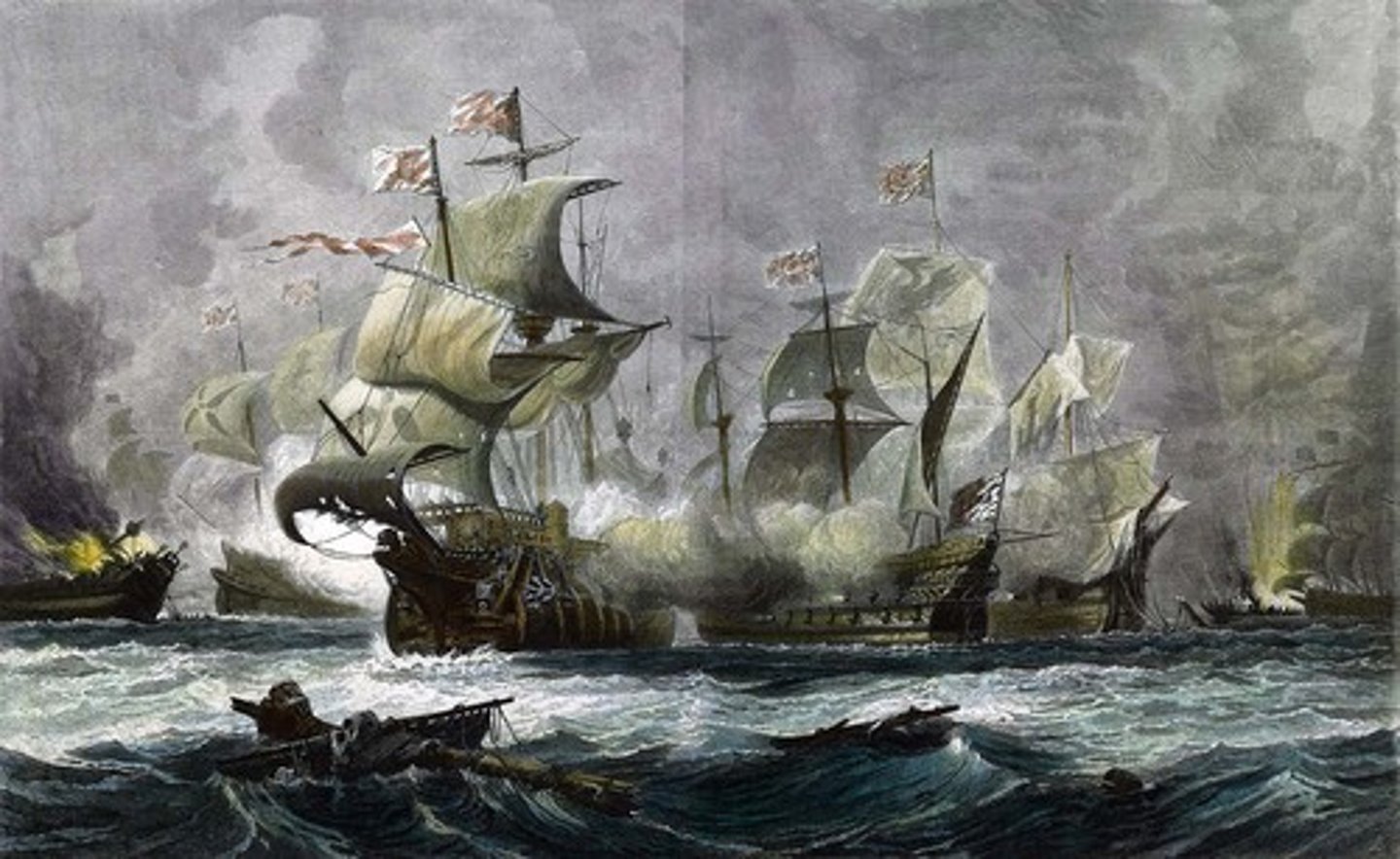
The Spanish Armada
A large Spanish invasion fleet that set sail to invade England in 1588 but was heavily damaged before it reached the island nation. It was defeated and had to return home. Spain's attempt to conquer England and return it to Catholicism failed.
Catholic Reformation (Counter-Reformation)
A term used to describe the actions taken by the Catholic Church to combat the influence and attacks by the Protestant movements. It was designed to bring people back to the Catholic Church.
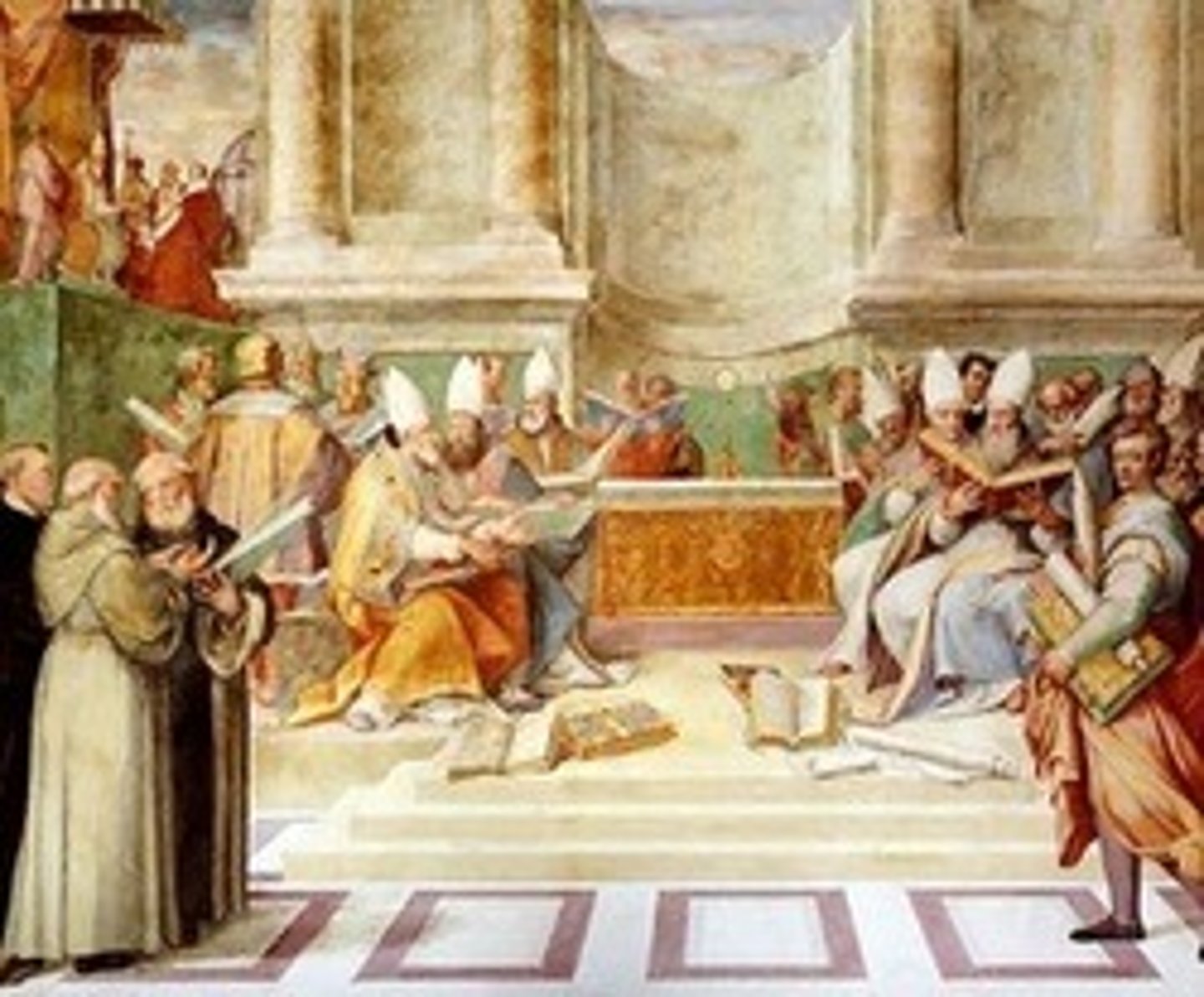
Council of Trent
This was a general assembly called on by Pope Paul III in 1542 to attempt to bring the Catholics and the Protestants back together in a unified church. It failed when hard line Catholic forces made it clear they would not work with Protestants and would not compromise.
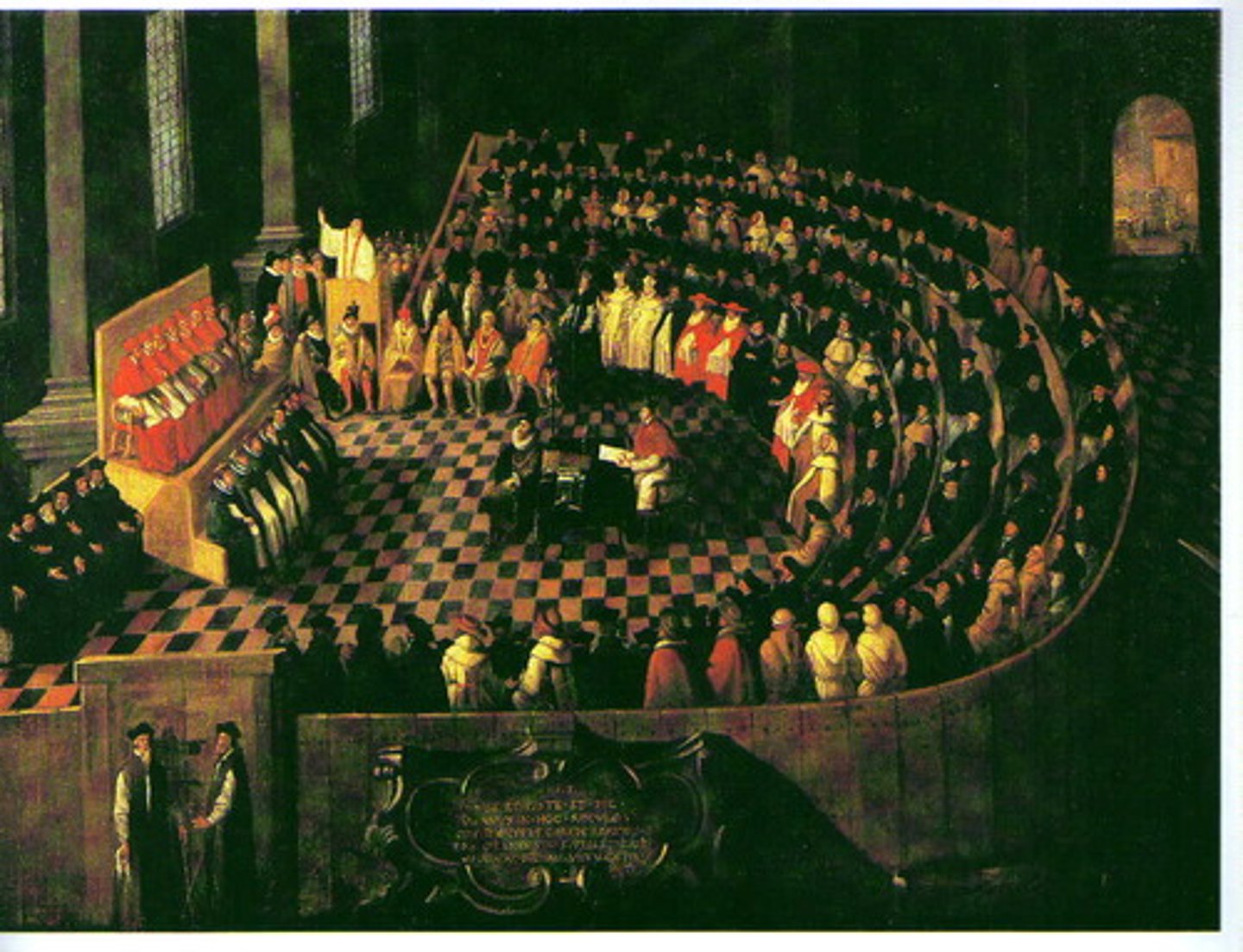
Edict of Nantes
This edict passed in France in 1598 helped end the open slaughter of people in France based on religious conflict that had been raging for years. The edict acknowledged Catholicism as the the official religion of France but guaranteed the Huguenots the right to worship in selected places in every district and let them keep a number of fortified towns for their protection.
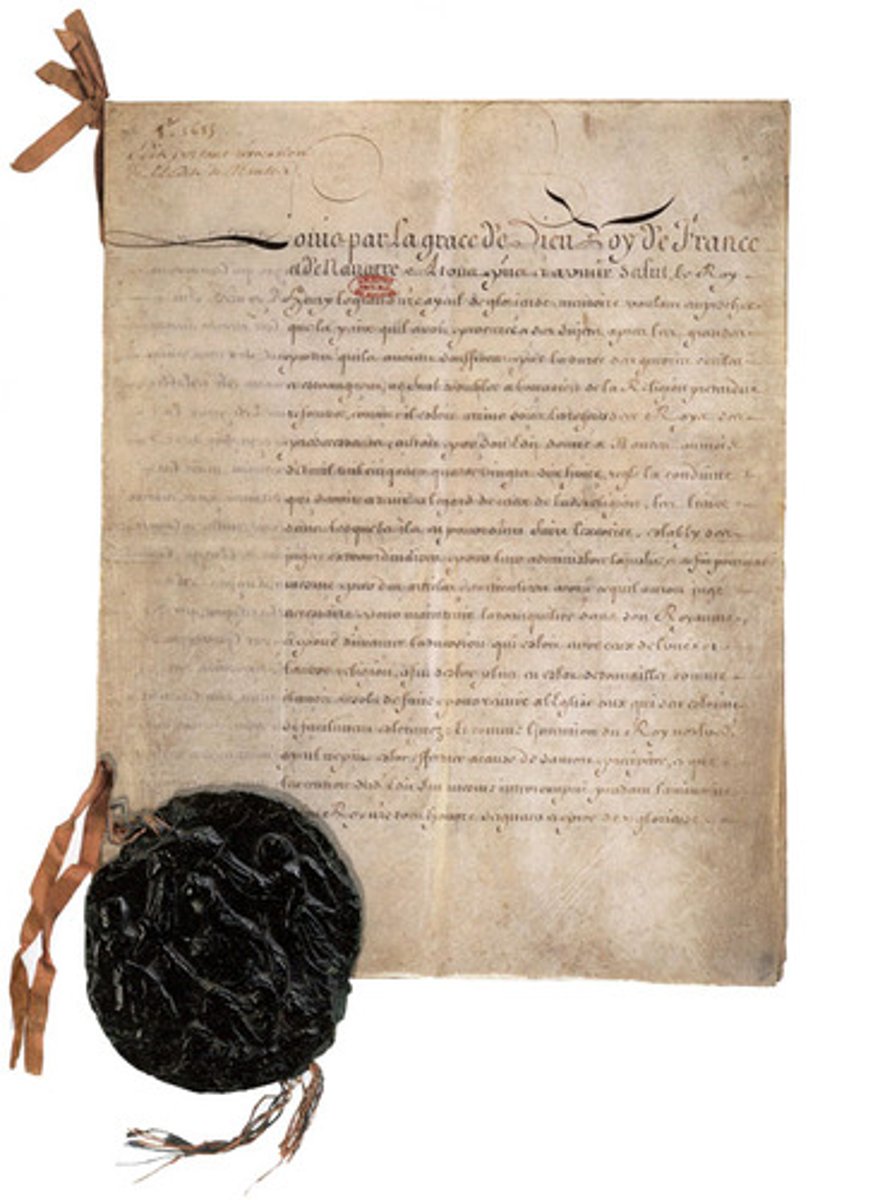
The Travels of John Mandeville
An example of travel literature, most of which was fantasy and inaccurate about 'Fantastic Lands', that inspired many in Europe to explore the world and seek fame and fortune.
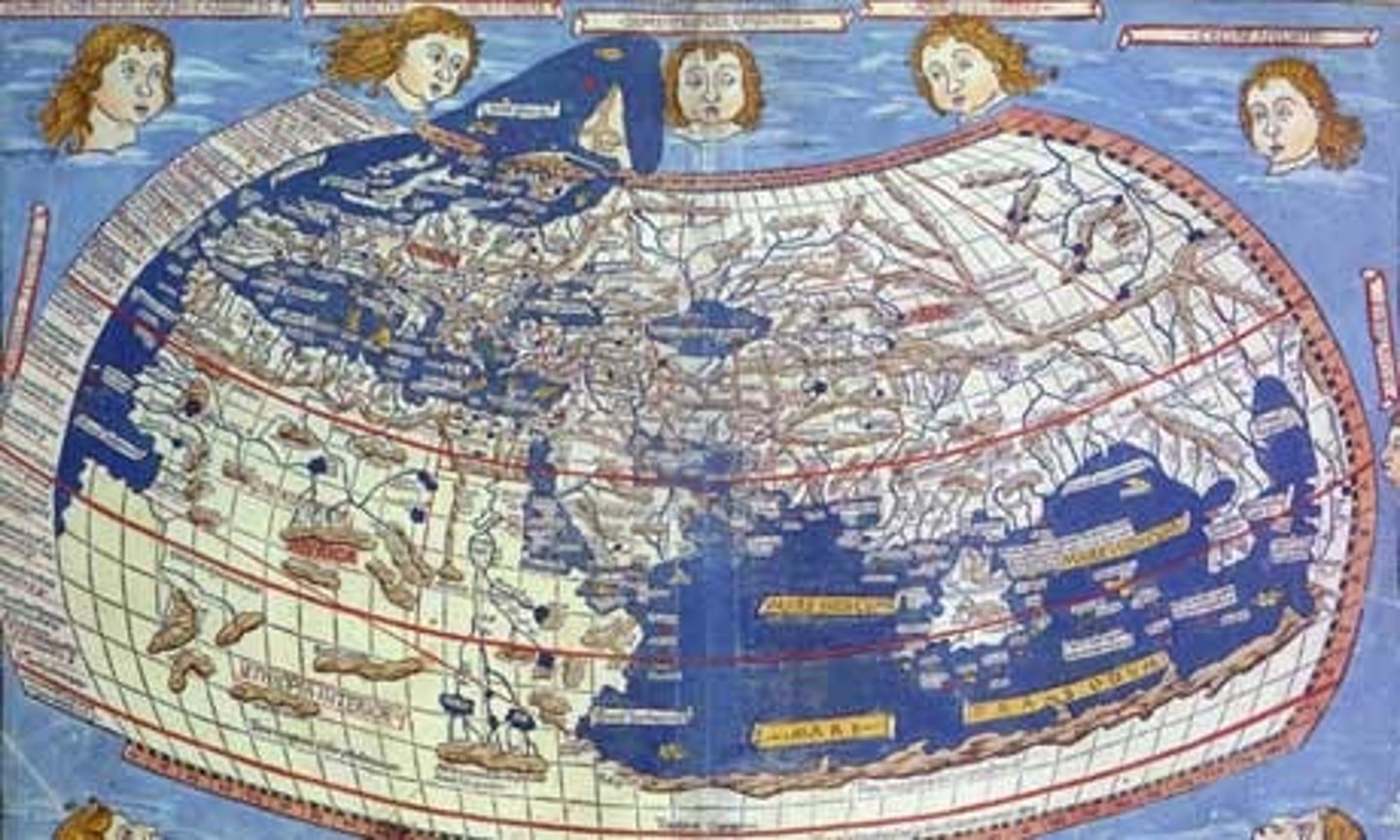
Ptolemy's World Map
A map of the world created by a Greek in the second century A.D., now called C.E. (Common Era) that was rediscovered and used by fifteenth century European explorers. It was very useful because it took into account the curvature of the Earth where other maps were less realistic and based as if the Earth were flat.
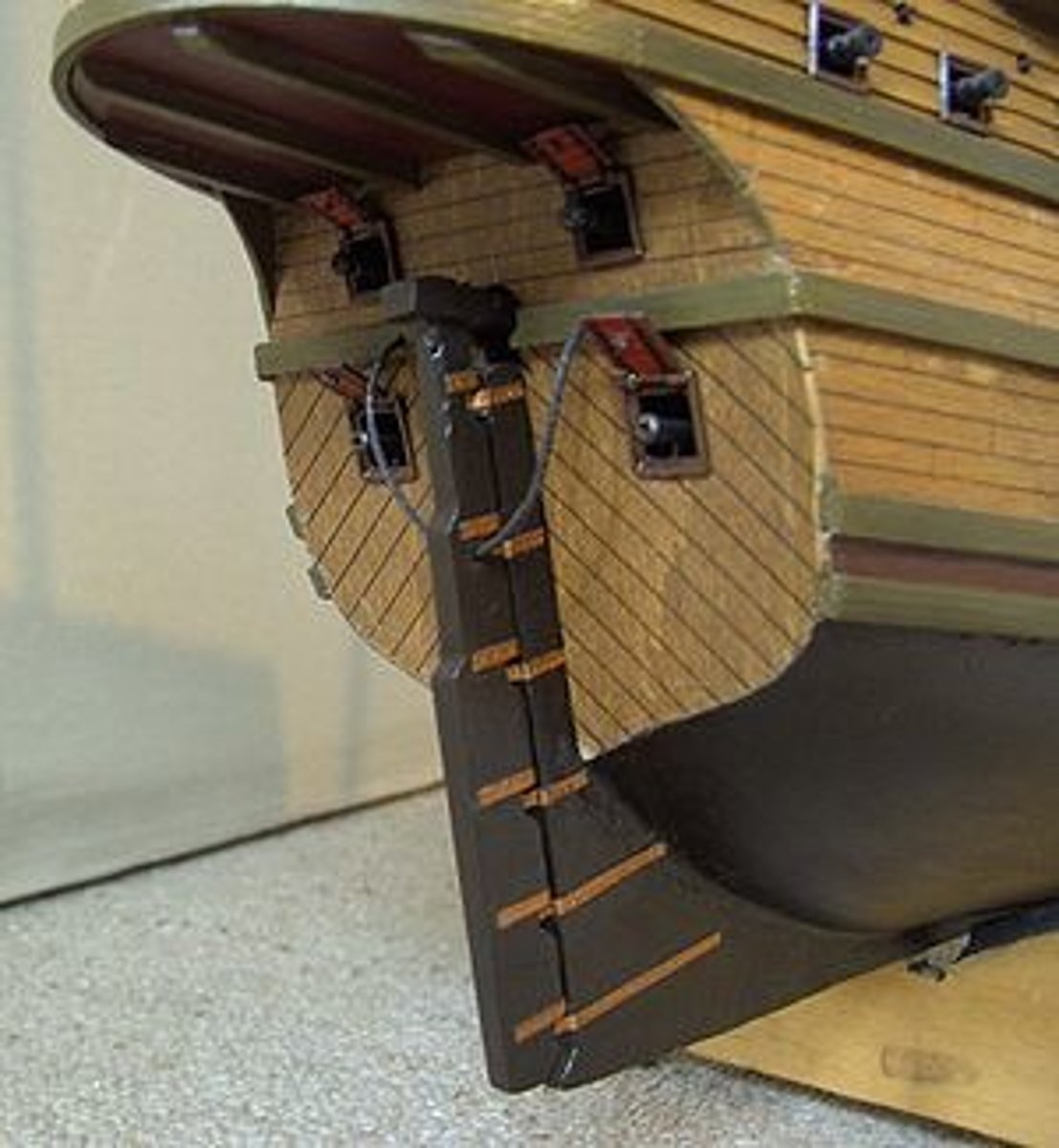
Axial Rudder, Lateen Sails, Compass, Astrolabe
Inventions that greatly improved the sailing ships of the 1400's and later that let Europeans sail greater distances in increased safety away from the direct shoreline they had been forced to follow along in earlier time periods.
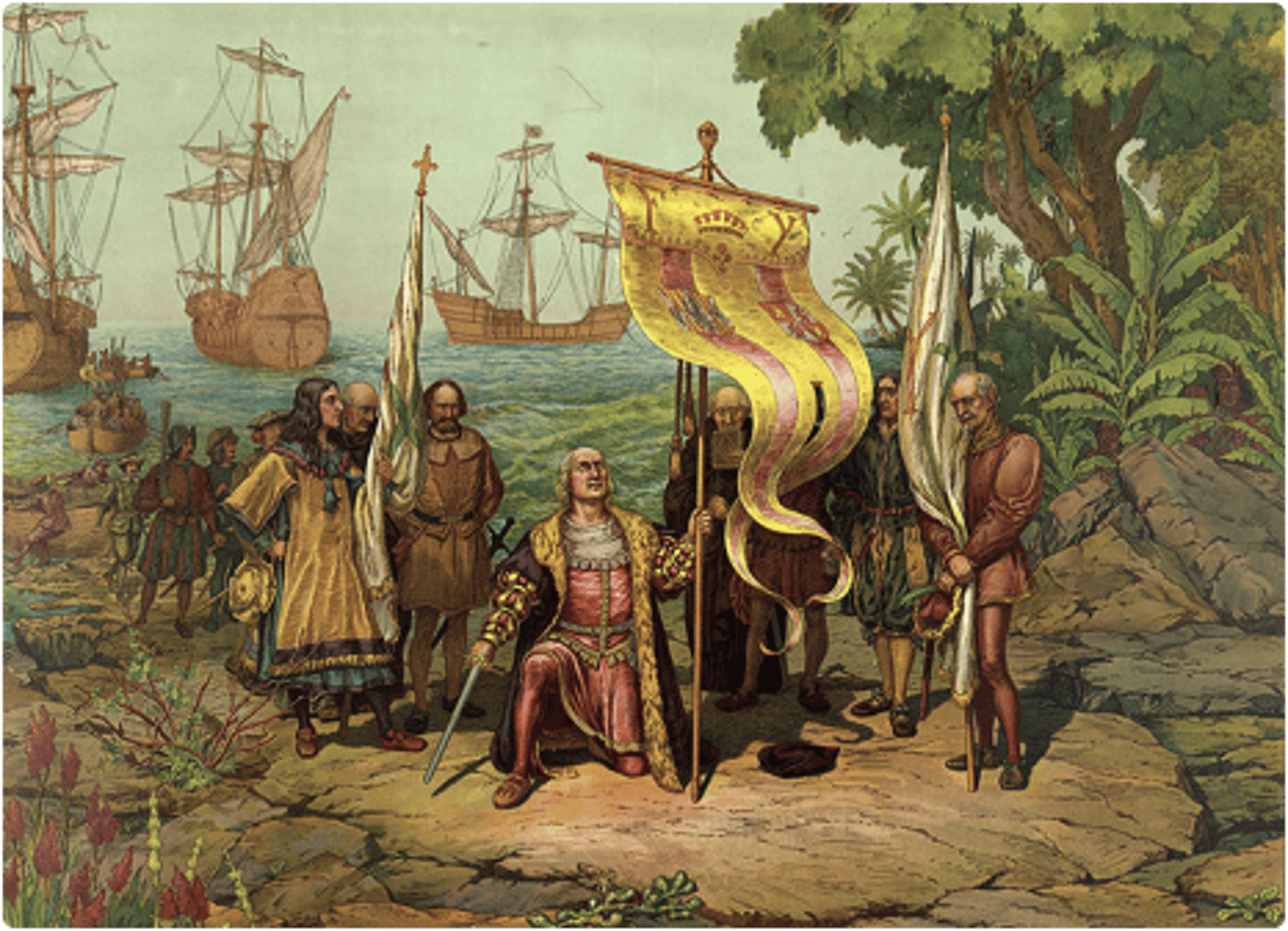
Portuguese Motives for Exploration
To find new Christian kingdoms out in the world to help them combat the Muslim armies they have historically been in conflict with and to increase the nations wealth by finding new trade opportunities, namely gold from Africa and spices from the far east.
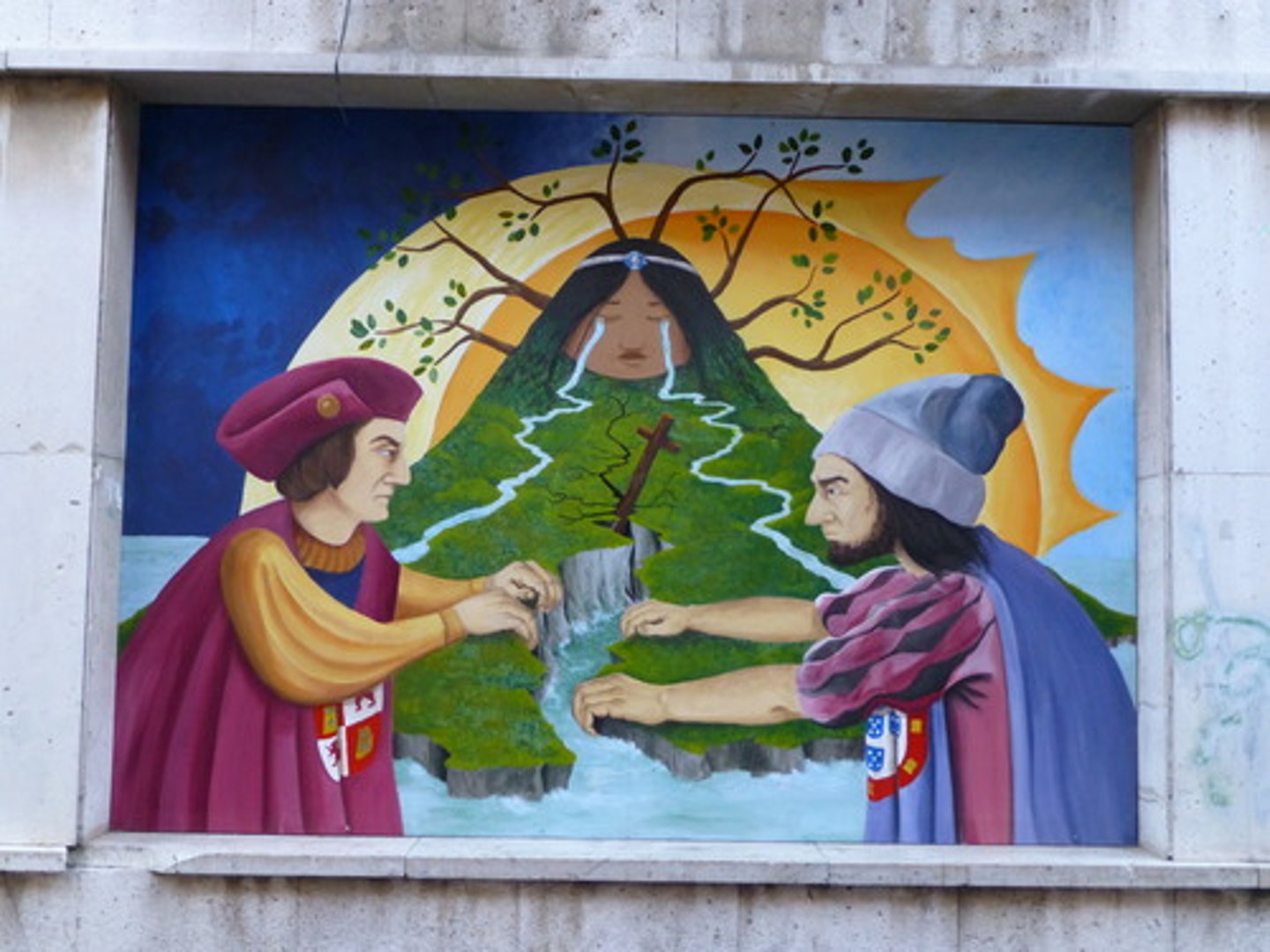
Treaty of Tordesillas
A treaty brokered by the Catholic Church that divided up the discoveries and territories in the New World between Spain and Portugal. Spain would end up getting control over much of South and Central America.
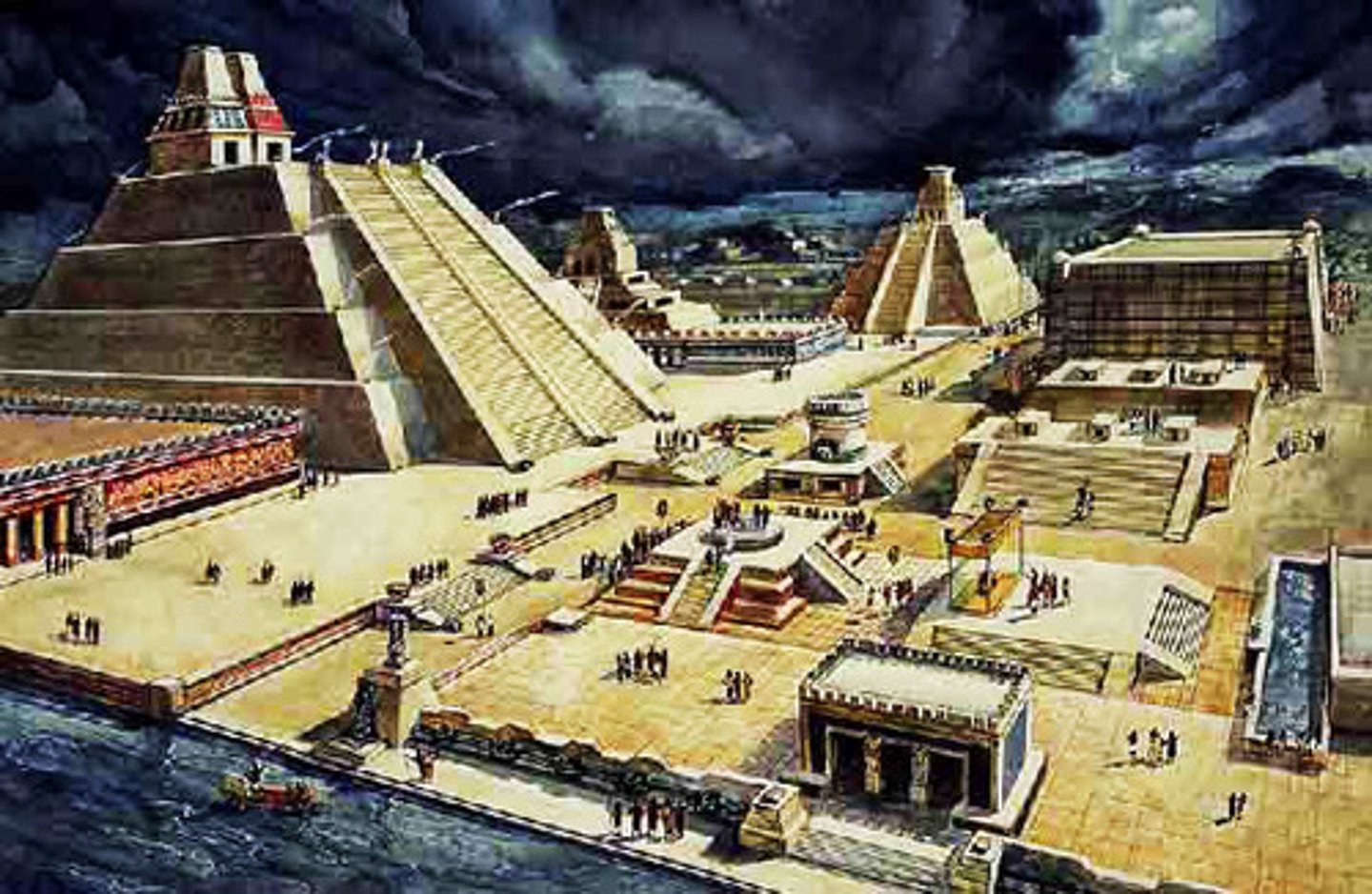
Aztec Empire
Large collections of loosely linked kingdoms in what is now modern day Mexico that came to power in the 1100's. They dominated and controlled smaller native tribes but they themselves were destroyed the the Spanish invaders after 1520. Smallpox and other diseases brought by the Europeans played a large part in bringing them down and making them too weak to drive out the Spanish.
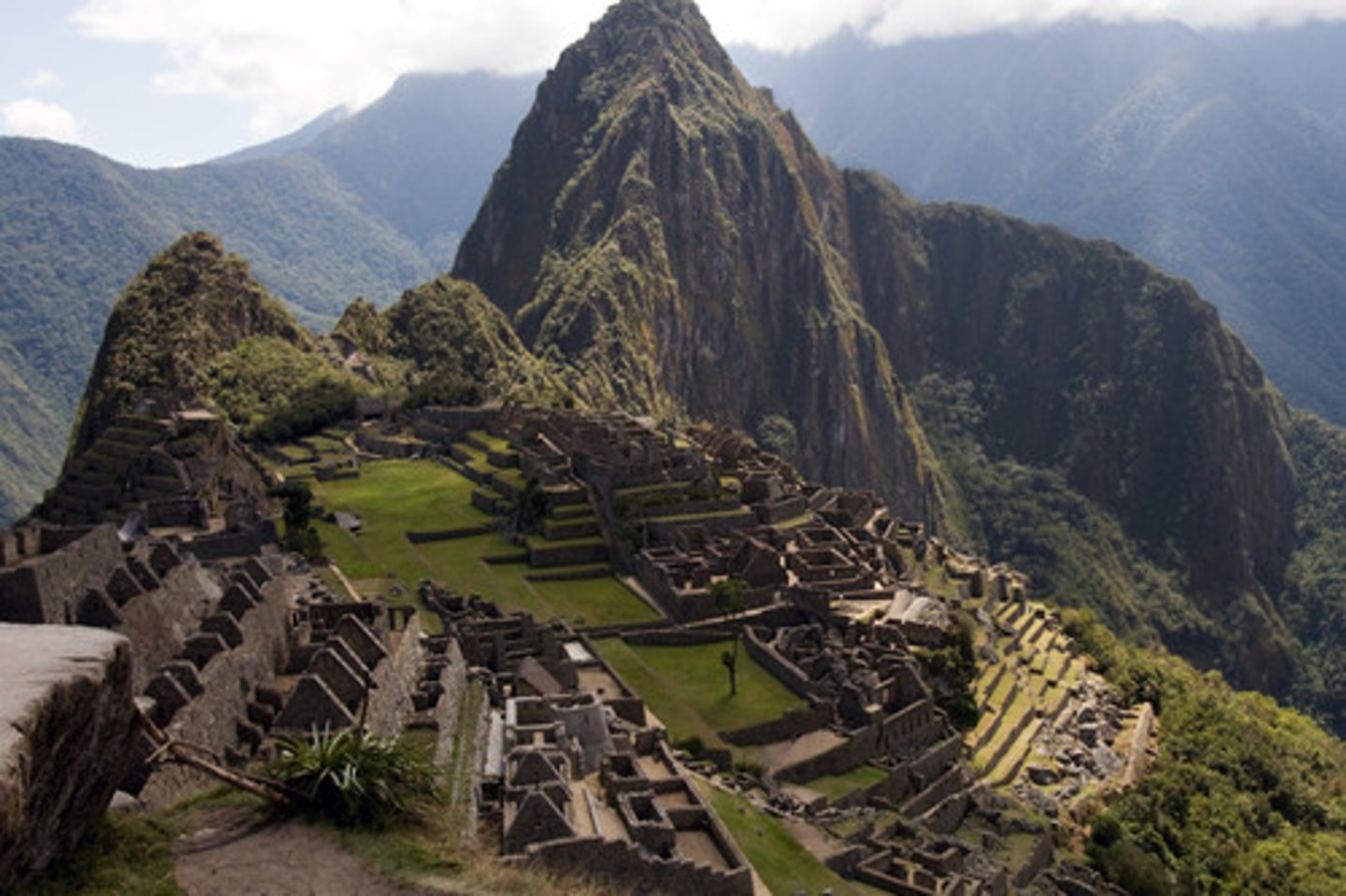
Inca Empire
An empire in what is now modern day Peru. This empire was devastated by smallpox, from Aztecs and others fleeing from the disease and Spanish invaders. They were already weak when the Spanish, led by Francisco Pizarro, showed up and conquered the empire in 1535.
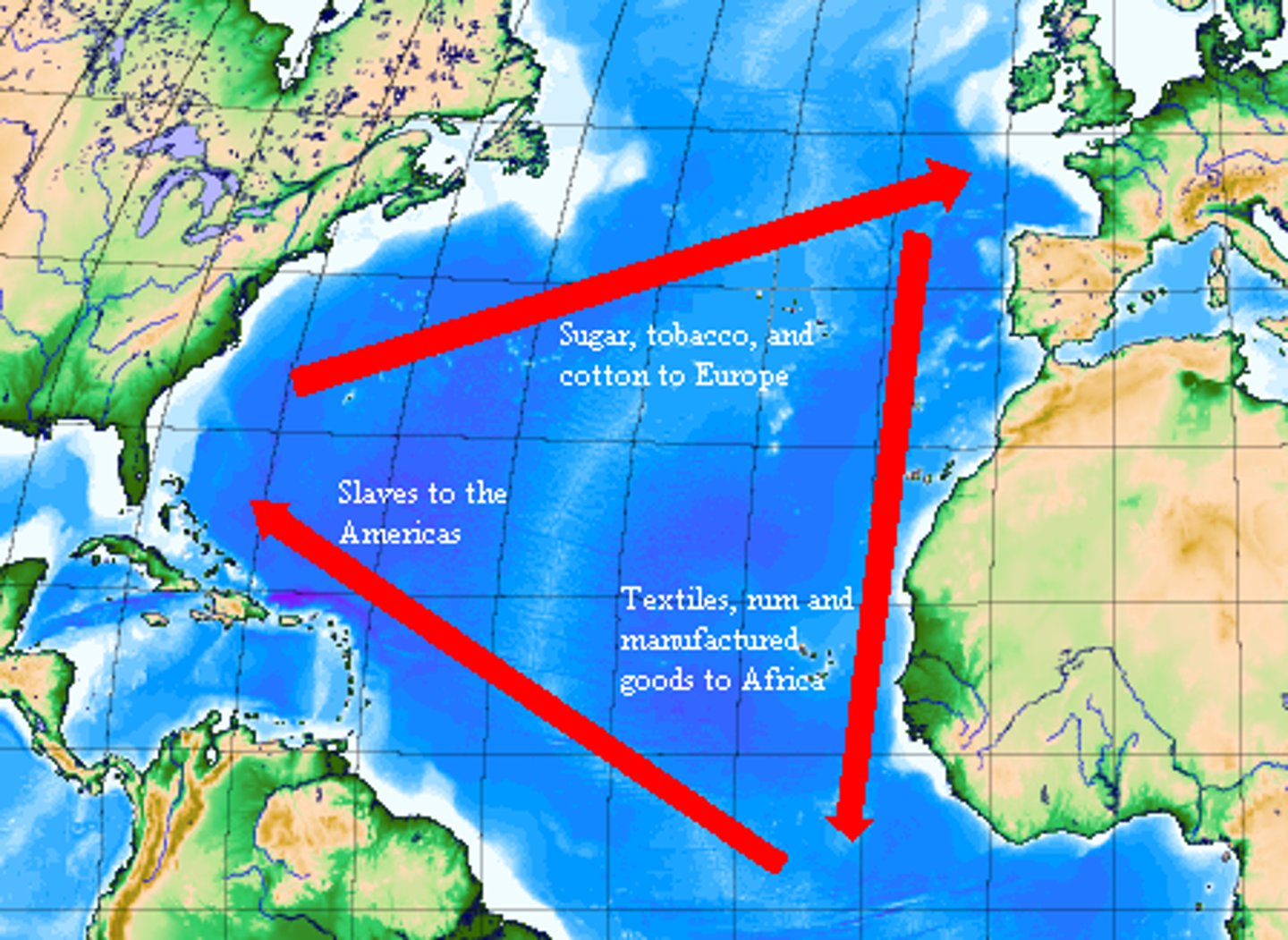
Triangular Trade
The name for the pattern of trade that developed after the discovery of the New World that connected Europe, Africa and the New World. Europe would send finished trade goods to Africa and use them to trade for slaves, the slaves were then shipped to the Americas for sale. The Europeans would then use the money to buy raw materials and goods such as cotton, rum, coffee and tobacco and resell them on European markets.
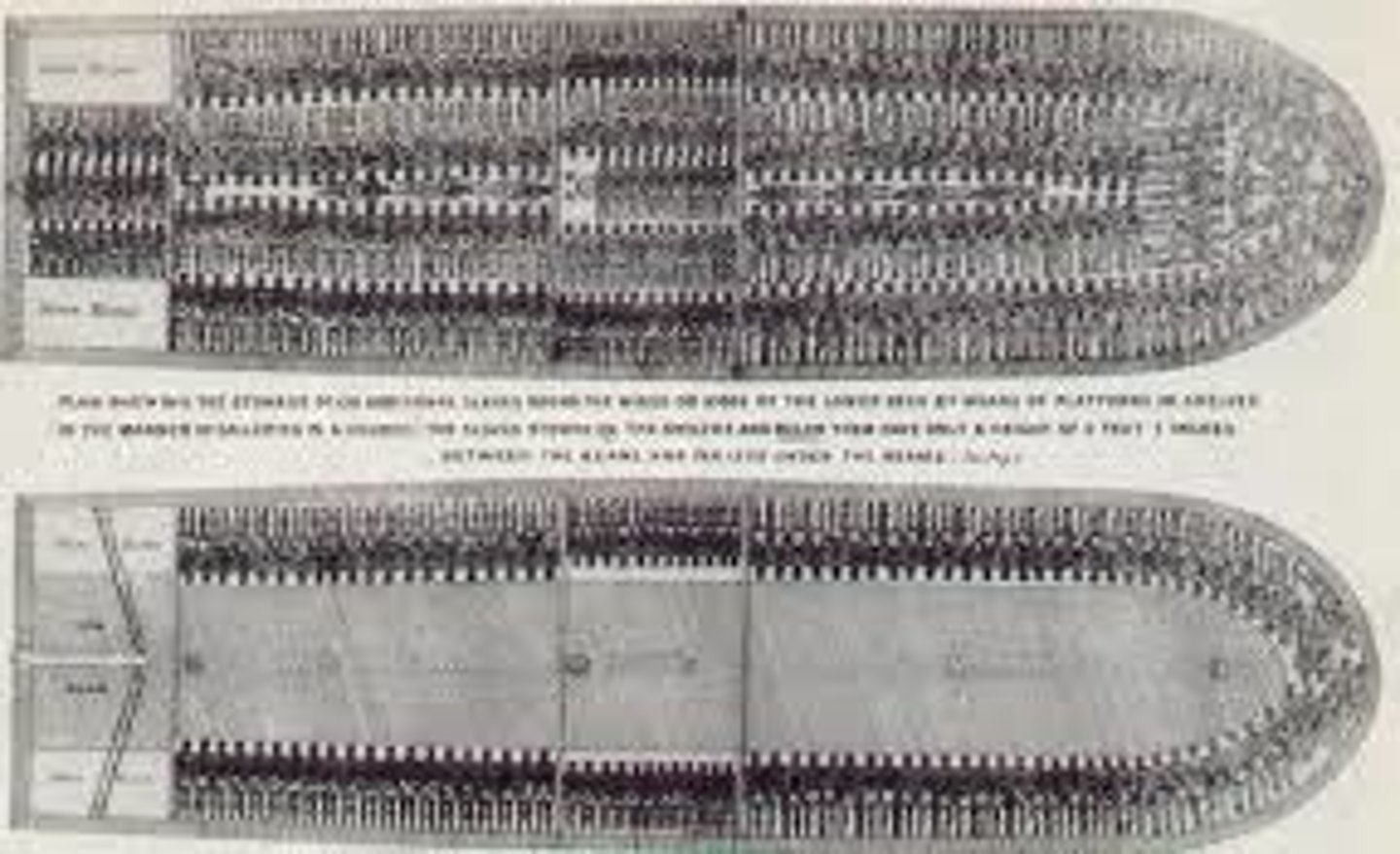
Middle Passage
The name for the route the slave ships would take when hauling ship loads of slaves for sale in the New World. It was known for being very brutal and having a mortality rate of around 10% because of the lack of sanitation and poor conditions on the long sea journey.
Columbian Exchange
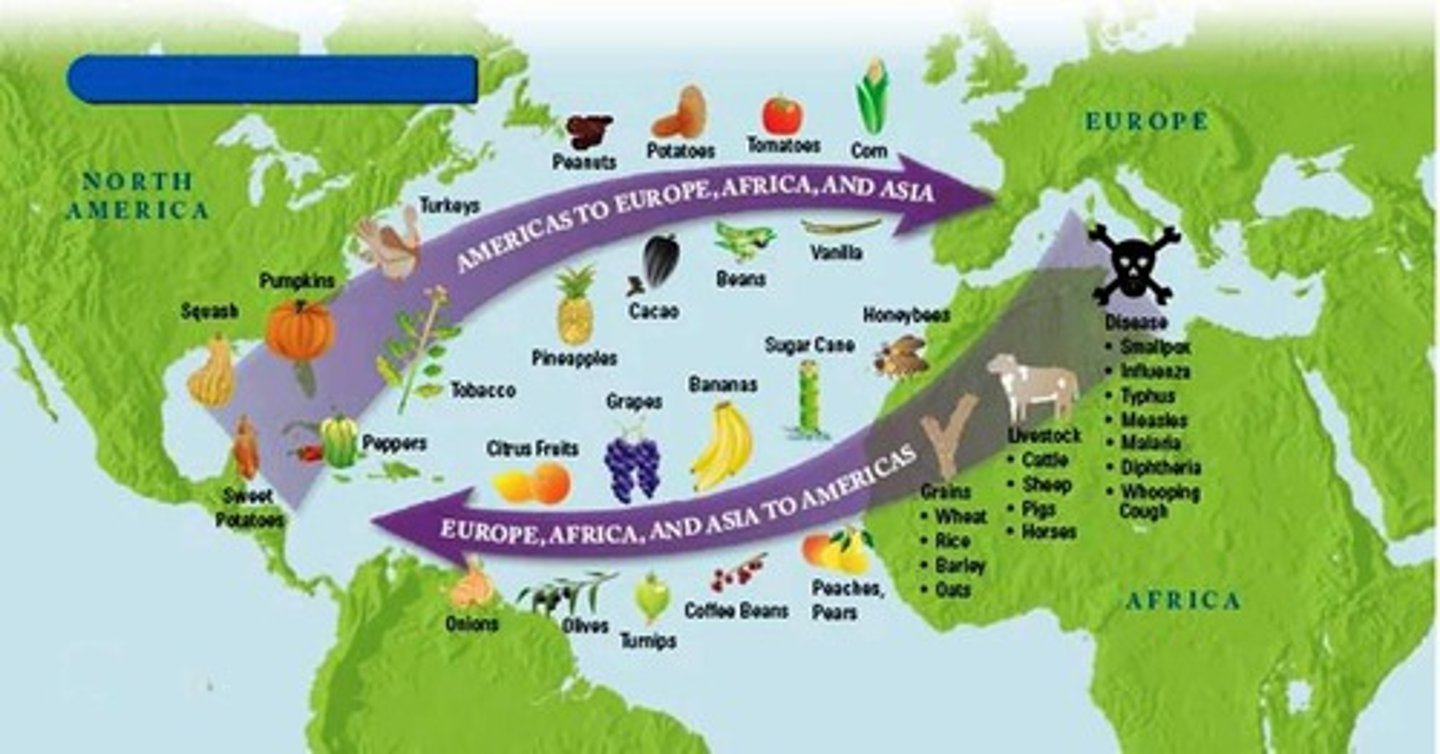
This term describes the reciprocal importation and exportation of plants and animals between Europe and the New World. For example, Europe imported potatoes, chocolate, corn, tomatoes and tobacco from the New World while the New World gained horses, cattle and wheat.
Price Revolution
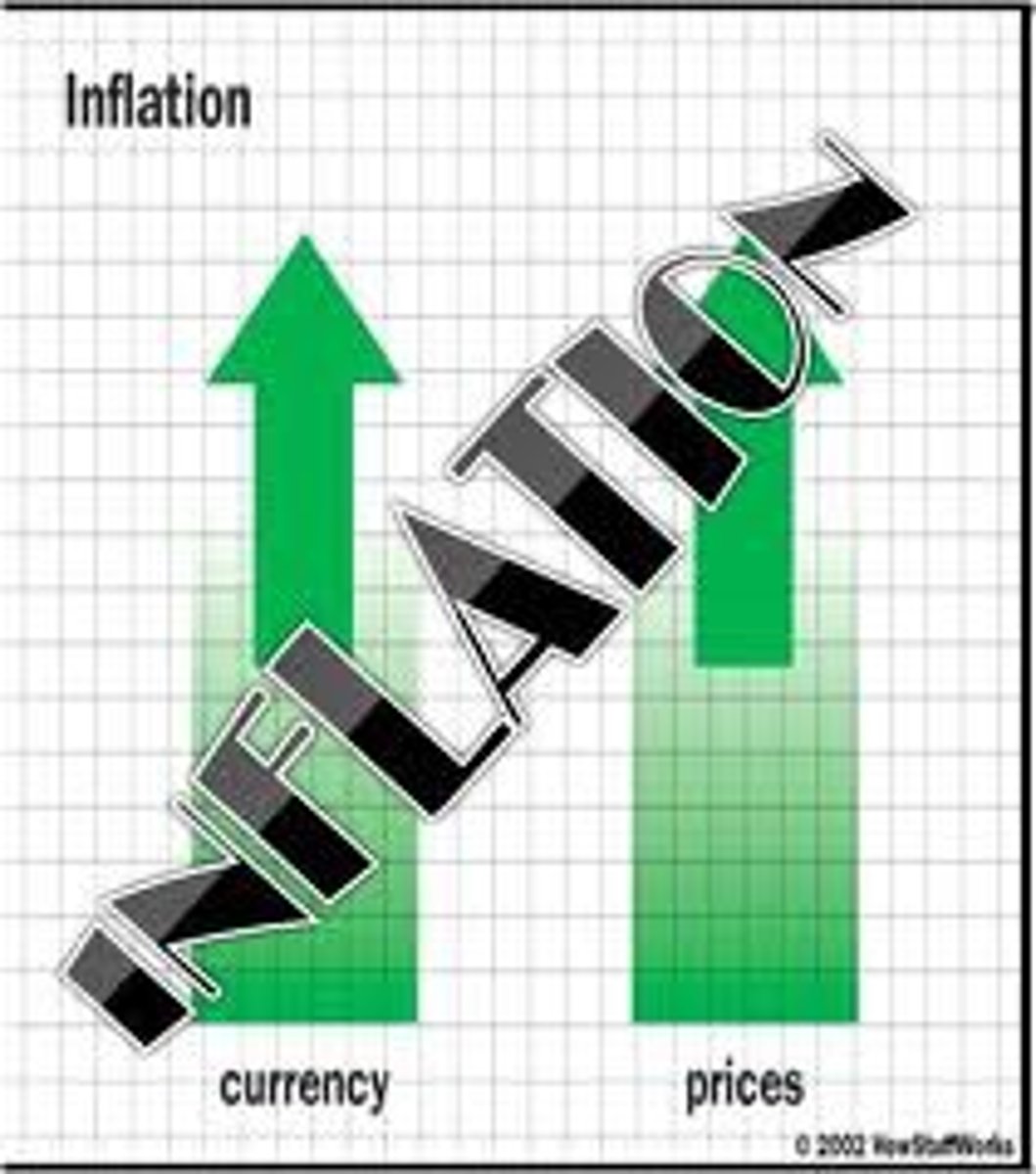
The term used to describe the inflation associated with the cost of goods, particularly food, in Europe. Peoples wages did not go up but their costs were on the rise. This led many in Europe, mostly the lower classes, to have a lower standard of living. The most common reason given for this event is the rise in population and the greater demand placed on available land and food production.
Joint-Stock Company
This new type of business model made it easier to raise the large amounts of money to create large, overseas companies. A group of investors would pool their money, each buying a share of the company and share in it's profits and revenues. A modern version of this you could liken it to would be the Stock Market we know and use in the United States today.
Mercantilism
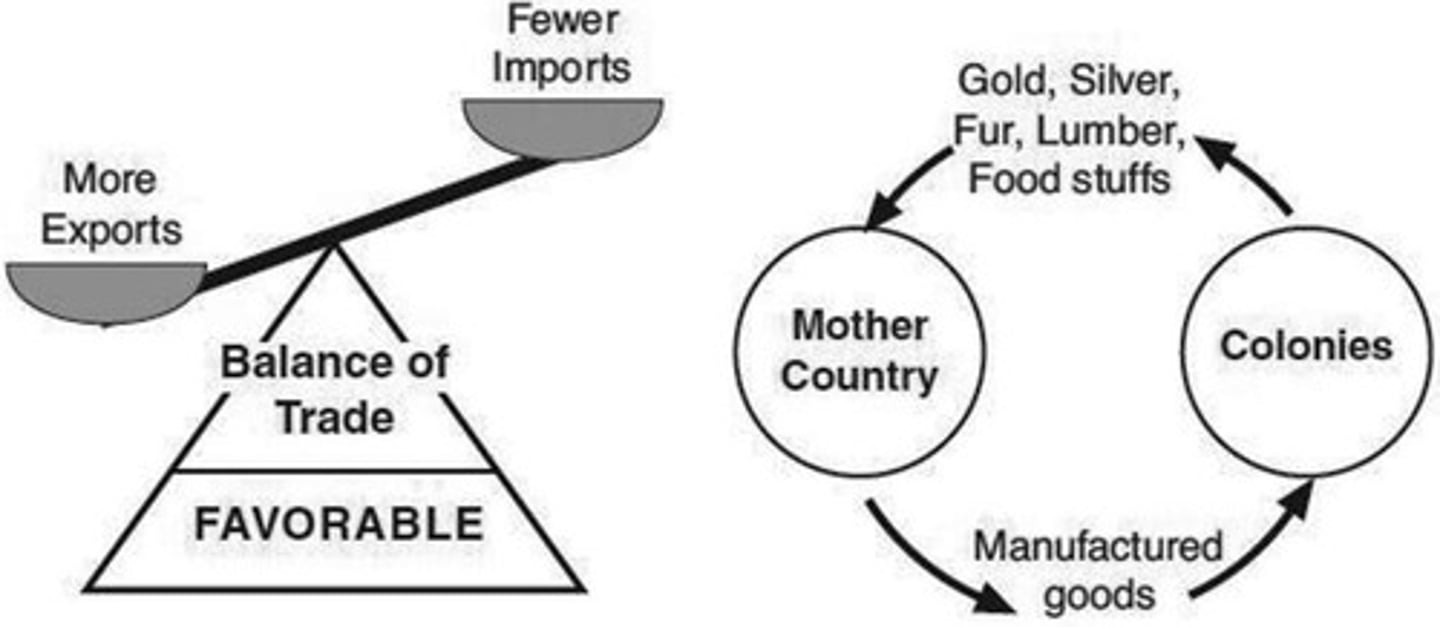
This was the business model used by several of the European nations during the 1500's to the 1700's. In this model governments tried to hoard their precious metals, implemented protectionist trade policies, promoted colonial development, increased ship building, supported trading companies and encourage manufacturing of products to be used in trade. The overall goal was to sell more than you had to purchase keeping your nation profitable.
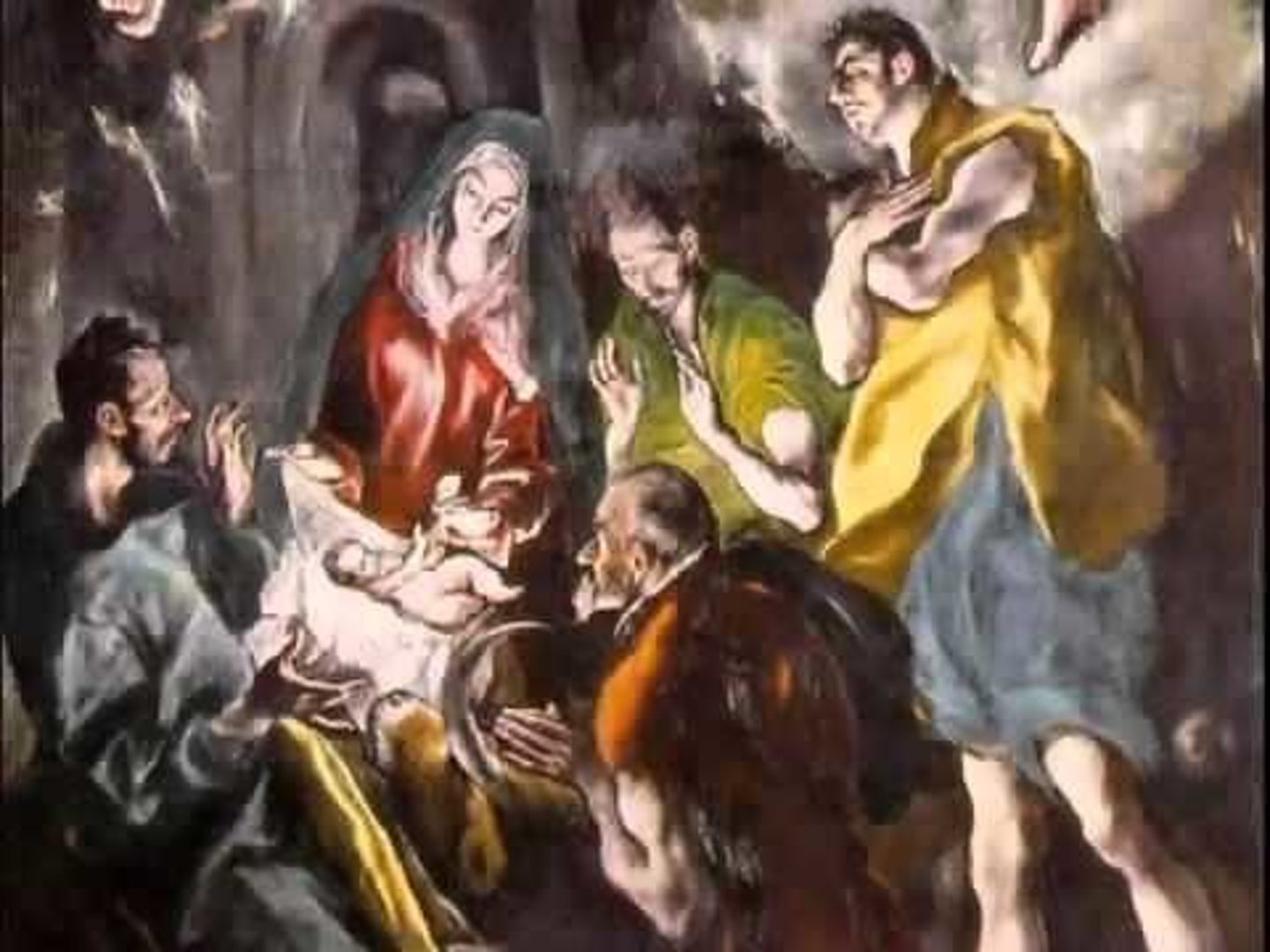
Mannerism
This was an art form that sought to break down the High Renaissance principles of balance, harmony and moderation. It came into its own in a time of great suffering and uncertainty. It is known for showing many of its subjects as elongated and out of proportion with themes of anxiety and confusion. It was in the 'manner' of the prior greats, such as Michelangelo, but warped to reflect the troubles of the times.
Absolutism
A type of monarchy where the king or queen has total, unchecked control over the nation they rule over using the argument of Divine Right. A prime example of this type of leadership can be seen in France during the 1600 and 1700's.
The Bohemian Phase (1618-1625)
This is the first phase of The Thirty Years' War. It began in a part of what is now present day Germany when a group of Protestant nobles rebelled against a Catholic king that was trying to make Catholicism the official religion in the region. Catholic officials were thrown out of a 70 foot tall window and survived!... but into a pile of poo... This sparked a rebellion that started the war.
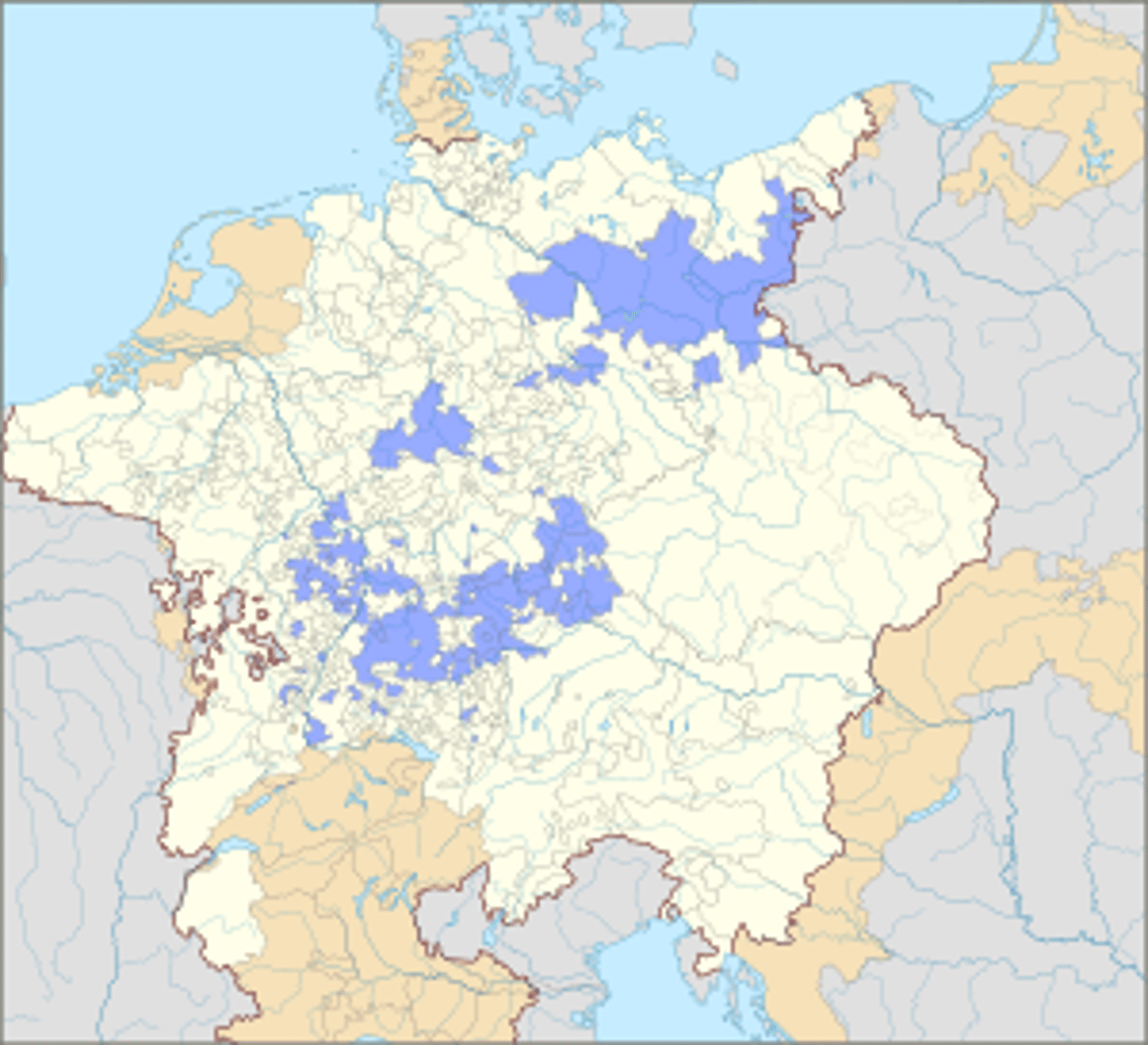
The Protestant Union
An alliance formed in 1608 by a group of Northern German princes for what they believed was for common defense against German Catholic states to the south. Much of the region believed a religious war was only a matter of time.
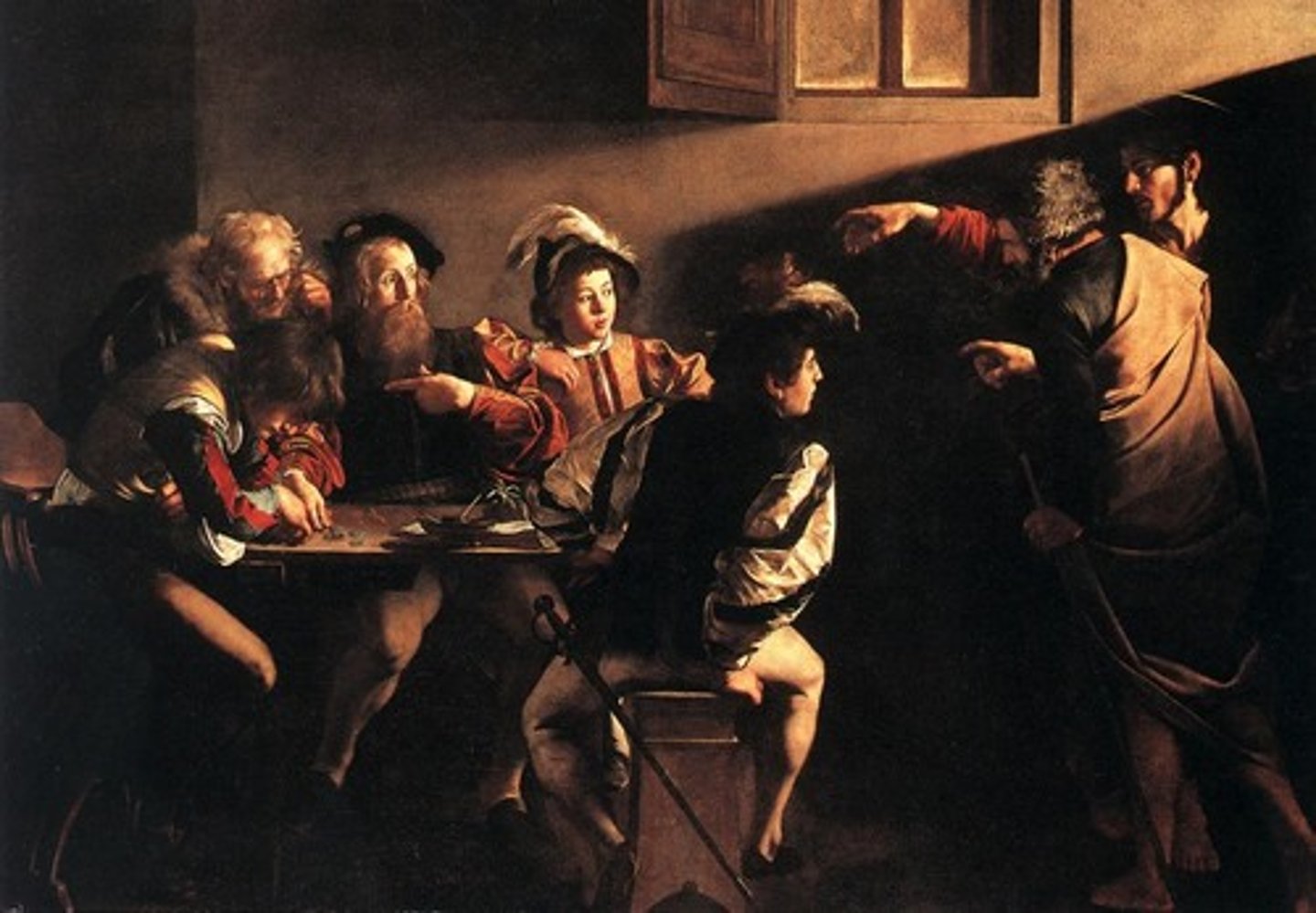
Baroque
This style of art sought to bring together the classical ideals of Renaissance art with the spiritual feelings of the sixteenth century religious revival. The paintings from this period were known for their use of dramatic effects to arouse emotions. A famous painter and example of this movement would be the Flemish artist Peter Paul Rubens.
Divine Right
This was the way to legitimize why the king had total control over the nation and everyone who lived in it. God selected them to rule over the nation so naturally they were the best and most capable for the job... or so the argument went. A poster board example of this would have to be Louis XIV.
The Danish Phase (1625-1629)
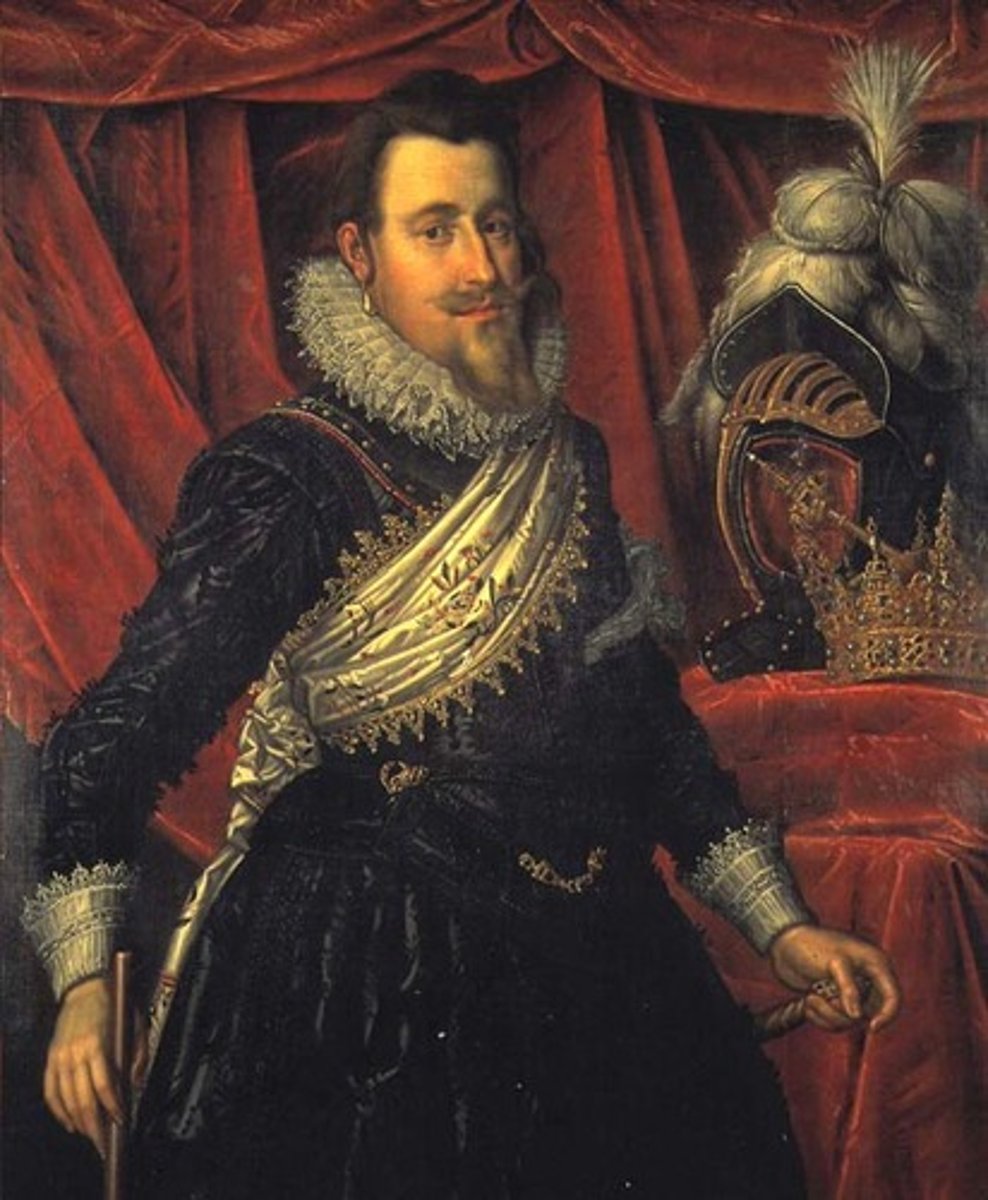
This is the second phase of the Thirty Years War. The king of Denmark, Christian IV, invaded Germany in an attempt to help his fellow Protestants against the Catholics, but also to try and get control over more territory and gain more power. It would see Denmark lose and no longer be a major power in the Baltic region.
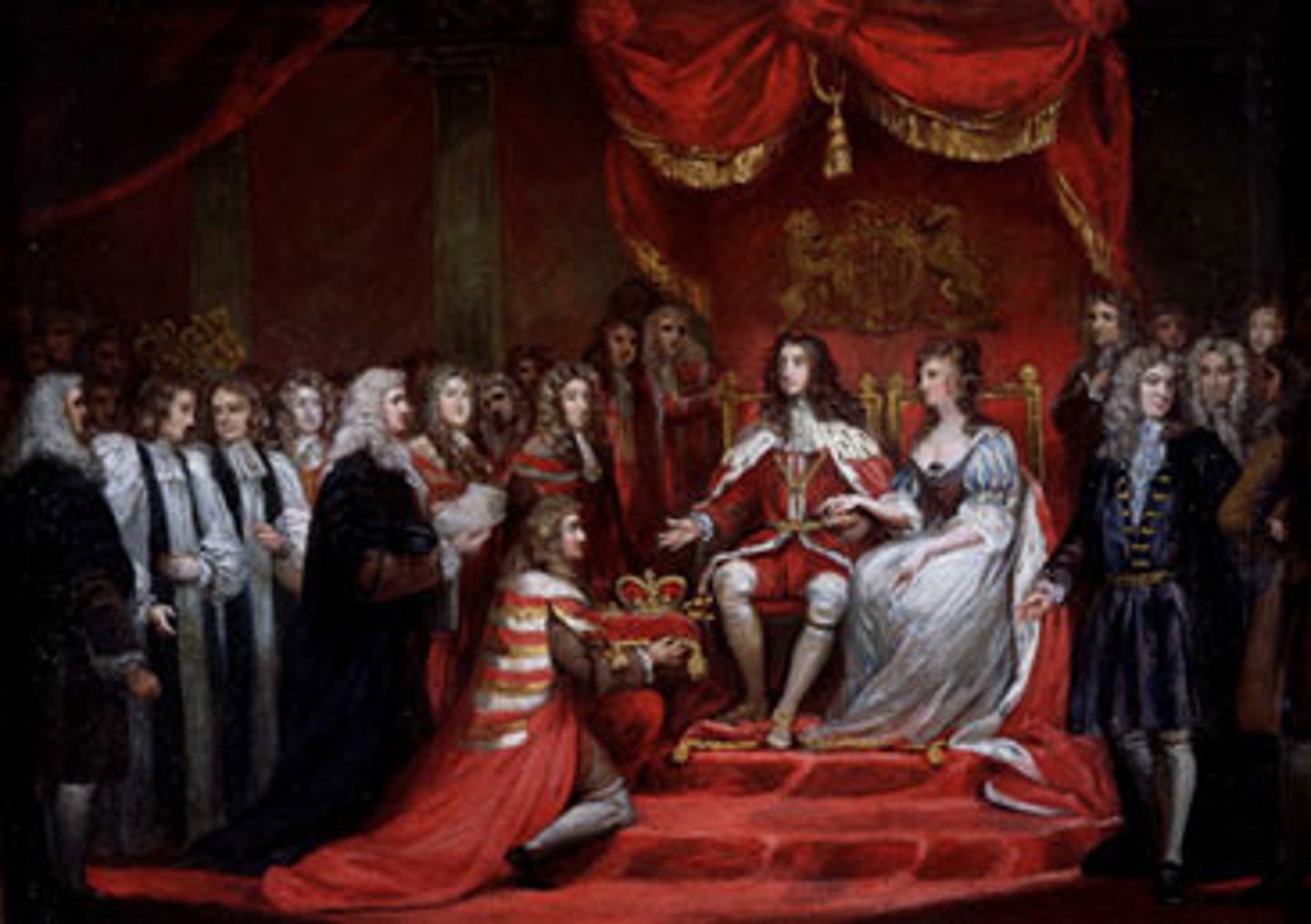
The Glorious Revolution
A nearly bloodless conflict in late 1688 where England forced out their Catholic monarch, James II and his wife and replaced them with Protestant ones, William of Orange and his wife Mary. It would destroy the idea of Divine Right of kings in England because Parliament chose the new king, not God, giving Parliament more and more power in the country as time went on.
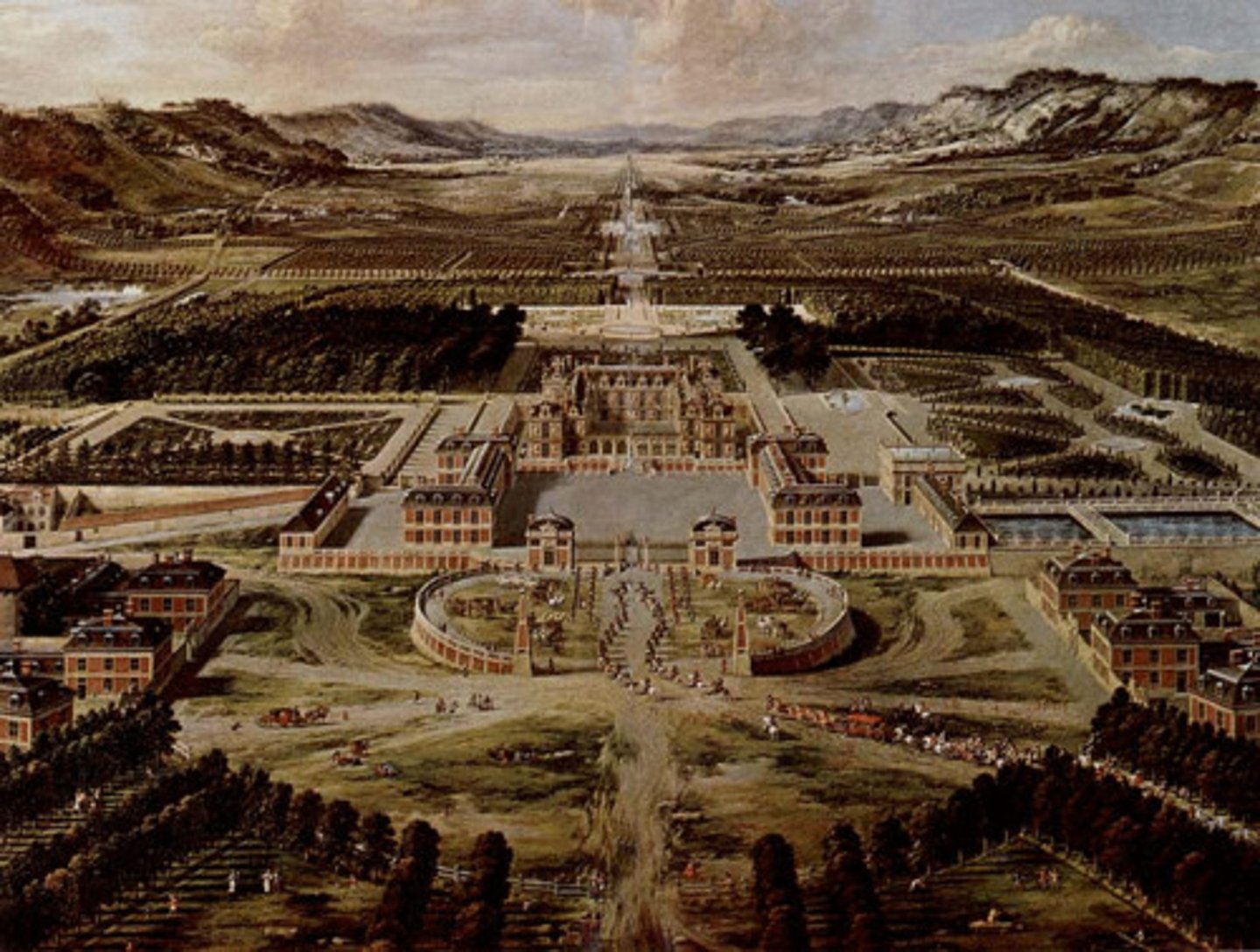
Palace of Versailles
An elaborate palace and living space for the Louis XIV and his family and servants. He also made sure many influential French nobles also lived there as a way to keep them entertained and out of the affairs of the state. It was an effective way to keep an eye on them as well. The palace also served as a way to impress and intimidate other rulers across Europe with the awesome riches and power of France.
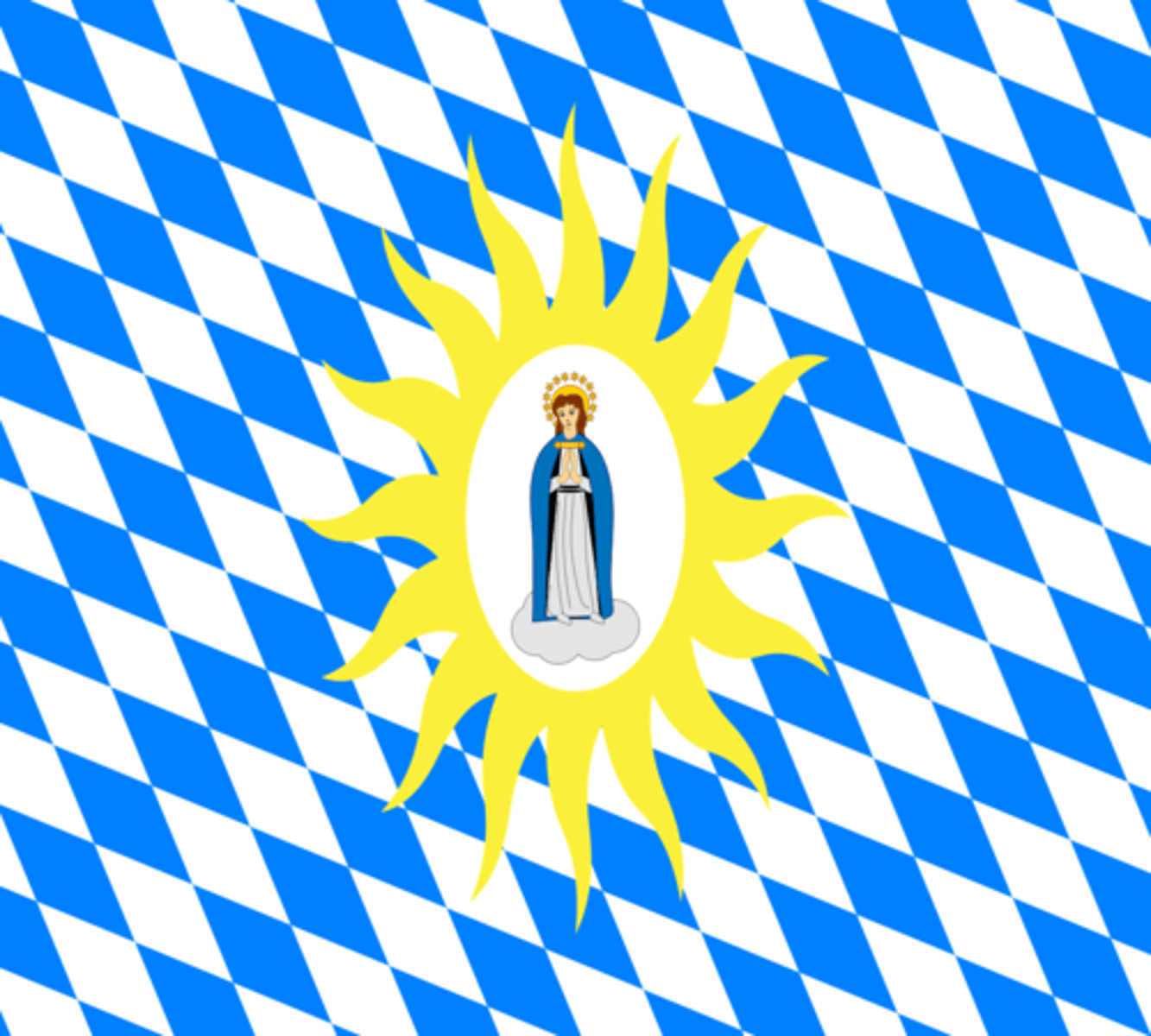
The Catholic League
An alliance formed in 1609 by a group of Southern German Catholic Princes in reaction to the Protestants forming their own group the year earlier.
The Swedish Phase (1630-1635)
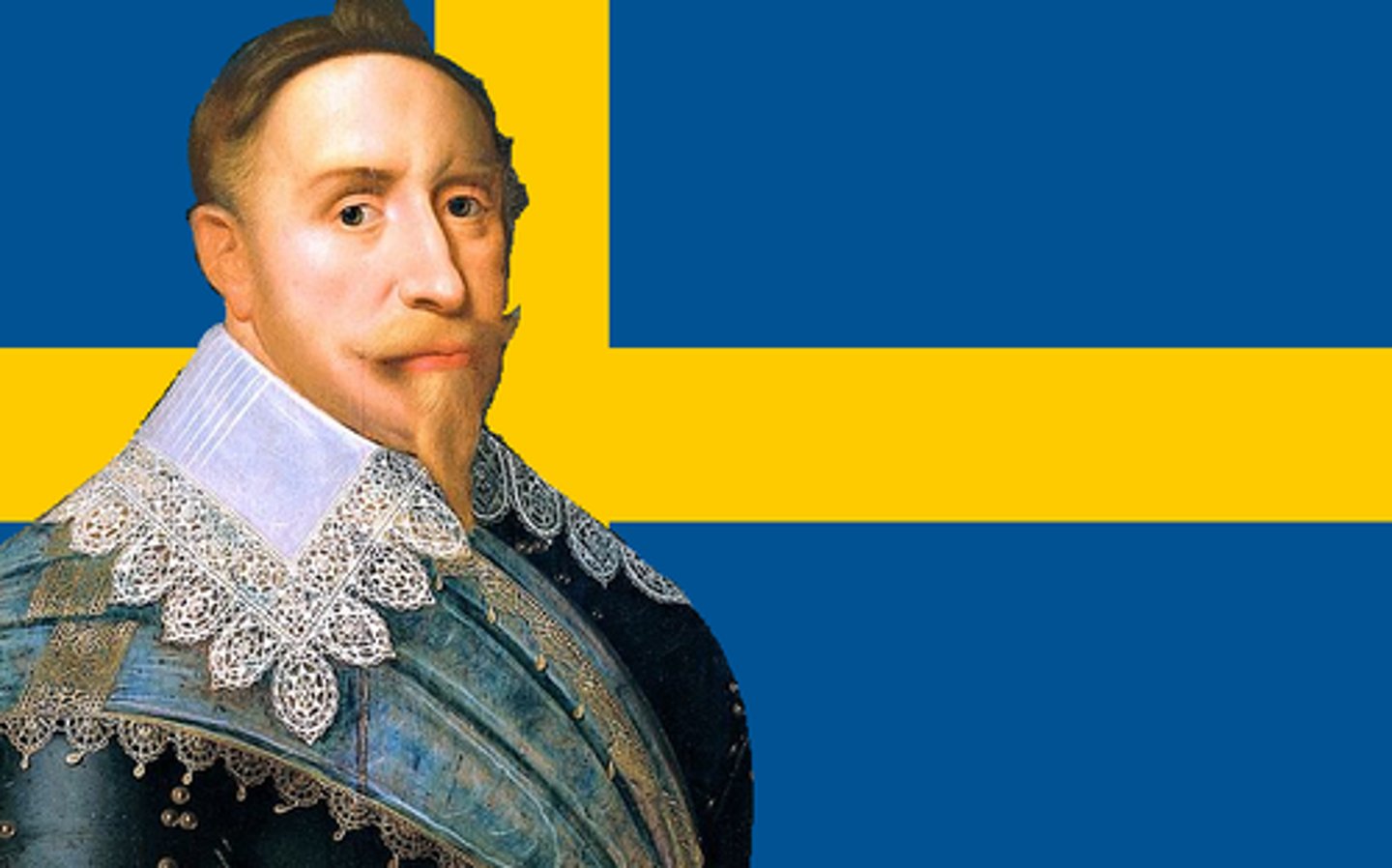
The third phase in the Thirty Years War. This would see Sweden join the war under the famous and very powerful King Gustavus Adolphus. Under his leadership Sweden had many victories and many military equipment and strategic improvements until his death in combat. By the end of this phase, Sweden would be driven out of Southern German territory.
War of Spanish Succession (1702-1713)
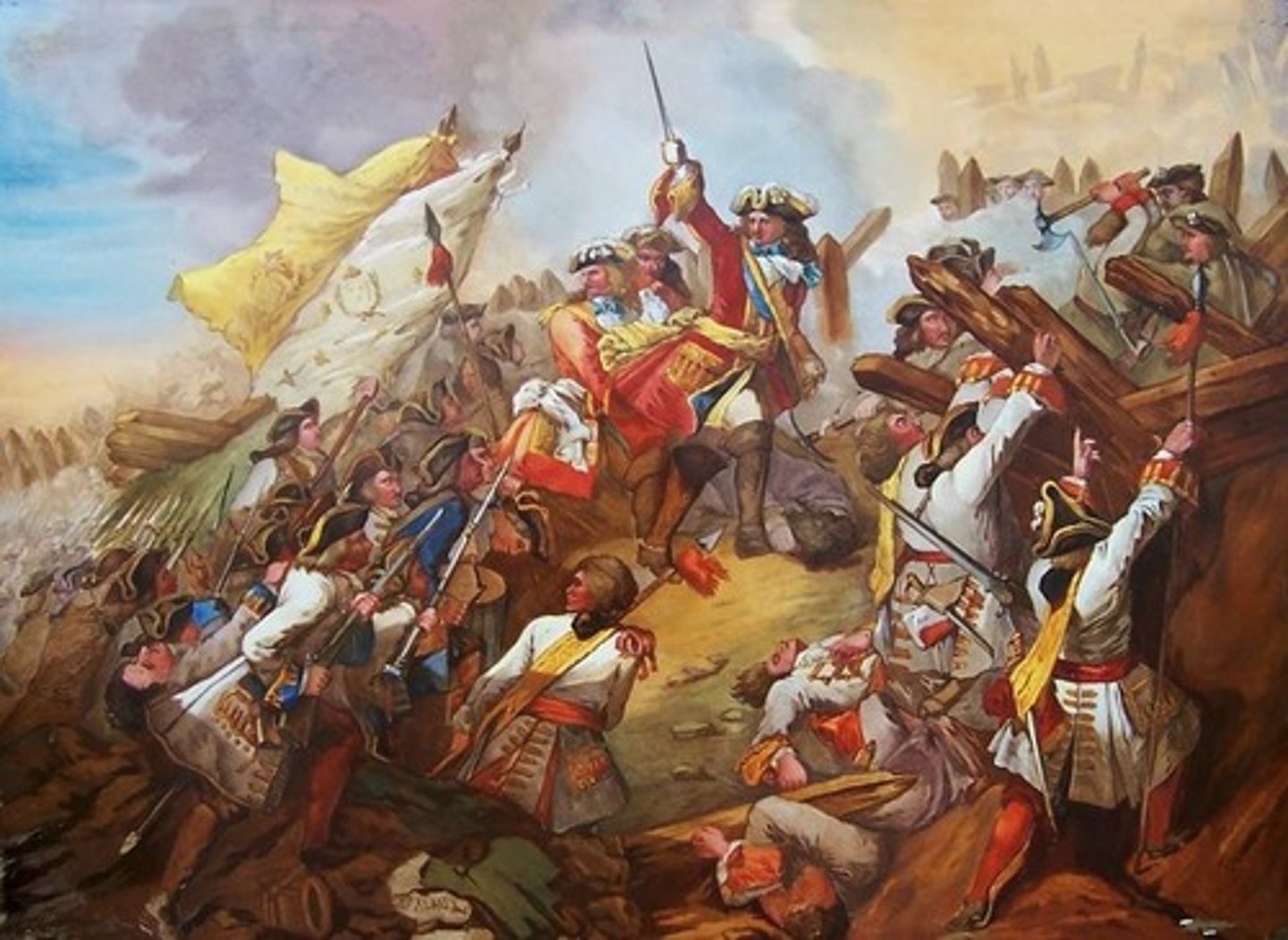
This was the fourth and final war of Louis XIV. It was caused by the death of the Habsburg ruler in Spain and the end of his family line. The throne was left to Louis XIV's grandson. Much of Europe went to war to stop this. They feared it would make France way too powerful combining forces with Spain. It left France with few victories and in major debt.
Witchcraft Craze
A movement that took place in much of Europe and North America in the European colonies where those accused of witchcraft were blamed and prosecuted for disease, crop failures and deaths. Social upheaval and religious conflict are often cited as major causes. It is estimated that as many as 100,000 people were prosecuted for being witches.
The Franco-Swedish Phase (1635-1648)
This was the fourth and final phase of the Thirty Years War. The war might have started out about religion, however this phase it evolved into a war about power and wealth when two major powers teamed up with opposing religions to fight against the Holy Roman Empire. The war would end with the Peace of Westphalia in 1648 with very little changed considering the carnage Europe endured.
Military Revolution
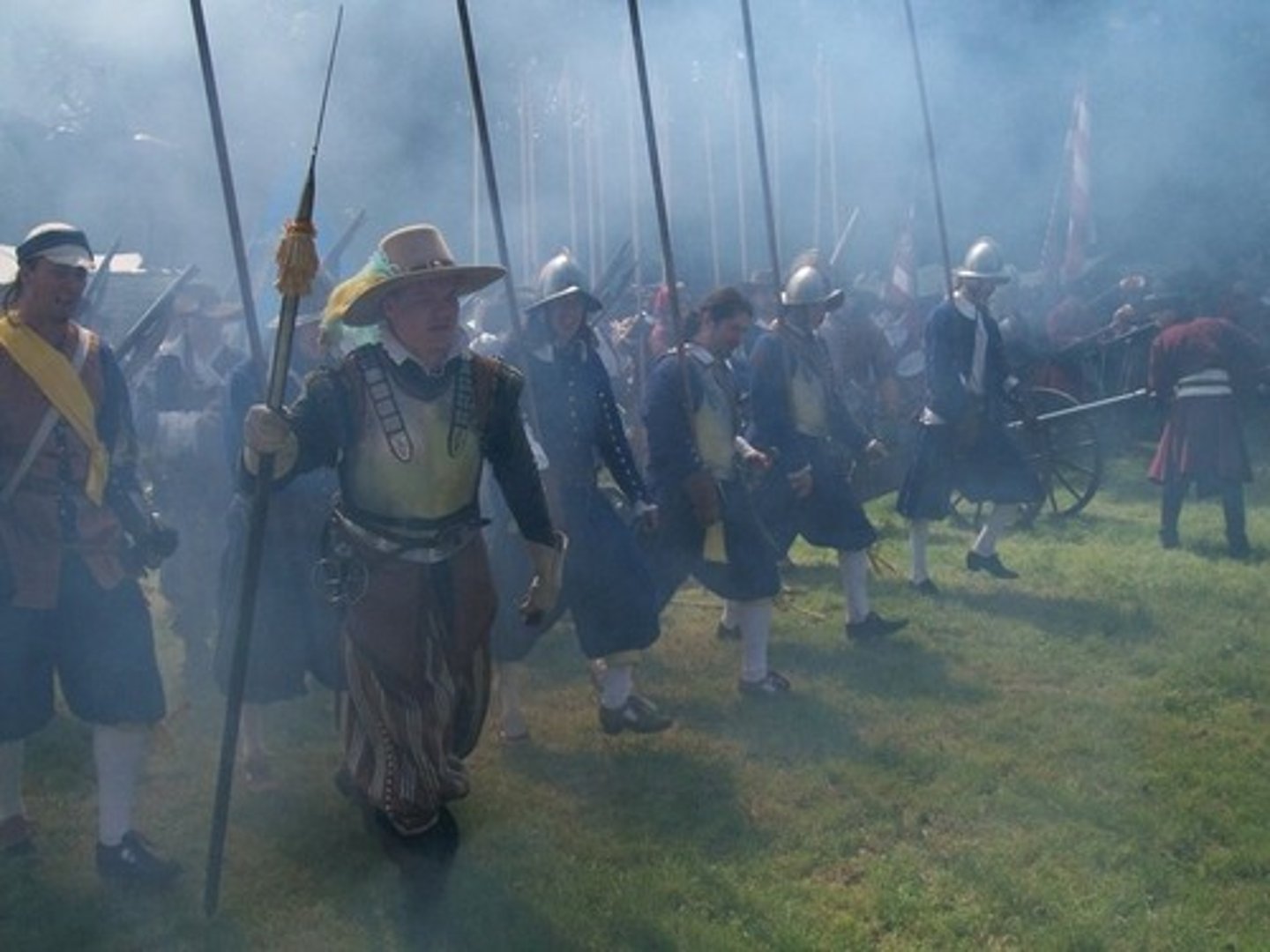
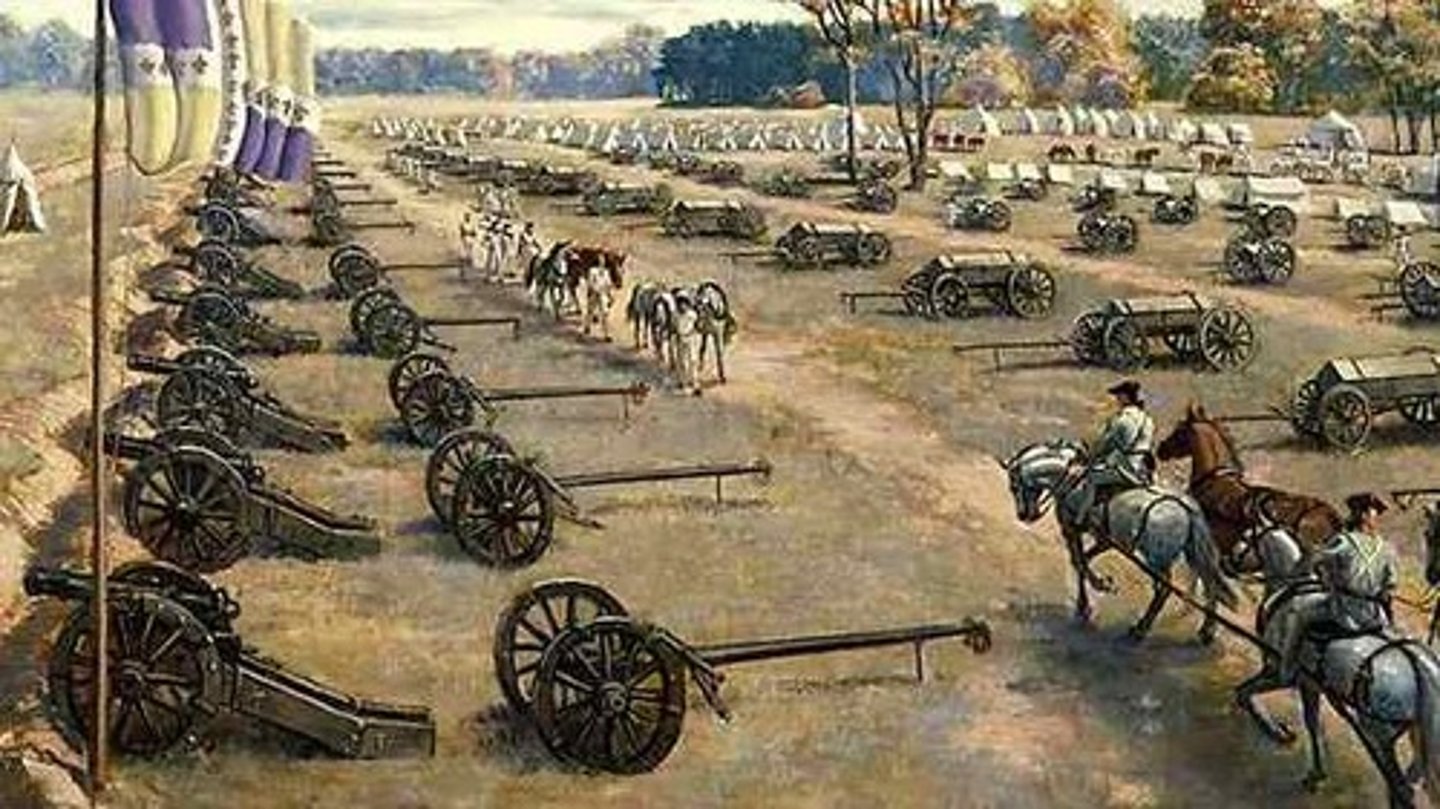
It is often asked did a military revolution take place between 1560 and 1660. Some would say no because the changes developed over a 100 years. Many other would say yes because the changes were so dramatic and drastically changed the way armies fought and maneuvered on the battlefield. Examples - Mobile cannons, mass conscription for larger armies, Brigade system for better movement and command control for armies on the battlefield are just a couple of examples.
The Thirty Years' War (1618-1648)
This is often called the last of Europe's religious wars. It was fought during the years 1618 to 1648 and had 4 distinct phases: The Bohemian Phase, The Danish Phase, The Swedish Phase, and the Franco-Swedish Phase. This war is well known for starting out as a religious war but ending as a war about power, riches and control of territory.
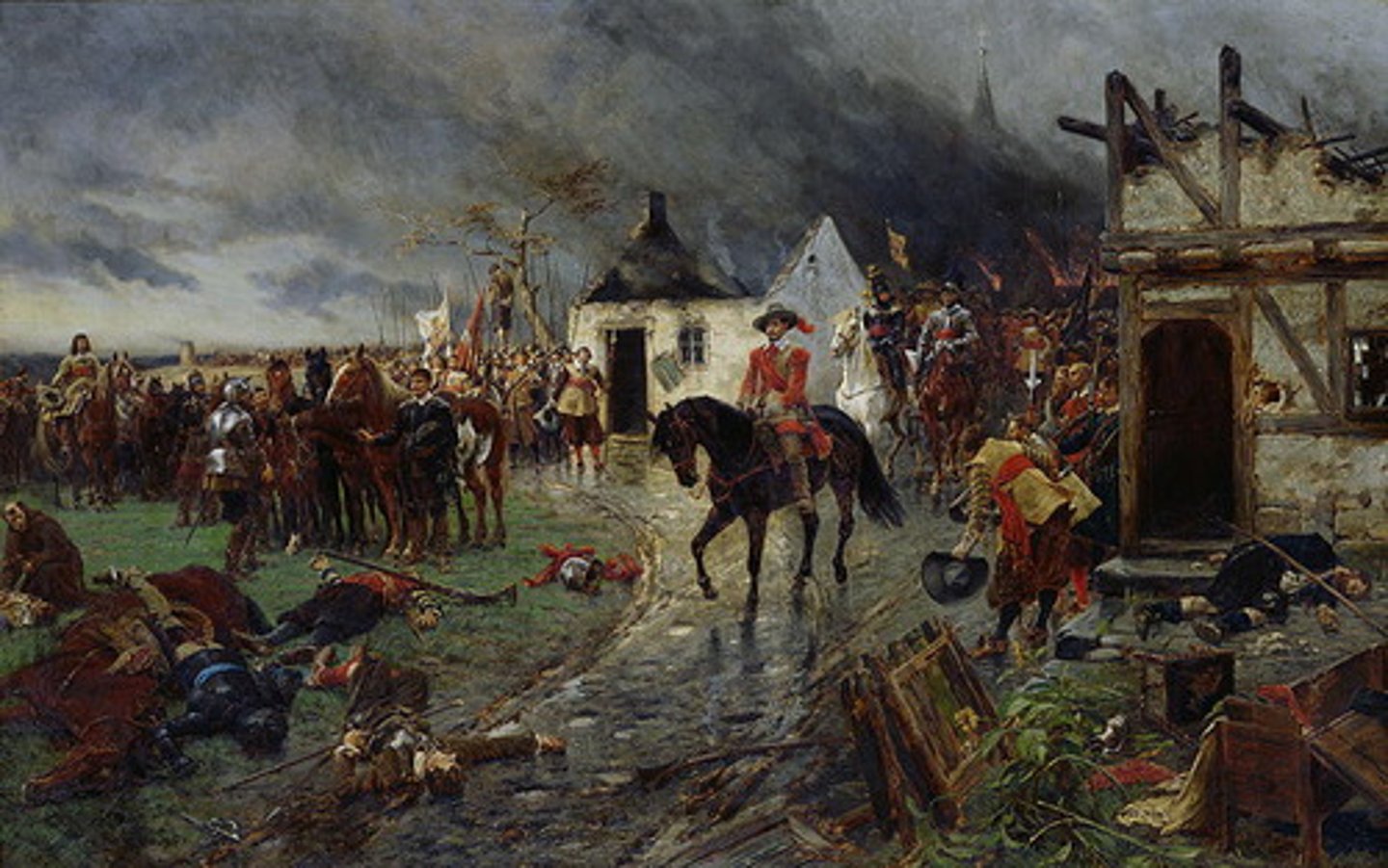
English Civil War
A two part conflict in England, phase one was 1642-1646 and the second phase was in 1648. It was a war between King Charles I and those forces supporting the English Parliament led by Oliver Cromwell. It would see King Charles lose his crown, and his head and would limit the power of future English monarchs.
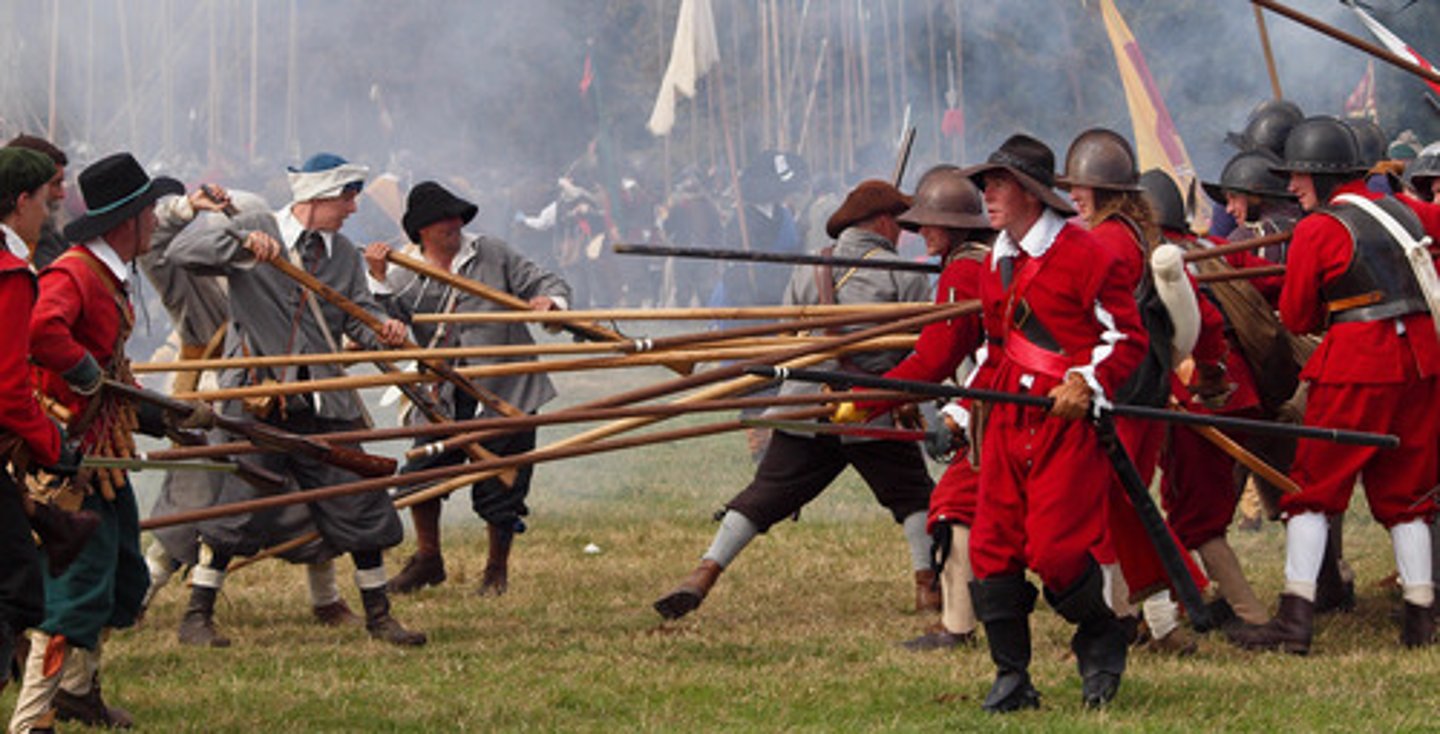
Scientific Revolution
When scientist began working on finding out how and why things worked the way they did and no longer just relied on old stories or fables to explain the physical world around them. Scientific experiments, new inventions and methods replaced superstitions of the past.
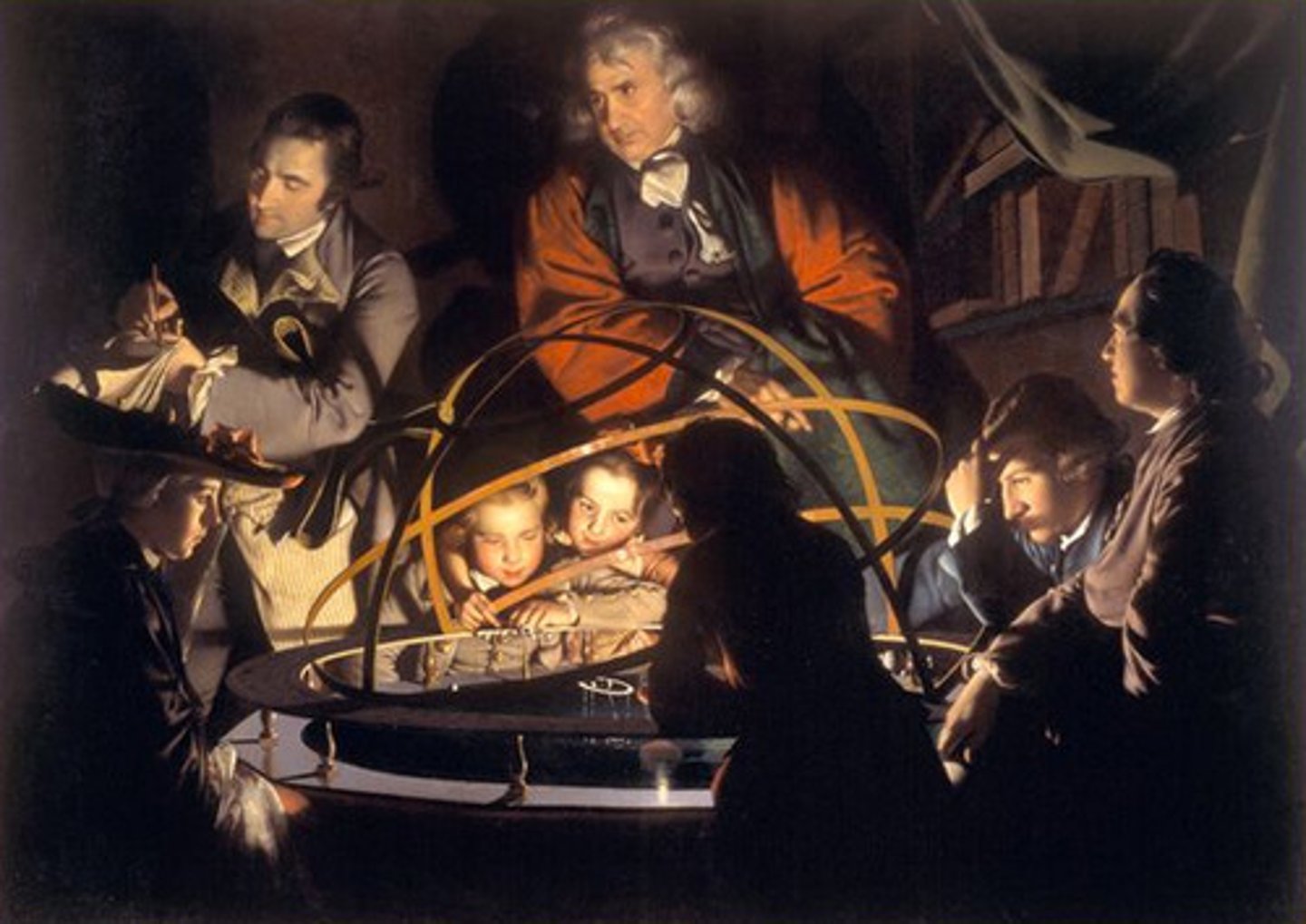
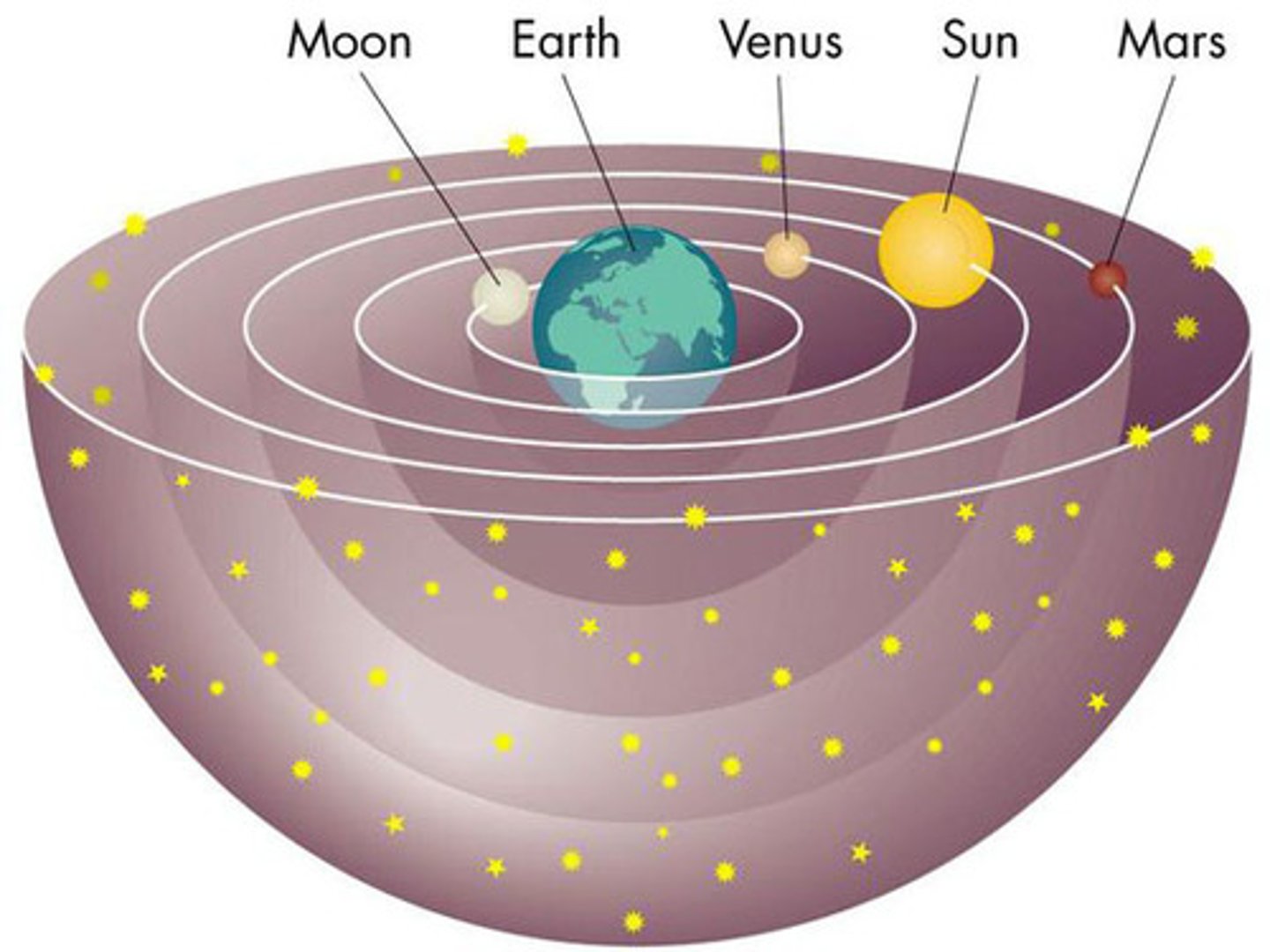
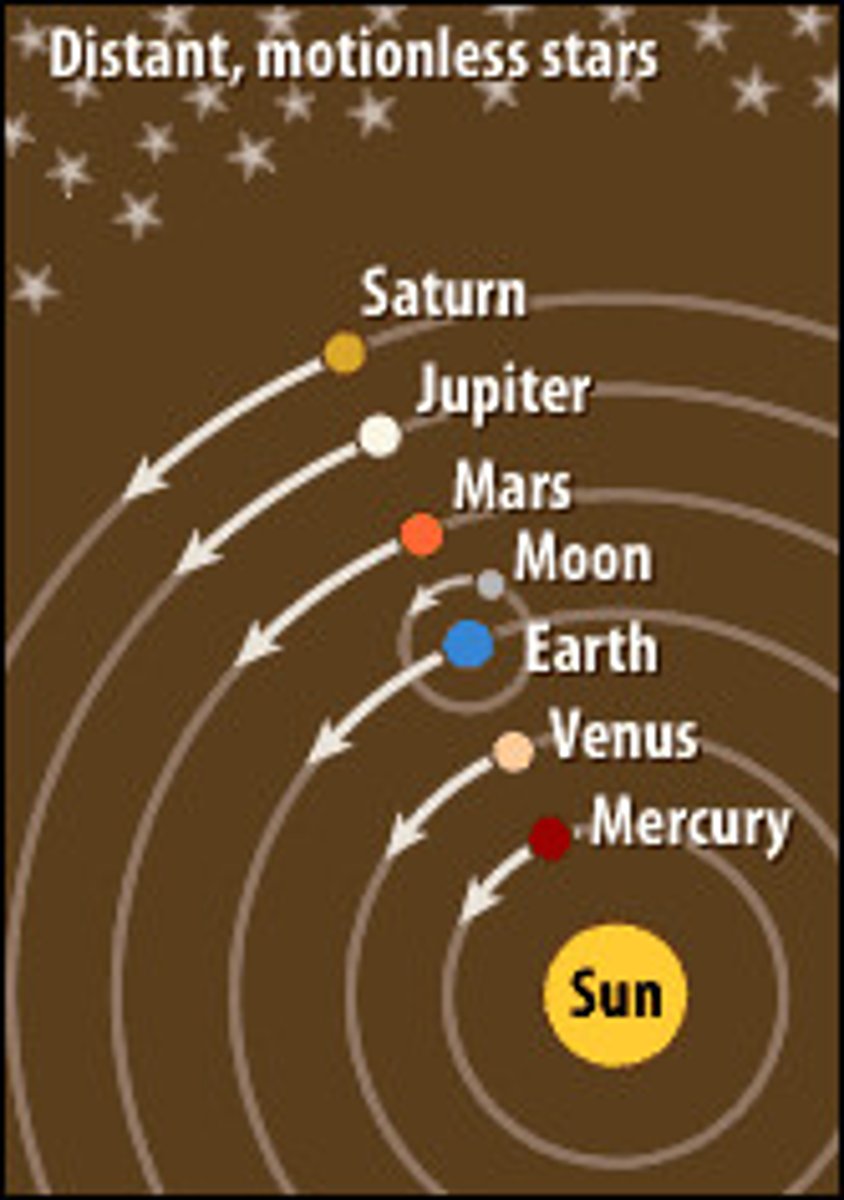
Geocentric Conception
The ancient belief that the universe was a large body of concentric spheres that moved around a fixed and motionless Earth at the center.
Heliocentric Conception
The idea put forth during the Scientific Revolution that said that the bodies in our solar system revolved around the sun, not around the Earth.
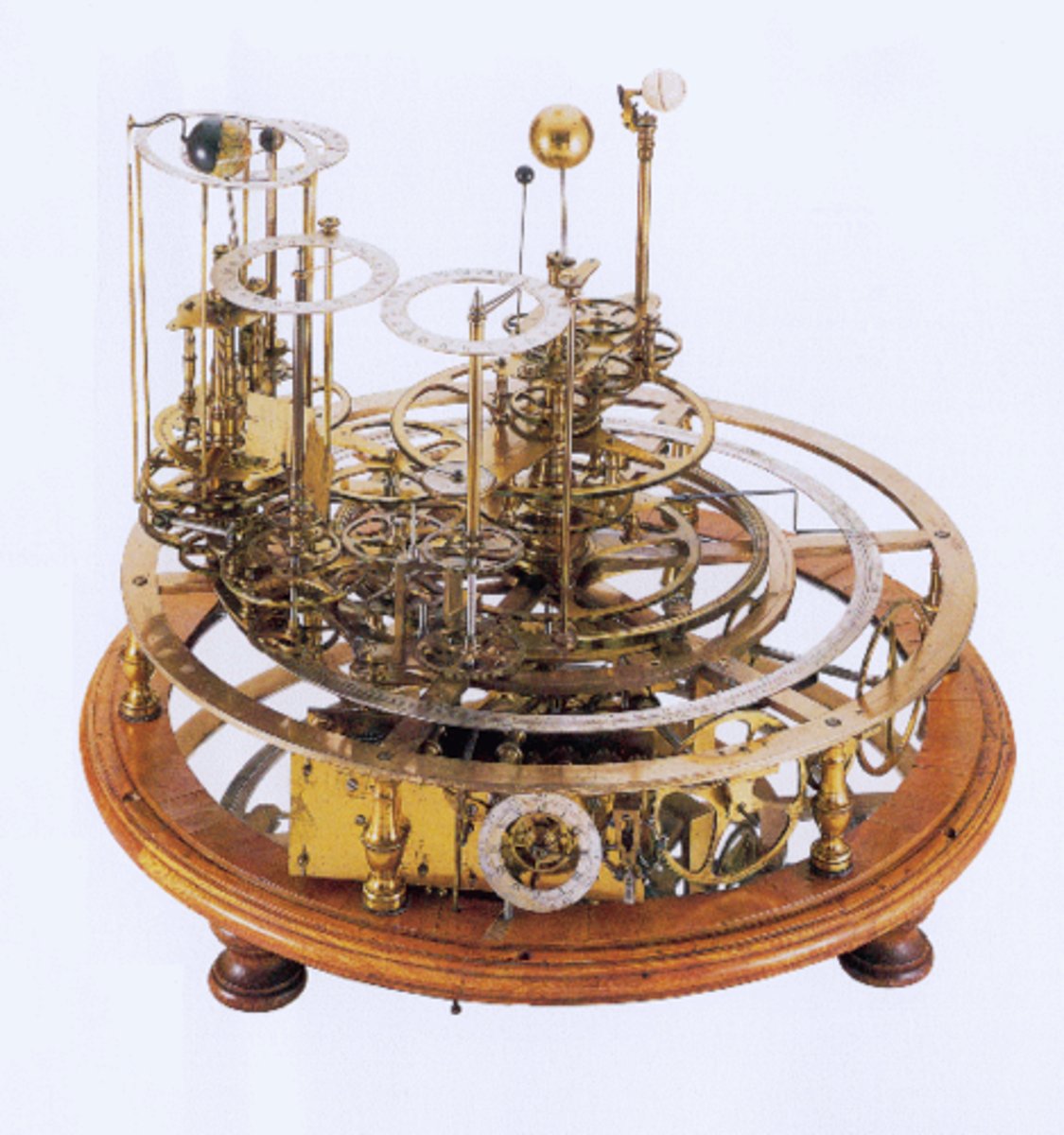
World-Machine
A concept from Isaac Newton that stated that God was everywhere and in everything. This view modeled the universe as a massive, interconnected group of planets, stars and all other objects that operated under the laws that he set forth such as gravity.
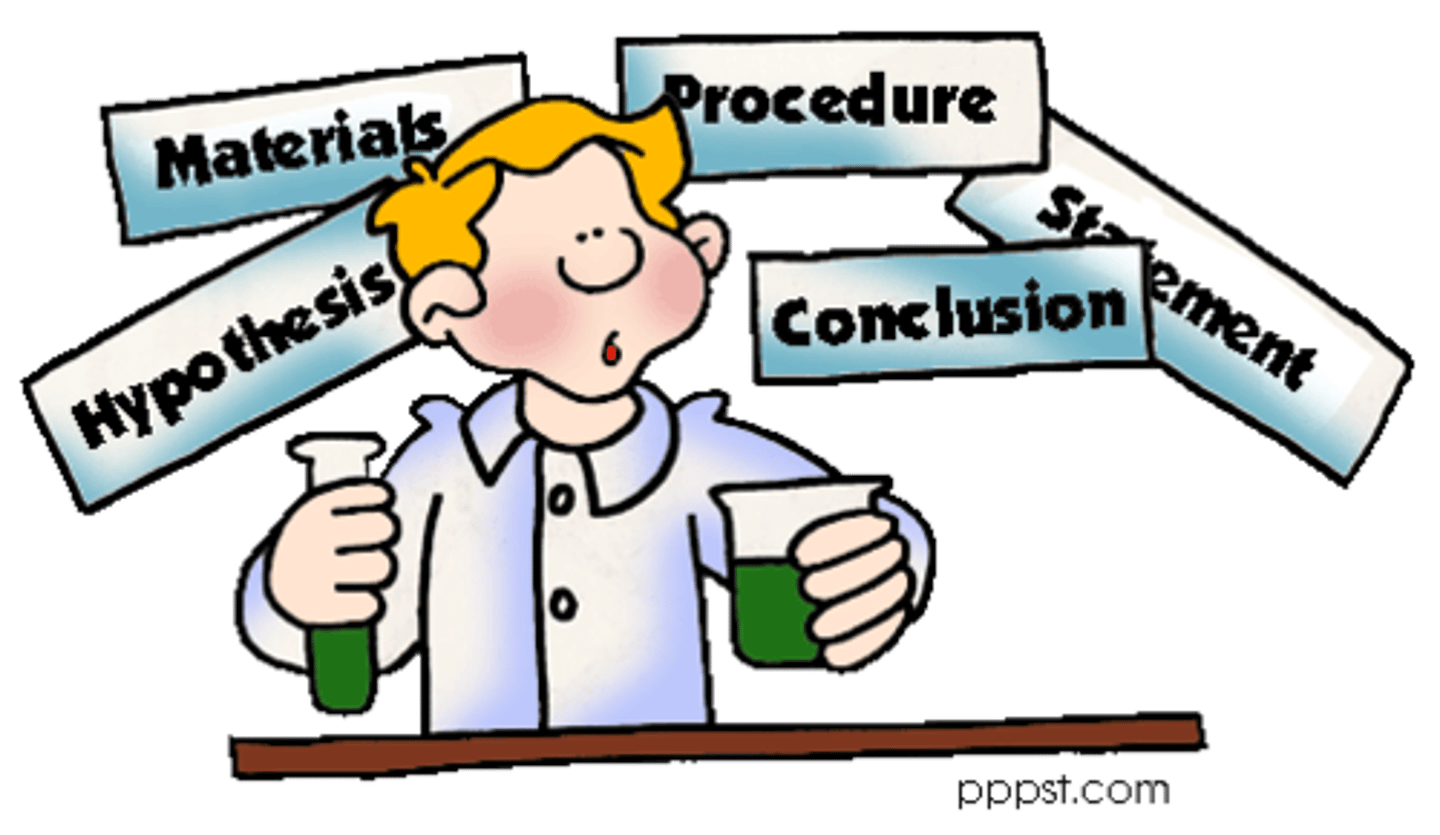
The Scientific Method
A concept first put forth by Francis Bacon and Descartes but finalized and improved on by Newton that revolutionized how people looked at science. This approach stressed inductive principles. Experiments and observation would lead to scientific truth, not just thinking what you believe is true and what was thought to be true in the past.
The Enlightenment
A term defined by Immanuel Kant as 'mans leaving his self-caused immaturity'. His motto, "Dare to know" showed people's desire to seek the truth through reason.

Skepticism
A growing movement during the Enlightenment that brought doubt and the questioning of the religious practices and traditions.
Travel Literature of the Enlightenment
These works became popular in Europe and led many to question their views of European people and society that had been viewed as superior for ages by comparing it to the simpler, more natural societies found in far off exotic lands.
Cultural Relativism
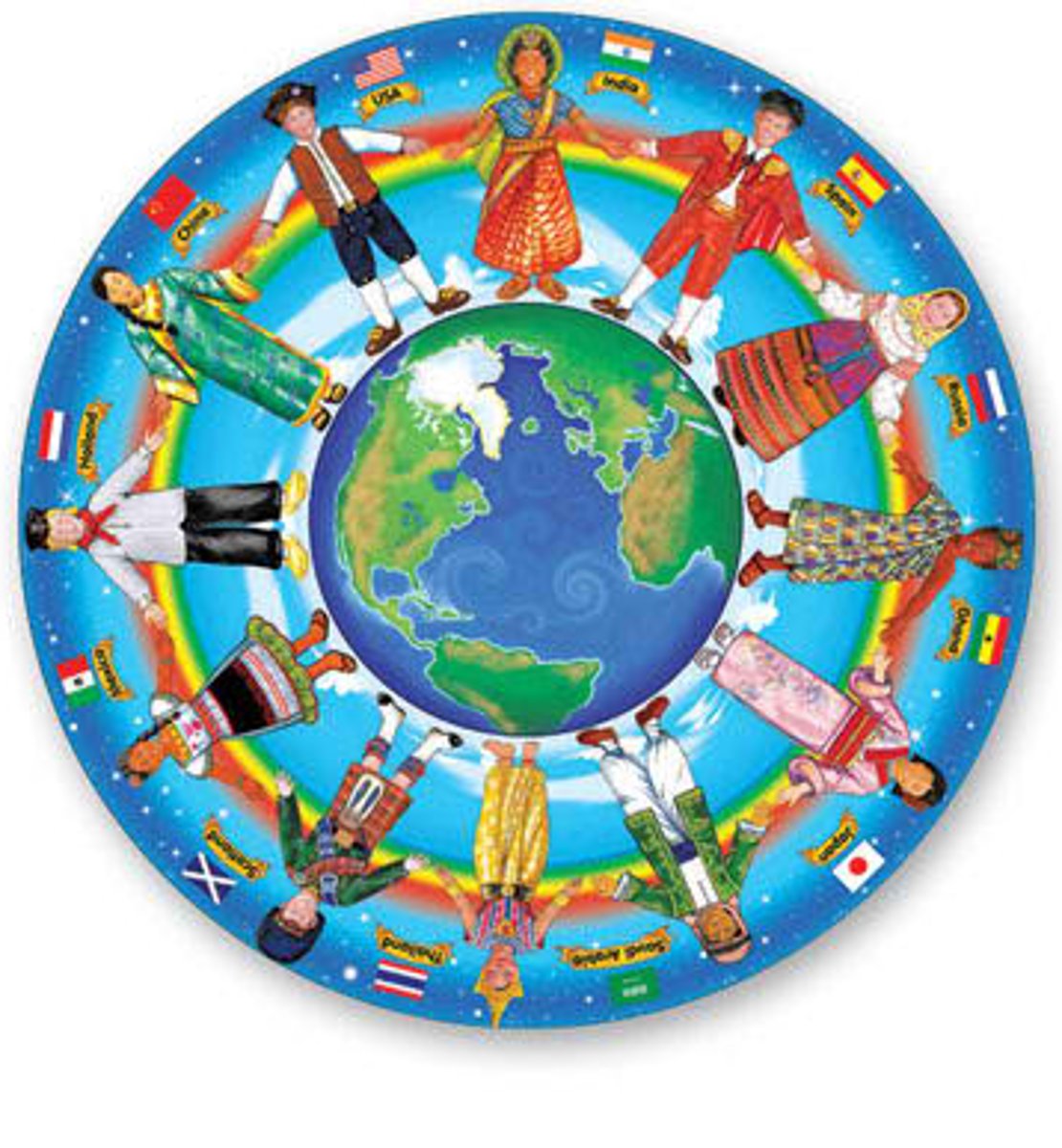
The view held by some European intellectuals after many had traveled abroad that the European way of doing things was not the only way, or always the best way of doing something.
Laissez-Faire
An economic system supported by the Physiocrats and Adam Smith. It stated that the best economy is one where the government would in no way interrupt the free play of economic forces through government regulations. Let the natural course run. Good businesses succeed and the bad fail.
The Social Contract (1762)
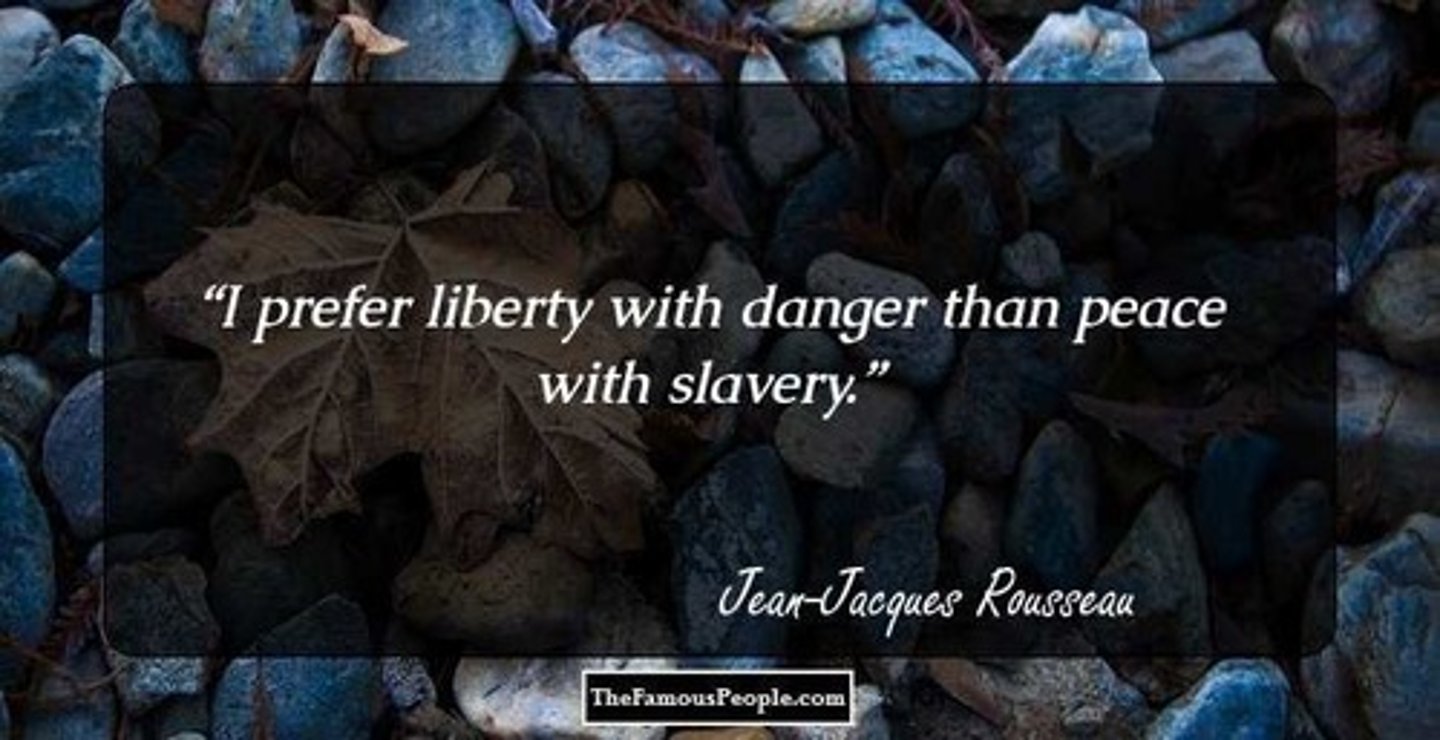
A major and influential work by Rousseau. It tried to harmonize individual liberty with government authority. States that freedom is achieved by enforcing the 'General Will', what is best for all the people.
Woman's Question
Most of the thinkers of the Enlightenment believed that women were naturally inferior to men and their roles in society should reflect this. However, there were some major thinkers that took the opposite view such as Diderot and Voltaire.
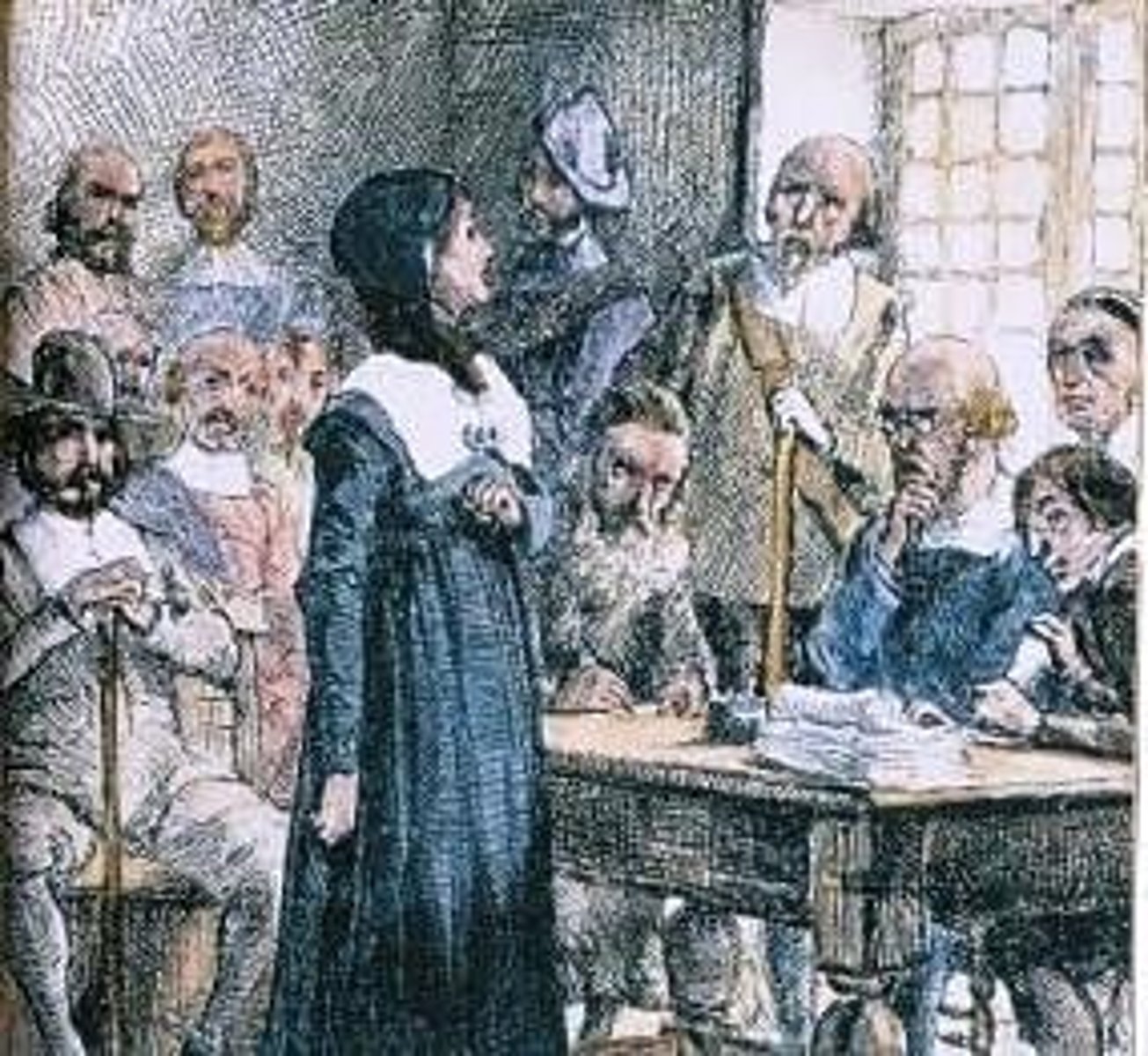
Salons
A place for the philosophes, important figures and guests to gather and discuss the important issues of the day as well as grand scale concepts such as the nature of life, science and religion. It tended to only include the upper middle class and above in society. They sprouted up all over, but Paris was the center. Usually run by women.
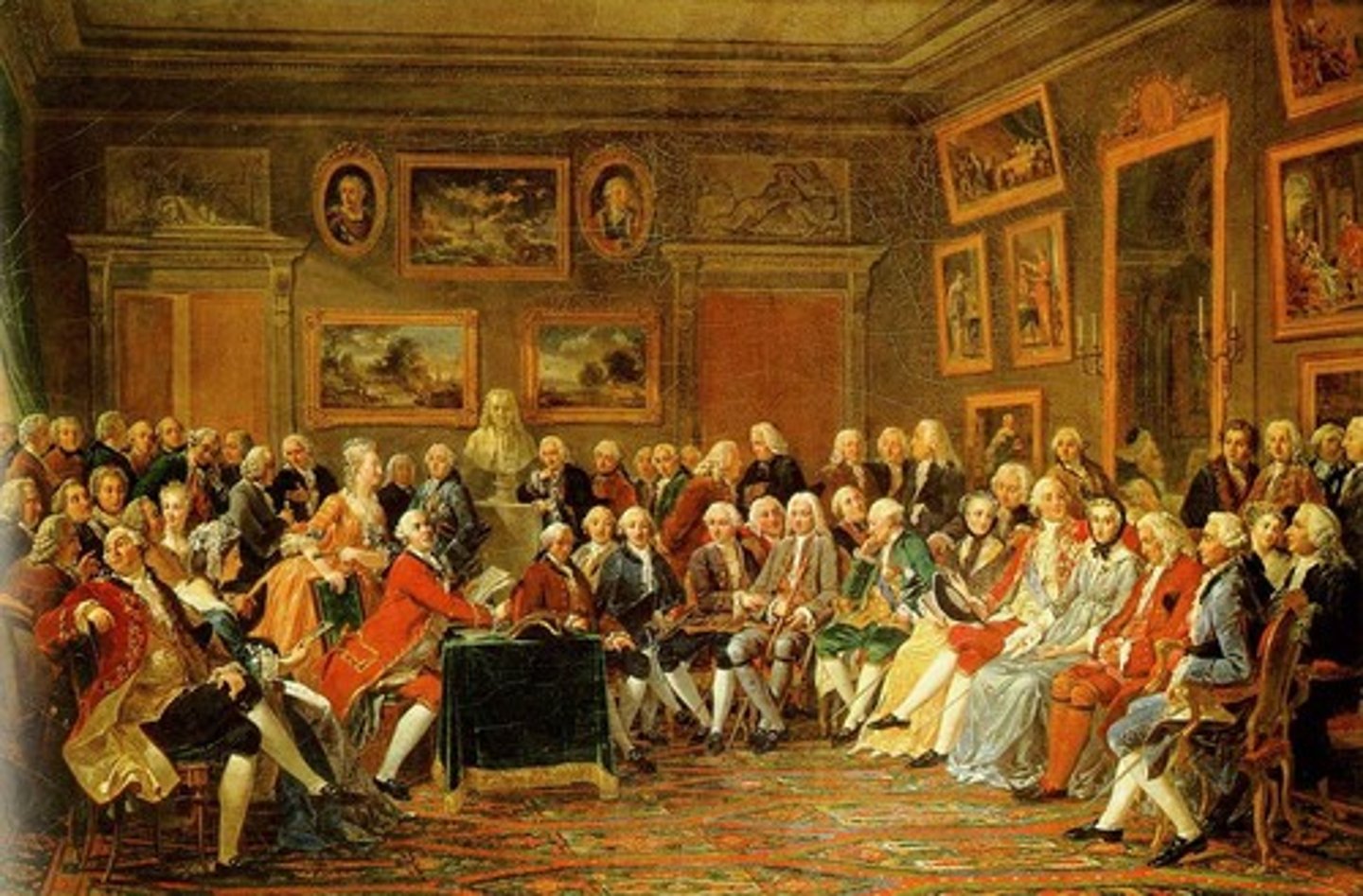
18th Century Novels
The birth of the modern novel. The novel was the chief method of fictional writing in England in this time period. It was often used to attack hypocrisies and provide sentimental entertainment for a growing audience of readers.
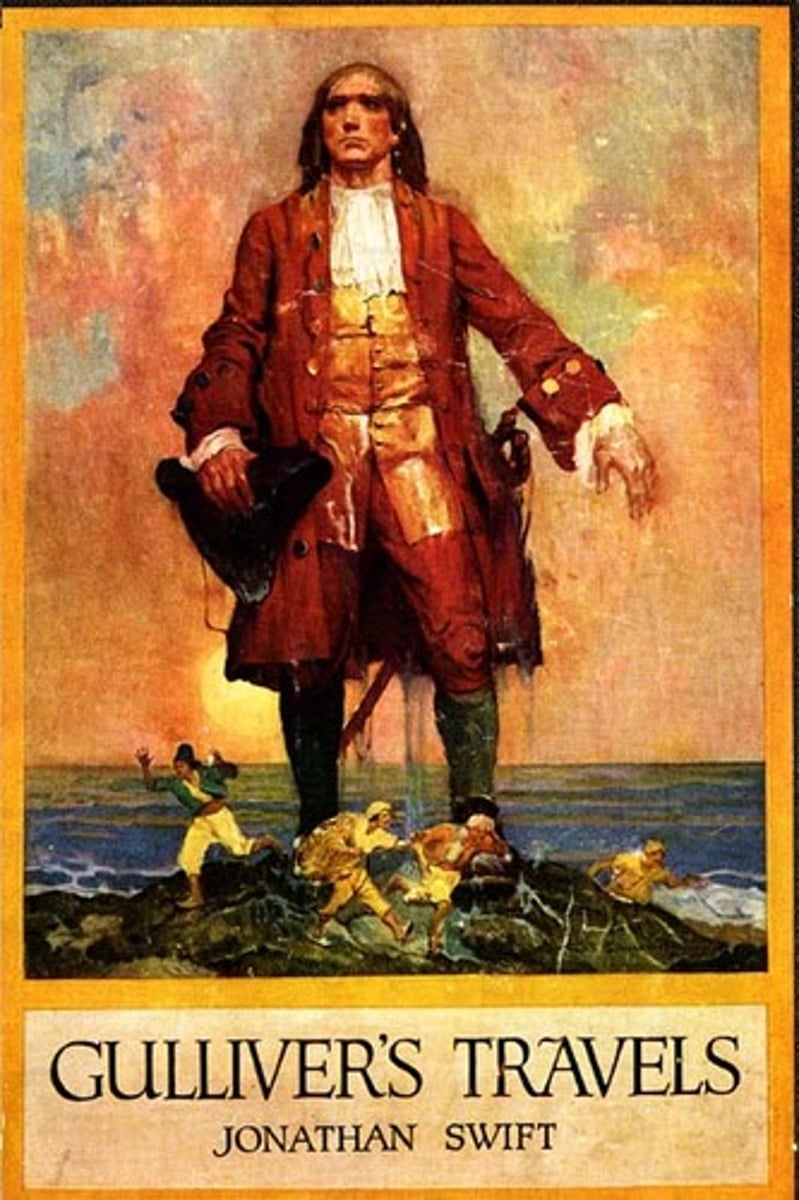
Decline and Fall of the Roman Empire (1776)
A major literary work written by Edward Gibbon. This new approach to looking at the telling and study of History took God out of the main focus and would instead look at secular approaches to what happened and why. This work would in fact blame the fall of the Roman Empire on the rise of Christianity in Rome itself.
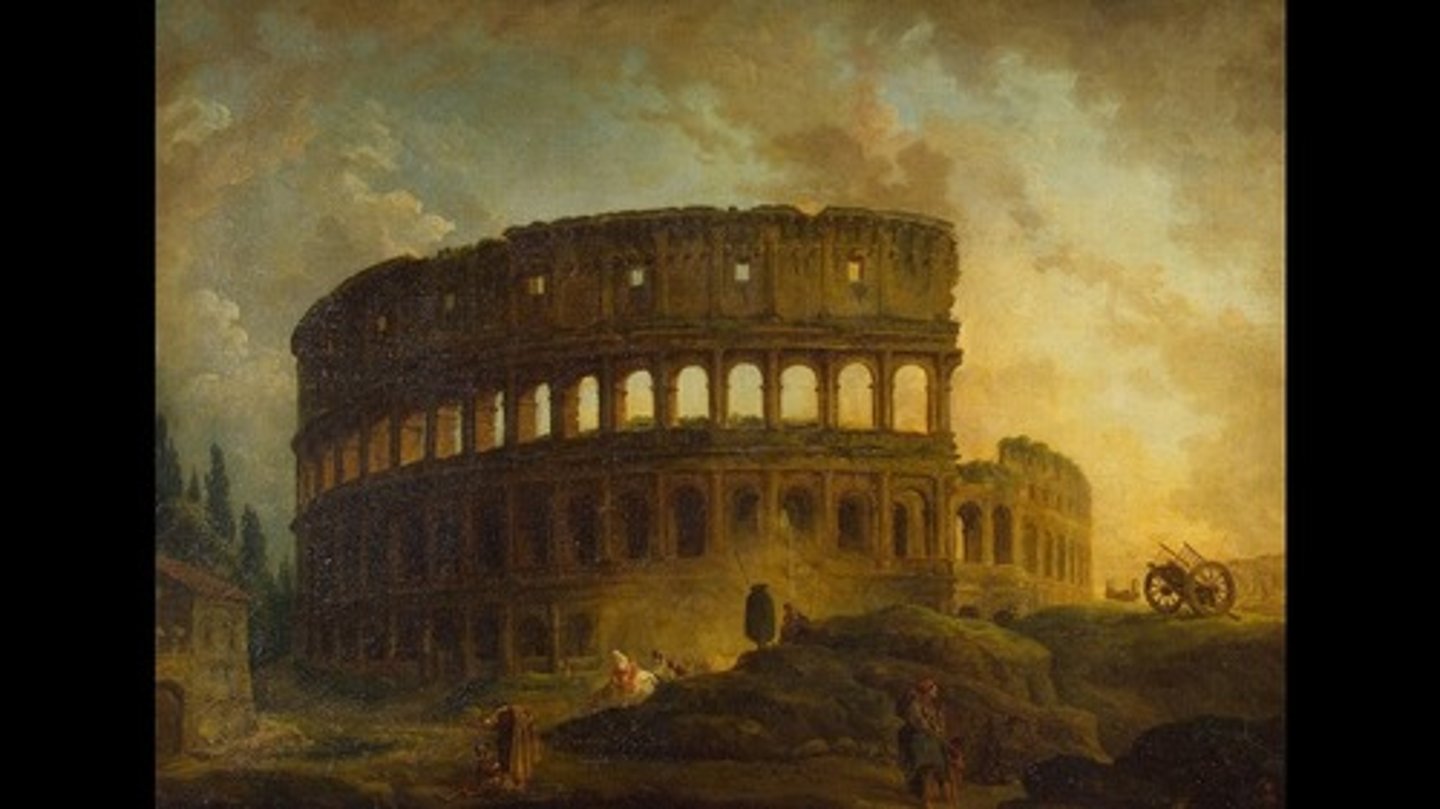
High Culture
A term used to describe art and literary works intended for a wealthy and educated selection of the population.
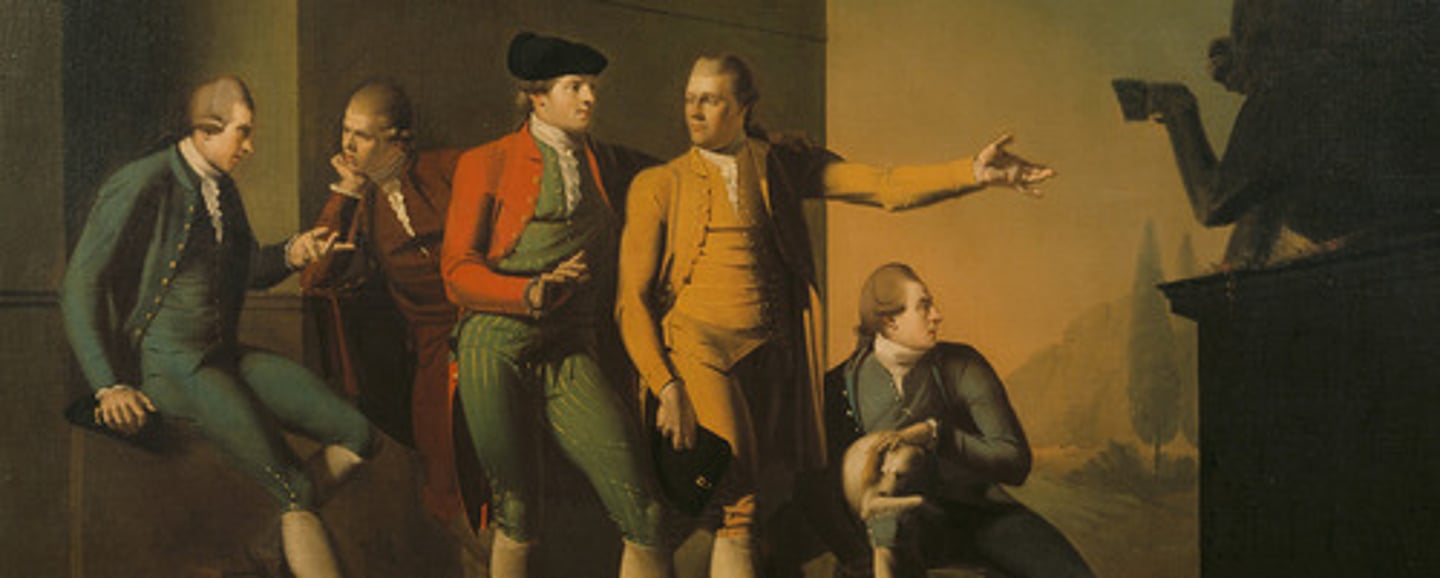
Popular Culture
A term used describe the written and unwritten lore of the masses, most of which was passed down orally over several generations.
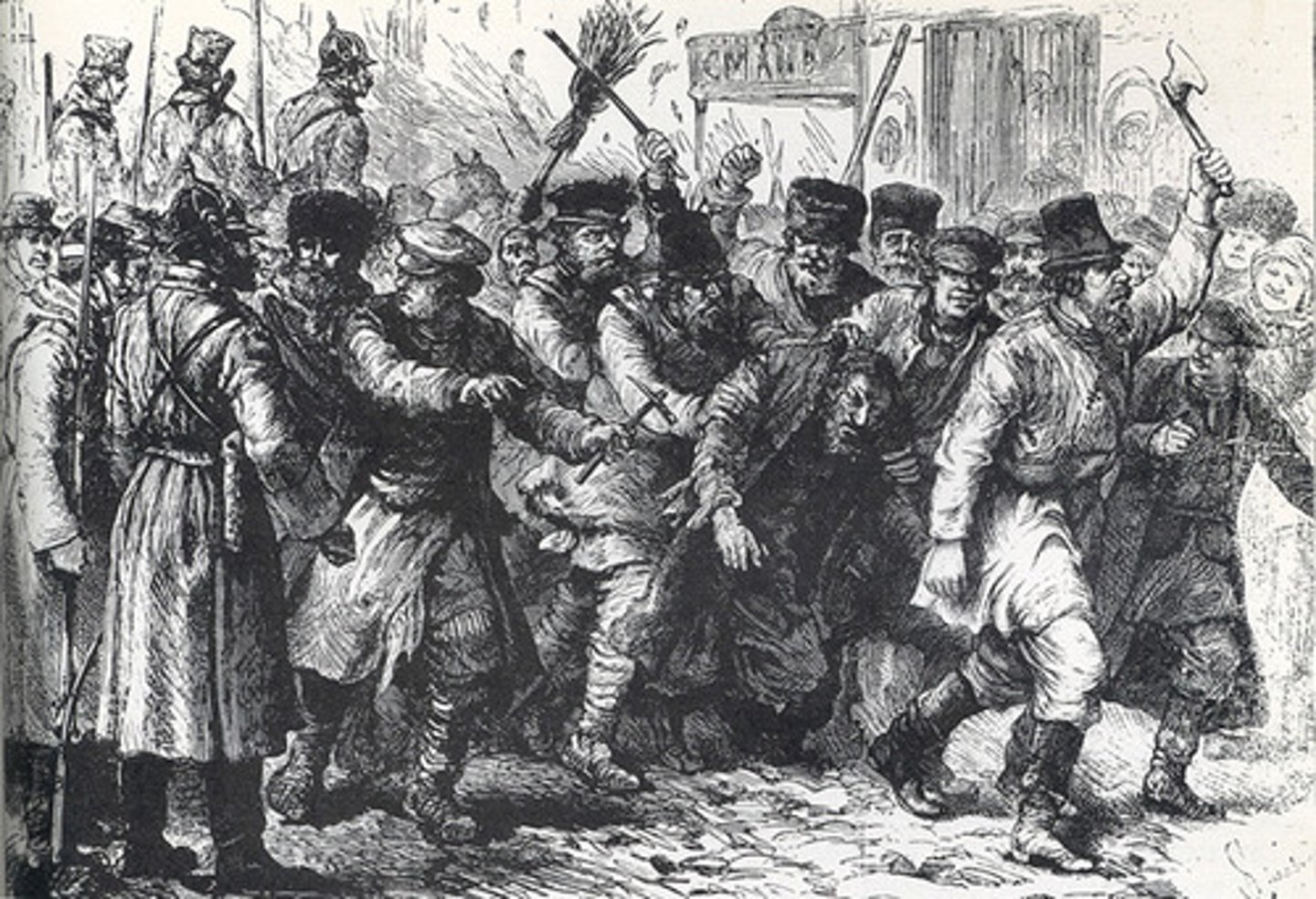
Pogroms
A term used to describe the systematic persecution and even killing of Jews in Eastern Europe. Many Jews could not own land, hold many different types of jobs or move about freely because of their faith.
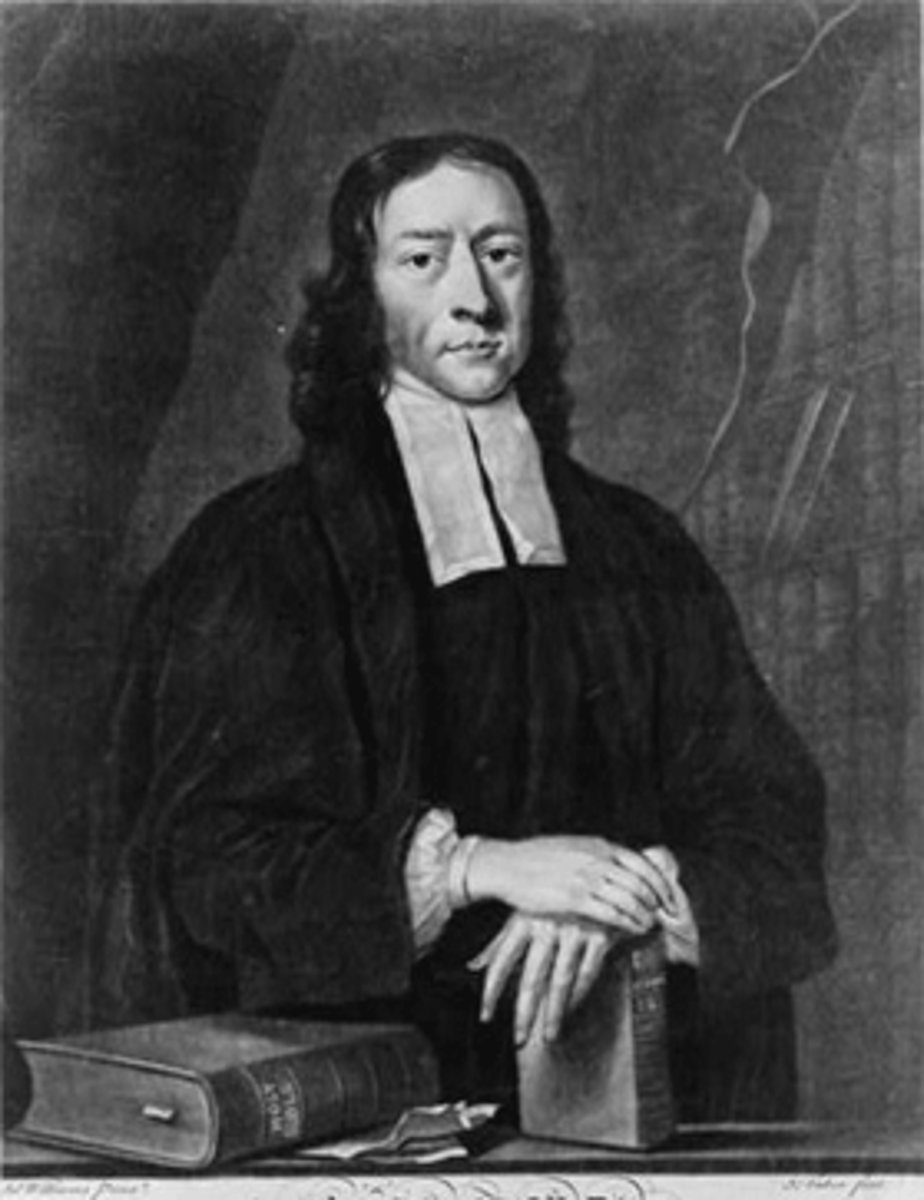
Pietism
This approach to Christianity sought to have a closer, more personal devotion to God. It was opposed to the purely rationalistic, sometimes even sterile approach to God. It was based on the teachings of Count Nikolaus von Zinzendorf.
Enlightened Absolutism
A type of monarch that would emerge in the eighteenth century who are said to have followed the principles of the philosophes of the Enlightenment.
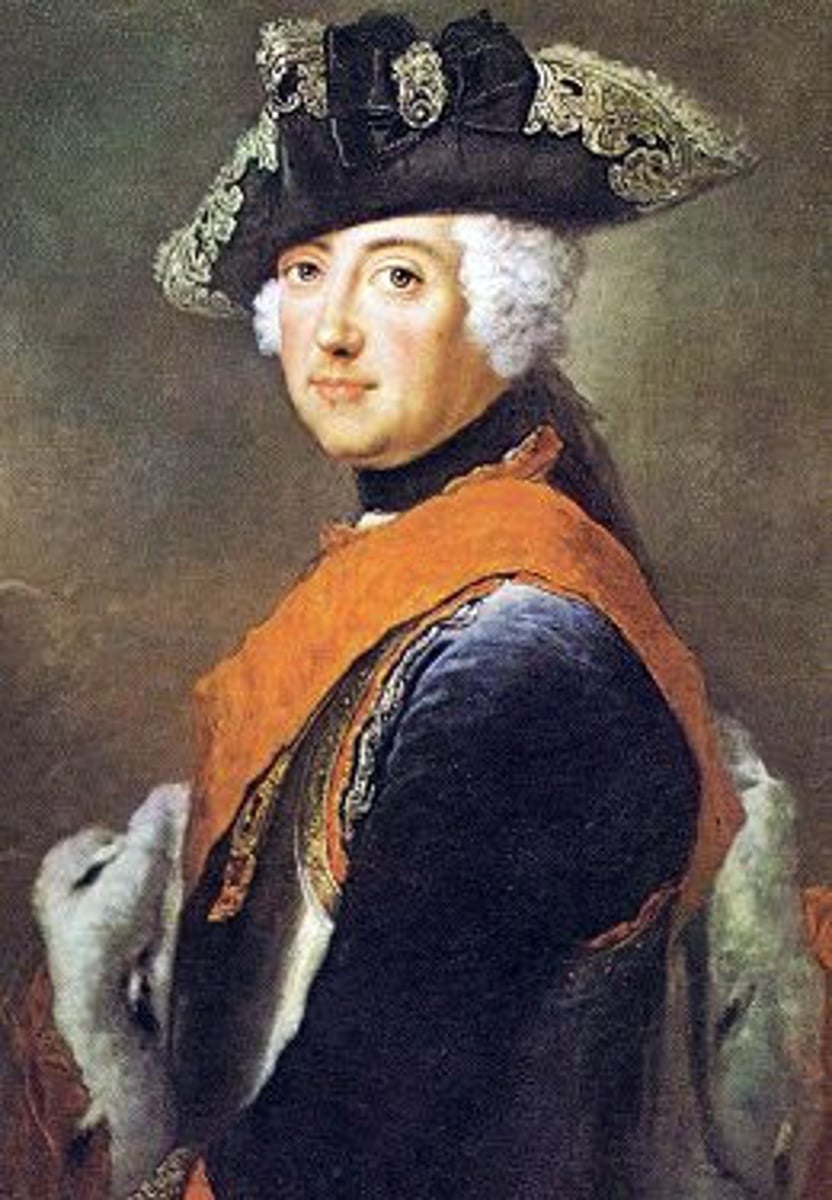
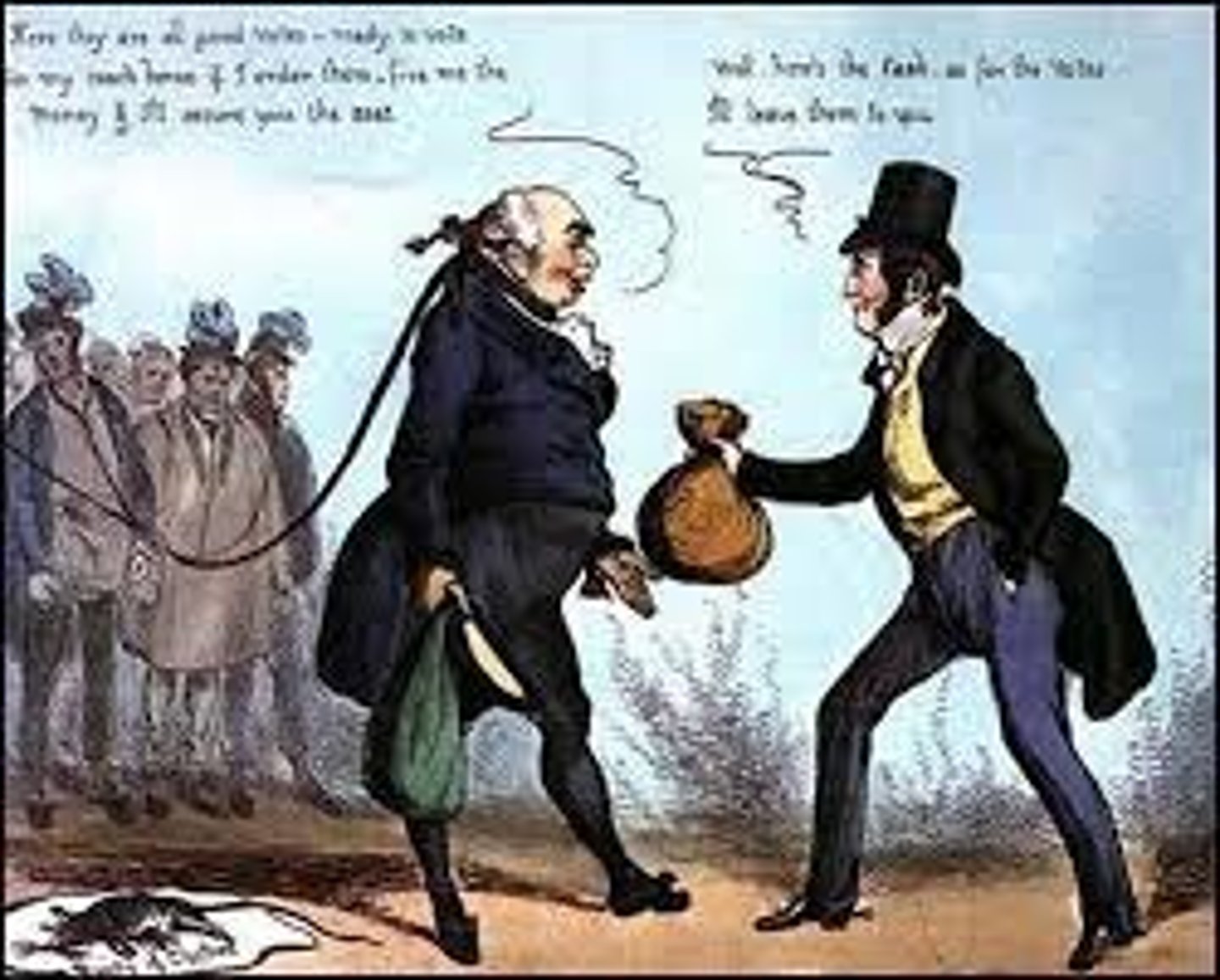
Pocket Boroughs
A corrupt system of voting for and choosing deputies for the English House of Commons based on corruption and even open bribery at times.
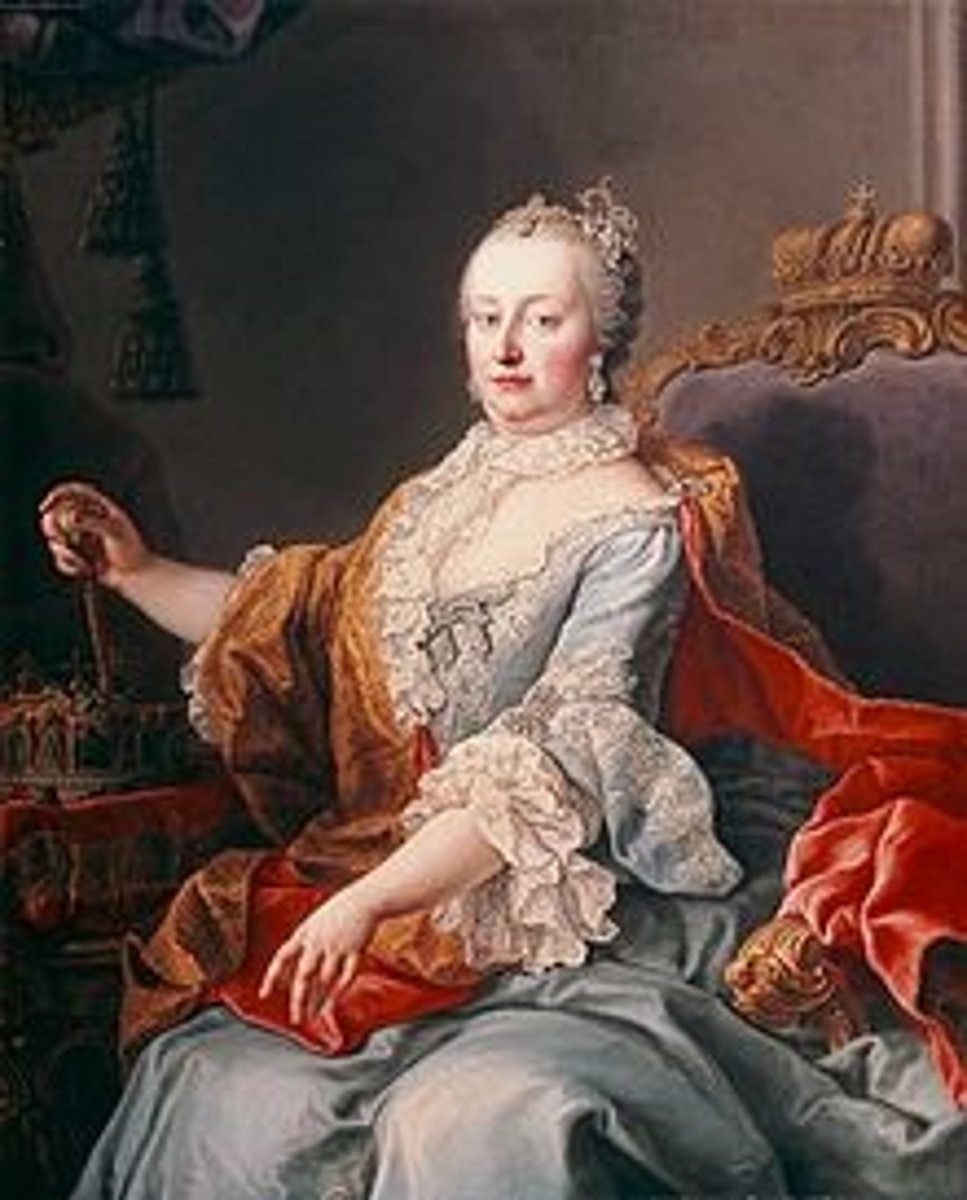
War of Austrian Succession
A war triggered by Austria putting a women in charge of the empire, Maria Theresa. Prussia used this as an excuse to declare war and take the iron rich Austrian Provence of Silesia.
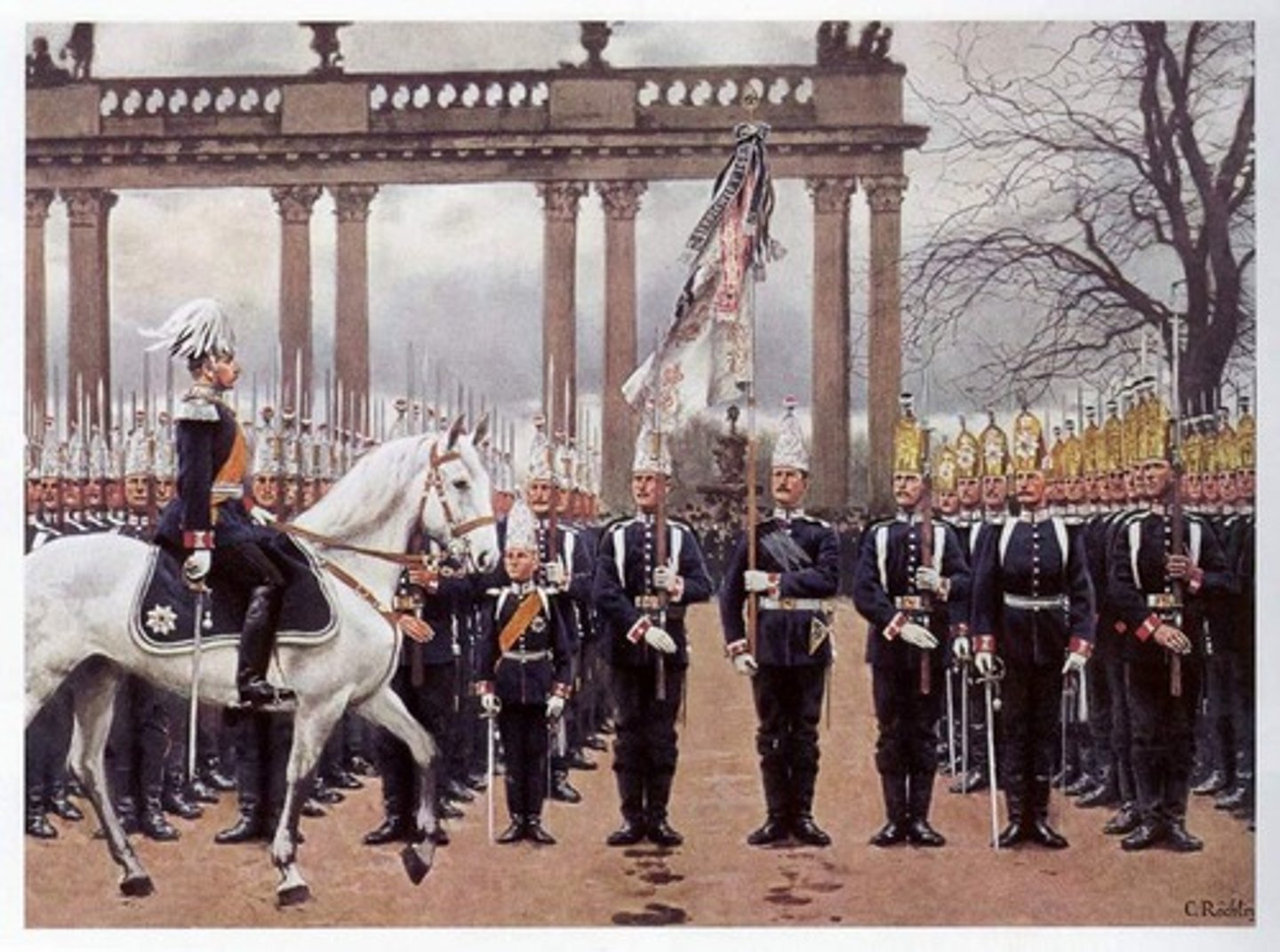
Prussian Militarism
This term can best be summed up by a government official... "Prussia was not a country with an army, but an army with a country which served as headquarters and food magazine."
Seven Years War
The war that would see France lose most of it's overseas empire, England become the dominant European economic and naval power and Prussia become a recognized major military power on the European continent.
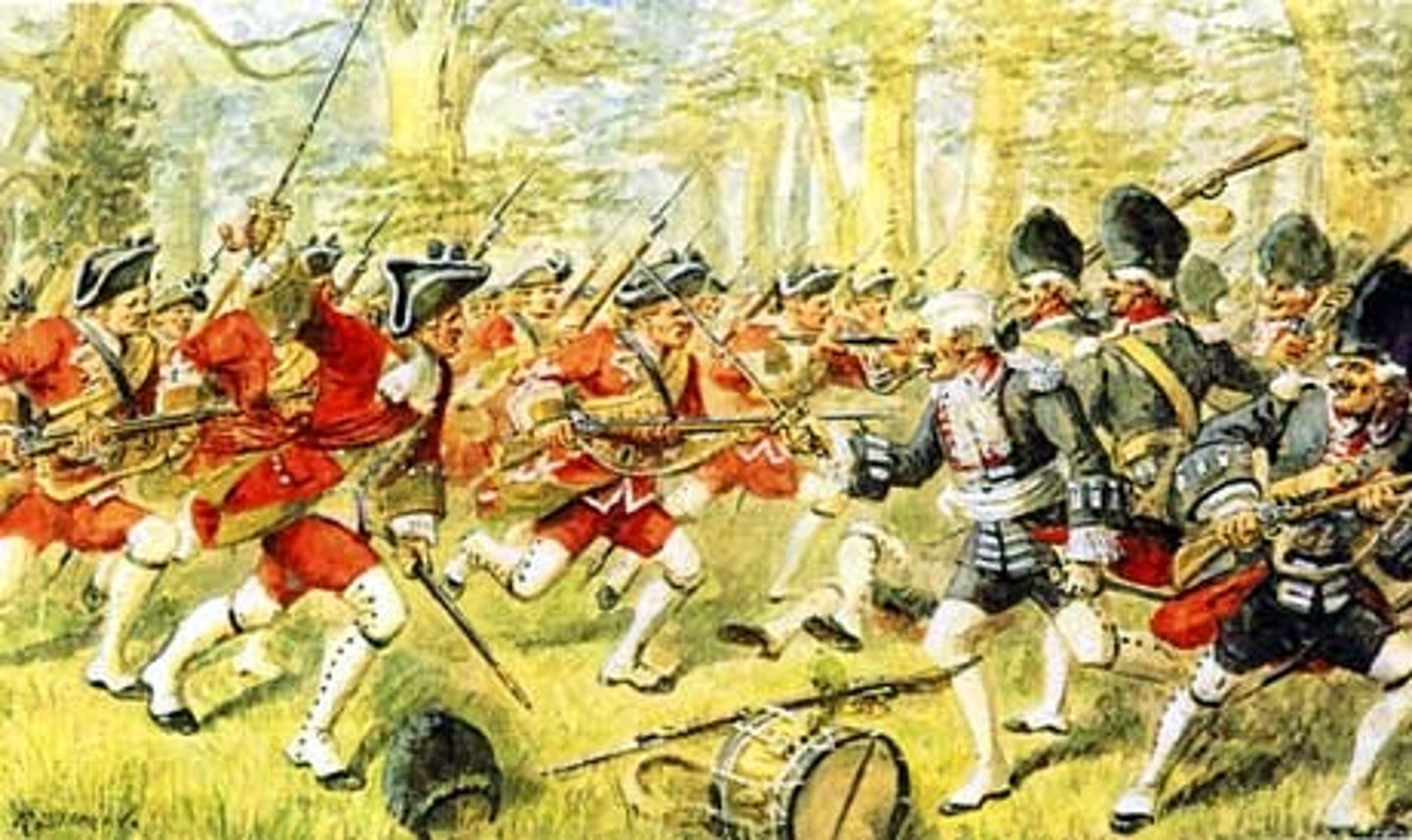
The French and Indian War
The name given to the Seven Years War that took place in North America. France would lose this war and have to give up much of its territory as well as its claim to its holdings in Canada.
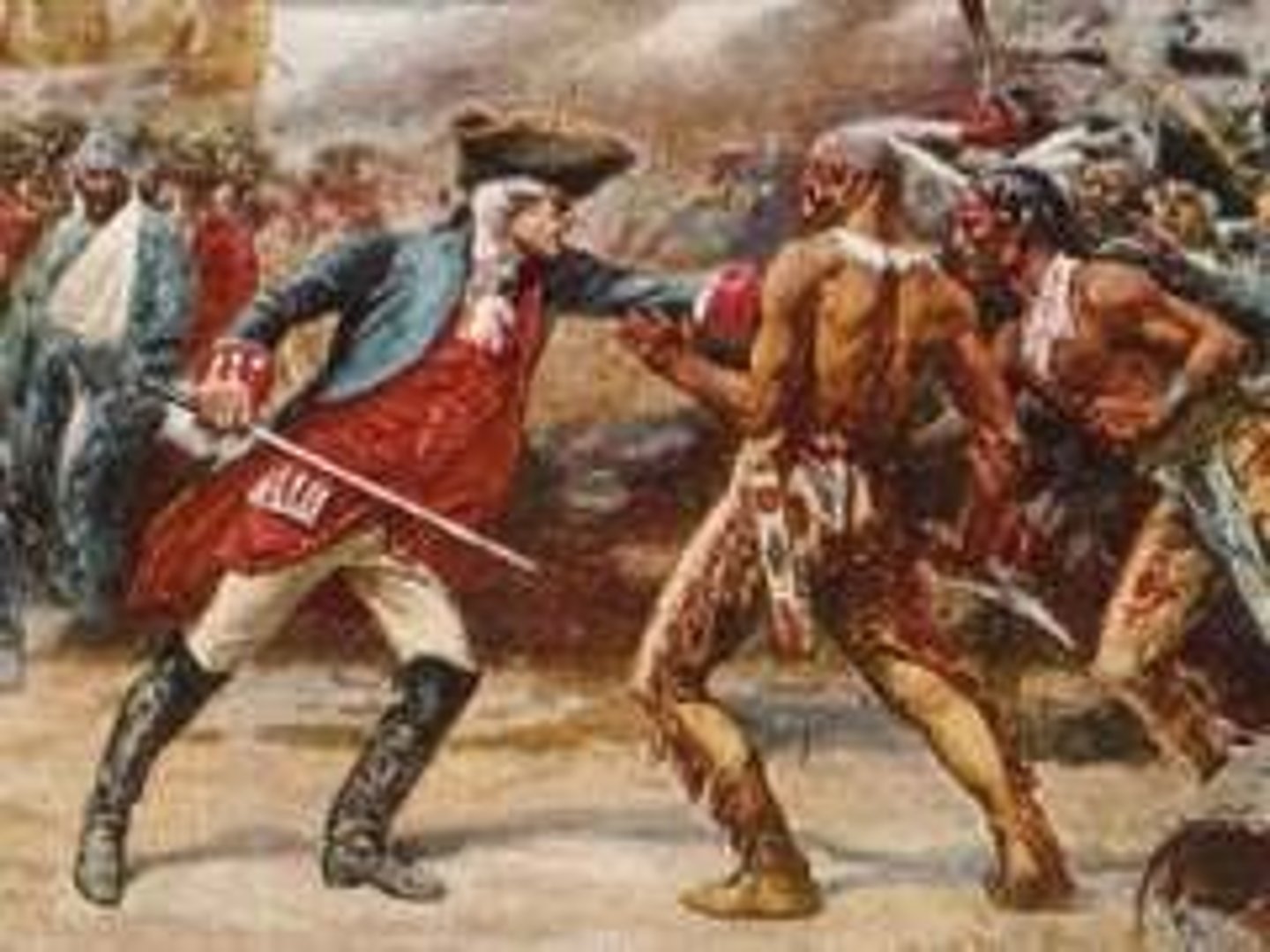
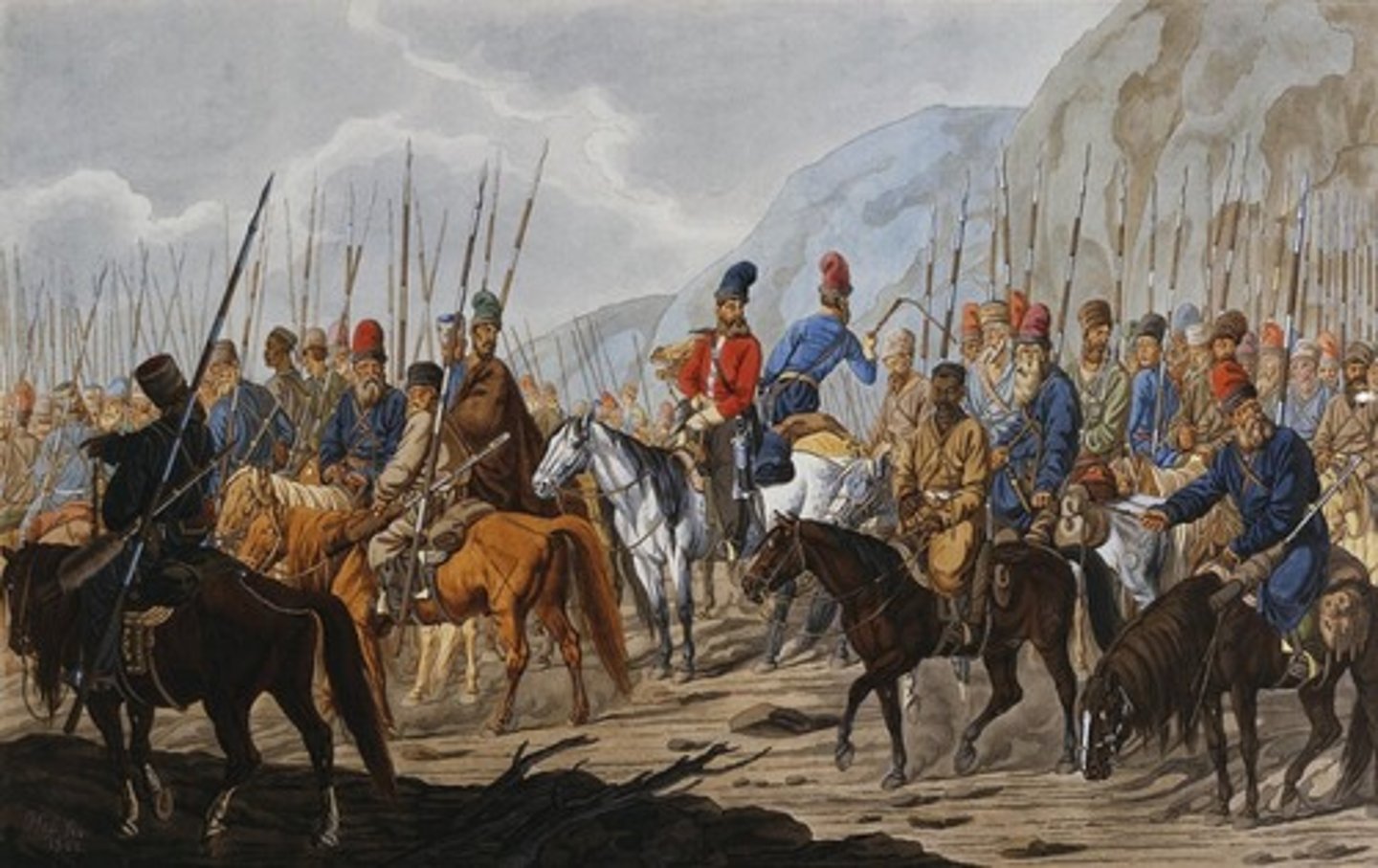
Pugachev's Rebellion
An uprising led by a illiterate Cossack that pushed for more rights for the poor in Russia. It was brutally crushed and was known for its great violence. Catherine the Great would respond with even more repression after the failed uprising.
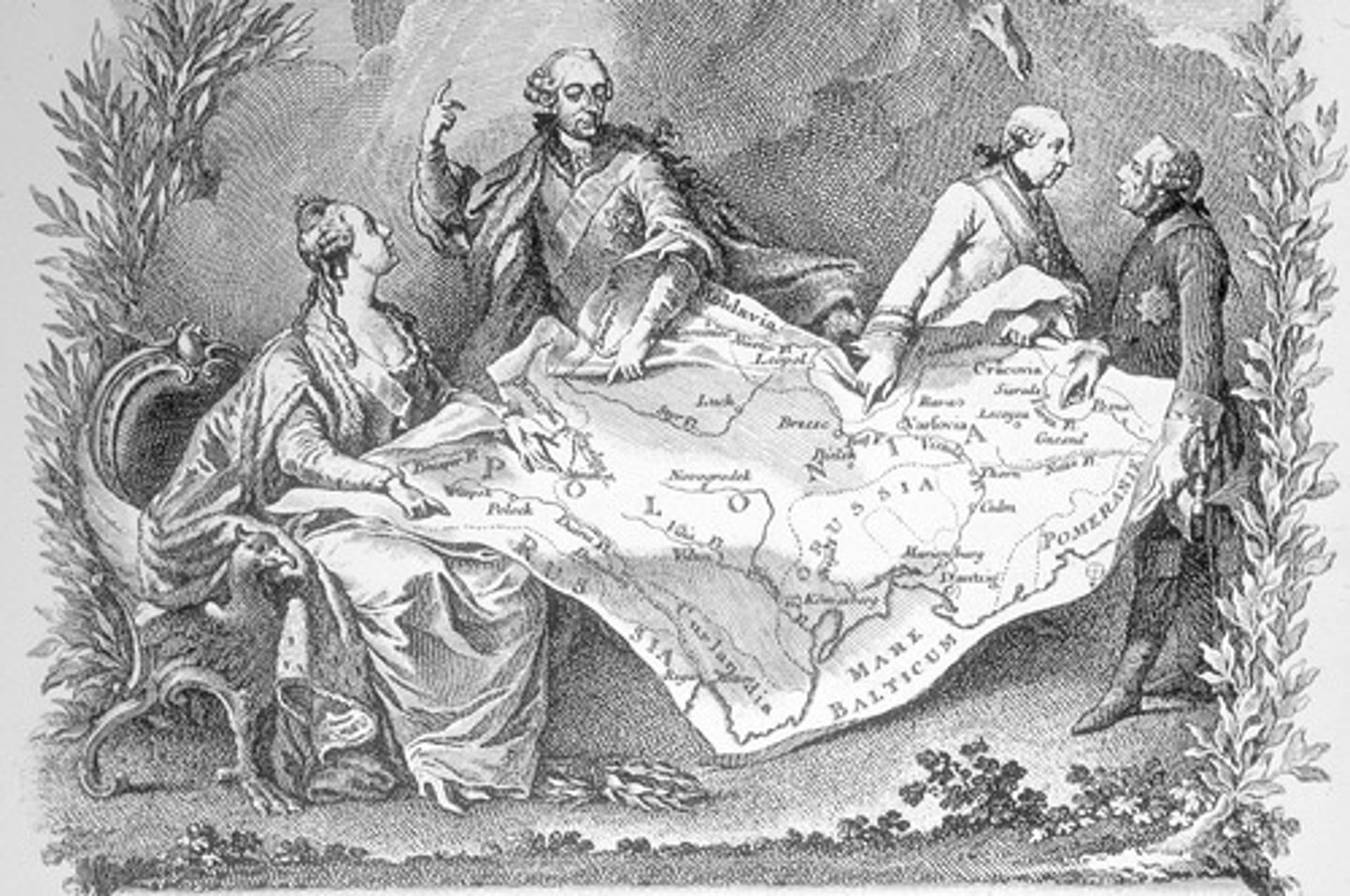
Partition and destruction of Poland 1795
This state paid the price for decades of weak, corrupt leadership and government. They were divided up by their powerful neighbors, Austria, Prussia and Russia.
Balance of Power
This concept became very important in European affairs. The idea was to not let any one power become too powerful. Alliances and sides in wars would change over the years to allow for shifting in levels of power.
Reason of State
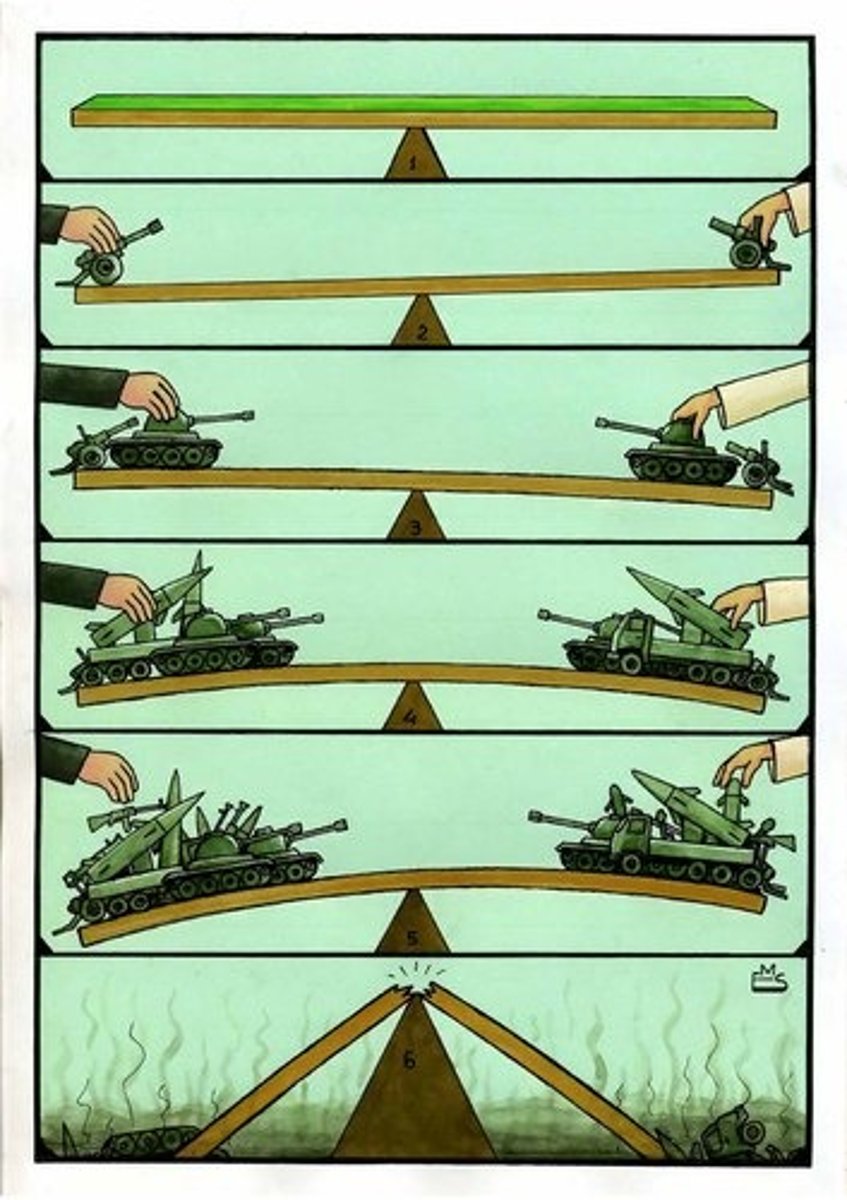
The concept of leadership that emerged in the eighteenth century that had leaders thinking about the long term needs and goals of their nations beyond their own lifetimes.
Primogeniture
The practice of the oldest son receiving all the attention and largest share of the parents estate. This began to fall out of favor in this time period as the needs of all the children in the family became more recognized.
Infanticide
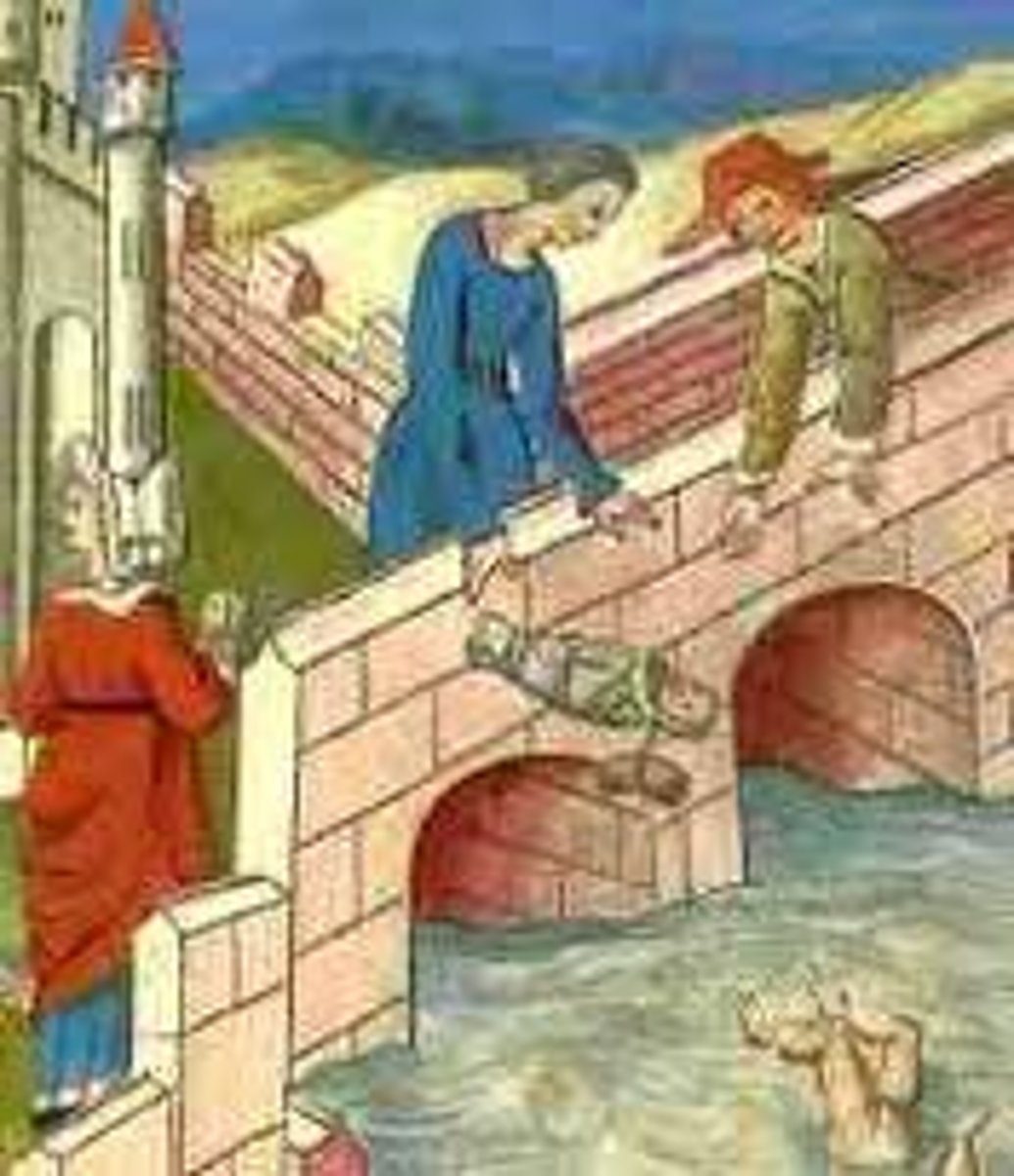
The practice of killing ones own children to save them from starving to death. This unfortunate practice took place in the lowest of classes and economic conditions.
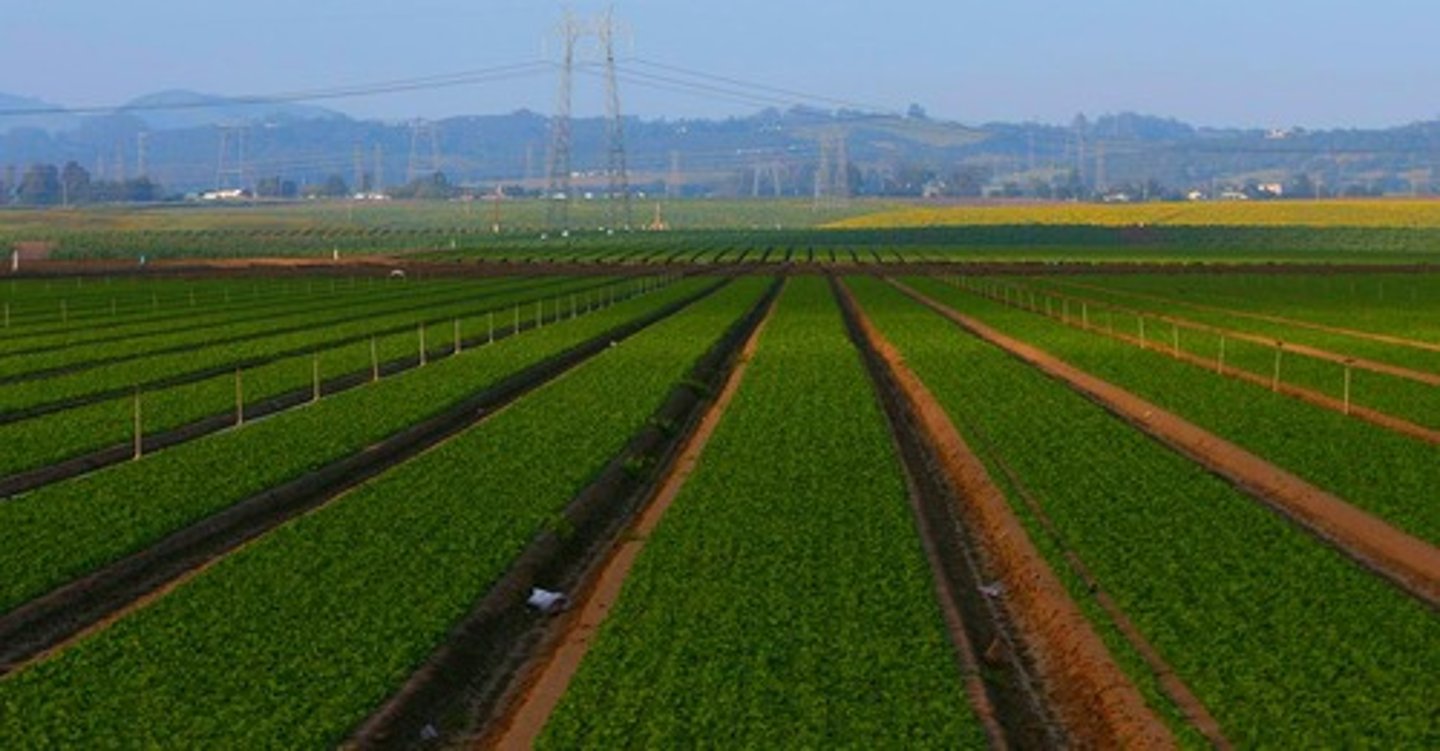
Agricultural Revolution
The term used to describe the advances in farming technology and techniques during the eighteenth century.
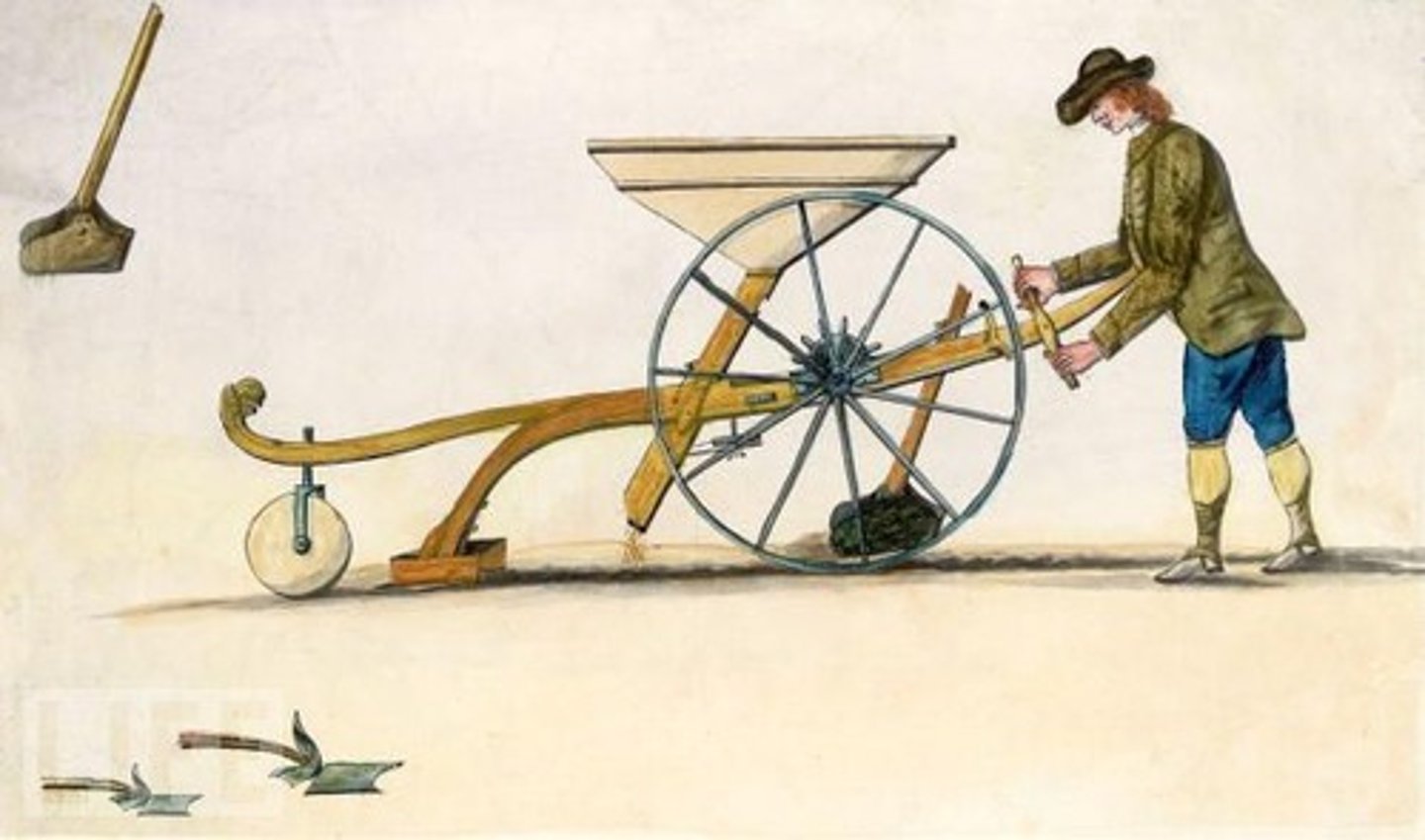
The Seed Drill
An invention by Jethro Tull that let farmers plant seeds in rows and also prevented birds from easily swooping down and eating the seeds before they could grow and produce food.
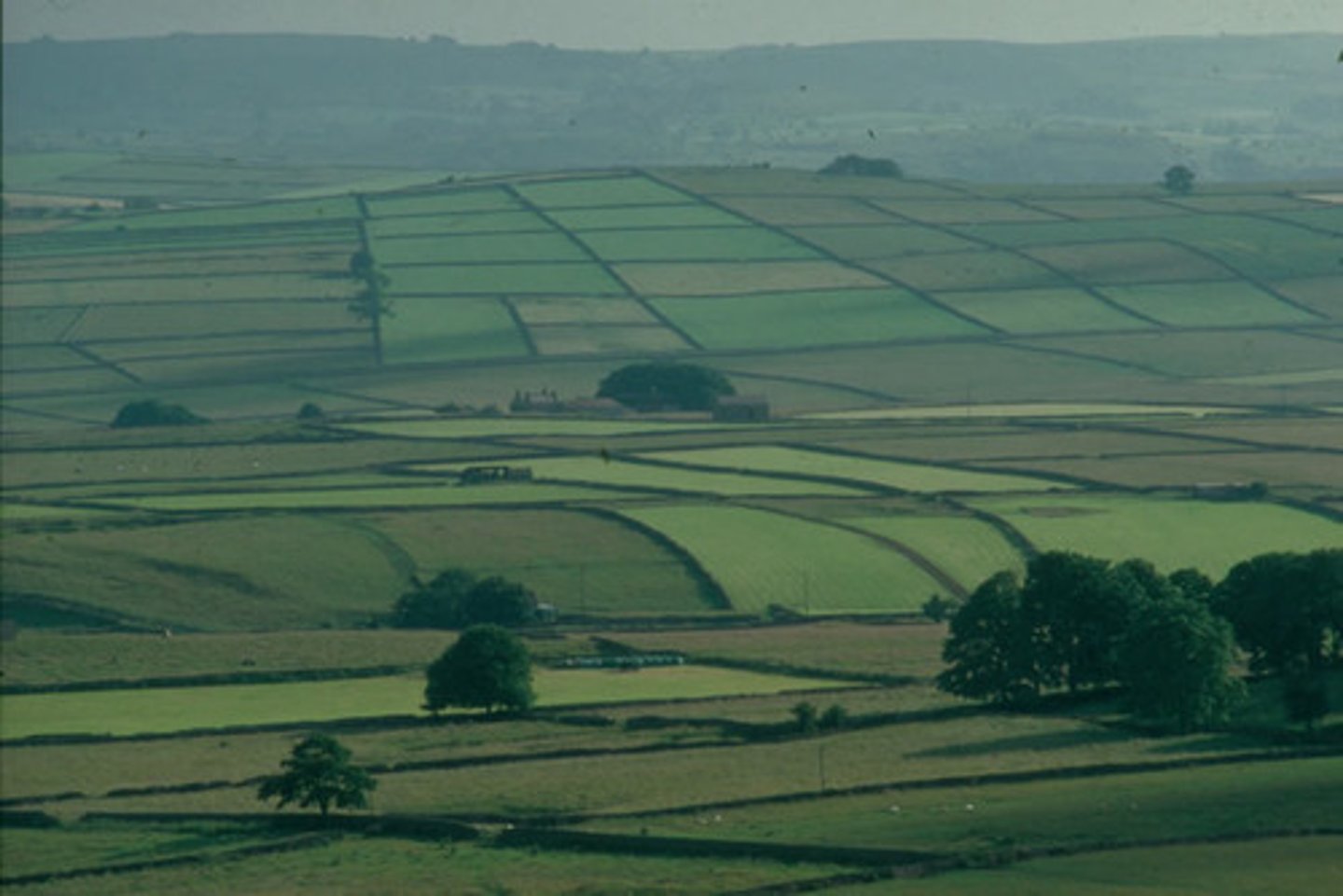
Enclosure Acts
An act of the English Parliament that let wealthy land owner enclose their lands, destroying the livelihood of many small farmers forcing them to become day laborers for the wealthy.
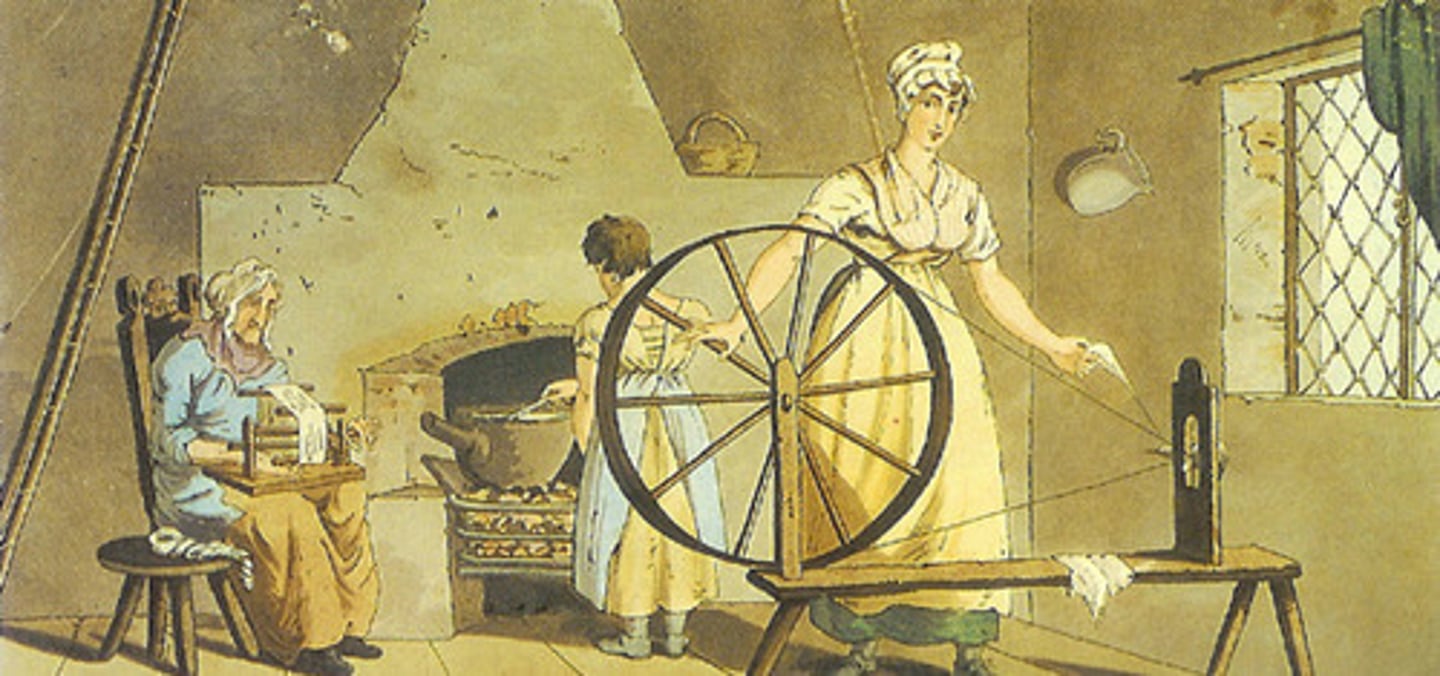
Cottage Industry
The term used where people would produce goods in their own homes and then sell them in markets. This predates the development of factories.
Treaty of Paris 1783
The peace treaty that saw Great Britain recognize the independence of the American colonies and granted the Americans control of the western territory from the Appalachians to the Mississippi River.
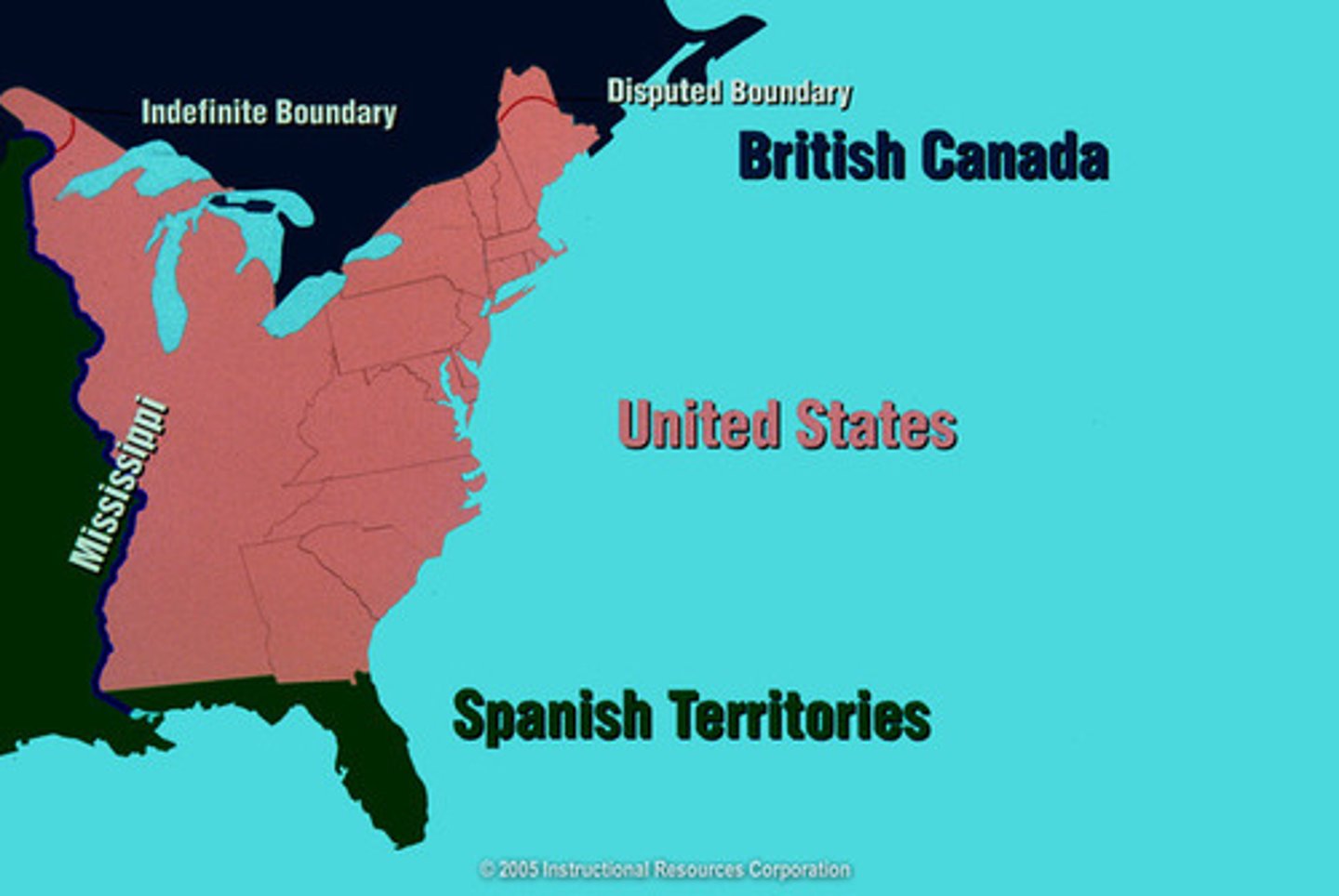
The American Revolutions impact on Europe
Many in Europe saw this event as the embodiment of the ideals of the Enlightenment. Many would push for such ideals and even revolution using the newly formed United States as an example.
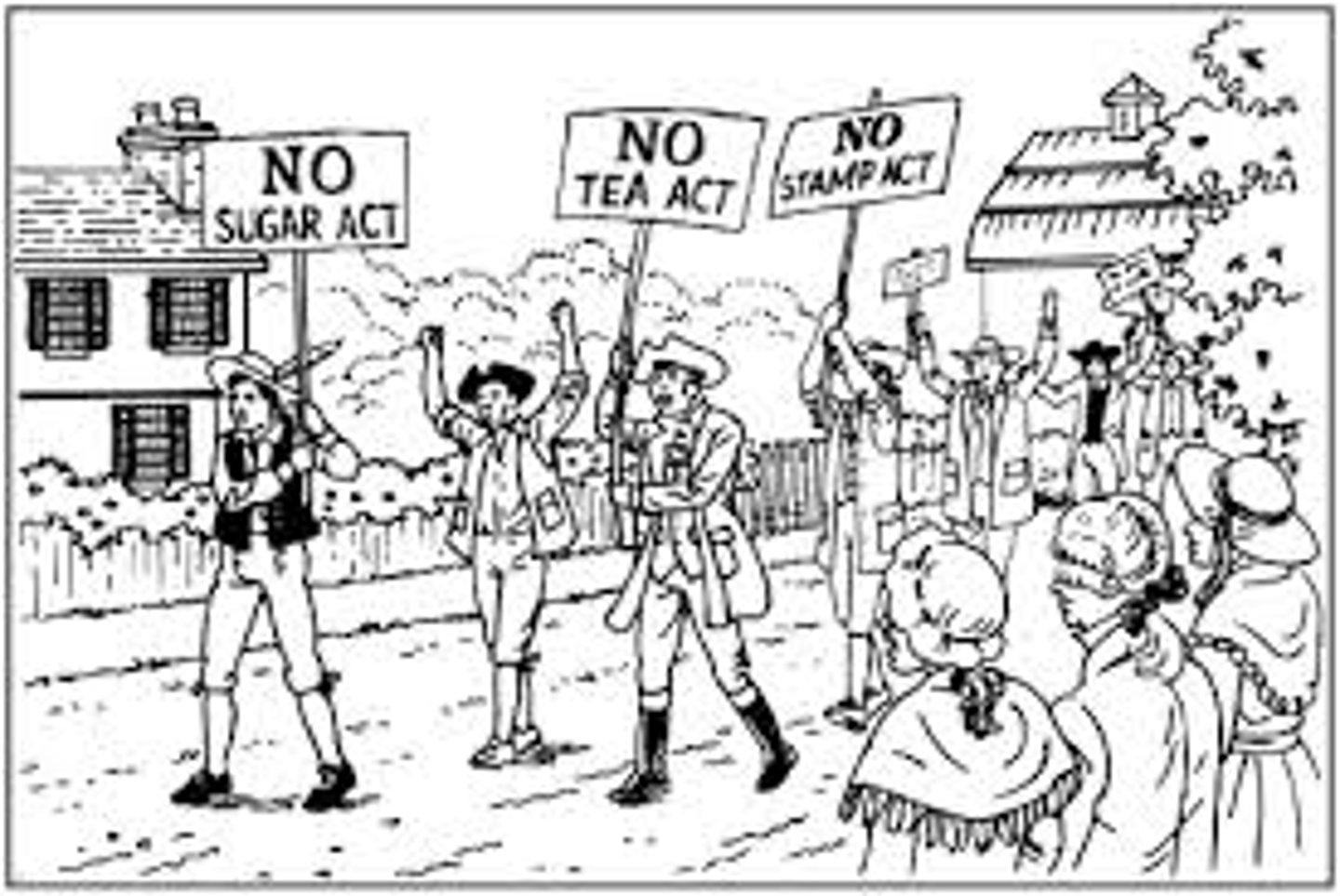
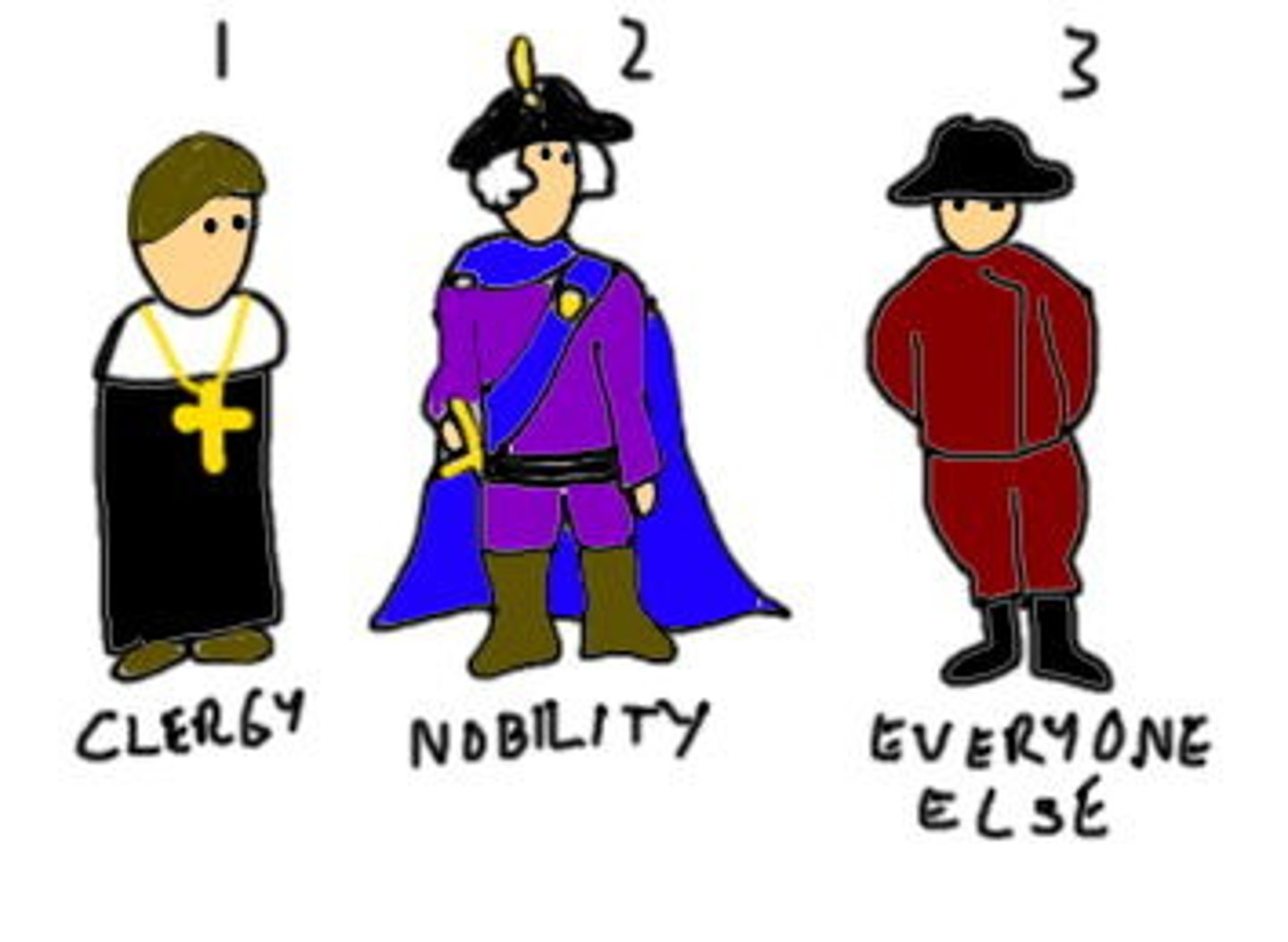
The First Estate
This group numbered around 130,000 in France. This social class was made up of the Clergy. This included the high officials down to the priests and monks. The church was exempt from paying taxes, only paying the state a voluntary amount every 5 years.
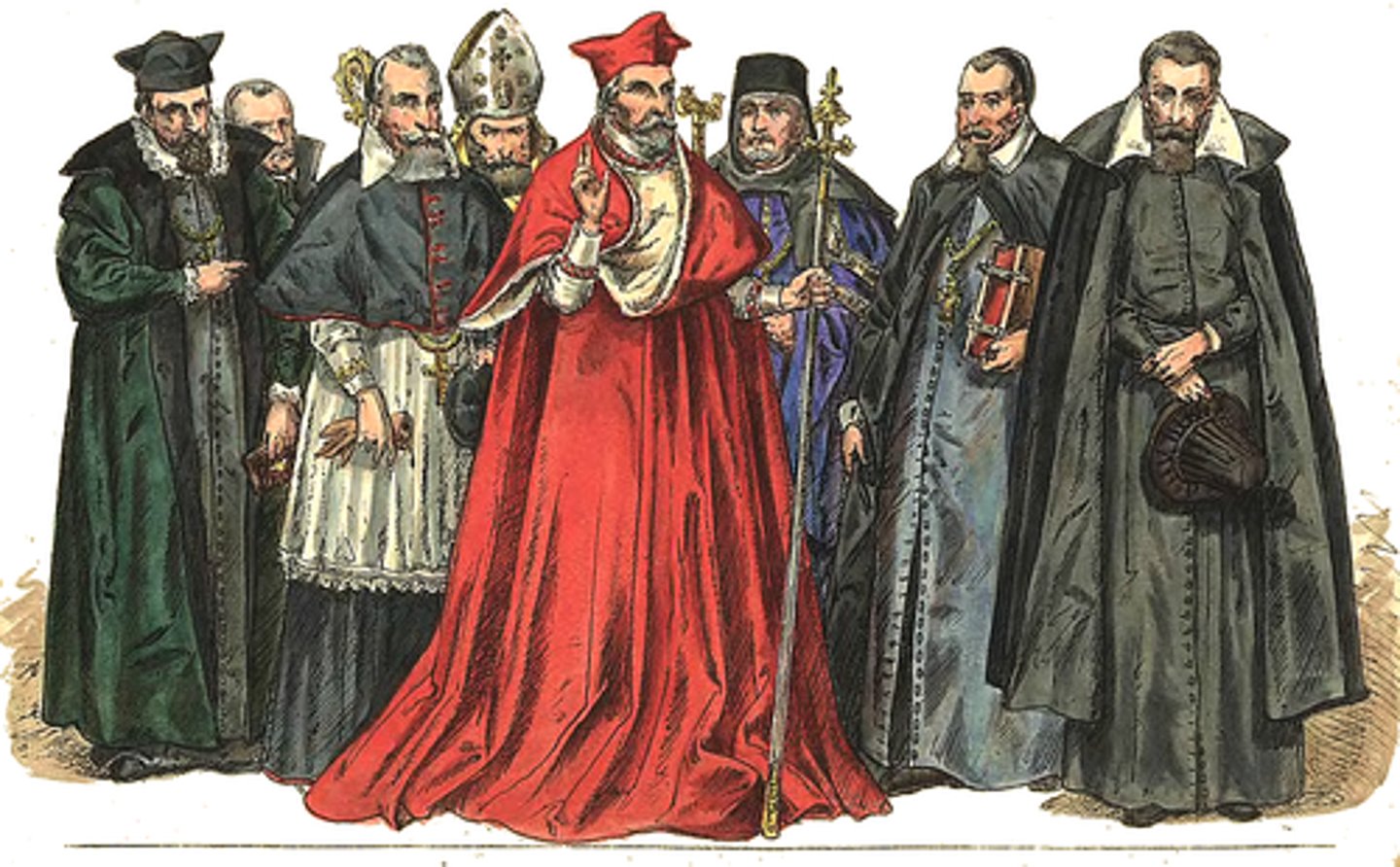
The Second Estate
This group numbered around 350,000 people in France. This social class was composed of the nations nobility. They were exempt from taxes. This group had 2 parts, the Nobles of the Sword and Nobles of the Robe.
The Third Estate
This part of French society was made up of commoners and made up the great majority of France. This group had a wide variety within its ranks, from the lowest peasant to skilled artisans and business owners. Made up of the poorest of society, this group paid nearly 100% of the nations taxes.
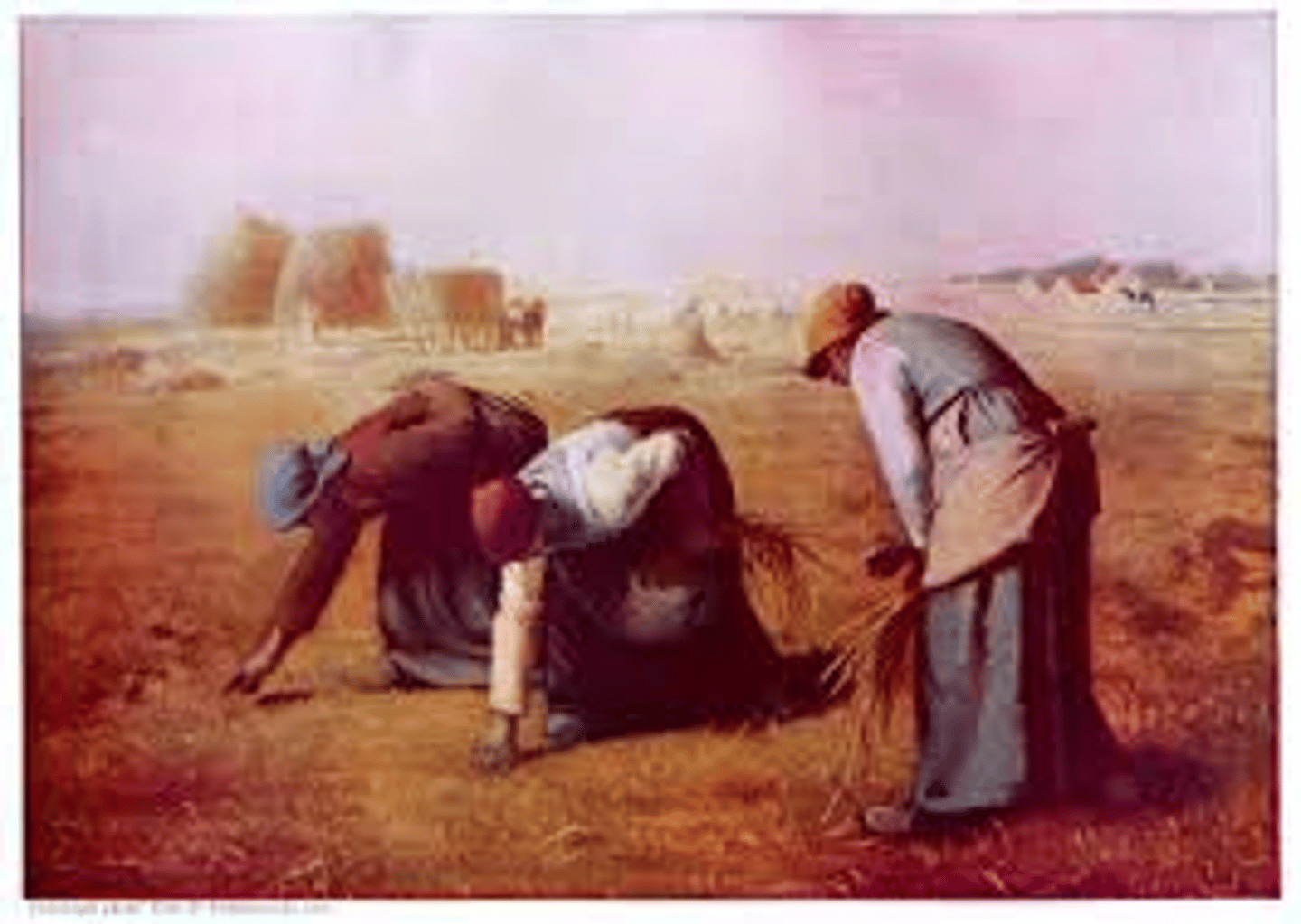
The Old Order
The term used to describe the system in France that held the roles in society to the rigid system of estates and ranks in society rather that merit or ability.
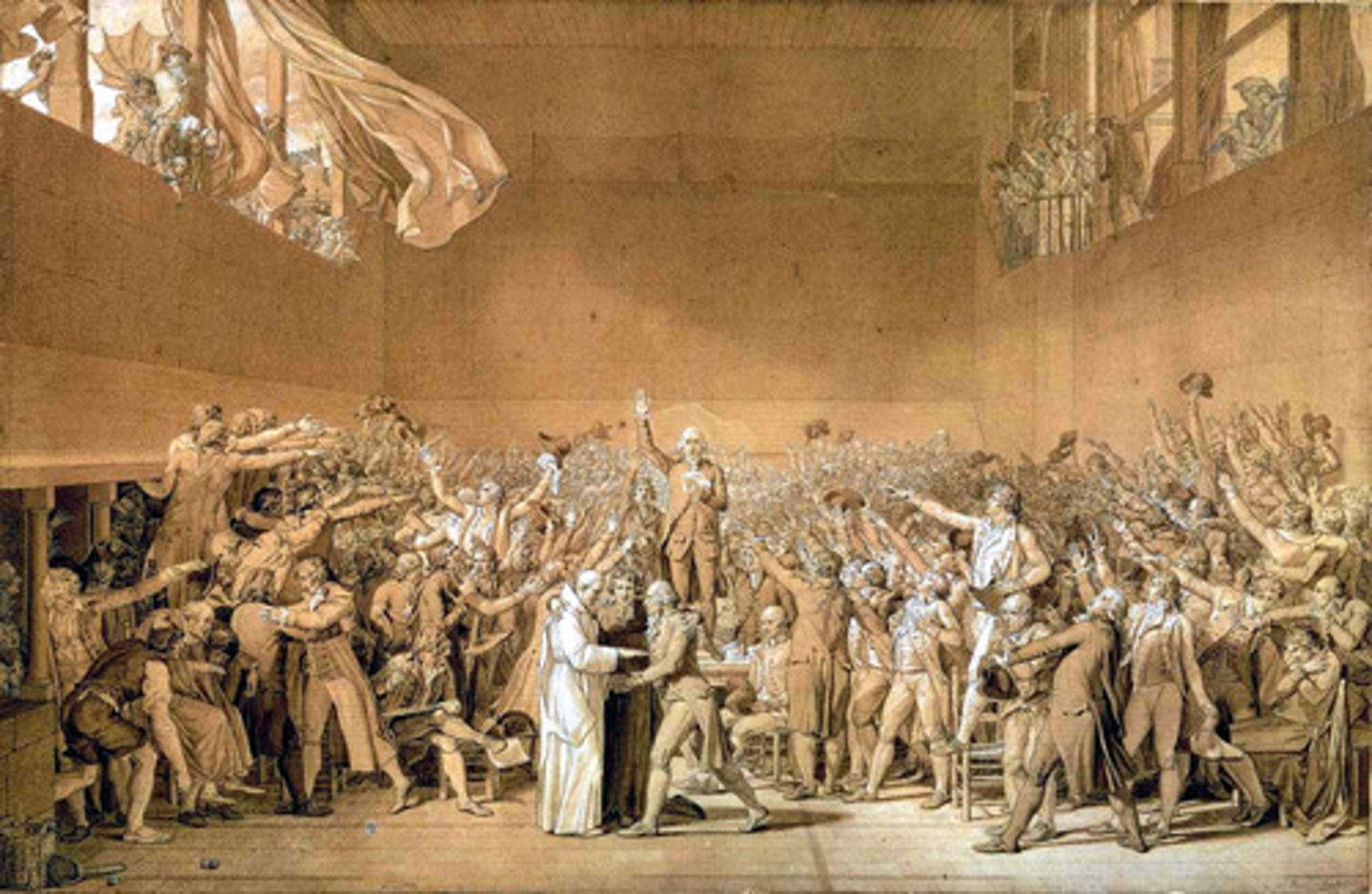
The Tennis Court Oath
A meeting of the Third Estate on June 20, 1789 that took place after they were locked out of the normal meeting place to work on a new constitution for France.
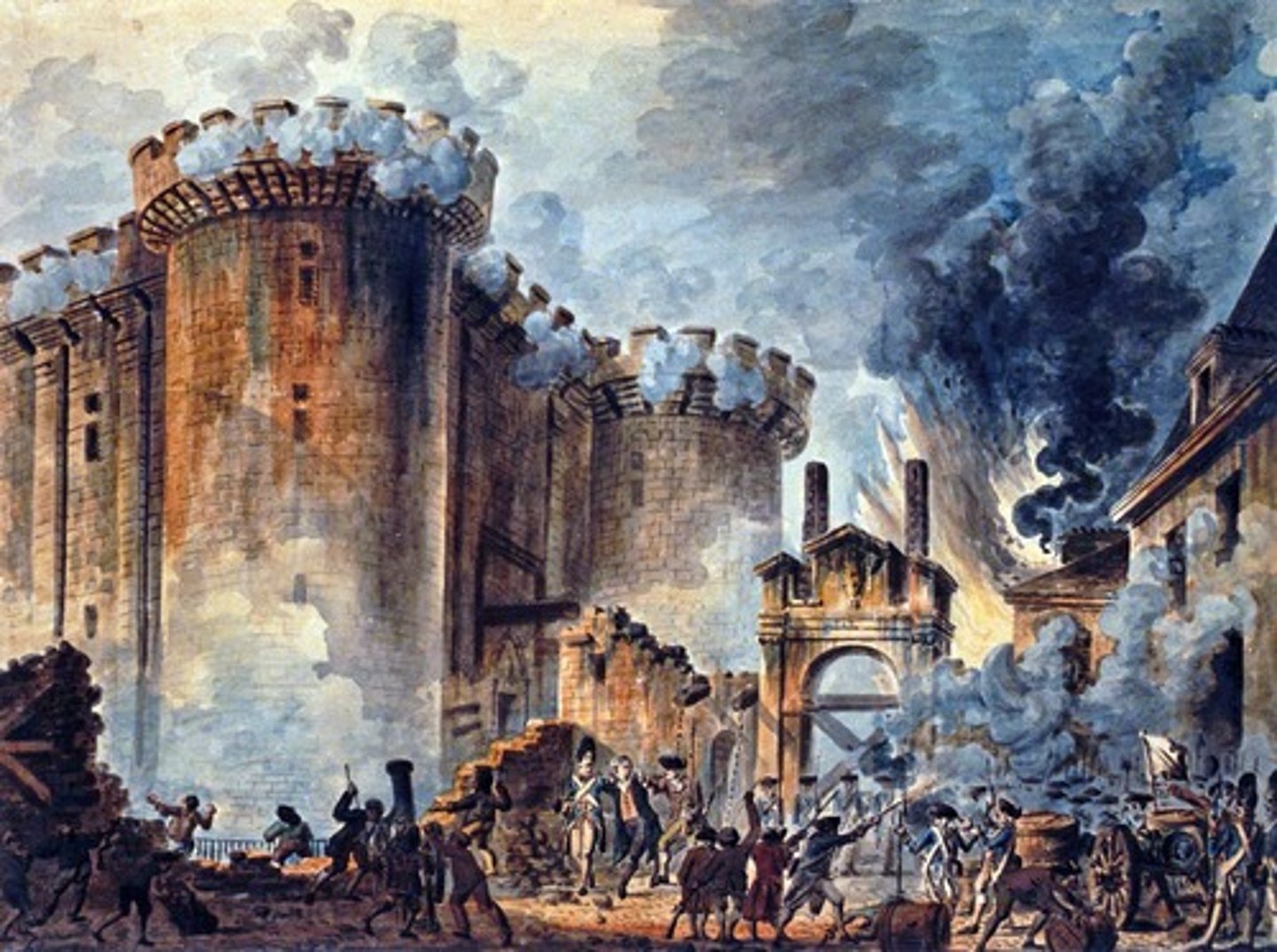
The Bastille
The storming and capture of this infamous political prison was a large symbolic victory for the rebels in their attack on the French government. Its loss showed the monarchy no longer held control of the country or the army.
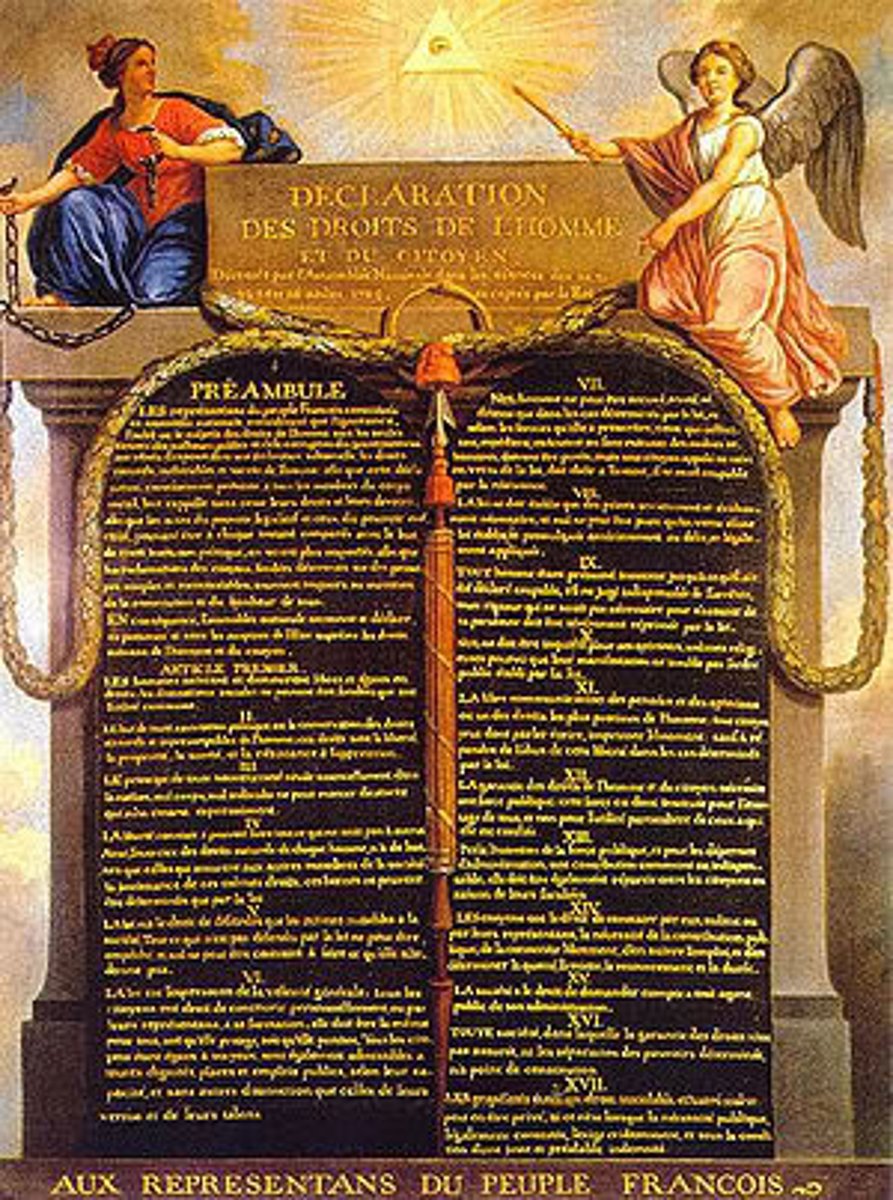
The Declaration of the Rights of Man and the Citizen
A charter in the early part of the French Revolution that reflected the ideals of the major philosophes of the French Enlightenment and the American Declaration of Independence.
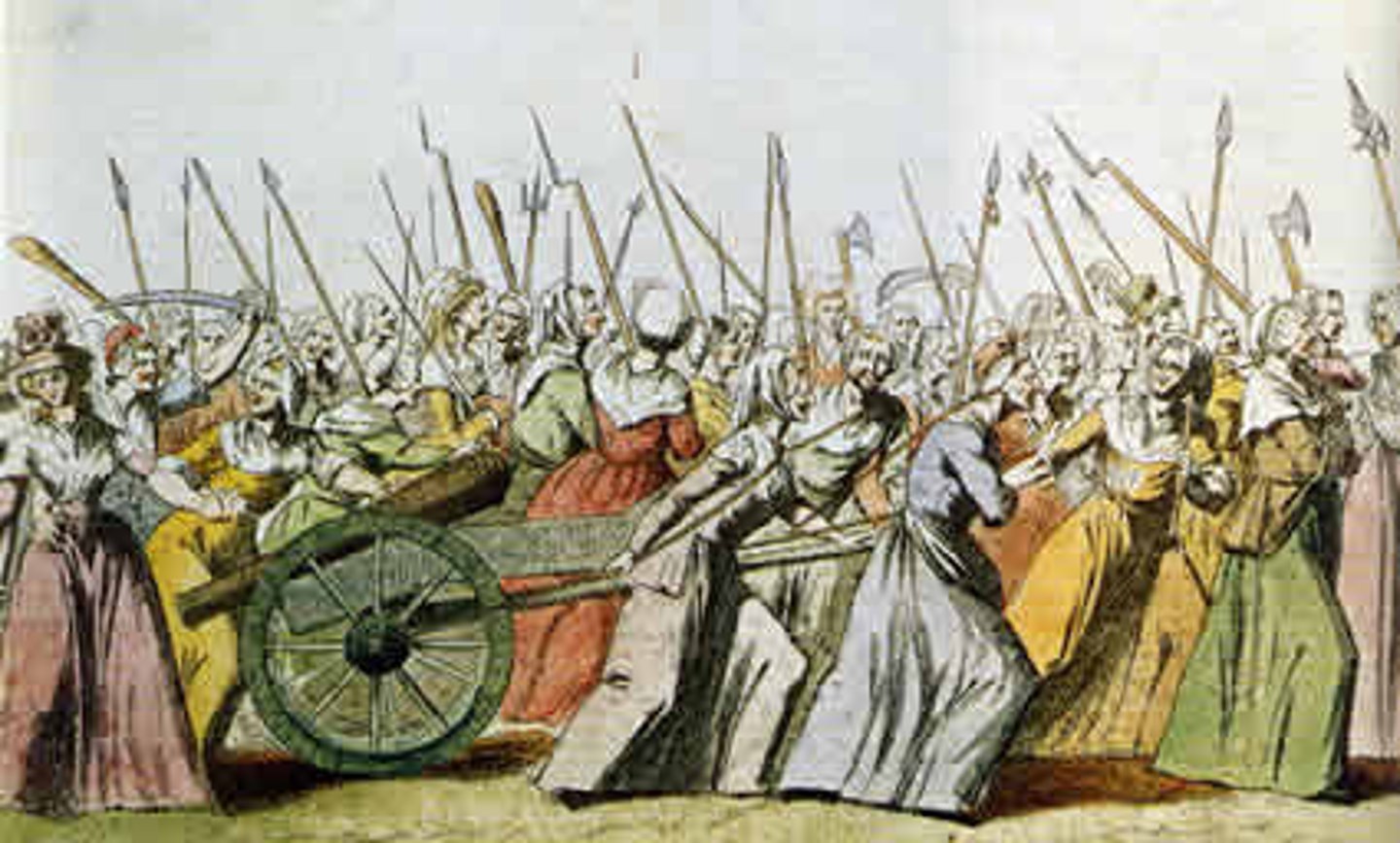
Women's March to Versailles
A large group of French women walked to the King's palace to plead for better conditions and bread for their starving children. It ended with the King being brought back to Paris as a virtual prisoner.
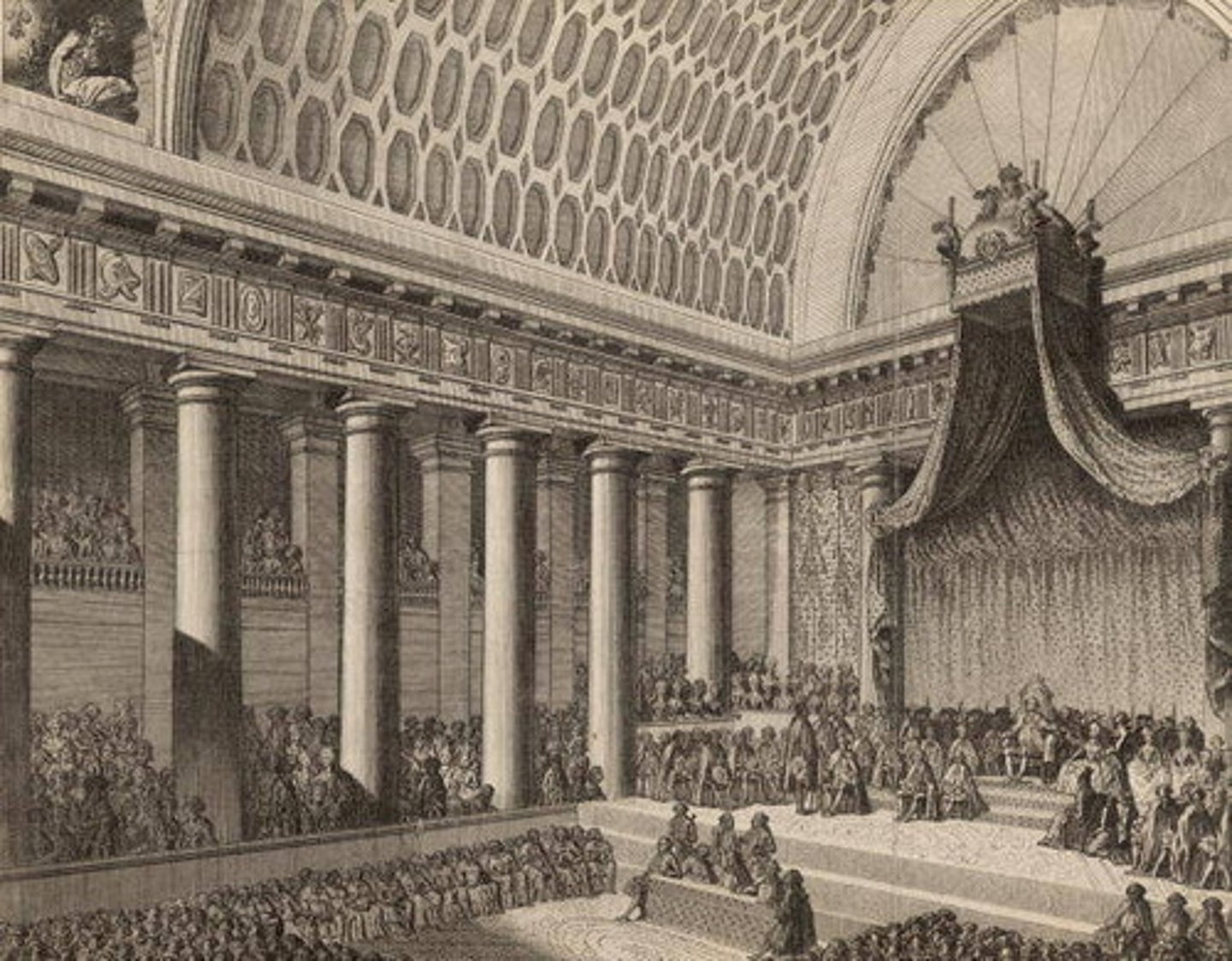
The National Assembly
This would become the new basis for the French government in the early French revolution and would work on a constitution and new government to replace royal power. It would be made up of many who where members of the Third Estate.
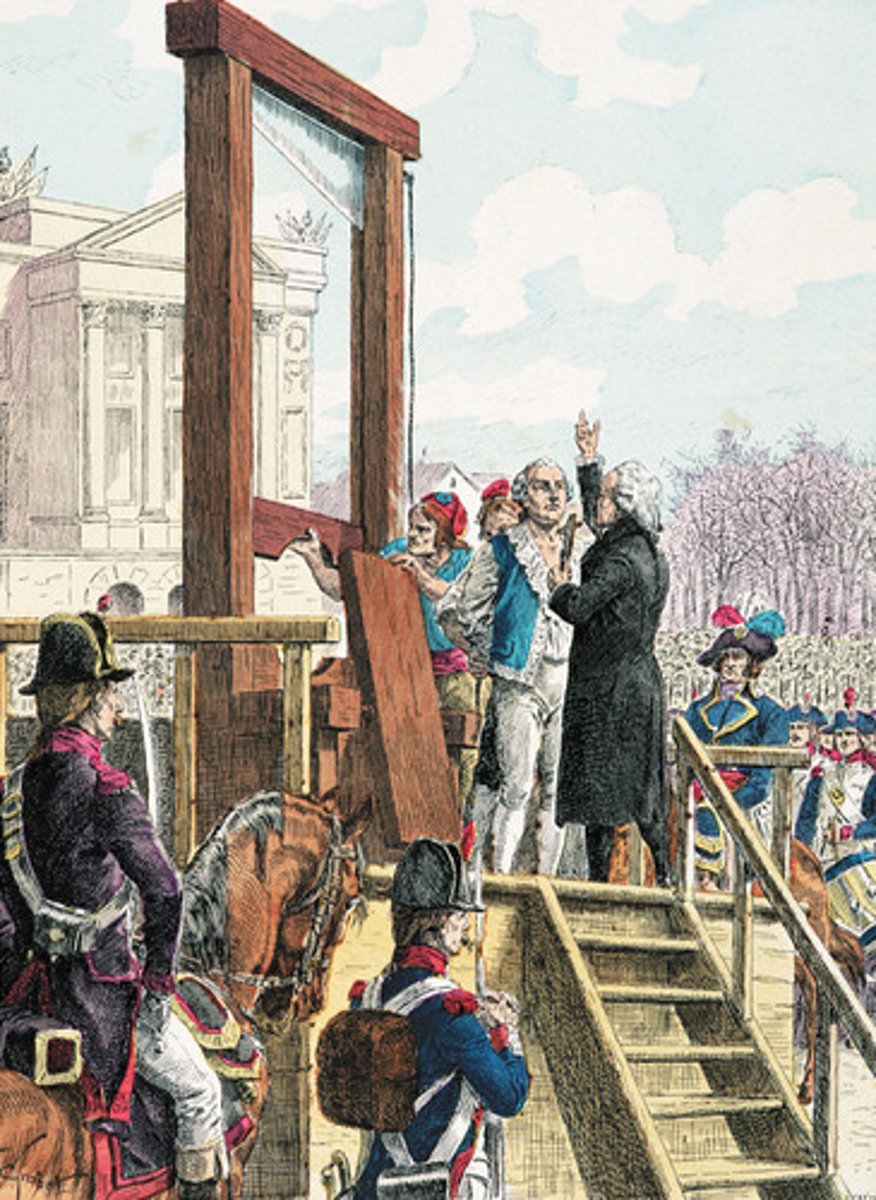
Committee of Public Safety
This was a revolutionary body used to carry out the Reign of Terror. It's purpose was to instill fear and destroy those who would oppose the goals of the revolution. Royals, former revolutionaries, peasants, and innocents would all be it's victims.
De-Christianization
This was the attempt to rid France of the influences of the Catholic Church in France. It involved the removing of religious names from streets, the looting of churches and even replacing the calendar.
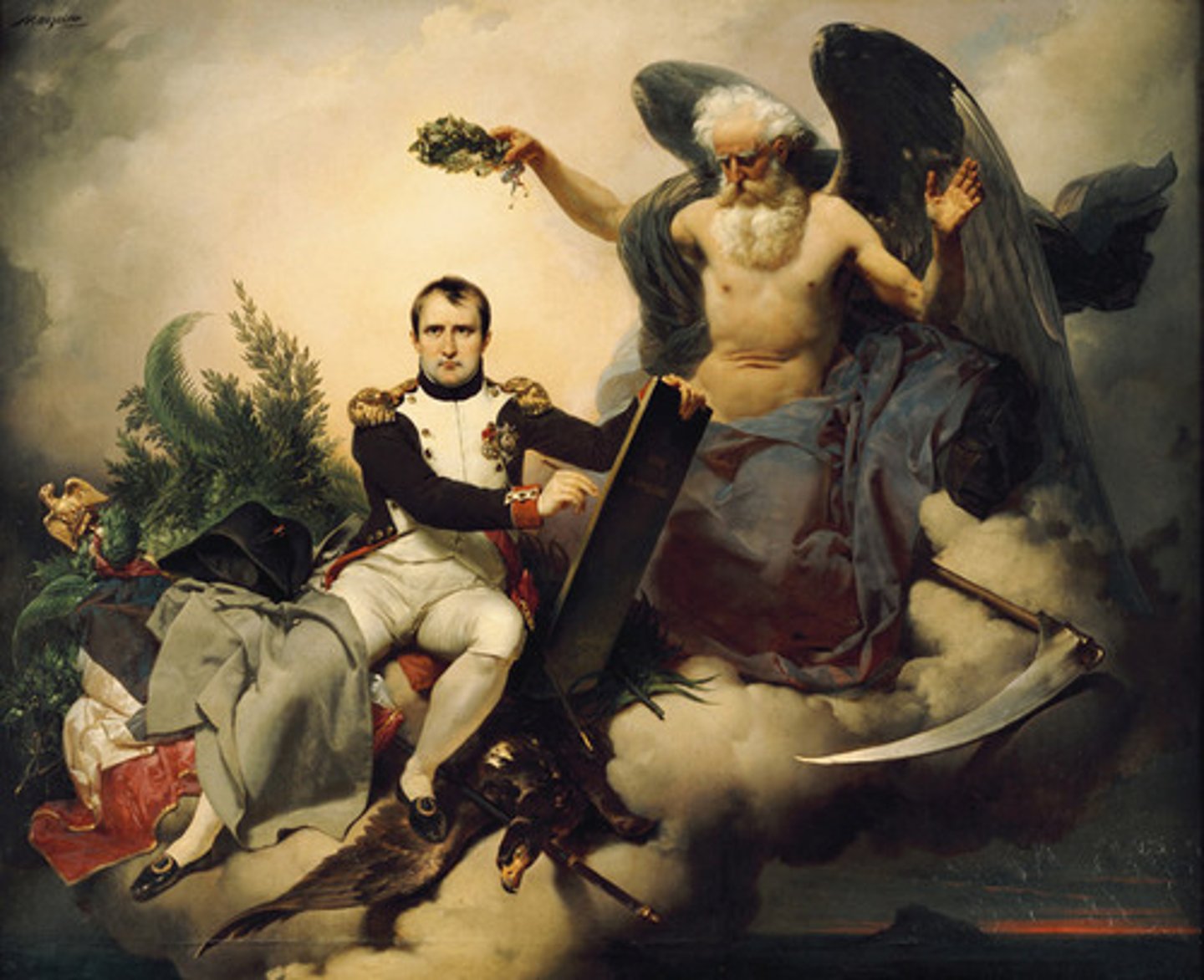
Code Napoleon (Napoleonic Code)
A major overhaul of the French legal system that took hundreds of different legal systems and laws and put them into a coherent system. This new Civil Code protected many of the gains of the revolution but would be a setback to the rights of women.
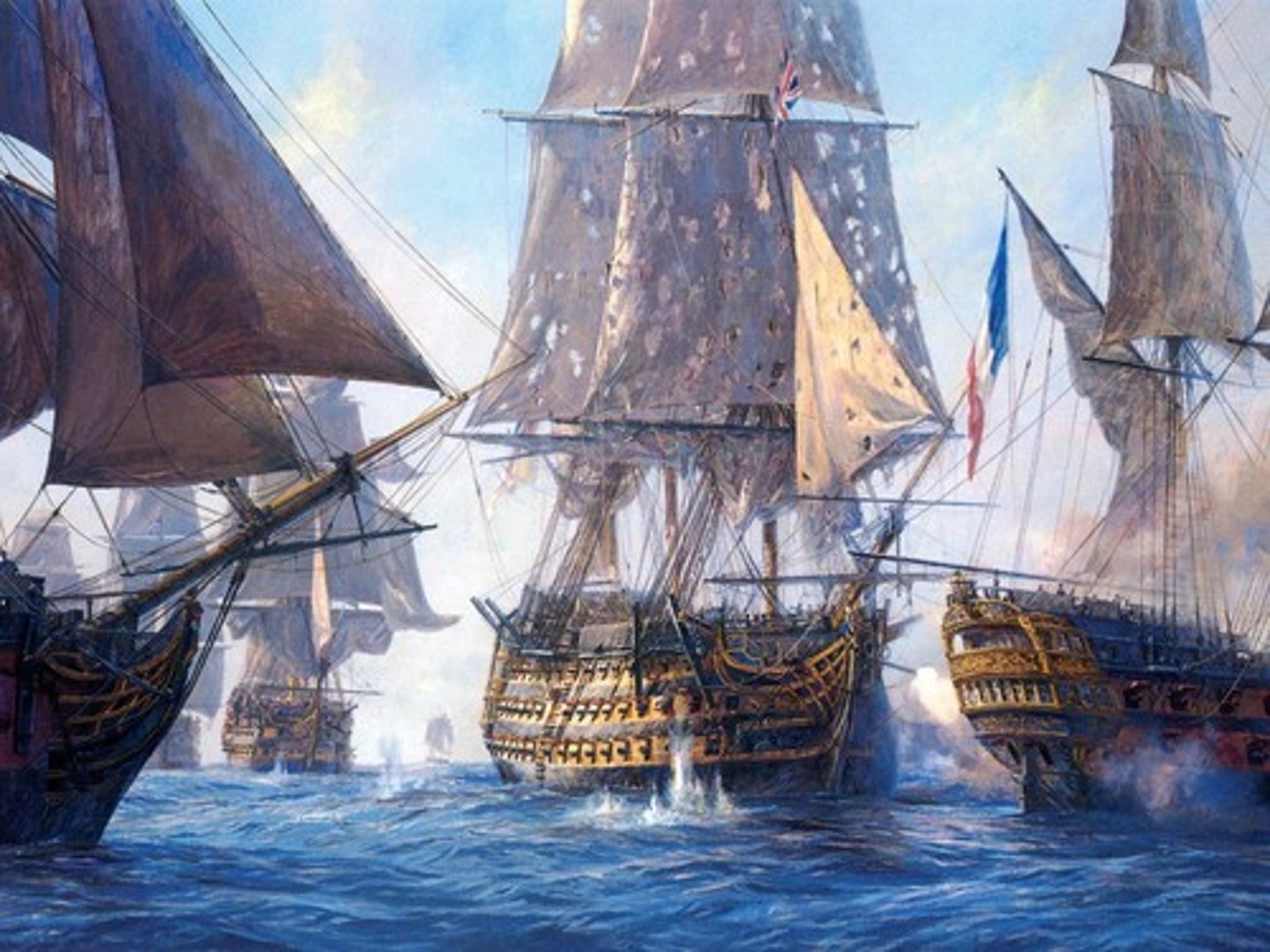
Trafalgar
A major naval battle and defeat for the combined French and Spanish ships. It showed that the English would keep control of the seas and would remain safe from French invasion.
Continental System
This was a system developed by France to try and lock out the British from European markets in an attempt to ruin them financially. It was a major failure.
Nationalism
The solidarity felt by a people of the same nation, who speak the same language and often religion. It was a force that contributed to countries eventually fighting back and defeating the armies of Napoleon.
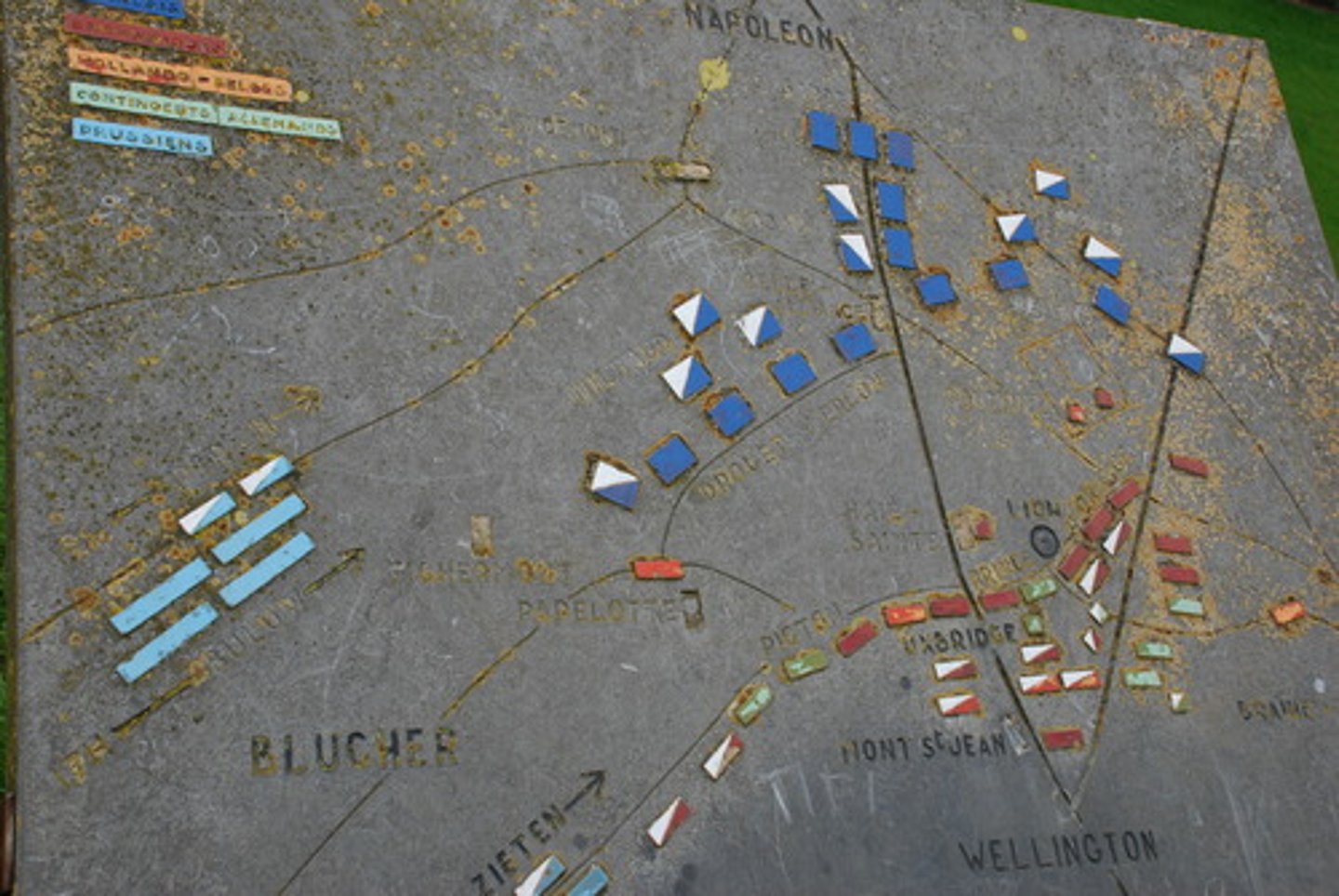
Battle of Waterloo
The final major battle and defeat of Napoleon in 1815. After this he would be exiled to the small island of Saint Helena and later die in 1821.
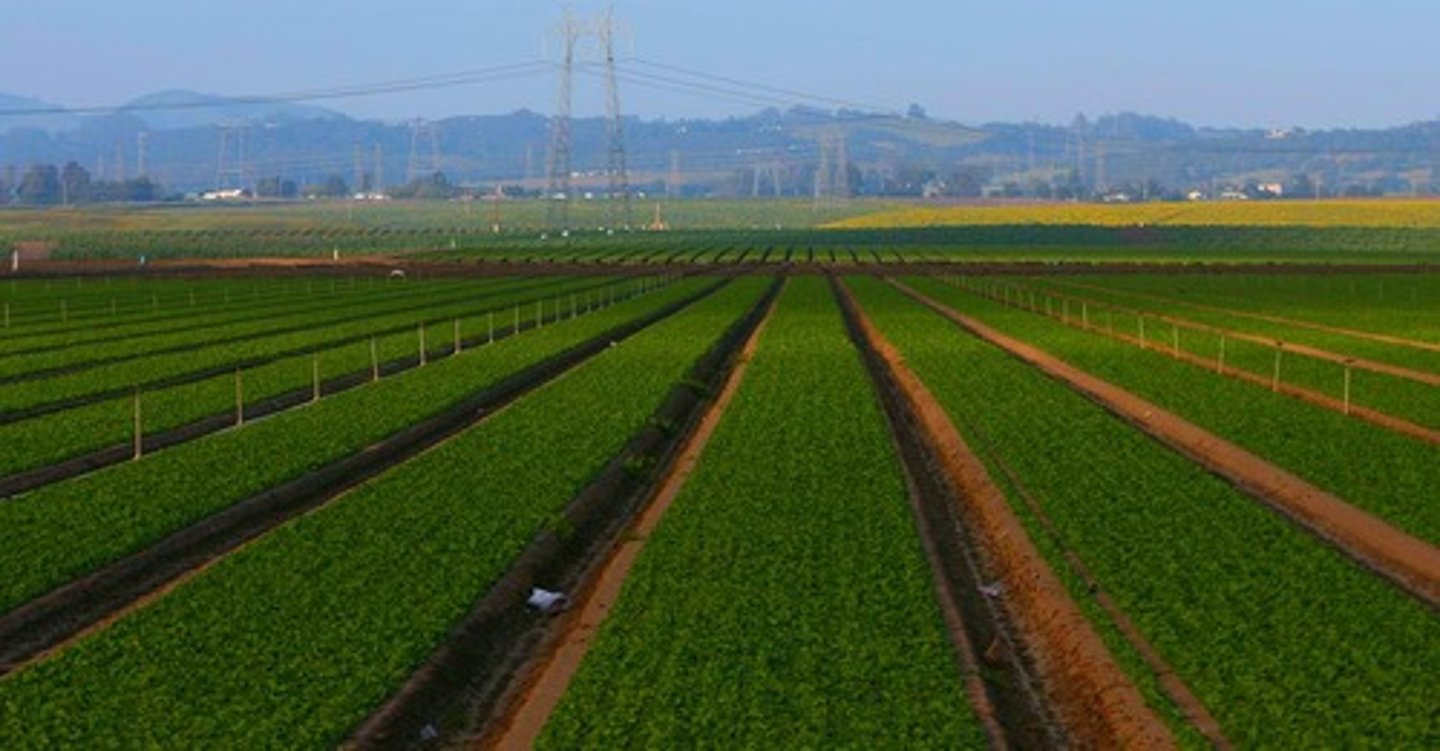
Agricultural Revolution
The changes and advances in farming that led to great increases in the amount of food produced. This led to the English having surplus workers being available for the new factory based jobs.
Capital
A term used to describe the money and ability to invest the newly forming industrial base that would start in England.
Mineral Resources
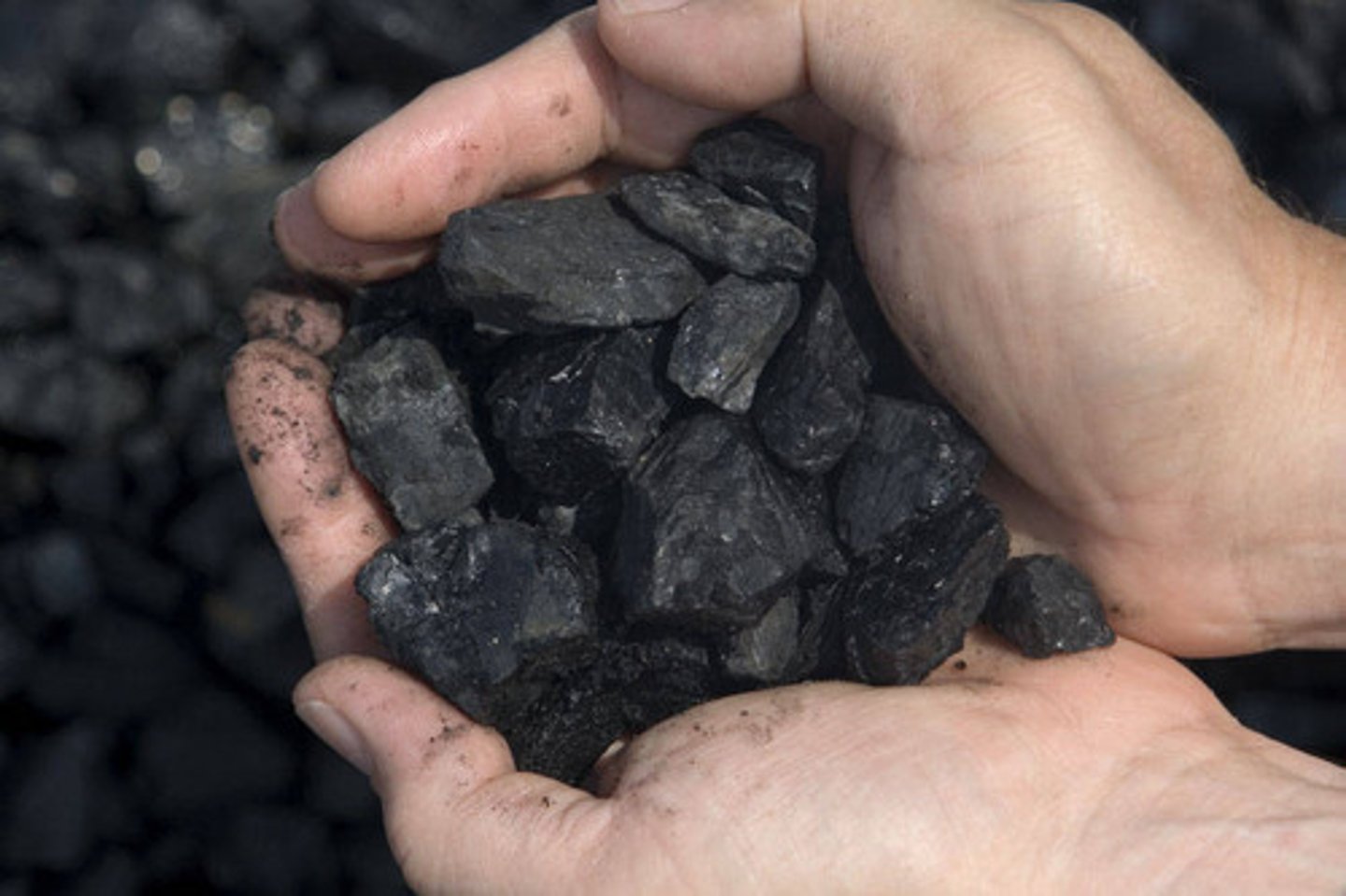
The ample supply of........, iron ore and coal in particular made England the ideal nation to lead and be the starting off point for the Industrial Revolution.
Great Britain
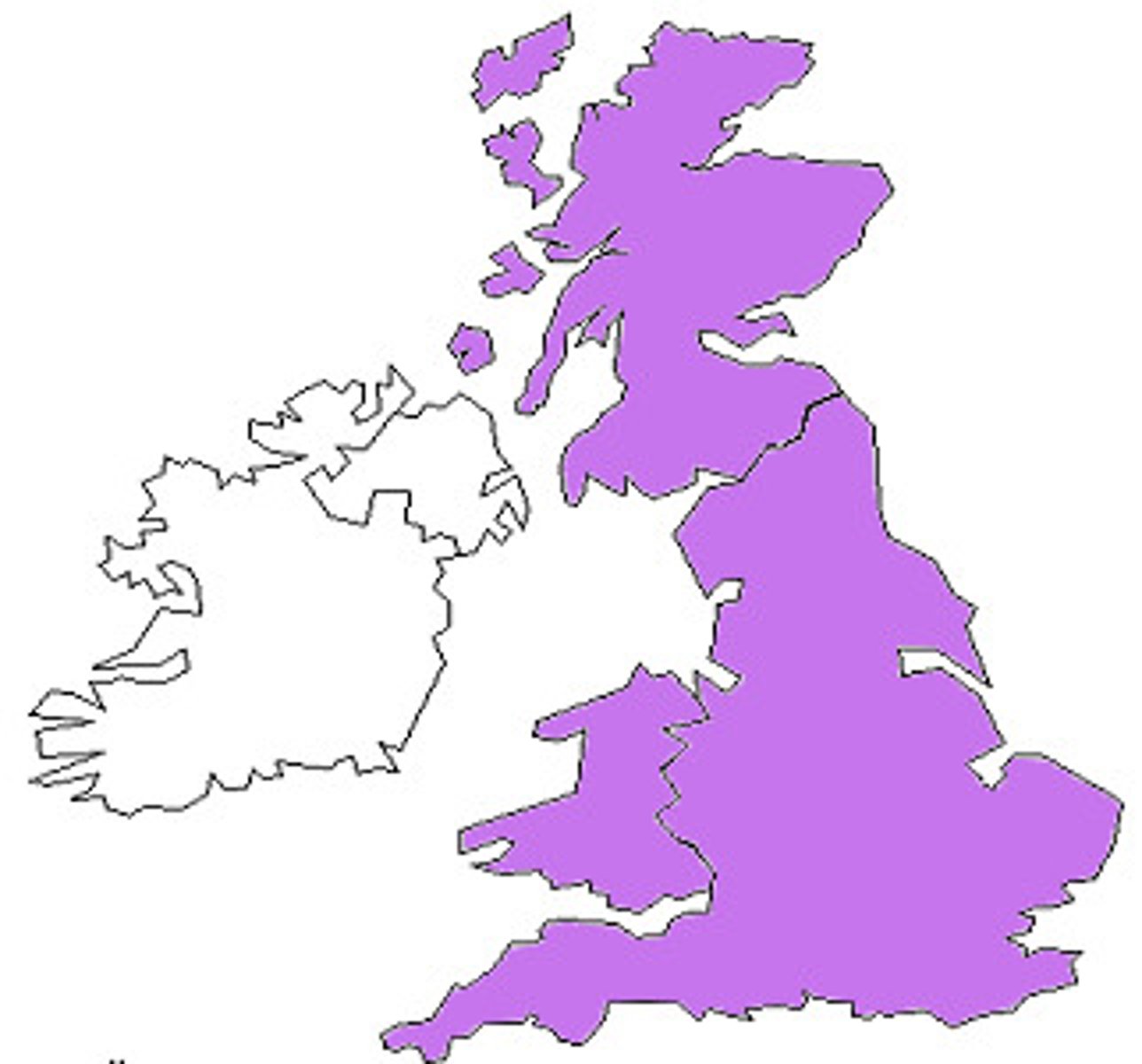
This nation had very favorable government policies and attitudes towards private enterprise that helped create a very favorable business climate starting in the 1700's.
Flying Shuttle
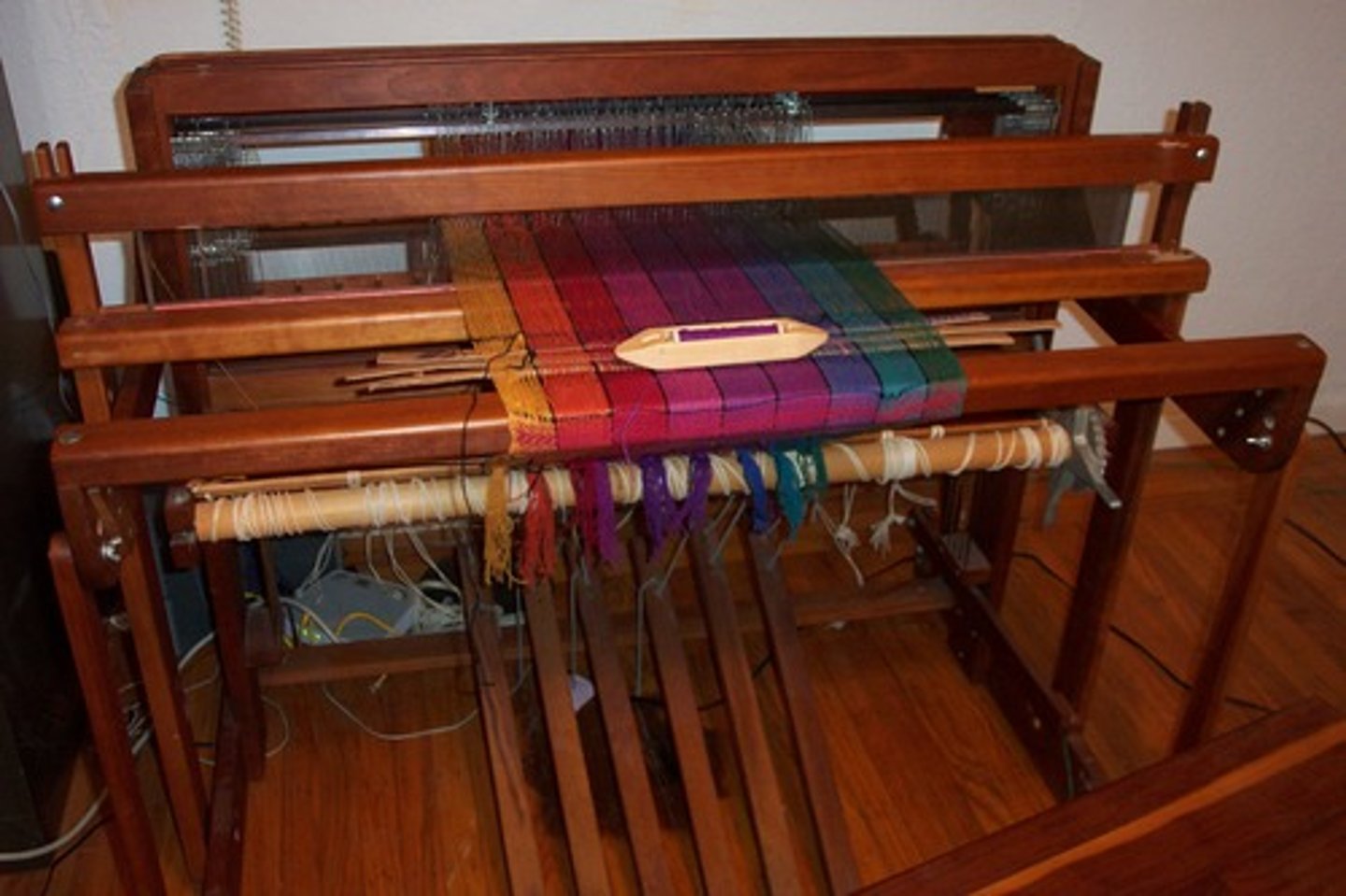
A machine used in the industrial revolution that sped up the process of weaving on a loom, doubling the output of material. However, it would lead to shortages in yarn because of how much faster it worked.
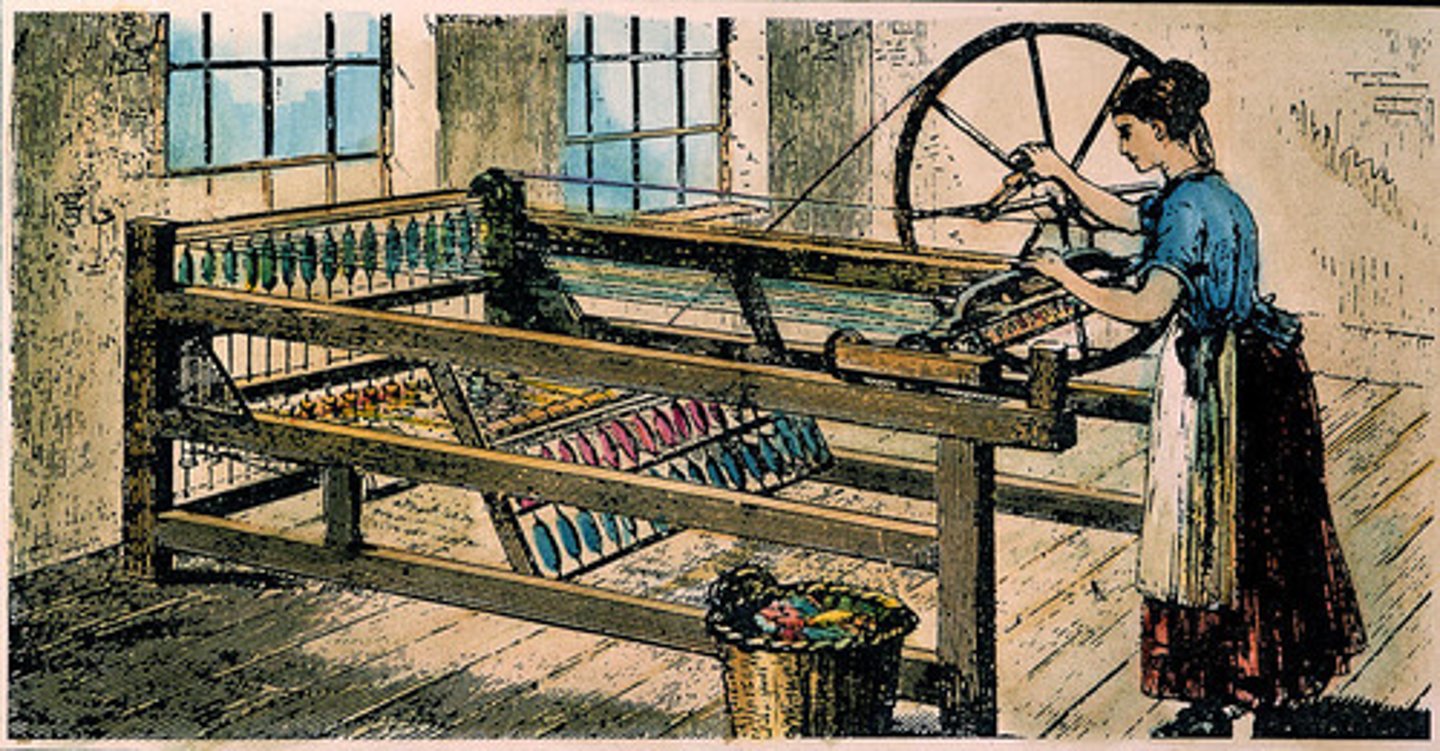
Spinning Jenny
A machine developed to increase the production of yarn used in the production of textiles.