Procedures: chapter 10
 Call Kai
 Learn
Learn Practice Test
 Spaced Repetition
 Match
Match Flashcards
 Knowt Play
1/73

There's no tags or description
Looks like no tags are added yet.
Name | Mastery | Learn | Test | Matching | Spaced | Call with Kai |
|---|
No analytics yet
Send a link to your students to track their progress
74 Terms
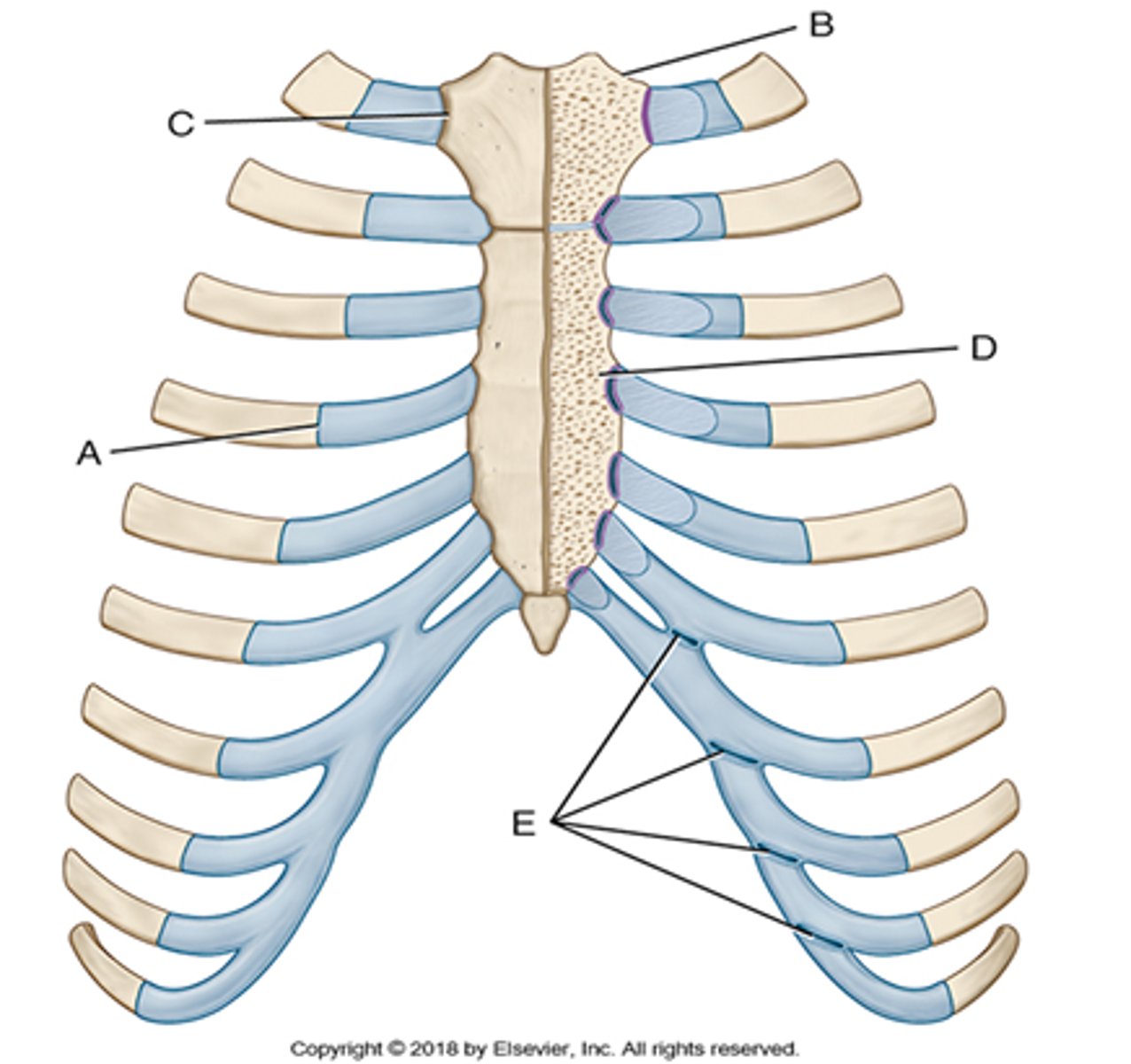
which one is A
Costochondral junction
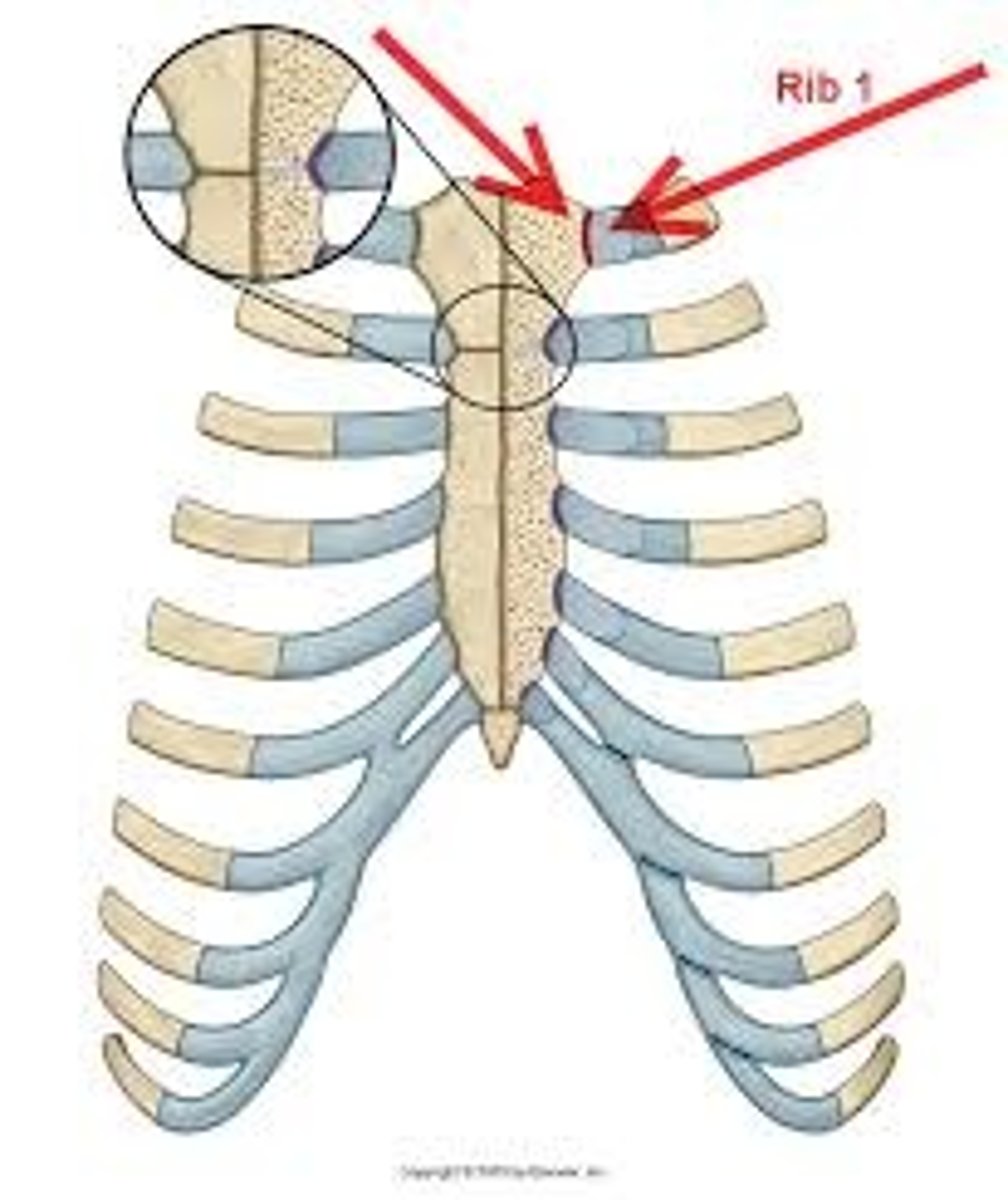
what is it pointing to?
sternocostal joint
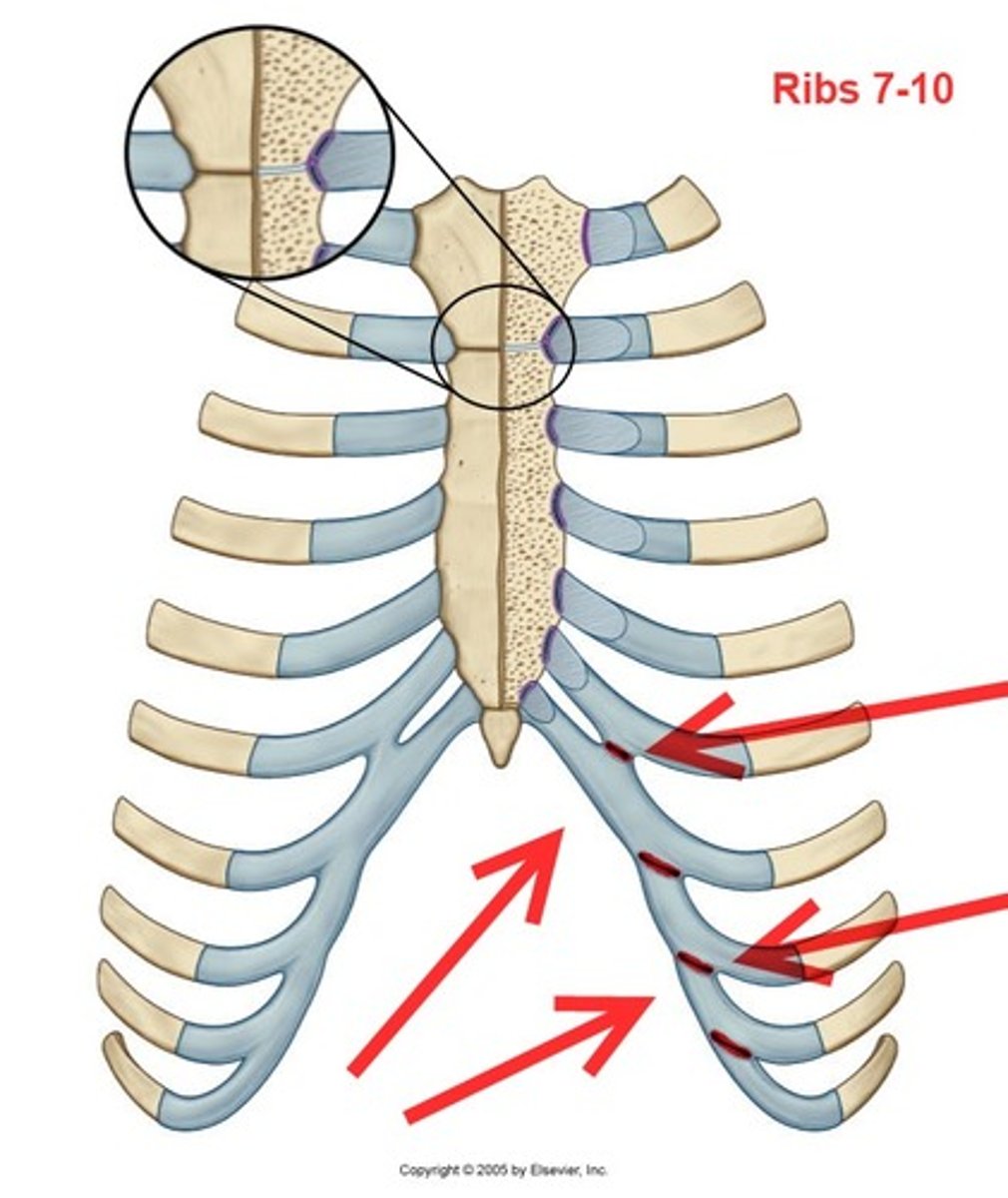
what is it pointing to?
interchondral joints
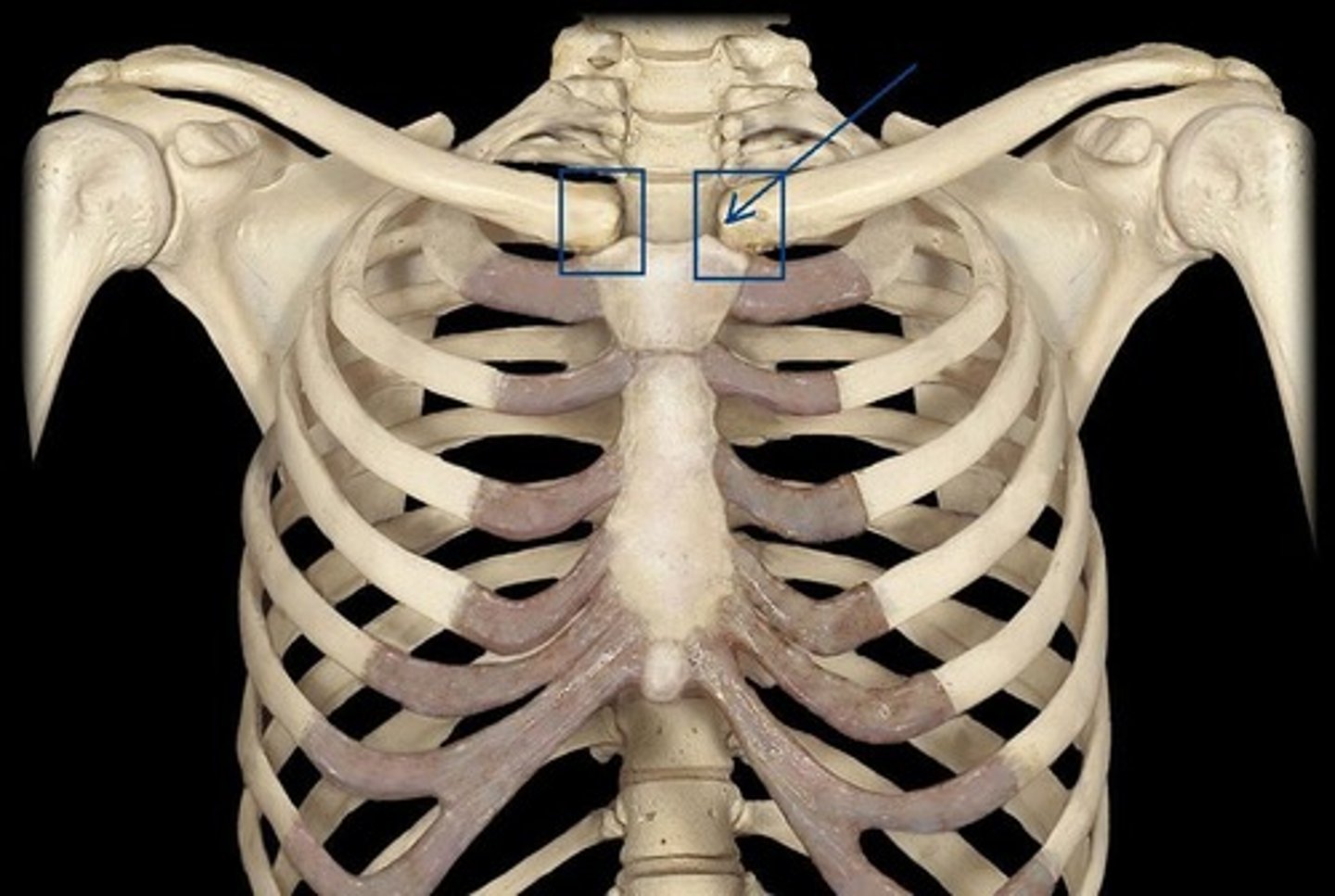
what is it pointing to? diarthrodial, and plane (gliding)
sternoclavicular joint (SC joint)
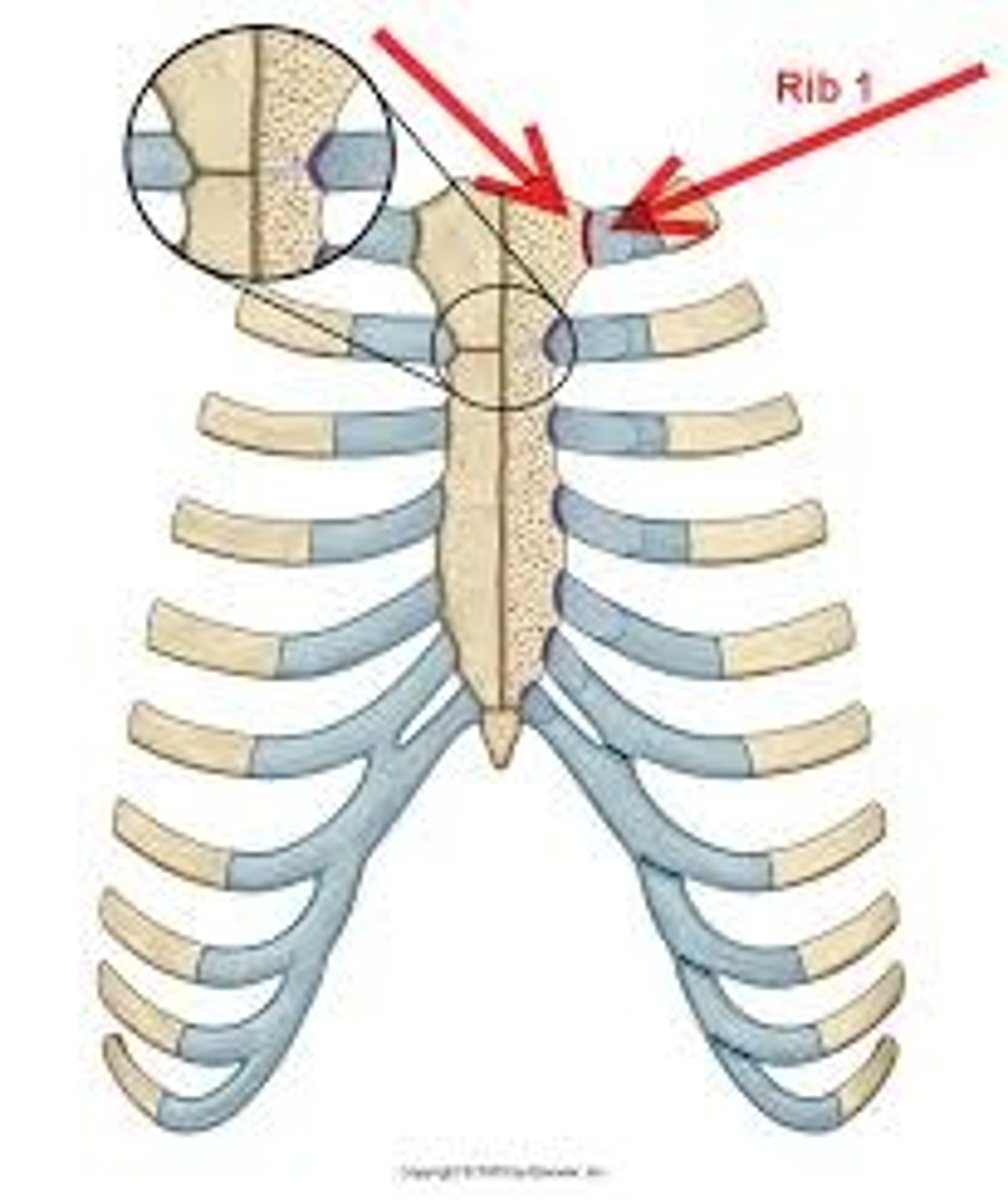
what is it pointing to? synarthrodial
first sternocostal joint
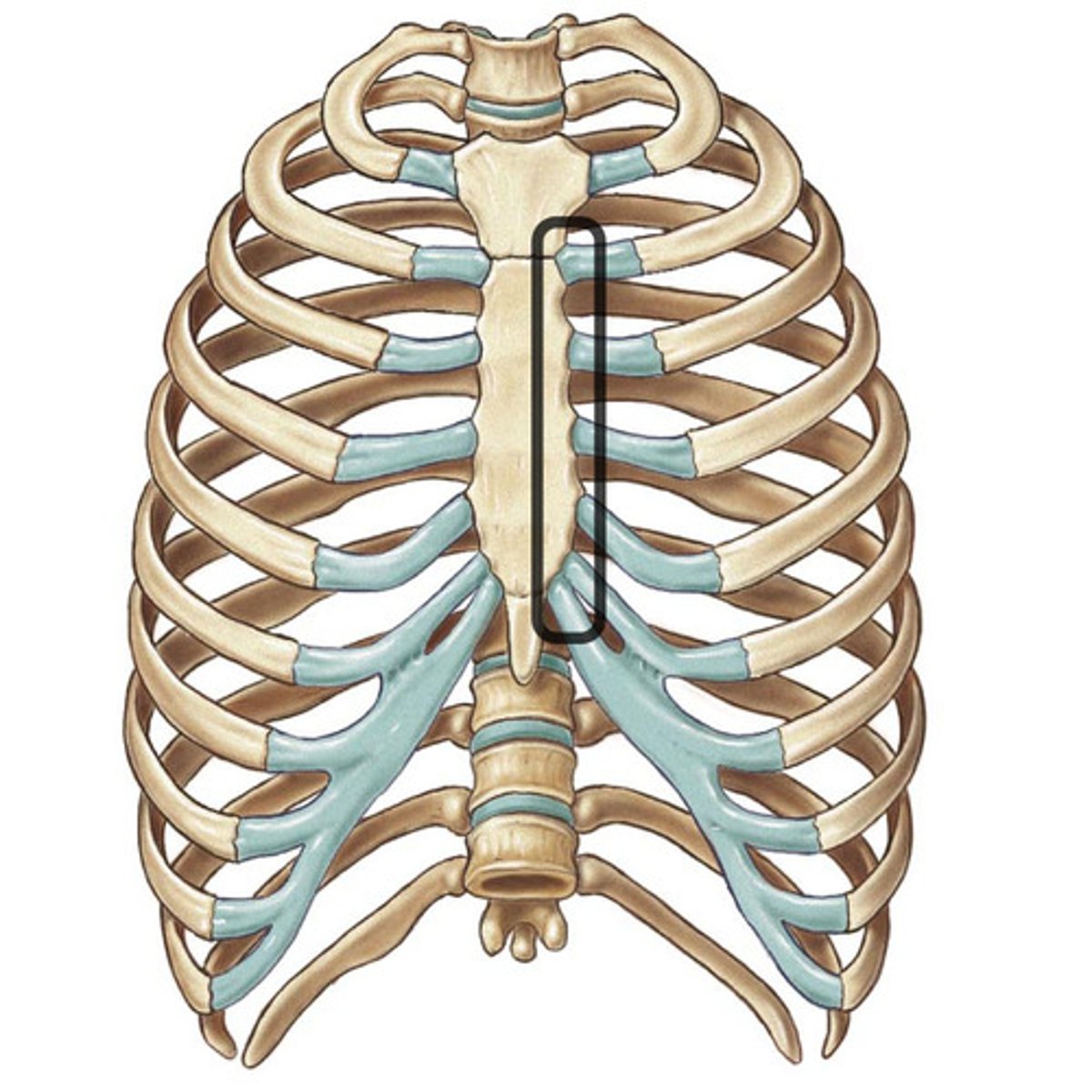
what is it pointing to? diarthrodial, plane (gliding)
2nd-7th sternocostal joint
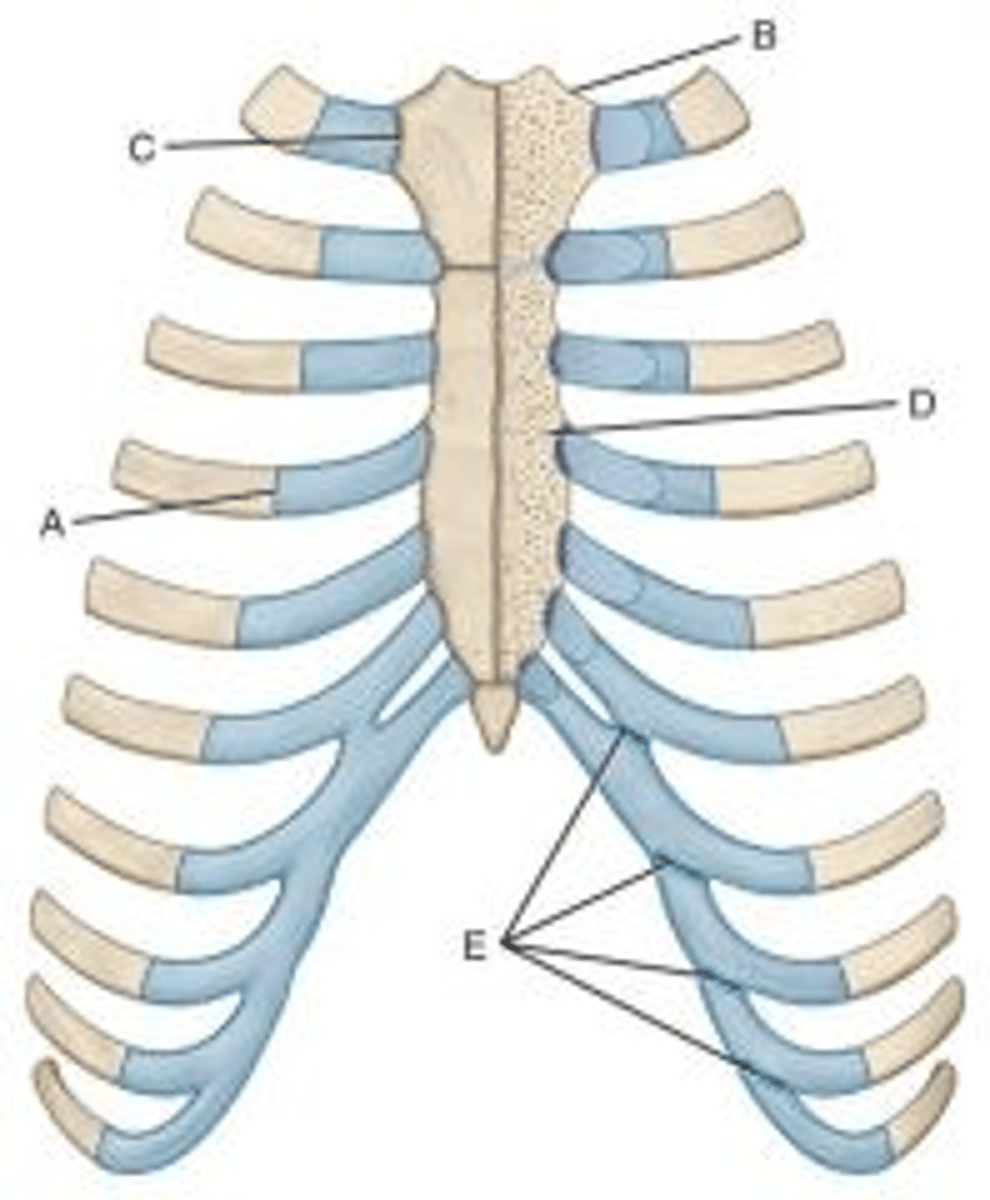
what is E pointing to? diarthrodial, plane (gliding)
6th-9th interchondral joints
what are the 3 parts of the bony thorax?
sternum
12 thoracic vertebrae
12 pairs of ribs that connect them
expand/contract during respiration
protect organs of respiratory system, heart, great vessels
what are these 2 functions of?
bony thorax
what are the 3 parts of the sternum?
manubrium
body (corpus/gladiolus)
xiphoid process/tip
made of cartilage till age 40, then turns to bone (endochondral), level of T9-T10
xiphoid process
cartilage to bone
endochondral
what is the level of the jugular notch?
T2-T3
what is the level of the sternal angle?
T4-T5
what is the level of the lower lateral rib margin?
L2-L3
which ribs are true ribs (ribs _ - _)
ribs 1-7
ribs go from high to low moving from ___ to ___
posterior to anterior
plane (gliding) motion
diarthrodial (freely moveable)
tubercle of rib connects to transverse process of vertebrae
found on all ribs EXCEPT ribs 11-12
costotransverse joint
plane (gliding) motion
diarthrodial (freely moveable)
head of rib connects to body of thoracic vertebrae
found on ALL ribs
costovertebral joint
for a RAO you would angle someone with a large chest ___º
15º
for a RAO you would angle someone with a small chest ___º
20º
why do we do an oblique when doing a sternum exam?
this puts sternum in the heart’s shadow
where the pain is determines what 3 things?
routine
breathing
technical factors
why do we do an oblique of the ribs?
demonstrates the axillary portion of ribs
CR (PA) will be at ___
T7
CR (AP) will be ___” below jugular notch
3-4”
breathing instructions for above the diaphragm?
inspiration
breathing instructions for below the diaphragm?
expiration
where the jugular notch and body of sternum come together
sternal angle
what is the only bony connection between the shoulder girdle and bony thorax?
SC joint
what is does the SC joint consist of? (2 things)
sternum
clavicle
ribs that connect directly to sternum
true ribs
which ribs are the true ribs?
ribs 1-7
don't connect directly to sternum, joins onto rib 7
false ribs
which ribs are the false ribs?
ribs 8-12
ribs that don't connect to sternum at all
floating ribs
which ribs are the floating ribs?
ribs 11-12
posterior end of ribs is ___ inches higher than the anterior end
3-5”
part of ribs that connects with thoracic vertebrae
Vertebral end (posterior)
articulates with thoracic vertebrae (posterior)
head
ligament attaches, articulates with the transverse process of the thoracic vertebrae
tubercle
actual piece of anatomy that articulates with vertebrae
facet
inside margin of a rib that includes an artery, vein, and a nerve
coastal groove
why do we ask are you coughing up any blood?
because there are blood vessels in ribs
which end of rib connects with sternum
sternal end (anterior)
Widest diameter of ribs/bony thorax is at rib ___ or ___
8 or 9
Ribs get longer and longer till about the ___ rib, then they get smaller and smaller
7th
named for what is connecting what
joints
what 2 ways can joints be classified?
structure and function
are these diarthrodial (movable) or synarthrodial (doesn’t move)
costochondral junction
1st sternocostal joint
synarthrodial
are these diarthrodial (movable) or synarthrodial (doesn’t move)
sternoclavicular joint
sternocostal joint of ribs 2-7
interchondral joints of ribs 6-9
diarthrodial
what is this the routine for?
PA CXR (72”)
AP or PA unilateral (40”)
side of injury closest to IR
Axillary/Oblique (40”)
45º oblique
rib routine
for a AP/PA ribs above the diaphragm, which ribs should be visualized?
ribs 1-9
Is this for ribs above or below diaphragm?
(PA) CR: T7
(AP) CR: 3-4” below jugular notch and centered to affected side
above the diaphragm
what is the degree of oblique for ribs above and below the diaphragm?
45º
Is this for ribs above or below diaphragm?
AP/PA: CR midway between xiphoid process and lower ribs margin
below the diaphragm
for a ribs below the diaphragm, which ribs should be visualized?
ribs 8-12
Is this for ribs above or below diaphragm?
CR midway between lateral rib margin and xiphoid tip or MSP (bottom of IR at top of crest)
below the diaphragm
axillary ribs best demonstrated in obliques = rotate spine ___ from the area of interest to elongate
away
for recumbent exam is the CR the same as erect or not?
CR is the same
what are the 2 projections for a sternum exam?
RAO
lateral
which exam is this for?
CR is 1” left of midline and midway between jugular notch and xiphoid process
sternum exam
what breathing technique is used for sternum?
orthostatic breathing technique (panting) 2-3 sec
for RAO projection for sternum, what is the degree of obliquity?
15-20º
what is the SID for RAO of sternum?
40”
what is the SID range for lateral sternum exam?
60-72”
what projection do we do sternoclavicular joints exams in?
PA
what exam is this for?
CR at T2-T3 (3” distal to vertebra prominens)
sternoclavicular joints exams (PA and oblique)
why do we perform sternoclavicular joints exams PA?
they are on front side of body, so closest to IR
what degree of obliquity do we use for anterior obliques of SC joints?
10-15º
evaluation criteria for RAO SC joint exam:
SC joint ___ and shifted away from spine
open
during SC joint exams, what exam would you do for right side pain?
RAO
anterior obliques for SC joints best visualize when pain is ___
down
for SC joint exam, anterior = ___
same (pain side down) - DIFFERENT FROM WHAT I KNOW!!!