Apocalypse Midterm -
 Call Kai
 Learn
Learn Practice Test
 Spaced Repetition
 Match
Match Flashcards
 Knowt Play
1/45

There's no tags or description
Looks like no tags are added yet.
Name | Mastery | Learn | Test | Matching | Spaced | Call with Kai |
|---|
No analytics yet
Send a link to your students to track their progress
46 Terms
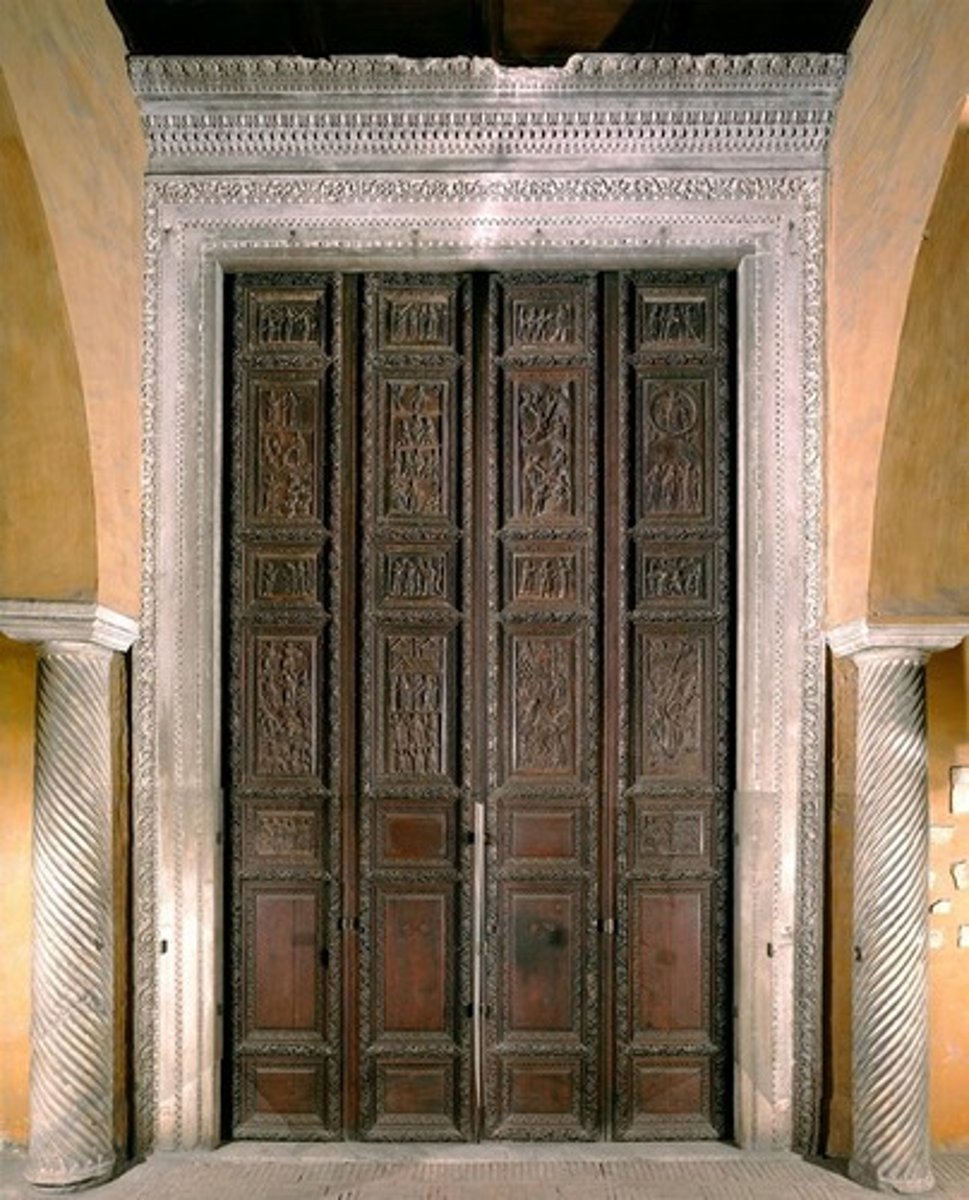
Crucifixion relief on wooden doors of church of Sta. Sabina, Rome, 422-32
This relief reflects early Christian iconography, where the Crucifixion is less emphasized compared to themes of triumph and salvation. What it Shows: Christ is depicted without excessive suffering, emphasizing his divine nature rather than human pain.
The early Christian depiction of Christ’s Crucifixion emphasizes triumph over death rather than suffering.
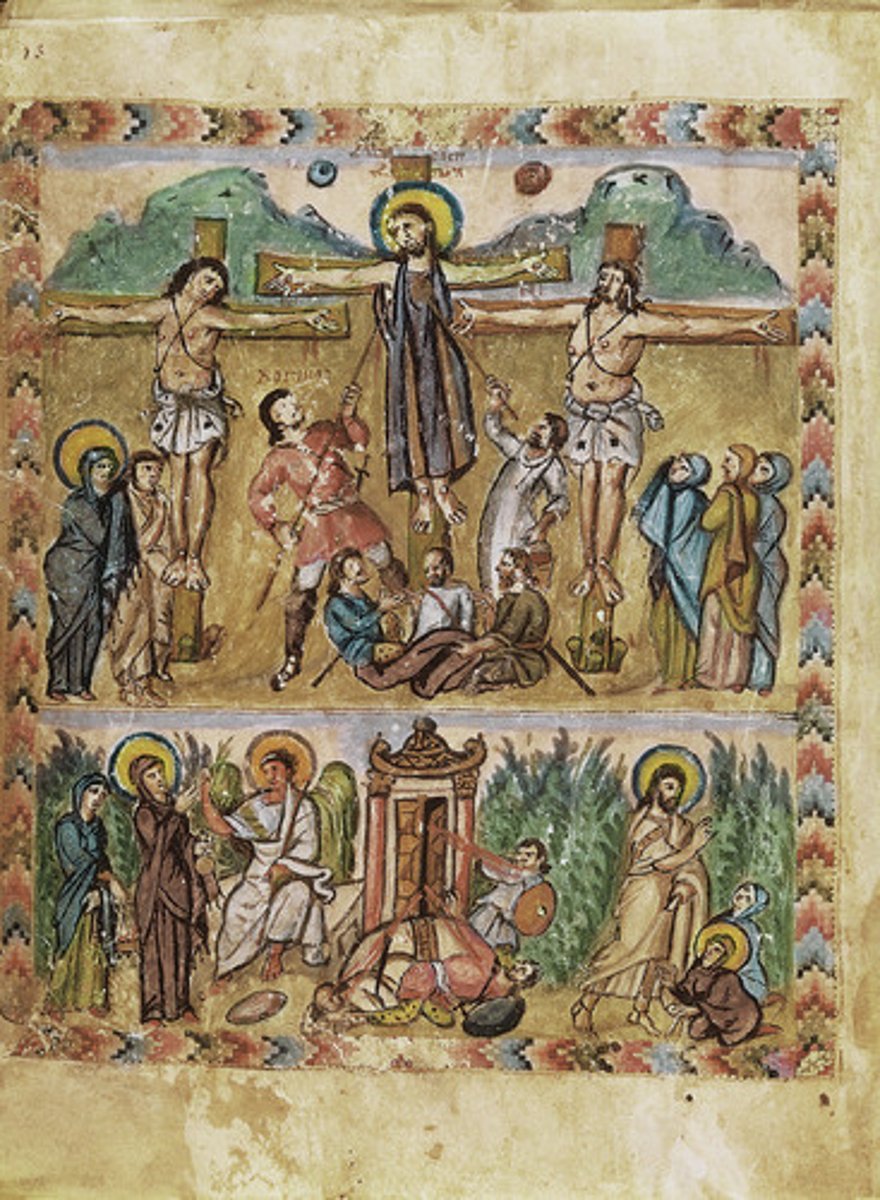
Crucifixion and Resurrection scenes, manuscript illuminations in the Rabbula Gospels, northern Syria, 586
Significance: It marks an early shift toward dramatic expression in religious art, with emotional figures and symbolic gestures.
Drama with symbolic resurrection imagery.
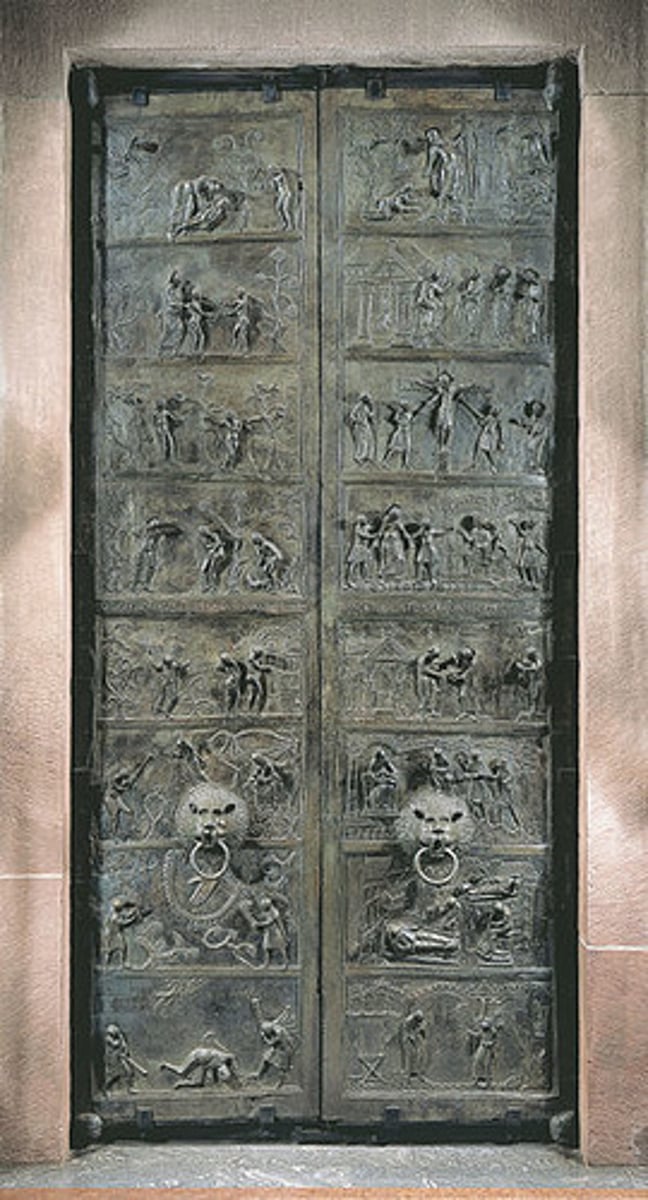
Bronze reliefs of Crucifixion and Fall of Man, from bronze doors of Bishop Bernward, Hildesheim Cathedral, Germany, ca. 1015
Significance: This pairing suggests that Christ’s death redeems humanity’s original sin. What it Shows: The parallel composition connects Old and New Testament themes, reinforcing theological ideas of redemption.
Sta. Sabina: Simplified, classical influence, minimal suffering.
Hildesheim: More expressive, dramatic, emphasizing sin and redemption.
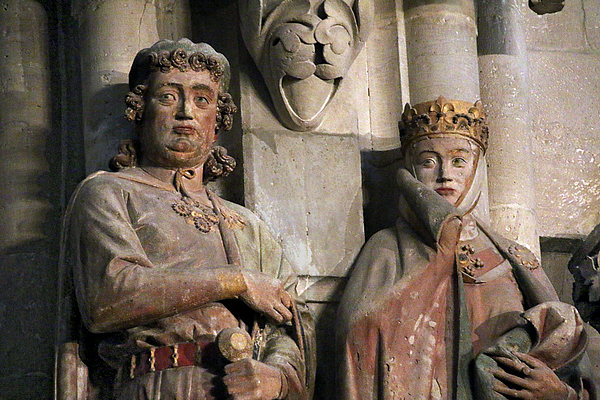
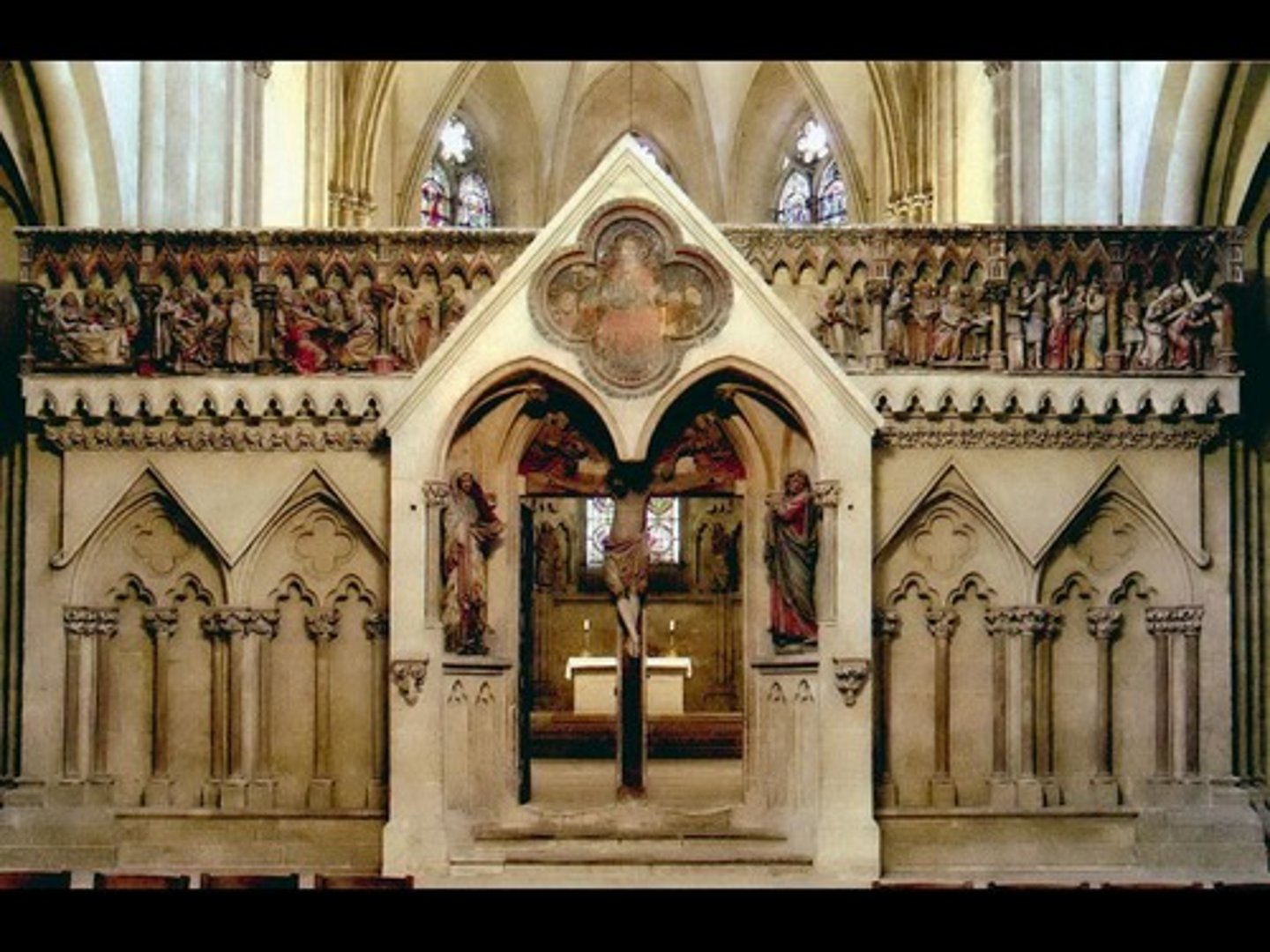
Crucifix with Mary and St. John, stone with polychromy, on west choir screen of Naumburg Cathedral, Germany, ca. 1250
Significance: Highlights growing emotional intensity in Gothic religious art. What it Shows: Expressive faces and gestures heighten the human drama of the scene.
Gothic realism and expressive pathos emphasize the emotional suffering of Christ.
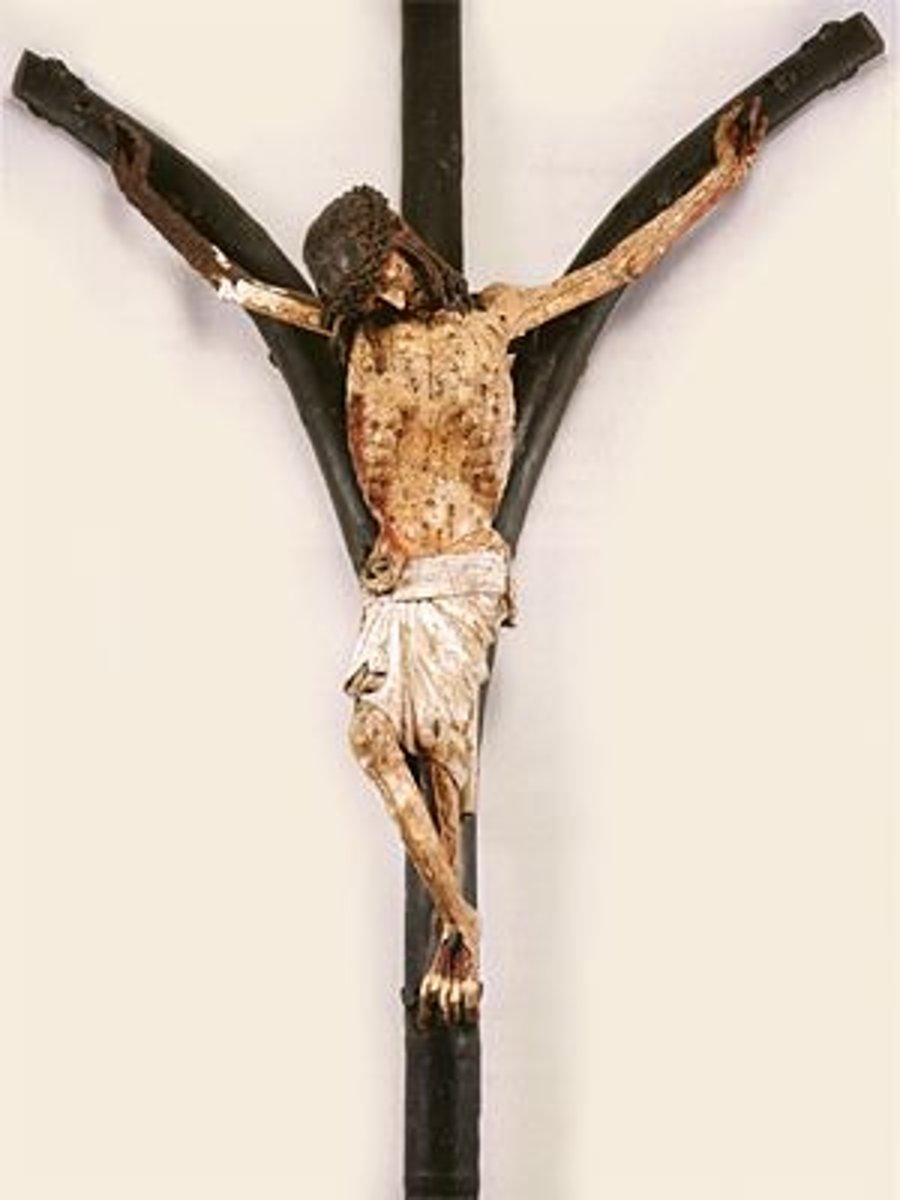
Crucifixus dolorosus, wood with late medieval polychromy and gesso, in Church of St. Maria im Kapitol, Cologne, Germany, ca. 1304
Significance: Introduces a new emphasis on physical pain and realism in religious art. What it Shows: Christ’s body is gaunt, and wounds are exaggerated to evoke compassion.
A late medieval emphasis on Christ’s physical suffering and pain fosters an emotional devotional experience.
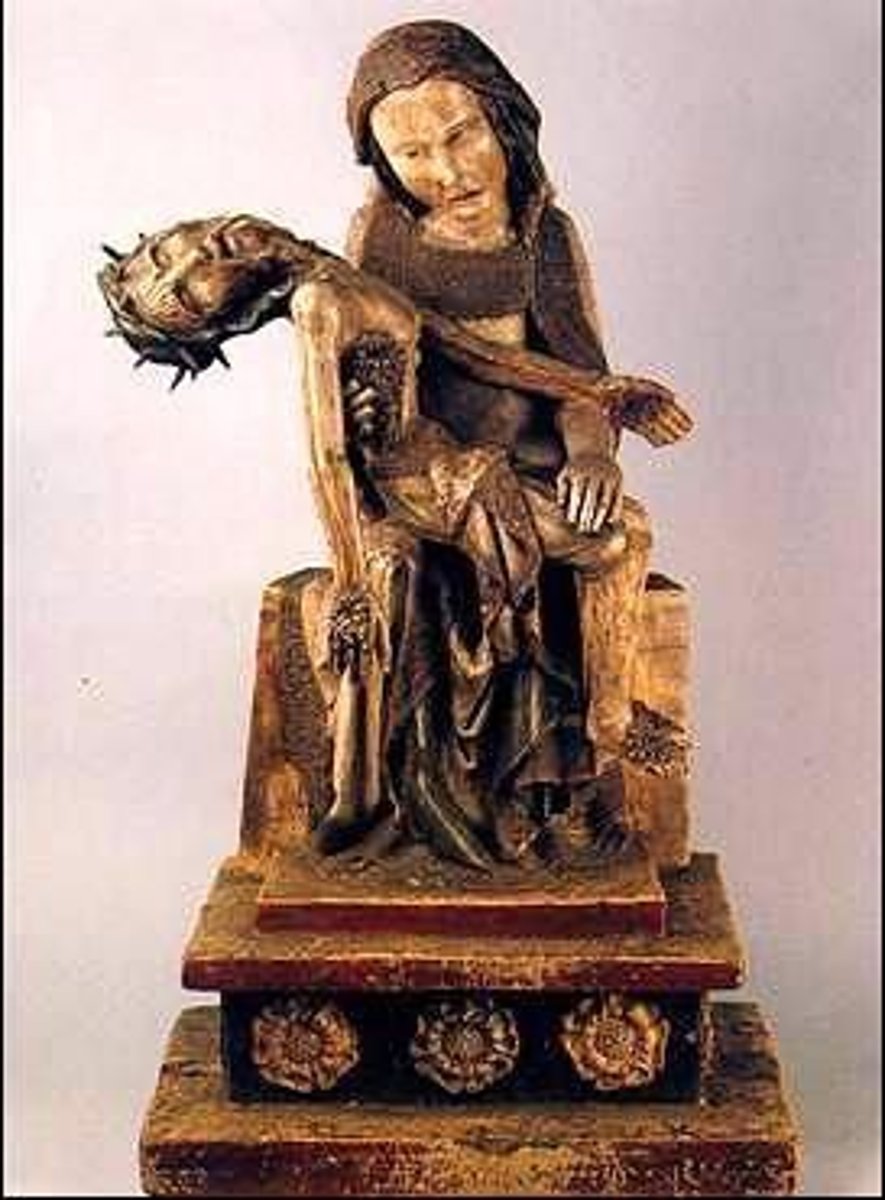
Sculpture of Mary holding the dead Christ (Röttgen Pietà), polychromed wood, made in the Rhineland, ca. 1300-25
Significance: Exemplifies the Gothic interest in emotional realism and the human experience of suffering. What it Shows: The exaggerated agony of Christ’s body contrasts with Mary’s grieving expression.
Extreme suffering and grotesque distortion reinforce late Gothic emotional piety.
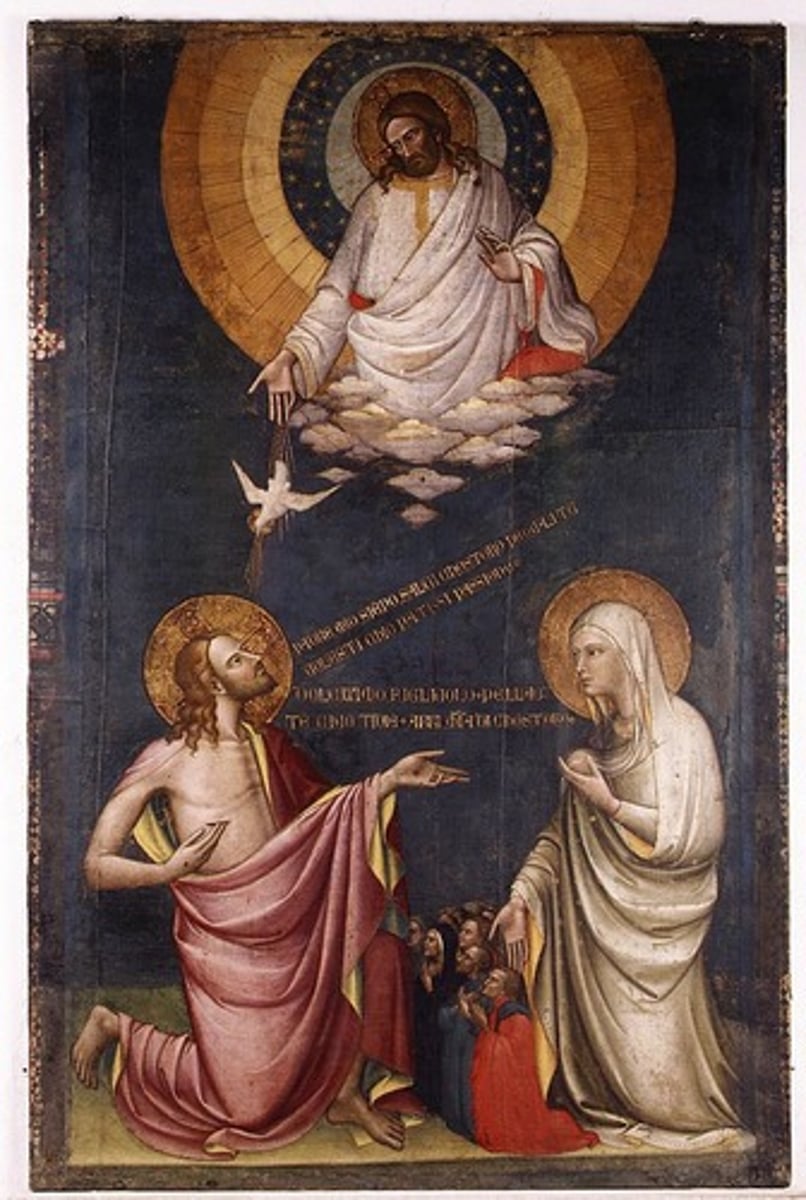
Lorenzo Monaco, Double Intercession, tempera on canvas, made in Florence before 1400
Significance: Represents the increasing role of intercession and personal devotion in medieval Christianity. What it Shows: Christ as the ultimate judge, with saints mediating for mercy.
The depiction of interceding saints highlights the medieval belief in saintly mediation.
Giotto di Bondone and workshop, fresco of St. Francis Receiving the Stigmata, in the upper church of San Francesco, Assisi, ca. 1280-90
Significance: Highlights the growing emphasis on mystical experiences and personal devotion. What it Shows: St. Francis mirroring Christ’s suffering, reinforcing his saintly status.
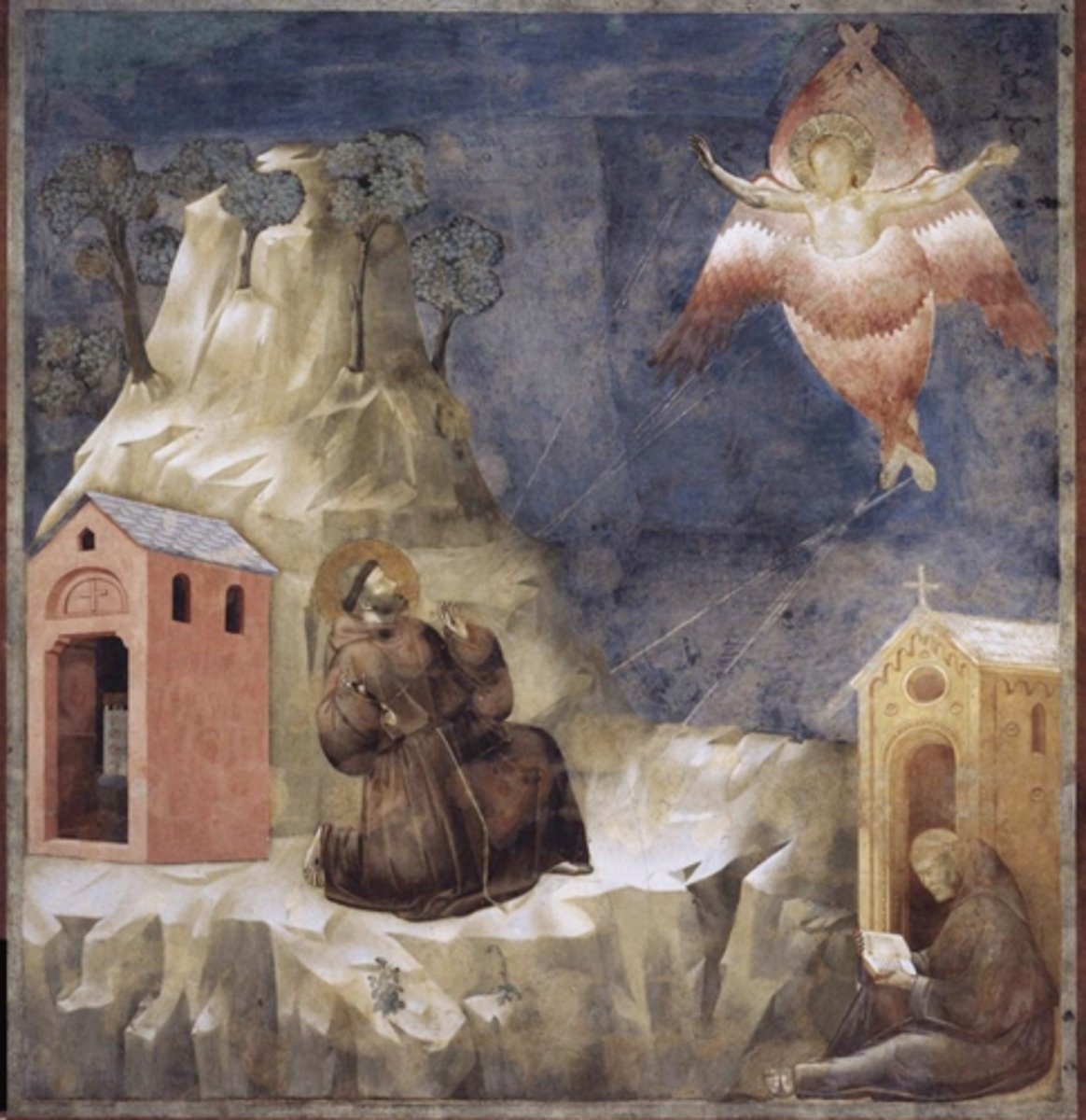
Crucifixion mosaic in Church of the Dormition, Daphni, Greece, ca. 1090-1100
Significance: Emphasizes Christ’s divine triumph over death. What it Shows: Christ depicted with open eyes and calm expression, signaling victory rather than suffering.
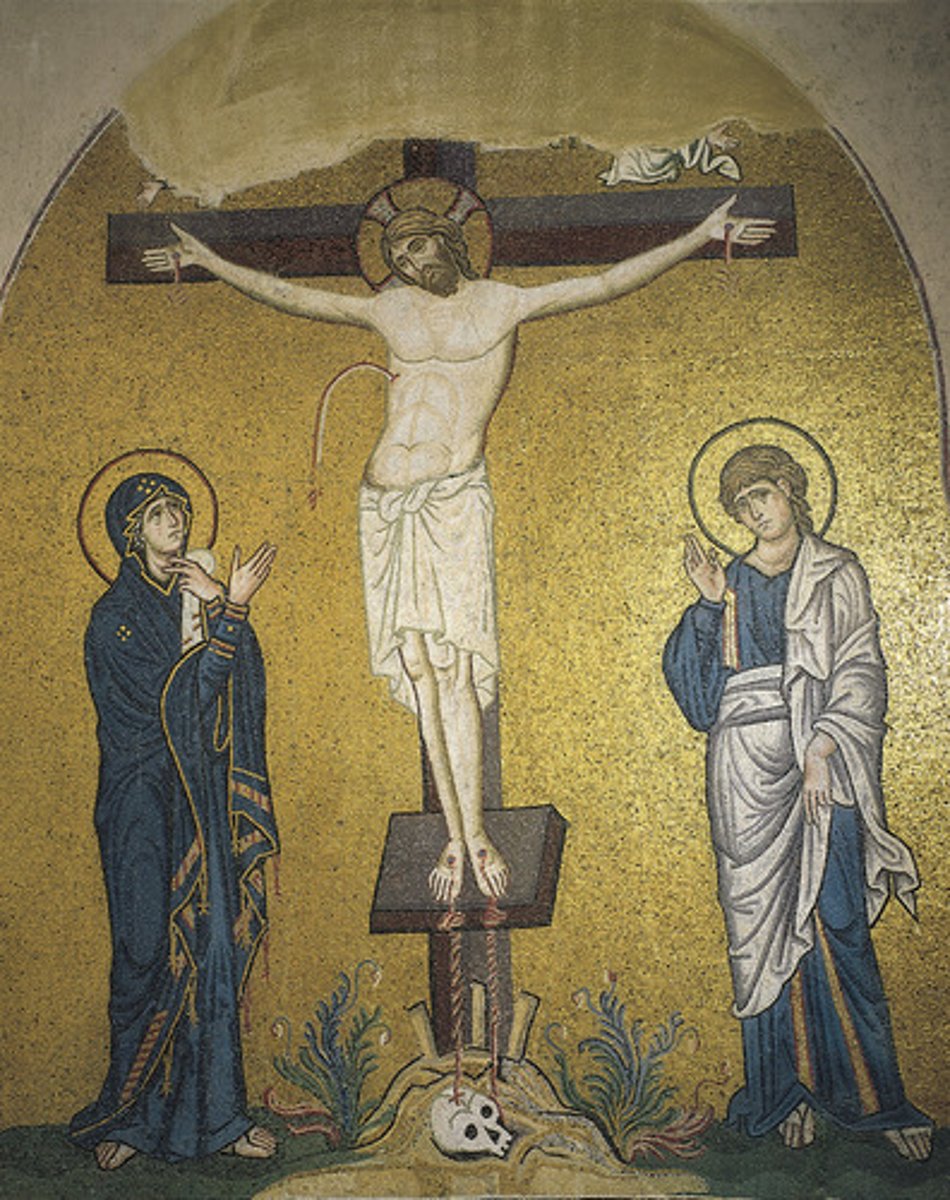
Rogier van der Weyden, Deposition Altarpiece, oil on panel, Flanders, ca. 1435
Significance: Masterful use of emotion and composition to engage viewers. What it Shows: Figures grieving intensely, creating a deeply human connection to Christ’s sacrifice.
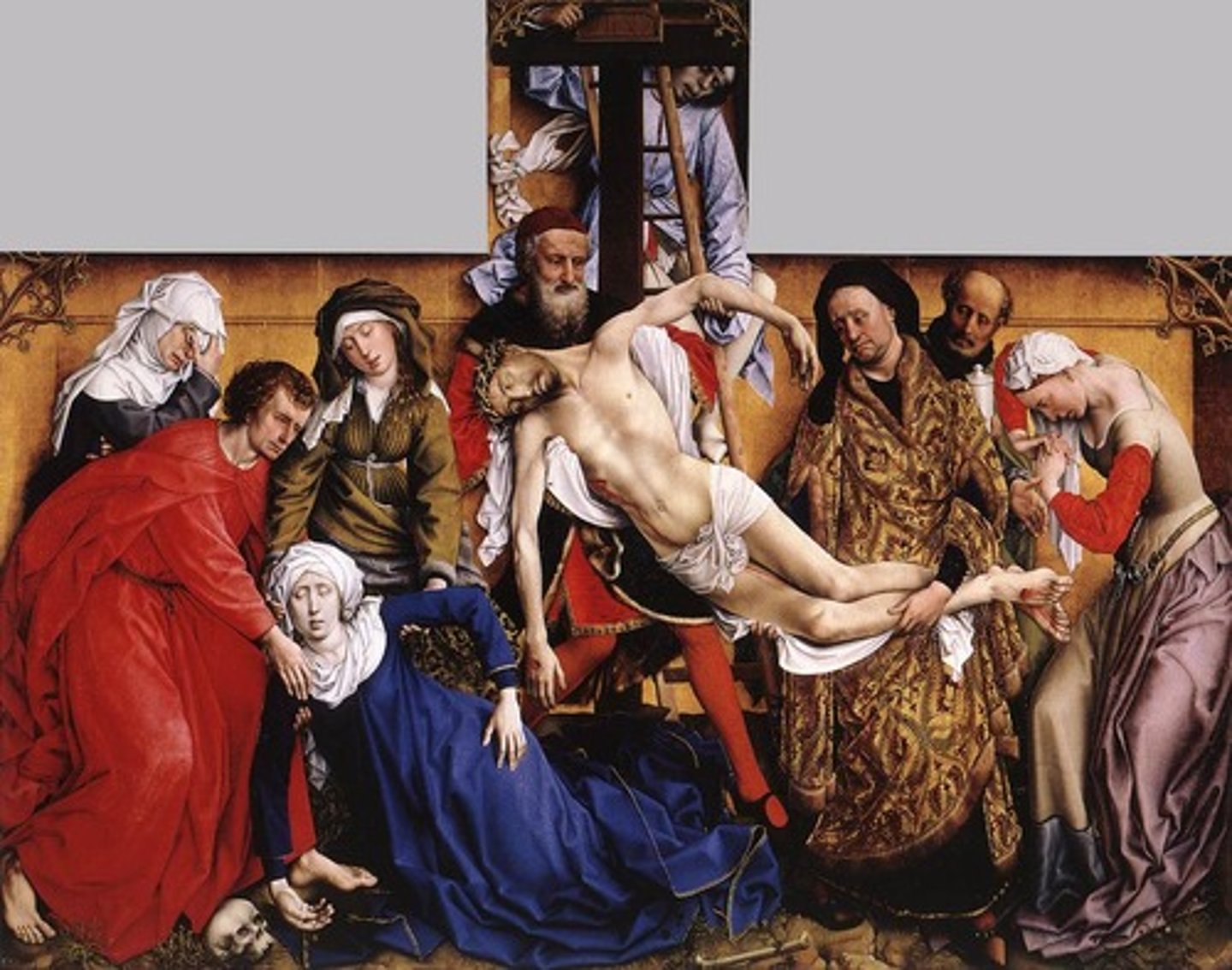
Fresco of the Lamentation in church of St. Panteleimon, Nerezi, Macedonia, mid-12th century
Significance: Introduces heightened emotional expression in Eastern Orthodox art. What it Shows: The Virgin Mary and followers mourning Christ with deep sorrow.
11. Create a visually immersive mourning scene.
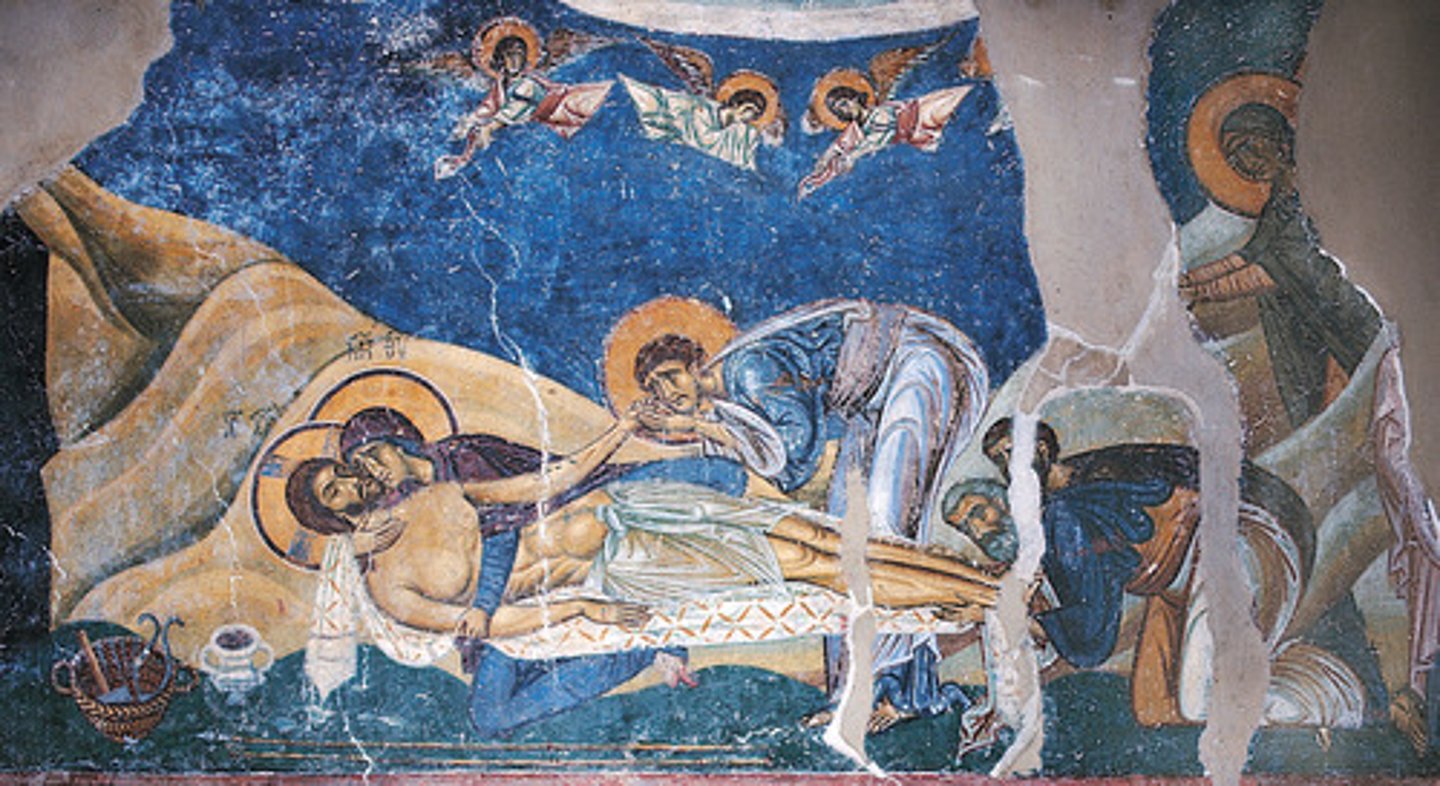
Giotto di Bondone, fresco of the Lamentation in the Arena Chapel, Padua, Italy, 1304-6
Significance: Pioneers naturalism and depth in Renaissance painting. What it Shows: Realistic expressions and movement, breaking from earlier stylized art.
Giotto: Humanized sorrow, depth, and gesture guiding the viewer’s emotion.
Use of psychological realism and spatial depth in Christian mourning imagery.
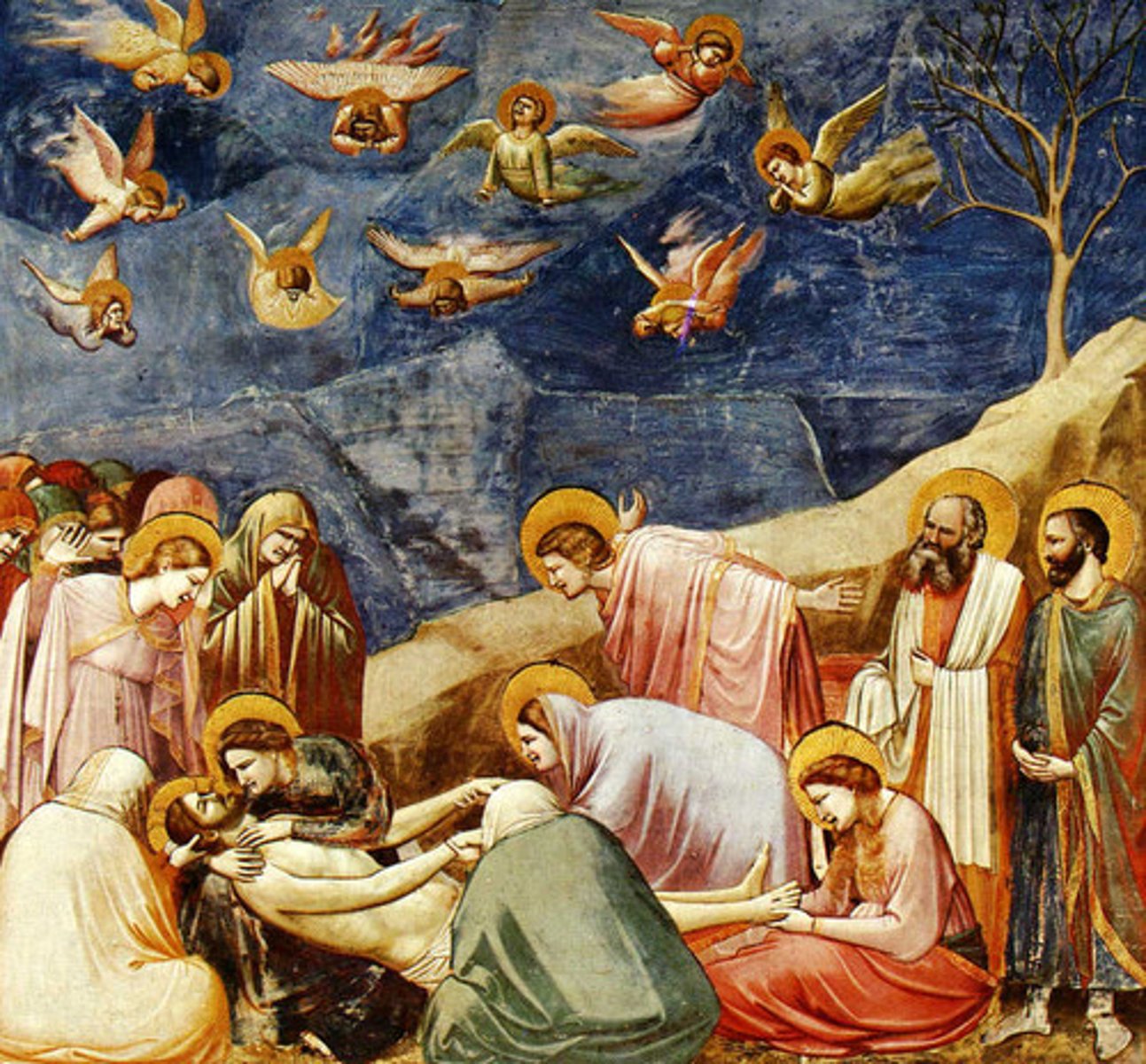
Niccolo dell'Arca, Lamentation Group, terra cotta figures, Bologna, Italy, after 1464
Significance: Exemplifies intense emotional realism in late Gothic art. What it Shows: Each figure expresses raw, deeply personal grief.
Niccolò: Individualized expressions, emotional realism.
Terracotta realism captures raw, unfiltered grief in one of the most dramatic Passion scenes.
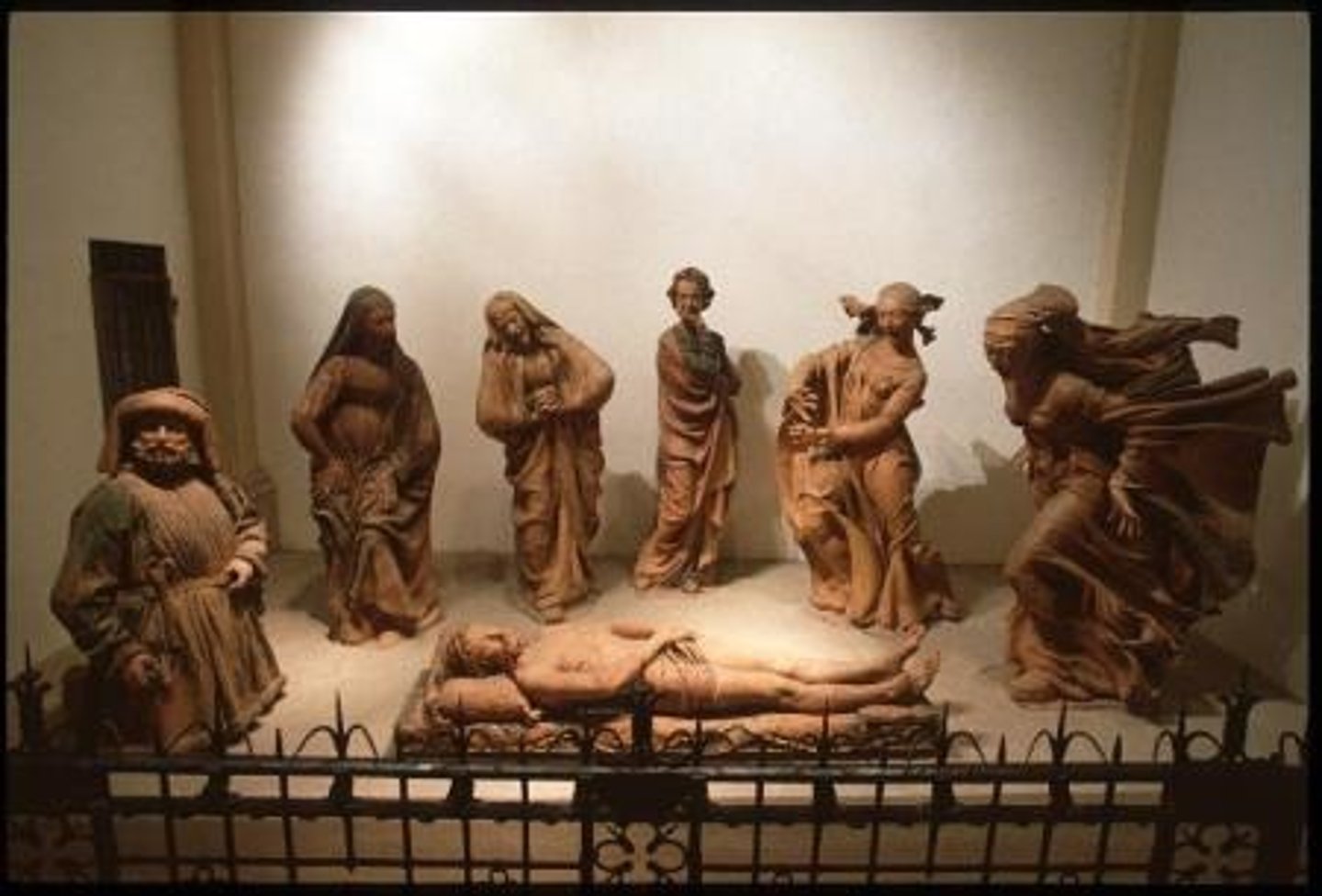
Calvary Group, wooden figures with polychromy and accessories, Poland, ca. 1500
Significance: Reflects the late medieval trend of immersive devotional experiences. What it Shows: The suffering of Christ and figures surrounding him in vivid detail.
Interactive devotional experience, theatrical
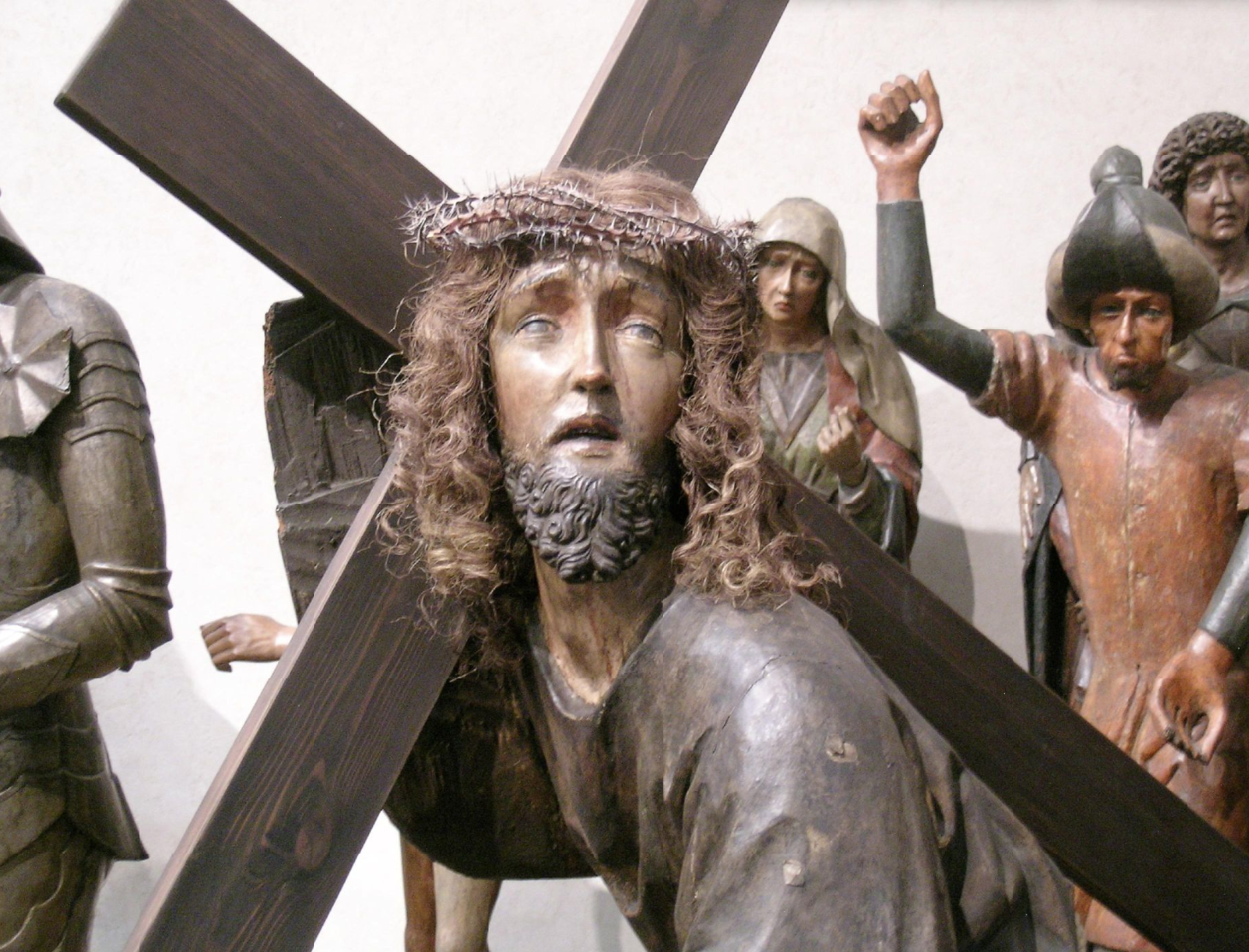
Crucifixion panel, Bohemia, ca. 1360 (now in Berlin, Gemäldegalerie, but you do not need to know its museum location for the exam)
Significance: Represents the stylistic transition toward greater realism in Gothic painting. What it Shows: Expressive figures and dramatic use of color to enhance emotional impact.
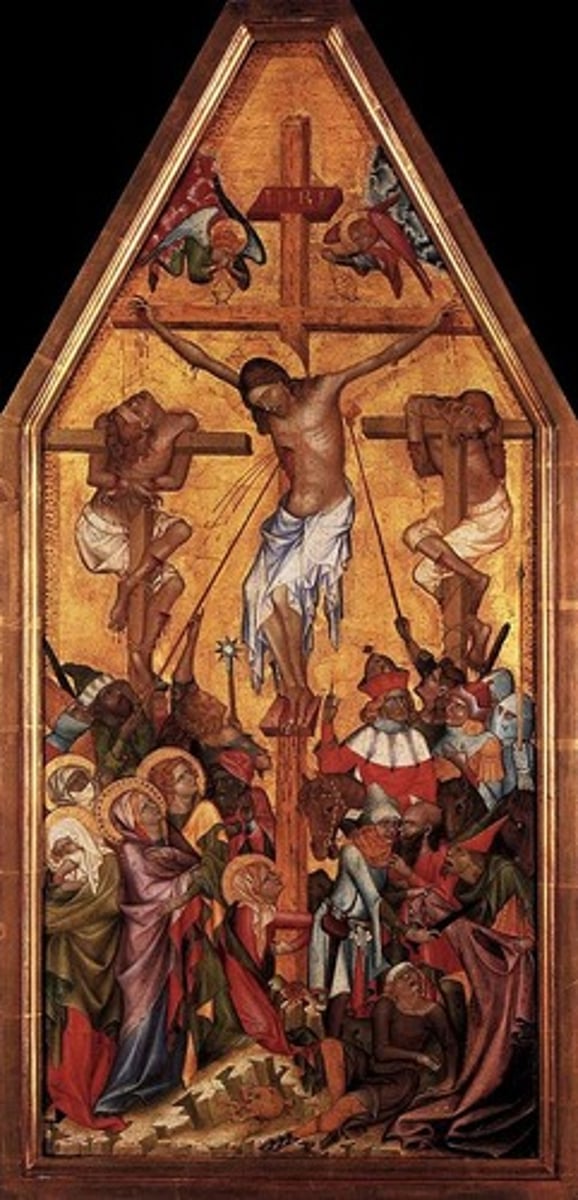
Robert Campin, The Crucified Thief, Netherlandish, c. 1410
Significance: Highlights late medieval interest in individual human suffering. What it Shows: A focus on anatomical realism and the agony of execution.
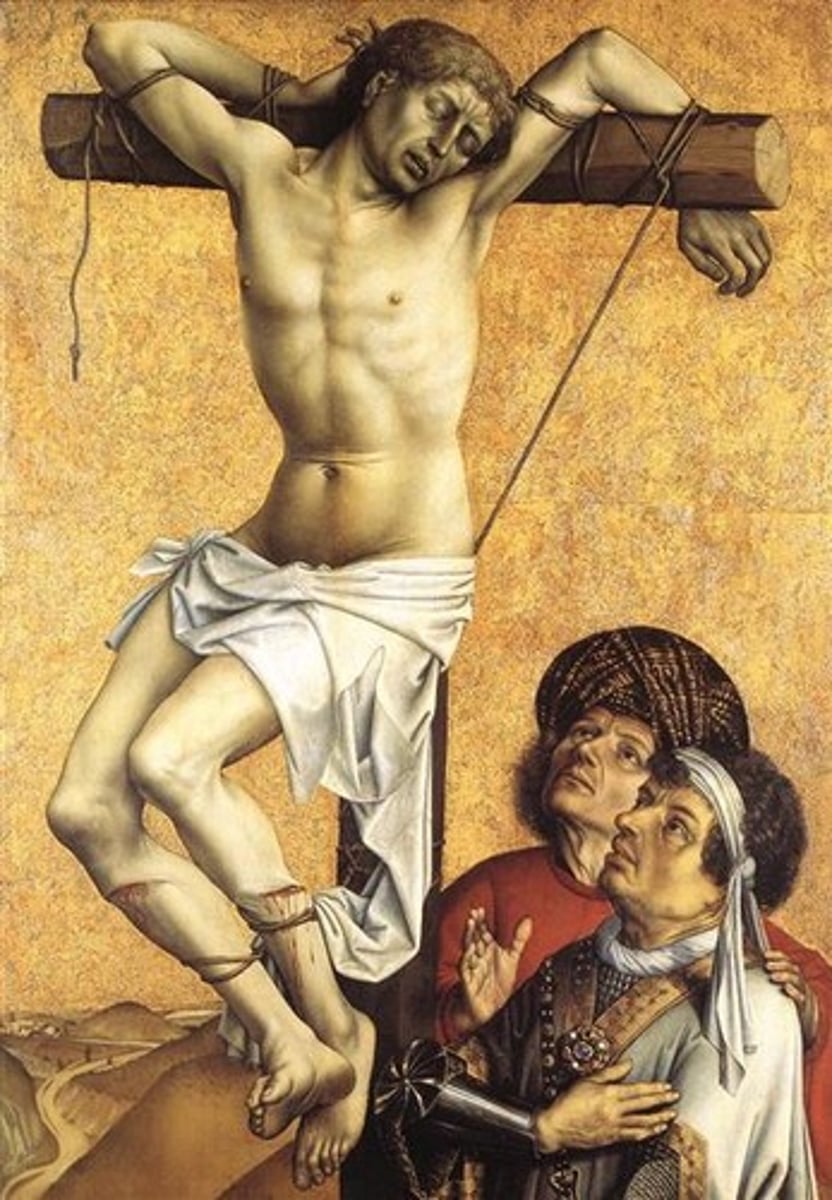
Procession of male and female martyrs, mosaics in nave of basilica of Sant' Apollinare Nuovo, Ravenna, Italy, mid-6th century
Significance: Represents the triumph of Christian martyrs and the unity of the Church.
What It Shows: A sense of orderly procession and divine purpose, reinforcing ideas of faith and heavenly reward.
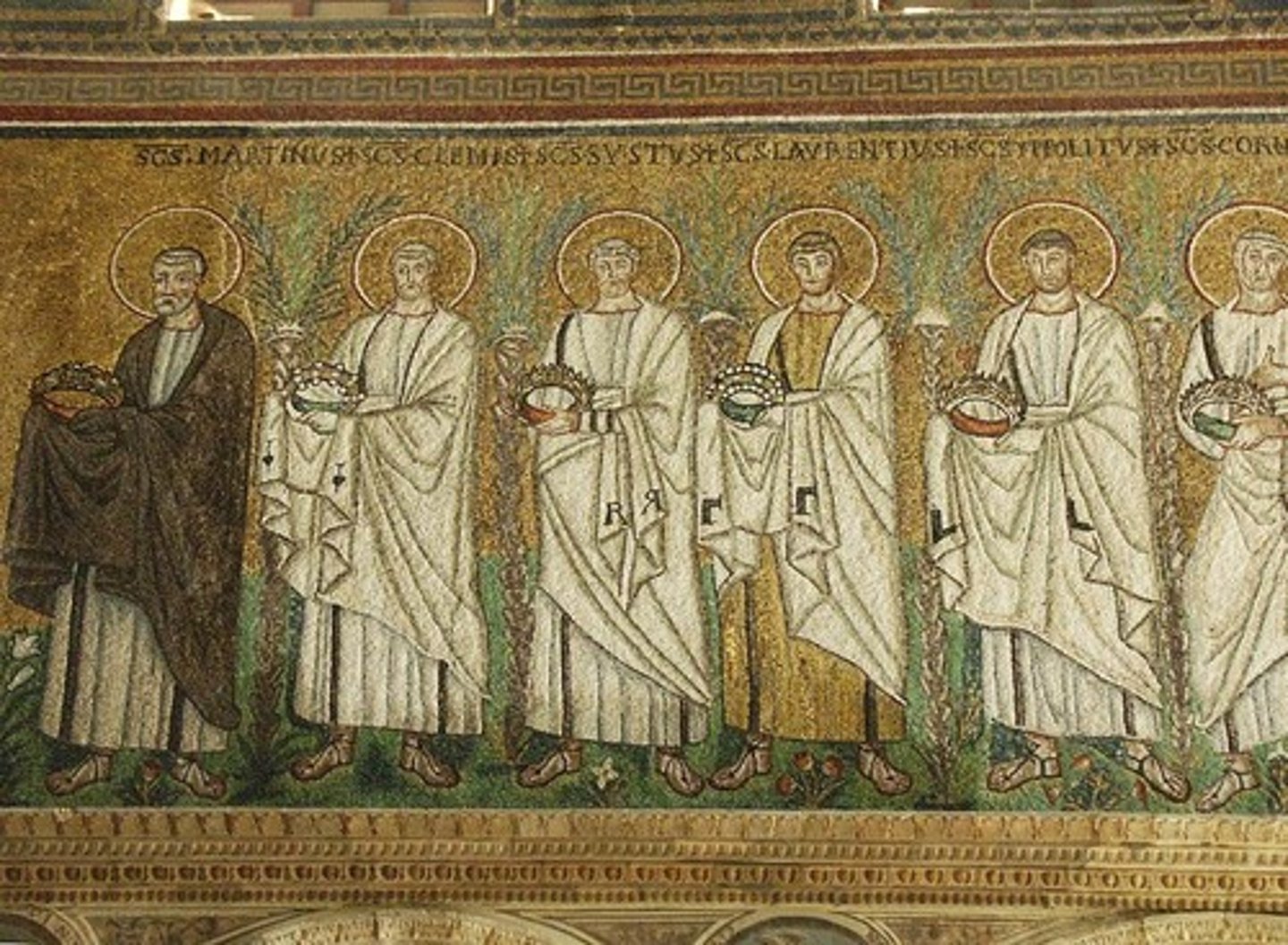
St. Apollinaris in paradise, apse mosaic in basilica of Sant'Apollinare in Classe, Italy, ca. 547
Significance: Represents the concept of paradise and eternal salvation
What It Shows: The saint as an intercessor for the faithful, set in a symbolic garden of Eden, reflecting themes of divine protection.
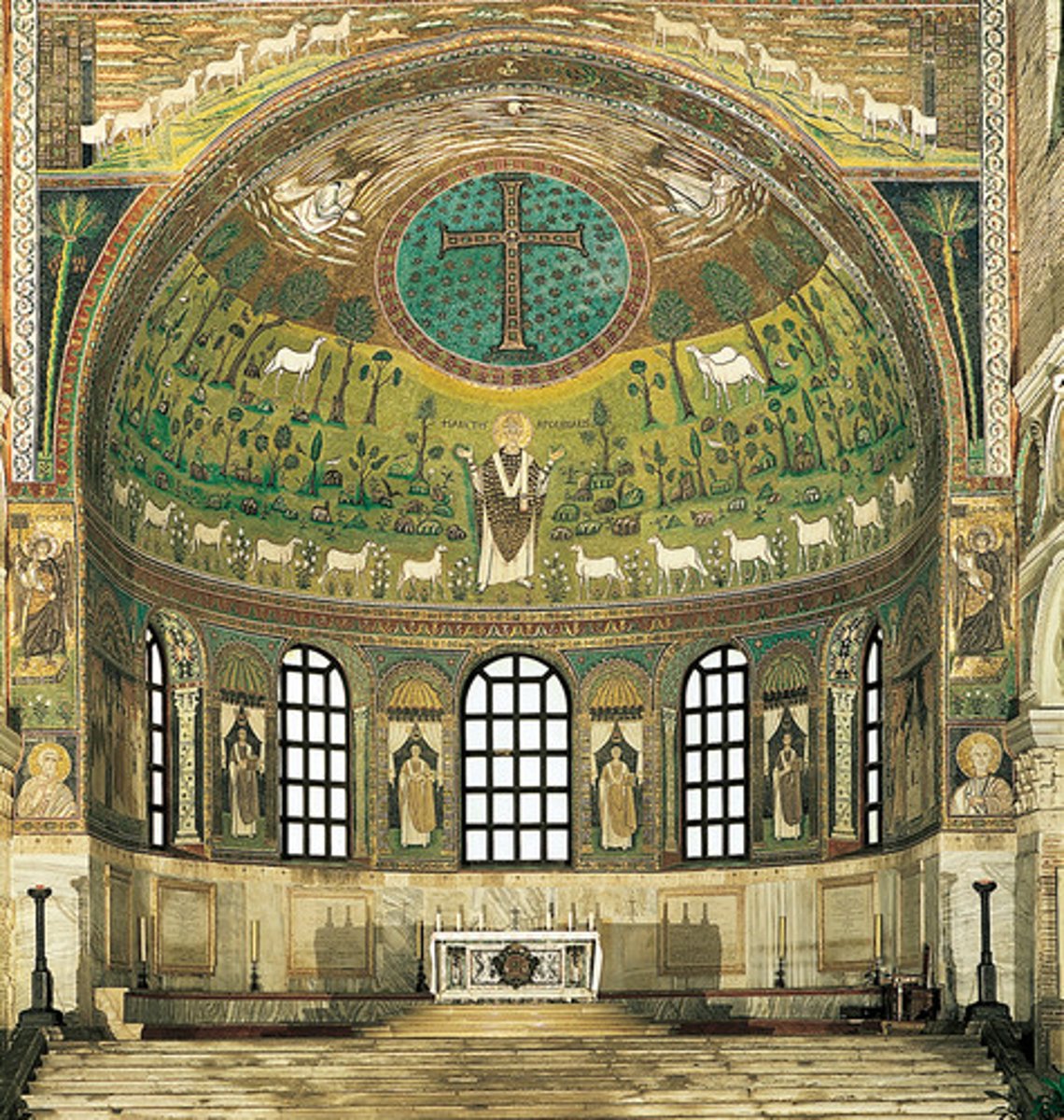
Mausoleum of Galla Placidia, Ravenna, ca. 430
a. Saint Lawrence, Good Shepherd, Heavenly vaulting
What It Shows: Heavenly imagery, the role of saints, and Christ as the Good Shepherd caring for his flock.
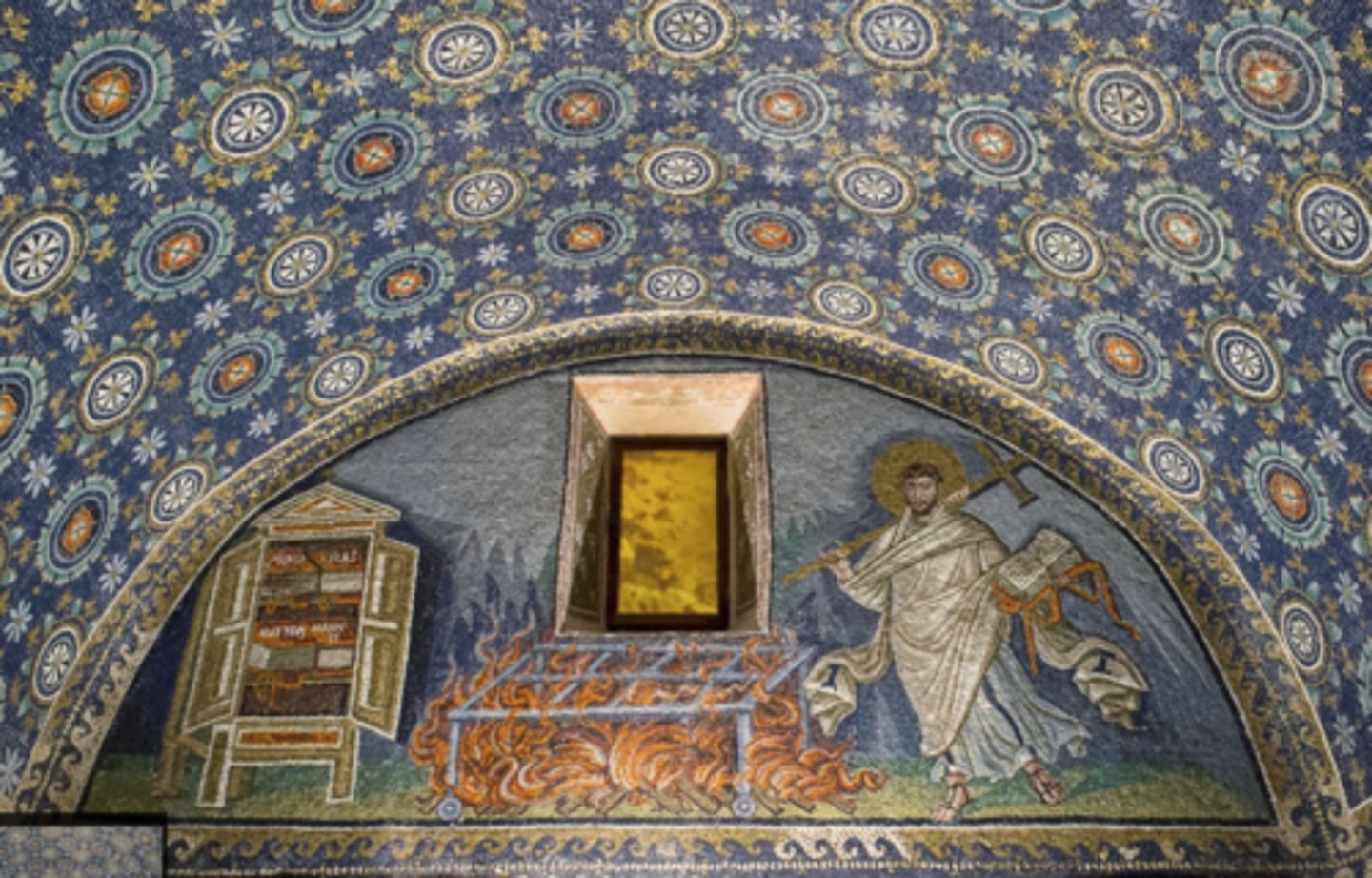
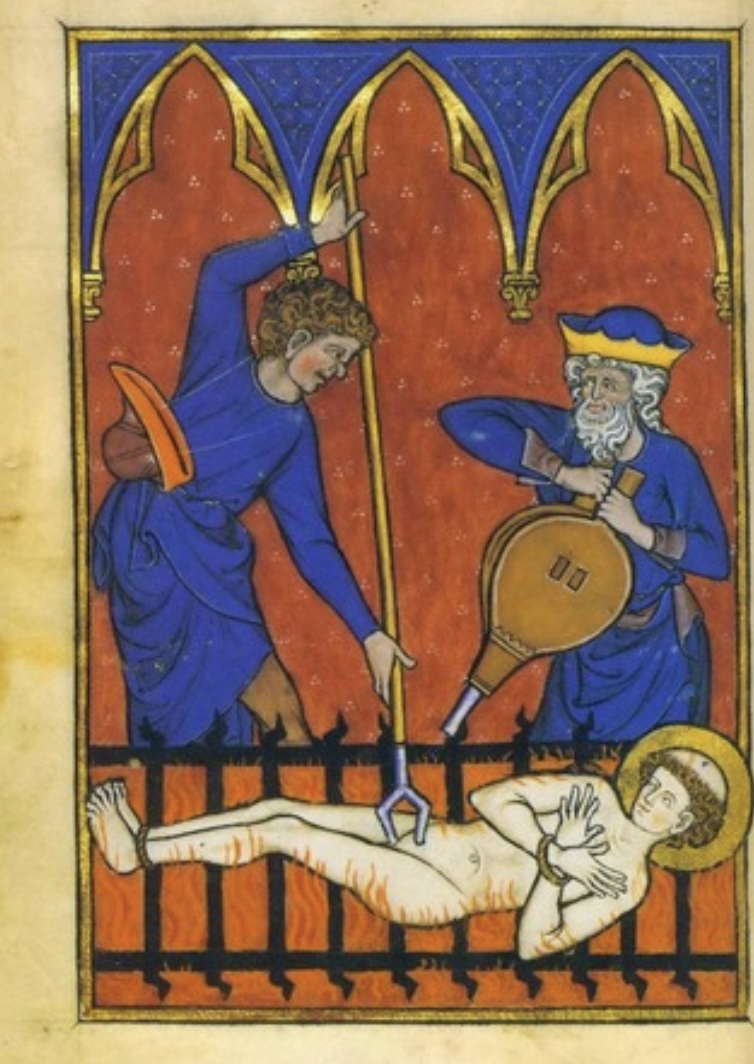
Martyrdom of St. Lawrence, in Picture Book of Madame Marie, northern France, ca. 1280
Significance: Highlights the medieval tradition of storytelling through illustrated manuscripts, emphasizing faith in the face of suffering.
What It Shows: Vivid expressions and flames, making the horror of martyrdom visually powerful.
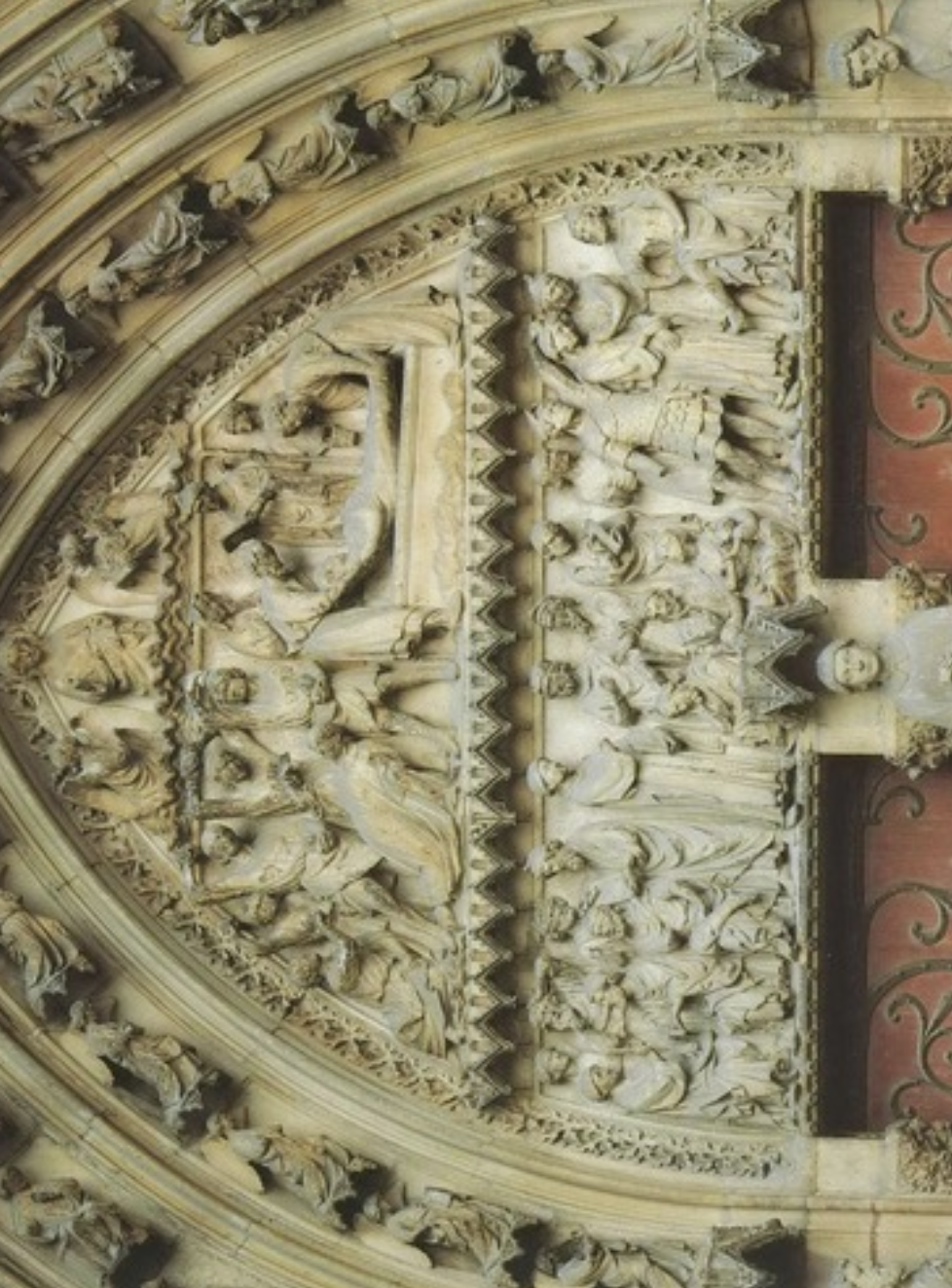
Stone reliefs of Stephen's preaching and martyrdom, on tympanum of south transept portal, Cathedral of Notre-Dame, Paris, ca. 1260
What It Shows: The contrast between Stephen’s calm expression and the violent act of stoning emphasizes his faith and martyrdom.
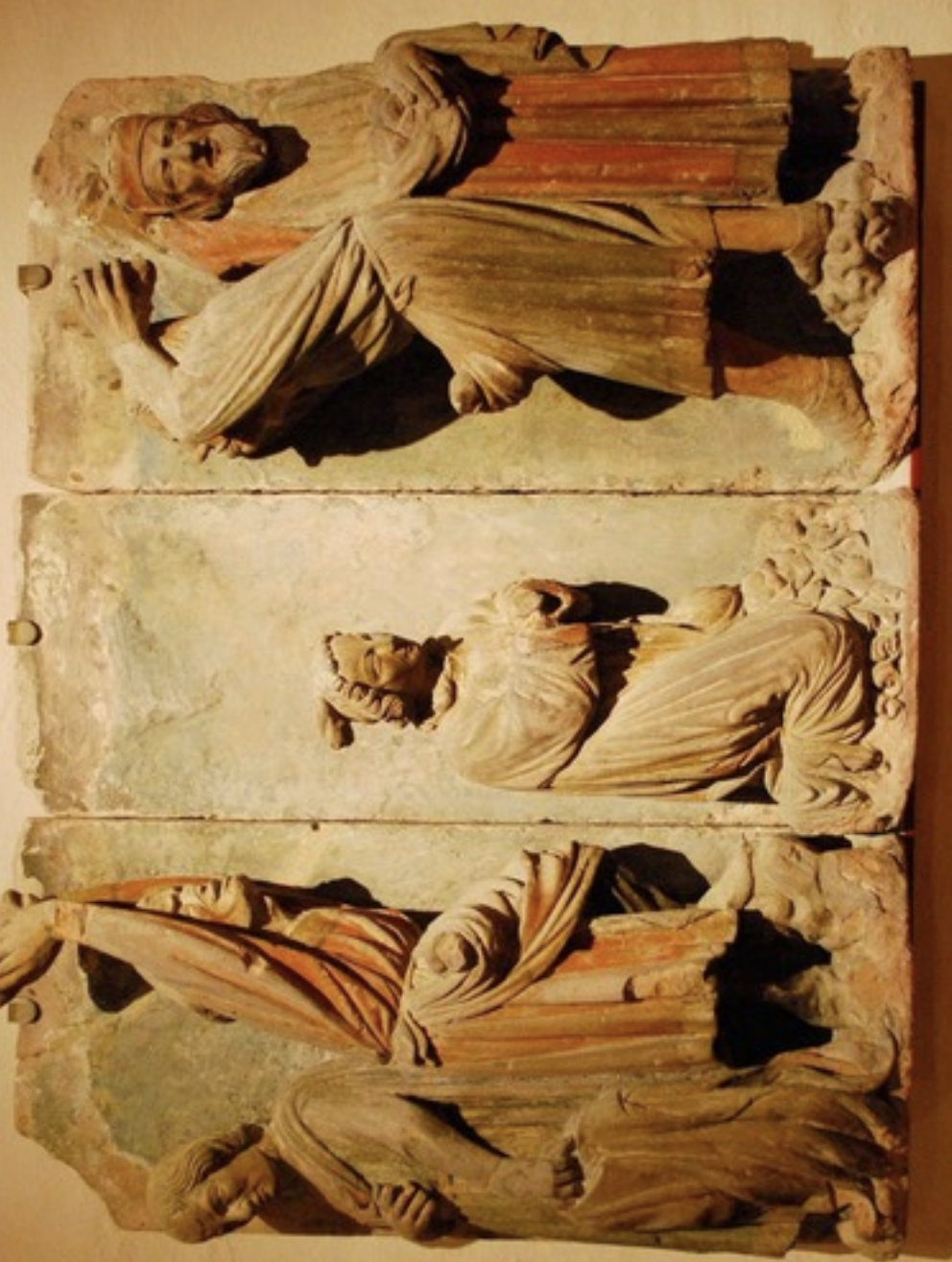
Stone relief of Stephen's martyrdom, Mainz, ca, 1270
Significance: Reinforces the theme of divine justice and sacrifice.
What It Shows: A dynamic composition emphasizing the saint’s suffering and spiritual triumph.
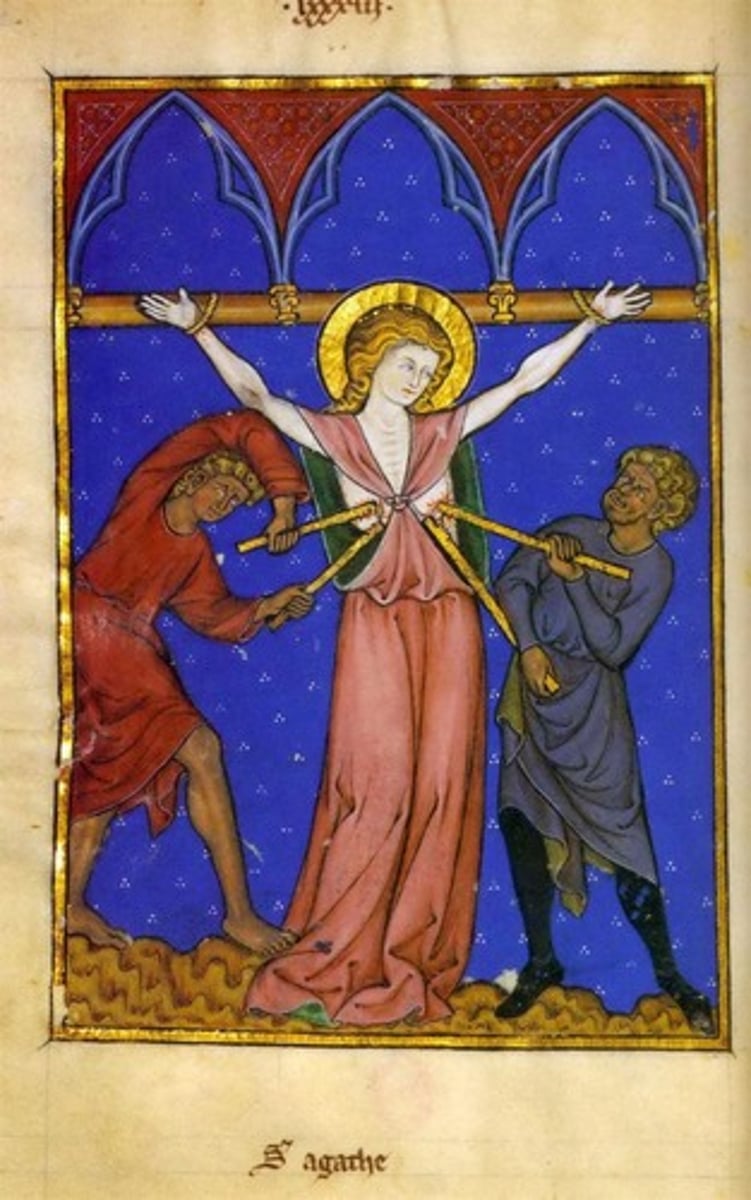
Martyrdom of St. Agatha, Picture Book of Madame Marie, northern French, ca. 1300
Significance: Highlights the medieval fascination with saints’ suffering as an example of ultimate devotion.
What It Shows: Agatha’s serene expression despite her physical pain symbolizes divine grace.
Manuscript drawings from Life of St Lucy, Metz, ca. 1130
What It Shows: Vivid narrative storytelling, focusing on Lucy’s strength and faith.
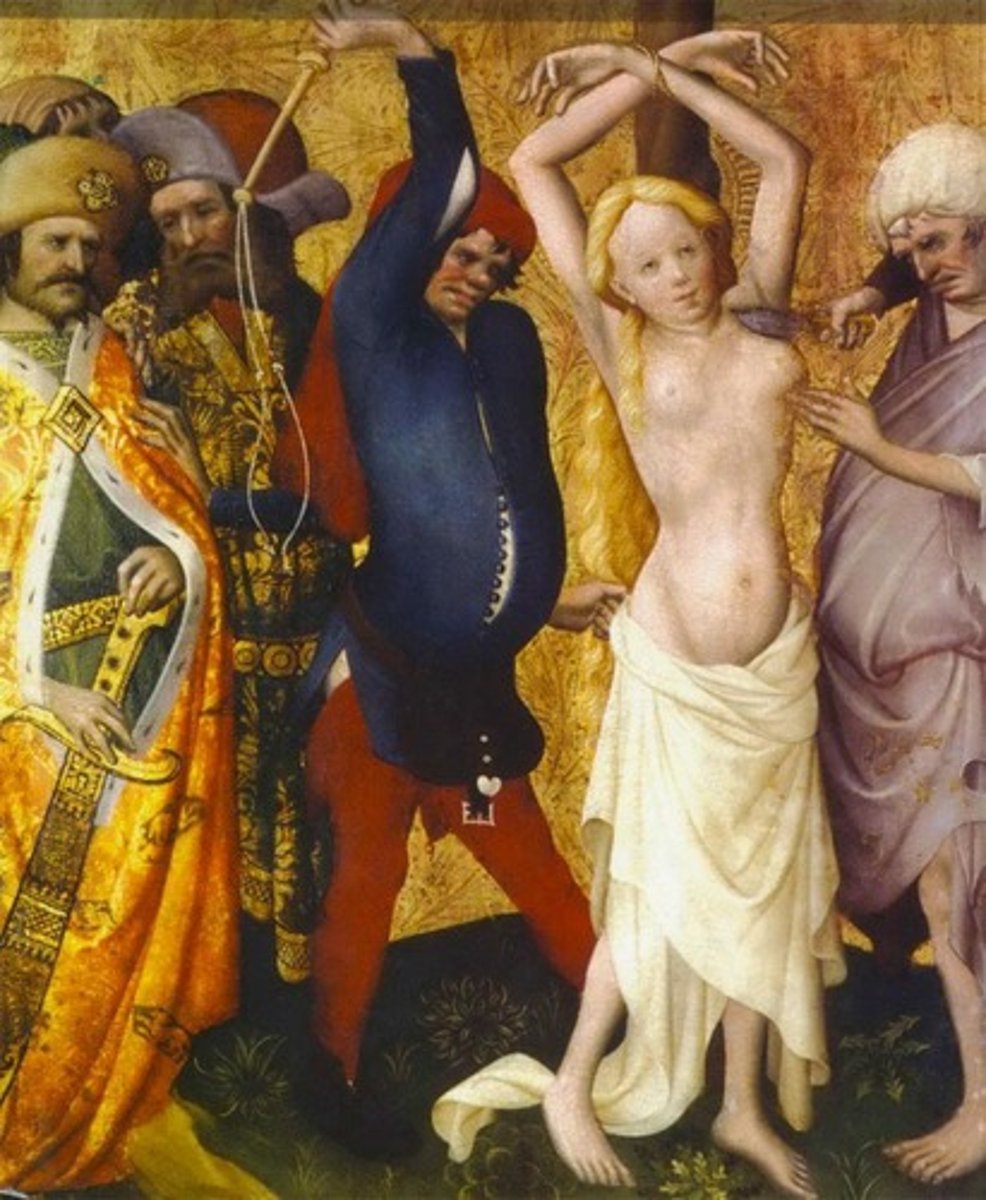
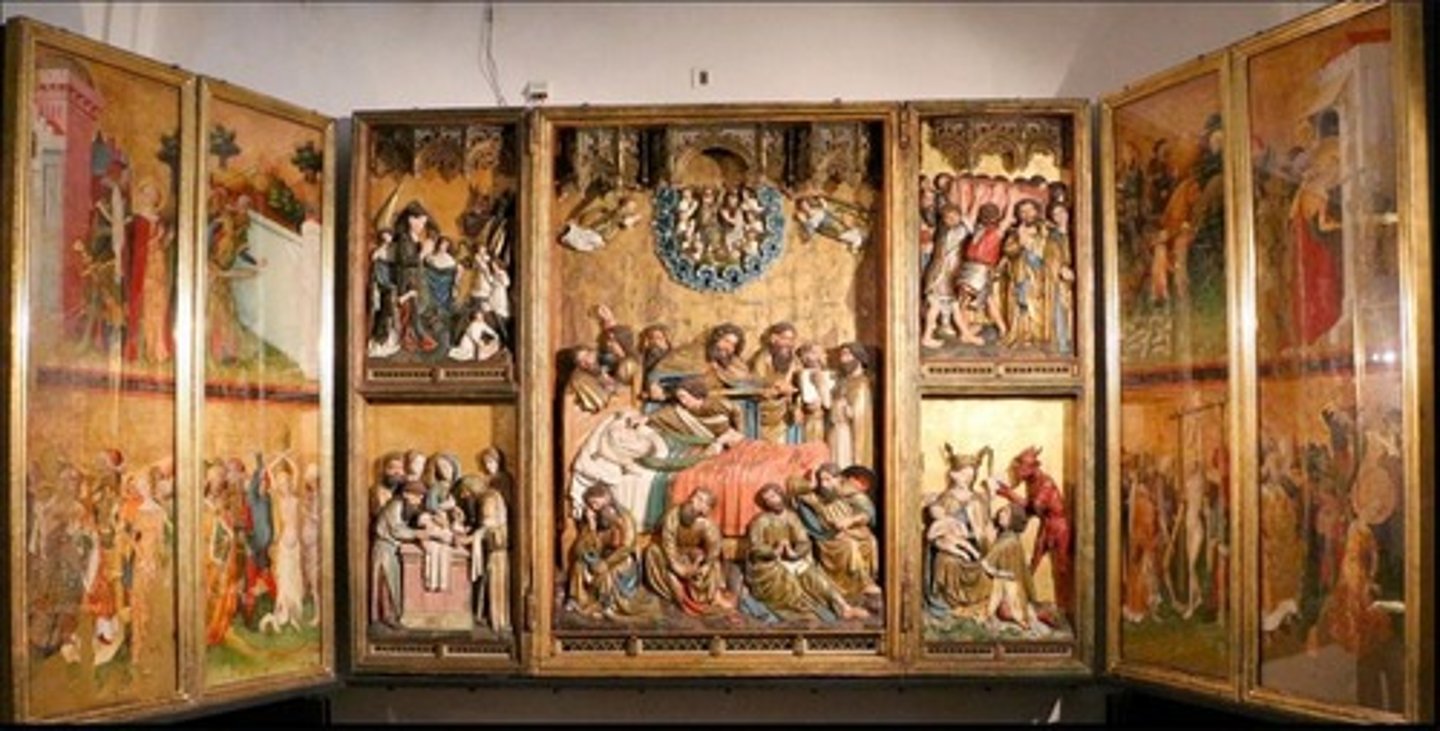
Master Francke, panels from St. Barbara Altarpiece, north Germany, ca. 1410-15
Significance: Late Gothic emotionalism, rich in color and detail.
What It Shows: Barbara’s journey from faith to suffering, emphasizing her devotion.
Cathedral of Notre Dame, Senlis, France: tympanum of west portal with Dormition, Assumption, and Coronation of the Virgin, ca. 1170
Significance: Reinforces Mary’s role in salvation history, common in medieval theology.
What It Shows: Hierarchical arrangement, with Mary at the center, surrounded by angels.
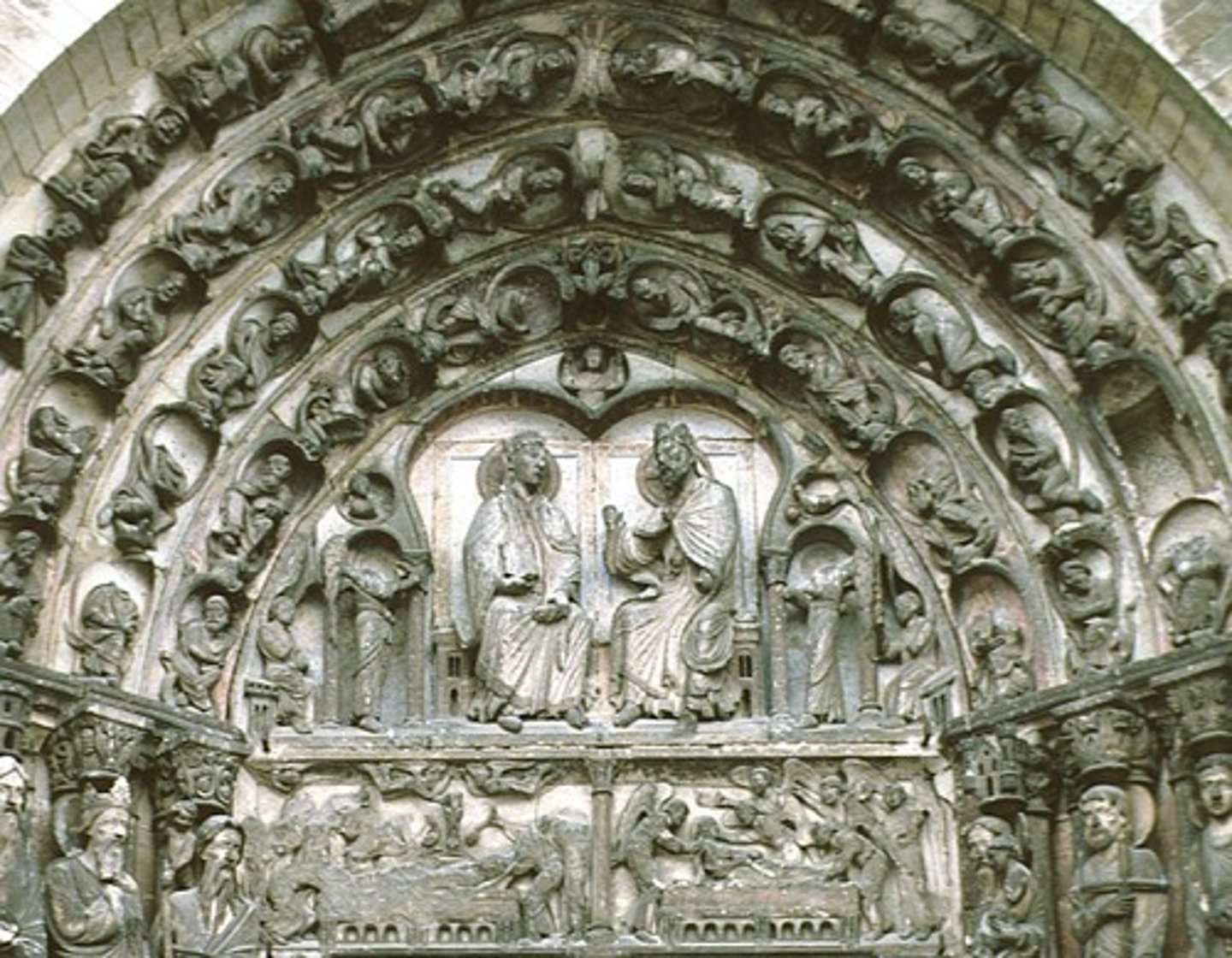
Strasbourg, France (but Germany in the Middle Ages), south transept portal, tympana with Dormition and Coronation of the Virgin, ca. 1225-30
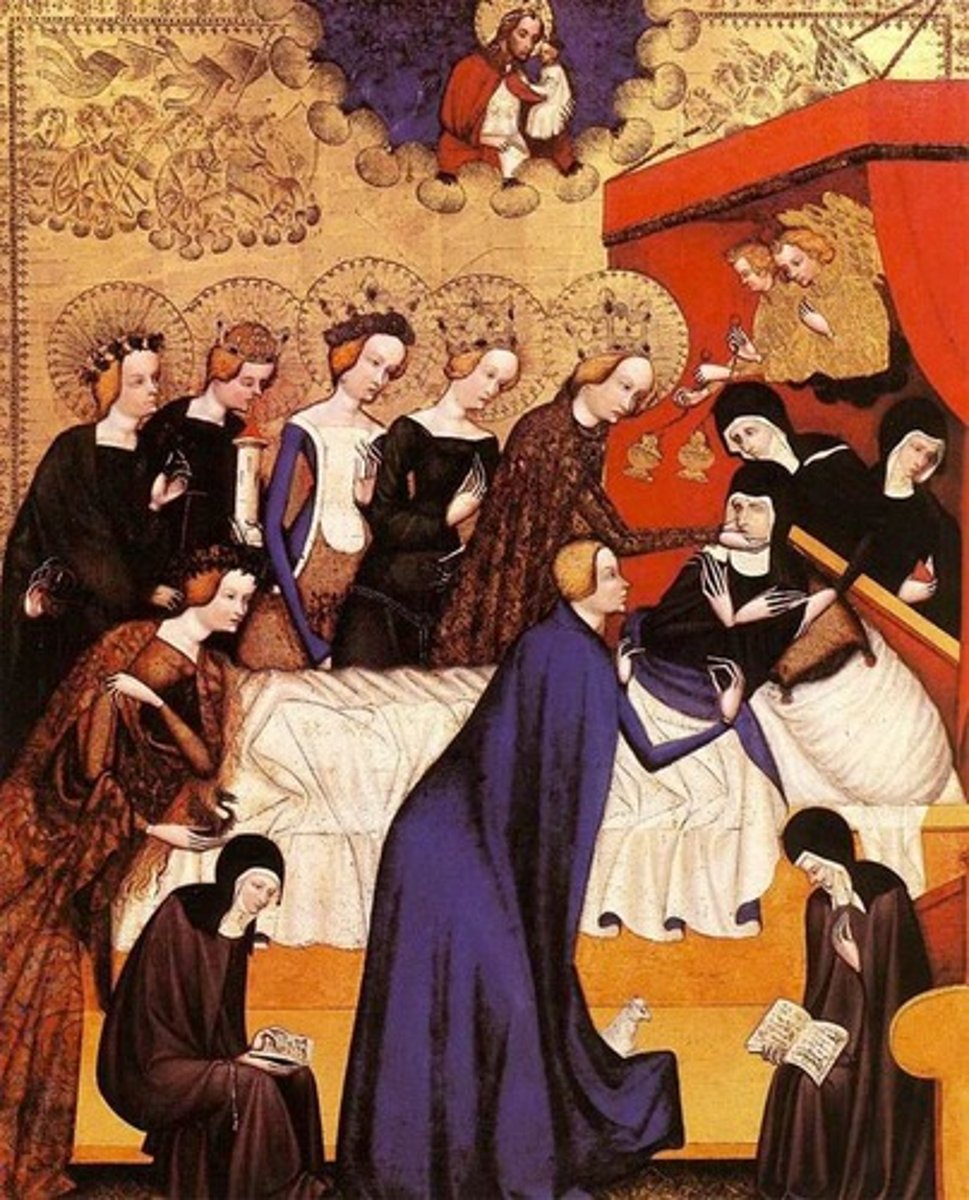
Master of Heiligenkreuz, Panel painting of Death of St. Clare, Austria, ca. 1400
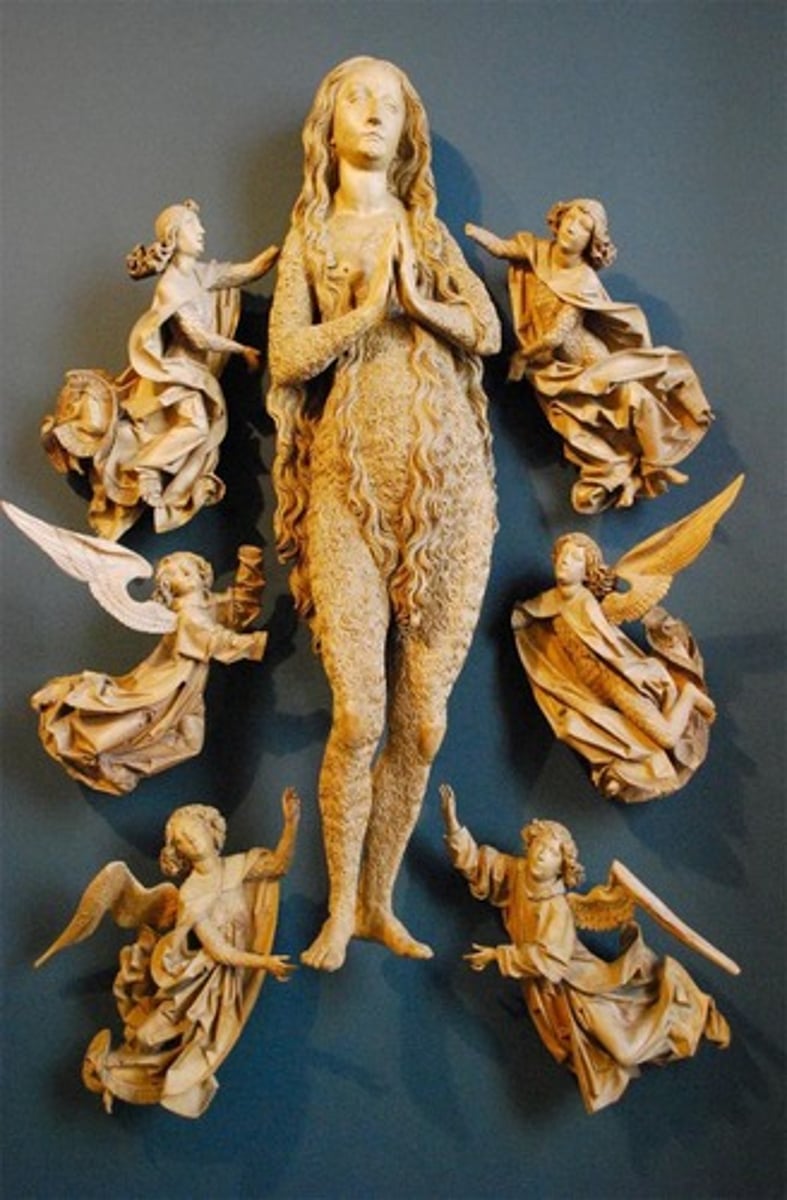
Tilman Riemenschneider, "Noli me tangere" relief and Hairy Magdalene figure from the Altarpiece of Mary Magdalene, Münnerstadt, Germany, 1490-92
What It Shows: Christ gently rejecting Magdalene’s touch ("Noli me tangere"), emphasizing the shift from physical to spiritual connection, and Magdalene’s transformation through penance in the Hairy Magdalene sculpture.
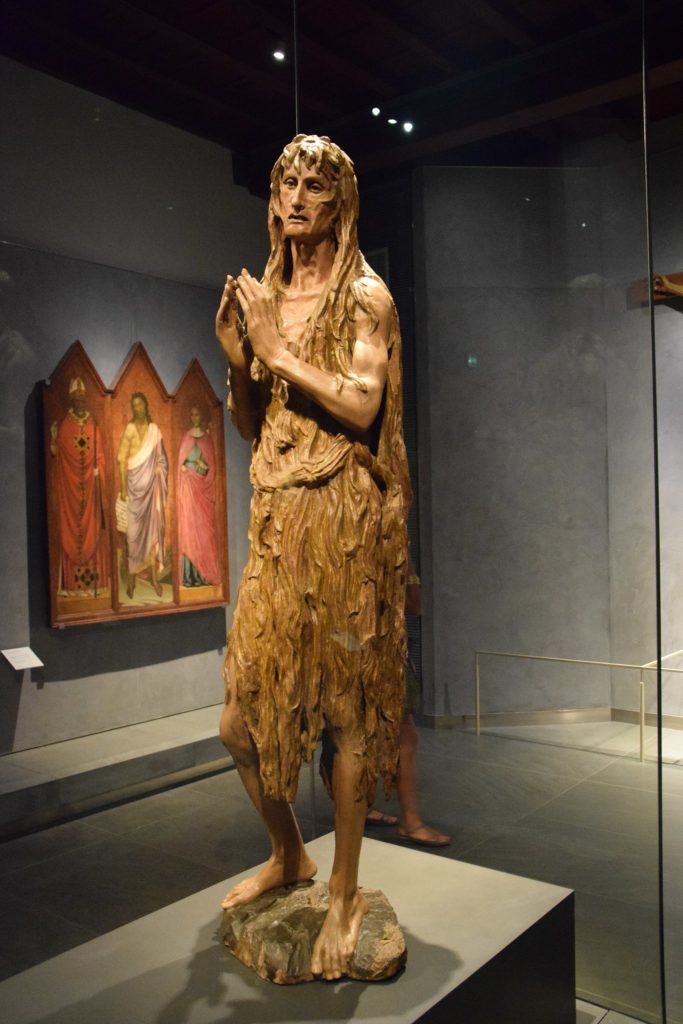
Donatello, The Penitent Magdalene, wood with polychromy, made in Florence, 1454-55
(Florence, Cathedral Museum)
What it Shows: Gaunt, aged figure with deeply lined face and disheveled hair, capturing the suffering of penance. Broader Significance: A striking departure from traditional Magdalene depictions, reflecting Renaissance humanism and psychological depth.
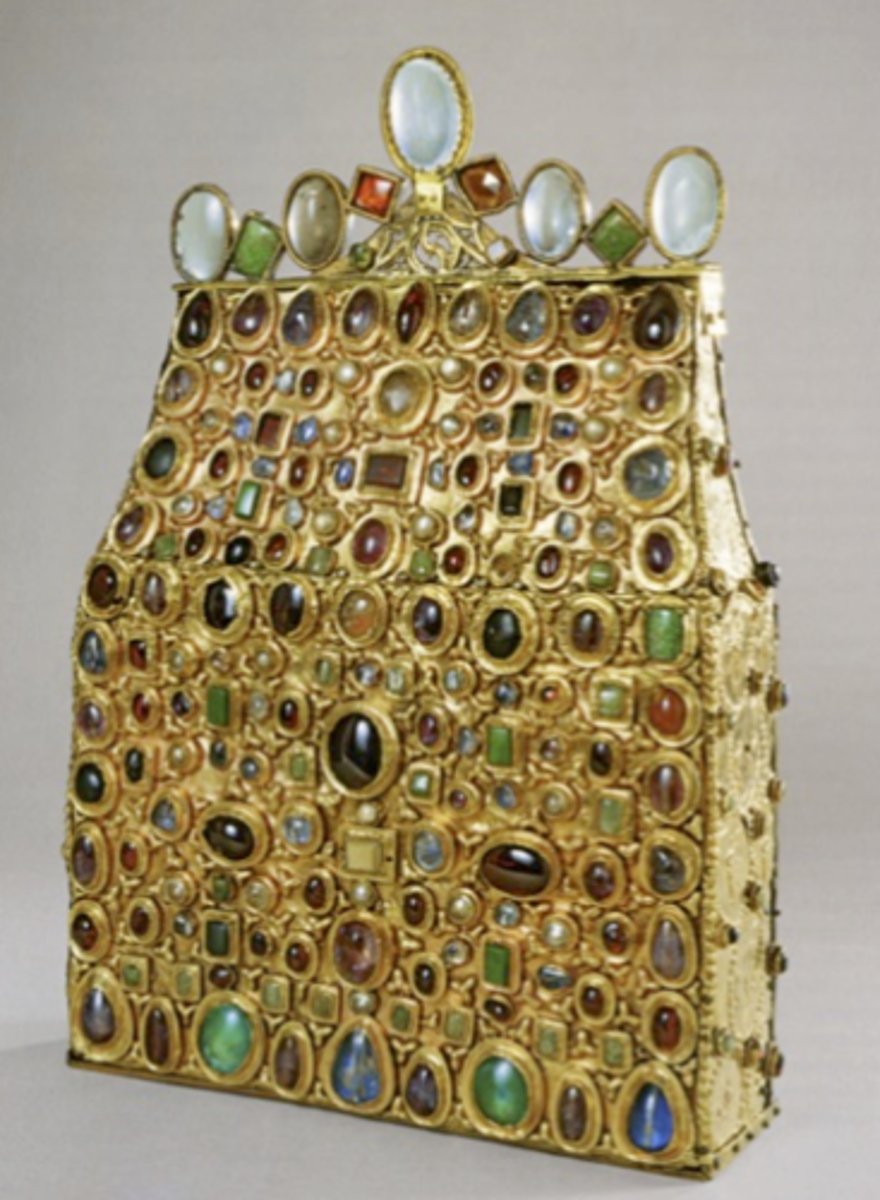
Purse reliquary (bursa) of St. Stephen, southwest Germany, ca. 800-830
What it Shows: A small, purse-shaped container, often adorned with filigree, gemstones, and inscriptions. Broader Significance: Illustrates the role of relics in early medieval Christianity and the importance of luxurious containers for sacred objects.
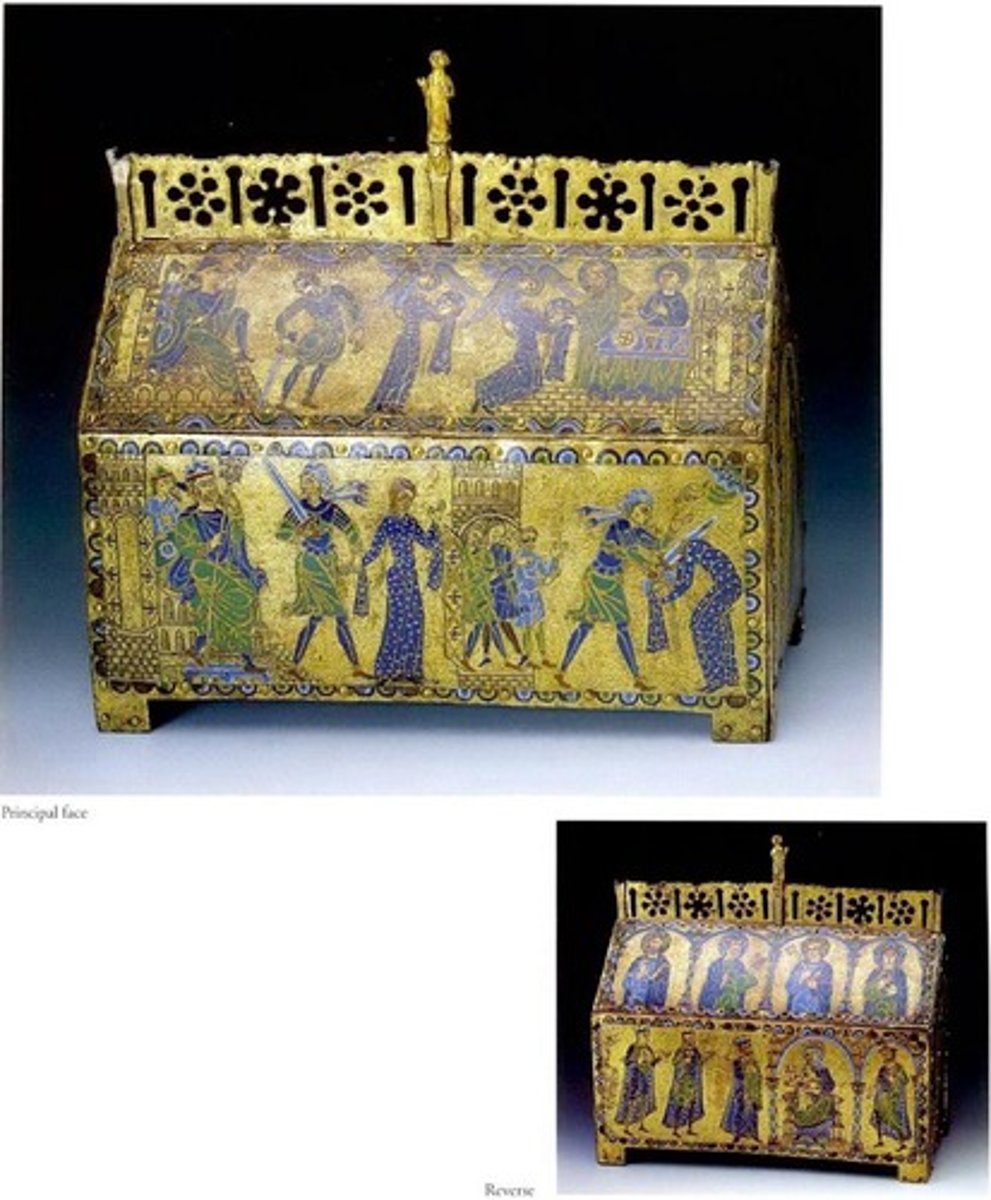
Metalwork and enamel casket-reliquary (chasse) of St. Valerie, Limoges, France, ca. 1175-85
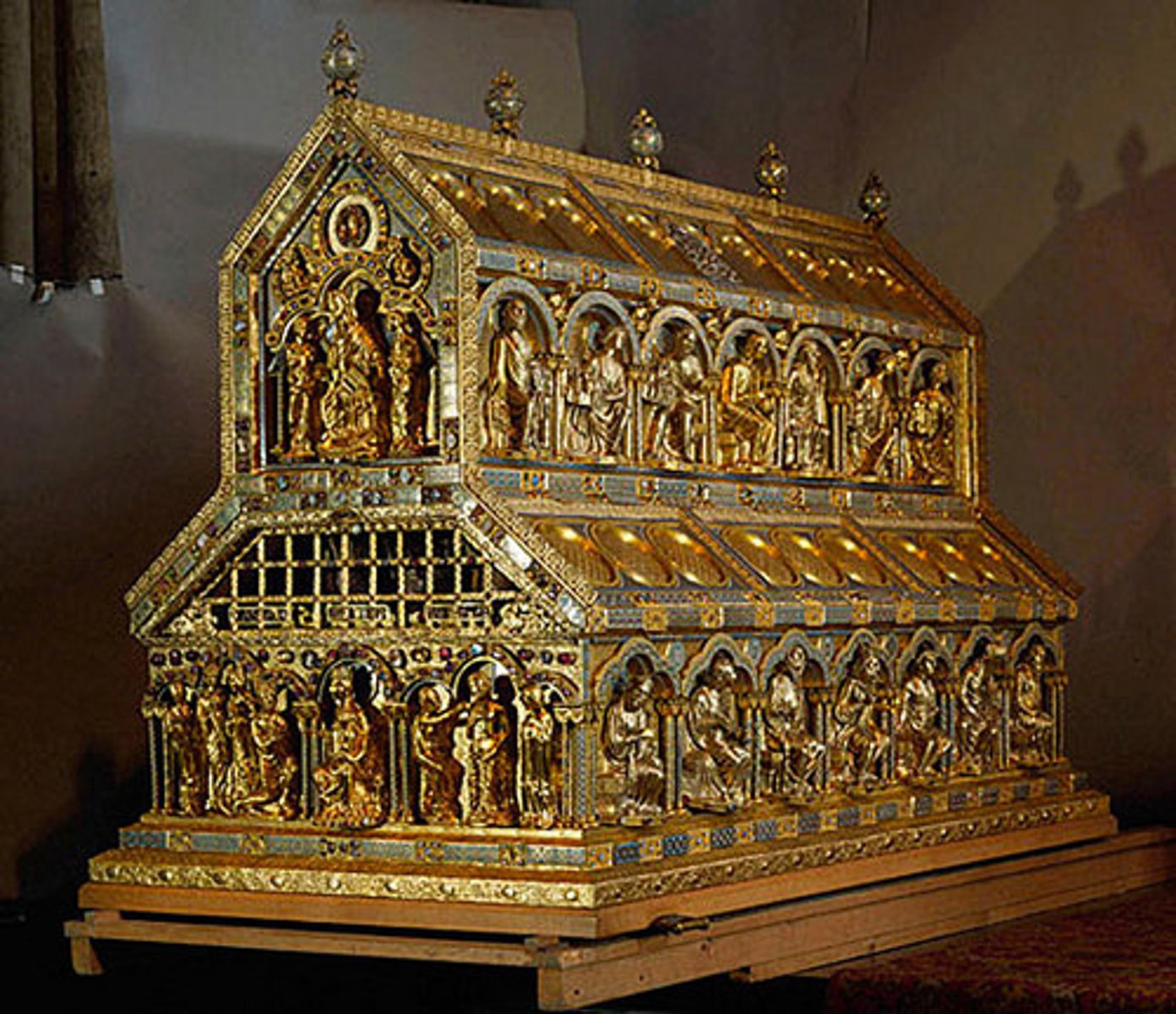
Nicholas of Verdun, Shrine of the Three Magi, Cologne Cathedral, Germany, 1181-1230
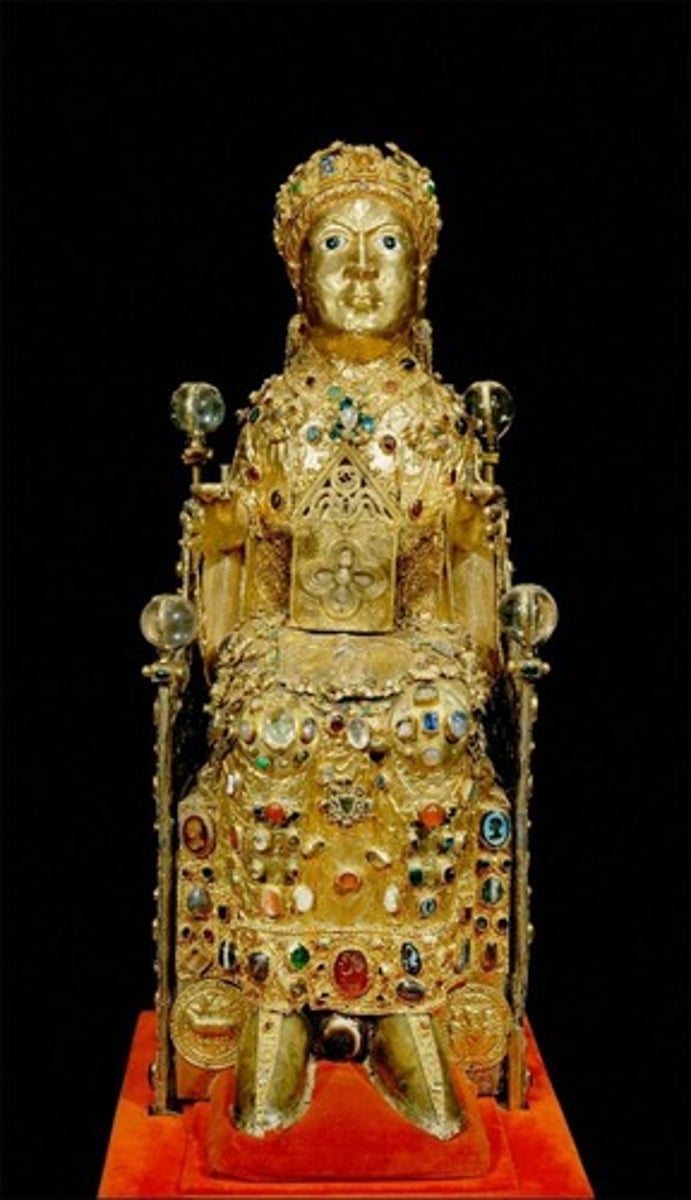
Reliquary statue of St. Foy, Conques, France, begun 9th-century
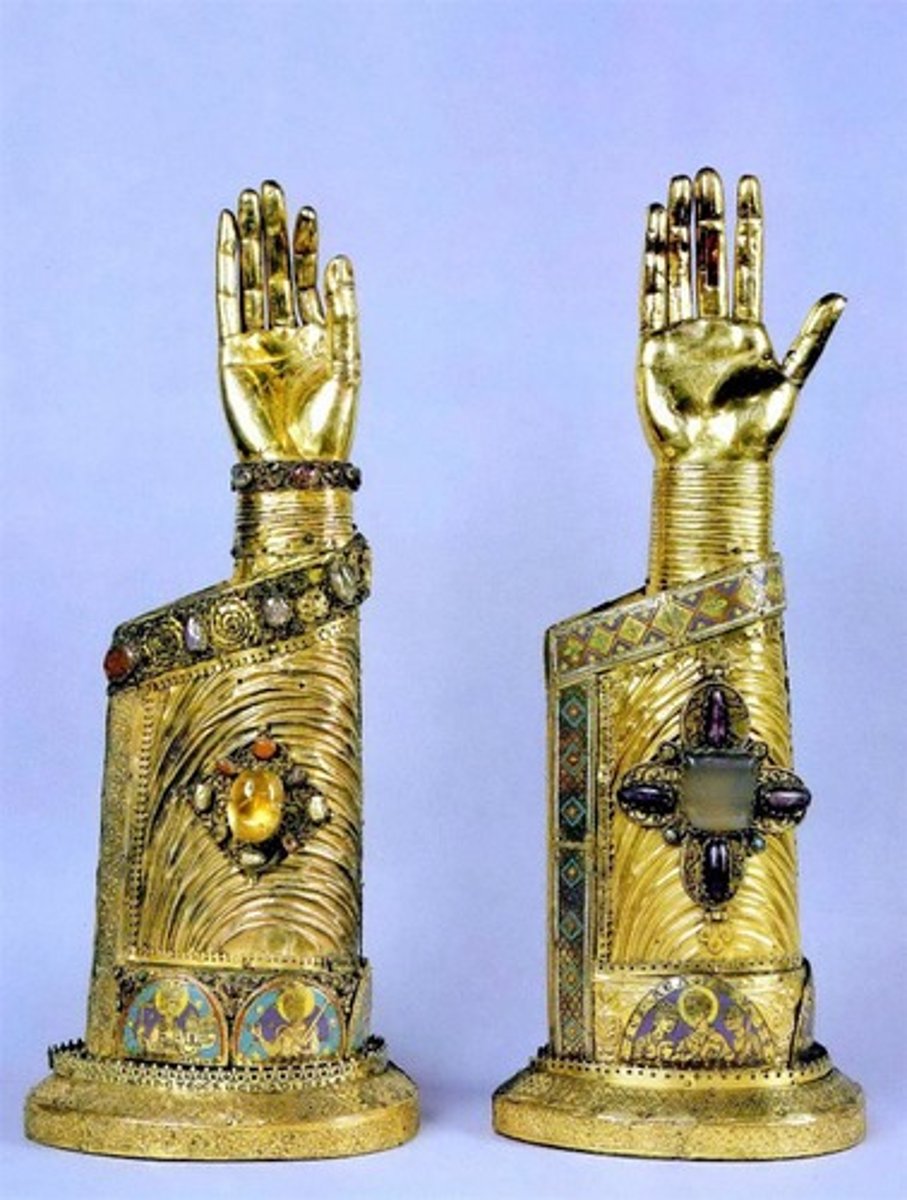
Arm reliquaries from various German churches, 13th-early 14th centuries
Broader Significance: Reflects the role of relics in performing miracles and strengthening regional Christian identity.
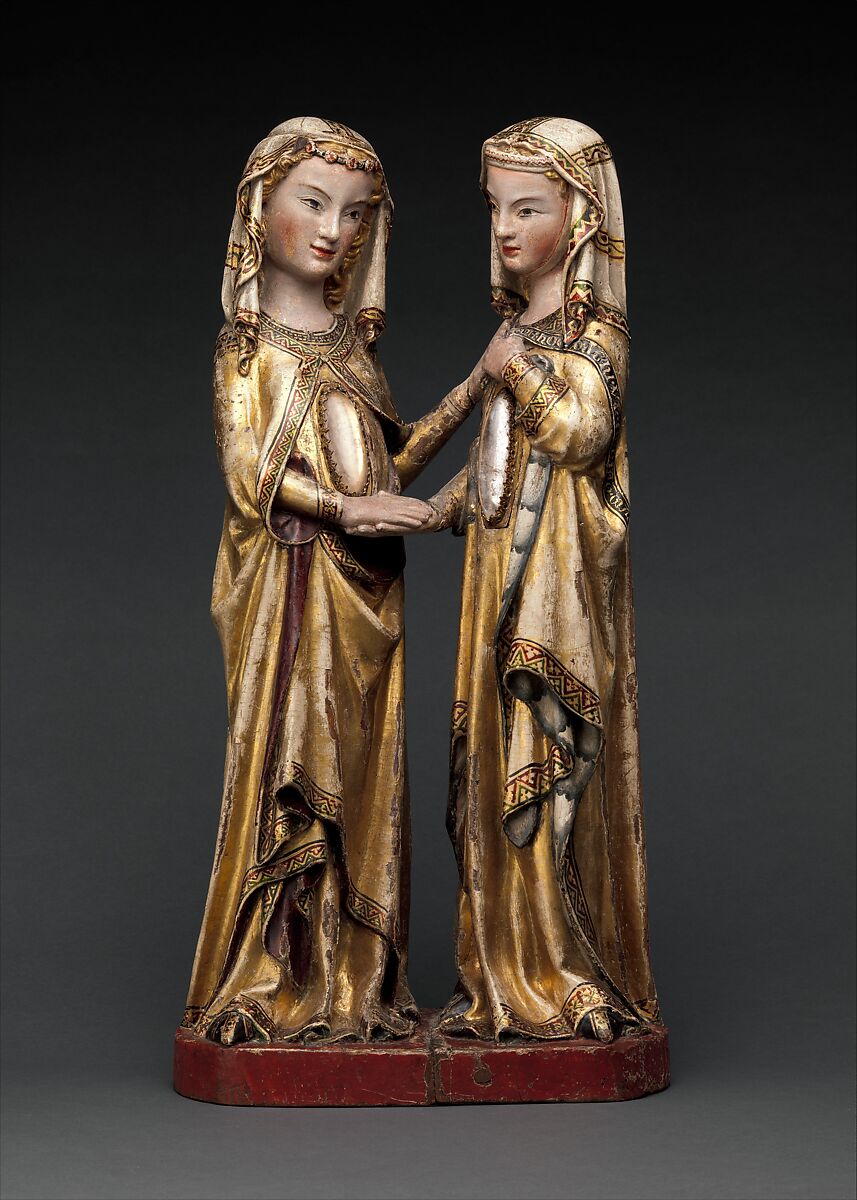
Master Heinrich of Constance, The Visitation, polychromed wood and rock crystal, ca.
1310–20
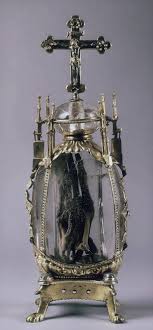
Crystal reliquary with hand of St. Attila (d. 741), early 13th century; now in Strasbourg,
Collège St-Etienne
Broader Significance: Illustrates how medieval Christians valued relic visibility for spiritual engagement.
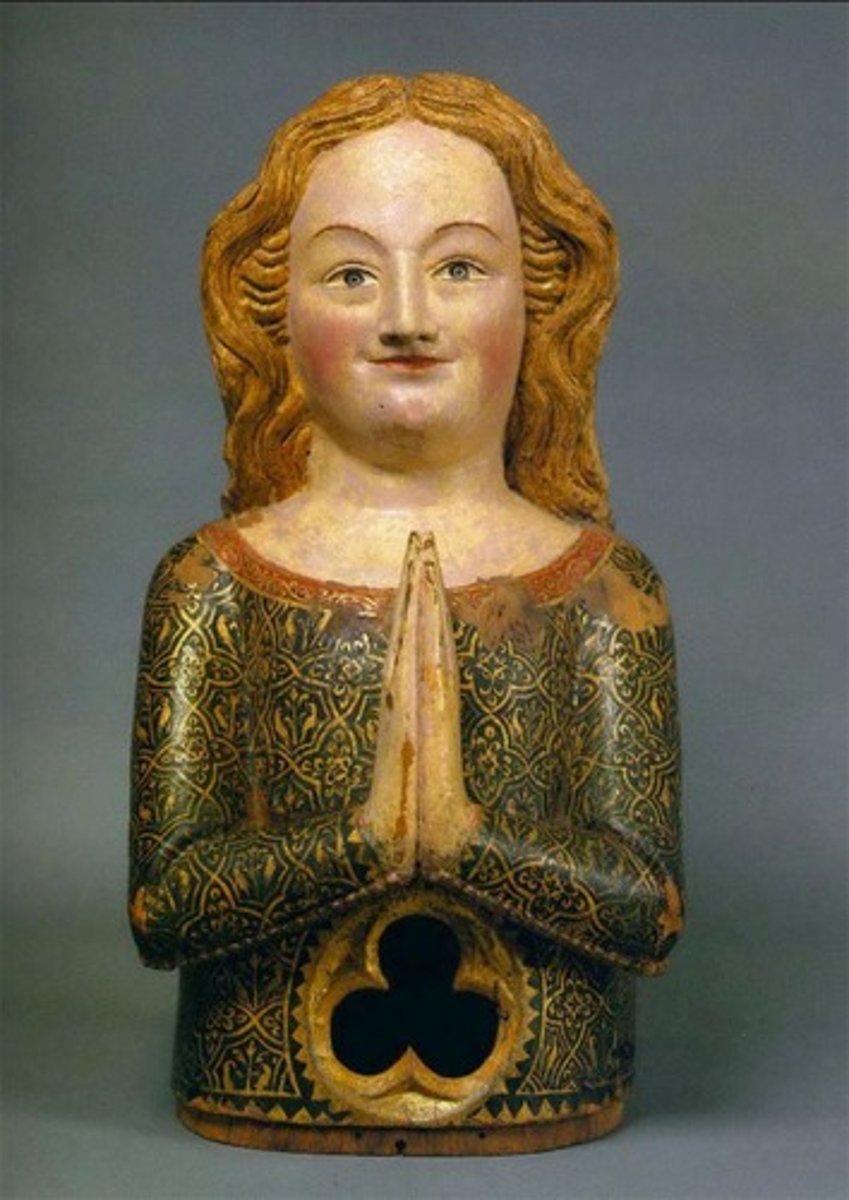
Wooden reliquary bust of an Ursula Virgin, Cologne, late 13th century
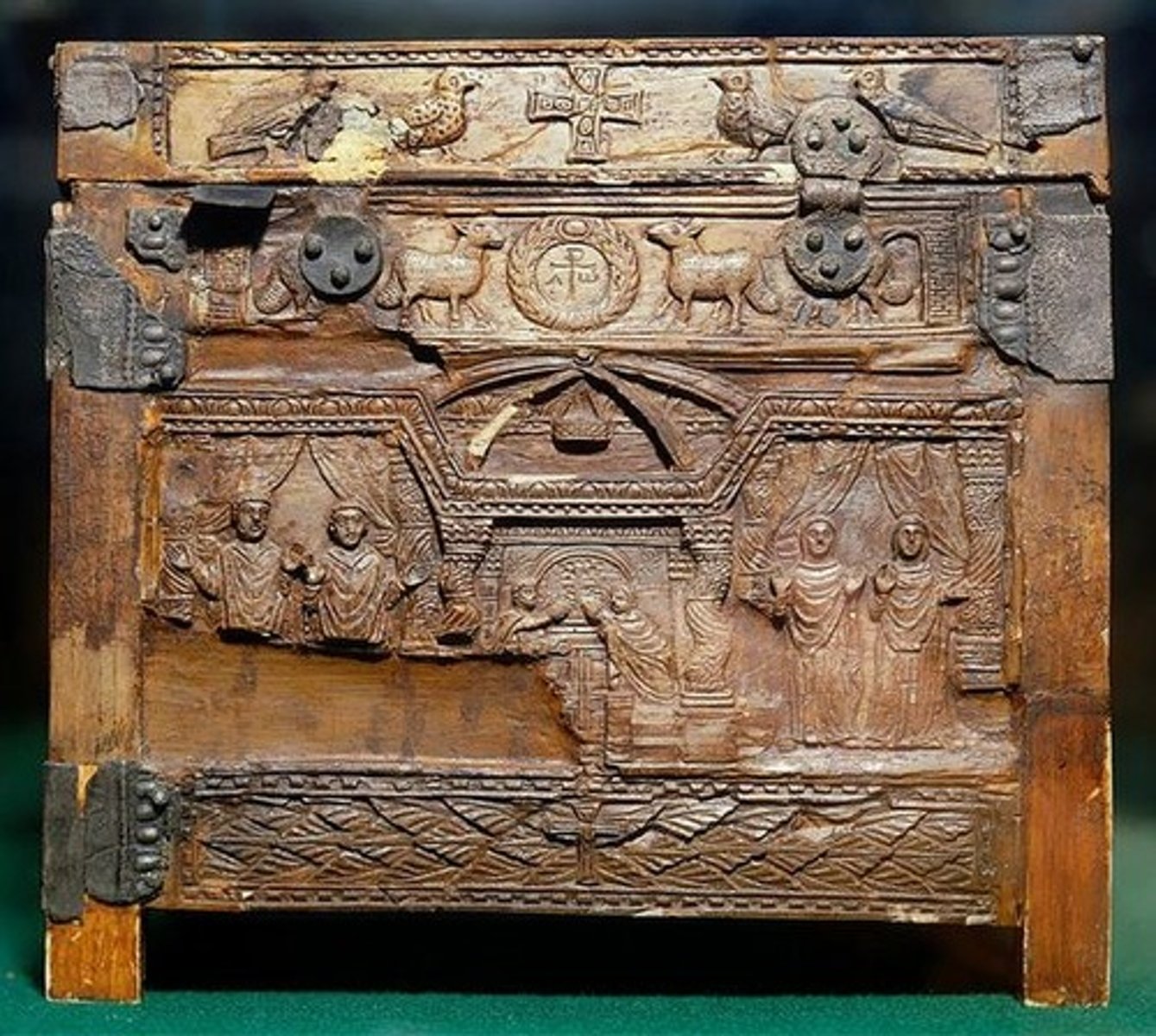
"Pola Casket": Ivory box with relief of Peter's shrine, Italian, ca. 430
Broader Significance: Highlights early Christian interest in relic veneration and portable devotional objects.
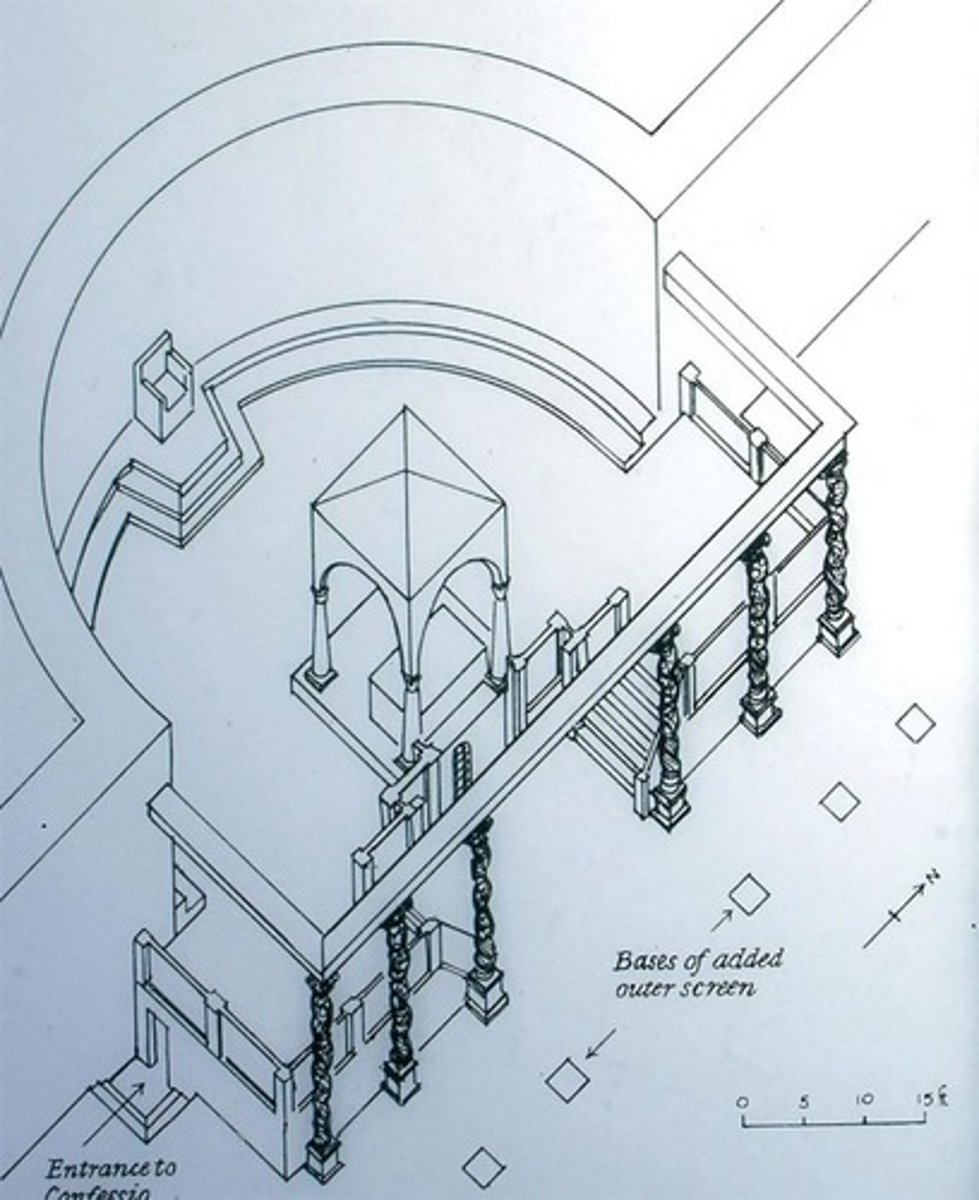
Reconstruction drawings and diagrams of Basilica of St. Peter (a.k.a. "Old St. Peter's"), Rome, ca. 320-29
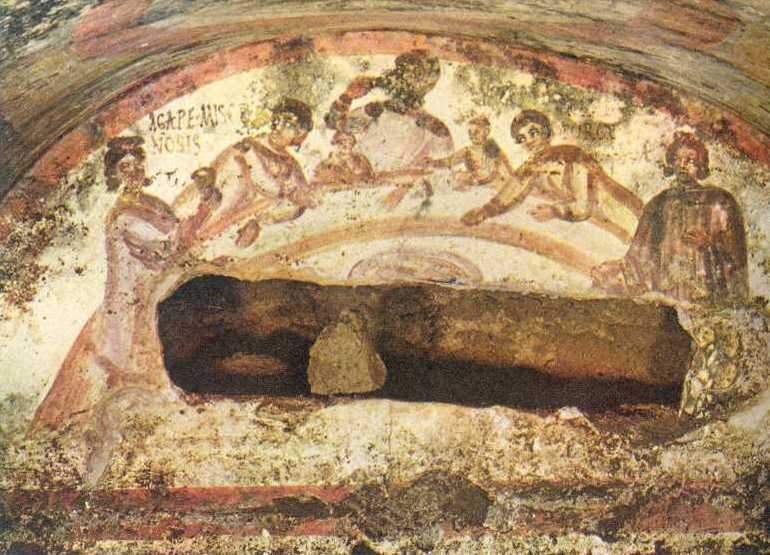
Scenes of agape feasts and Last Suppers, from various Roman catacombs, 3 rd -5 th centuries
Depicts communal Christian meals as precursors to the Eucharist.
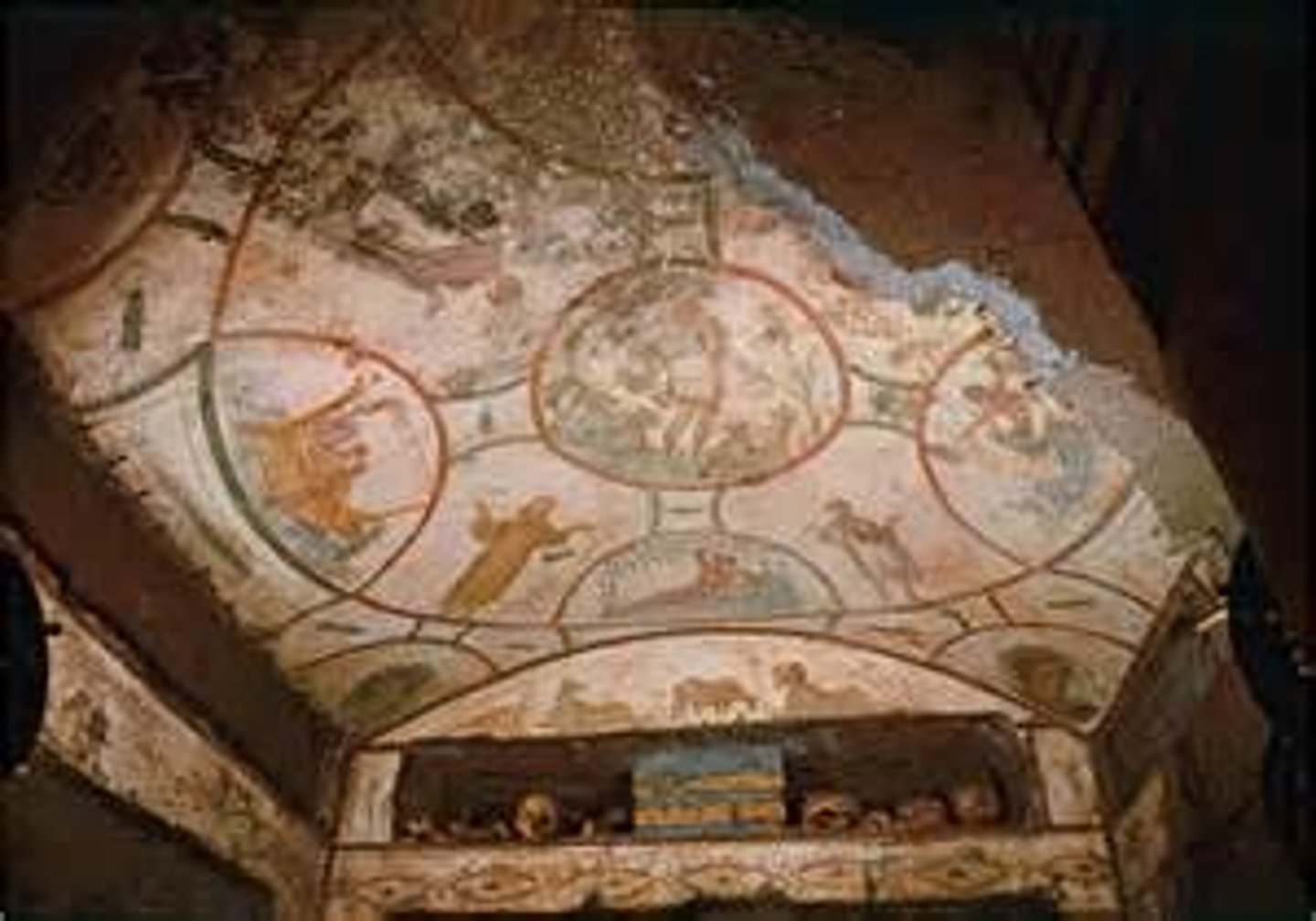
Catacomb of Sts. Petrus and Marcellinus, Rome, late 3rd-early 4th century: Vault painting with Good Shepherd and Jonah scenes
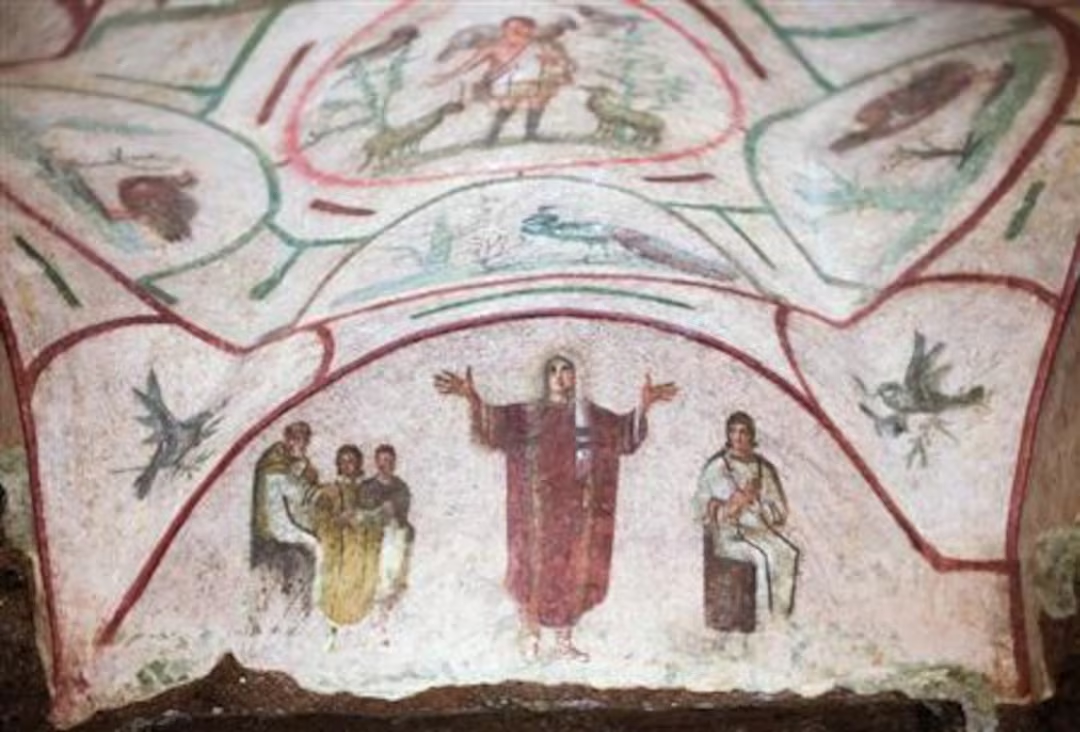
Catacomb of Priscilla, Rome, late 3rd century: Cubiculum of Donna velata
a. Marriage (?), prayer, motherhood fresco
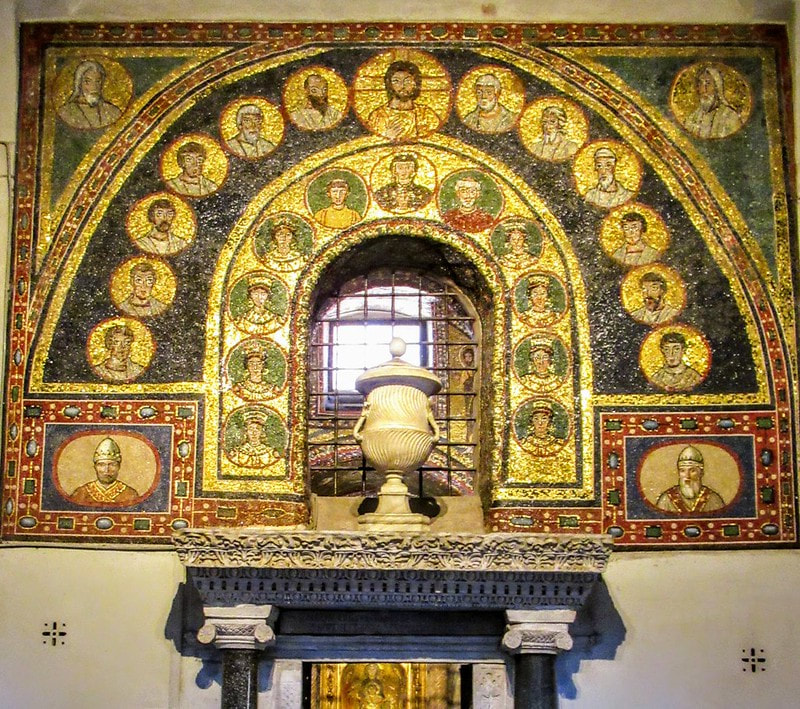
Zeno Chapel (appended to Sta. Prassede), 817-22 (Santa Prassede)
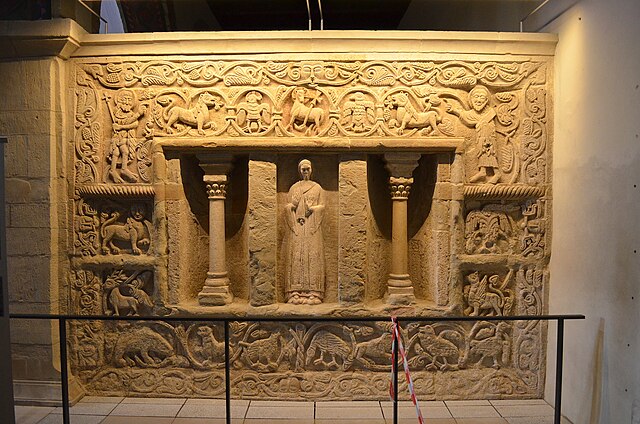
Church of St. Cyriakus, Gernrode (Saxony-Anhalt, Germany), 10 th century: Holy
Sepulcher ensemble, stucco with polychromy, ca. 1080-1130
Uta and Eckhart, Naumburg Cathedral, Germany, ca. 1250