Vital Signs, Patient Assessment, and Medication (CCMA)
 Call Kai
 Learn
Learn Practice Test
 Spaced Repetition
 Match
Match Flashcards
 Knowt Play
1/146

There's no tags or description
Looks like no tags are added yet.
Name | Mastery | Learn | Test | Matching | Spaced | Call with Kai |
|---|
No analytics yet
Send a link to your students to track their progress
147 Terms
temperature
pulse
respiration
blood pressure
what are the 4 main vital signs?
temperature, pulse, respiration
what does TPR stand for?
height, weight, body mass index (BMI)
what are the anthropometric measurements?
systolic pressure
the highest blood pressure level that occurs when the heart is contracting
diastolic pressure
the lowest blood pressure level that occurs when the heart is contracting
systolic/diastolic, mmHg
how is BP recorded? what is the measure in?
systole
contraction of the heart
diastole
relaxation of the heart
lower BP
a decrease in blood volume causes a...
higher BP
a higher blood viscosity causes a...
greater peripheral resistance, higher BP
a smaller lumen (diameter) of the artery causes....
systolic higher than 140mmHg
diastolic higher than 90mmHg
what BP reading defines hypertension?
essential hypertension
the most common type of hypertension; occurs when a patient with no other health problems has a BP over 140/90
secondary hypertension
hypertension that occurs due to an underlying pathologic conditions; causes a BP over 140/90
less than 120/80 mmHg
greater than 100/60 mmHg
what range is a normal adult BP in?
systolic: 60-96
diastolic: 30-62
what range is a normal for a newborn's BP?
systolic: 78-112
diastolic: 48-78
what range is a normal for a toddler's (1-3 yo) BP?
systolic: 78-112
diastolic: 50-79
what range is a normal for a young child's (4-6 yo) BP?
systolic: 85-114
diastolic: 52-79
what range is a normal for a child's (7-11 yo) BP?
systolic: 94-119
diastolic: 58-79
what range is a normal for an adolescent's BP?
systolic: 120-139 mmHg
diastolic: 80-89 mmHg
what BP range indicates prehypertension?
systolic: 140-159 mmHg
diastolic: 90-99 mmHg
what BP range indicates stage 1 hypertension?
systolic: over 160 mmHg
diastolic: over 100 mmHg
what BP range indicates stage 2 hypertension?
systolic: below 90 mmHg
diastolic: below 60 mmHg
what BP range indicates hypotension?
using a Sphygmomanometer
1. feel for the brachial artery pulse in the inner elbow crease. place the diaphragm of the stethoscope over this point.
2. close the valve on the bulb and pump rapidly to 160-180 mmHg, or until 30 mmHg above your typical systolic pressure.
3. slowly open the valve to allow the pressure to fall at a rate of roughly 2-3 mmHg per second.
4: identify systolic: note the gauge reading when you hear the first rhythmic tapping sound.
5: identify diastolic: continue listening as the pressure falls until the sound disappears.
6. deflate: quickly release all remaining air
how do you manually take blood pressure?
diastolic pressure is up to 5 mmHg higher
what change occurs in BP when the patient is sitting (vs. in supine position)?
diastolic pressure increases 6 mmHg
what change occurs in BP when the patient is unsupported?
systolic pressure may be raised by 2-8 mmHg
what change occurs in BP when the patient's legs are crossed?
Korotkoff sounds
series of sounds that correspond to changes in blood flow through an artery as pressure is released
sharp, tapping sound as blood resurges into the patient's artery
where systolic BP is recorded
Korotkoff Phase I
swishing sound, as more blood flows through artery.
Korotkoff Phase II
sharp, rhythmic tapping
Korotkoff Phase III
soft tapping, which grows fainter as the blood is flowing easily
where diastolic BP is recorded for children.
Korotkoff Phase IV
all sounds disappear
where diastolic BP is recorded
Korotkoff Phase V
pulse
a measurement of the blood as the heart circulates it through the body. felt as a small movement under the skin in areas of the body where the artery is close to the surface.
stroke volume
the amount of blood ejected from the heart in one contraction (amount of blood pumped into aorta)
60-100 bpm
what is the normal pulse rate of a healthy adult/adolescent?
120-160 bpm
what is the normal pulse rate of a healthy neonate (0-30 days)?
80-140 bpm
what is the normal pulse rate of a healthy toddler (1-2 yo)?
75-120 bpm
what is the normal pulse rate of a healthy young child (3-6 yo)?
75-110 bpm
what is the normal pulse rate of a healthy child (7-11 yo)?
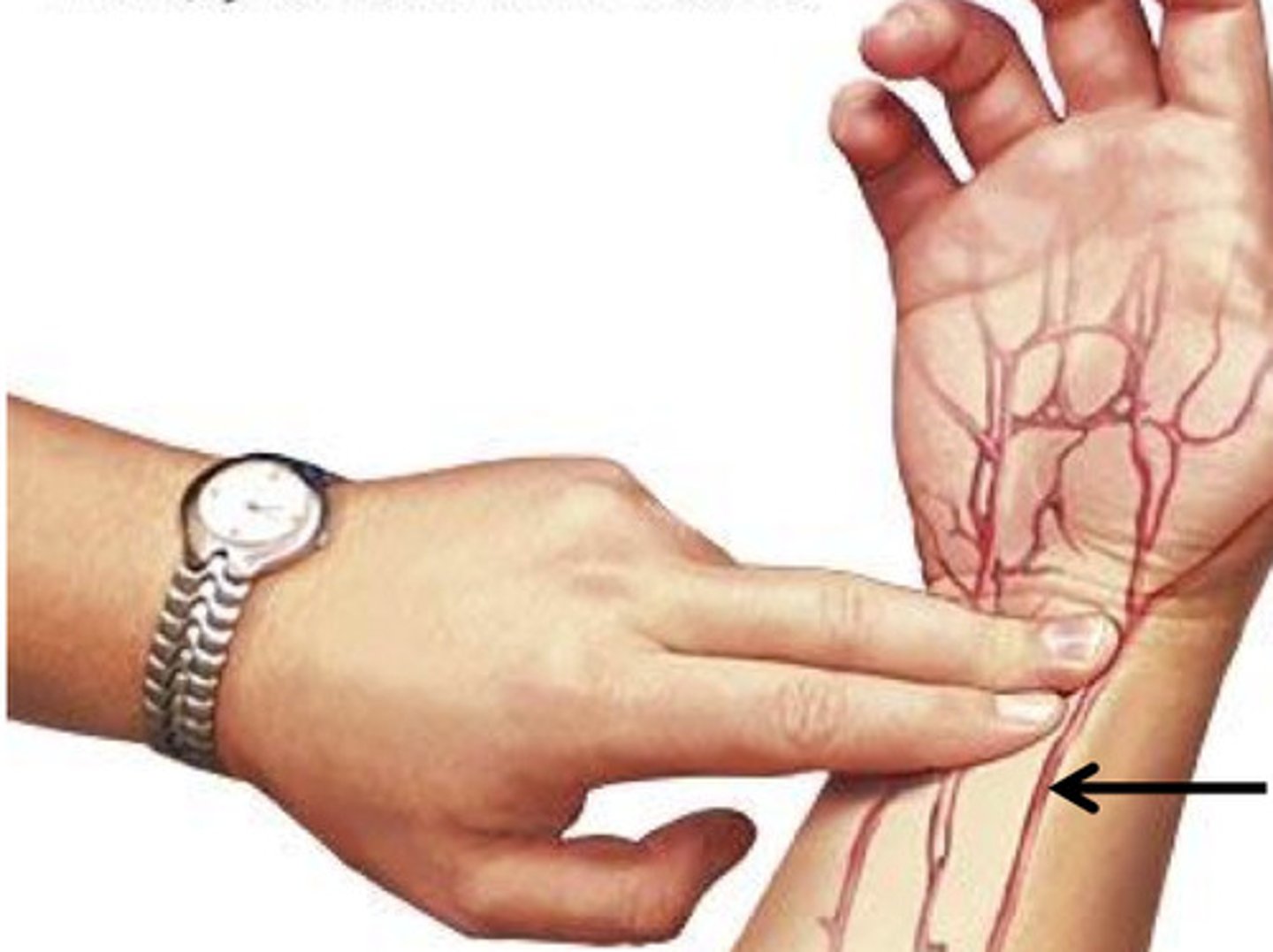
radial artery
major artery in the forearm, most common site to palpate a pulse.
at the wrist on the thumb side.
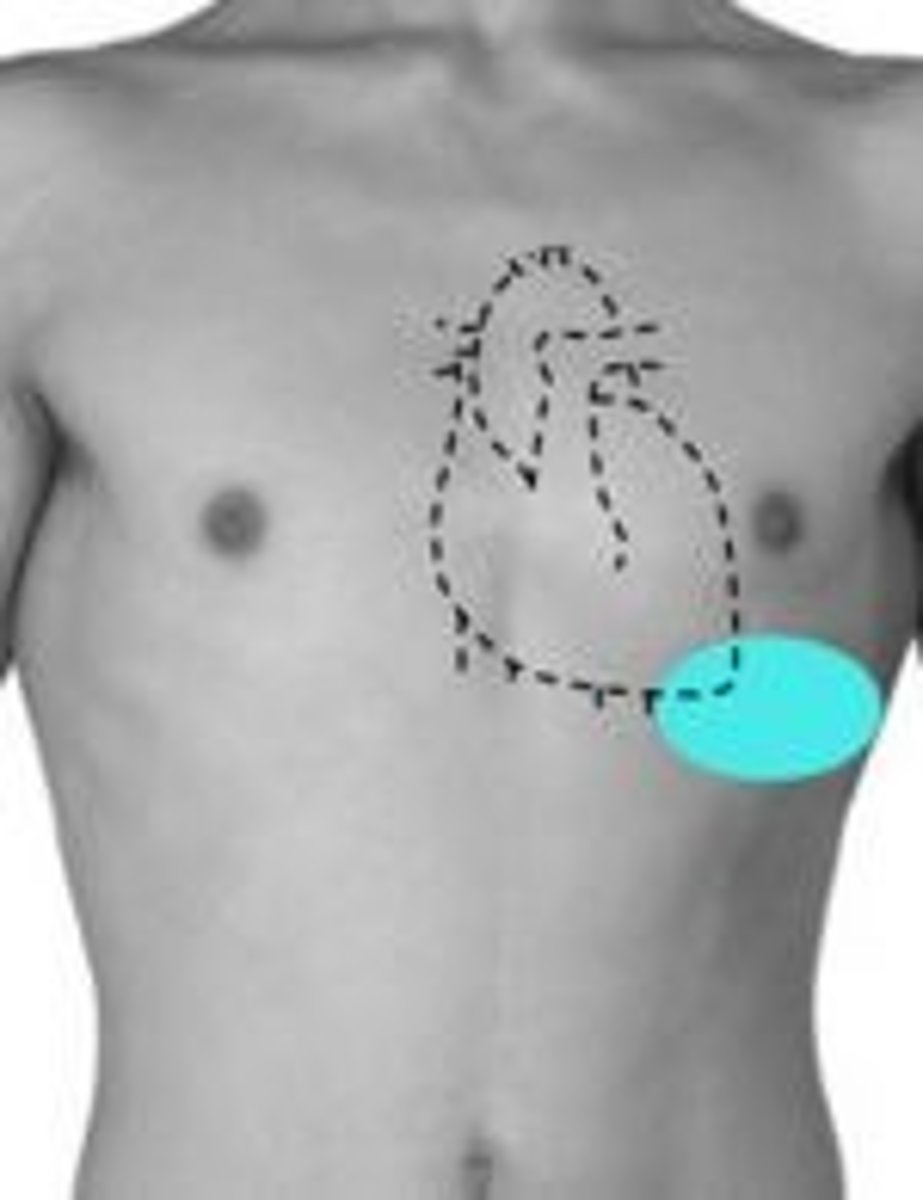
apical pulse
pulse taken with a stethoscope and near the apex of the heart
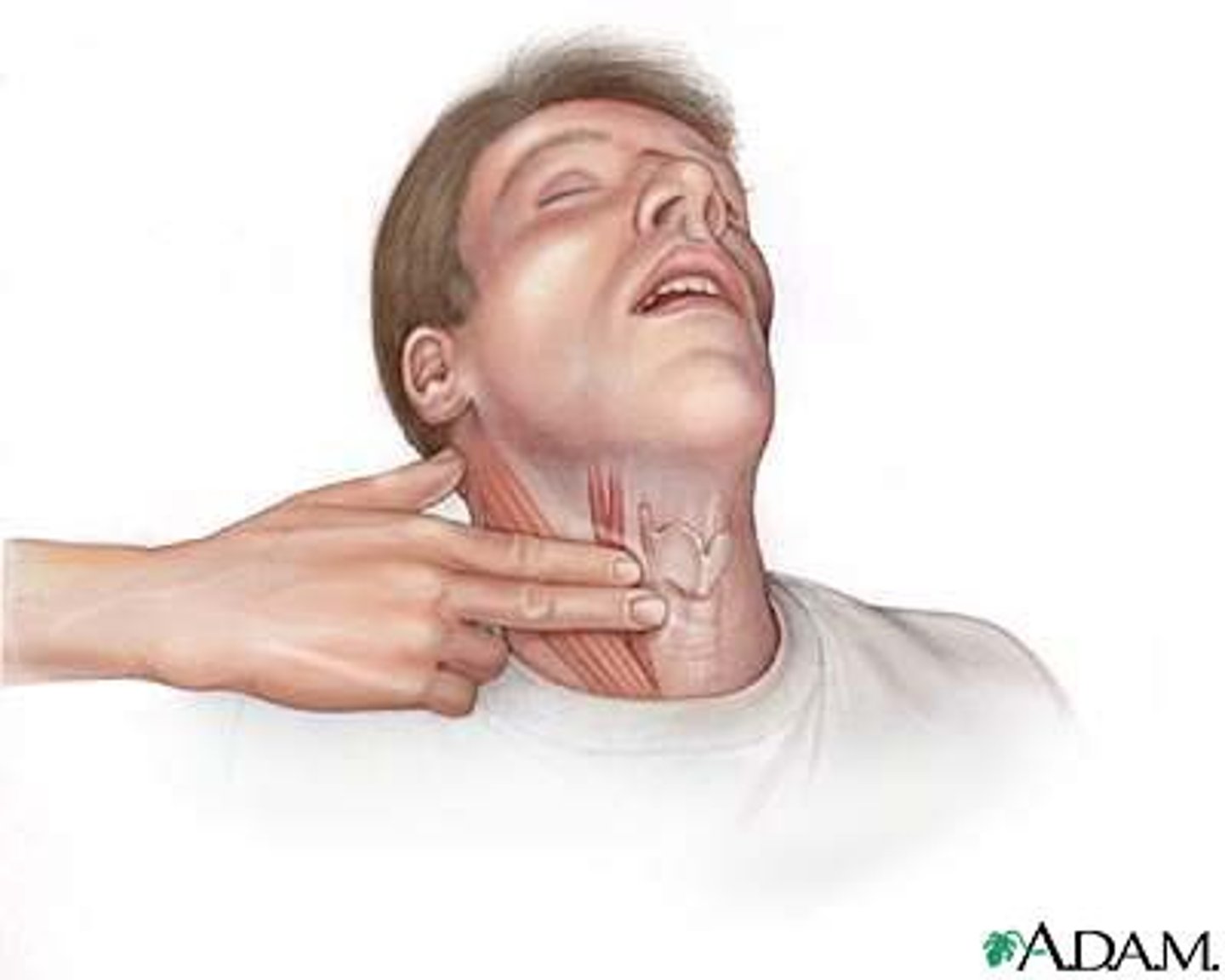
carotid pulse
the pulse felt along the large carotid artery on either side of the neck. between the larynx and the sternocleidomastoid muscle.
most commonly used in emergency situations
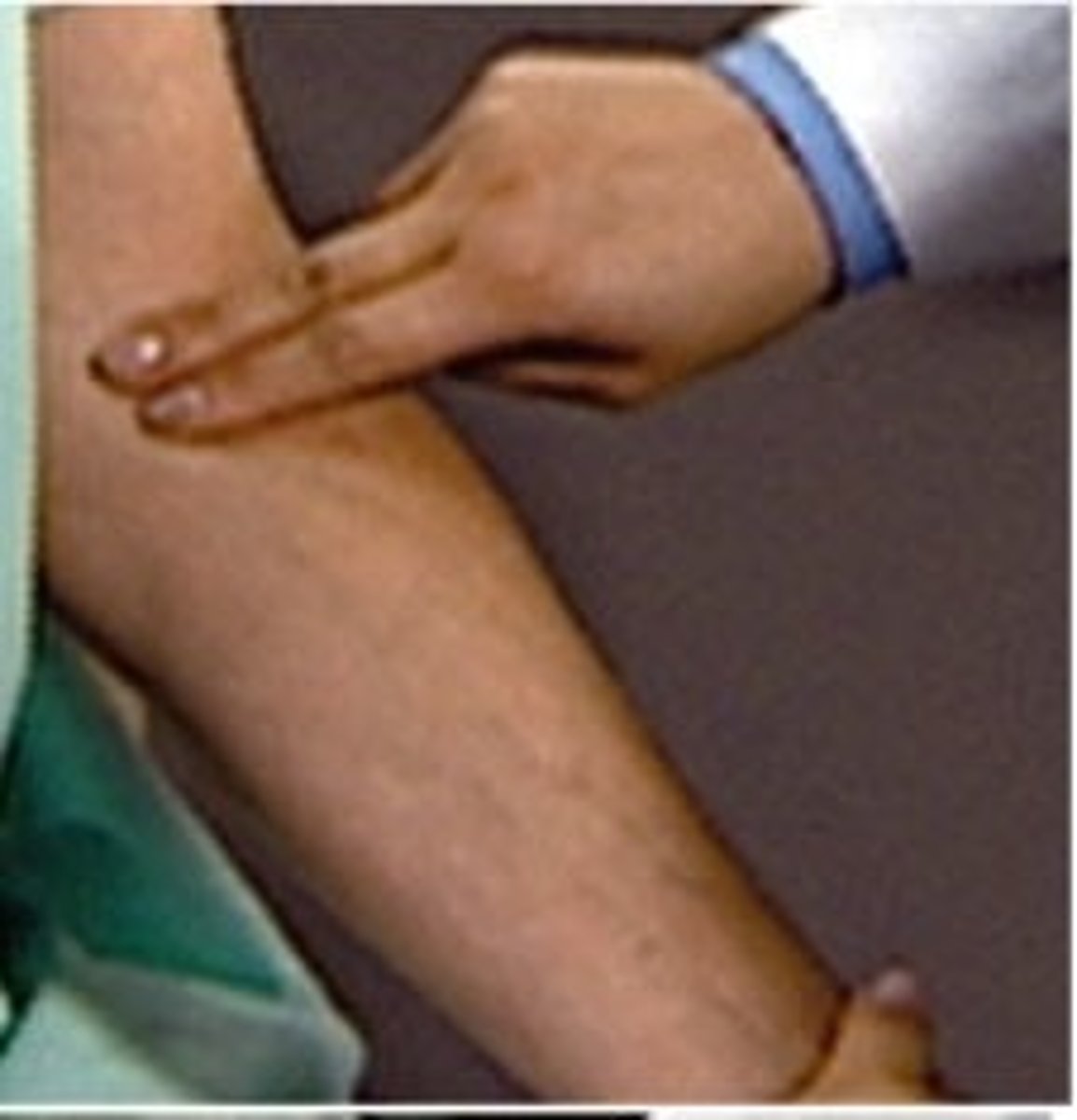
brachial pulse
pulse point at the inner (antecubital) aspect of the elbow.
most commonly used in infants and small children.
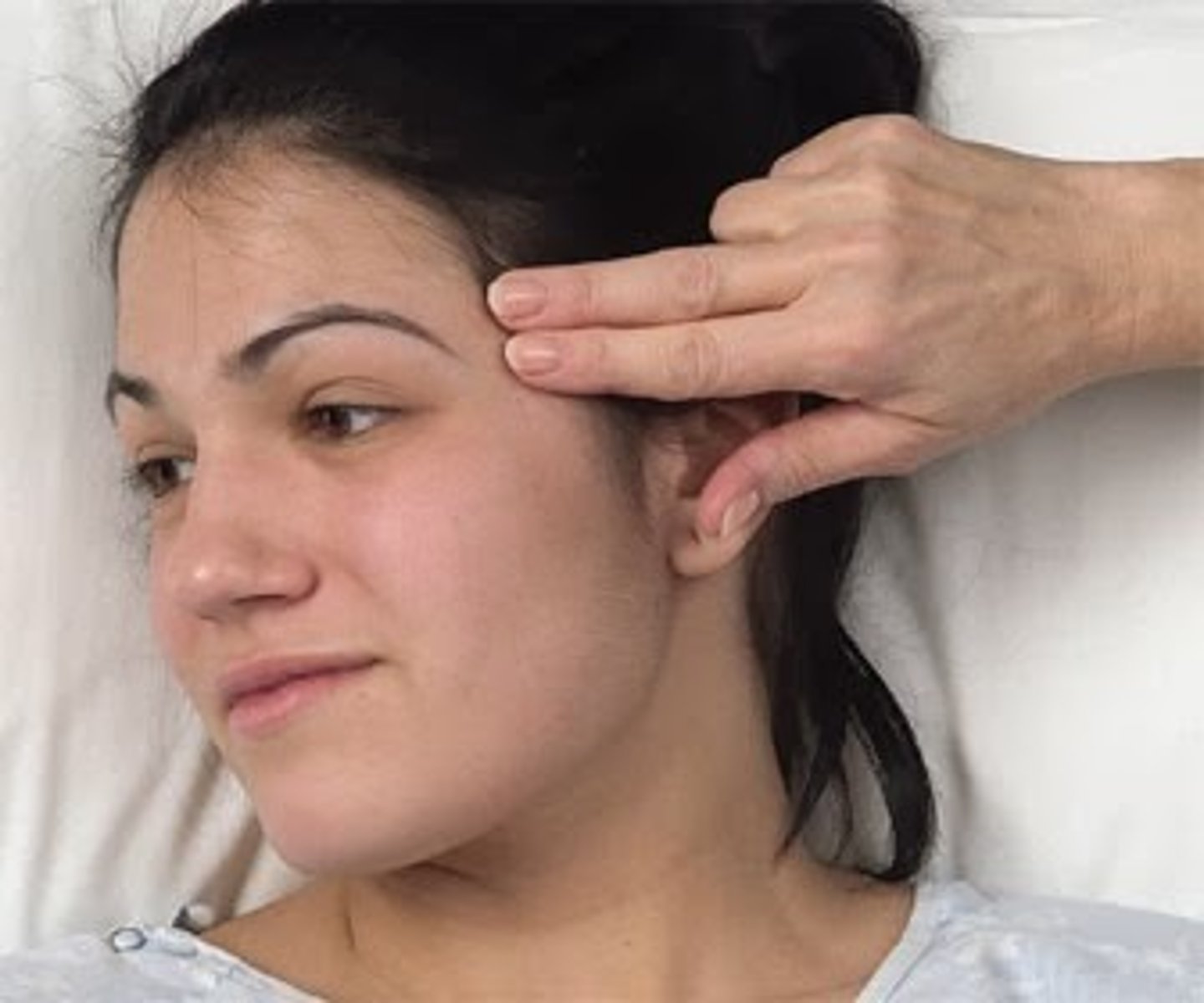
temporal pulse
pulse point located in the temples of the head, parallel/lateral to the eyes
used to evaluate circulation to the head and brain, not necessarily to palpate pulse rate.
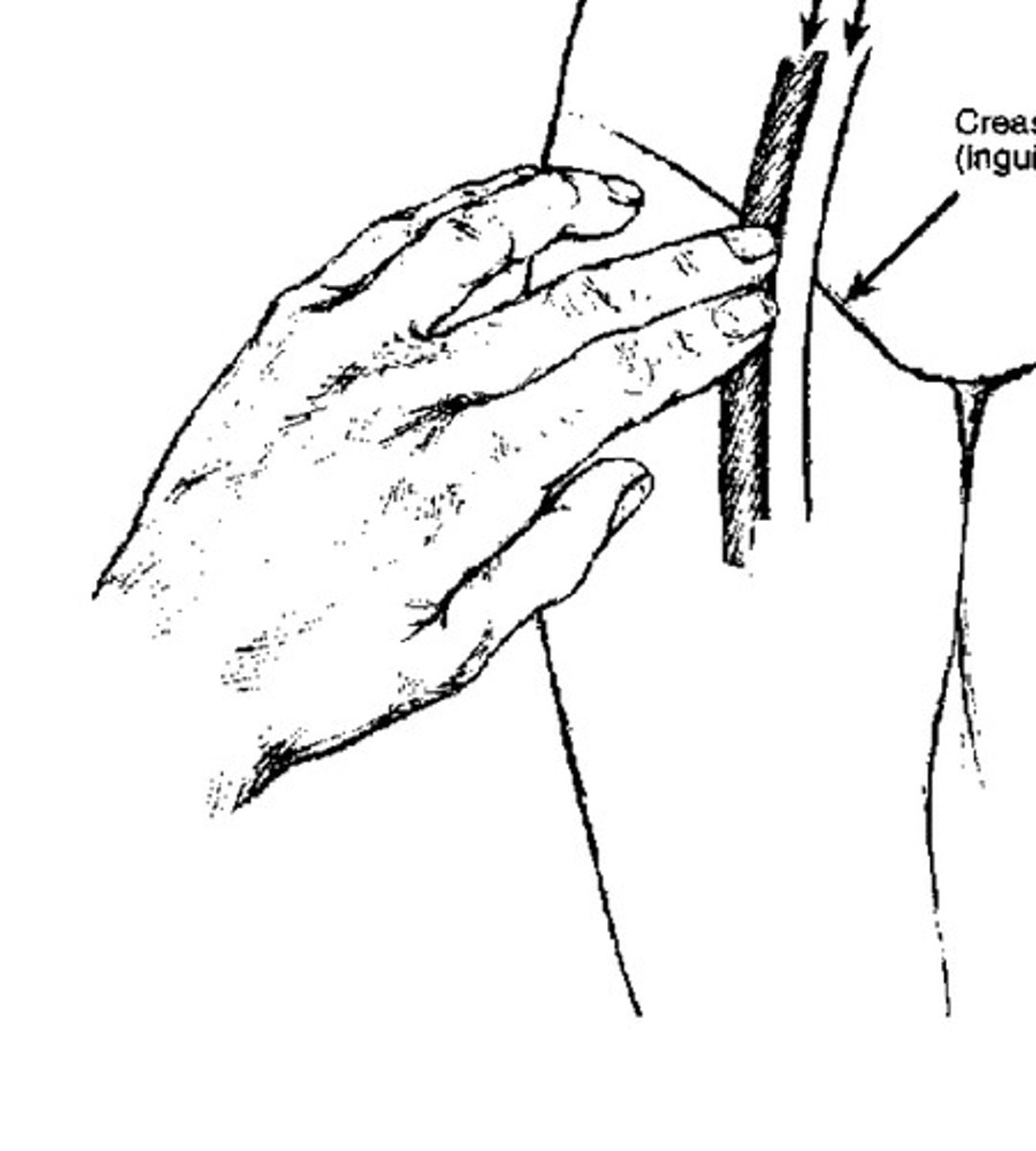
femoral pulse
pulse of the femoral artery felt in the groin
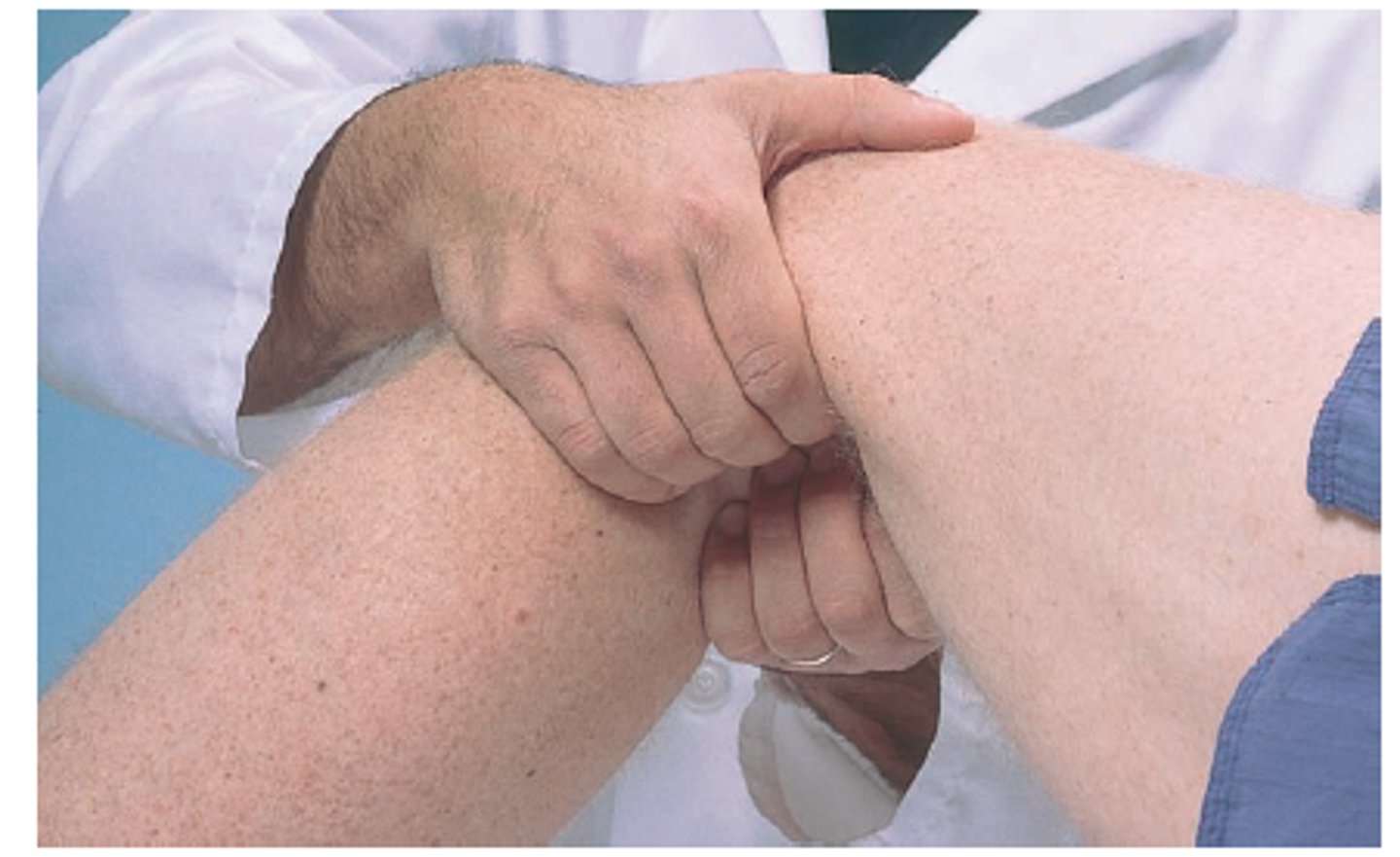
popliteal pulse
pulse felt at the back of either knee; lower part of femoral artery
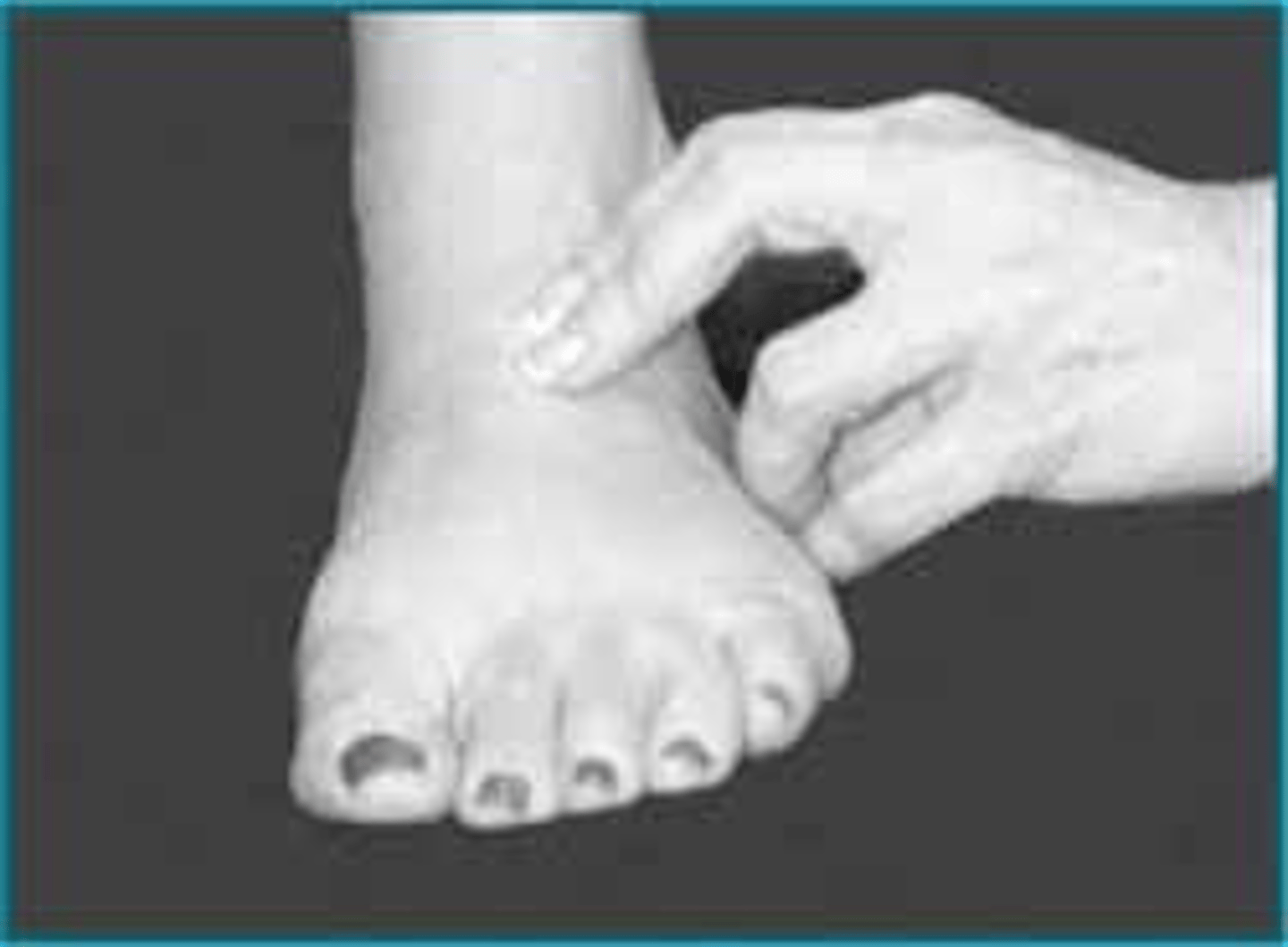
dorsalis pedis (pedal) pulse
pulse felt across the arch of the foot, slightly lateral to the midline, beside the extensor tendon of the great toe.
used to evaluate circulation of the leg, not necessarily to palpate pulse rate.
the apical pulse
if the radial pulse shows irregularity, this pulse point should be used instead:
irregular pulse
pulse is uneven and there is an unequal amount of time between beats.
arrythmia
rhythm is irregular, resulting in an abnormal pulse.
intermittent pulse
pulse in which beats are occasionally skipped; runs in an otherwise regular pulse
can occur with exercise or after drinking caffeinated beverages
premature ventricular contractions (PVCs)
occurs when a heartbeat does not result in blood being ejected; causing skipped beats
pulse volume
strength of the pulse, affected by force of the heartbeat, the strength of the cardiac contraction, and the condition of the arterial wall.
thready pulse
a pulse with a decreased volume that feels weak and thin, hard to palpate
often due to insufficient circulation of blood, not providing enough oxygen to cells.
bounding pulse
a pulse that is very strong (sometimes even visible on the skin surface).
often felt in patients with hypertension.
0.45 kg
1 lb = ____ kg
2.2 lb
1 kg = ____ lb
2.54 cm
1 in = ____ cm
30.48 cm
1 ft = ____ cm
kg/m^2
BMI =
rate
rhythm
depth
3 things to note when taking respirations
30-50 breaths/min
what is the normal respiratory rate of a newborn?
20-30 breaths/min
what is the normal respiratory rate of a toddler (1-3 yo)?
18-26 breaths/min
what is the normal respiratory rate of a young child (4-6 yo)?
16-22 breaths/min
what is the normal respiratory rate of a child (7-11 yo)?
12-20 breaths/min
what is the normal respiratory rate of an adolescent/adult?
dyspnea
difficult or labored breathing
bradypnea
respirations that are regular in rhythm, but slower than normal in rate
apnea
absence or cessation of breathing
tachypnea
rapid, shallow breathing
hypernea
an increase in the depth of breathing that is usually accompanied by hyperventilation
hyperventilation
abnormally prolonged and deep breathing that is usually associated with acute anxiety, emotional distress, or pain
orthopnea
a condition in which the patient must sit or stand to breathe comfortably; often occurring for patients diagnosed with congestive heart failure (CHF) or COPD
wheezing
a high-pitched breath sound heard on expiration, indicative of obstruction or narrowing of respiratory passages, that often occurs with patients who are diagnosed with asthma
rales
abnormal or crackling breath sounds during inspiration
rhonchi
abnormal rumbling sounds on expiration that indicate airway obstruction by thick secretions (mucus) or spasms.
stertorous breathing
strenuous respiratory effort marked by a snoring sound.
cyanosis
skin coloring changes to a bluish color, especially around the mouth and nail beds, due to being unable to inhale enough oxygen, causing increased CO2 in blood
98.2ºF (axillary!)
what is the normal temperature for a newborn?
99.7ºF
what is the normal temperature for a 1 yo?
98.6ºF
what is the normal temperature for someone 6yo-adult?
96.8ºF (orally!)
what is the normal temperature for an elderly person (over 70 yo)?
97.6ºF
what is the normal temperature at the axillary site?
°F = (°C × 9/5) + 32
how to convert ºC to ºF
°C = (°F - 32) × 5/9
how to convert ºF to ºC
continuous fever
a fever in which temperature remains above normal throughout a 24-hour period and fluctuates less than 3 degrees.
intermittent fever
fever which comes and goes over a 24-hour period, alternating between elevated and normal levels.
remittent fever
fever which fluctuates considerably by more than 3 degrees, but the body temperature tends to remain above the normal range.
S: subjective
O: objective
A: assessment
P: plan
what does SOAP notes stand for?
subjective data (S in SOAP)
purpose of the visit, with the patient's words in quotation marks, or a summary of the patient's statement about the chief complaint
objective data (O in SOAP)
observed or measurable data such as vital signs, the exact anatomic location of an injury, and difficulty with gait
inspection
palpation
percussion
auscultation
mensuration
manipulation
what are the 6 methods of examination?
inspection
observation to detect significant physical features or objective data
general appearance, body contour, gait, symmetry, visible injuries and deformities, tremors, rashes, and color changes.
palpation
touching the skin or performing a firmer exploration for underlying masses, often involving the abdomen
percussion
examination technique that It is performed by tapping or striking the body with the fingers or a small hammer to elicit sounds or vibratory sensations.
determines position, size, density, and amount of air in an underlying organ/cavity
auscultation
using a stethoscope to listen to sounds arising from the body.
useful for evaluating sounds originating in the lungs, heart (murmur or bruit), and abdomen (bowel sounds).
mensuration
process of measuring
height and weight, the length and diameter of an extremity, the extent of flexion or extension of an extremity, the size of the uterus during pregnancy, the size and depth of a wound, and the pressure of a grip
manipulation
passive movement of a joint that is used to determine the range of extension or flexion of the body part.