Types of Agar: Portage Microbiology Module 4.2
 Call Kai
 Learn
Learn Practice Test
 Spaced Repetition
 Match
Match Flashcards
 Knowt Play
1/29

There's no tags or description
Looks like no tags are added yet.
Name | Mastery | Learn | Test | Matching | Spaced | Call with Kai |
|---|
No analytics yet
Send a link to your students to track their progress
30 Terms
Lysogeny Broth (LB) Agar
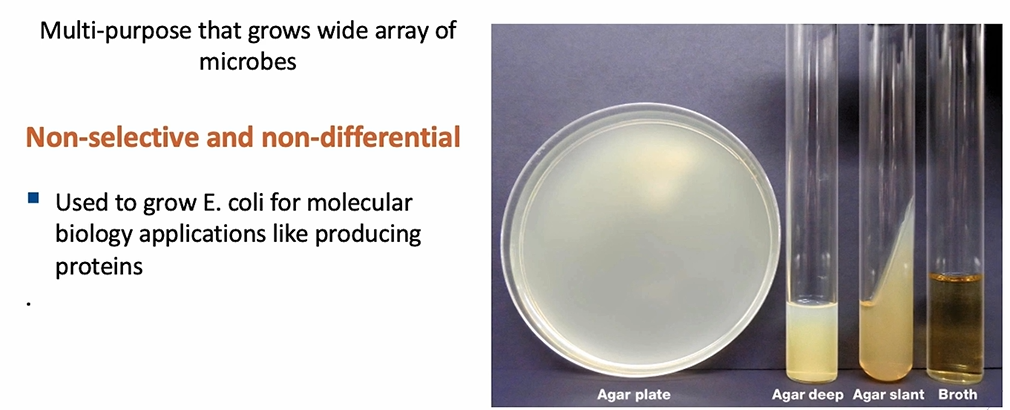
Trypticase Soy Agar (TSA)
non-selective and non-differential
BUT
Blood Agar is a type of this agar that is - non-selective, differential, and enriched
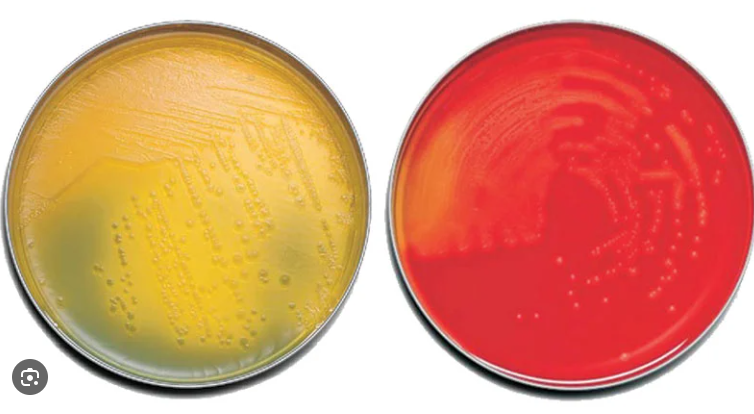
Blood Agar
(a type of TSA)
Columbia CNA Agar
Chocolate Agar
MacConkey Agar
Sorbitol-MacConkey Agar (SMAC)
Eosin Methylene Blue Agar (EMB)
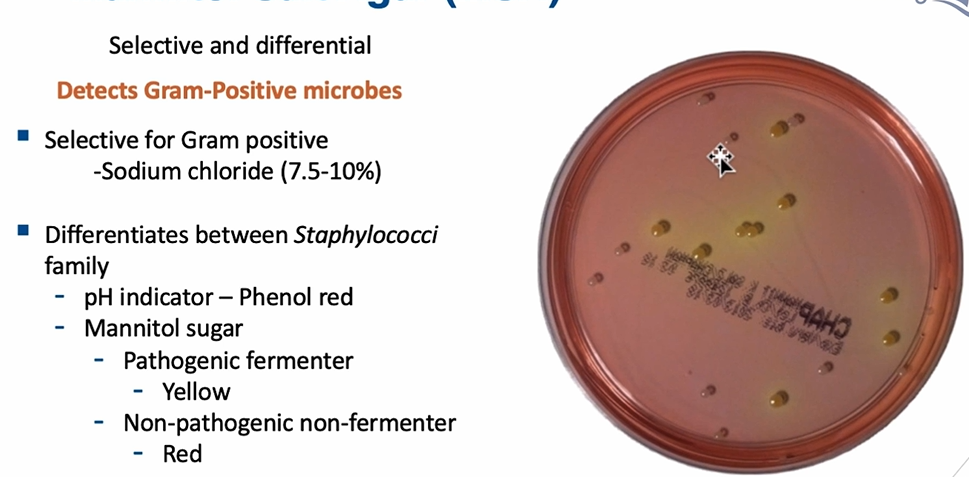
Mannitol Salt Agar (MSA)
S/D?
Lysogeny Broth Agar (LB)
Non-selective
Non-differential
S/D?
Trypticase Soy Agar (TSA or TSAYE with yeast)
Non-selective
Non-differential
S/D?
Blood Agar
Non-selective
Differential
Enriched
S/D?
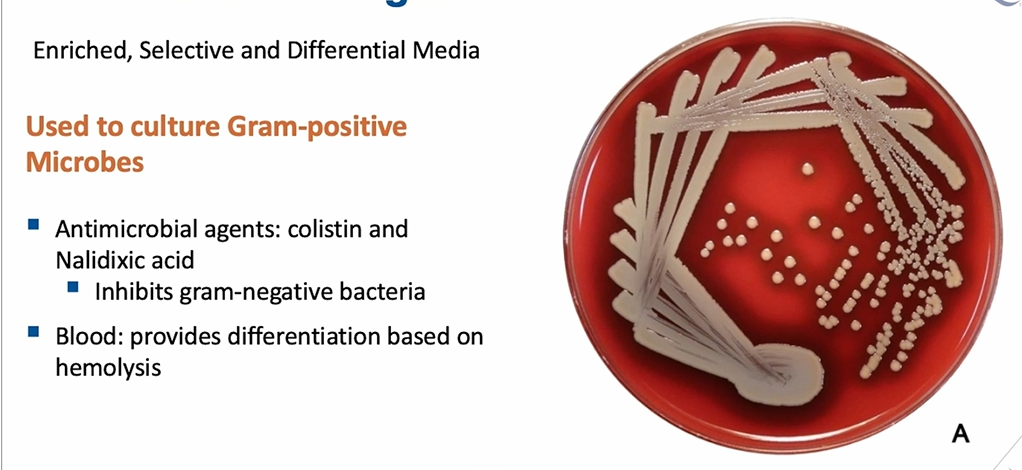
Columbia CNA Agar
Selective
Differential
Enriched
S/D?
Chocolate Agar
Non-selective
Non-differential
Enriched
S/D?
MacConkey Agar
Selective
Differential
S/D?
Sorbitol-MacConkey Agar
Selective
Differential
S/D?
Eosin Methylene Blue Agar
Selective
Differential
S/D?
Mannitol Salt Agar (MSA)
Selective
Differential
Explain: Lysogeny Broth Agar (LB)
grows wide array of microbes
used to grow E. coli a lot
Explain: Trypticase Soy Agar
can be incorporated with yeast
multi-purpose medium
similar color to LB agar
Explain: Blood Agar
a type of TSA agar
grows fastidious microbes (complex growth reqs)
differentiates between streptococcus strains
mixed with 5-10% sheep’s blood
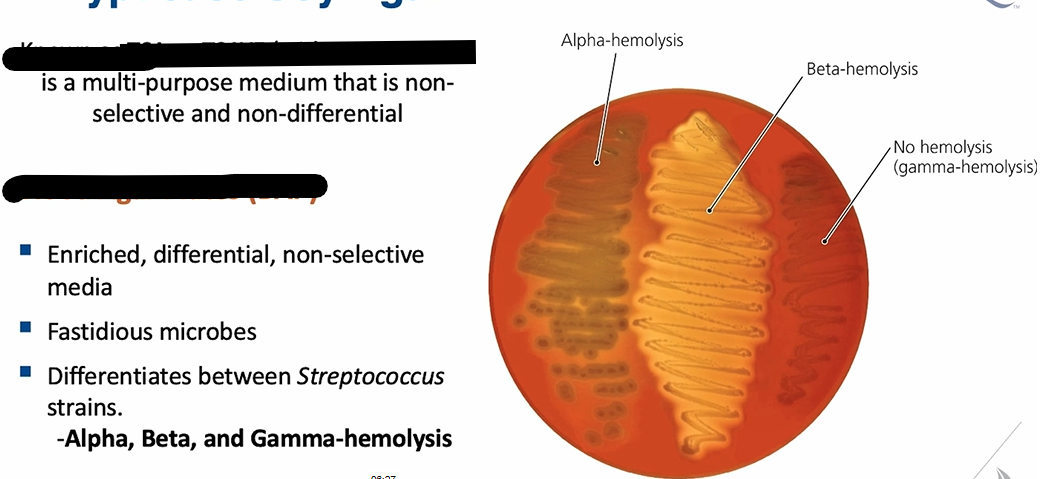
differentiates alpha, beta, and gamma hemolysis
Alpha hemolysis
appears greenish brown due to incomplete/partial lysis of RBCs (Blood agar plates)
Beta hemolysis
appears clear-ish due to the capacity of a microbe to completely lyse RBCs (Blood agar plates)
Gamma hemolysis
appears white/tan due to the absence or lack of hemolytic activity (Blood agar plates)
Explain: Columbia CNA Agar
cultures/sustains gram-POSITIVE microbes
antimicrobial agents incorporated in the media inhibit gram NEGATIVE bacteria growth
Blood in the media provides differentiation based on hemolysis
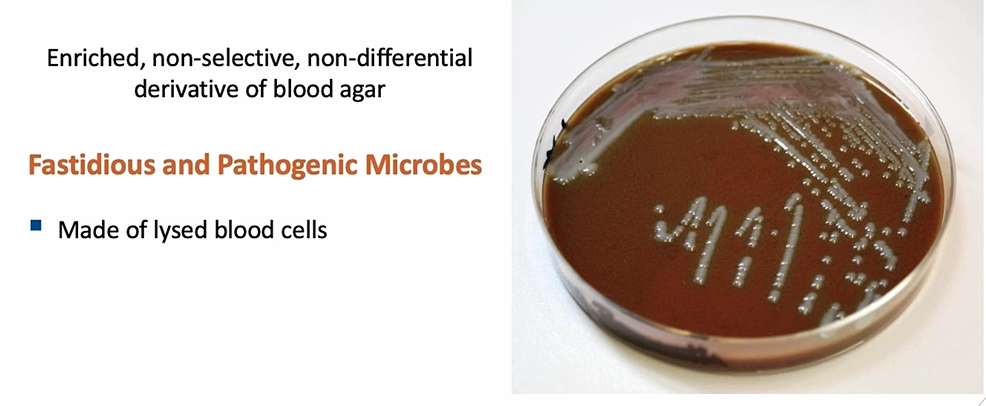
Explain: Chocolate Agar
derivative of blood agar
used for fastidious (complex growth req) and pathogenic microbes
medium made of already lysed RBS (lysed via heat)
these RBS release growth nutrients in the media
since RBCs are already lysed, we can’t observe hemolytic differences
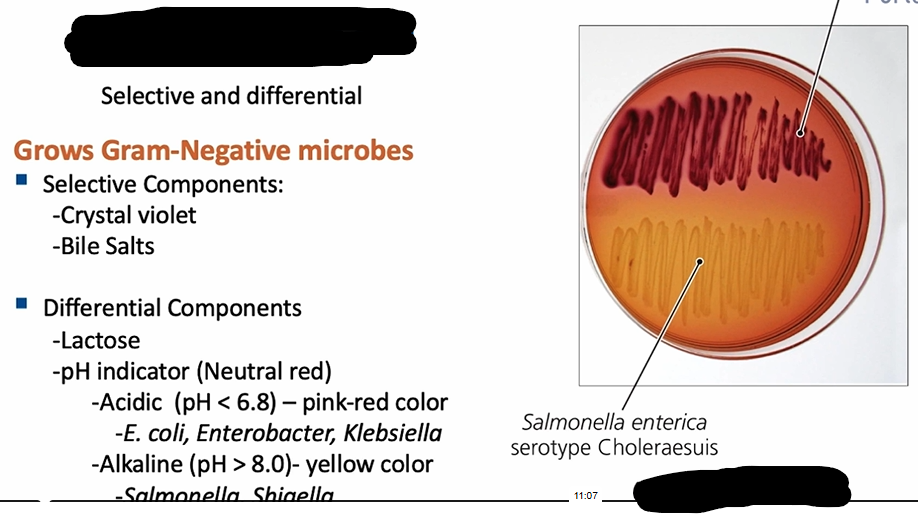
Explain: MacConkey Agar
promotes growth of gram NEGATIVE microbes
Crystal violet and bile salts inhibit growth of gram positive bacteria
if a microbe does ferment lactose, it will become acidic making the medium display a pink/red color
if a microbe does NOT ferment lactose, it will become alkaline (basic?) and the medium will display a yellow culture
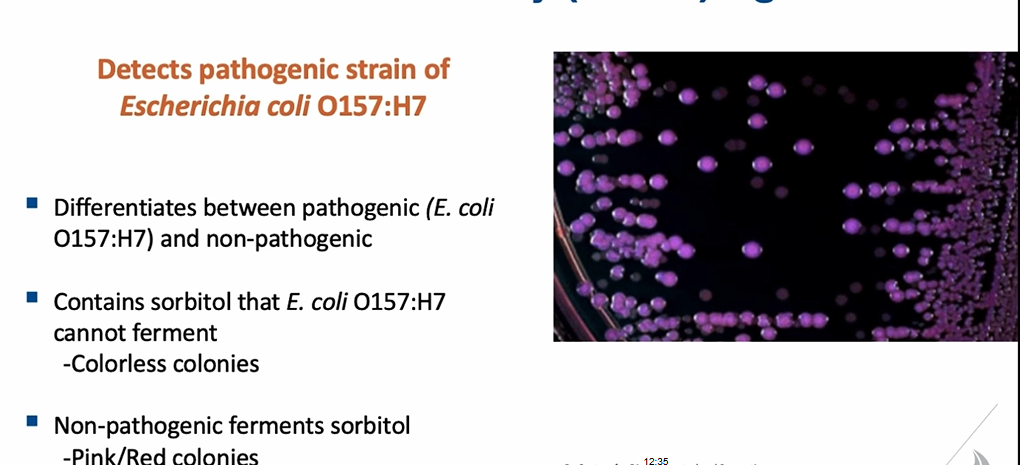
Explain: Sorbitol-MacConkey Agar
detects pathogenic strain of E-Coli (which is E. coli 0157:H7)
agar contains sorbitol that pathogenic e. coli cannot ferment, but nonpathogenic can
Pathogenic E. coli colonies are colorless
Nonpathogenic E. coli colonies are pink/red (indicating fermentation IS occurring)
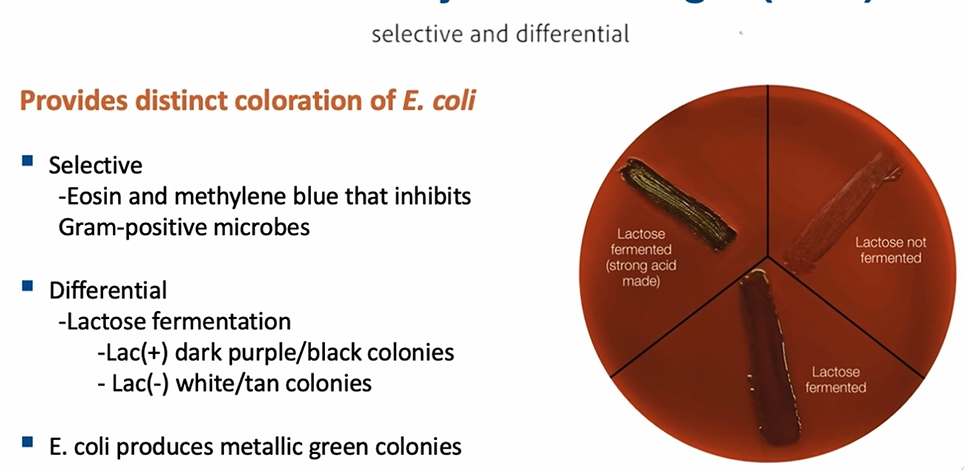
Explain: Eosin methylene Blue Agar
Main two ingredients inhibit gram positive microbes (selective)
Stratified by lactose fermentation
Microbes that CAN ferment lactose look dark purple/black
Microbes that CANNOT ferment lactose look white/tan
***E. coli produce metallic green colonies because cells are absorbing some of the dyes present in the agar
Explain: Mannitol Salt Agar (MSA)
detects gram POSITIVE microbes
differentiates Staphylococci family
plate has sodium chloride and mannitol sugars incorporated
Pathogenic microbes that can ferment mannitol sugar appear yellow (due to pH)
Nonpathogenic microbes that cannot ferment mannitol sugar appear red (due to pH)
(Plate has a reddish background to begin with)