Cellular Respiration & Fermentation: Key Concepts and Pathways in Biology
 Call Kai
 Learn
Learn Practice Test
 Spaced Repetition
 Match
Match Flashcards
 Knowt Play
1/73

There's no tags or description
Looks like no tags are added yet.
Name | Mastery | Learn | Test | Matching | Spaced | Call with Kai |
|---|
No analytics yet
Send a link to your students to track their progress
74 Terms
What do living cells require to do work?
Energy from outside sources.
How do animals obtain energy?
By feeding on other animals or photosynthetic organisms.
What is the primary function of cellular respiration?
To generate ATP by breaking down organic molecules.
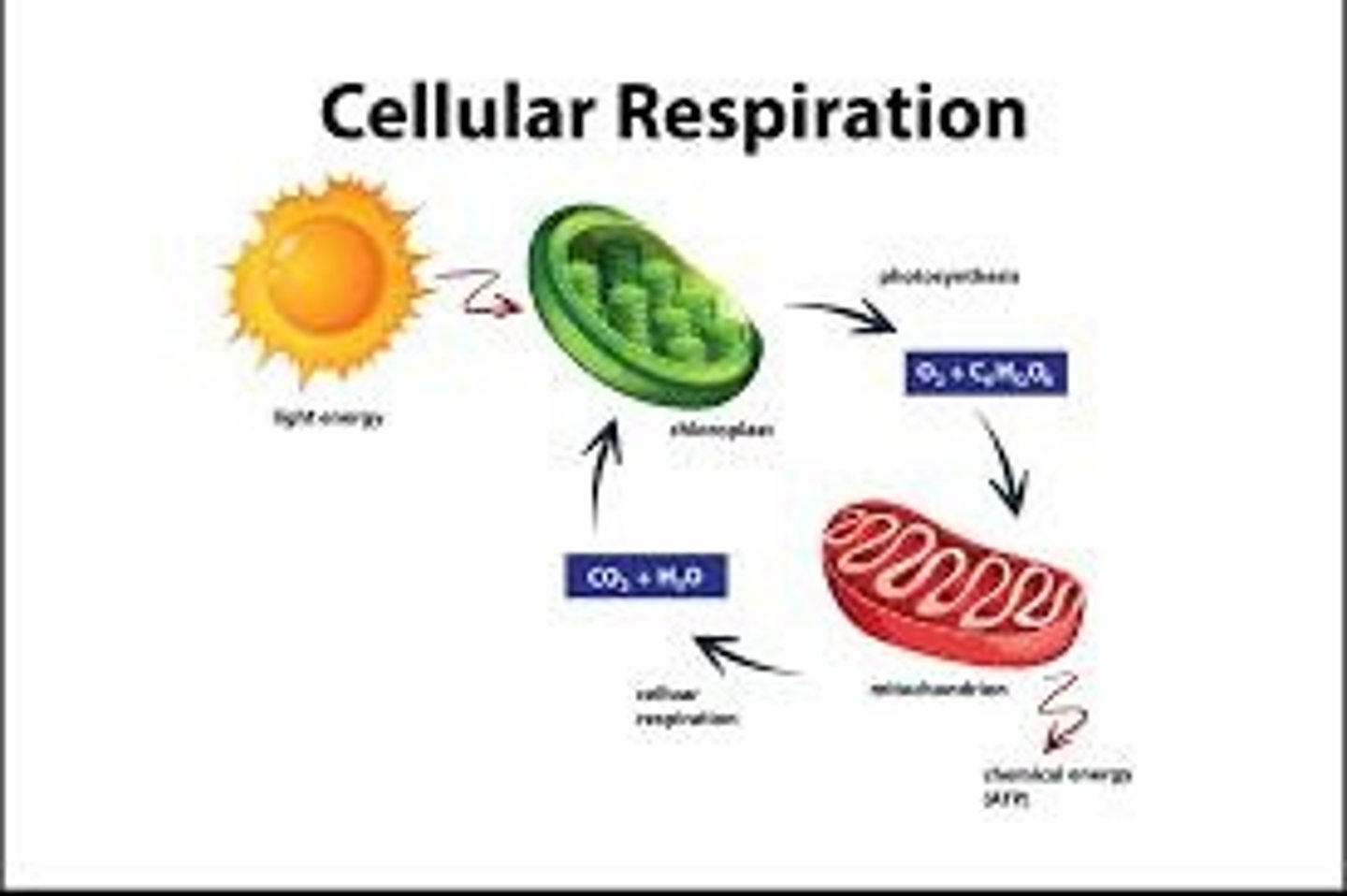
What is the equation for cellular respiration using glucose?
C6H12O6 + 6 O2 → 6 CO2 + 6 H2O + Energy (ATP + heat).
What are catabolic pathways?
Pathways that release stored energy by breaking down complex molecules.
What is fermentation?
A partial degradation of sugars that occurs without O2.
What is aerobic respiration?
The process that consumes organic molecules and O2 to yield ATP.
What is anaerobic respiration?
Similar to aerobic respiration but consumes compounds other than O2.
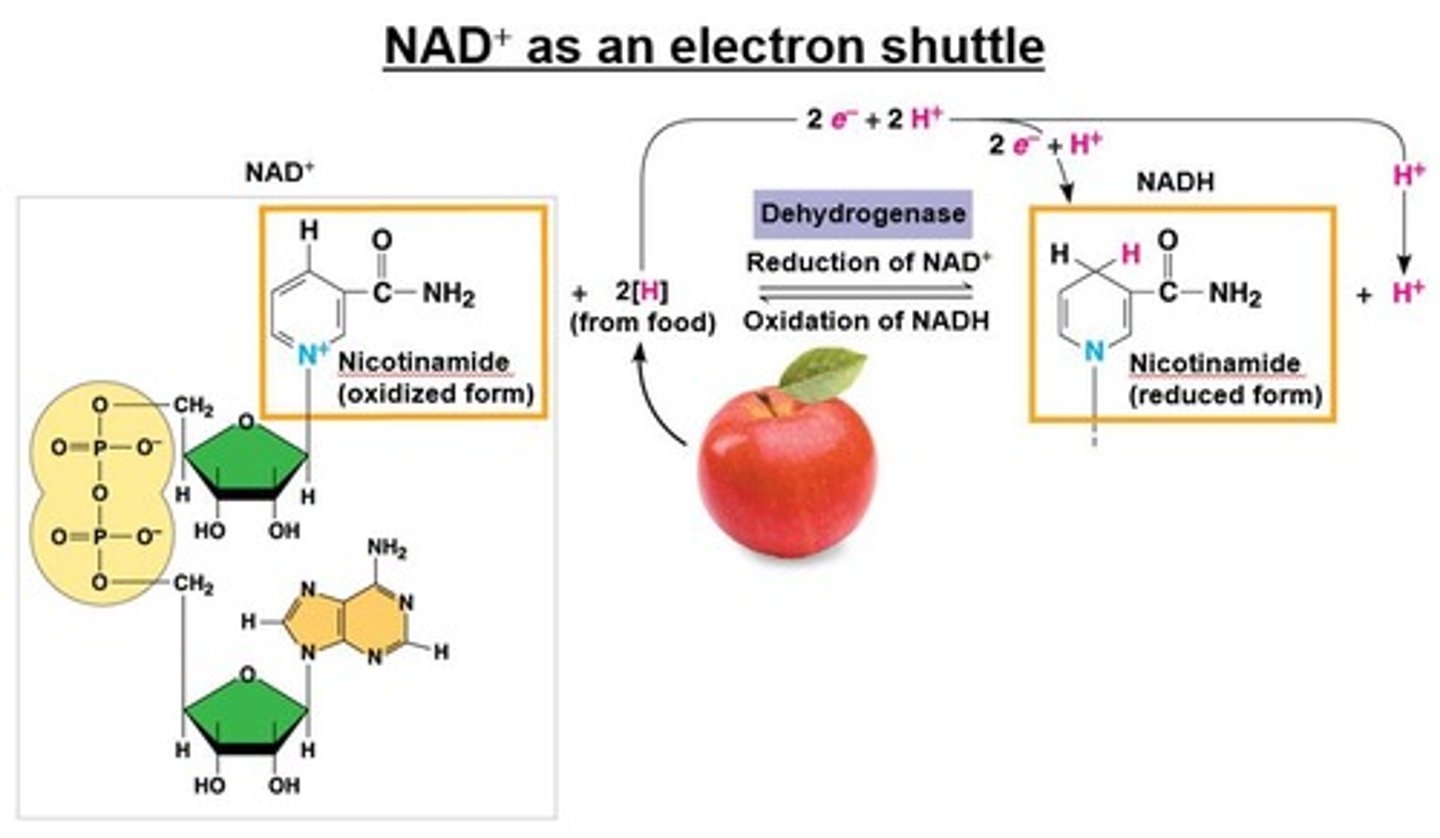
What are redox reactions?
Chemical reactions that transfer electrons between reactants.
What happens during oxidation?
A substance loses electrons.
What happens during reduction?
A substance gains electrons.
What is the role of NAD+ in cellular respiration?
NAD+ acts as an electron acceptor and oxidizing agent.
What is the electron transport chain?
A series of steps where electrons are passed to regenerate ATP.
What are the three stages of cellular respiration?
1. Glycolysis, 2. Citric acid cycle, 3. Oxidative phosphorylation.
What is substrate-level phosphorylation?
A method of ATP synthesis that occurs during glycolysis and the citric acid cycle.
How much ATP can be generated from one glucose molecule?
Up to 32 molecules of ATP.
What is oxidative phosphorylation?
The process that generates almost 90% of ATP, powered by redox reactions.
What analogy is used to explain cellular respiration?
Glucose is like a larger-denomination bill, while ATP is like smaller-denomination bills.
What is the significance of the electron transport chain?
It allows for a controlled release of energy to regenerate ATP.
What is the role of the reducing agent in redox reactions?
It donates electrons and becomes oxidized.
What is the role of the oxidizing agent in redox reactions?
It accepts electrons and becomes reduced.
What is the importance of organic molecules with hydrogen in cellular respiration?
They are excellent sources of high-energy electrons.
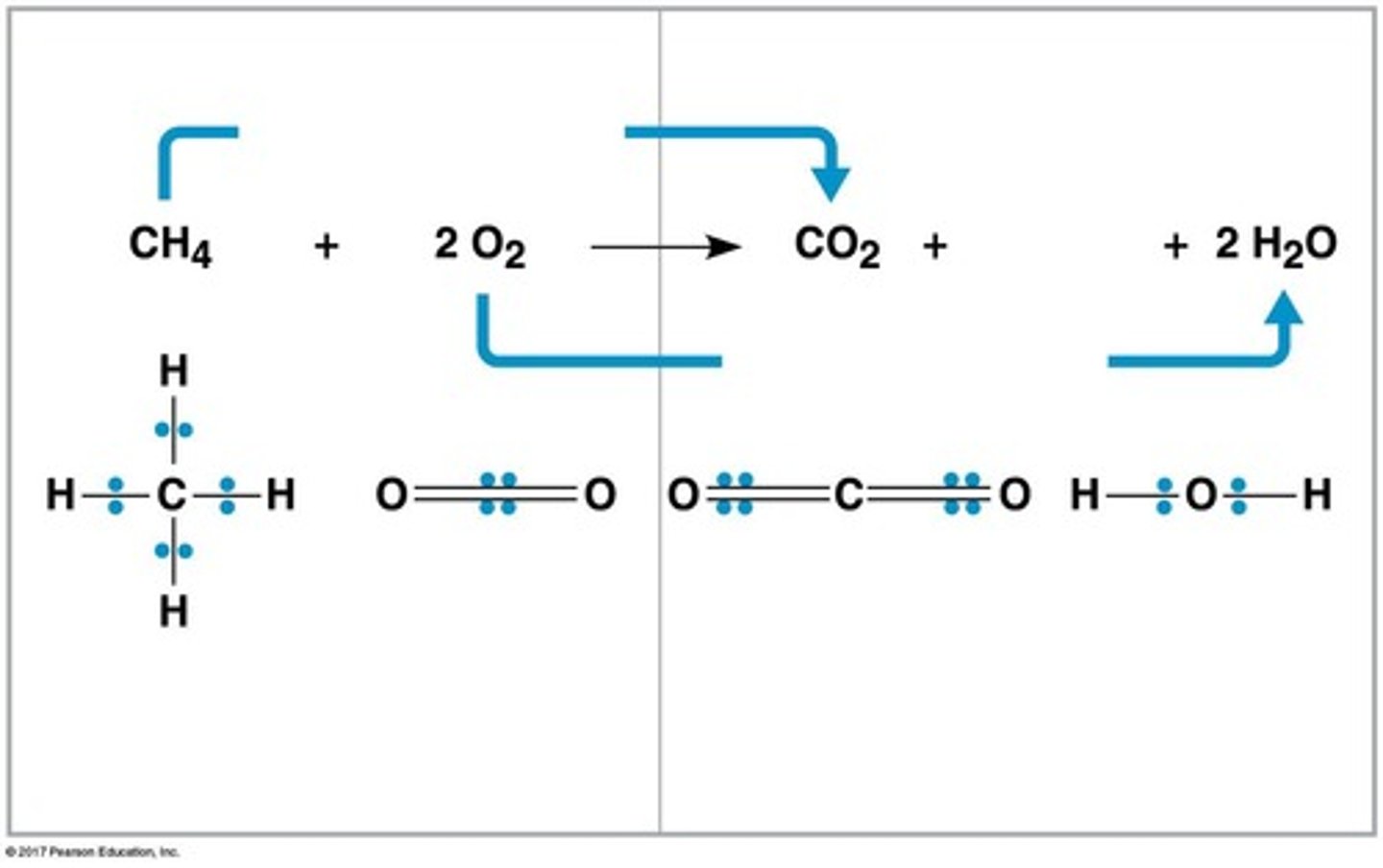
What is the outcome of the combustion of methane in terms of redox reactions?
Methane is oxidized to carbon dioxide and water.
What is the primary energy currency of the cell?
ATP (adenosine triphosphate).
What is the relationship between photosynthesis and cellular respiration?
Photosynthesis generates O2 and organic molecules used in cellular respiration.
What is the significance of the citric acid cycle?
It completes the breakdown of glucose and produces electron carriers.
What happens to the energy released during the transfer of electrons in cellular respiration?
It is used to synthesize ATP.
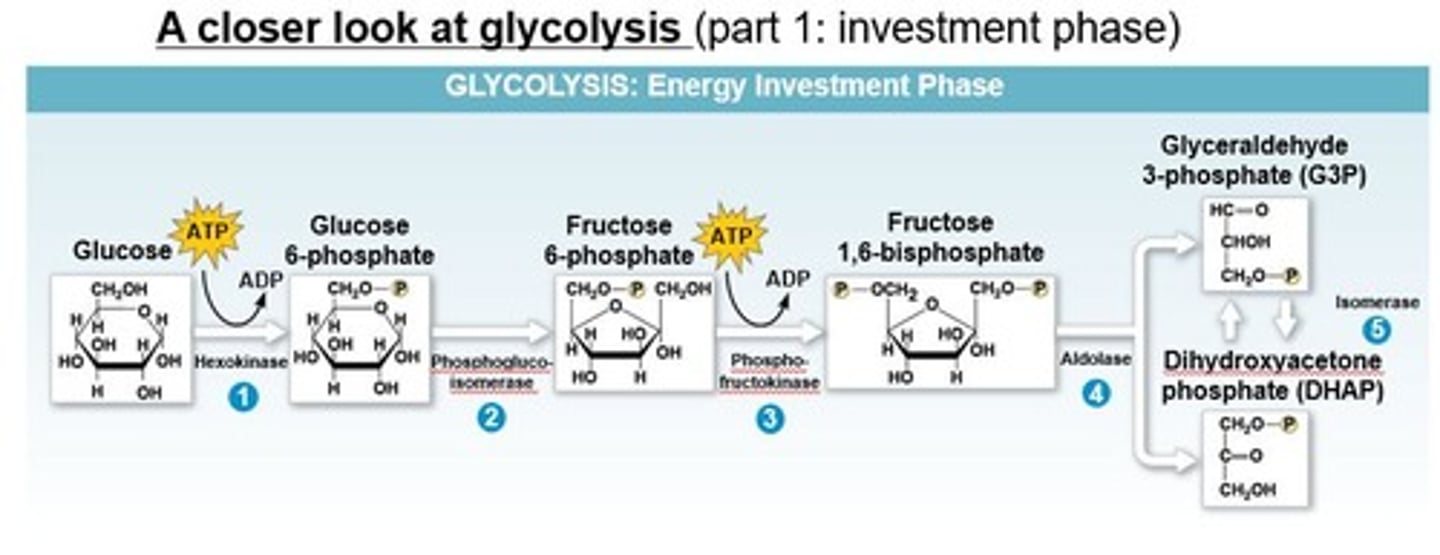
What is glycolysis?
Glycolysis is the process that breaks down glucose into two molecules of pyruvate.
Where does glycolysis occur?
Glycolysis occurs in the cytoplasm.
What are the two major phases of glycolysis?
The two major phases are the energy investment phase and the energy payoff phase.
Does glycolysis require oxygen?
No, glycolysis occurs whether or not O2 is present.
What is the net gain of ATP from glycolysis?
The net gain of ATP from glycolysis is 2 ATP.
What are the end products of glycolysis?
The end products of glycolysis are 2 pyruvate, 2 ATP, and 2 NADH.
What must happen to pyruvate before entering the citric acid cycle?
Pyruvate must be converted to acetyl coenzyme A (acetyl CoA).
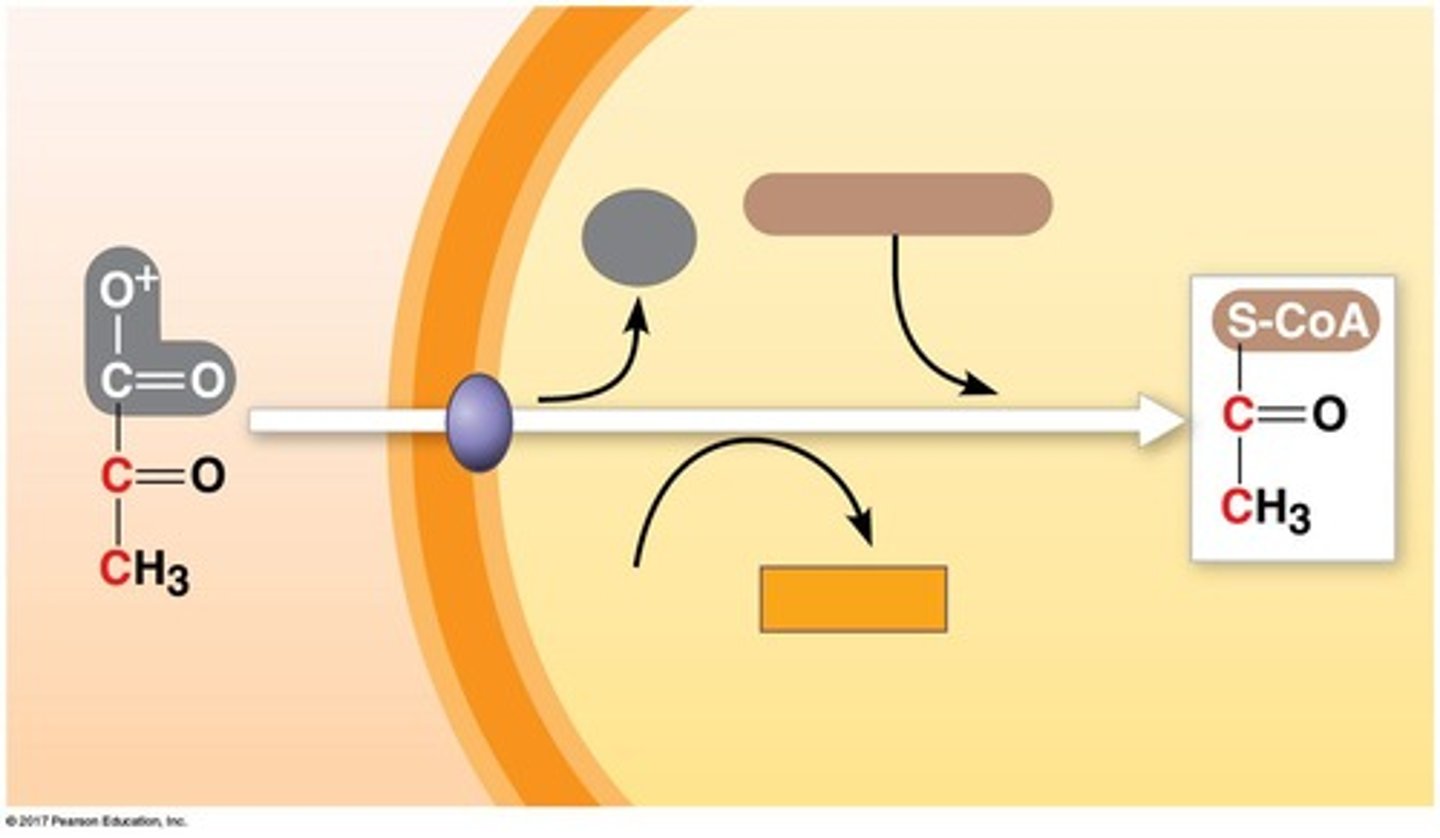
What are the three reactions catalyzed during the conversion of pyruvate to acetyl CoA?
1. Oxidation of pyruvate and release of CO2, 2. Reduction of NAD+ to NADH, 3. Combination of the remaining two-carbon fragment with coenzyme A to form acetyl CoA.
What is the citric acid cycle also known as?
The citric acid cycle is also known as the Krebs cycle.
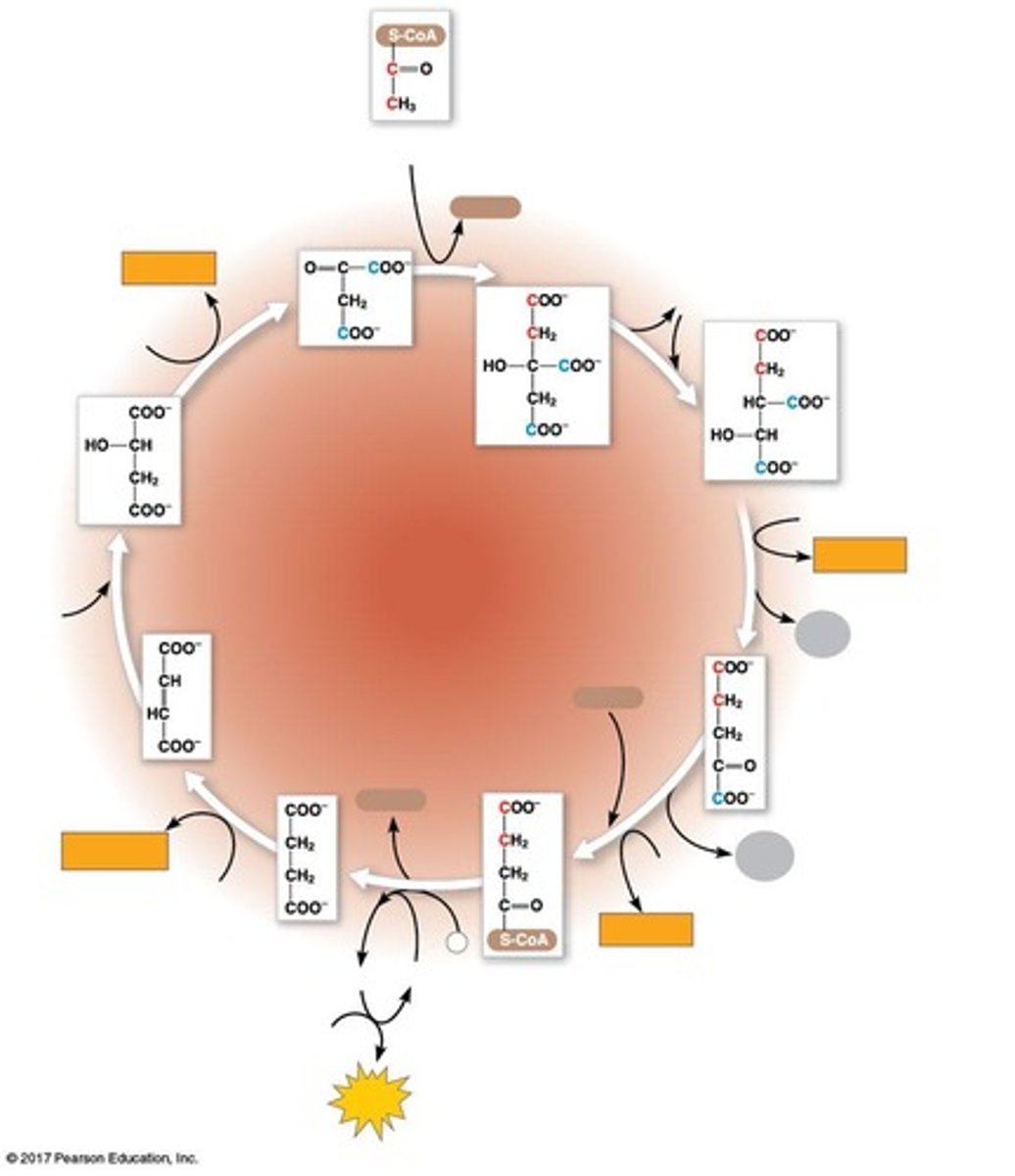
What does the citric acid cycle produce per turn?
The citric acid cycle produces 1 ATP, 3 NADH, and 1 FADH2 per turn.
How many steps are in the citric acid cycle?
The citric acid cycle has eight steps.
What is the role of NADH and FADH2 in cellular respiration?
NADH and FADH2 relay electrons extracted from food to the electron transport chain.
Where is the electron transport chain located?
The electron transport chain is located in the inner membrane (cristae) of the mitochondrion.
What happens to electrons as they move through the electron transport chain?
Electrons drop in free energy and are finally passed to O2, forming H2O.
Does the electron transport chain generate ATP directly?
No, the electron transport chain generates no ATP directly.
What is chemiosmosis?
Chemiosmosis is the use of energy in a H+ gradient to drive cellular work, specifically ATP synthesis.
How does ATP synthase produce ATP?
H+ moves down its concentration gradient through ATP synthase, causing it to spin and catalyze the phosphorylation of ADP to ATP.
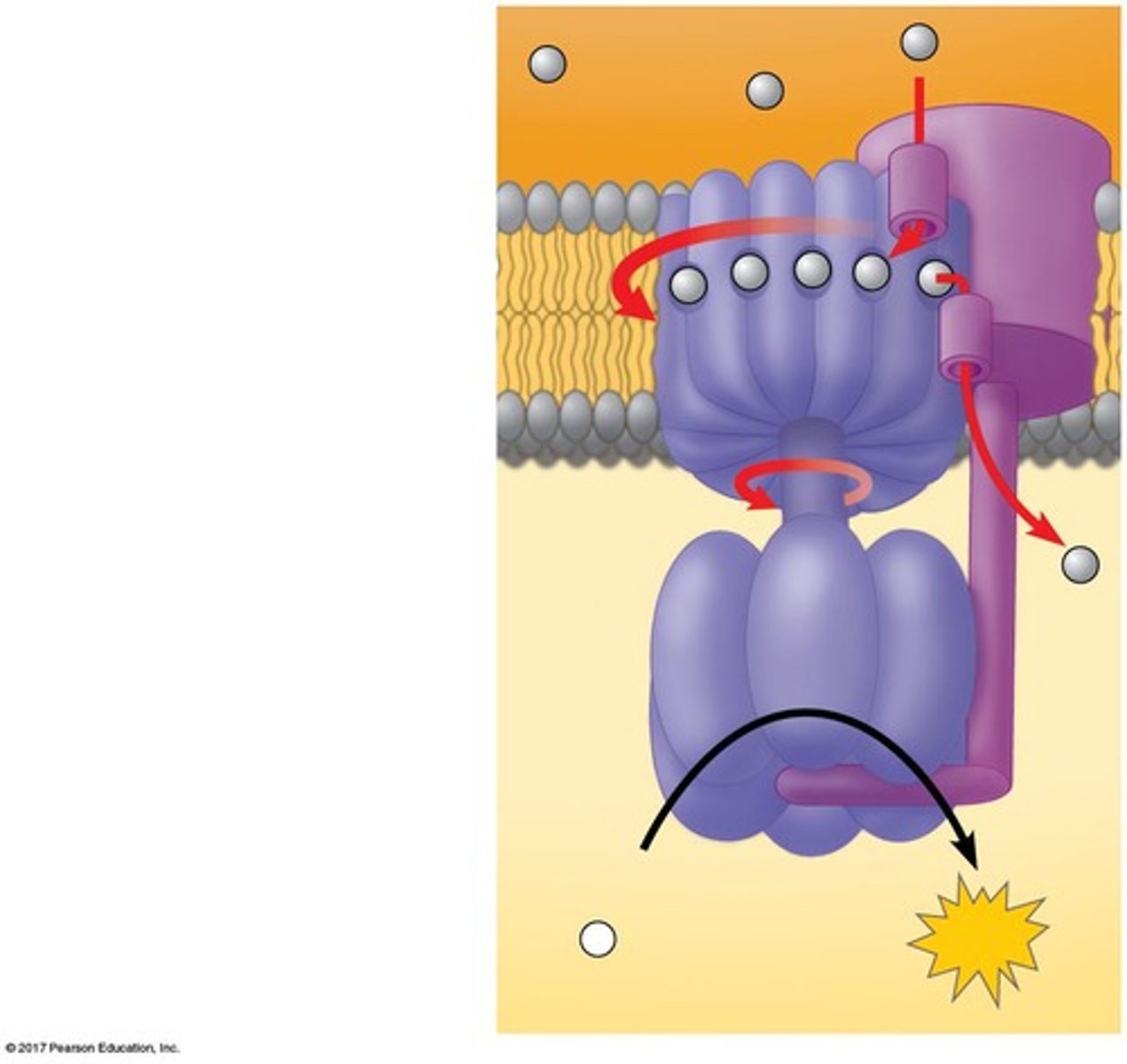
What is the proton-motive force?
The proton-motive force refers to the H+ gradient across a membrane that has the capacity to do work.
What is the main function of the citric acid cycle?
The main function of the citric acid cycle is to complete the breakdown of pyruvate to CO2.
What is produced when NADH donates electrons to the electron transport chain?
When NADH donates electrons, it is oxidized to NAD+.
What is the significance of the eight steps in the citric acid cycle?
Each step is catalyzed by a specific enzyme, allowing for the systematic breakdown of citrate back to oxaloacetate.
What is the initial substrate that enters the citric acid cycle?
The initial substrate that enters the citric acid cycle is acetyl CoA.
What is the sequence of energy flow during cellular respiration?
glucose → NADH → electron transport chain → proton-motive force → ATP
What percentage of energy in glucose is transferred to ATP during cellular respiration?
About 34%
How many ATP are produced from one molecule of glucose during cellular respiration?
About 32 ATP
What happens to the rest of the energy from glucose during cellular respiration?
It is lost as heat.
What are the three reasons why the exact number of ATP produced is not known?
1. NADH to ATP ratio is not a whole number. 2. ATP yield varies with NAD+ or FAD. 3. Proton-motive force drives other work.
What is the role of oxygen in cellular respiration?
Oxygen pulls electrons down the transport chain; without it, the chain ceases to operate.
What are the two common types of fermentation?
Alcohol fermentation and lactic acid fermentation.
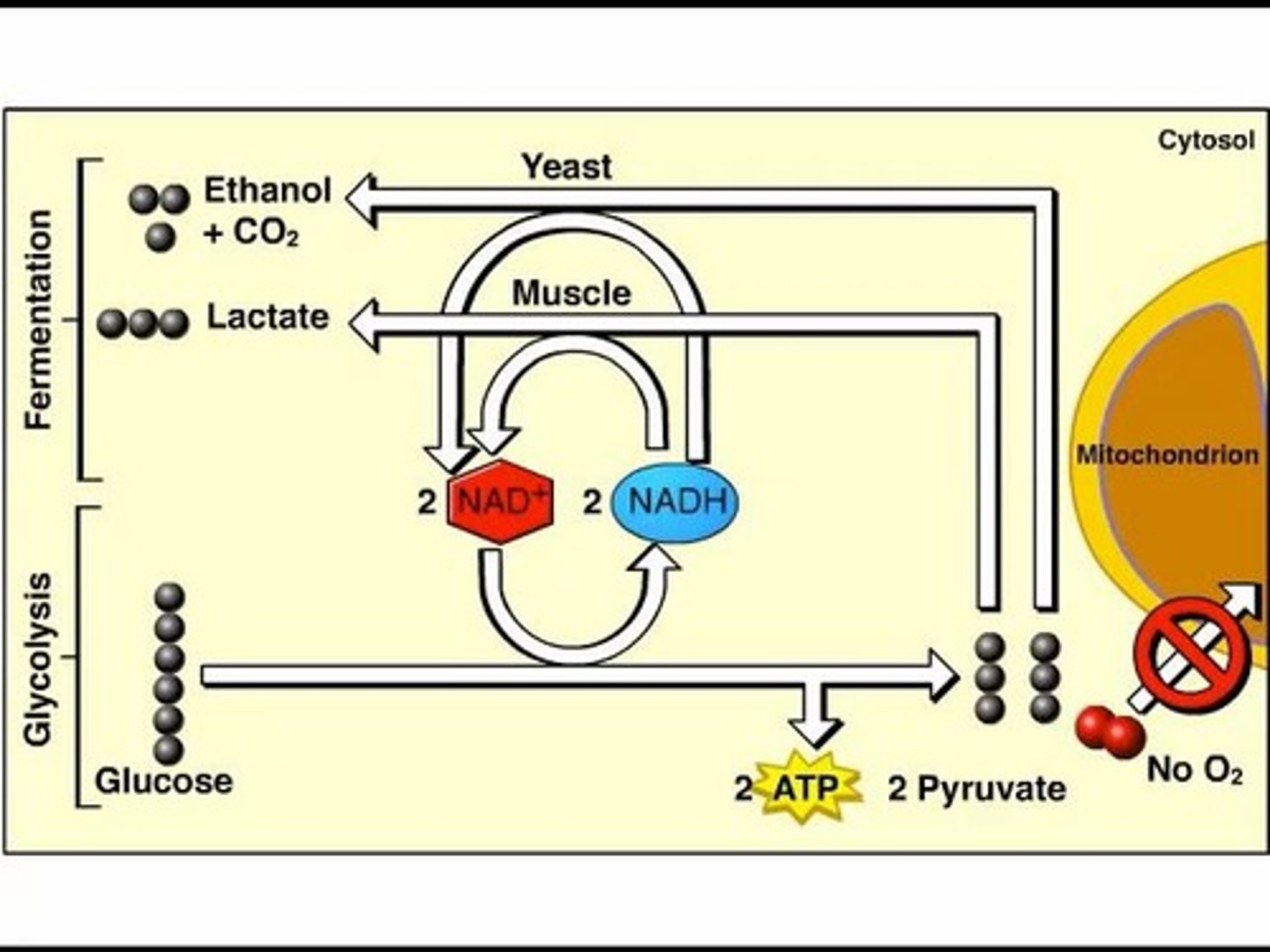
What are the steps involved in alcohol fermentation?
1. Pyruvate is converted to acetaldehyde. 2. Acetaldehyde is reduced to ethanol, producing NAD+.
What is produced during lactic acid fermentation?
NAD+ and lactate, with no release of CO2.
How do human muscle cells use lactic acid fermentation?
To generate ATP during strenuous exercise when O2 is scarce.
What is the maximum ATP yield from cellular respiration per glucose molecule?
About 30 or 32 ATP.
What is the net ATP yield from glycolysis?
2 ATP.
What is the significance of glycolysis in evolution?
It is an ancient process likely used by early prokaryotes to produce ATP before O2 accumulated.
What types of molecules can catabolic pathways funnel into cellular respiration?
Carbohydrates, proteins, and fats.
What must happen to proteins before they can be used for fuel?
They must be digested to amino acids and their amino groups removed.
What does beta oxidation do to fatty acids?
It breaks them down to yield acetyl CoA, NADH, and FADH2.
How does the body use small molecules from food?
To build their own molecules such as proteins.
What is feedback inhibition in the context of cellular respiration?
A mechanism where respiration speeds up if ATP concentration drops and slows down when ATP is plentiful.
What is the primary control of catabolism based on?
Regulating the activity of enzymes at strategic points in the catabolic pathway.
What is the difference between obligate anaerobes and facultative anaerobes?
Obligate anaerobes cannot survive in the presence of O2, while facultative anaerobes can use either fermentation or cellular respiration.
What is the role of NAD+ in glycolysis?
It acts as the oxidizing agent that accepts electrons.
What are the end products of alcohol fermentation?
Ethanol and CO2.
What is produced in lactic acid fermentation?
Lactate and NAD+.
How does glycolysis occur in terms of cellular structure?
It occurs in the cytosol and does not require membrane-bound organelles.
What is the significance of the citric acid cycle in metabolism?
It serves as a major intersection for various catabolic and anabolic pathways.