Comprehensive A-Level Biology and Disease Flashcards
 Call Kai
 Learn
Learn Practice Test
 Spaced Repetition
 Match
Match Flashcards
 Knowt Play
1/114

There's no tags or description
Looks like no tags are added yet.
Name | Mastery | Learn | Test | Matching | Spaced | Call with Kai |
|---|
No analytics yet
Send a link to your students to track their progress
115 Terms
Tuberculosis
Bacterial disease that can infect humans, deer, cows, pigs, and badgers.
Kills the cells and tissues
Lungs are most often affected
Bacterial meningitis
Infection of the meninges- the membranes that surround the brain and the spinal cord
The membrane becomes swollen and may cause damage to the brain and nerves
Pathogen
Organism that causes disease
Two types of phagocytes
Neutrophils and macrophages
How to find pathogens
Phagocytes are attracted by:
Chemicals released from pathogens
Signals from damaged body cells
Viruses
Invade cells and takeover the genetic machinery and the other organelles of the cells
Caused the cells to manufacture more copies of the virus
The hostel eventually bursts releasing many new viruses which will infect healthy cells. Good night.
Why does the body need different types of white blood cells?
Different white blood cells have different functions so the body can destroy pathogens in more than 1 way
Explain why antibodies made for one pathogen may not work on another pathogen.
Antibodies are specific and each antibody has a shape that only fits one type of antigen on a pathogen
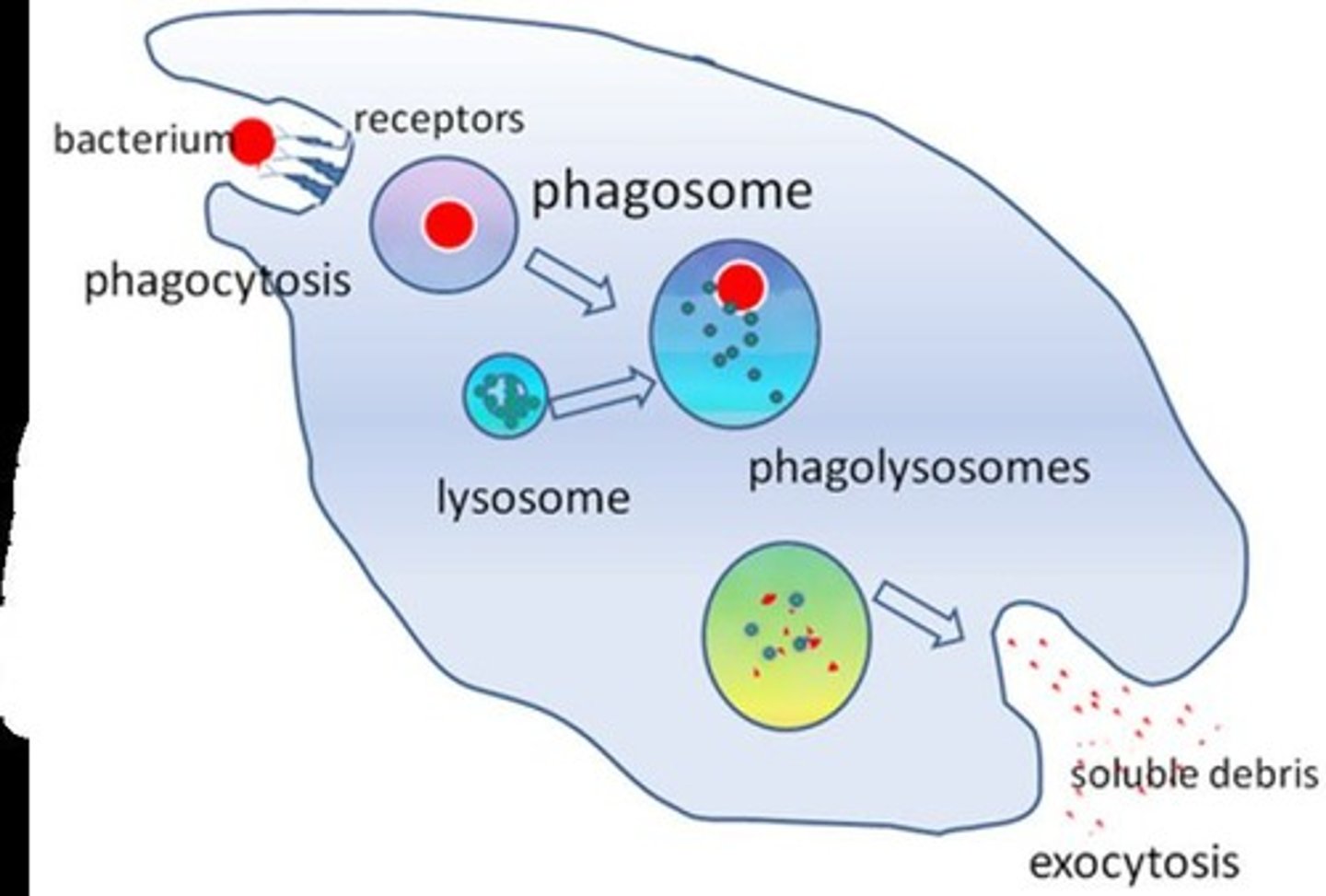
Phagocytosis
Non specific defence
Destroys many different types of pathogens
Tuberculosis treatment
Cured using antibiotics and prevented through vaccination.
Ringworm
A type of ringworm that thrives in warm, damp regions between the toes.
Ringworm symptoms
Causes the skin to crack and become scaly, causing itchiness and soreness.
Ringworm treatment
Can be cured using antifungal creams.
Ring rot
Caused by a bacterium that infects potatoes, tomatoes, and aubergines.
Ring of decay in the vascular tissue of a potato tuber or tomato accompanied by leaf wilting
AIDS
When the replicating viruses in the helper T cells interfere with the normal functioning of the immune system.
Attacks cells in their immune system and compromises the immune response
Tobacco mosaic virus
This virus infects plants, mainly tobacco plants.
Tobacco mosaic virus effects
Causes damage to the leaves, resulting in a mosaic pattern on their surfaces.
Causes mottling and discolouration of leaves
Influenza
A disease caused by a virus that infects the ciliated cells lining gas exchange surfaces.
Attacks respiratory system and causes muscle pains and headaches
Influenza risks
Young children, the elderly, and those who are immunocompromised are more at risk of severe symptoms.
Communicable disease
Diseases caused by pathogens: bacteria, viruses, protoctista, and fungi.
Potato blight
Caused by a protoctista.
Affects both leaves and potato tubers
Fungi
Eukaryotes that cause many plant diseases and can be either multicellular or single-celled.
Black Sigatoka
Caused by the Mycosphaerella fijiensis fungus, which infects bananas.
Black Sigatoka effects
The fungal hyphae cause damage to the leaves, causing them to turn black and prevent plant growth.
Protoctista
Eukaryotes that exist as single-celled organisms or cells grouped into colonies.
Pathogenic protoctista
Parasites that are usually transmitted via a vector, e.g., malaria is transmitted by mosquitos.
Rheumatoid arthritis
An example of an autoimmune disease where the immune system attacks the cartilage in joints.
Herd immunity
It is passed from mosquitos to humans when mosquitos bite and take blood from humans.
Direct transmission between animals
Includes direct contact, inoculation, and ingestion.
Indirect transmission between animals
Includes vectors, droplets, and fomites.
Plant disease defense mechanism
The carbohydrate becomes a barrier which prevents the pathogens from spreading to further cells.
Malaria
Parasite in the blood that causes headaches and fever and may progress to Coma and death
direct transmission
Direct physical contact such as touching a person who is infected or touching contaminated surfaces that harbour pathogens
E.g HIV ringworm athletes foot bacteria meningitis
Wash hands regularly, especially after using the toilet
Keep surfaces clean, especially door handles
Clean and disinfect cuts and abrasions
Sterilise surgical instruments
Use Condoms
Faecal- oral transmission
Drinking water or eating food contaminated by the pathogen
E.g food poisoning,cholera
Using human sewage to fertilise crops
Treatment of wastewater and treatment of drinking water
thorough, washing of all fresh food
Careful preparation and thorough cooking of all food
Droplet infection
Pathogen is carried in tiny water droplets in the air
E,g tuberculosis influenza
Cover your mouth when coughing or sneezing
Use a tissue and ensure the tissue is disposed of correctly
Transmission by spores
Resistant stage of the pathogen
Carried in the air or reside on surfaces or in the soil
E.g anthrax tetanus
Use a mask
Wash skin after contact with soil
Social factors affecting transmission
Overcrowding
Poor ventilation
Pool health
Poor diet
Homelessness
Indirect transmission
Some pathogens are transmitted indirectly via vector
A vector is another organism that may be used by the pathogen to gain entry to the primary host
Indirect transmission of plant pathogen
Result of insect attack
Spores or bacteria become attached to a borrowing insect such as a beetle which attacks an infected plant
When that beetle attack attacks another plant, the pathogen is transmitted to the uninfected plant
The beetle acts as a vector
Athletes foot
Growth of fungus under skin of feet
Callose
A polysaccharide that can be deposited at sieve plates in phloem, and other locations, in the plant to prevent pathogens spreading within them.
Mucous membranes
Line many body tracts, for example the trachea in the lungs.
Mucus
Produced by goblet cells, traps pathogens.
Lysozymes
This enzyme is found in tears in the eye and also in phagocytic white blood cells.
Expulsive reflexes
Reflexes such as sneezing, coughing, and vomiting.
Hydrolytic enzymes
Found in lysosomes, which digest pathogens.
Inflammation
Occurs in localized areas where damage to cells is detected, causing the area to become red, hot, sore, itchy, and swollen.
Histamines
Cause blood vessels to dilate and therefore more blood is flowing in this area.
Cytokines
Chemicals which attract phagocytes, which can engulf and destroy the pathogens.
Phagocytes
Cells that engulf and destroy pathogens.
Antigens
Trigger an immune response when detected by lymphocytes.
Chemical markers on the surface of cells
Protein/glycoprotein
Specific to each pathogen
T lymphocytes
A type of white blood cell that enables identification of cells as either 'self' or 'foreign' by the immune system.
Antigen-presenting cells
Any cell that presents a non-self antigen on their surface.
T helper cells
Have receptors on their surface that attach to antigens on APCs and become activated - clonal selection.
T regulator cells
Produce interleukins to activate B lymphocytes and stimulate macrophages for phagocytosis.
B lymphocytes
Made in bone marrow and mature in bone marrow; involved in humoral immune response and produce antibodies.
Humoral response
Involves the production of antibodies.
B memory cells
Remember specific antibodies for particular antigens.
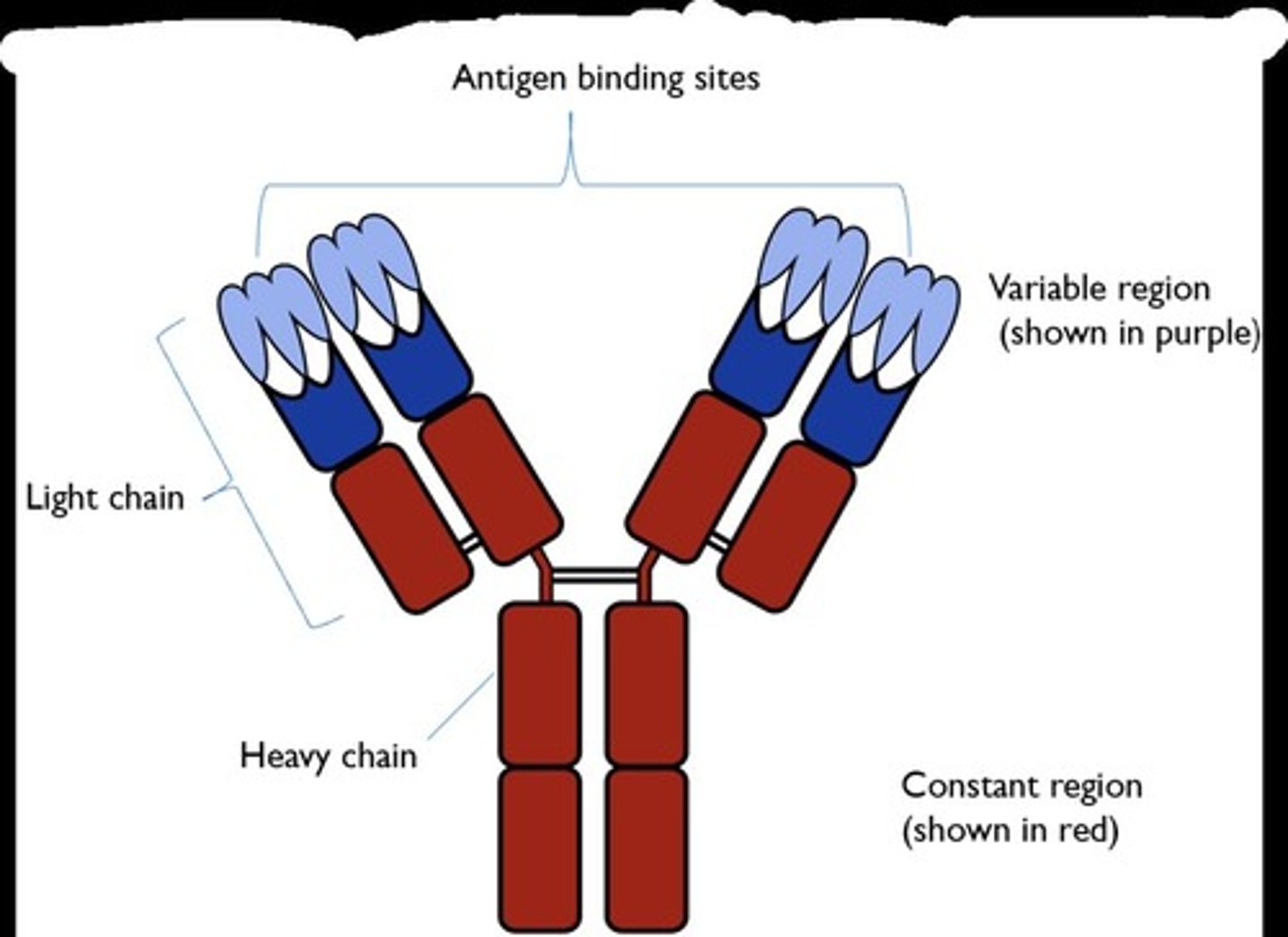
Antibody structure
Antibodies have two binding sites and are flexible so they can clump pathogens together.
Passive immunity
Antibodies introduced into the body; plasma and memory cells not made as no interaction with antigen.
Opsonins
Antibodies act as opsonins when an antibody-antigen complex has been formed.
Proteins that attach to antigens on pathogens
Help phagocytes bind to the pathogen more easily
Make phagocytosis more effective
Phagosome
The vesicle formed around a pathogen inside a phagocyte.
Clonal selection
When immune cells with the complementary antigens or antibodies to the pathogen's antigens are activated in response to the pathogen.
Clonal expansion
When immune cells rapidly divide by mitosis.
Natural active immunity
Immunity created by own immune system after direct contact with pathogen through infection.
Artificial active immunity
Creation of antibodies and memory cells following introduction of an attenuated pathogen or antigens, e.g., vaccination.
Vaccination
Leads to the creation of antibodies and memory cells.
Polymorphic genes
A gene that has more than one allele.
Captive breeding
Breeding endangered species in zoos and other facilities to build a healthy population of the animals.
Mutation
Changes in the processes within an organism when pathogenic DNA mutates causing a change in shape of antigen.
Antigenic variability
Specific antibody no longer binds to new antigen
Epidemic
When a disease spreads rapidly on a national level
Pandemic
When a disease spreads rapidly on a global level
Antibiotic resistance
This is often caused by a mutation in the bacterium or receiving a copy of an antibiotic resistance gene from another bacteria - horizontal transfer.
Pharmacogenetics
By analysing your DNA, it can be possible to identify drugs that individuals will respond better to
Personalised medicines
Medicines tailored to individual genetic profiles
Synthetic biology
Using bacteria as medicine factories
Habitat
Includes examples such as the genetic engineering of bacteria to make human insulin
Environment
All the alleles in a population at a particular time
Gene pool
The number of different alleles in a population
Genetic diversity
Sharing of alleles from one population to another
Gene flow
A measure of the range of habitats
Habitat diversity
The number of different species within an area and their abundance to indicate biodiversity
Species diversity
This involves both species richness and species evenness
Species richness
A measure of the number of different species in a community
Species evenness
The relative abundance of each different species within a community
Community
The number of different species within an area and their abundance to indicate biodiversity
Diversity index
An index of diversity combines both the number of different species and the population size of each within a community
Random sampling
Method for random quadrat sampling using two tape measures at right angles to each other
Opportunistic sampling
Sampling organisms which are conveniently available, involves bias
Stratified sampling
Populations or habitats can be separated into groups to sample from
Systematic sampling
Identifying different areas within a habitat to sample
Impact of Agriculture on Biodiversity
Clearing land for agriculture results in the destruction of habitats
Reasons to maintain biodiversity
Reducing the number of habitats and food sources decreases biodiversity
Conservation methods
Economic reasons - deficient soil can reduce the ability to grow crops and make a profit, ecotourism
Hierarchy
Smaller groups arranged within larger groups with no overlap between groups
Taxon
The term for each group in a classification hierarchy
Binomial system
A universal naming system for species
Phylogeny
The change in allele frequency over many generations in a population
Types of variation
Intraspecific variation and interspecific variation