Lecture 6 (GI): organs, basic processes, structure of wall, enteric nervous system, phases of GI contorl, mouth, pharynx, esophagus (swallowing), stomach
 Call Kai
 Learn
Learn Practice Test
 Spaced Repetition
 Match
Match Flashcards
 Knowt Play
1/36

There's no tags or description
Looks like no tags are added yet.
Name | Mastery | Learn | Test | Matching | Spaced | Call with Kai |
|---|
No analytics yet
Send a link to your students to track their progress
37 Terms
primary organs
where food actually enters and passes (e.g., mouth, pharynx, esophagus, stomach, small intestine, large intestine)
accessory organs
add things to the GI tract that is useful for digestion and absorption (e.g., salivary glands, liver, gallbladder, pancreas)
is regulation of GI digestion and absorption homeostatic
NO. regulation is designed to maximize digestion and absorption, regardless of whether nutrients are required for function at the moment
motility
contraction of the tract. occurs along entire length from esophagus to anus
secretion
movement of nutrients from ECF to GI tract. occurs throughout the entirety of the GI tract, but mostly in small intestine.
digestion
breakdown of food into smaller units. mostly occurs in small intestine, but also occurs in mouth (salivary glands) and tiny bit in stomach
absorption
movement from GI tract lumen to blood. mostly occurs in small intestine
short reflexes
isolated to GI lumen and wall. does not involve CNS input.
long reflexes
involve CNS
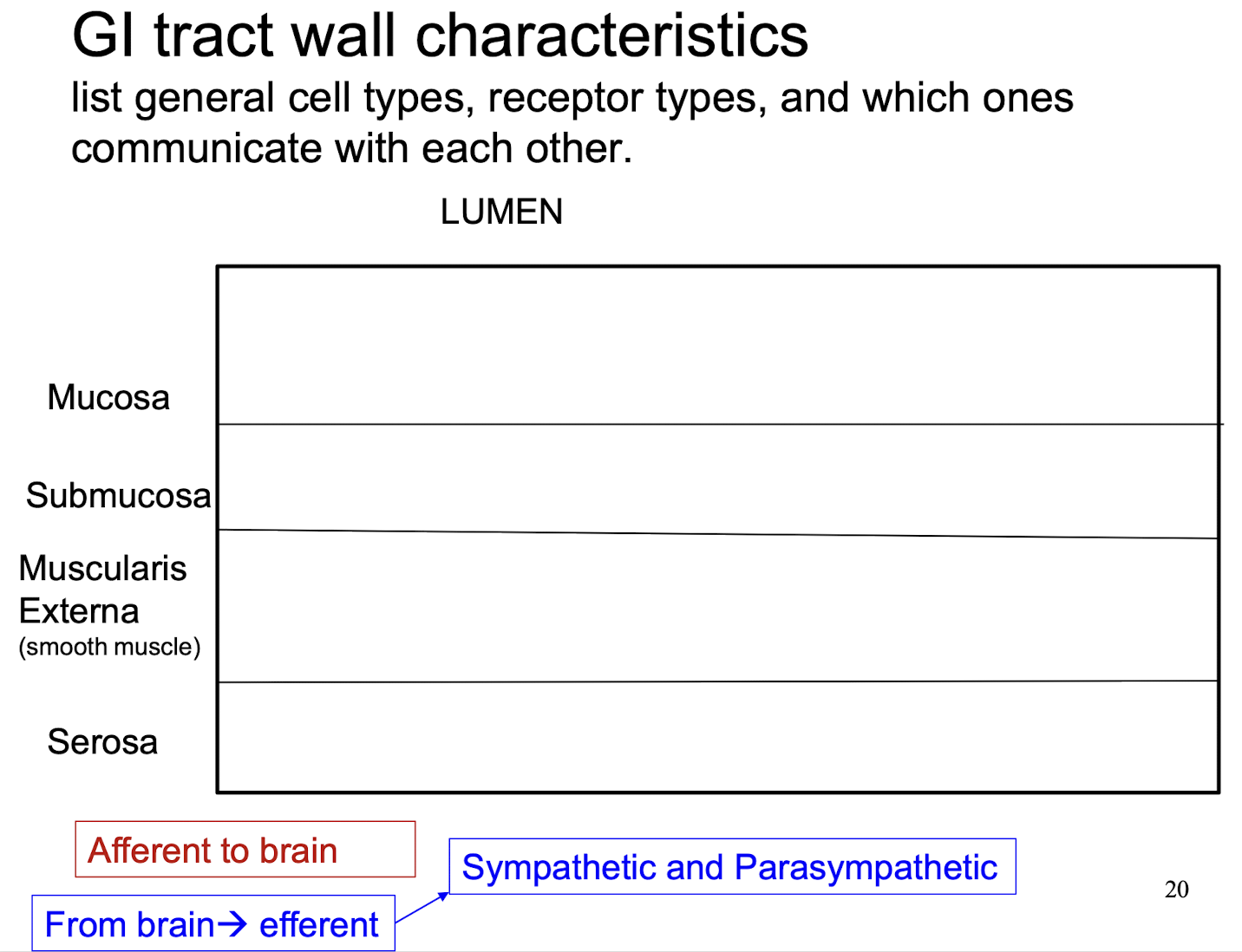
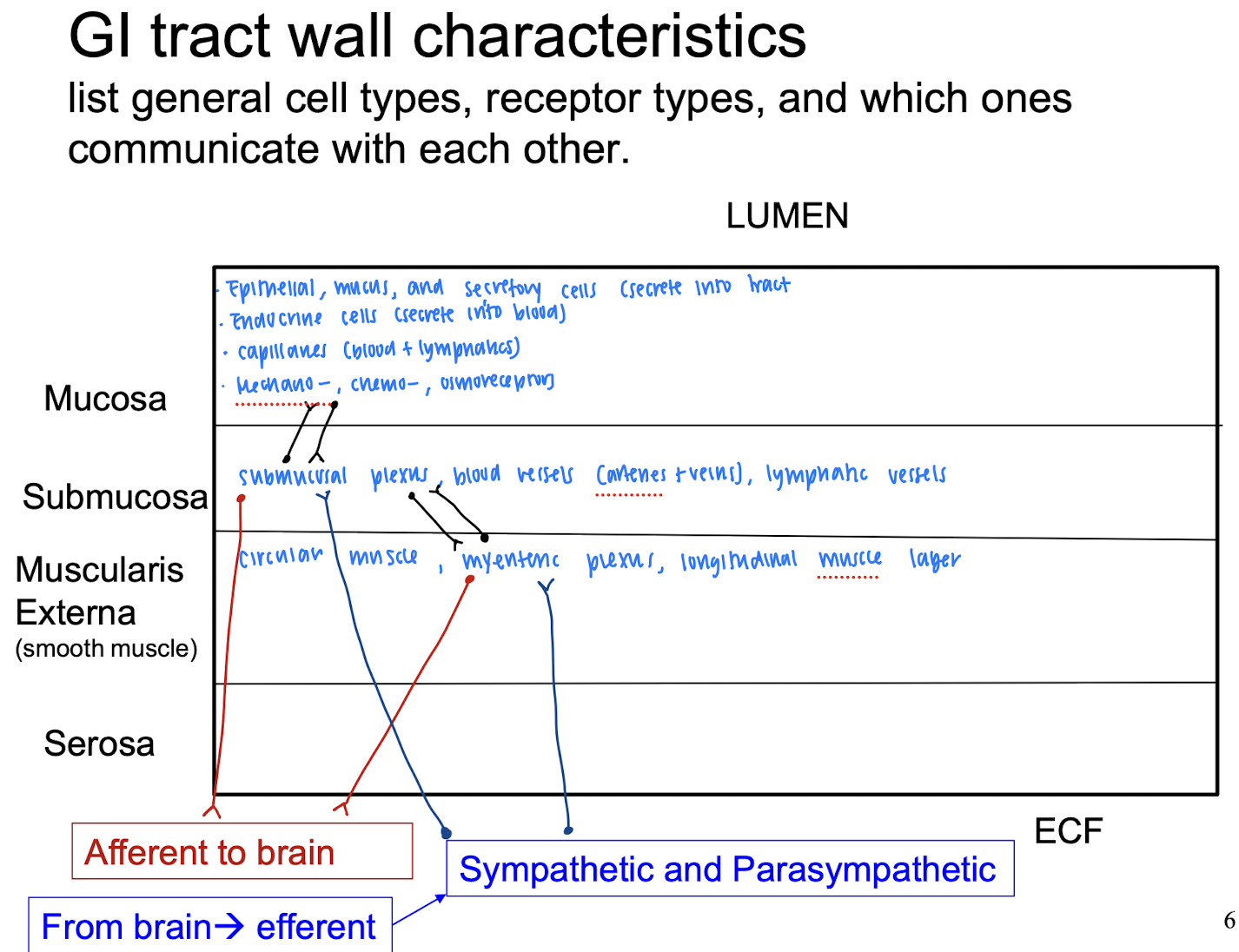
ICCs and what do they determine
generate slow wave depolarizations and are connected to adjacent smooth muscle cells. determine FREQUENCY of GI smooth muscle contractions
how much fluid in the tract is from ingestion vs secretion
ingestion ~1.2L
secretion ~7 L
total fluid = 8.2 L/day
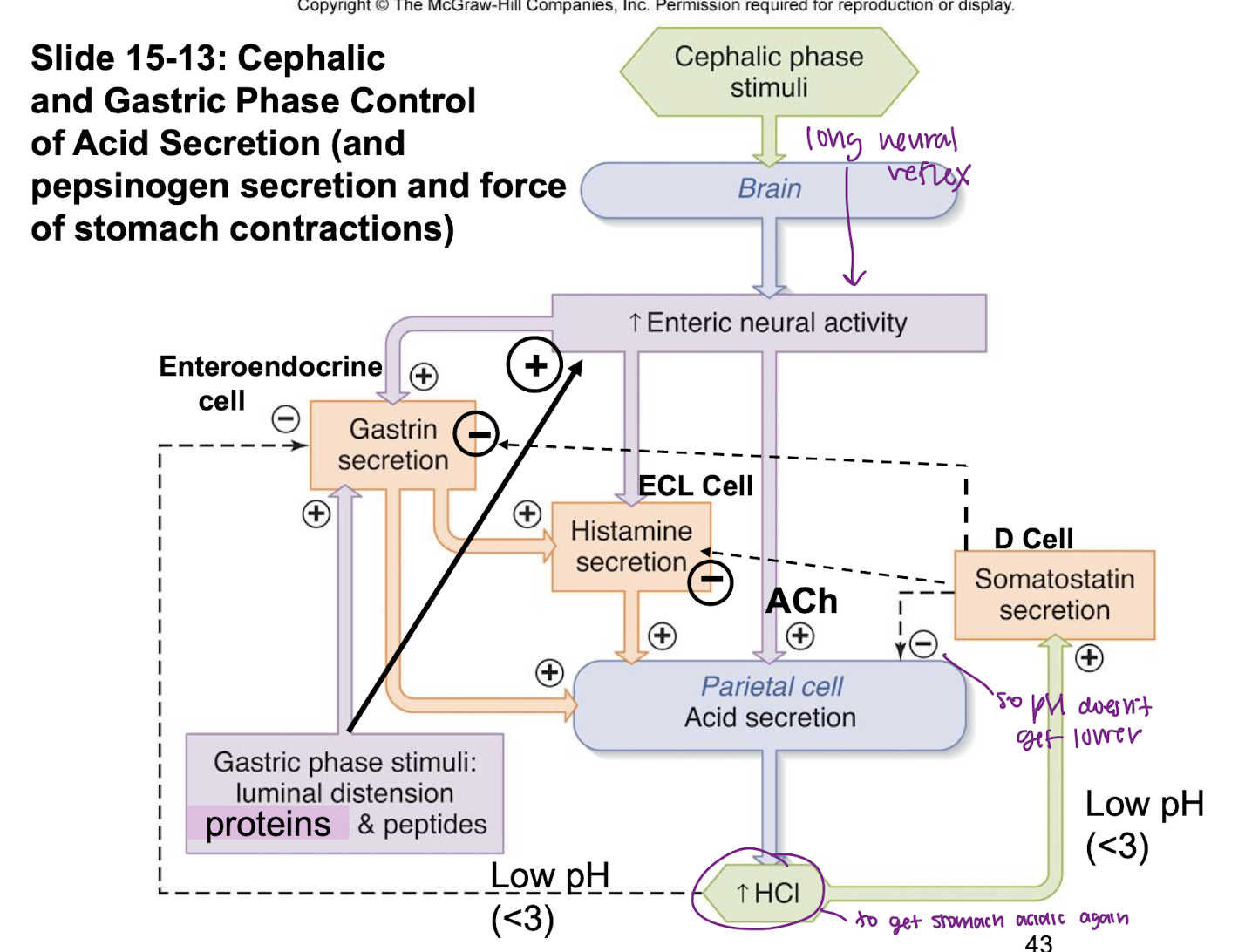
cephalic phase
initiated when receptors in the head are stimulated by chewing and/or thinking, sight, smell, and/or taste of food
gastric phase
initiated by distension, acidity change, proteins and peptides in the stomach to regulate stomach functions
intestinal phase
initiated by distension, acidity, osmolarity, and digestive products in the small intestine to regulate both intestinal (activated) and stomach (inhibited) functions
amylase
enzyme in saliva that digests starch (carbohydrates)
lipase
enzyme in saliva that digests fat
initial saliva vs final saliva osmolarity
initial saliva = isotonic solution, plus mucin and proteins (e.g., amylase) are secreted from acinar cells
final saliva = hypotonic. NaCl reabsorbed, K+ and HCo3- secreted. water not reabsorbed (impermeable to water)
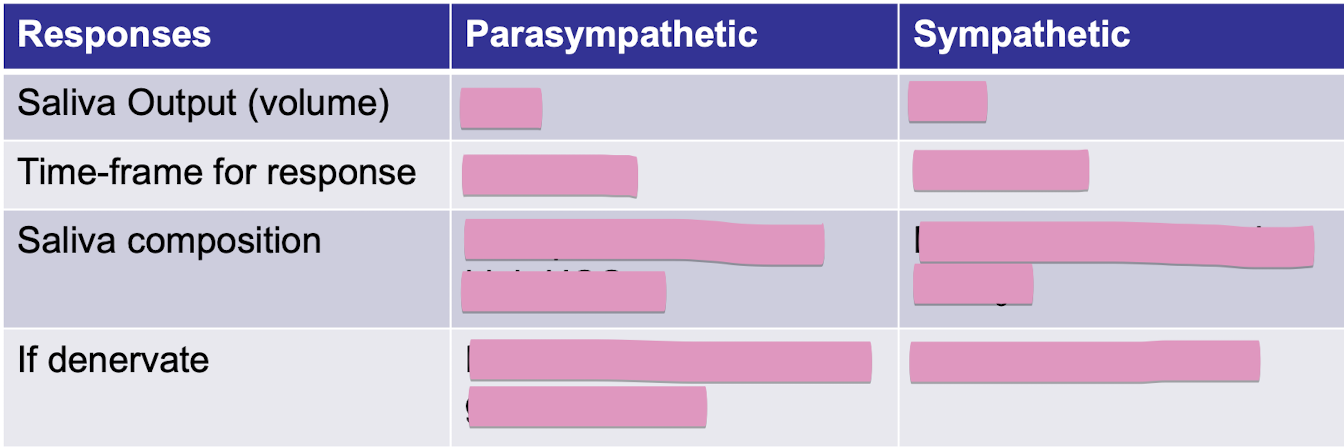
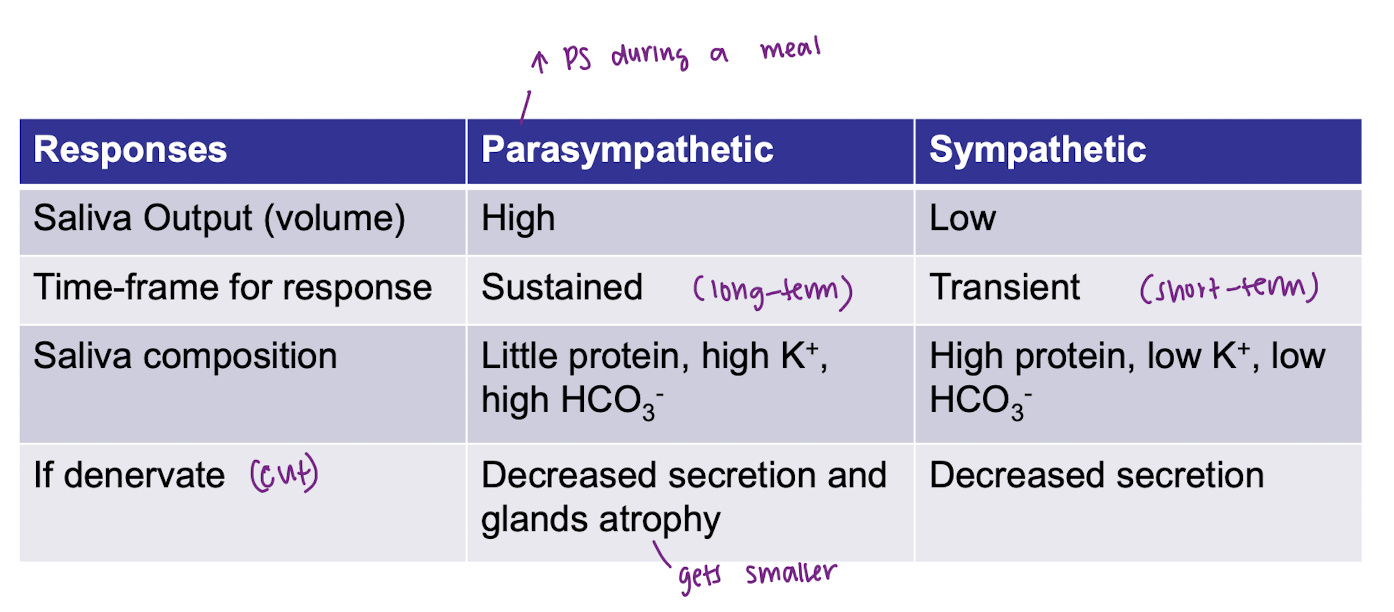
autonomic innervation of salivary gland arterioles
PS neurons release VIP (vasoactive intestinal peptide), and acinar cells release paracrine → dilation of vessels → increased blood flow (this is one exception to the “blood vessels get only sympathetic innervation” rule)
symp neurons release NE → blood vessels (α2 receptors) → vasoconstriction
dual innervation to blood vessels w/ opposite effects
autonomic innervation of salivary gland acinary cells
PS neurons release ACh → acinar cells (M-AChR’s) → increased isotonic fluid secretion
symp neurons release NE → acinar cells (α and β receptors) → increase mucin (mucous) and proteins (e.g., amylase secretion)
dual innervation with similar effects… both stimulate an aspect of salivary secretion)
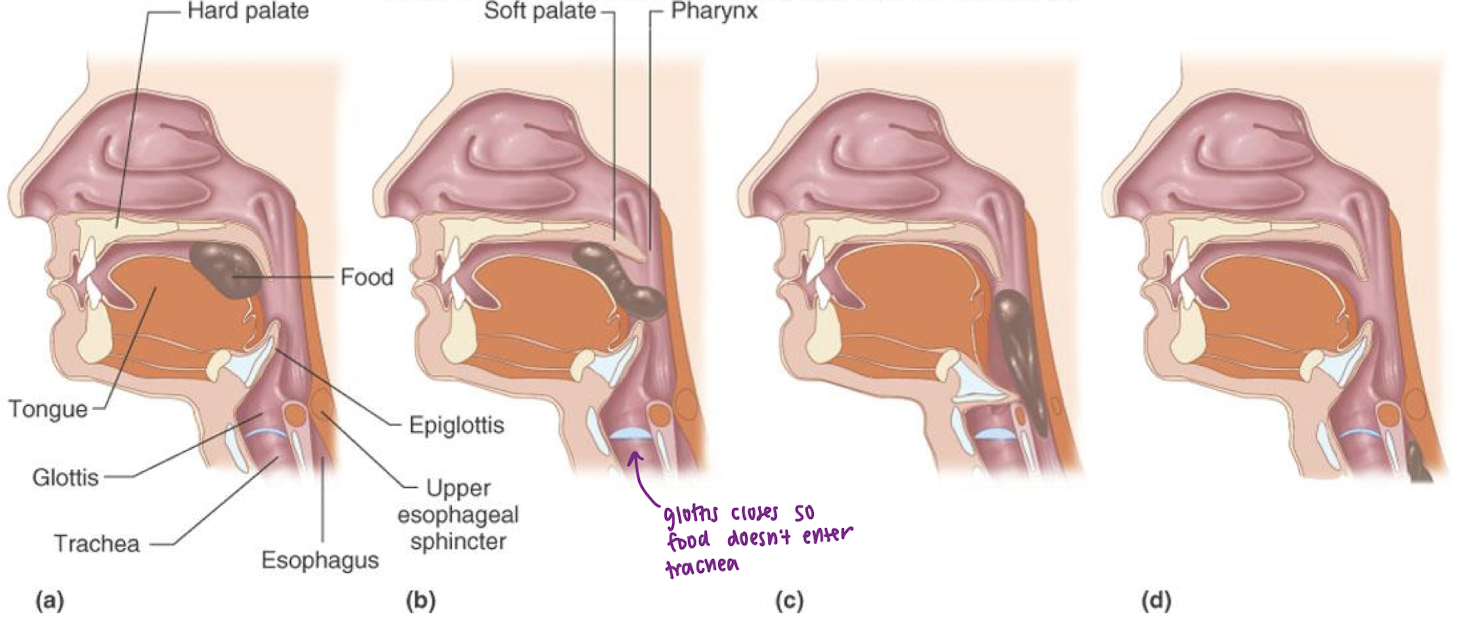
swallowing reflex
tongue pushes food to back of pharynx → reflex activated: afferent information sent to
swallowing center in medulla oblongata which sends efferent impulses to: inhibit breathing, raise larynx, close glottis, and relax upper esophageal sphincter (skeletal muscle)
peristalsis
progressive wave of contractions that moves food from esophagus to stomach
lower esophageal sphincter (LES) opens vs closes during
opens/relaxes during swallowing (PS activity)
closes after food (symp activity)
secondary peristalsis
repeated peristaltic waves not initiated by swallowing if food doesn’t reach stomach or is there is distension at esophagus
chyme
mixture of broken up food particles and gastric juice
mucous cells
mucus, bicarbonate secretion
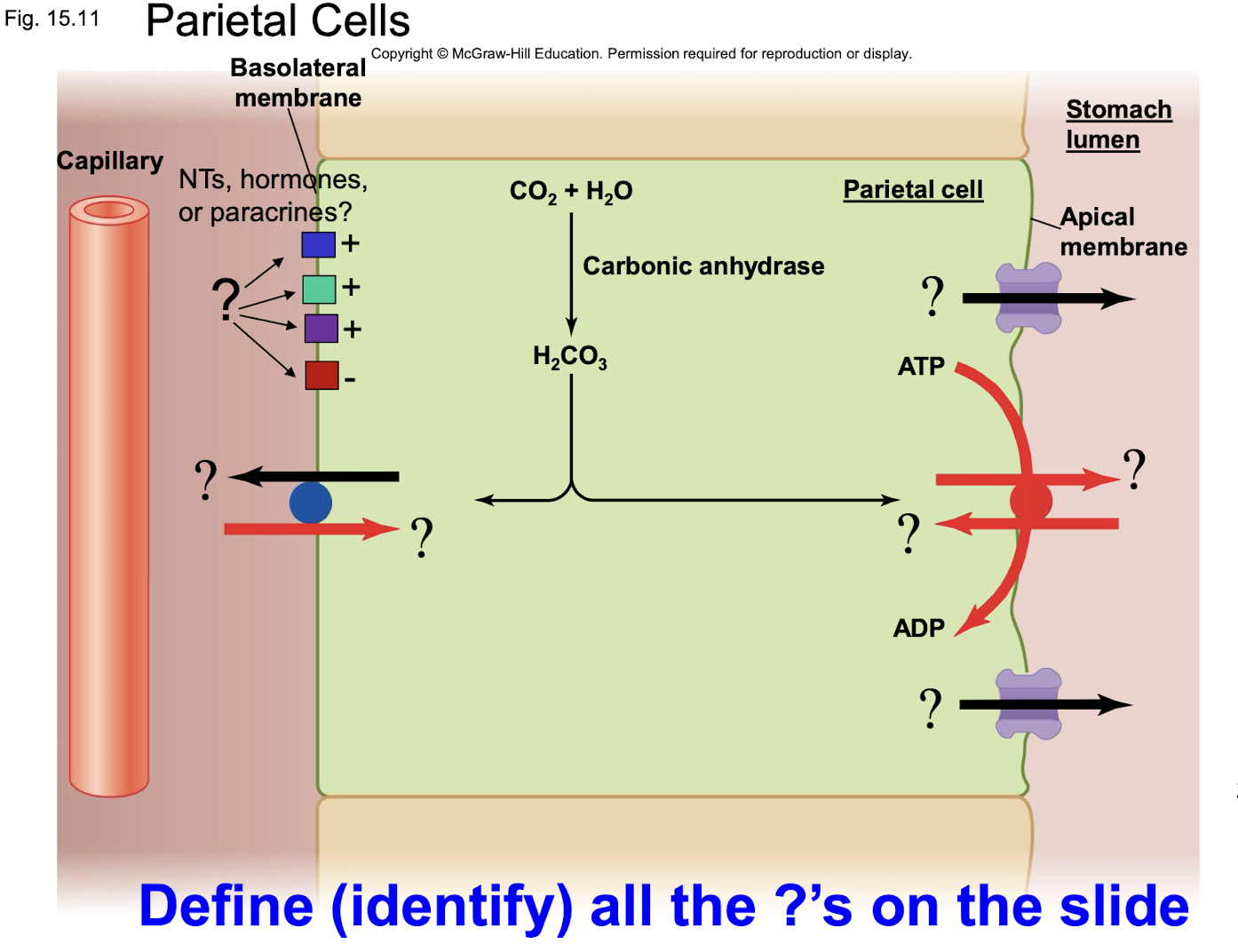
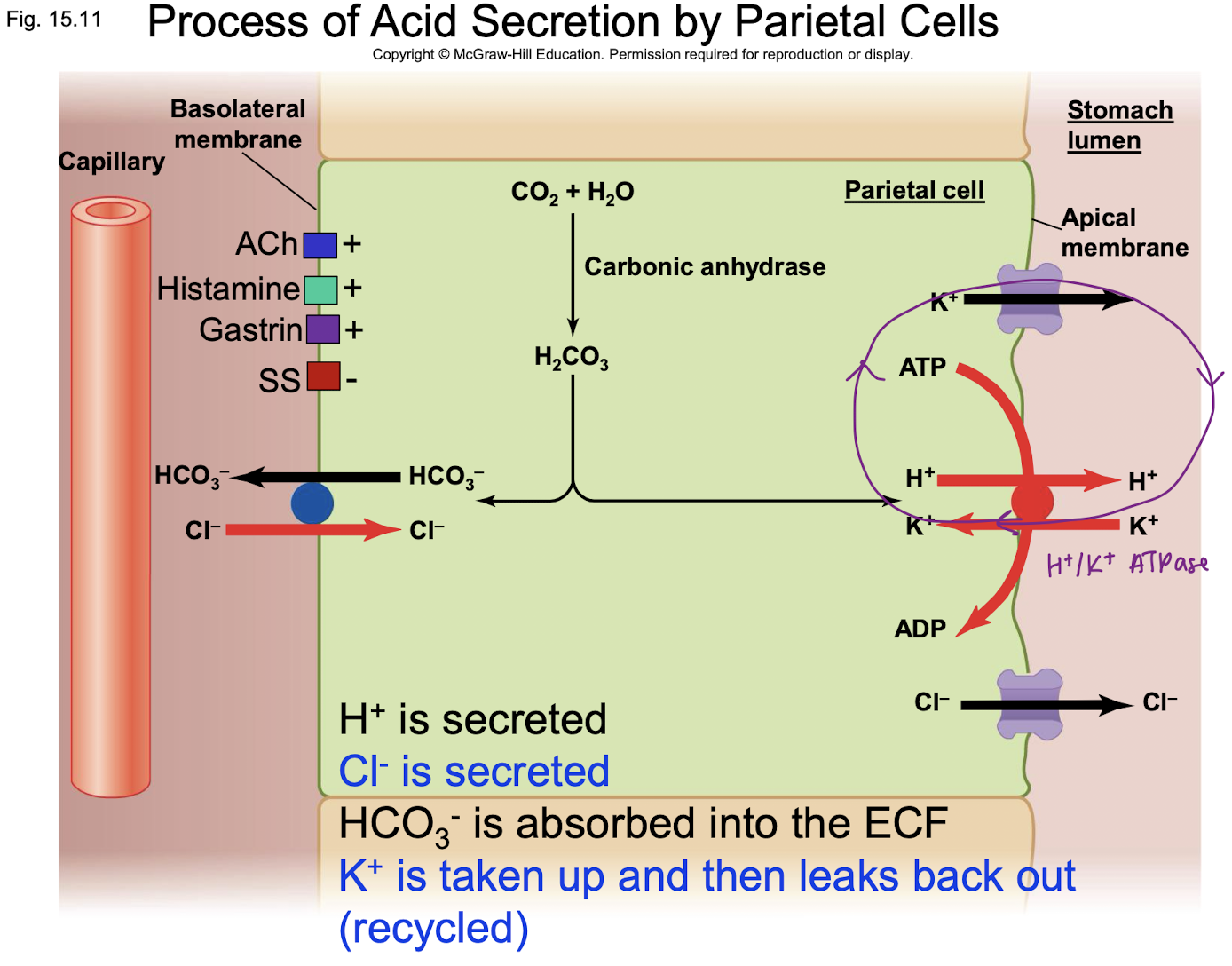
parietal cells
acid, intrinsic factor secretion
enterochromaffin-like cells (ECL cell)
histamine secretion
chief cells
pepsingogen secretion
G cells
enteroendocrine cells that secrete gastrin (a hormone)
D cells
secrete somatostatin (paracrine factor)
what is the only essential function of stomach
secretes intrinsic factor, which is essential for absoprtion of vitamin B12 by the ileum (B12 is required for production of RBC)
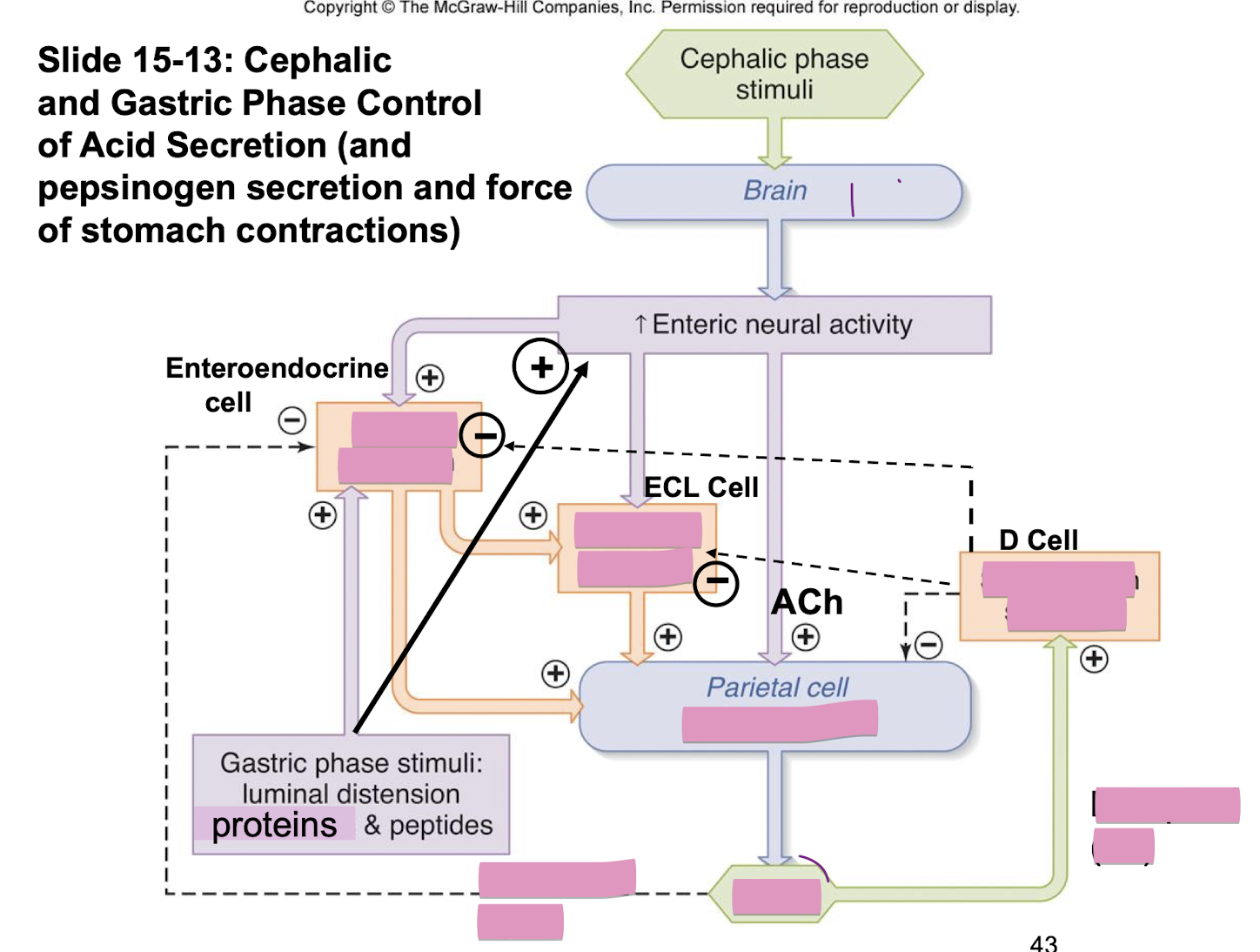
pepsinogen
inactive enzyme that requires acidic environment to be activated (HCl) and converted to pepsin to breakdown proteins
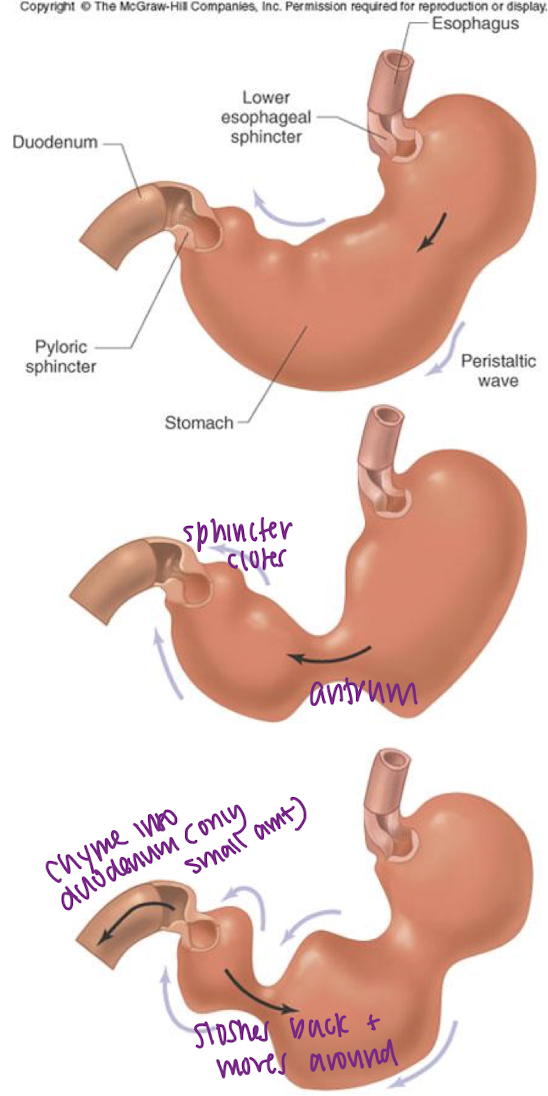
motility of the stomach steps
stomach produces peristaltic waves in response to arrival of food
wave begins in body and progresses to the antrum
antrum has more smooth muscle, so stronger contraction. peristaltic wave closes the pyloric spincter — only a small amount of chyme enters the small intestine
most chyme is forced back toward the body, which mixes the chyme