PSYCHOLOGICAL ASSESSMENT UNIT 2
 Call Kai
 Learn
Learn Practice Test
 Spaced Repetition
 Match
Match Flashcards
 Knowt Play
1/16

There's no tags or description
Looks like no tags are added yet.
Name | Mastery | Learn | Test | Matching | Spaced | Call with Kai |
|---|
No analytics yet
Send a link to your students to track their progress
17 Terms
what are the phases of the descriptive-predictive approach? 4 pts
phase 1: first data collection
phase 2: formulation of hypothesis and deduction of suportable statements
phase 3: contrasting-testing of hypothesis
phase 4: communication of results
correlational- considered as the traditional approach (description only)
what are the phases of the intervention-evaluation approach? 3 pts
phase 5: treatment plan and its evaluation
phase 6: treatment→ design, administration, continous evaluation if applicable
phase 7: evaluation and follow-up
experimenta;- considered as behavioral (intervention and change)
Hypothesis vs prediction: hypothesis characteristics? 4 pts
a hypothesis is a testable idea that leads to an experiment
based on a hypothesis one can create a prediction
a hypotheis will enable predictions through the act of deductive reasoning
an example “test anxiety decreases as a result of effective study habits”
Hypothesis vs prediction: prediction characteristics? 4 pts
a prediction is a logical statement about what will happen is the hypothesis is correct
a predcition is a statement about something that might happen in the future based on the existing evidence or observations
the prediction is the outcome that can be observed if the hypothesis were supported by the experiment
an example “students who experience test anxiety prior to an english exam will get higher scored than students who do not experience test anxiety”
phase 1: first data collection 5 pts
specify the demand/request- reasons for consultation/behaviors to modify
set objectives/aims about the case and consider the necessity to adjust expectations
establish the potentially relevant historical and current conditions
ethics
inform the client about the process, that collaboration is needed, confidentiality
inductive method vs deductive method? 6 pts
A. inductive:
from specific experiences to the generalisation
uncertainty about the conclusions
B. deductive:
from general to specific
based on logical principles and inference rules
correct application of those rules
final aim is to ensure validity of the deductions
phase 2: formulation of hypothesis and deduction of contrastable statements 2 pts
this phase is carried out based on the observations and information received from the patient
involves the hypothesis formulation stage and the deduction of verifiable statements stage
what is hypothesis formulation? 1 pt
based on the observations that the psychologist makes and the combination of these observations with the general and specific knowledge they have
an inductive process
what is deduction of contrastable statements? 1 pt
selection of instruments to operationalize and measure each of the variables present in each of the hypotheses formulated
phase 2: stage 1 formulation of hypothesis 2 pts
consists of establishing theories about the case based on the reliability and validity of the data collected about the subject and its circumstances and the amount of knowleedge that the evaluator has about psychological functions
inductive process that raises assumptions
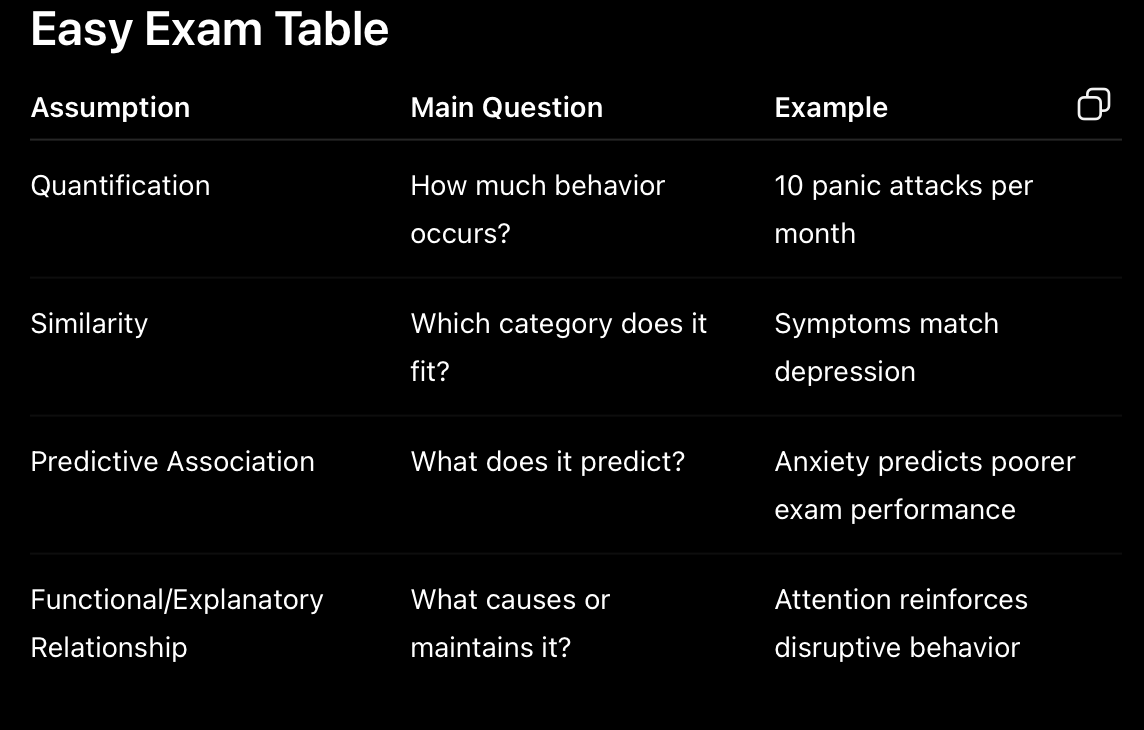
four types of assumptions or inductive hypotheses? 4 pts
quantification- assumptiion aimed to verify the frequency with which a particular behavior occurs
similarity- assumptions based on the idea that the criteria previously established to place a behavior in a category are met
predictive association- assumption that allows us to hypothesize to what extent the behaviors studied are associated with other behaviors allowing us to establish predictions based on empirically proven associations
functional/explanatory relationship- It is the assumption that a behavior can be explained by a causal relationship with another variable, which is verified through experimental testing after a predictive association has been established.
phase 2: stage 2 deduction of contrastable statements 2 pts
a deductive process that raises verifiable deductions that include decision making about what instruments/toold to utilise to measure each of the variables present in the hypothesis formulated
necessary to do an analysis of relevant variables associated with the problem and the selection of techniques or instruments
phase 3: contrasting 6 pts
preparation of material
preparation of the applicant
administration of the procedures to collect info
correction.assessment, and analysis of the info obtained
discussion of results
drawing conclusions
phase 4: final report 2 pts
verify that hypotheses and statements raised in phase 2 have responded to the objectives and goals proposed in the first phase
verbal and written feedback (diagnosis and planning of actions)
phase 5: treatment plan and evaluation 2 pts
establish the functional assumptions about the case- formulation of model, selection of IVs and DVs
deduction of verifiable predictions- selection of the measurements of the DV that will be the treatment objectives, selection of IV measures, treatment selection, selection of a valuation design
phase 6: treatment 2 pts
design intervention and assessment through which the hypotheses will be tested and the treatment evaluated
selection and application of assessment techniques and control of possible intervening and contaminating variables
phase 7: evaluation and follow-up 4 pts
new evaluation of problem behaviors in order to check if therapeutic goals have been reached
the test to check whether the data support the hypotheses initially formulated
if the treatment has been effective
communication of results