UNIT 2: Cell Processes
 Call Kai
 Learn
Learn Practice Test
 Spaced Repetition
 Match
Match Flashcards
 Knowt Play
1/126

There's no tags or description
Looks like no tags are added yet.
Name | Mastery | Learn | Test | Matching | Spaced | Call with Kai |
|---|
No analytics yet
Send a link to your students to track their progress
127 Terms
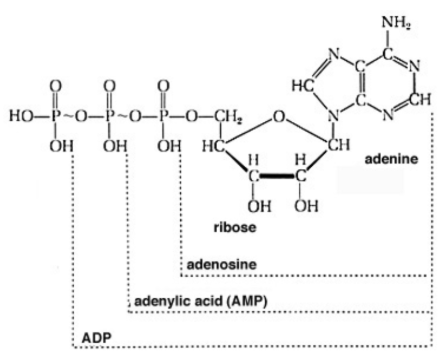
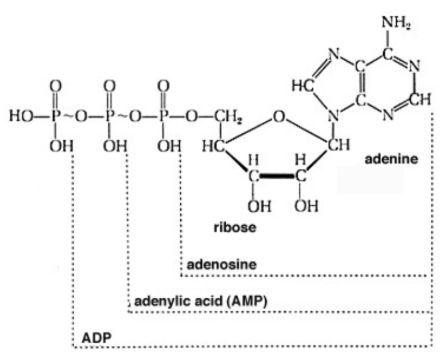
ATP
Adenosine Triphosphate
Redox Reaction
oxidation and reduction coupled reaction
Oxidation reaction
loss of electron, proton or gain of oxygen
Reduction Reaction
gain of electrons, proton or loss of oxygen
LEO said GER
Loss of
Electrons
Oxidation Reaction
Gain
Electrons
Reduction Reaction
Reducing agent
molecule that donates electrons
Oxidizing agent
molecule that accepts electrons
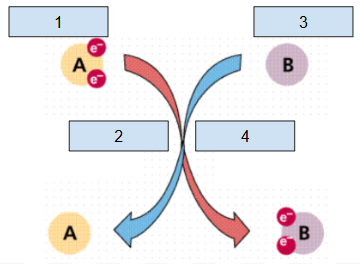
Reducing agent
Oxidation reaction
Oxidizing agent
Reduction reaction
Steps of cellular respiration
Glycolysis (anaerobic)
Pyruvate oxidation and citric acid cycle (aerobic)
Oxidative Phosphorylation (aerobic)
Anaerobic
does not require oxygen
aerobic
requires oxygen
Glycolysis
splitting of glucose into pyruvate
occurs in cytoplasm
ancient reaction that harvests energy
creates insufficient energy (2 ATP for every glucose)
Evolution of glycolysis
prokaryotes with nit membrane bound organelles evolved glycolysis
anaerobic atmosphere (without oxygen)
all cells still use glycolysis
Steps of glycolysis
Glucose priming
endergonic (2 ATP → 2 ADP + 2 phosphate (attached to glucose))
Chopping stage
glucose is split in half
Energy harvest
exergonic ( 2 ADP + 2 phosphate (attached to glucose) → 2 ATP)
Net yield from glycolysis
2 pyruvate
2 H2O
2 ATP
2 NADH
Cancer and glycolysis
cancer is able to grow anywhere (does not need to be near blood source) because it preforms glycolysis to gain energy anywhere
Why is mitochondria the powerhouse of the cell
It creates ATP that powers the rest of the cell
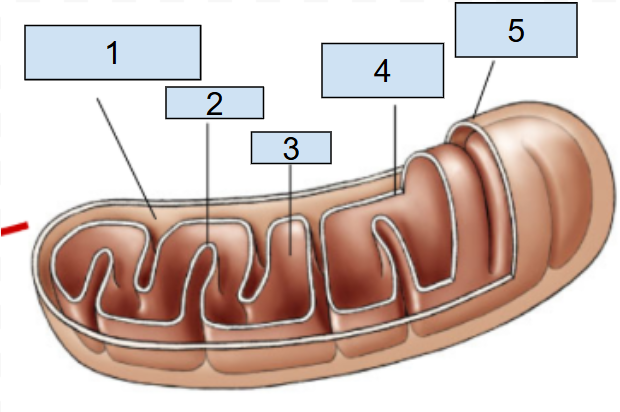
intercellular space
cristae
matrix
inner membrane
outer membrane
pyruvate oxidation
pyruvate enters mitochondria through transport protein
2 CO2 are released from pyruvate as it enters the mitochondria
pyruvate oxidizes to form Acetyl CoA
and 2 NADH
Citric Acid/Krebs Cycle
After pyruvate oxidation Acetyl CoA enters the matrix
In 8 steps Acetyl CoA gets oxidized and turns into CO2, NADH, FADH2 and ATP
happens 2 time per glucose (one per pyruvate)
Net gain of pyruvate oxidation and citric acid cycle
2 ATP
8 NADH
2 FADH2
6 CO2 (which are released from mitochondria)
How does the citric acid cycle favour the laws of thermal dynamics
1st law: Energy is not created or destroyed it is only transferred in coupled reactions
2nd law: an increase in enthropy is favoured in the universe. Bigger molecules are transformed into smaller ones (CO2 + ATP + NADH +FADH2)
Methods of Generating ATP
Substrate Level Phosphorylation
Chemiosmosis Generation of ATP
Substrate Level Phosphorylation
ATP is formed from an enzyme catalyzed reaction
occurs is glycolysis and citric acid cycle
Phosphate containing group transfers a phosphate directly to ADP
30.5 kJ/mol of potential energy is also transferred
Chemiosmosis
Movement of H+ ions through ATP synthase to generate ATP
H+ diffuse from an area of high [ ] to low [ ]
increase in entropy through diffusion
release of energy through diffusion is used to generate ATP by combining ADT + P
What components are apart of Oxidative Phosphorylation
electron transport chain
chemiosmosis
Where does oxidative phosphorylation take place
mitochondria - cristae membrane
Oxidative Phosphorylation generates the _____ amount of ATP
most
Steps for oxidative phosphorylation
Oxygen (1/2 O2 ) rips electron from C4
½ O2 + 2 e- + 2 H+ → H2O
C4 rips oxygen from C3 via shuttle molecule Cytochrome C (CytC)
C4 gains energy and pumps protons from matrix into inter membrane space
C3 rips electron from C2 or C1, via ubiquinone
C3 gains energy to pump protons across matrix to inter membrane space
If C2 loses and electron, it will gain an electron from FADH2 . FADH2 oxidizes into FAD and complex 2 reduces
If C1 loses an electron it will gain electrons from NADH. NADH oxidizes into NAD+, C1 reduces (gains electrons)
C1 gains energy and pumps H+ across into inter membrane space
Chemiosmosis:
Proton gradient in intermembrane space has been created. H+ diffuse across ATP synthase (exergonic -releases energy), ADP phosphorylates into ATP (endergonic)
Purpose of Oxidative Phosphorylation
Generate a lot of ATP
Recycle NAD+ and FAD to be used again in citric acid cycle
Get rid of potentially harmful Oxygen
1 NADH = _ ATP
3
1 FADH = _ ATP
2
Final ATP count from 1 glucose molecule
Glycolysis: 2 ATP, 2 NADH
Entry + Citric Acid Cycle: 2 ATP, 8 NADH, 2 FADH
Oxidative Phosphorylation: 38 ATP (Total)
What is the role of oxygen in cellular respiration
acts as the final electron acceptor in electron transport train
Oxygen atom pulls electrons from the control centers push protons into the intermembrane space
Creates H2O
What happens if there is insufficient Oxygen
oxidative phosphorylation shuts down because there is no longer a electron acceptor
Pyruvate Oxidation and Citric acid cycle shut down (no NAD+ and FAD recycled)
Glycolysis can continue because it has a way to recycle the NAD+
How is shivering related to the cellular respiration?
causes muscle contractions
ATP is required for muscle contractions - activating cellular respiration
some energy released will be in the form of heat and not used in reduction reactions
What is brown fat
Found in newborns, hibernating mammals, migratory birds
generates body heat
higher levels of mitochondria, that have high levels on uncoupling proteins
lots of capillaries to bring in oxygen
What is an uncoupling protein channel?
Transport chain for H+ that does not got through ATP synthase
energy from diffusion is not used to generate ATP
instead energy is released in the form of heat
How is cellular respiration controlled?
Allosteric inhibition by ATP, NADH and Citrate
Allosteric Activation by ADP
Thermodynamics
study of how energy moves
Metabolism
all chemical reactions occurring in an organism
Anabolism
chemical reactions that require energy to make new chemical bonds
Catabolism
chemical reaction that releases energy when bonds are broken
Energy
ability to do work (Joules or Calories)
Kinetic energy
energy of motion
Potential energy
stored energy
First Law of Thermodynamics
The total amount of energy in the universe is constant, it cannot be created or destroyed only transferred into different forms
Enthalpy of Reaction
the heat content of a substance
ΔH (Change in enthalpy)
overall heat change of a reaction
Exothermic Reaction
Energy is released
Endothermic Reaction
Energy is absorbed
Second Law of Thermodynamics
Entropy (S) (disorder/chaos) is favoured and constantly increasing in the universe
What does entropy favour
solids → liquid/gas
Bigger reactant → multiple smaller products
high concentration → low concentration
Spontaneous reaction
reaction that only requires a little bit of energy to get started and will continue to occur on its own once it has started
Gibbs free energy
the maximum amount of usable energy released by a chemical system at constant temperature and pressure, determining if a process is spontaneous
\Delta G<0
reaction is spontaneous
exergonic
\Delta G>0
reaction is not spontaneous
endergonic
ΔG=0
reaction is at equilibrium
no net change
no tendency to proceed
system is balanced
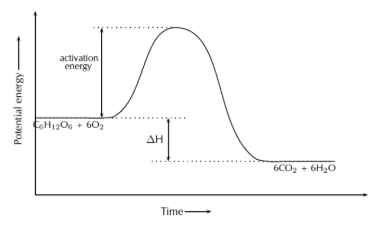
Exothermic reaction (Cellular respiration)
reaction that releases heat
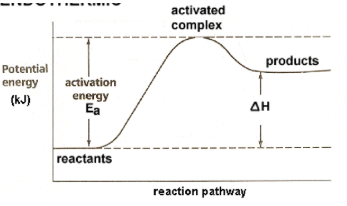
Endothermic Reaction (Photosynthesis)
Cellular respiration chemical equation
C6H12O6 + O2 → 6 CO2 + 6 H2O +Energy (38 ATP)
cellular respiration reaction characteristics
ΔG = -2870 kJ/mol of glucose
releases energy
increase in entropy
proceeds spontaneously
Photosynthesis chemical equation
6 CO2 + 6 H2O +Energy (from sun) → C6H12O6 + O2
Characteristics of photosynthesis reaction
ΔG = 2870 kJ/mol of glucose
absorbs energy
decrease in entropy
does not proceed spontaneously - energy is needed to derive the reaction
Equation for photosynthesis:
6 CO2 + 6 H2O + light energy → C6H12O6 + 6 O2
Purpose of the cuticle on a dicot leaf
protects cell against UV radiation
Prevents against loss of water in the leaf
In what part of the leaf does photosynthesis take place
palisade mesophyll cell
cell wall is made of cellulose
leaves have waxy cuticle that prevents water loss
chloroplast have chlorophyll that have a plant a green pigment
contain guard cells
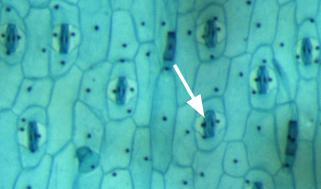
Guard cell
Guard cells come in ____
pairs
What are guard cells
Cells that open/close to regulate oxygen, carbon dioxide and water
How do guard cells open?
triggered by K+ ions
K+ enters cell and which pulls water molecules into the cell with osmosis
Cell swells up (turgid) and the stroma opens
What happens as the guard cell closes
K+ ions leave the cell, followed by water
cell becomes flaccid (shrivels) and stomata closes
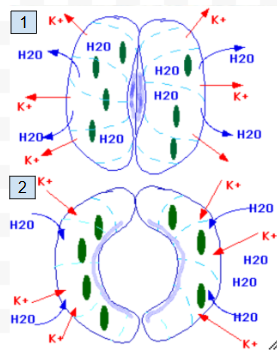
Which is guard cells open/close
close
open
What are the thylakoids?
flattened membrane sacs in granum
contain light pigment molecules (chlorophyll) and ETC on membranes
Give leaf green colour
What is the significance of thylakoids?
increase surface area for capturing light
What are granum
interconnected systems of thylakoids
How many granum are in a chloroplast?
approximately 60
What is the stroma?
protein-rich fluid within the chloroplast
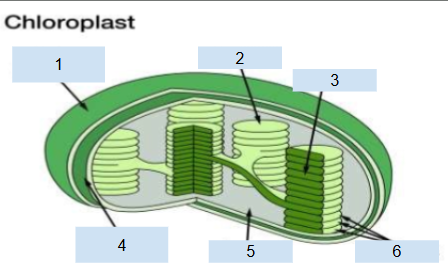
Label the chloroplast
outer membrane
granum
Lumen
inner membrane
stroma
thylakoids
Light is…
electromagnetic radiation
light travels in ____ packets called ____
wave
photons
Light from the sun is…
a mixture of photons of different energies called wavelengths (measured in nanometers)
the smaller the wave =
more energy
photon
a wave packet of energy
pigment
a material that has selective absorption of light
what are the most abundant photosynthetic pigments in photosystems
chlorophyll a and b
What is chlorophyll?
green coloured pigment
absorbs light energy for photosynthesis
What is the chemical difference between Chlorophyll A and B
one R-side chain
Why are plants green
chlorophyll a and b absorb violet-blue light and red regions of light - reflects green light
What is the main pigment in a photosystem
chlorophyll A
role of chlorophyll A
absorbs light energy and transfers energy directly to photosynthesis reaction
role of chlorophyll B
accessory pigment that absorbs remainder of light
role of accessory pigments (including chlorophyll B)
absorb different ranges of energy to maximize the total absorption of light energy for photosynthesis
chlorophyll a collects energy for accessory pigments and transfers it to trigger photosynthesis
Where can pigments be found
within the photosystem
Why are leaves different colours in the fall?
production of chlorophyll stops
other colours become visible due to accessory pigments
Photosynthesis equation
6 CO2 + 6 H2O + light energy → C6H12O6 + 6 O2
Roles of photosynthesis:
Make food: sugars for plants (autotrophs) and consumed by other animals (heterotrophs)
Remove CO2 from the atmosphere
produces oxygen for aerobic organisms
steps of photosynthesis
Light dependent reactions
non-cyclic phosphorylation
cyclic phosphorylation
Light independent reactions
Calvin-Benson cycle
Goal of light dependent reactions
Produce: ATP, NADPH and O2