Semester 2 Final Exam Study Flashcards
 Call Kai
 Learn
Learn Practice Test
 Spaced Repetition
 Match
Match Flashcards
 Knowt Play
1/47

There's no tags or description
Looks like no tags are added yet.
Name | Mastery | Learn | Test | Matching | Spaced | Call with Kai |
|---|
No analytics yet
Send a link to your students to track their progress
48 Terms
Gene
Unit of heredity which is transferred from a parent to an offspring
Allele
One of 2 or more alternative forms of a gene
Homozygous
Having two identical alleles for a particular gene
Heterozygous
Having two different alleles for a particular gene
Haploid
Having a single set of unpaired chromosomes, typical of gametes
Diploid
Having two complete sets of chromosomes, typical of somatic cells
Gamete
A reproductive cell that contains a haploid set of chromosomes, either sperm or egg in animals
Ecology
The study of interactions between organisms and their environment
Trophic Level
Each step in an ecological pyramid
Weather
Day to day conditions
Climate
Year to year, average conditions
Biotic Factors
Any living part of an ecosystem
Abiotic Factor
Any non living part of an ecosystem
Habitat
Where an organism lives (“address”)
Mutation
Random changes in DNA
Evolution
The change in the heritable characteristics of biological populations over successful generations
Gene pool
All the genes including all the different alleles for each gene that are present in a population at any point in time
Genetic Drift
Random changes in allele frequencies
Speciation
One species splits into 2 or more species
Natural Selection
A process of the survival of the fittest
Artificial Selection
Selective breeding of plants and animals to promote the occurrence of desirable traits in offspring
Autotroph
Any organism that makes its own food using energy from the sun
Heterotroph
Any organism that relies on other organisms for food
Climate Change
Changes in average temperature
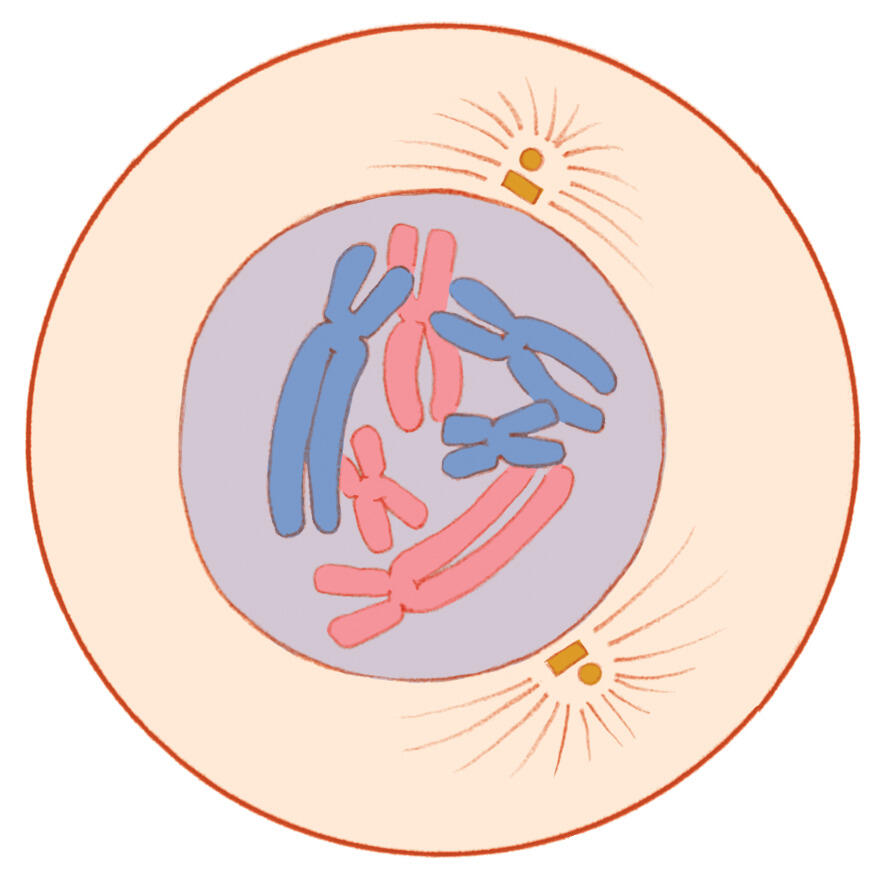
Prophase
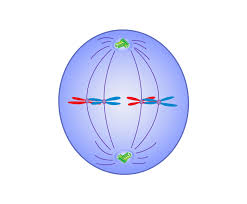
Metaphase
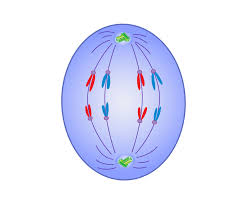
Anaphase
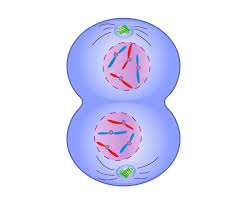
Telophase
Process of Interphase
G1 phase - Cell growth
S phase - DNA replication (synthesis)
G2 phase - Final Preparation for division
Why do cells have to divide?
Growth: To allow an organism to get larger
Repair: To replace damaged or dead cells
Efficiency: As a cell grows, its volume increases faster that its surface area.
What is Mitosis?
A type of cell division
Results in two daughter cells each having the same number and kind of chromosomes as the parent nucleus
Division of the Nucleus
Prophase, Metaphase, Anaphase, Telophase
Cytokinesis: Division of the cytoplasm, resulting in two separate daughter cells
When do chromosomes become visible during the cell cycle?
During Prophase
When loose chromatin condenses into tightly coiled structures we recognize as chromosomes
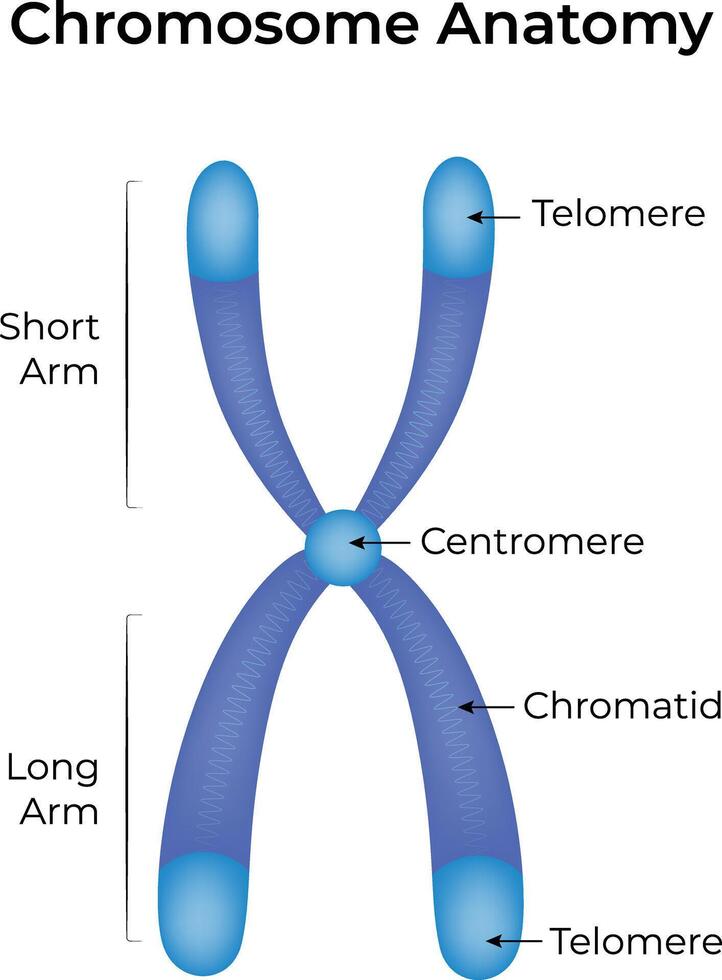
Chromosome Anatomy
What is the role of spindle fibers?
They attach to the centromeres of the chromosomes and pull the sister chromatids apart toward opposite poles of the cell
What are factors that affect the rate of mitosis?
Cell Type
Environment
Injury
Cell size
What is centriole?
Cylinder shaped organelle found in animal cells
They move to opposite ends of the cell and help organize the spindle fibers that pull the chromosomes apart
Stage of Meiosis 1 Description
Prophase 1: Chromosomes condense, crossing over occurs
Metaphase 1: Homologous pairs line up in the middle of the cell
Anaphase 1: Pairs are pulled apart to opposite ends of the cell
Telophase 1: Cytokinesis, cell divides into 2 cells (each cell now having half the number of chromosomes)
Stage of Meiosis 2 Description
Prophase 2: Chromosomes condense again in the two cells
Metaphase 2: Chromosomes line up in the middle (single file)
Anaphase 2: Sister Chromatids are pulled apart
Telophase 2: Cytokinesis, both cells divide (resulting in 4 unique haploid cells)
What are homologous chromosomes?
Pairs of chromosomes (one from each parent) that are similar in size, shape, and the specific genes they carry
What is crossing over? When does it occur?
Exchange of genetic material between homologous chromosomes (creates genetic variety)
occurs in Prophase 1 of Meiosis
What type of cells go through meiosis? What do we know about the cells at the end of Meiosis?
Cell Type: Only germ cells (creates gametes like sperm & egg cells) go through Meiosis
Result: 4 daughter cells (each cell is haploid, has half the DNA of the original cell, and is genetically unique)
How do you calculate Diploid and Haploid cells?
Diploid = Haploid x 2
Haploid = Diploid / 2
How many rounds of Interphase and cell division are there in Meiosis?
Interphase: only 1 round (DNA replication happens only once before the whole process starts)
Cell division: There are 2 rounds of division (Meiosis 1 and Meiosis 2)
Mendel Trait Punnet Squares
Standard version where one allele is dominant and masks the recessive one
B - If this is present, it masks the recessive traits
bb - Only recessive if both are lowercase
ex)
B = Brown eyes
b = Blue eyes
Bb = Brown eyes
Incomplete Dominance Punnet Squares
No allele is truly dominant over the other (heterozygous phenotype is a mix of the 2 homozygous phenotypes)
ex)
RR = Red flower
WW = White flower
RW = Pink flower
CoDominance Punnet Squares
Both alleles are expressed equally and at the same time (both traits show up in the heterozygous individual; they don’t mix)
ex) A black chicken crossed with a white one produces a chick w/ both black and white feathers
Sex Linked Traits