7. large animal med- salmonellosis
 Call Kai
 Learn
Learn Practice Test
 Spaced Repetition
 Match
Match Flashcards
 Knowt Play
 Podcast
1/47

There's no tags or description
Looks like no tags are added yet.
Name | Mastery | Learn | Test | Matching | Spaced | Call with Kai |
|---|
No analytics yet
Send a link to your students to track their progress
48 Terms
what organism causes salmonellosis?
salmonella enterica
gram-negative, intracellular, facultative anaerobe
what are the 2 primary antigens of salmonella enterica?
O: somatic (lipopolysaccharide)
H: flagellar (heat labile)
how many serotypes are there for salmonellosis?
2600 known serotypes
what are host-adapted variants of salmonellosis?
variants that usually only colonize one (or a few) species
what is the host-adapted salmonella variant in cattle, sheep, and horses?
cattle: s. dublin
horses: s. abortus equi
sheep: s. abortus ovis
what are non-adapted variants of salmonella?
variants that can colonize many species, therefore have a greater zoonotic risk
how long can salmonella organisms persist in the environment?
over a year in certain conditions (can withstand freezing temperatures)
but, most infections are due to recently shed bacteria (not lingering sources)
what is the transmission of salmonellosis from animal to animals?
1. fecal-oral (direct contact, fomites, contaminated feed)
2. +/- respiratory, transplacental
is salmonellosis more commonly reported in beef or dairy cattle herds?
dairy herds
what are 3 sources of infection of salmonellosis?
1. host-adapted strains persisting in lifelong shedders
2. non-adapted strains shed by acutely infected animals
3. shedding of non-adapted strains that may persist for long periods
what is the pathophysiology of salmonellosis causing secretory diarrhea?
1. organisms attach to enterocytes via fimbriae
2. type 3 secretion system injects enterotoxins and other effector proteins into cells --> stimulates Cl- secretion (secretory diarrhea)
what is the pathophysiology of salmonellosis causing deep ulceration in intestinal epithelium?
the bacteria recruits neutrophils to laminate propria and intestinal lumen, leading to epithelial necrosis (deep ulceration)
what causes systemic signs seen with salmonellosis?
absorption of endotoxins or bacteremia
what causes chronic infections of salmonellosis?
bacteria persisting within WBCs in lymphoid tissue
what organism factors determine the susceptibility to infection with salmonellosis?
inoculation dose, strain virulence
what host factors determine the susceptibility to infection with salmonellosis?
-immune status
-gut competition (abx, neonate, feed change)
-gastric pH
-stressors (illness, surgery, pregnancy, etc)
which animals are the most susceptible to salmonellosis infections?
neonates and sick animals are most susceptible
what are the 2 most common/important clinical syndromes of salmonellosis?
sepsis and acute enterocolitis
what other syndromes are seen with salmonellosis?
-colic/proximal enteritis
-chronic enteritis
-respiratory disease
-chronic shedding
-latent shedding
-passive shedding
(and sepsis/acute enterocolitis)
which animals is sepsis due to salmonellosis most common in?
most common in neonates (<1 month old)
what are clinical signs of sepsis due to salmonellosis?
-SIRS/endotoxemia (fever, tachycardia, tachypnea)
-depression, recumbency, injected MMs
-impaired perfusion
-colic, diarrhea, GI stasis
what secondary sites can salmonellosis localize to in septic animals?
CNS (meningitis)
joints (septic arthritis)
udder (mastitis)
fetus (abortion)
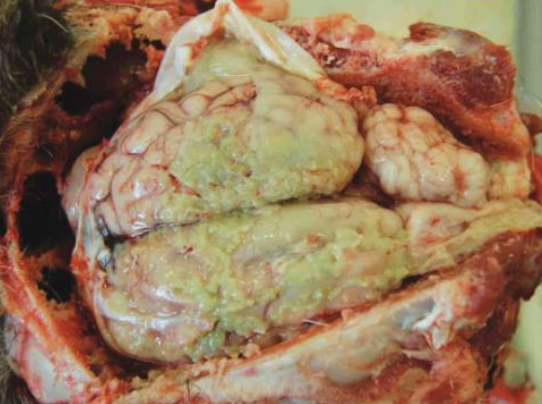
what are complications of sepsis due to salmonellosis?
-laminitis
-abortion
-altered coagulation/DIC
which animals most commonly get acute enterocolitis due to salmonellosis?
adult animals (can affect both small and large intestines)
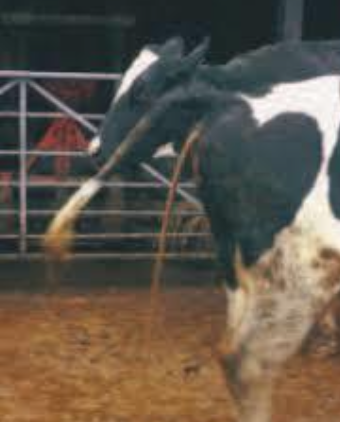
what are the clinical signs of acute enterocolitis due to salmonellosis?
-diarrhea (profuse, watery, often w/ casts or blood)
-colic (often before diarrhea)
-SIRS/endotoxemia (fever, tachycardia/tachypnea)
-depression, injected MMs, anorexia, poor perfusion
which clinical syndrome of salmonellosis results in the highest-shedding animals?
acute enterocolitis
can acute enterocolitis progress to sepsis?
yes, will also have similar complications as sepsis
what are the clinical signs of proximal enteritis caused by salmonellosis?
colic, gastric reflux, +/- SIRS
much more likely in horses than ruminants, and is not always associated with salmonella
how does chronic enteritis differ from acute enterocolitis caused by salmonellosis?
diarrhea is usually less severe than acute
which animals is respiratory disease seen in due to salmonellosis?
densely packed animals (production setting)
what clinpath abnormalities are seen with salmonellosis?
-leukopenia (neutropenia) w/ degenerative left shift and toxic changes
-hyper-fibrinogen
-hemoconcentration
-acidemia, poor perfusion
-electrolyte/protein loss
-azotemia
what clinpath abnormalities are poor prognostic indicators for salmonellosis cases?
-persistent leukopenia
-diverging PCV/TP
what pathologic lesions/findings are seen with salmonellosis?
-thickened mucosa with fibronecrotic plaques
-sheets of fibrin
-enlarged mesenteric LNs
-chronic: discrete areas of intestinal necrosis
-septic: widespread petechiae, secondary sites of infection
-s. dublin: thickened gallbladder wall
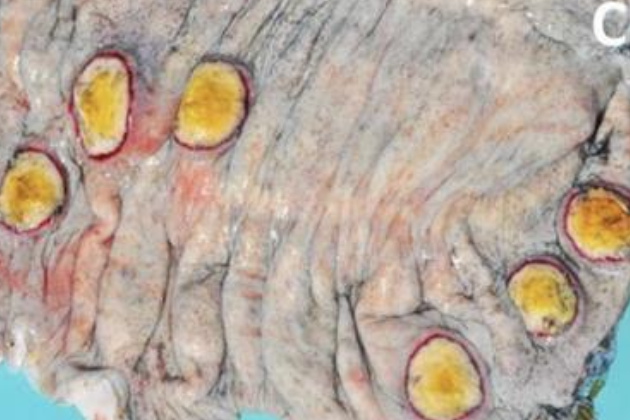
what are 3 methods of diagnosing salmonellosis? which is the most common?
1. culture
2. PCR (most common)
3. serology (ELISA)
how effective is culture in diagnosing salmonellosis?
has poor sensitivity bc organism is shed intermittently (repeated fecal cultures used to increase sensitivity)
when organism is detected, allows for serotyping and sensitivity
how effective is PCR in diagnosing salmonellosis?
most common test, more sensitive and faster than culture
how effective is serology for diagnosing salmonellosis?
usually only used as a screening tool for production herds to identify carriers (high titers=carrier)
what is the general treatment for salmonellosis?
1. fluids (mainstay of tx)
2. NSAIDs
3. colloid support (plasma transfusion)
what type of fluids are used for treatment of salmonellosis?
usually alkalinizing fluids (LRS, norm-R) with supplemental potassium +/- calcium
why are NSAIDs part of the treatment protocol for salmonellosis?
esp used in patient with systemic inflammation
use banamine, ketoprofen, bute
what is the mortality rate of salmonellosis without treatment?
w/o treatment, 75% of acutely affected animals will die
when are antibiotics indicated for treatment of salmonellosis?
depends on situation for adults, but used in neonates due to high likelihood of becoming septic
why are antibiotics not commonly used for treatment of salmonellosis?
-will prolong period of shedding (may increase risk of chronic/latent carriers)
-resistance to abx is common
why is the MOA of lidocaine used for treatment of salmonellosis?
acts as an analgesic, anti-inflammatory, and prokinetic
what is the purpose of giving antiplatelet drugs to animals with salmonellosis?
to reduce risk of microthrombosis, thrombophlebitis, and DIC
what does management of salmonellosis include?
monitoring for complications:
-renal injury
-laminitis
-thrombophlebitis
-DIC
-new foci of infection
how long after starting treatment should clinical signs of salmonellosis improve?
signs should improve within 24 hours of starting treatment
if severe signs last over 3 days= poor prognosis
how is salmonellosis controlled?
-ID and remove carriers (esp for s. dublin)
-promptly isolate and treat acute infections
-maintain environmental hygiene
-control bird/rodent populations
-avoid contaminated feed
-vaccines (best if given to dams to prevent neonatal infections)