Fetal pig Dissection Diagram | Quizlet
 Call Kai
 Learn
Learn Practice Test
 Spaced Repetition
 Match
Match Flashcards
 Knowt Play
1/25

There's no tags or description
Looks like no tags are added yet.
Name | Mastery | Learn | Test | Matching | Spaced | Call with Kai |
|---|
No analytics yet
Send a link to your students to track their progress
26 Terms
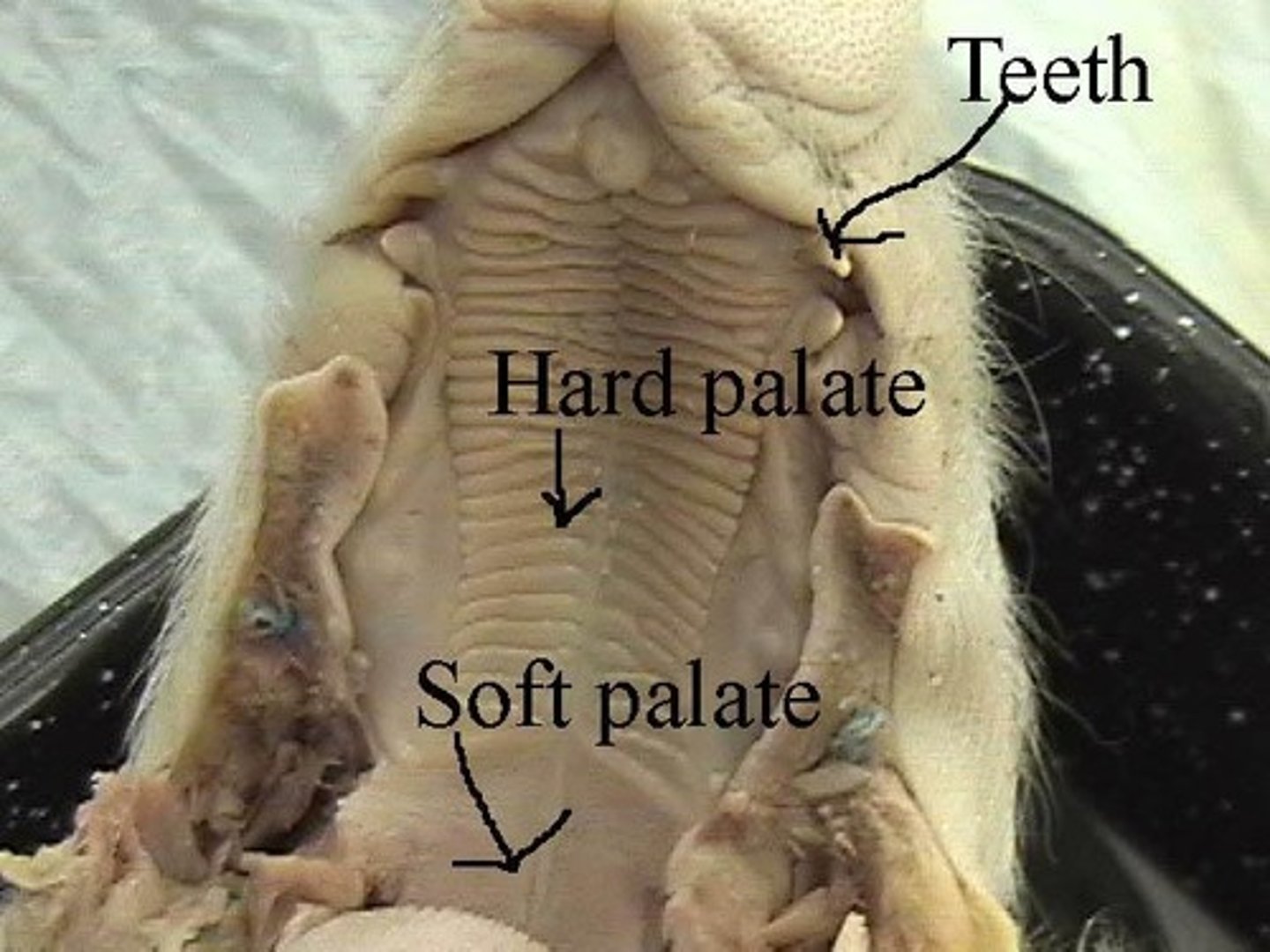
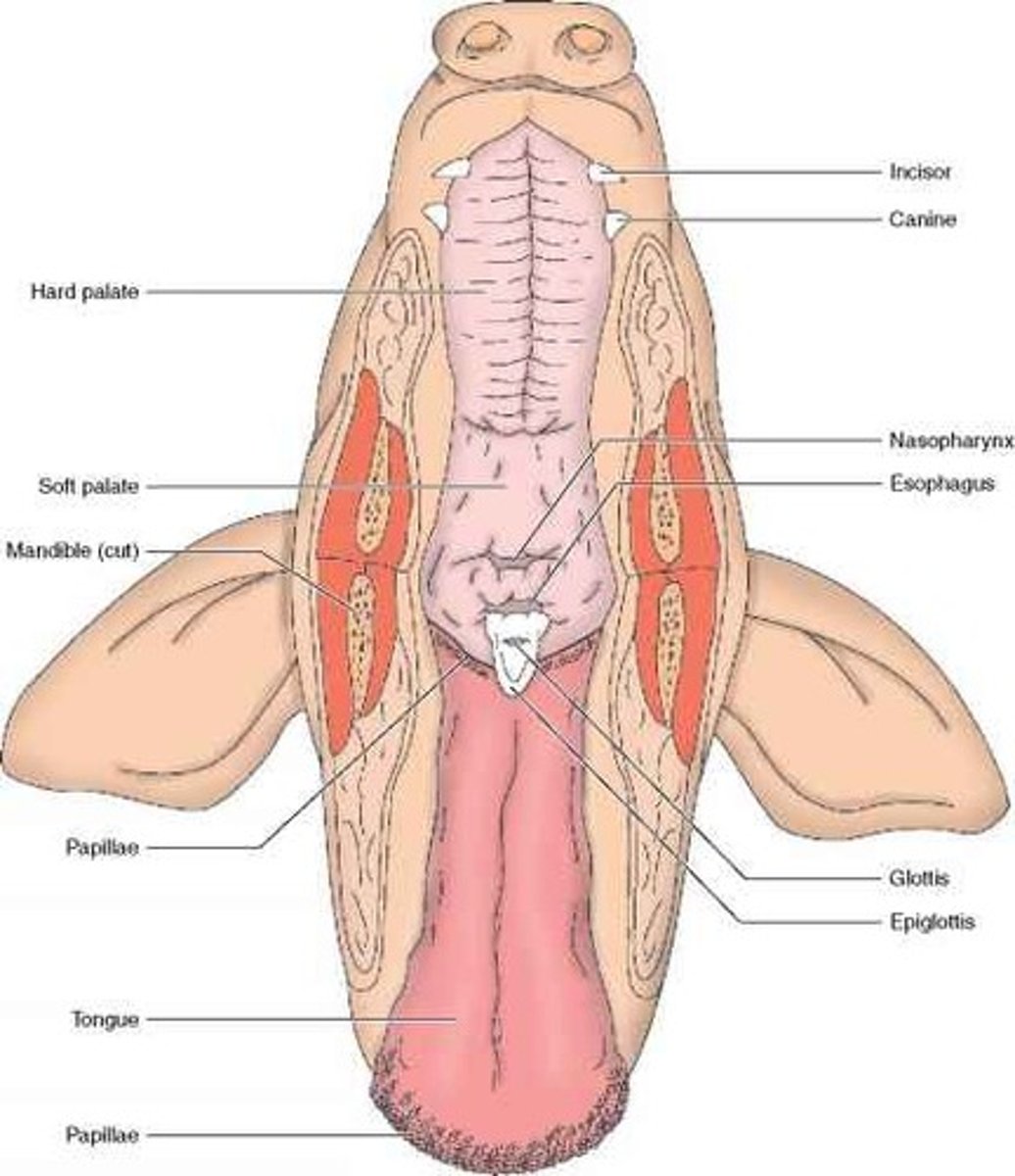
hard/soft palate
tongue
TERM
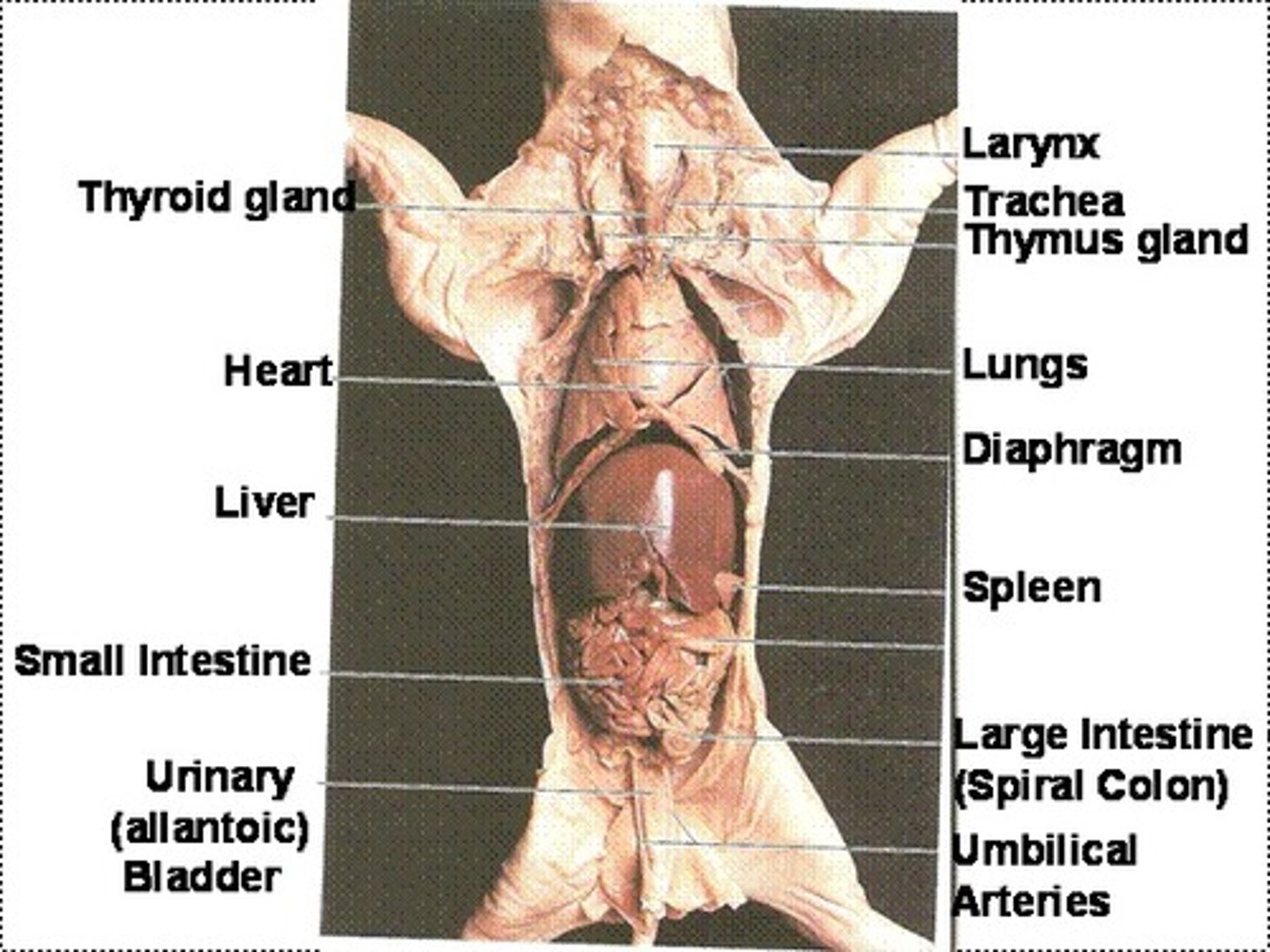
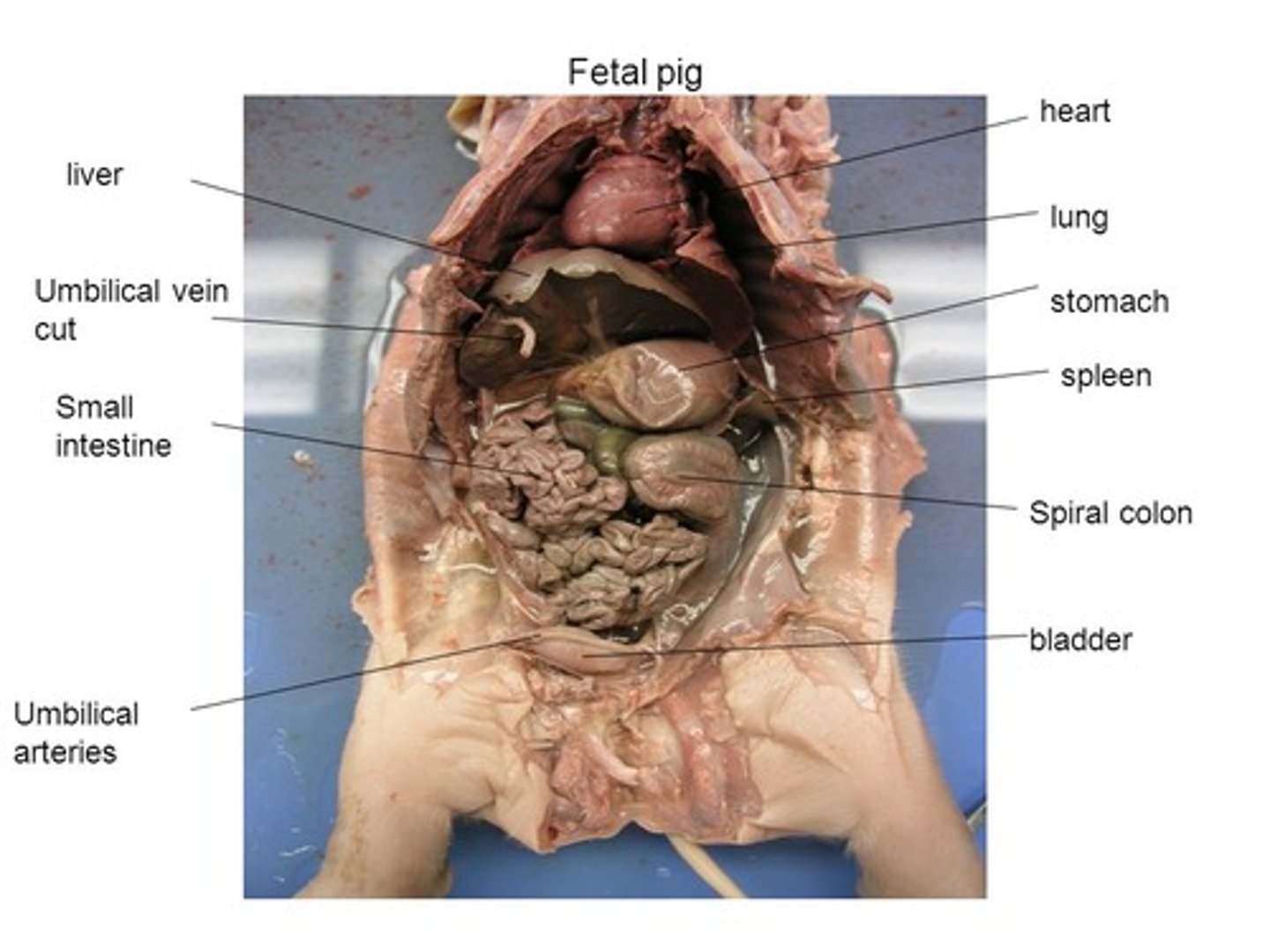
liver
DEFINITION
detoxifies chemicals and metabolizes drugs. Secretes bile aiding in digestion and makes proteins important for blood clotting
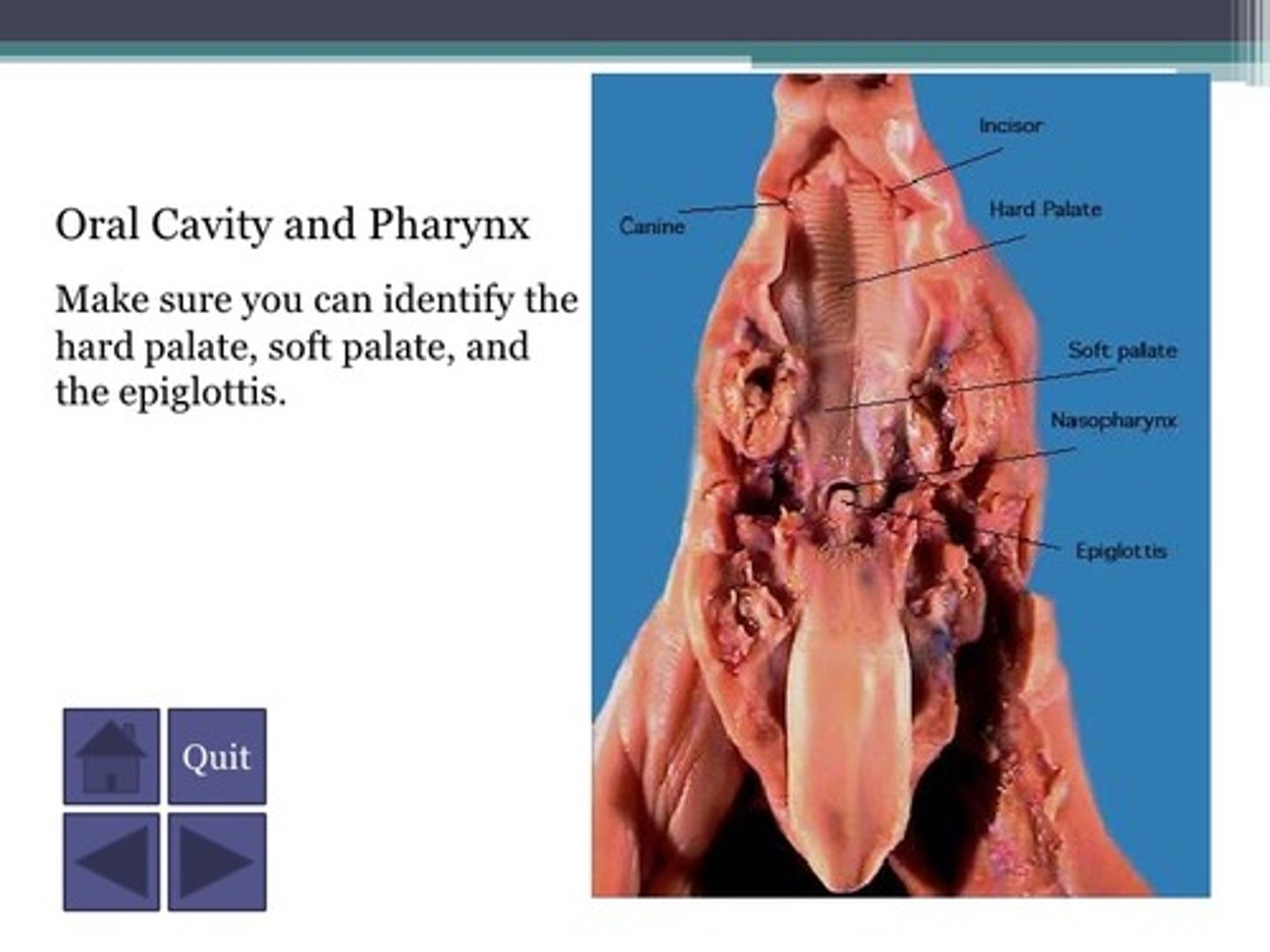
epiglottitis
seals off the windpipe during eating, so that food is not accidentally inhaled.
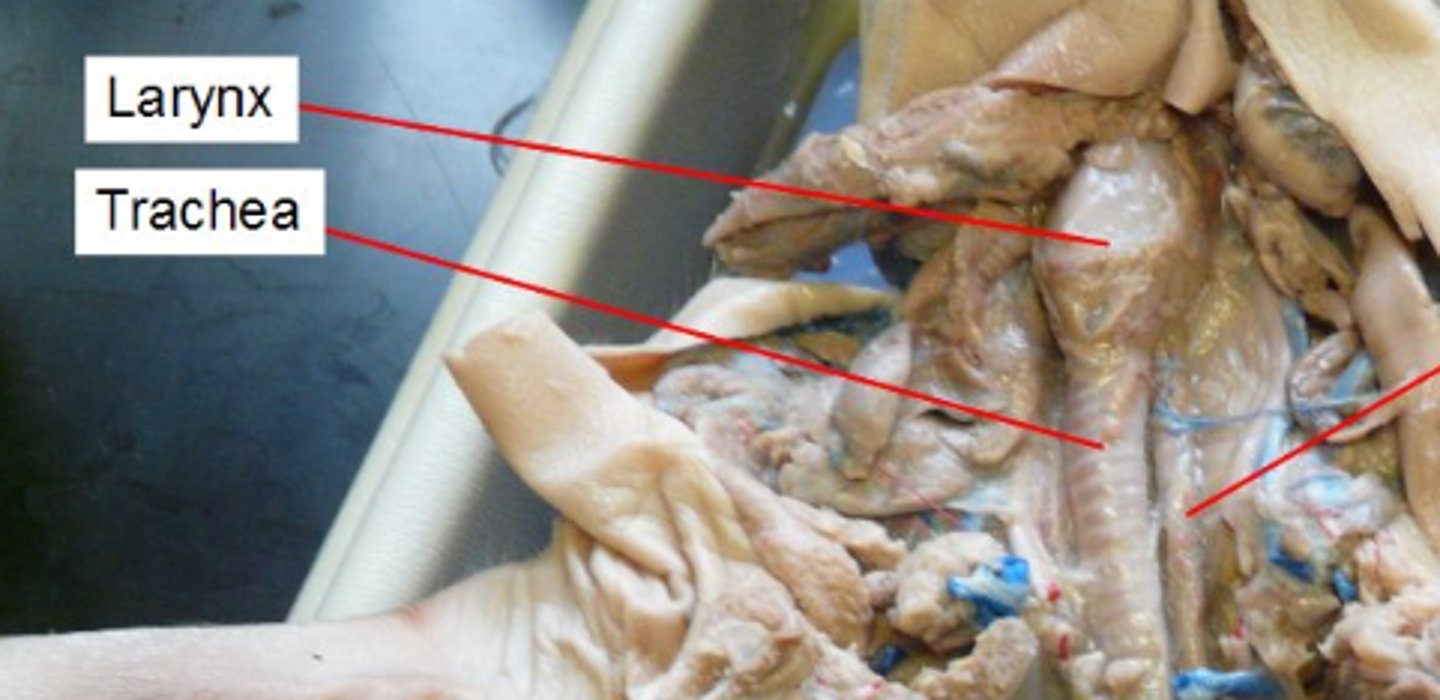
trachea
a tube through which the air passes to get to the lungs, windpipe
TERM
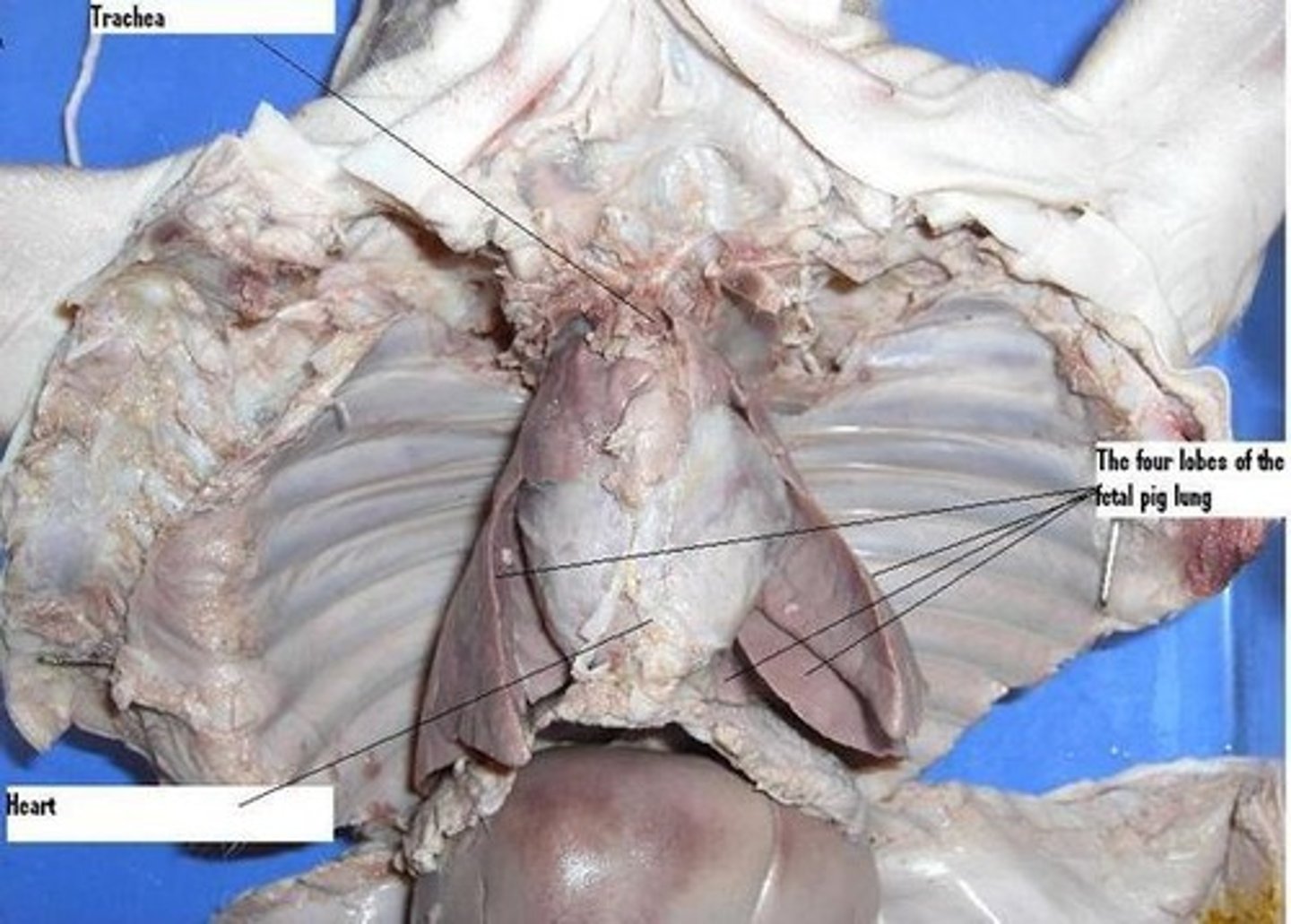
lungs
DEFINITION
responsible with gas exchange
TERM
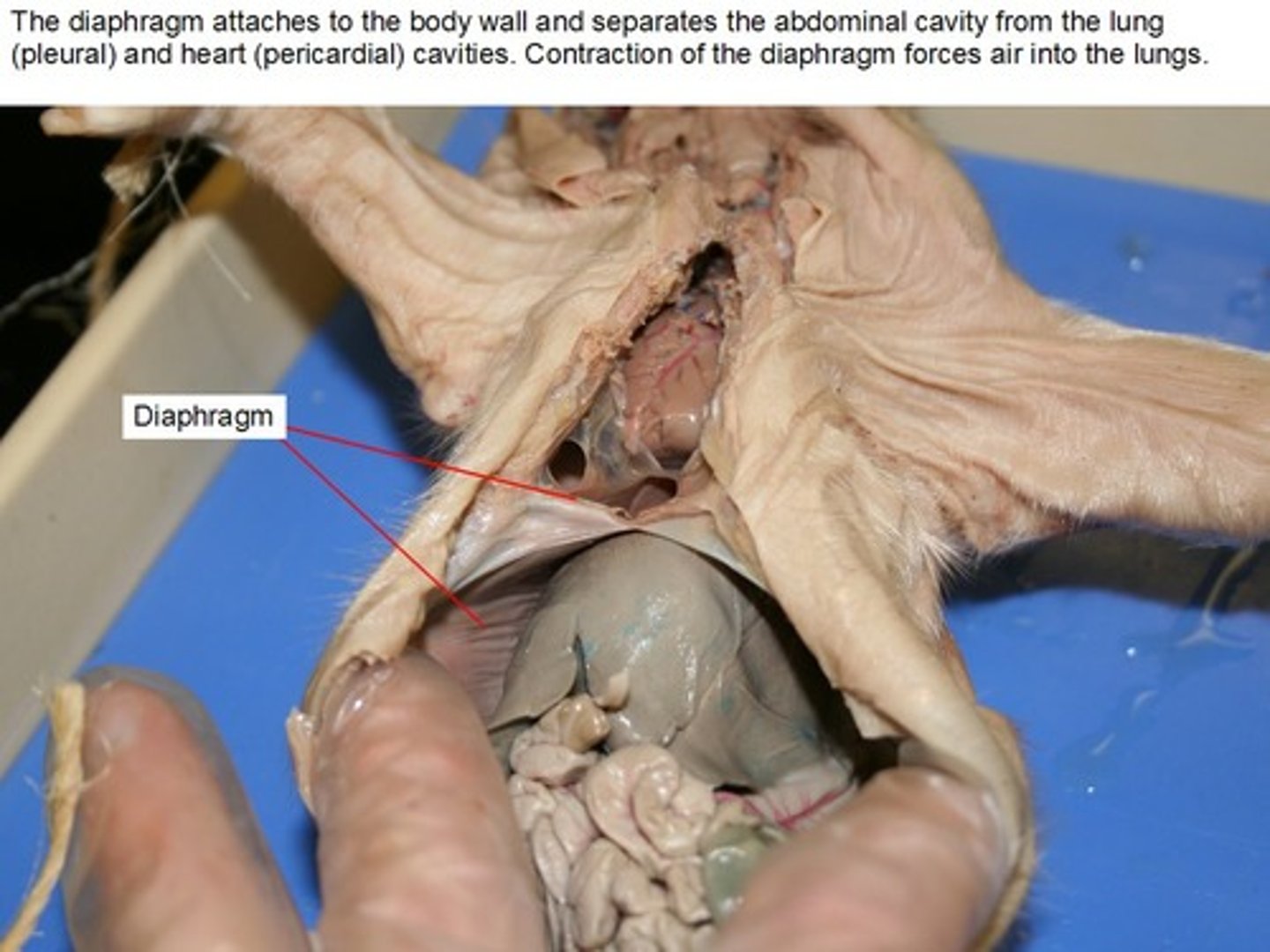
diaphragm
DEFINITION
The muscle that aides in the breathing process. Separates the thoracic cavity from the gastrointestinal cavity
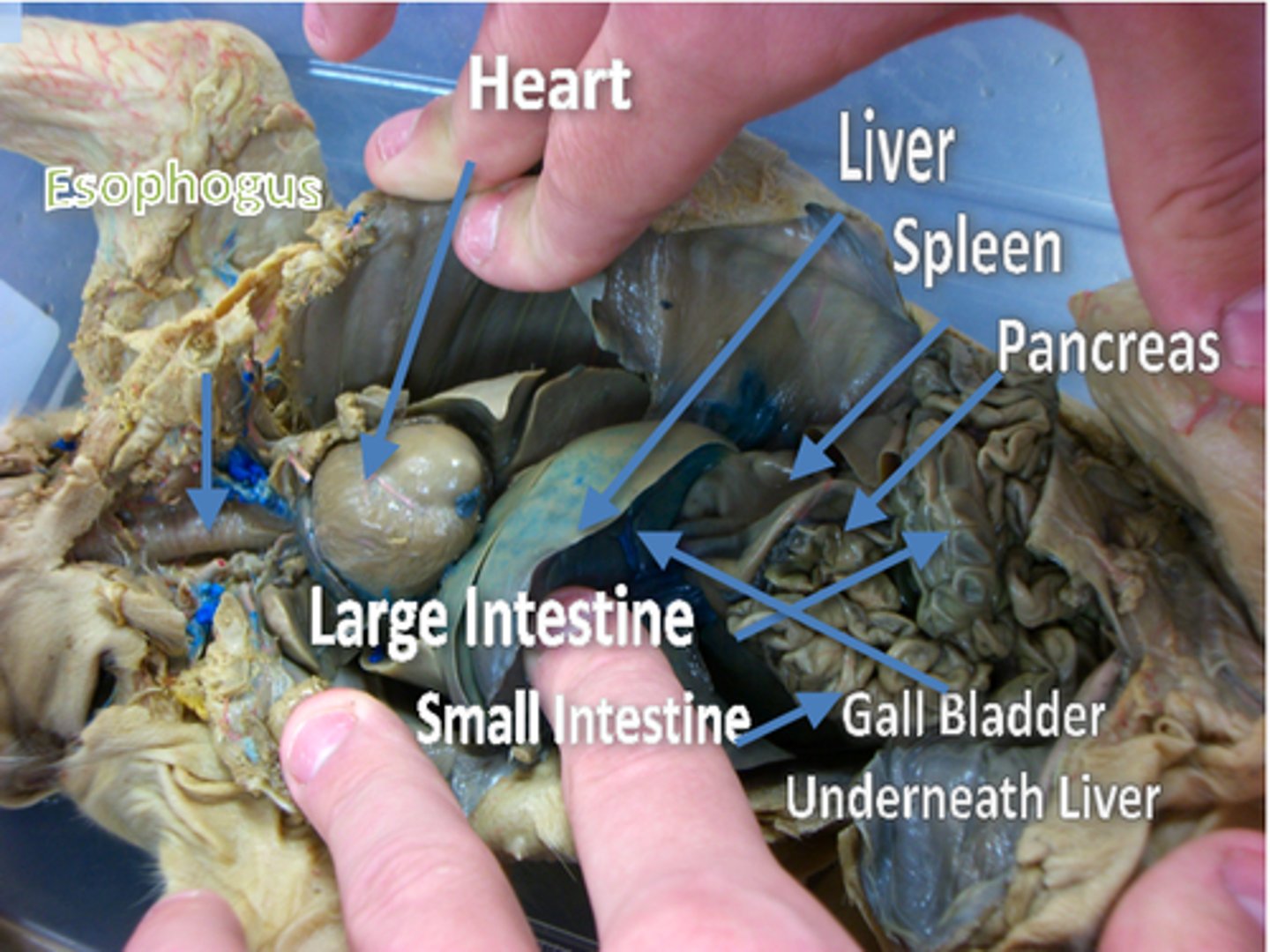
esophagus
tube connecting mouth to the stomach
TERM
small intestine
DEFINITION
absorption of nutrients
TERM
large intestine
DEFINITION
tube after the small intestine where liquid is absorbed
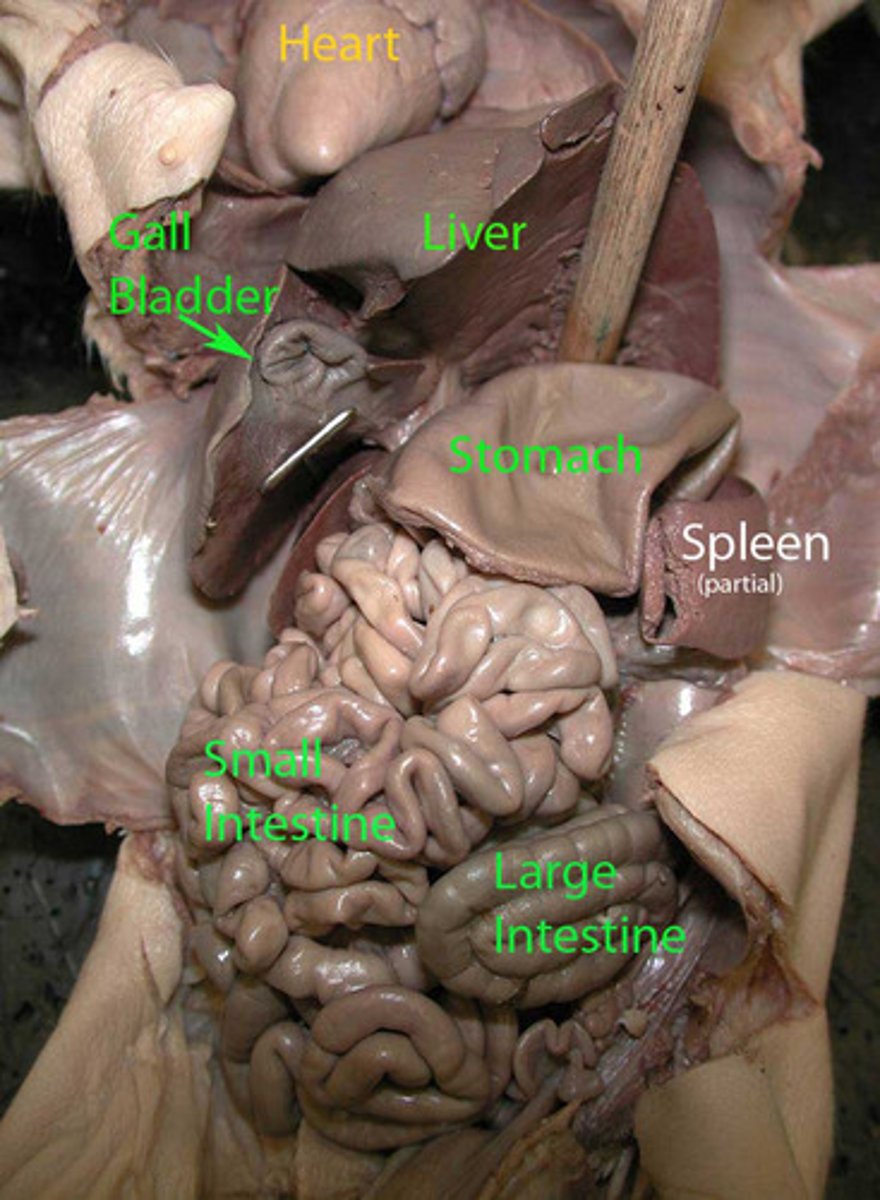
heart
Causes blood to flow through the body by its pumping action.
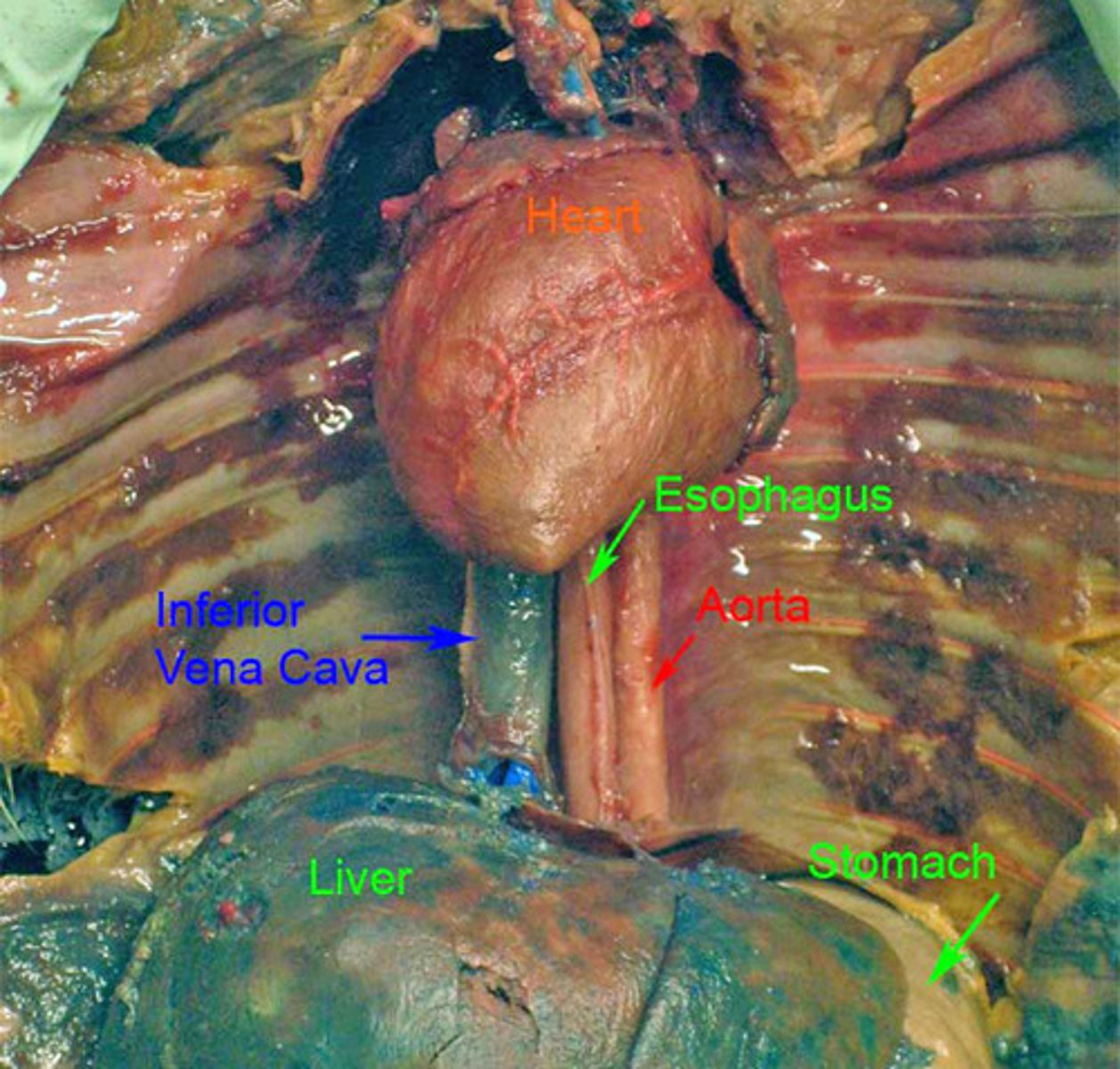
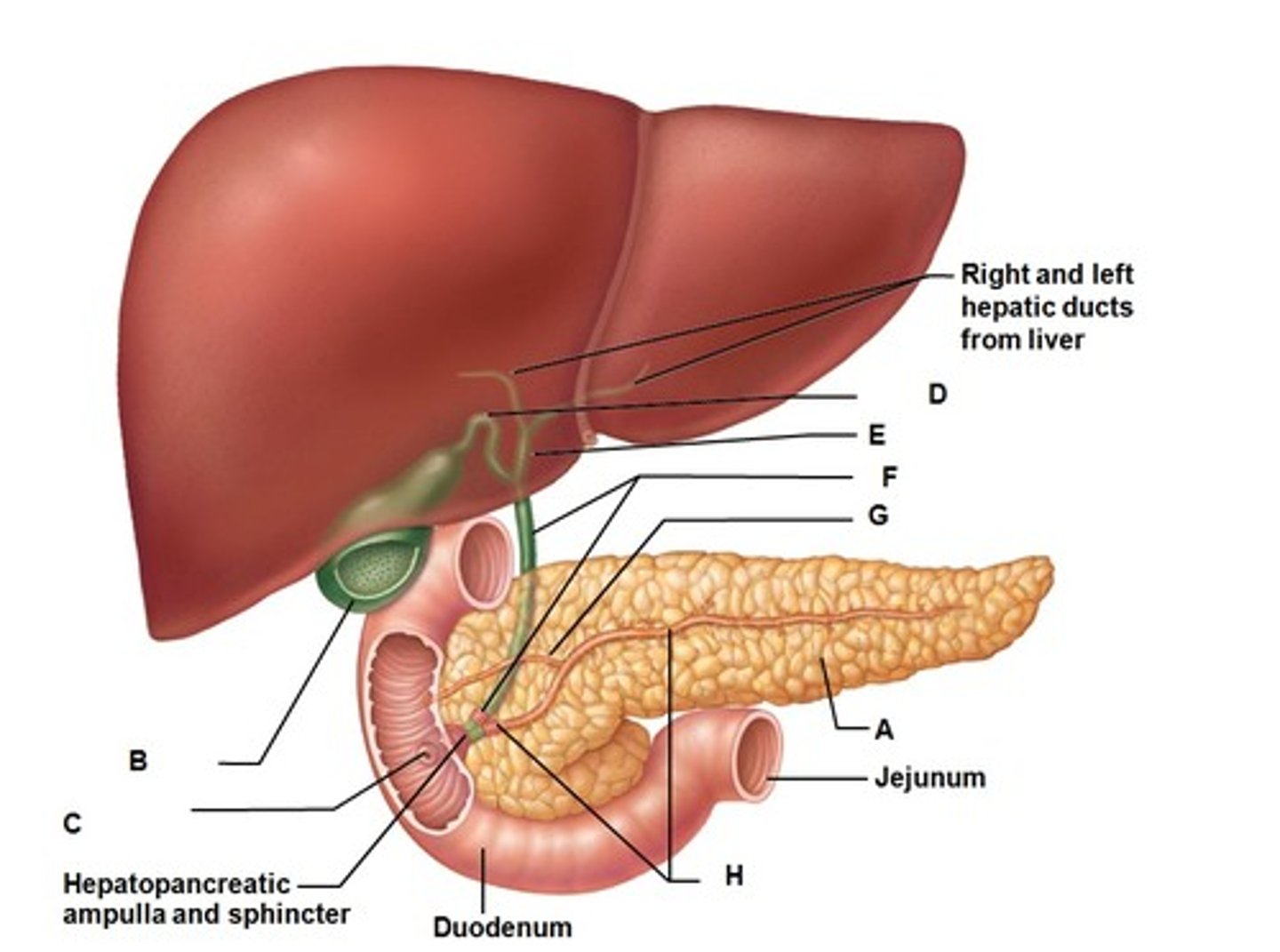
gallbladder
where bile is stored
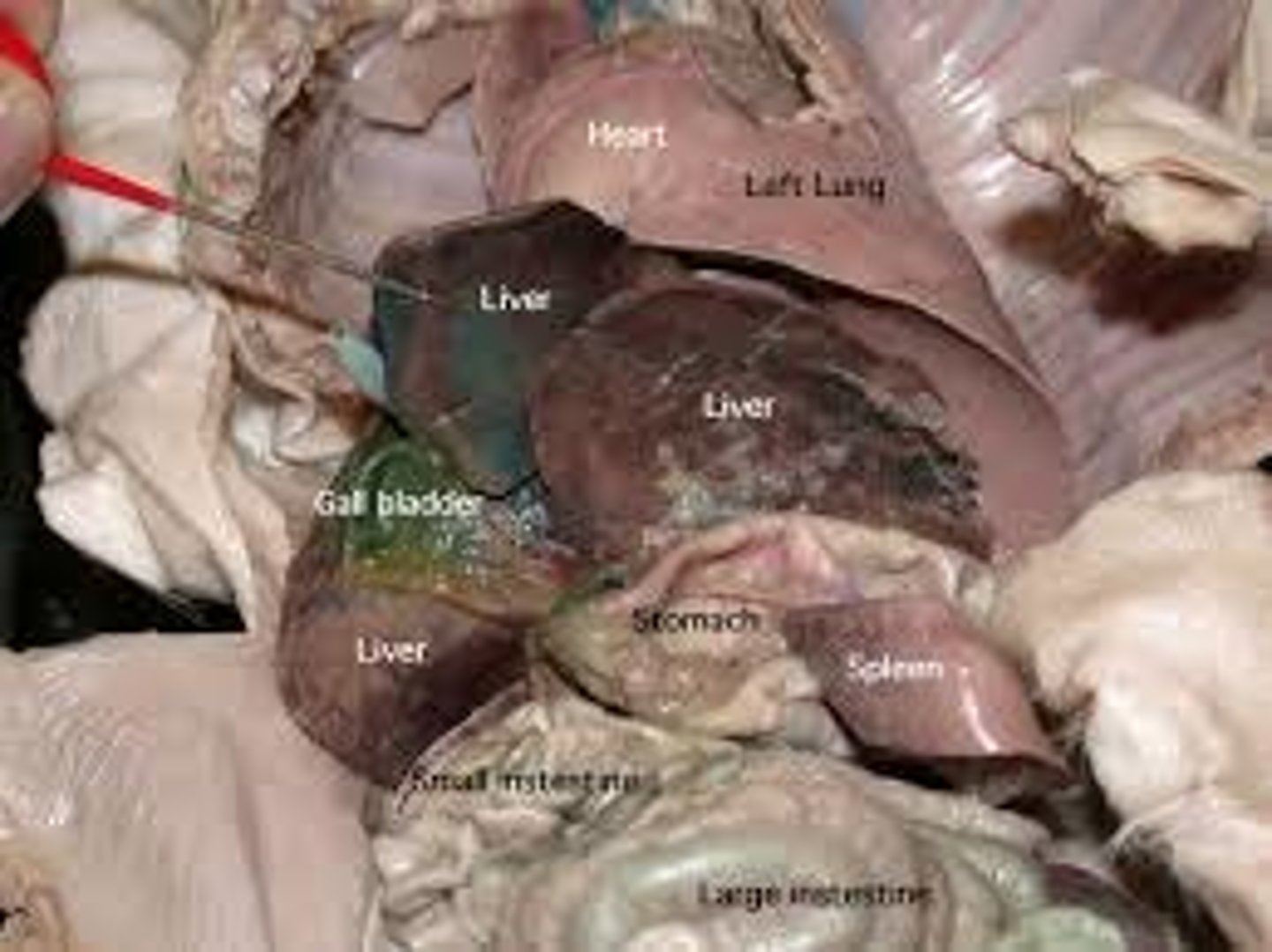
pancreas
plays an important role in digestion and in regulating blood sugar
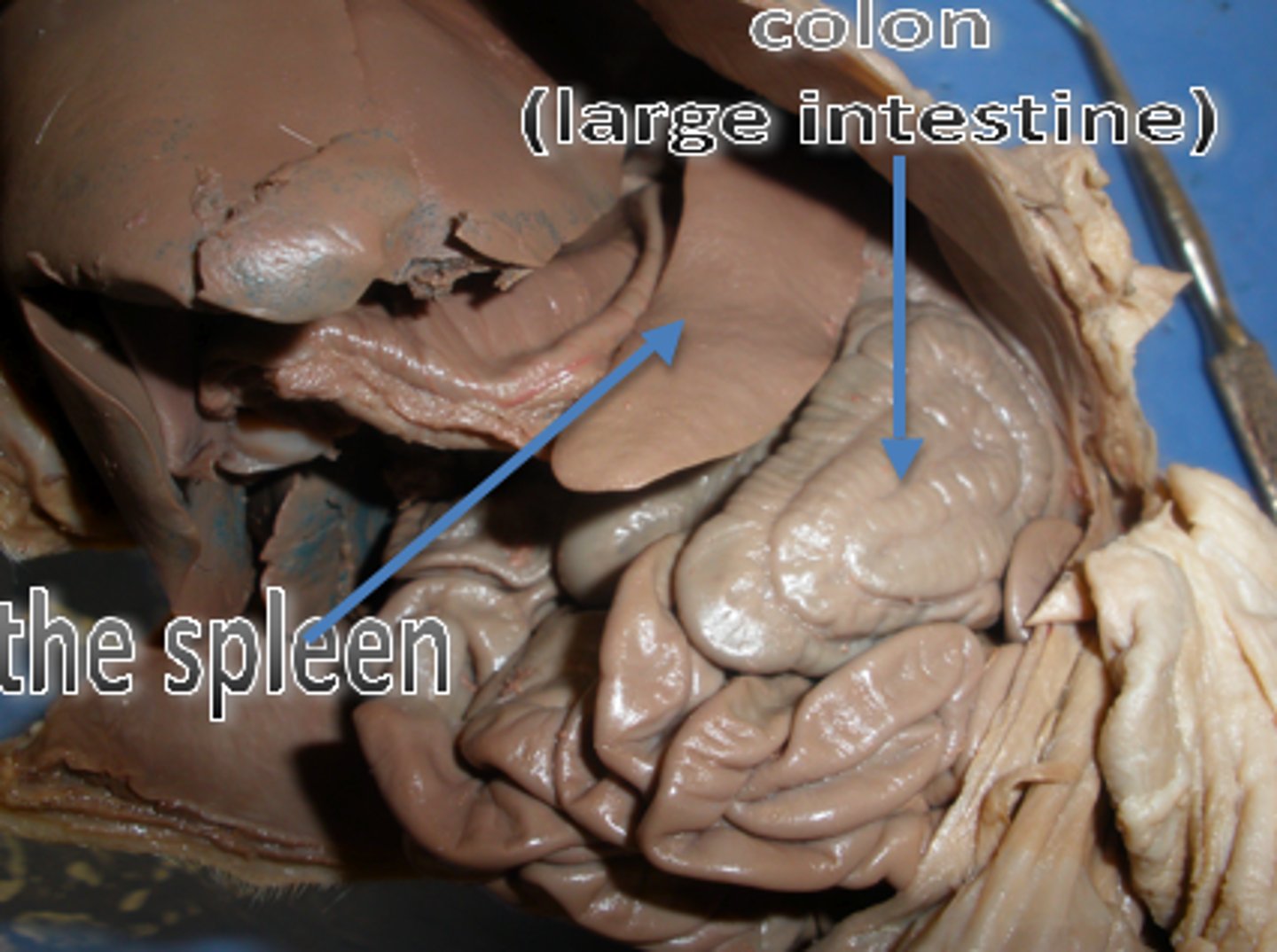
spleen
recycles red blood cells and stores white blood cells
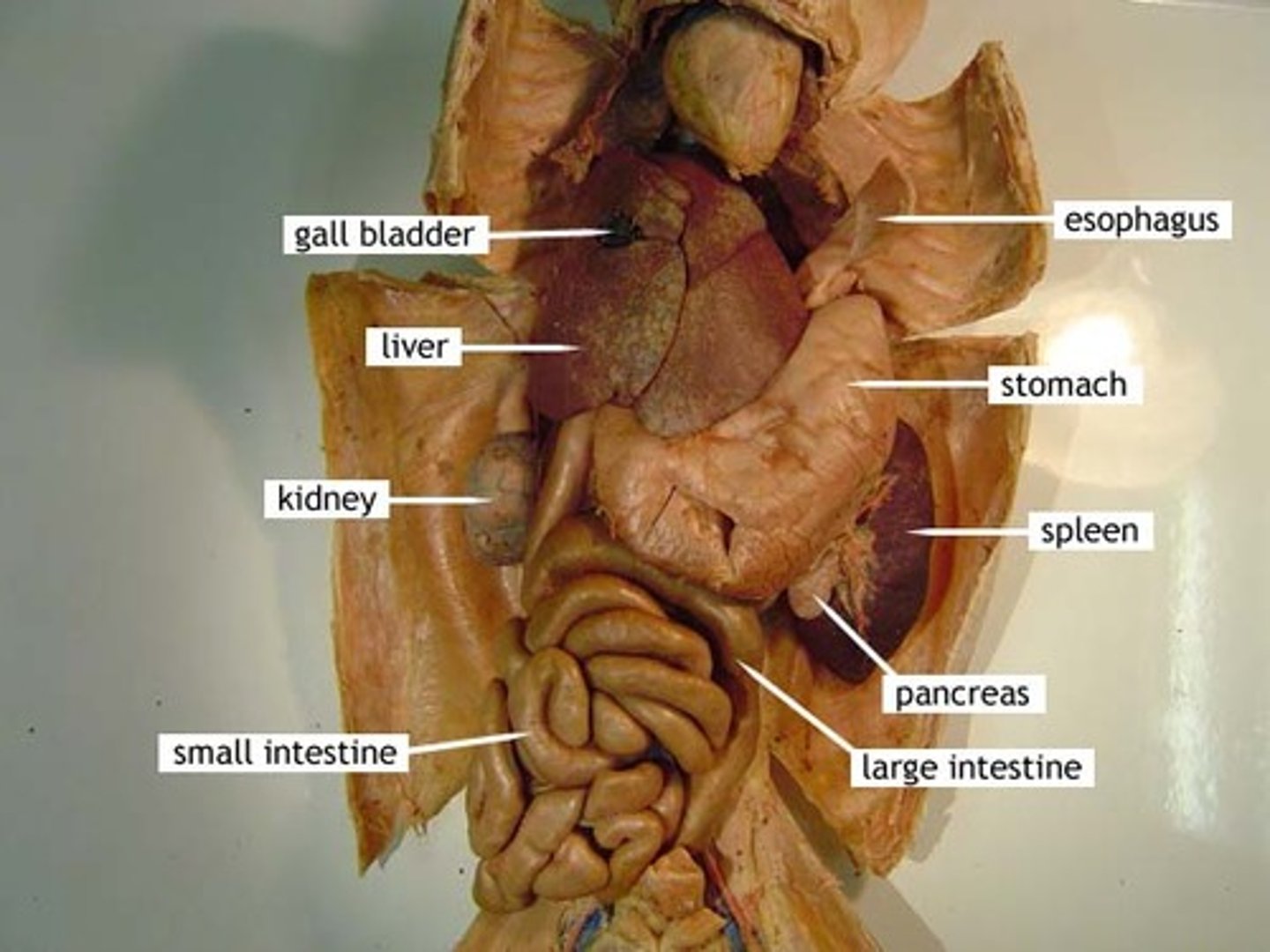
stomach
Breaks down food and mixes with digestive juices
kidney
to extract waste, form urine, and balance body fluid
TERM
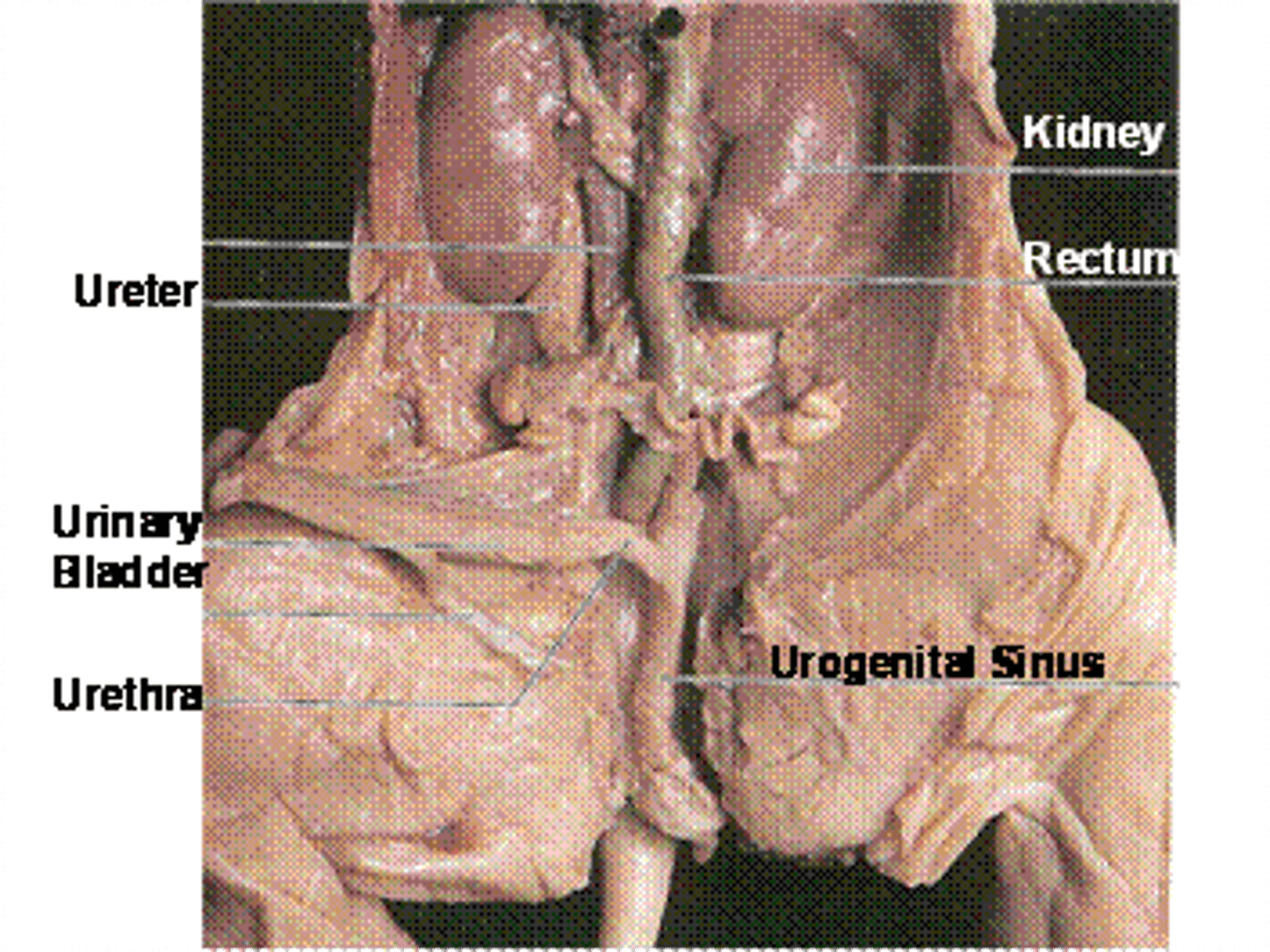
Urinary Bladder
DEFINITION
storage of urine
genital papilla
covers the opening of the vagina.
mesentery
a series of blood vessels attached to the small intestine for nutrient absorption
4 chambers
mammalian heart (2 atria and 2 ventricles)
fascia tissue
connective tissue that holds muscle to skin (looks like spider webs)
pinna
ears
ureters
tube that carries urine from the kidney to the urinary bladder
Cerebrum
largest part of the brain; responsible for thinking, remembering, and voluntary movement
Cerebellum
in the brain, coordinates movement and balance
Brainstem
breathing, HR, and temperature - lower brain activities