Digestive System (Midterm 2)
 Call Kai
 Learn
Learn Practice Test
 Spaced Repetition
 Match
Match Flashcards
 Knowt Play
1/196

Earn XP
Description and Tags
Midterm 2
Name | Mastery | Learn | Test | Matching | Spaced | Call with Kai |
|---|
No analytics yet
Send a link to your students to track their progress
197 Terms
Most organisms have similar digestive structures, but emphasize different sections depending on:
Diet
Evolutionary History
Alimentary Canal
muscular, one-way tube running from the mouth to the anus, responsible for ingesting, digesting, absorbing nutrients, and eliminating waste
The alimentary canal has ________ ______ that help supplement digestion
Accessory Glands
What are the four steps of digestion
Ingestion
Breakdown
Absorption
Elimination
what’s the first step of digestion
Ingestion
capture and intake
what is the second step of digestion
Breakdown
mechanical - teeth, stomach, and tongue
chemical - stomach, saliva, pancreas, gall bladder
Mechanical Breakdown
mechanical - teeth, stomach, and tongue
Chemical Breakdown
chemical - stomach, saliva, pancreas, gall bladder
What is the major disadvantage of porifera’s digestive system?
If your mouth is you anus, you can’t sequentially consume and digest
you eat, digest, excrete. Only then can you eat again
A complete digestive system allows
Sequential Consumption
one section eats
one section digests
one section absorbs
Herbivores trends
long AC focused on extraction of poor-quality food
Carnivore Trends
Short AC because food is easily digestible
The goal of digestion is to…
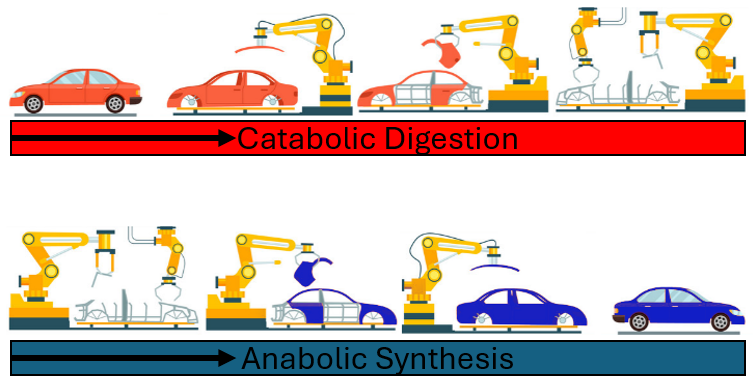
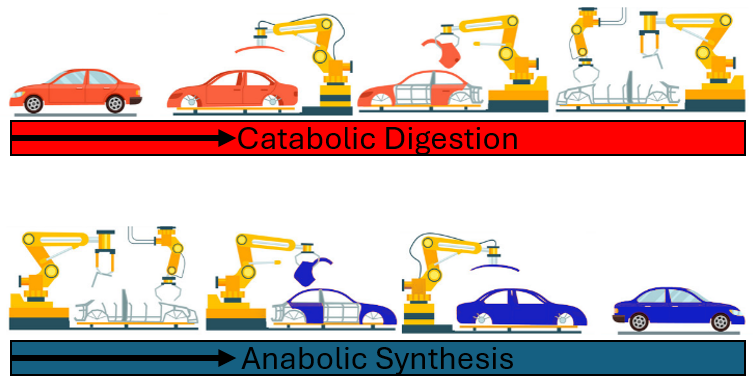
break apart large, complex, molecules for both energy and to make our own complex molecules from Catabolic digestion and anabolic synthesis
Catabolic digestion
the metabolic process of breaking down complex food molecules into smaller, simpler units to release energy and provide raw materials for cellular function
Anabolic Synthesis
the metabolic process of building complex molecules from simpler ones
Eating is the act of…
stealing the storage molecules from something else and releasing the components
Complex Carbohydrates are?
long chains of glucose
Complex Carbohydrates are broken down into?
Simple sugars (single molecules of glucose) because of enzymes
Digestive enzymes are one method of…
chemical digestion
most enzymes are very specific about the…
actions they can do
Major action by the tongue, teeth, and stomach, is an example of…
mechanical digestion
when plants first evolved the cellulose-like lignin, couldn’t be broken down , because…
there was no enzyme able to break the carbohydrate links
No break down of plants (~360mya) meant…
no decomposition and plant material built up for 40million years, which lead to carbon fuels
The four major macromolecules for life
Carbohydrates
Proteins
Lipids (fats)
Nucleic Acids
The primary law of digestion
More Surface Area = More Digestion
Smaller objects have a larger surface area to volume ratio
Similarities of Peristalsis Vs Segmentation
Both are caused by the smooth muscle that surrounds the canal, but have different purposes
Peristalsis vs Segmentation
Peristalsis moves food down the canal (unidirectional)
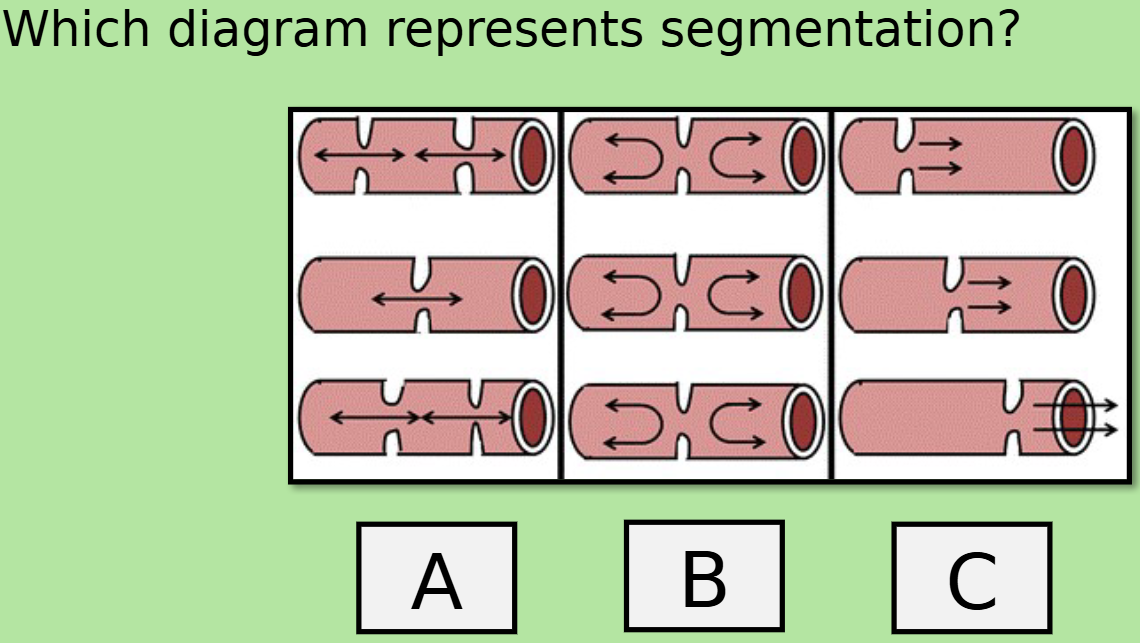
Segmentation sloshes food back-and-fourth and divides the food into smaller chunks
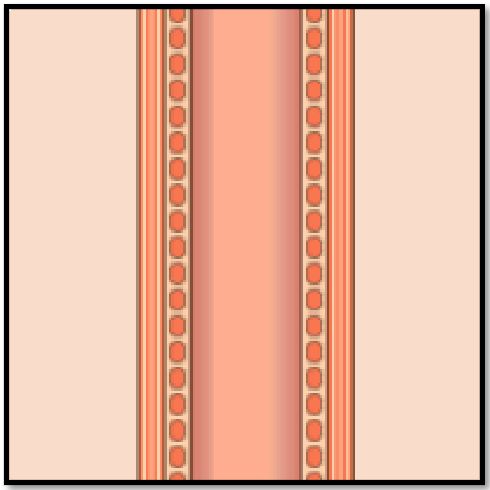
Peristalsis
Peristalsis consists of rhythmic, wavelike contractions that push food forward (unidirectional).
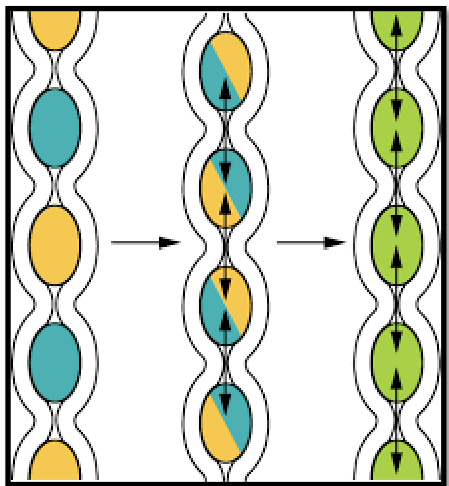
Segmentation
Segmentation uses localized, back-and-forth contractions of circular muscles, primarily in the small intestine, to mix food with digestive juices and enhance absorption.
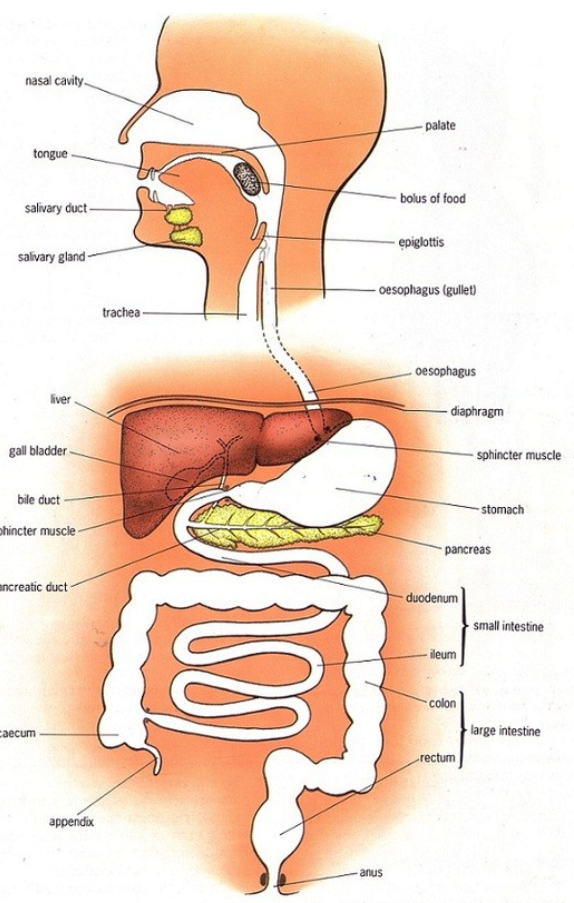
The Alimentary Canal is…
“The tube that has to do with food”
It is technically outside the body
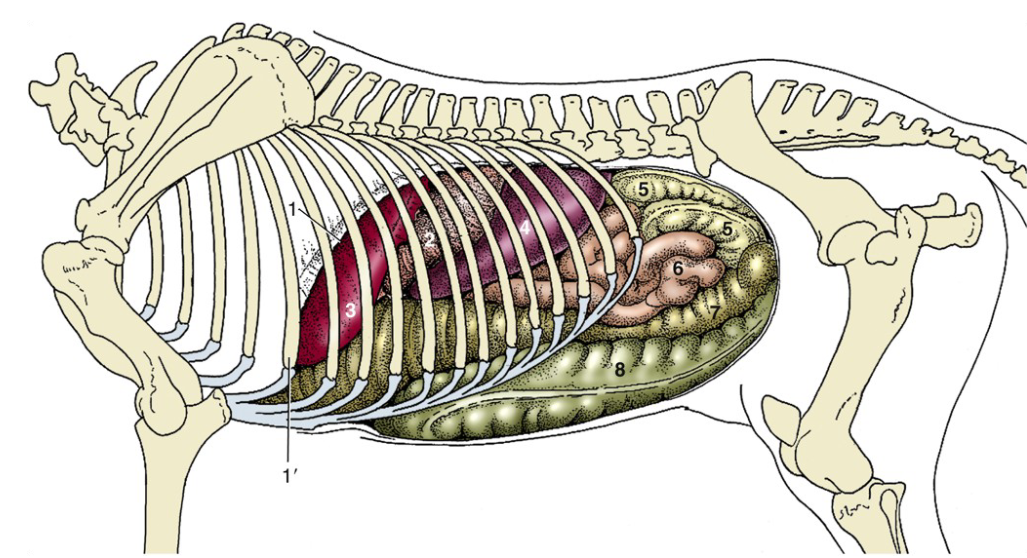
Peritoneal Cavity
Posterior to thoracic cavity (heart/lungs)
Enlarged area to horse gut
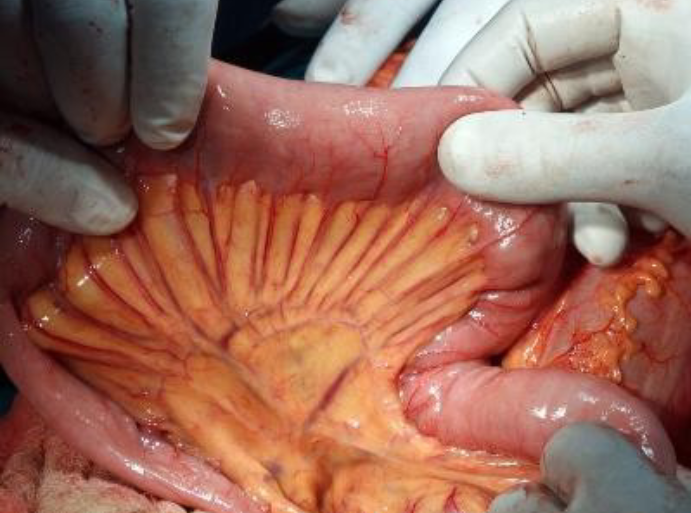
The alimentary canal is wrapped in a ….
thin sheet of endothelial cells called Peritoneum
The peritoneum is similar to what other body parts?
Pericardium (surrounding the heart)
Pleura (Surrounding the lungs)
peritoneum
the serous membrane lining the cavity of the abdomen and covering the abdominal organs.
The (peritoneum) sheet is continuous, but it split into two functional types:
Parietal
Visceral
Parietal Peritoneum
lines the outer abdominal wall
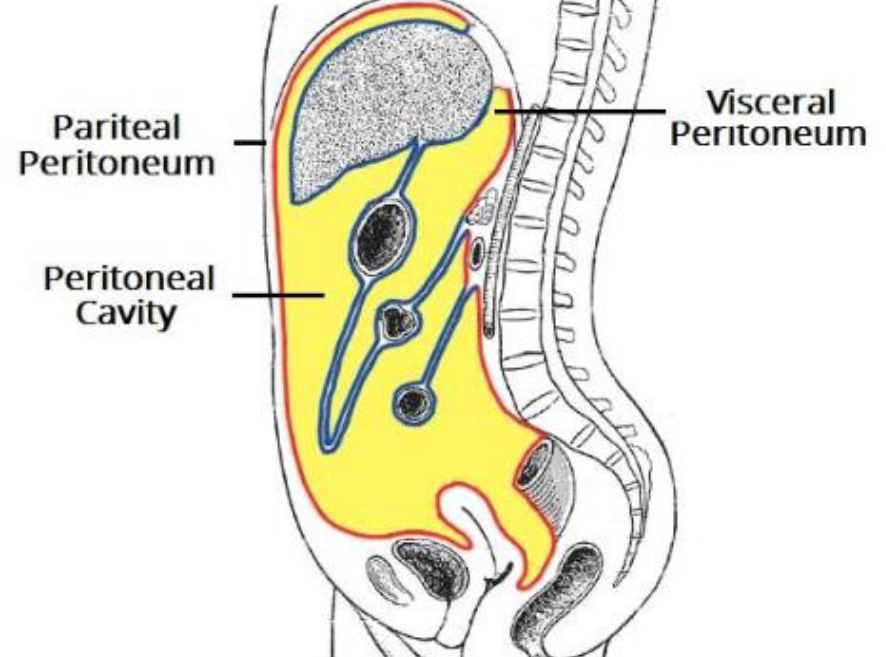
Visceral Peritoneum
lines the organs themselves
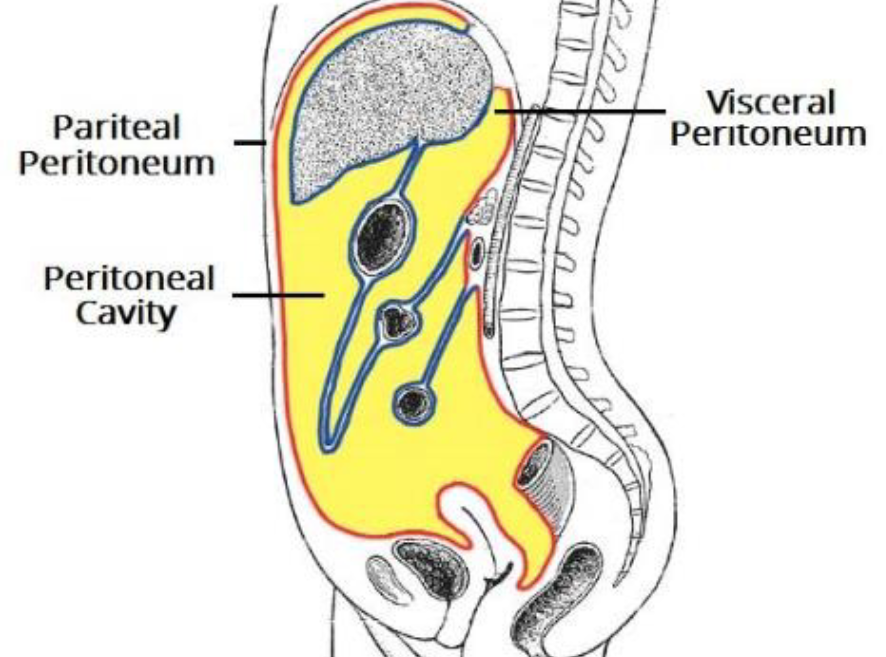
Peritoneum originates from
mesoderm that wraps around the endoderm gut
Mesentery
The peritoneum that connects organs to the abdominal wall
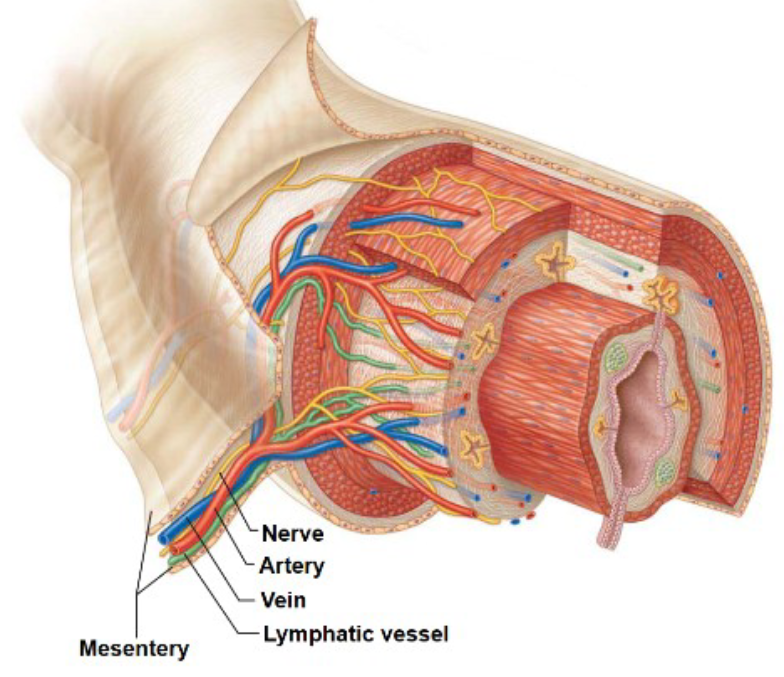
the Mesentery serves to
Hold organs mostly in place (limited sloshing)
Act as a bridge to connect sensitive blood and lymph vessels and nerves
Not all organs float freely in the abdomen, some are…
partially enveloped into the dorsal wall
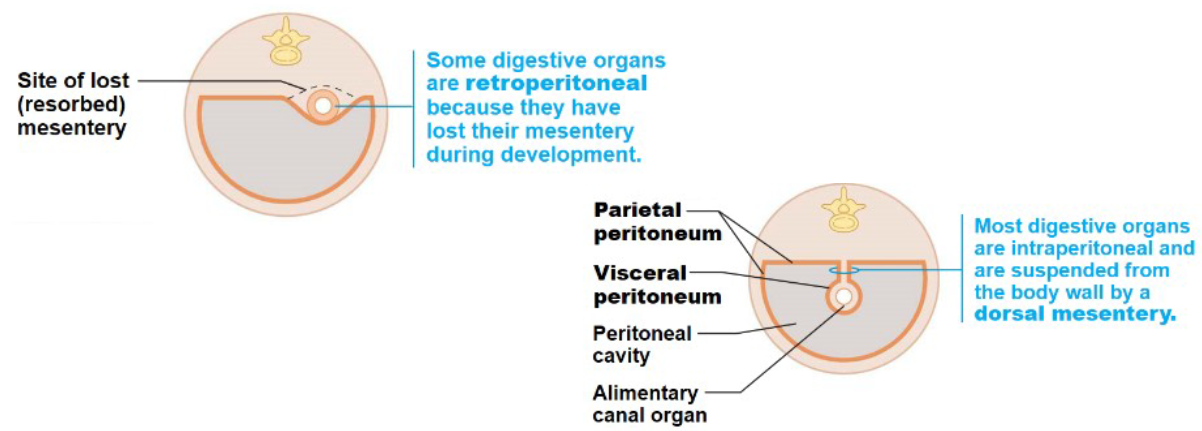
retroperitoneal organs
abdominal organs located behind the parietal peritoneum and outside the peritoneal cavity, positioned against the posterior abdominal wall
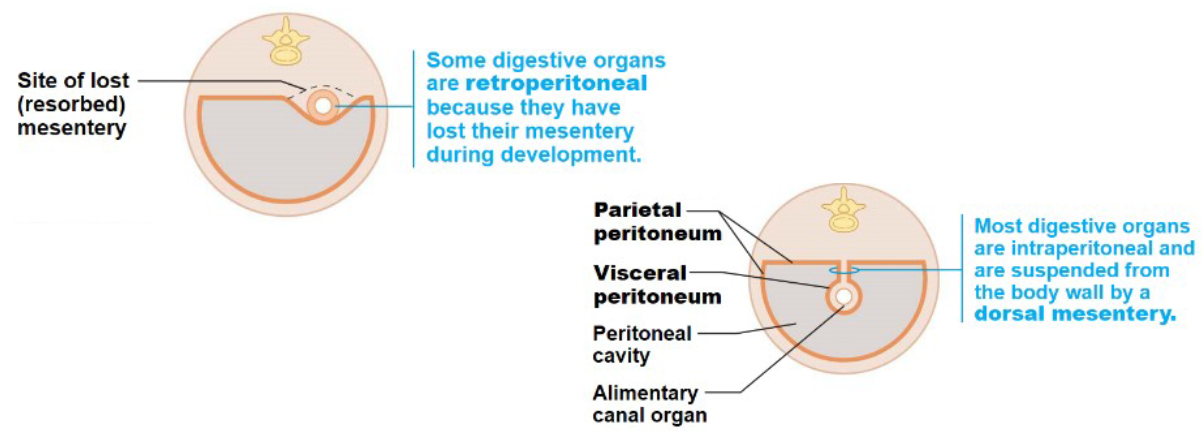
retroperitoneal organs include…
the kidneys, esophagus, rectum, and others
The alimentary canal has four main tunics surrounding the lumen:
Mucosa
Submucosa
Muscularis externa
Serosa
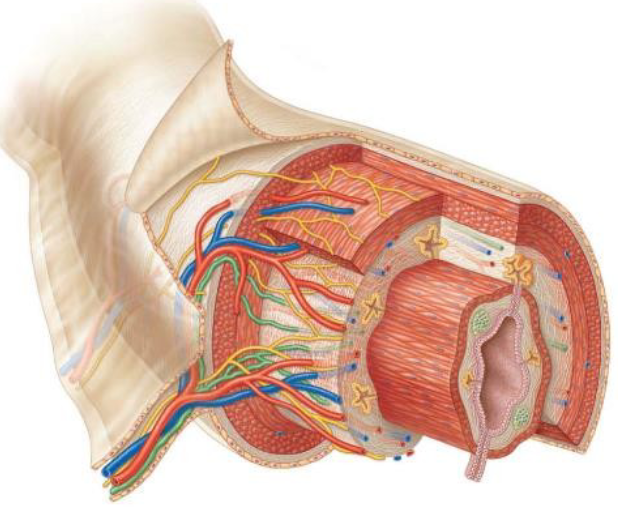
Mucosa
Directly in contact with lumen
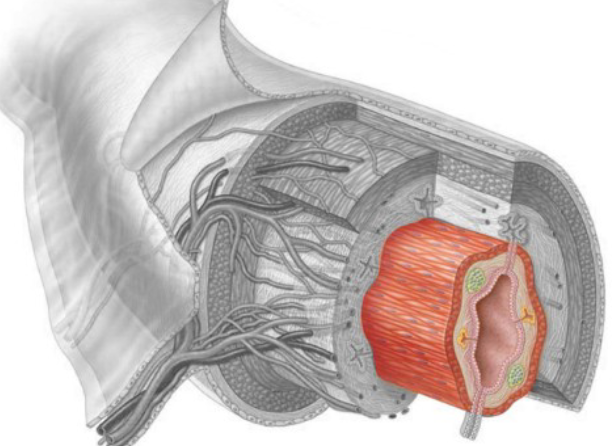
Three main functions of the Mucosa:
Protect against pathogens
Absorb broken-down digestive products
Secrete mucous / enzymes / hormones that aid in digestion
Submucosa
Connective tissue housing large blood and lymphatic vessels as well as nerves
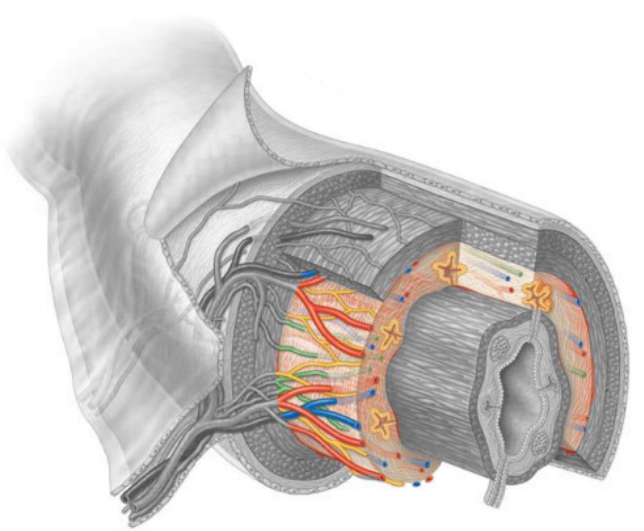
Submucosa Functions
Supportive to the mucosa
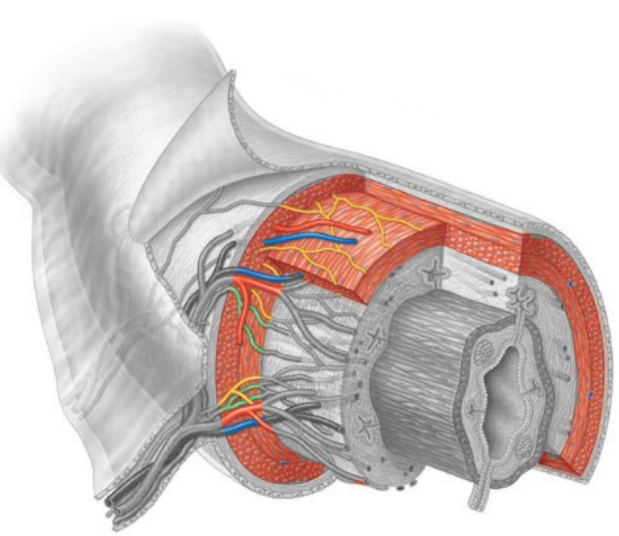
Muscularis Externa (muscularis)
Two perpendicular bands of muscle
Inner circular layer
Outer longitudinal layer
A thickened region of circular muscle is called a sphincter
Sphincters help…
halt the flow of food material down the digestive tract
Failure of the esophageal sphincter is a common cause for
Acid Reflux Disease
Serosa consists of
Consists of a thin connective layer surrounded by visceral peritoneum
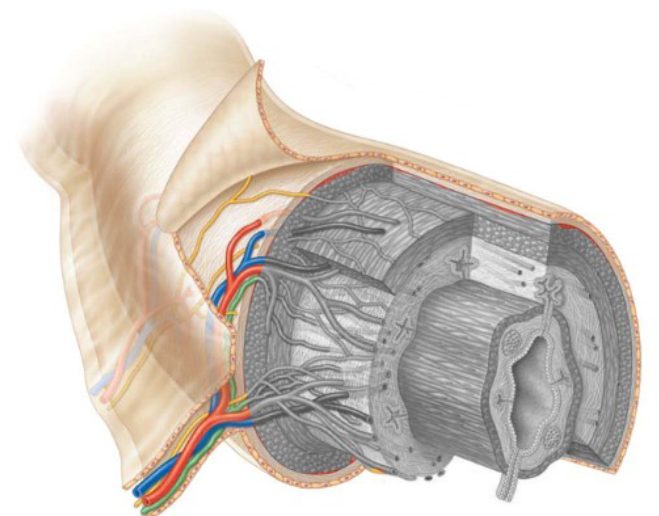
The Serosa forms
This forms the outer structure of the mesentery
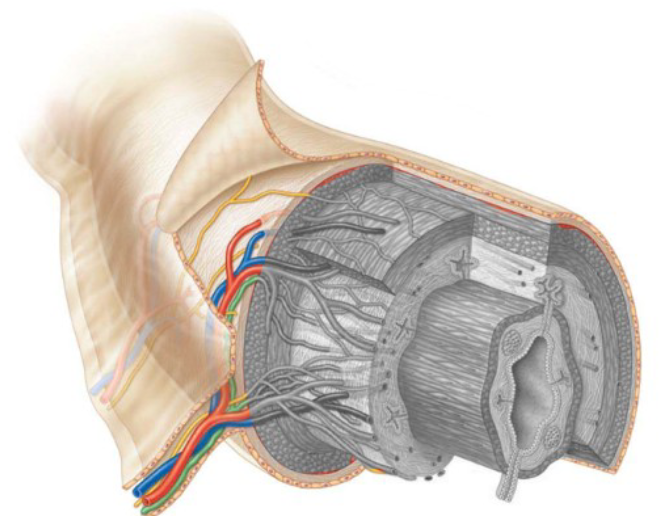
Portions of AC that are attached to the posterior wall have
adventitia instead of serosa
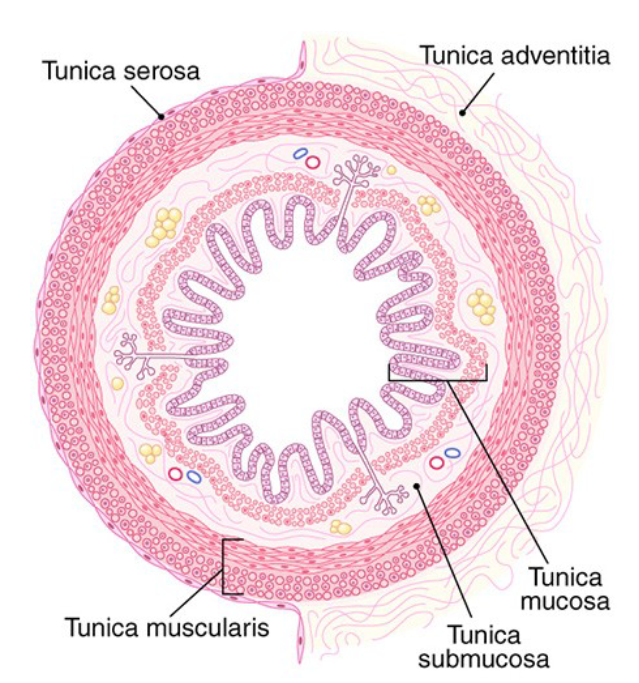
Serosa does what?
This holds the tube firmly to surrounding tissues
The esophagus is the only portion…
entirely surrounded by adventitia
A
The secretory cells, exocrine pancreatic cells, acid generating stomach cells, and the many other accessory glands need to be…
turned on and off
the enteric NS controls this
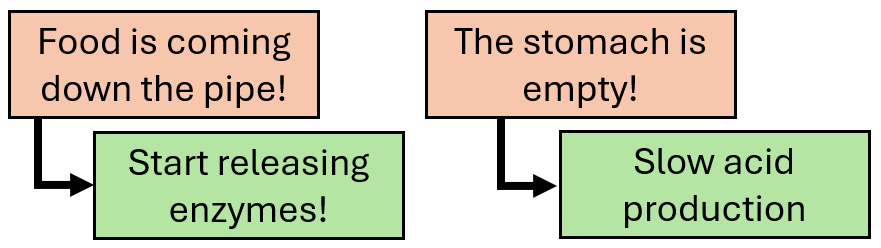
Food is coming down the pipe —>
Start releasing enzymes
The stomach is empty —>
Slow acid production
Enteric Nervous System
complex, network millions of nerves lining the gastrointestinal tract from the esophagus to the rectum
Who has more nerve cells, the spinal cord of the enteric NS?
The Enteric NS
Submucosal Nerve Plexus
controls the glands and smooth muscle of the mucosa
Myenteric Nerve Plexus
controls circular and longitudinal smooth muscles
A reflex arc is…
the response to a stimulus from sensation → integration (sometimes brain) → action
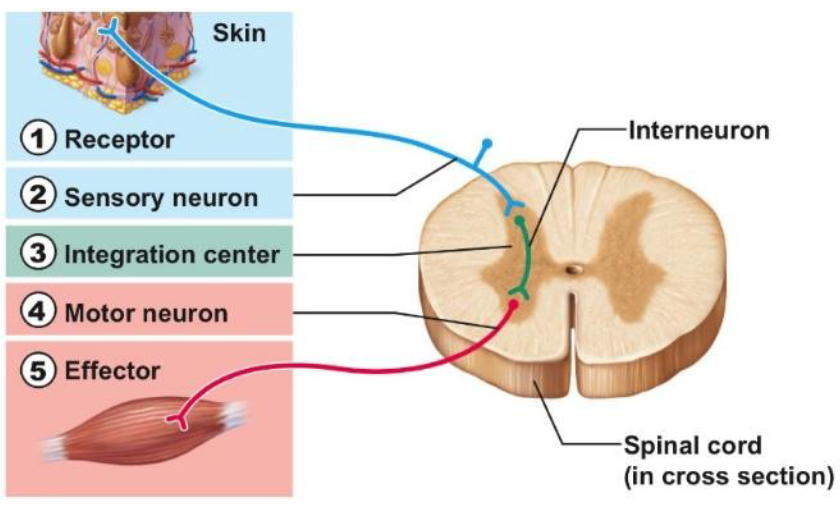
In the ‘gut brain’ there are
long and short reflexes
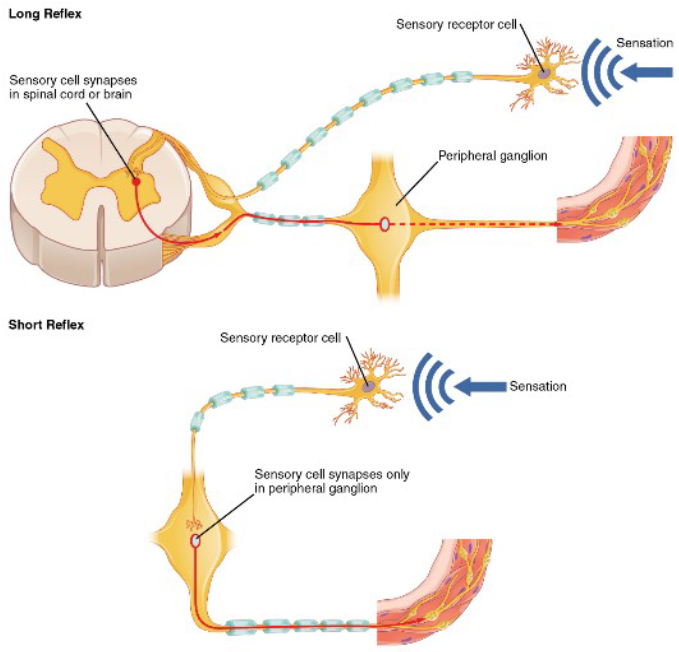
Short reflexes are handled…
entirely within the digestive system
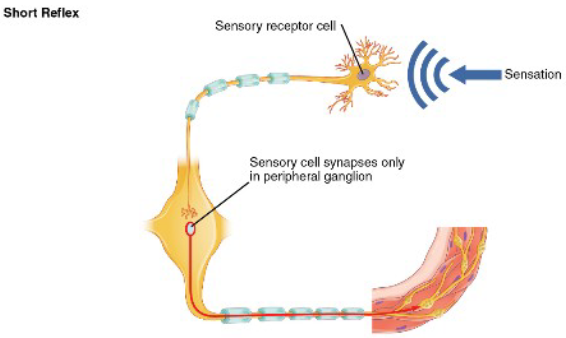
Short Reflex
When the signals and reactions are entirely controlled by the ENS
Long reflex
The ‘normal’ fxn is modified by parasympathetic (stimulates) and sympathetic (inhibits/halts) nerves
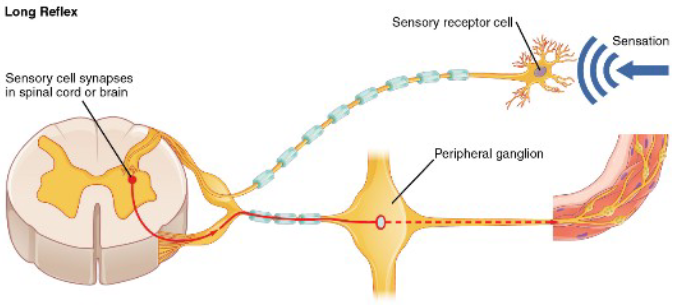
Mechano-osmo-chemo-receptors
detect the signal
Neurons
regulate activity by integrating multiple signals, PNS/SNS, endocrines
Smooth muscle and glands
initiates change
Enteric Nervous System Parts
Mechano/osmo/chemo receptors
Neurons
Smooth muscle and glands
Hirschsprung’s is an example of
myenteric plexus function loss
The microbiome
the assemblage of bacteria and fungi that reside in the
stomach and intestineis often telling of a species diet
Your microbiome is more determined by
diet than species relationships
Carnivore Guts
‘Feast and Famine’ means you might go long periods without food, then acquire large amounts
Simpler guts and expandable stomachs
Herbivore Guts
More difficult to digest food requires bacterial help
Foregut vs Hindgut is simply where are housing the fermenting bacteria
The Mouth’s majors components
lips
tongue
salivary glands
teeth
Where is the initial site of physical and chemical breakdown
The mouth
The mouth is made out of…
Highly keratinized stratified squamous skin to survive abrasion
The lips (labia) and tongue do what?
manipulate food, arranging it for mastication by the teeth
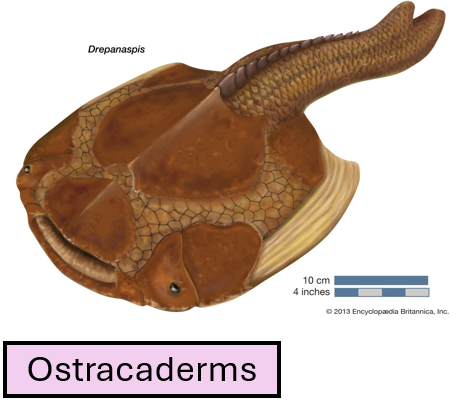
ostracoderms + placoderms had…
The dermal plates of ostracoderms + placoderms provide protection from predators
These large sheets of enamel were inflexible, limiting movement
odontodes
Large armor plates break up into many smaller enamel flakes
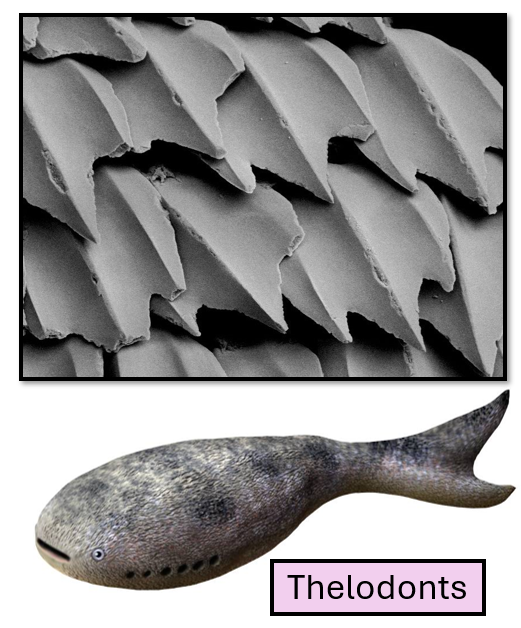
surface odontode scales teeth were exapted to
odontode teeth in the newly evolved jaws
odontode theory
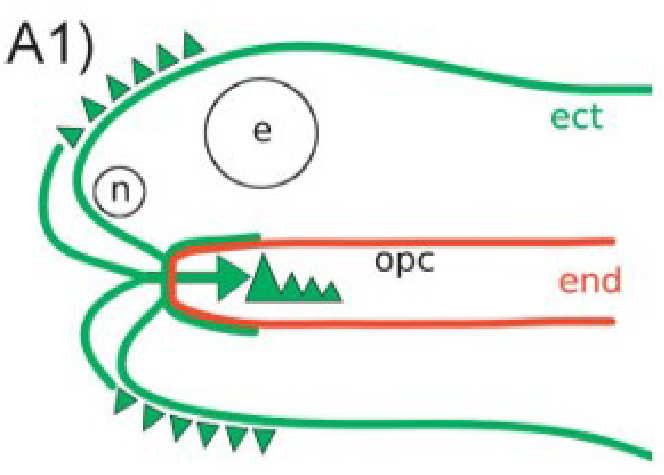
odontode theory
vertebrate teeth evolved from dermal denticles—small, armored, tooth-like skin structures found on ancient armored fish (odontodes)—which migrated into the mouth
All vert teeth share:
Enamel (or enamel-like)
outer layerDentin
Pulp
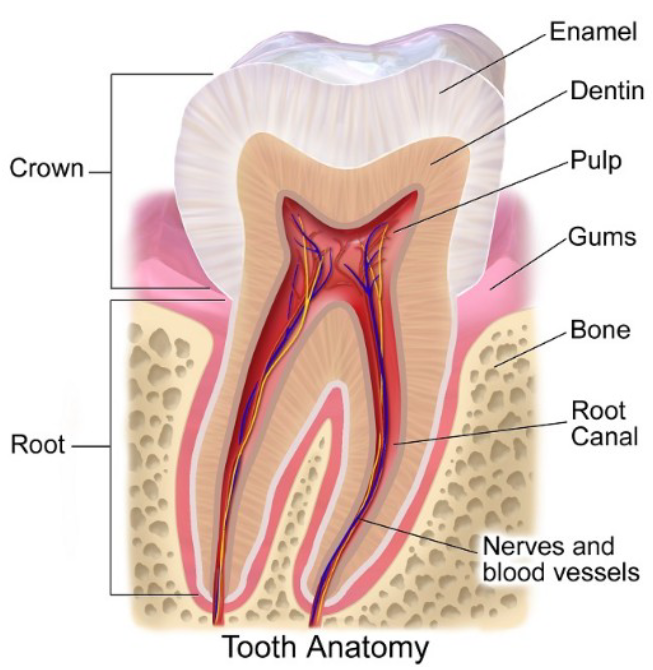
All the layers of the teeth are derived from
neural crest cell mesoderm + oral region ectoderm
The tooth is mostly
Dentin
dentin
a firm but slightly pliable protein-rich calcium matrix
Enamel
is extremely hard but brittle and surrounds the crown portion of dentin
Dental Formula
expressed as I:C:P:M (Incisors, Canines, Premolars, Molars)
times this by two to get the top and bottom
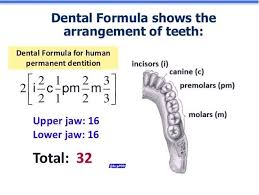
diastema
a space separating teeth of different functions, especially that between the biting teeth (incisors and canines) and grinding teeth (premolars and molars) in rodents and ungulates.
why might there be diastema before the premolars
Probably to be able to chew fibrous food, as it’s much more common in herbivores
The Earliest Dental Formula
0000
Pangolins, Anteaters, and some baleen whales have the easiest dental formula
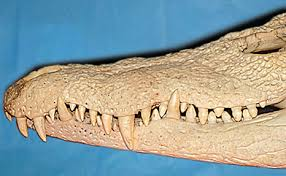
Haplodont
Haplodont teeth are the simplest form of tooth, characterized by a single, conical crown lacking ridges, cusps, or tubercles.
Found commonly in reptiles, amphibians, and some marine mammals, these teeth are designed for prehension (grasping) or combat rather than chewing
Triconodont
Triconodont teeth are characteristic molars of early, largely carnivorous Mesozoic mammals featuring three, usually cone-shaped, cusps arranged in a linear or slightly curved row (a-b-c).
They are known for providing a, self-sharpening, shear-based cutting mechanism
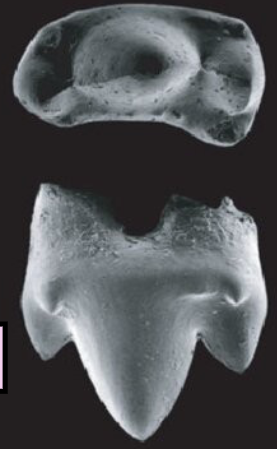
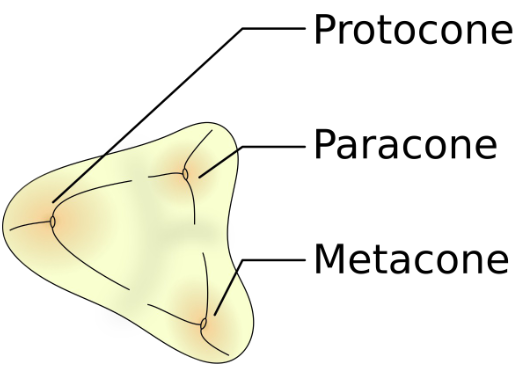
Tribosphenic
Tribosphenic refers to a specialized, three-cusped mammalian molar tooth design that combines shearing and grinding, essential for the evolutionary success of marsupials and placentals
The interactive effect of tribosphenic molars acts as a
motar-and-pestle to efficiently grind food particles
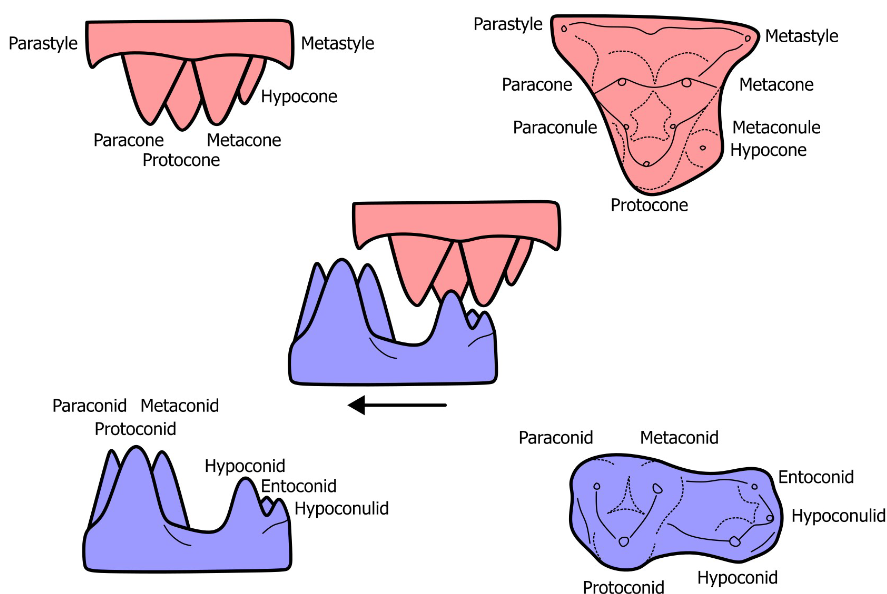
“The most important mammalian innovation”
The interactive effect of tribosphenic molars