Physics final
 Call Kai
 Learn
Learn Practice Test
 Spaced Repetition
 Match
Match Flashcards
 Knowt Play
1/59

Earn XP
Description and Tags
Issac Newton if you can hear me ...
Name | Mastery | Learn | Test | Matching | Spaced | Call with Kai |
|---|
No analytics yet
Send a link to your students to track their progress
60 Terms
free fall forces
net force = gravity only, assumed to act at center of mass of the object
if object is spinning about its center of mass in free fall, net torque is zero
to have zero net torque while spinning about center of mass
no forces acting on it (deep space) or
all external forces act directly through the center of mass
angular momentum of a figure skater
internal forces (any change skater makes to body movements) can’t change total angular momentum of the system
L = I * w → components will change
net torque
If you see an object with a constant shape that is speeding up its spin (positive acceleration), there must be a net torque
If total angular momentum (L = Iw) doesn’t change over time (no external forces), net torque must be zero
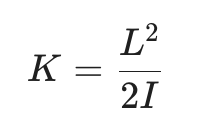
kinetic energy in relation to angular momentum and inertia
normal force on a roller coaster loop
normal force doesn’t do work on a roller coaster loop
instantaneous displacement is perpendicular to normal force = no work
net force if friction force = applied force
net force = 0, so momentum is constant but not necessarily 0
finding net force at a time given velocity and mass functions
multiply functions (foil!), take derivative, plug in time
choosing reference point for computing torque
point where most unknown forces can be named zero
(radius = 0 therefore torque = 0 at that point)
final vs initial angular velocity or rotational inertia (when momentum conserved)
Ii wi = If * wf
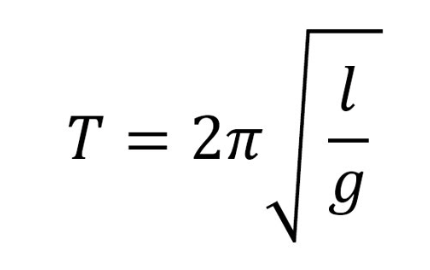
simple pendulum equation
ball collision at an angle rules
if initial y momentum is 0, the final y momentum must also be zero
if one ball is at an angle above x axis, other must be at an angle below (one pos sin one neg sin)
ball collision workflow
draw a picture (with directions and angles → one pos y one neg y)
make equations for x and y components including unknowns (equal masses cancel) m1v1i + m2v2i = m1v1f + m2v2f
solve for unknown angle or velocity based on initial y velocity being 0
plug unknown into equation to solve
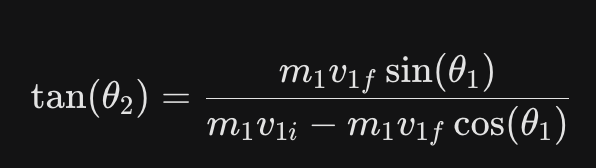
tangent shortcut
tan theta of target object = everything from Y equation/ everything from X equation
use kinematic equations
only when acceleration is constant
when inertia is not constant
need to take derivative of momentum
net torque is derivative of
angular momentum
find net torque from angular acceleration and rotational inertia
angular acceleration α → derivative → angular velocity w → I * w = angular momentum → derivative → net torque
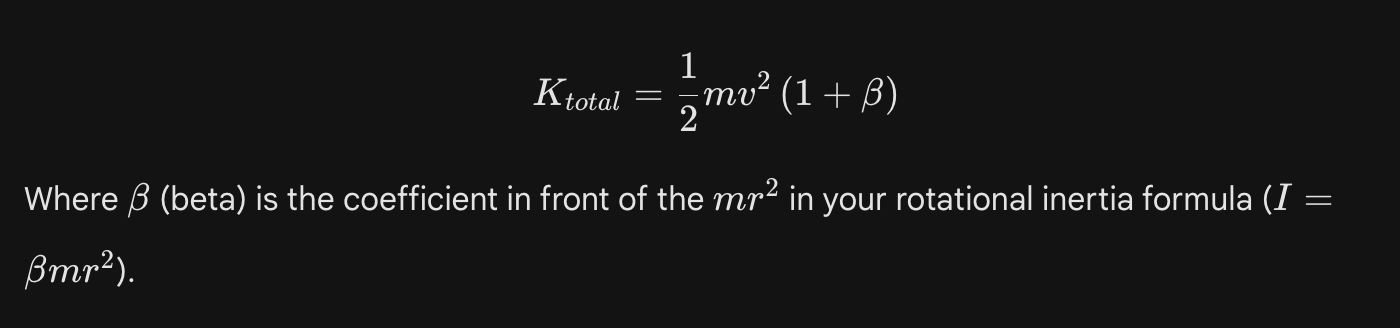
energy formula for rolling without slipping sphere
rolling acceleration formula
independent of mass and radius
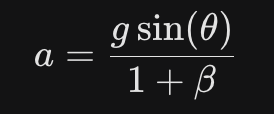
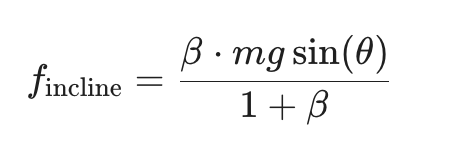
friction on an incline, rolling without slipping
friction at the top of a loop (critical velocity)
no normal force, so
no friction
velocity at top of loop (critical speed)
R = radius of loop
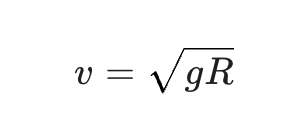
height of loop

kinetic energy as a constant
a positive constant for an object falling straight down when its drag euqls its weight, with no other forces acting
work done by friction
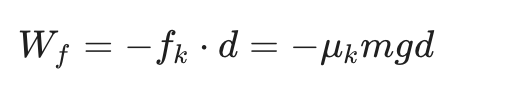
minimum speed on a banked curve with friction
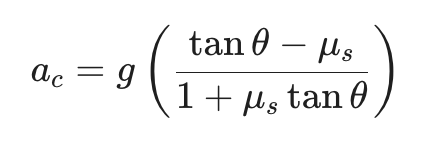
ratio of net centripetal force to weight
F = mac, weight = mg
→ ratio = ac/g
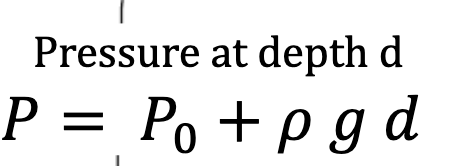
pressure
force/area
fluid statics: pressure and depth
perfect (ideal) fluid
incompressible (constant density)
non-viscous (frictionless)
laminar (constant velocity at each point in the fluid)
fluid constants

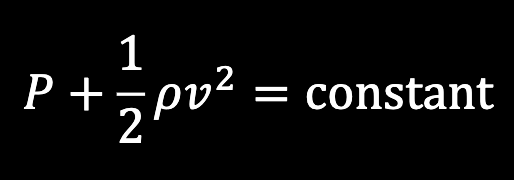
lift
matter vs energy waves
waves that require a medium (solid, liquid, or gas) = matter
waves that don’t require a medium = energy (electromagnetic, gravitational waves)
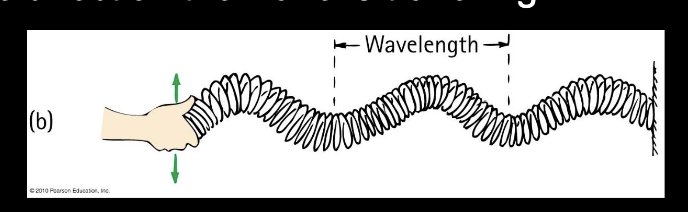
transverse waves
medium vibrates perpendicular to the direction the wave is traveling
ex. guitar string vibrations, earthquake s-waves
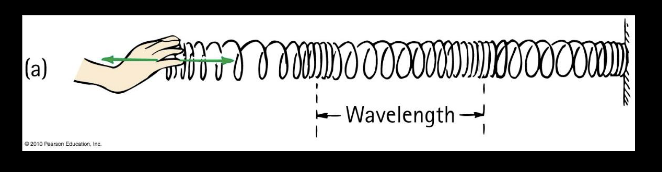
logitudinal wave
medium vibrates along the same direction the wave is traveling
ex. sound waves in air, p-waves
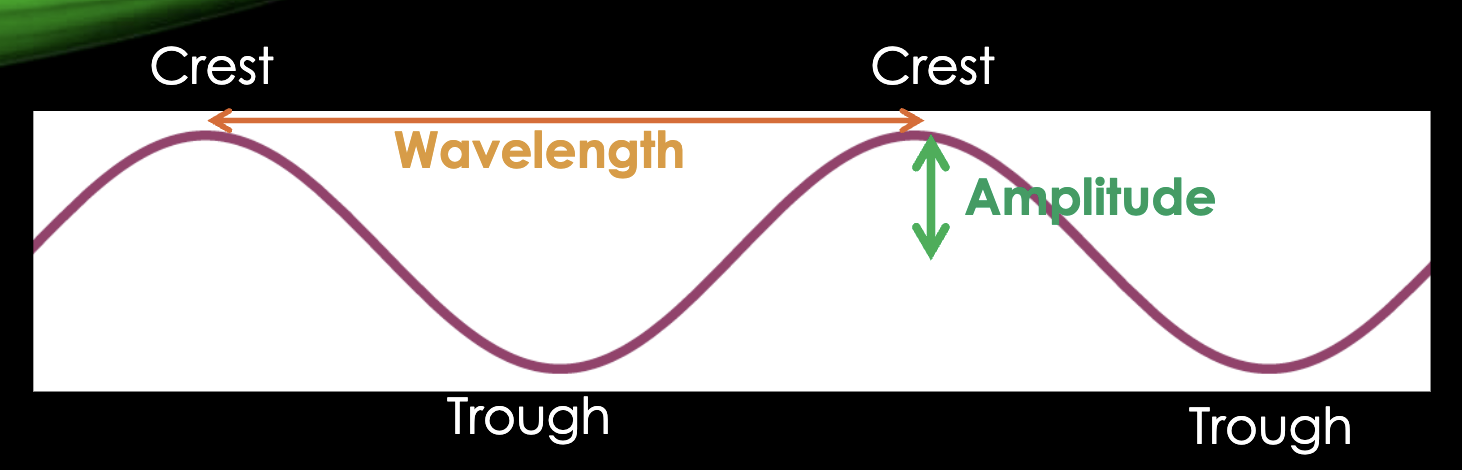
wave anatomy
frequency
1/period
wave speed
wavelength/period
wavelength * frequency
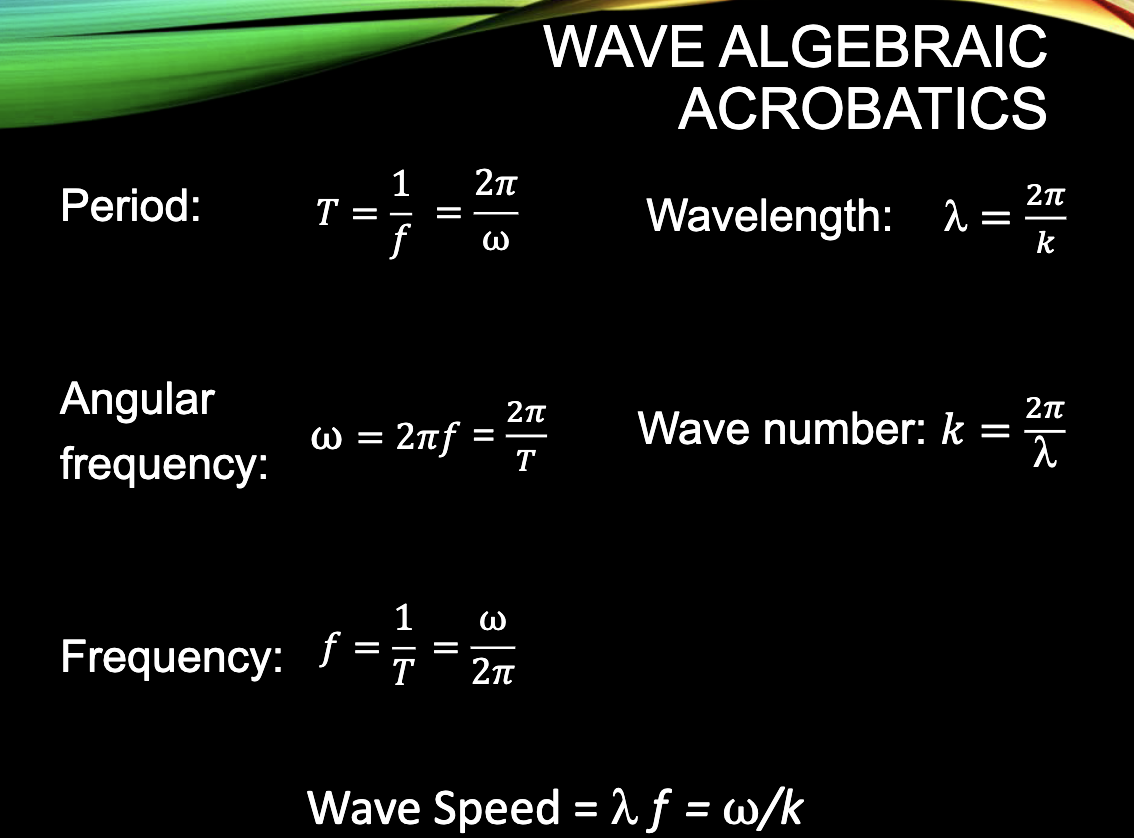
wave equations
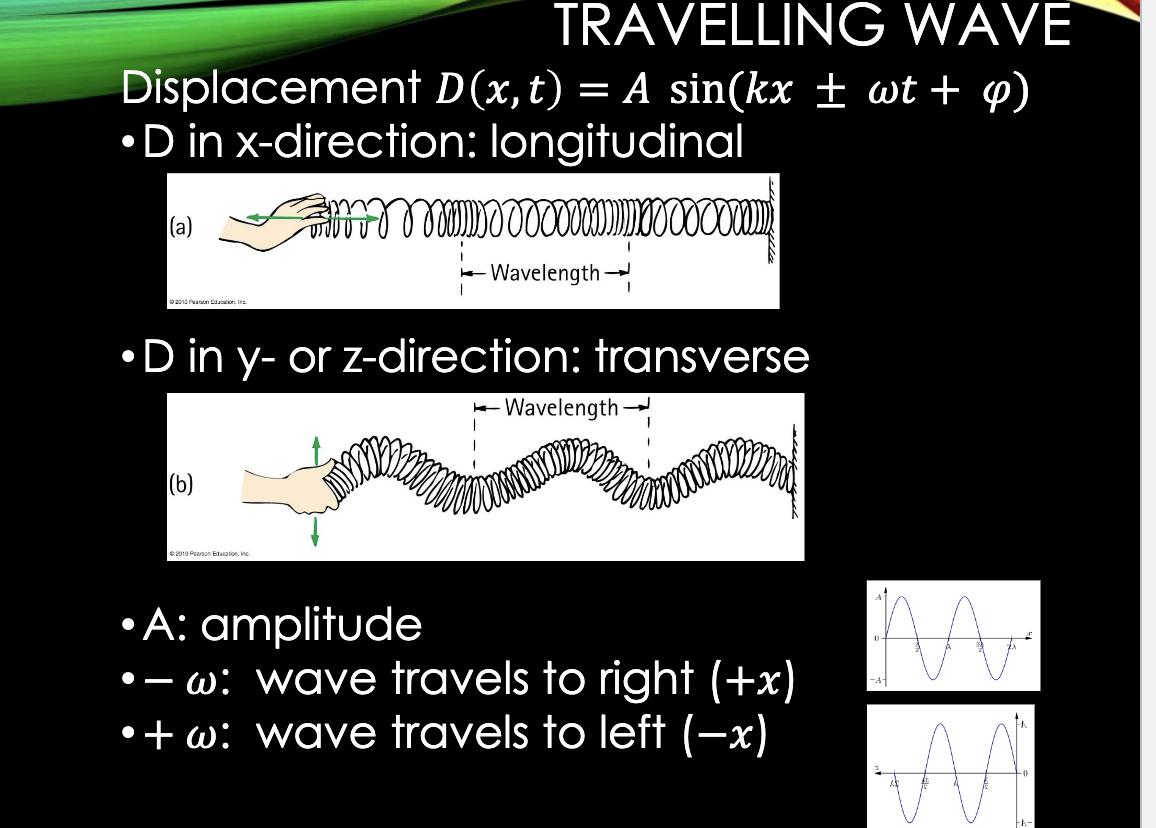
traveling wave
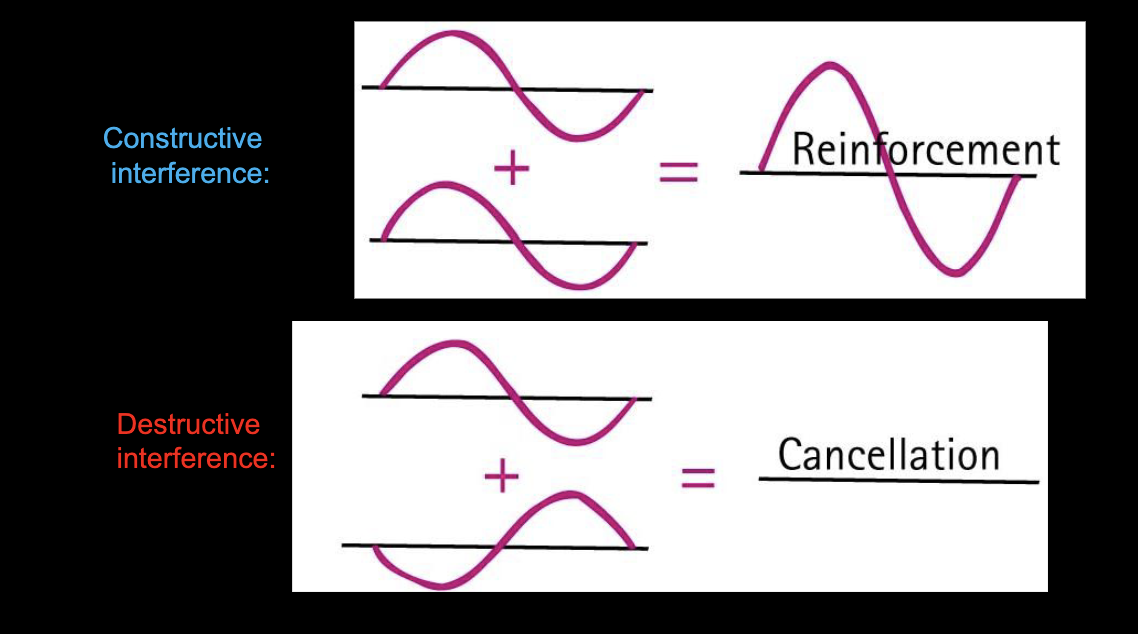
constructive and destructive interference
standing wave anatomy
nodes = locations where the string is held still
antinodes = locations of crests and troughs
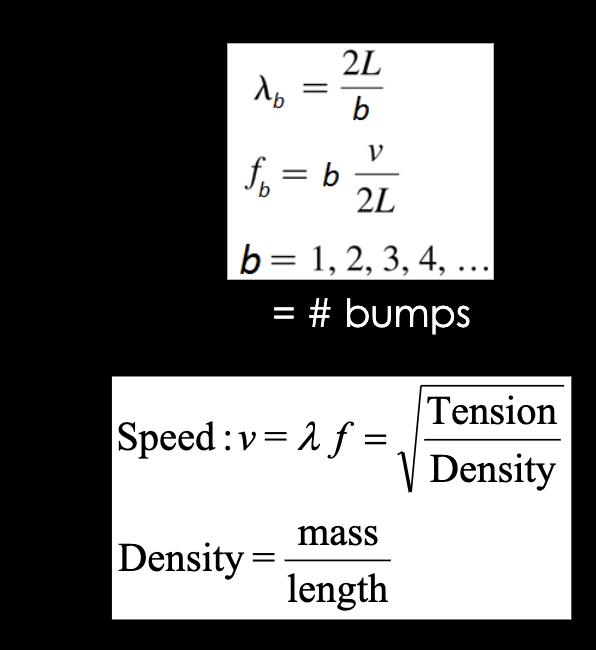
1 wavelength = 2 ‘bumps’
closed ends are displacement nodes
open ends are displacement antinodes
standing wave harmonics
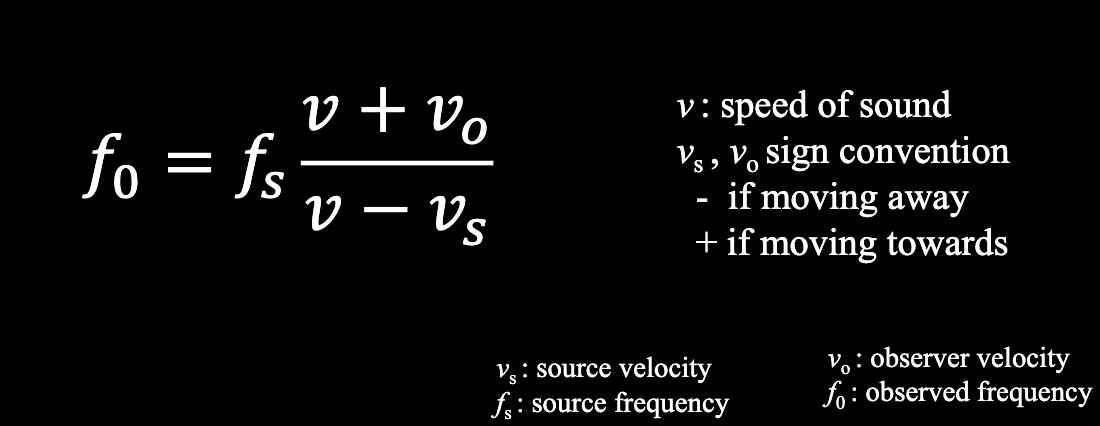
doppler effect for sound waves
harmonic number
Open-Open Pipe: Harmonics are 1, 2, 3, 4...(All integers).
Open-Closed Pipe (Bottle): Harmonics are 1, 3, 5, 7… (Odd only).
Count the "humps" or loops. If it ends on an open end, you’ll have a ".5" at the end, and you just double it to get the odd harmonic number.
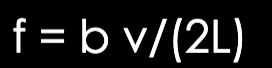
frequency, velocity, length, bump number
4 fundamental forces
gravity, electromagnetic, weak nuclear, strong nuclear
Heat (Q)

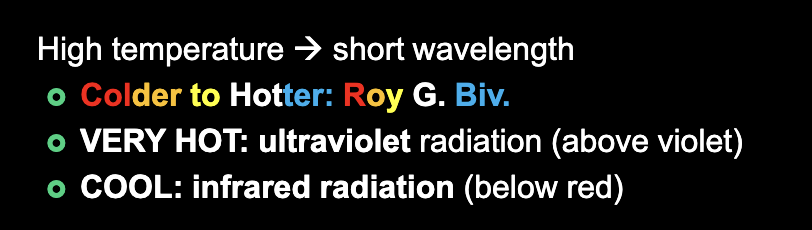
thermal radiation
hotter objects emit light more intensely at shorter wavelengths
total intensity equation
T env = environment temperature in K (= 0 for stars)
e = emissivity of object (0 to1)

internal energy
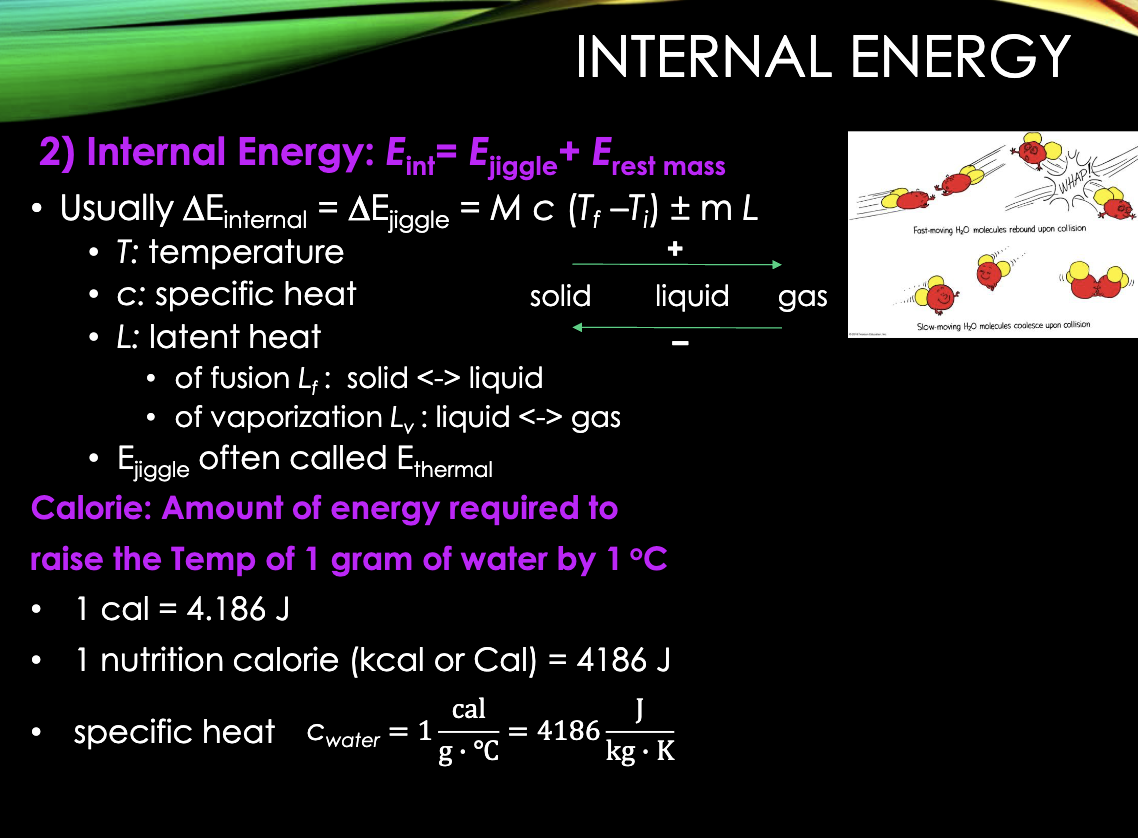
mechanical equivalent of heat
both heat and work can change internal energy
heat can result in a change in kinetic energy
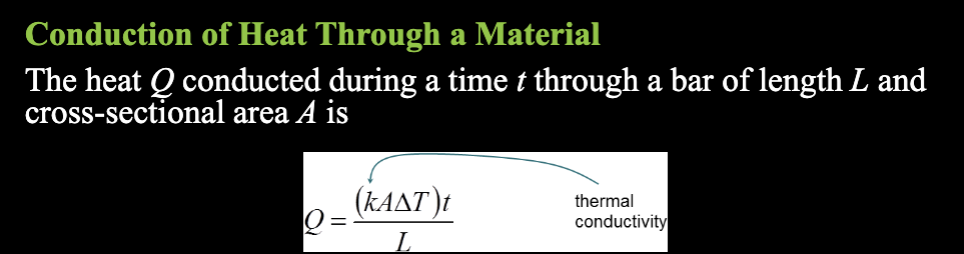
heat conduction
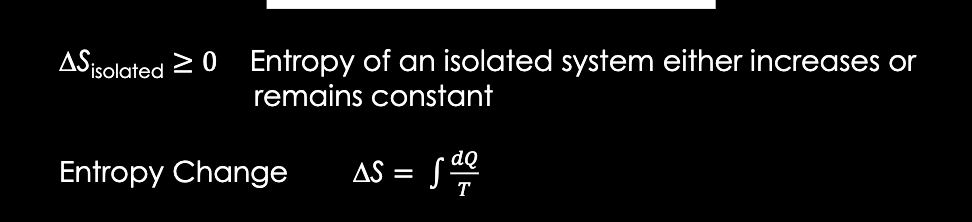
entropy
an isolated system will always evolve to a state of higher entropy until equilibrium is achieved
(increasing randomness = increasing entropy)
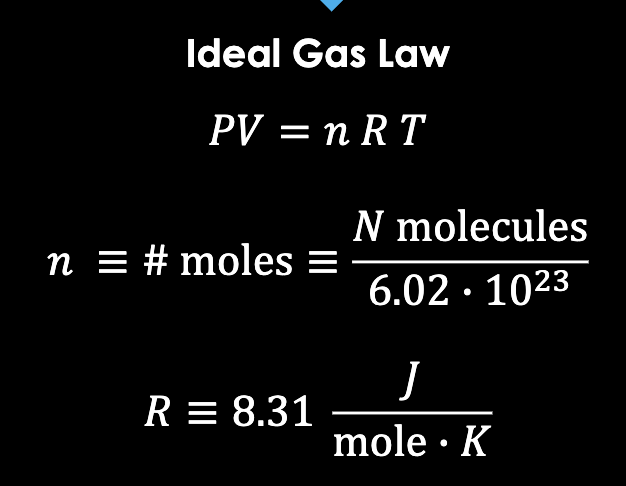
ideal gas law
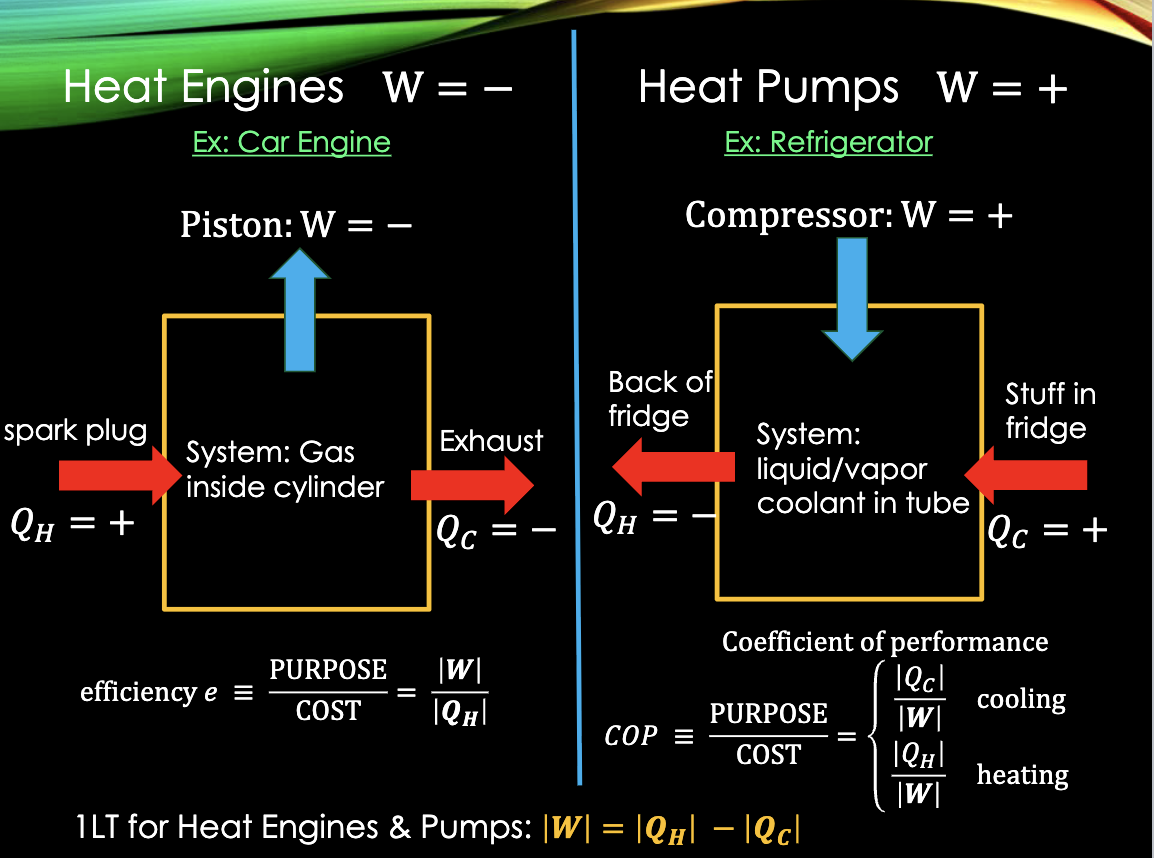
heat engines
COP of cooling can be bigger than 1
COP heating is 1 more than COP cooling
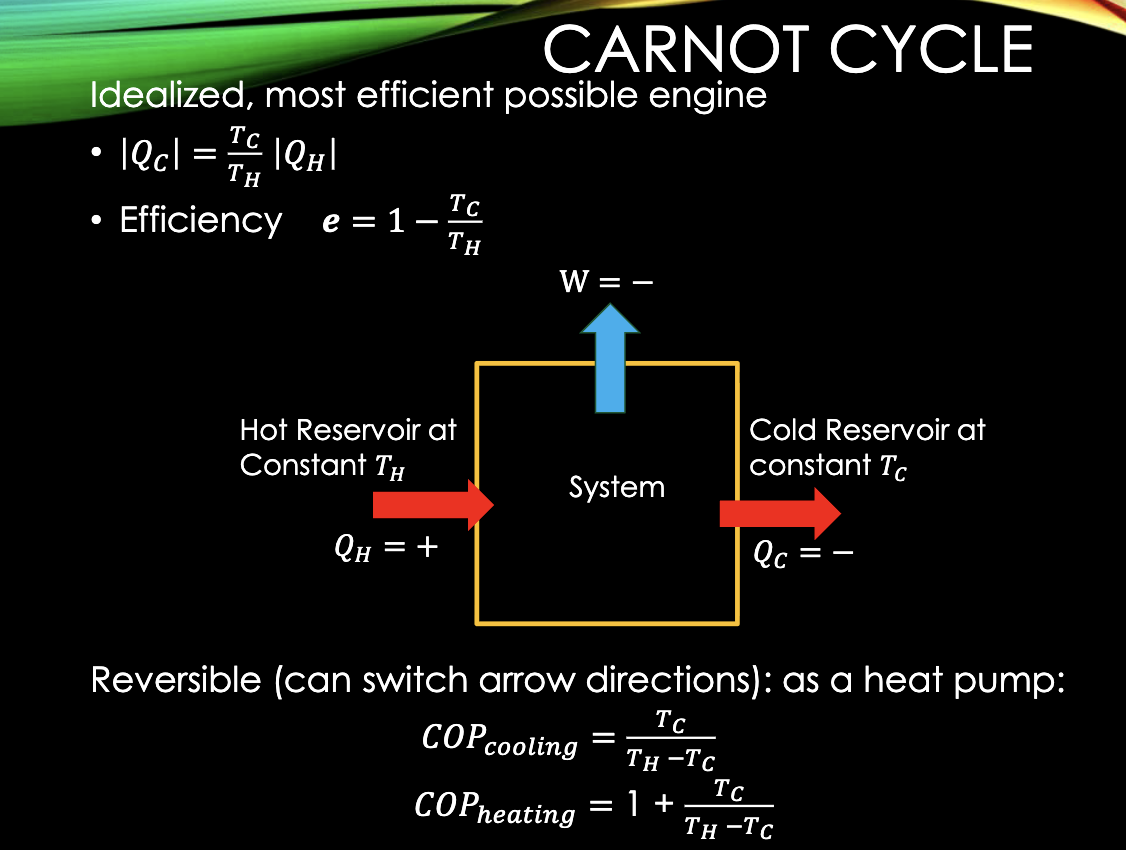
efficiency can never be more than 1
carnot cycle
sum of work on a particle
change in kinetic energy