Comprehensive Marine Fisheries and Ocean Conservation Key Concepts
 Call Kai
 Learn
Learn Practice Test
 Spaced Repetition
 Match
Match Flashcards
 Knowt Play
1/40

There's no tags or description
Looks like no tags are added yet.
Name | Mastery | Learn | Test | Matching | Spaced | Call with Kai |
|---|
No analytics yet
Send a link to your students to track their progress
41 Terms
What is a fishery?
An entity engaged in raising or harvesting fish.
What are the key components that define a fishery?
People involved, species or type of fish, area of water or seabed, method of fishing, class of boats, and purpose of activities.
What is fisheries science?
A multidisciplinary science that involves managing and understanding fisheries, incorporating oceanography, biology, ecology, conservation, statistics, economics, public policy, engineering, and law.
What is the Exclusive Economic Zone (EEZ)?
National waters extending 200 miles from shore where a country has special rights to explore and use marine resources.
What is a fishery stock?
Semi-discrete groups of fish with definable attributes of interest to fishery managers.
How are fishery stocks identified?
By geography, migratory timing, unique adaptations, population genetic structure, and physical marking/tagging.
What is the significance of life-history knowledge in fisheries management?
It helps in understanding age classes, growth rates, and recruitment patterns which are critical for sustainable management.
What does stock-recruitment refer to?
The expected relationship between the size of the stock and recruitment in the following year.
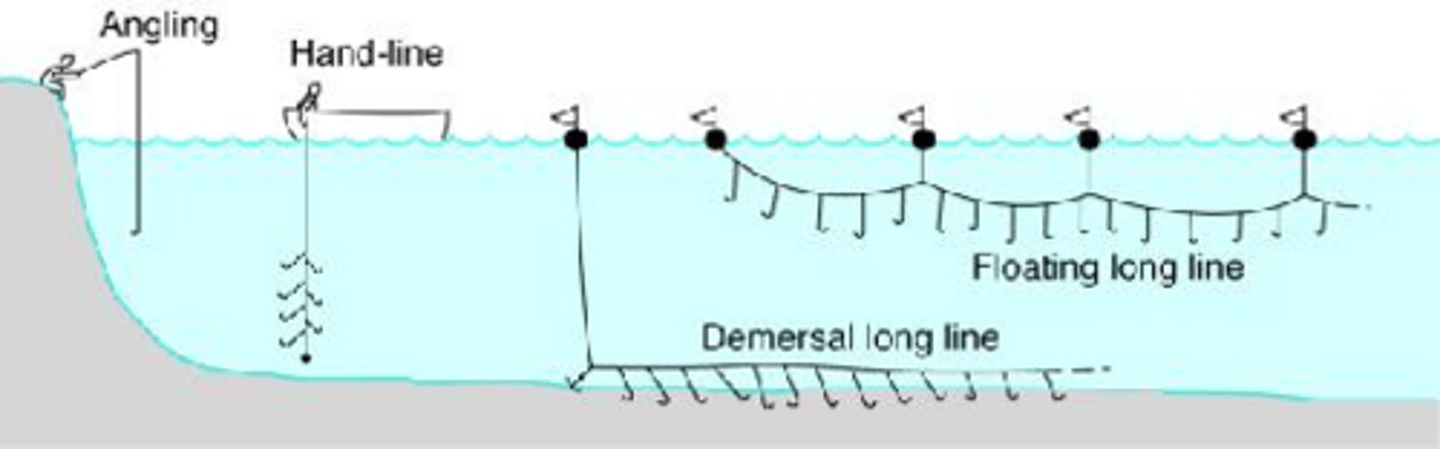
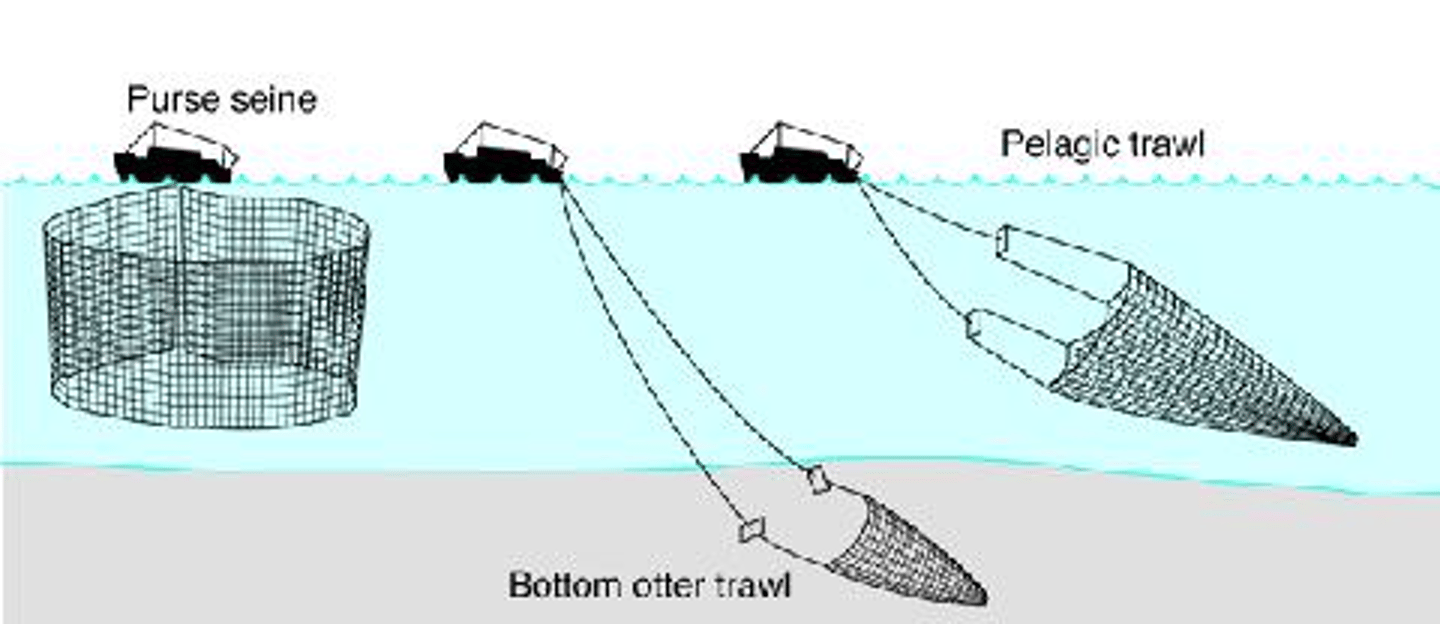
What are some common fishing methods?
Hook-and-line, longline fishing, gill net fishing, trawl nets, and purse seine.
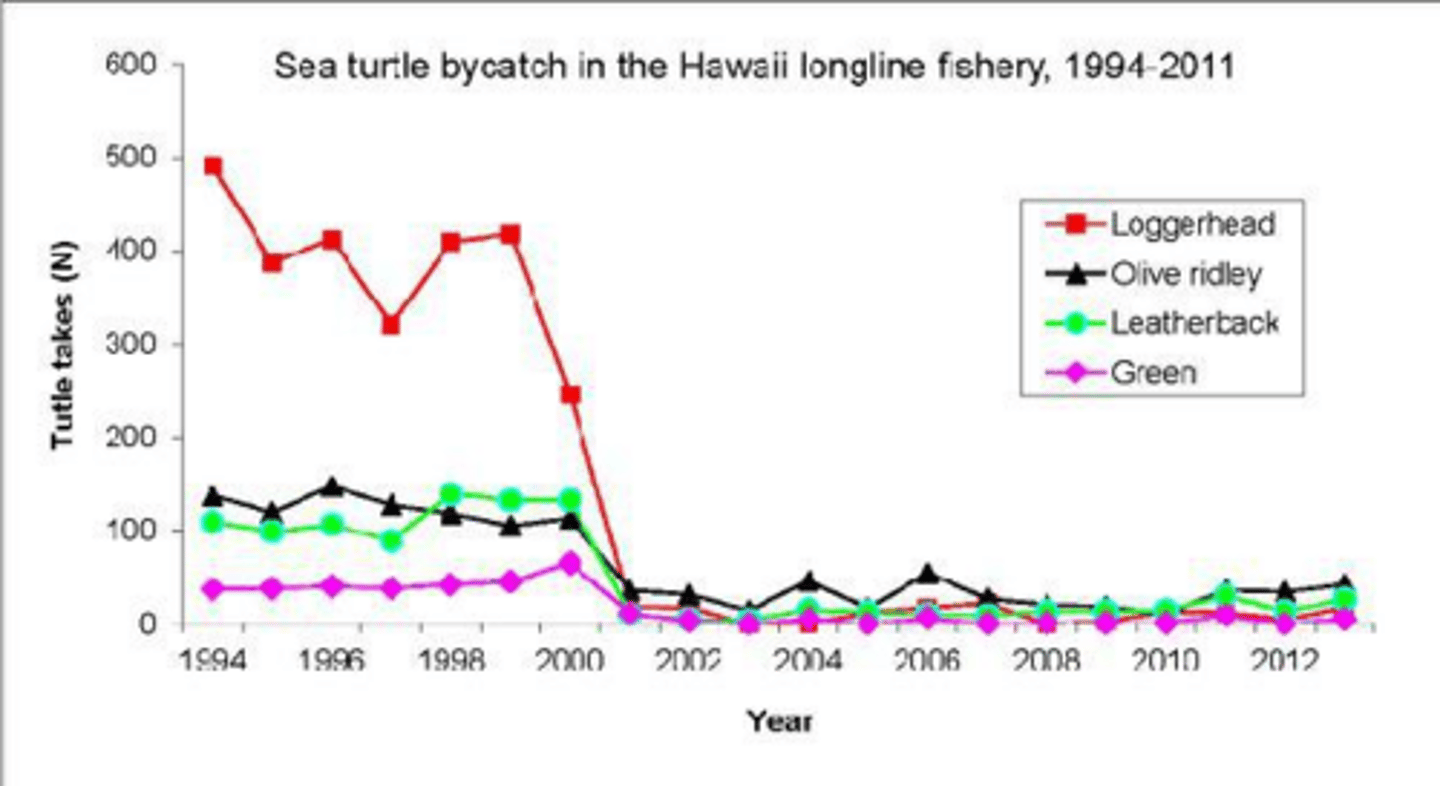
What is bycatch?
Unintended catch of non-target species during fishing, which can be as high as 90% in some methods.
What is the purpose of Marine Protected Areas (MPAs)?
To provide lasting protection for part or all of the natural and cultural resources in the marine environment.
What is Maximum Sustainable Yield (MSY)?
The largest average catch that can be captured from a stock under existing environmental conditions.
What are the challenges in determining MSY?
Variability in oceanographic data, long-term population data, and changes in ecosystems over time.
What are shifting baselines in fisheries?
The phenomenon where memories of past fish populations are short, leading to a reference point based on current conditions rather than historical data.
How can we prevent shifting baselines?
By maintaining historical records, long-term monitoring, and recalibrating perceptions of fish populations.
What are the pros of aquaculture?
Can help meet the demand for seafood, reduce pressure on wild fish stocks, and provide economic opportunities.
What are the cons of aquaculture?
Can lead to environmental degradation, disease spread, and reliance on wild fish for feed.
Why is the ocean important to humans?
It provides food, regulates climate, supports biodiversity, and offers recreational opportunities.
What is the role of public policy in fisheries management?
To create regulations and frameworks that ensure sustainable use of marine resources.
What is the impact of over-exploitation on fisheries?
It can lead to the collapse of fish populations and disrupt marine ecosystems.
What is a no-take zone?
An area where all forms of fishing and harvesting are prohibited to allow fish populations to recover.
What is the significance of the 23,000-year-old fishhook found in Okinawa?
It highlights the long history of human engagement with fishing and marine resources.
What is the importance of maintaining sustainable resource use?
To ensure that resources are harvested without diminishing their long-term ability to regenerate.
What is the definition of a Marine Protected Area (MPA)?
An area of the marine environment reserved by laws or regulations to protect natural and cultural resources.
What is the purpose of no-take zones in MPAs?
To allow a minimum population to complete a life cycle by prohibiting fishing in specific areas.
What are the benefits of MPAs?
Increased biomass (413%), density of animals (200%), size of animals (82%), and diversity of community (71%).
What is a significant impact of aquaculture on marine environments?
Aquaculture has become a leading vector for aquatic invasive species worldwide.
What are some human impacts on marine environments?
Direct habitat destruction, toxic substances, sewage runoff, climate change, and global change.
What is a major source of mercury contamination in marine environments?
Atmospheric deposition from coal-burning power plants and mining activities.
What health issues can cadmium cause in humans?
Disruption of kidney functions and bone deformations with severe pain.
What is the primary concern regarding pesticides in marine environments?
Agricultural runoff leading to persistent organic pollutants affecting marine life.
What was the significance of Rachel Carson's 'Silent Spring'?
It raised public concern about the effects of pesticides on the environment.
What are the ecological impacts of the Deepwater Horizon oil spill?
Prolonged ecological impacts, reproductive challenges, physical stress, and habitat loss.
What are Polycyclic Aromatic Hydrocarbons (PAHs) and their sources?
Toxic and carcinogenic compounds from sewage, runoff, oil spills, and burning fossil fuels.
What are the effects of nutrient input and eutrophication in marine environments?
Overstimulates primary production, supports pathogen growth, and leads to hypoxic conditions.
What is thermal pollution and its impact on marine life?
Water temperature increases from power stations can entrap marine organisms and disrupt ecosystems.
How does ocean warming and acidification affect marine ecosystems?
Influences metabolism, migration patterns, reproductive timing, and increases disease spread.
What economic value do coral reefs provide?
Florida's coral reefs contribute over $1.6 billion to the economy from tourism.
What percentage of animal protein consumed by humans comes from the ocean?
16% of all animal protein.
How many people depend on the ocean for food?
4.5 billion people.
What are some pharmaceuticals derived from marine organisms?
Anti-retroviral drugs from sponges and PCR enzymes from hydrothermal vent bacteria.